Apple increased its share of worldwide PC shipments in the third quarter of 2026, with Counterpoint Research crediting the MacBook Neo for some of the company's resilience during a market downturn.
The firm's preliminary estimates put Mac shipments at 5.6 million units, an 11% decrease from the same quarter last year. Worldwide PC shipments fell 21% to 57 million units, allowing Apple's market share to increase from 8.7% to 9.8%. Counterpoint identified the MacBook Neo as a key contributor to Apple's performance.
The report explains how rising production costs are making replacement computers harder to afford. Higher memory and component prices have fed through to PC prices, prompting consumers to postpone purchases. Business fleet replacements and Windows migration sustained some demand, although neither was enough to prevent the overall contraction.
Apple remained the fourth-largest PC vendor by shipments. Lenovo led with a 26.3% share, followed by HP at 18.1% and Dell at 13.3%. Shipments at those companies declined 23%, 31%, and 25%, respectively.
ASUS, in fifth-place, was the only vendor among the top five to record a smaller annual decline than Apple. Its shipments fell 7%, giving it a 9.2% market share.
Counterpoint expects global PC shipments to decrease 27% year over year in the fourth quarter. Its forecast for 2027 suggests there will be broadly flat shipment volumes compared with 2026.
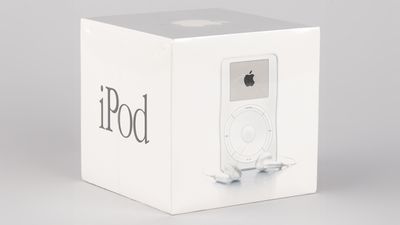
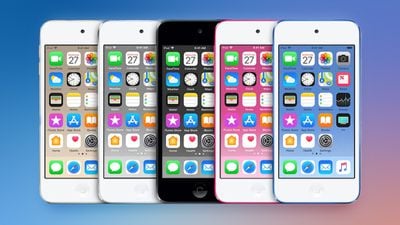
Apple today marks 25 years since the introduction of the original iPod, one of the company's most significant products and a major contributor to its expansion beyond the Mac.
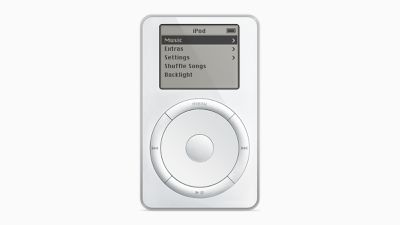
Steve Jobs unveiled the first iPod on October 23, 2001, at a small press event in the Town Hall auditorium at Apple's Infinite Loop headquarters. Advertised as offering "1,000 songs in your pocket," the device combined a 5GB hard drive with a monochrome LCD display, a mechanical scroll wheel, and up to 10 hours of battery life.
The original model cost $399 and required a Mac with iTunes. Its FireWire connection transferred music and charged the battery, while automatic synchronization copied songs and playlists from the user's iTunes library. Apple said that an entire CD could be transferred in under 10 seconds and a collection of 1,000 songs in less than 10 minutes. The hard drive could also store documents and other files.
Ahead of the announcement, Apple invited the press to the unveiling of a "breakthrough digital device," specifying that it was not a Mac. Reports variously suggested a music player, a home stereo accessory, or a handheld device with handwriting recognition. MacRumorsrumor roundup published two days before the event included the name "iPod."
The announcement received a mixed response. Our original coverage is still available, along with reader comments questioning the device's price, Mac-only compatibility, and significance. One reader described it as "far from revolutionary," while another wrote, "all this hype for something so ridiculous!"
The iPod went on sale on November 10, 2001, with readers reporting that they lined up to purchase it. Early forum discussions included complaints about fingerprints on the polished rear enclosure, charging temperatures, and sound quality, alongside a host of positive impressions from owners.
Hardware revisions followed in quick succession. The second-generation iPod adopted a touch-sensitive scroll wheel, while the third-generation model introduced the 30-pin Dock Connector in 2003. The full-size iPod gained a color display in 2004 and video playback in 2005.
The iPod mini was announced in January 2004, representing the first extension of the product line. It featured a smaller anodized aluminum enclosure in silver, gold, pink, blue, or green, and introduced the Click Wheel, which integrated playback buttons into the touch-sensitive scrolling surface. Apple adopted the same control for the fourth-generation full-size iPod later that year.
In 2005, Apple introduced both the iPod shuffle and iPod nano. The shuffle omitted a display and offered a smaller, simpler music player, while the nano replaced the mini with a thin design based on flash storage. Later iPod nano models added video playback, a video camera, and a touchscreen. The square sixth-generation model, introduced in 2010, could be worn on the wrist using third-party watch straps.
The iPod touch arrived in September 2007, several months after the first iPhone went on sale. It featured a 3.5-inch Multi-Touch display, Wi-Fi, and Safari, requiring a cellular plan.
The seventh-generation iPod touch received an A10 Fusion chip and up to 256GB of storage in May 2019. It remained on sale without further hardware updates until May 10, 2022, when Apple announced its discontinuation and said it would be available while supplies lasted.
In its announcement, Apple attributed the end of the lineup to the integration of music playback across its other products. Greg Joswiak, Apple's senior vice president of worldwide marketing, said that "the spirit of iPod lives on" through devices including the iPhone, Apple Watch, HomePod mini, Mac, iPad, and Apple TV.
Apple's iPhone Duo has attracted more pre-orders than the company anticipated in several major markets, according to DigiTimes, with display chip suppliers hoping its reception will boost investment in foldable devices.
Sources in the display driver industry believe the iPhone Duo could give other smartphone makers greater confidence in foldables, expanding the market for OLED touch and display driver integration, known as TDDI. The technology combines the electronics responsible for touch sensing and display control.
According to the sources, cost remains an obstacle to introducing OLED TDDI technology in traditional flagship smartphones this year. It is considered to be a technical requirement for foldables, however, giving chipmakers a route to increased shipments even if adoption elsewhere remains limited.
The report also identifies Apple's rumored touchscreen MacBook as a possible catalyst for investment in notebook displays. Adding touch capabilities creates opportunities to sell more sophisticated components, such as integrated touch and display drivers and timing controllers, which coordinate display operation.
The sources expect rival manufacturers could adopt similar display technologies in response to Apple's new products, generating business for companies outside Apple's supply chain. That prospect comes as the industry faces subdued consumer demand during the second half of 2026.
It's already Friday, October 23 in Australia and New Zealand, which means customers who pre-ordered an iPhone Duo are beginning to receive their devices.
We are seeing first impressions and early photos from actual customers on the MacRumors forums, Instagram, Reddit, and other social networks. If your iPhone Duo has been delivered, let us know what you think of it in the comments below. MacRumors reader Boardiesboi is always one of the first to get a new iPhone and share images.
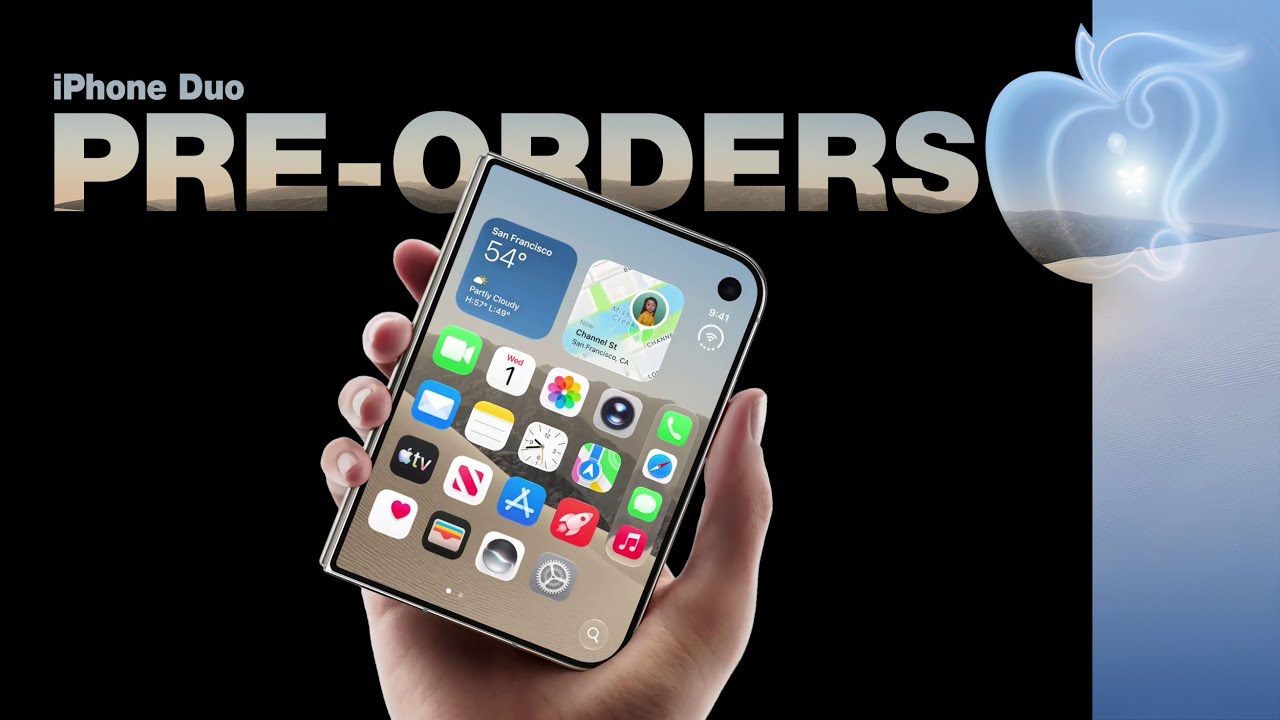
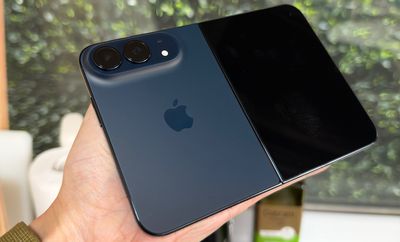
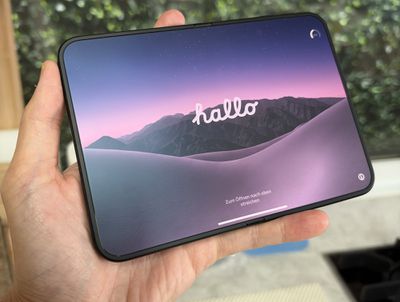
Priced starting at $1,999, the iPhone Duo is Apple's first foldable device, featuring a 5.4-inch outer display and a 7.6-inch inner display.
Apple says retail stores in select countries will have a limited number of iPhone Duos for walk-in purchases on launch day, and it expects stock to sell out fast due to "extraordinary" demand. There is no Apple Store in New Zealand, so store stock in Australia will give us an idea of what in-store availability might look like worldwide.
Apple Stores in the United States, Australia, Austria, Belgium, Canada, Italy (select stores), Mexico, Macao (launch day only), Germany, the Netherlands, Singapore, Spain, Sweden, Switzerland, Türkiye, and the UK will have some iPhone Duos for walk-in customers.
The iPhone Duo will not be available for walk-in purchase in France, China, Hong Kong, India, Japan, Malaysia, South Korea, Taiwan, Thailand, and the United Arab Emirates, so customers in those locations will need a reservation for Apple Store pickup.
Apple's website advises customers to check back on Saturday, October 24 for pickup reservations. Shipping estimates for online orders slipped to January 25 shortly after pre-orders started and have stayed there since. Purchasing on launch day or getting lucky with a pickup reservation at a later date is the best chance of getting an iPhone Duo this year.
It's possible some carriers and big-box stores could also have stock available on launch day.
After Australia and New Zealand, sales and deliveries of the iPhone Duo will begin in Asia, the Middle East, Europe, and finally, North America. Some Apple Stores worldwide are opening early at 8:00 a.m. local time.
Popular password management app 1Password today announced 1Password for Agents, a platform that gives AI agents safe access to user credentials for completing tasks.
The platform lets AI agents access logins, passwords, and other data without seeing or storing the information. Agents can send a request to sign in to a website or account, and users can approve or deny the request. 1Password says the agent uses a unique digital key to verify its identity, and then the login information is filled directly into the sign-in form.
Personal AI agents like Meta Muse, ChatGPT Dots, and Claude Duet often need access to accounts and sensitive user information, and 1Password for Agents offers that access without exposing passwords.
1Password for Agents is rolling out "over the coming days" for Grok Bot and Muse. Claude Duet, ChatGPT Work and Dots, and Town's Townie integrations are "coming soon."
The new agent access feature is free for Individual and Family accounts on 1Password.com. 1Password is priced starting at $3.99 per month with annual billing.
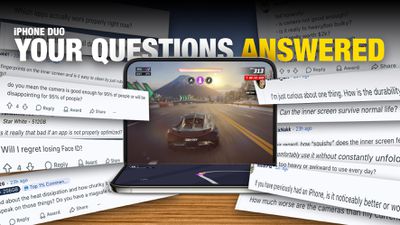
MacRumors videographer Dan Barbera got his iPhone Duo a day early, so he spent today answering some of the questions people are asking about the new device.
On app optimization, some apps scale to fill the Duo's screen, and others have been updated for the actual Duo form factor with unique features for the different positions. Netflix has a special mode for a half-fold, for example.
There are apps that haven't been updated at all, and those have thick black bars on the sides. The apps are usable, but it's not a good experience. We'll see a ton of app updates coming out starting tomorrow, so hopefully unoptimized apps become less of a problem. Multitasking with two apps side by side is useful, and it's nice to be able to do things like watch a video while scrolling a website.
The iPhone Duo's camera is on par with an iPhone 17 camera. It's not as good as the iPhone 18 Pro camera with a variable aperture, but it's not terrible. There is no telephoto lens, and camera quality is one of the big iPhone Duo compromises. The under-display Face ID camera is okay for casual FaceTime videos, but the quality is comparatively poor for anything else.
The other feature people are going to miss is Face ID. Touch ID is not as quick as Face ID, especially because Apple built a deliberate pause into it. You need to touch and hold to unlock. The Apple Watch can be used to unlock the iPhone Duo, and that's an experience that's closer to Face ID.
The inner display feels durable, and it's similar to an iPad with a nano-texture display. It does pick up fingerprints, but it doesn't feel like it's going to break or scratch easily.
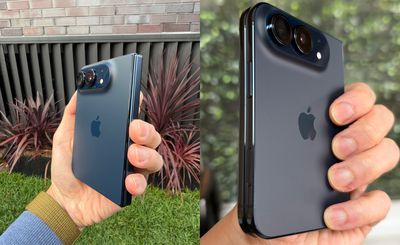
The iPhone Duo is heavier than other iPhones, and it can feel bulky. Depending on hand size, you may be able to use it one-handed, though it's harder to use left-handed because the the Touch ID button and on-screen navigation bars are on the right.
At a $1,999 starting price, the Duo is expensive, and it has compromises that will deter some people. Once major apps get updated, the experience will change, and we'll have a better idea of whether it's worth getting.
We'll have a full iPhone Duo review coming soon, so make sure to stay tuned to MacRumors.
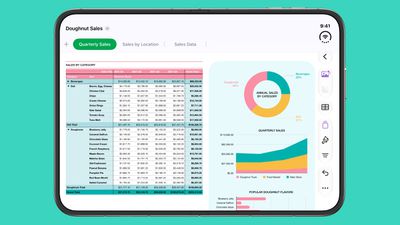
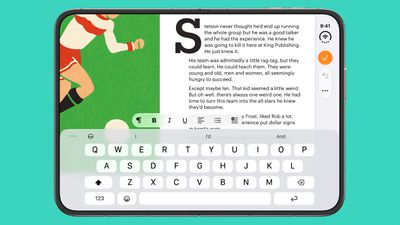
Apple today added an "Intelligent Assistant" to Keynote, Numbers, and Pages. The feature is available in beta for Apple Creator Studio subscribers. The update is available again following the temporary removal of the apps from the App Store.
In Numbers, Intelligent Assistant can build formulas, visualize data, help generate formulas with natural language, and generate tables.
The Pages Intelligent Assistant can start a first draft, and "edit, organize, and elevate your writing." It can draft sections, adjust tone, and generate images or shapes using natural language.
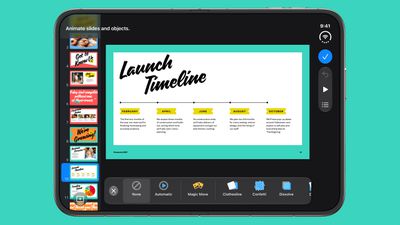
With Keynote, Intelligent Assistant can help build and refine slides, add animations, create presenter notes, and generate images and shapes.
For all three apps, Intelligent Assistant can search for information on a topic on the web and then add it to a document. Apple says Intelligent Assistant can also walk users through using advanced features or make suggestions on what to try.
Along with Intelligent Assistant, Creator Studio subscribers also have access to new templates and themes, as well as curated videos that can be found in the Content Hub.
For all users, the apps include bug fixes and performance improvements. Keynote also has an Interchange Format for importing and exporting presentations.
Though not mentioned in the release notes, the updates also add iPhone Duo support to all three apps.
Keynote, Numbers, and Pages are free apps, but they have extra capabilities available with a Creator Studio subscription. Creator Studio is priced at $12.99 per month, and it works across all of Apple's creator apps.
On a new episode of his Power On podcast, Bloomberg's Mark Gurman said he "heard" that Apple is "looking at" the idea of a future iPhone Duo with an inner display that is "roughly half an inch" larger than the one on the existing model.
iPhone Duo has a 7.6-inch inner display and a 5.4-inch outer display. Gurman does not know exactly how much larger the inner display would be on a future model, but he said it could be somewhere in the 7.9-inch to 8.1-inch range. He said this would not be a separate model, so do not expect an "iPhone Duo Max."
To celebrate the launch of the iPhone Duo this Friday, Apple has set up oversized iPhone Duo promotional displays at Apple Fifth Avenue in New York City, Apple Covent Garden in London, Apple BKC in India, and Apple Jing'an in Shanghai.
The installations were already spotted under wraps, and Apple CEO John Ternus has since revealed what they look like in a photo of Apple Jing'an shared on his Weibo account today. The oversized iPhone Duo displays have mirrored finishes and glowing edges, and they show the device in various positions, or poses as Apple calls them.
Ternus is expected to be at Apple Fifth Avenue for iPhone Duo launch day. Apple said that its stores in the U.S. and select other countries will have "limited" availability of the iPhone Duo for walk-in customers tomorrow.
Apple has temporarily removed Keynote, Pages, and Numbers from the App Store, just after releasing an update that added iPhone Duo support and a new Intelligent Assistant.
It is not clear if the apps were removed intentionally, or if it is a bug. Apple has not said when the apps will be reinstated, but if it was in error, they should return soon.
Update: The Mac versions are back without the new update. The iOS versions don't seem to have returned to the App Store yet.
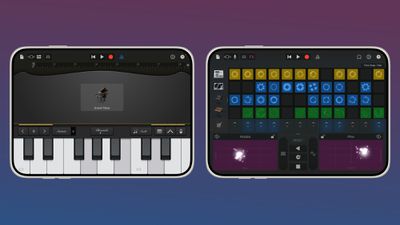
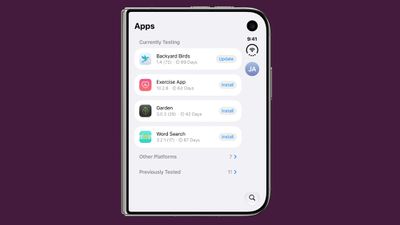
Apple today updated its TestFlight and GarageBand apps with support for the iPhone Duo's inner and outer displays.
Both apps have the vertical toolbar and will now display properly on the iPhone Duo in any orientation.
TestFlight functionality is largely the same with little benefit from the Duo display, but GarageBand gets a wide layout that takes full advantage of the inner screen. It offers up a bigger interface for music editing and using touch instruments like keyboards and guitars.
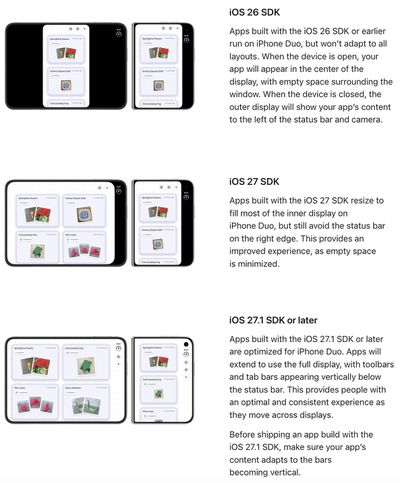
In order for an app to be optimized for the iPhone Duo, the developer needs to build it with the iOS 27.1 SDK or later. Apps optimized for the iPhone Duo fill the entire inner display, and the app's toolbar appears vertically below the status bar.
Apps built with the iOS 27 SDK fill most of the inner display on the iPhone Duo, but they still avoid the status bar on the right edge.
Apps built with the iOS 26 SDK or earlier run on the iPhone Duo, but the app will appear in the center of the inner display with lots of empty space on each side.
Many more apps are being optimized for the iPhone Duo each and every day, so keep a close eye on the App Store's updates menu.
Amazon this week is taking $49 off Wi-Fi models of Apple's 11th generation iPad, with prices starting at $399.99 for the 128GB Wi-Fi iPad, down from $449.00. This is a match of the best price we've seen on the iPad since Apple's price hikes over the summer.
Note: MacRumors is an affiliate partner with Amazon. When you click a link and make a purchase, we may receive a small payment, which helps us keep the site running.
Additionally, Amazon has the 256GB Wi-Fi iPad for $499.99 ($49 off), and both have free delivery estimates around late October, but Prime members should be able to get same-day delivery in many locations. The 128GB model has all four colors on sale, while the 256GB model has three colors on sale.
If you're on the hunt for more discounts, be sure to visit our Apple Deals roundup where we recap the best Apple-related bargains of the past week.
Deals Newsletter
Interested in hearing more about the best deals you can find as we head into the holidays? You can sign up for our Deals Newsletter and we'll keep you updated so you don't miss the biggest deals of the season!
Apple today announced that F1 races on the Apple TV streaming service will now be broadcast with Dolby Atmos spatial sound, starting with the 2026 U.S. Grand Prix in Austin, Texas on October 23 to October 25. Apple's press release outlines everything F1 fans need to know about the U.S. Grand Prix and ways to follow along.
Apple TV has been the exclusive home of F1 in the U.S. since March, as part of a five-year partnership. All races are included with a subscription at no extra cost.
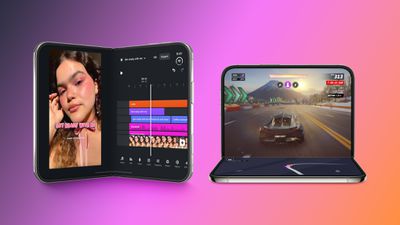
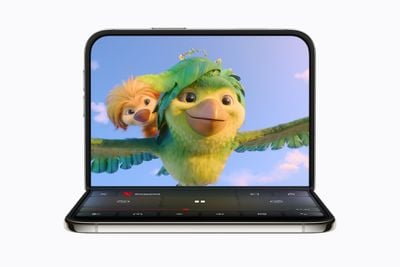
You can hold the iPhone Duo and set it down in a number of ways, such as partially folded like a book, placed down on a surface, or standing on its edges:
With the Netflix app, for example, Apple said iPhone Duo users can scroll through a feed of short, vertical movie and TV show clips on the outer display to discover something new to watch, and then open the device to keep watching on the inner display. Apple's screenshot shows the Netflix app on an iPhone Duo in a "seated" pose.
Apple also showed off Amazon's Prime Video app in a "seated" position.
Netflix
Prime Video
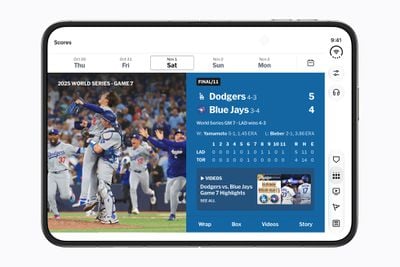
The official MLB app was updated with iPhone Duo support yesterday and now shows live games, scores, stats, and more across the full width of the inner display.
MLB
In the Zoom app, iPhone Duo users can see shared content and other participants all at once.
Zoom
Slack and Lyft also take full advantage of the iPhone Duo's larger inner display.
Slack
Lyft
In the coming weeks, Apple said Microsoft's Word and Outlook apps will roll out a "desktop-class experience" that includes Word's formatting tools appearing alongside a document and Outlook's inbox visible next to a full message.
Other apps and games that are or will soon be optimized for the iPhone Duo include Flighty, Fantastical, Things, Bear, Notewise, SmartGym, Airmail, Paramount+, PGA Tour, Instagram, Edits, Sneaky Sasquatch, Retrocade, NYT Cooking, Lowe's, DoorDash, OpenTable, Yelp, American Airlines, United Airlines, Weibo, and more.
Apple has blocked compromised security certificates on its devices that could help attackers impersonate websites, BleepingComputer reports.
The certificates were issued by certificate authority eMudhra. According to Mozilla's investigation, their private keys were all numbers below 256, making them almost instantly recoverable. Attackers could use the affected website certificate keys to create fraudulent certificates that vulnerable software would trust.
Apple introduced the blocks on October 19, according to an advisory from Mozilla cryptography engineer Dennis Jackson. These protections stop software using Apple's system checks from trusting the compromised certificates.
Jackson says Safari and other major browsers had additional certificate checks that would have prevented attacks through this route. Whether attackers exploited other software remains unknown.
Apple has already distributed blocks for the compromised certificates. Mac users who use the affected command-line tools can find tests and mitigation instructions on Jackson's website.
Apple is preparing what appear to be giant iPhone Duo displays outside its Fifth Avenue store in New York ahead of the device's launch on Friday, October 23.
Photos from users on X show the structures on the plaza beside the glass cube. Their designs are hidden by wrapping and black covers, so it remains unclear exactly how Apple will present the device.
The outdoor installations accompany a substantial retail push inside the store. According to Bloomberg's Mark Gurman, Apple plans to allocate more than 150 iPhone Duo units to demonstrations and displays at Fifth Avenue. Typical non-flagship locations are expected to receive around 20 each.
Gurman also described new ways to demonstrate the foldable design, including a fixture that shows the device opening and closing. A separate MagSafe stand will hold an unfolded iPhone Duo beside two conventional iPhones for comparison.
Fifth Avenue's launch decorations have changed twice in just over a month. For September's iPhone 18 Pro release, Apple added color to the cube to reflect the new Burgundy and Glacier finishes.
The iPhone Duo goes on sale on Friday, October 23. Apple has confirmed limited walk-in availability in the United States and several other markets, warning that launch-day inventory is expected to sell out quickly. Stores in mainland China, France, Japan, and several other markets will require customers to reserve a pickup time through Apple's online store.
MacRumors will be on the ground for the launch event at Apple Fifth Avenue tomorrow.
Apple's second-generation iPhone Duo could gain Face ID, with prototypes already incorporating the technology beneath the outer display, according to Bloomberg's Mark Gurman.
In the latest episode of his "Power On" podcast, Gurman described Apple's work on adding facial authentication technology to its foldable iPhone. The company is said to be testing the hardware for a successor expected next fall, but has not finalized whether the feature will ship.
The current, first-generation iPhone Duo relies on a fingerprint sensor embedded in its side button, just like the iPad. Its thin design leaves limited space for the depth-sensing components needed for Face ID.
News of the prototype seems to represent a more concrete development of Gurman's earlier prediction about future iPhone Duo upgrades. In September, he suggested that smaller components and advances in artificial intelligence could help Apple add Face ID and a dedicated telephoto camera by the third generation.
Gurman also said that Apple is considering adding an Action button to a future iPhone Duo. The feature is noticeably lacking on the current model.
The first iPhone Duo launches tomorrow with a starting price of $1,999.
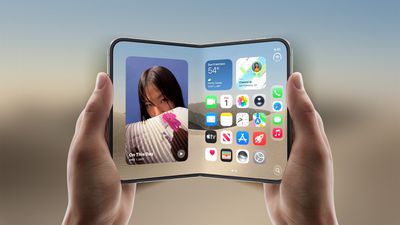
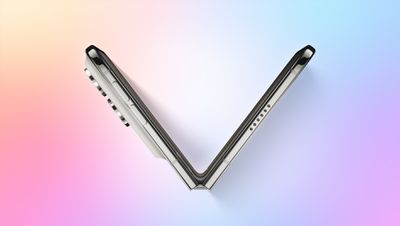
Apple's first foldable iPhone, with a book-style design featuring a 5.4-inch outer display and a 7.6-inch inner display with a minimal crease down the middle.




















 Note: MacRumors is an affiliate partner with Amazon. When you click a link and make a purchase, we may receive a small payment, which helps us keep the site running.
 Apple today announced that F1 races on the Apple TV streaming service will now be broadcast with Dolby Atmos spatial sound, starting with the 2026 U.S. Grand Prix in Austin, Texas on October 23 to October 25. Apple's press release outlines
 Netflix
 Prime Video
 MLB
MLB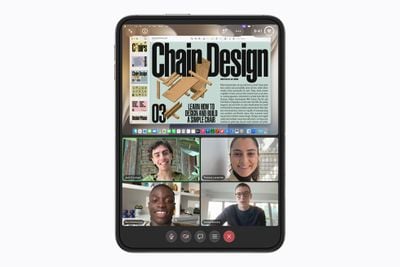 Zoom
Zoom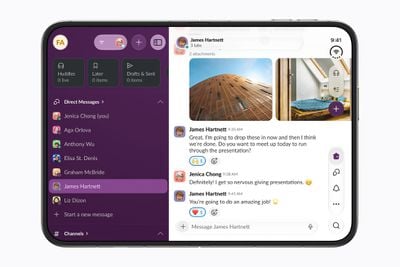 Slack
Slack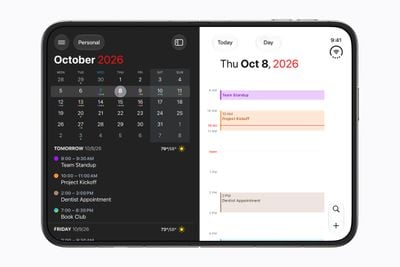 Fantastical