

Ask MacRumors
Should You Buy the HomeView?
Apple's $299 HomeView is an all-new product introduced in October 2026. It is a centralized home hub with a 7-inch display that can control smart home products, answer questions with Siri AI, display pictures, make FaceTime calls, play music, show recipes, offer up calendar events, and much more.
Since the HomeView works as a home control device and a speaker, it can replace a HomePod or a HomePod mini. It is not a replacement for an iPhone or iPad. Some Apple apps, personal context features, and third-party apps require an iOS device.
If you use the HomeKit ecosystem or want to start, HomeView is a useful device that's more capable than a speaker, and the $299 price tag could be worth it. The new $149 HomePod mini will also offer Siri AI support if you want a more affordable option, but it does not have a display.
The HomeView launches on November 13, but it is available for pre-order. It is an all-new product, and now is the best time to buy.
Apple HomeView Details
Apple HomeView is a new home product that has elements of the HomePod, iPad, and Apple Watch. Apple says it is meant to be central to the home and personalized for all users with integrated Siri AI. HomeView recognizes up to six people in a home and offers a personalized experience for each user.
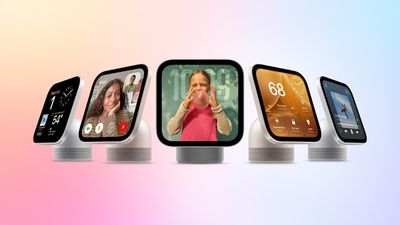
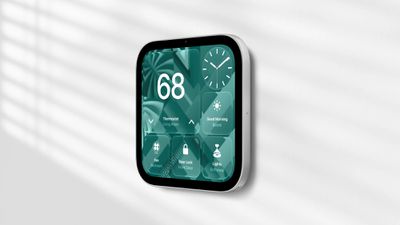
There is a 7-inch Liquid Retina display with adjustable brightness between 500 nits and 0.3 nits, which is the lowest brightness option on an Apple display to date. You can get the Apple HomeView with a speaker base or attach it to the wall with the wall-mounted version. The HomeView is 5.73 inches and square-shaped with a 9.8mm thickness, but with the base, it measures from 5.38 to 6.82 inches tall and 3.78 to 5.13 inches deep. The speaker model weighs 2.1 pounds and the wall model weighs 0.63 pounds.
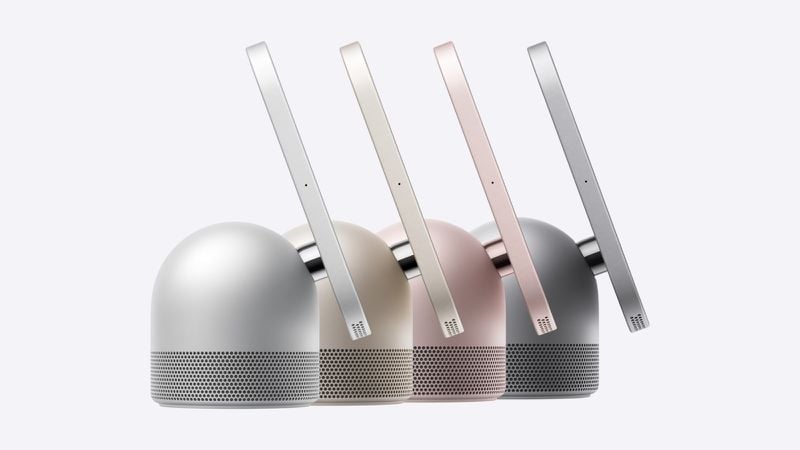
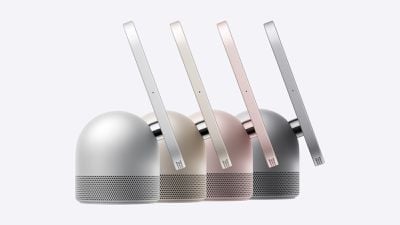
The speaker model has a dome-shaped base with small perforations in a band around the bottom. The base attaches to the display with a stainless steel hinge that has tilt adjustment. The speaker HomeView comes in silver, starlight, rose pink, and space gray, while the wall-mounted version is limited to silver and space gray.
A USB-C port is included at the back of both versions, and the HomeView must be plugged in to work. The speaker model comes with a color-matched 1.5m USB-C cable and a 30W power adapter. The wall-mounted version does not come with additional equipment, and it requires mounting hardware that must be purchased separately. Even though the wall-mounted version needs extra hardware and does not have a speaker base, both models are priced at $299.
Both versions of the HomeView have speakers at the bottom of the display with two custom full-range drivers with Spatial Audio support. The speaker base also includes a custom down-firing woofer and dual force-cancelling passive radiators. There are four microphones in each HomeView for far-field Siri support, including a front microphone, a rear microphone, and left and right microphones.
The HomeView supports computational audio for tuning loudness and bass at any volume level, and multiple HomeViews can be used for multiroom audio over AirPlay. There is a 12-megapixel camera on the front of the HomeView that can be used for FaceTime, and Center Stage is supported so the camera can adjust its view to be wider or closer depending on the user's location in the room or the number of people on the call.
HomeView does not have an App Store, but it comes with Apple apps and widgets built in. Supported apps include Apple Music, Podcasts, Calendar, FaceTime, Safari, Alarms, Reminders, Find My, Home, Settings, Intercom, Weather, World Clock, Timers, and Messages. Audiobooks, Classical Music, News, and the Apple TV app are available through an iPhone connection. Third-party audio and video apps with HomeView integration will show up on the device when a user's iPhone is connected and authenticated.
With Safari, HomeView can display crafting tutorials or cooking instructions. Apple says recipes will include a Start Cooking button that will offer a step-by-step format users can follow along with. Songs, podcasts, recipes, audio calls, and video calls can be handed off from an iPhone to HomeView and vice versa.
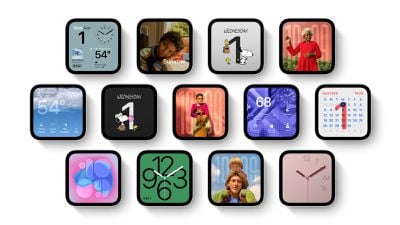
HomeView has Apple Watch-like customizable faces that are displayed when it's not in use. A Photos face can show collections of images and serve as a digital picture frame. There are dedicated informative faces like Calendar and Weather. A new Flow face reacts to movement with colors and light, while a Snoopy face shows the time with Snoopy animations that change with time of day, weather, sporting events, and holidays. With the Home Modular face, the HomeView can serve as a smart home dashboard with thermostat controls, video, light options, and HomeKit scenes, and the Home Camera face shows up to nine live camera feeds. Some faces will change throughout the day.
There is an A18 chip in the HomeView with Siri AI support. Siri AI on HomeView works like Siri AI on other devices, but personal context understanding requires authentication and a nearby iPhone or iPad. Siri can be activated with a Siri command or by swiping down from the top of the display. Users will be able to ask Siri about content in Messages, Calendar, and more, plus Siri can hold back-and-forth conversations with information synced to the Siri app on other devices.
The A18 chip has a Secure Exclave for processing camera and microphone feeds in a way that can't be accessed by Apple or the operating system. HomeView recognizes each person's face and voice on-device with no visual or audio data exposed to the operating system. Household members need to have an Apple Account and must be added as a member of the shared home in the Home app. Personal content is shown only when a user is actively in front of the HomeView with a recently unlocked iPhone or iPad on the same Wi-Fi network as the device. The HomeView must also recognize the person by face to display data and keep everyone's personal information separate. Guests and unrecognized users can do things like control smart home accessories, set timers, play music, and check the weather, but personal information won't be available.
HomeView is equipped with Wi-Fi 6E, Thread, and Bluetooth 6, plus it supports peer-to-peer discovery for guest access. There is an accelerometer, ambient light sensor, and temperature and humidity sensor used for HomeView features and for smart home scenes and automations. Apple says some HomeView features will respond to proximity to show more information as you get closer to the device. Sound Recognition is available and HomeView can send alerts if it hears smoke alarms and carbon monoxide detectors.
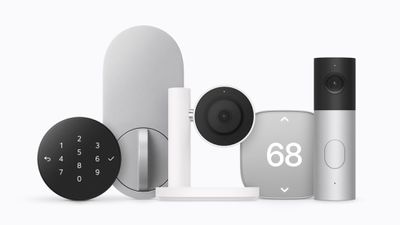
Apple partnered with LG Electronics and Schneider Electric for an Apple Home Collection of accessories meant to work with HomeView. Products have an Apple aesthetic with premium materials and a clean, minimal look. The Apple Home Collection includes a video doorbell, indoor and outdoor security cameras, deadbolt lock, thermostat, and temperature sensors, with some products launching in December and others coming in early 2027. Existing HomeKit and Matter accessories also work with the HomeView.
HomeView requires iOS 27.2 or iPadOS 27.2 or later to work, plus it needs Wi-Fi access. Siri AI is only available in English to start with. HomeView is not launching in the European Union to begin with because of the Siri AI requirements.
Note: See an error in this roundup or want to offer feedback? Send us an email here.
How to Buy
The Apple HomeView can be pre-ordered from the Apple Store and other retailers such as Amazon and Best Buy for $299, and it launches on November 13 in the U.S., UK, Canada, New Zealand, Australia, and India. Pre-orders start on October 15 in Singapore, and customers in South Africa can pre-order now through resellers.
The wall-mounted version does not come with a speaker base, and three mounts from Schneider Home are sold separately.
The Power Mount USB-C Wall Connector is priced at $59.95, while the Power Mount AC Wired model that's meant to be installed by an electrician is $79.95. Apple also plans to sell a Power Mount PoE Wired version for $129.95, but it isn't launching until early 2027. The wall-mounted HomeView can be purchased with no mount, but mounting hardware and power are required for it to operate. Wall-mounted versions also require a 20W or better power adapter and a USB-C cable.
