iPhone 18 Pro to Kick Off Apple's Four-Part Camera Upgrade Plan - MacRumors
Skip to Content

iPhone 18 Pro to Kick Off Apple's Four-Part Camera Upgrade Plan

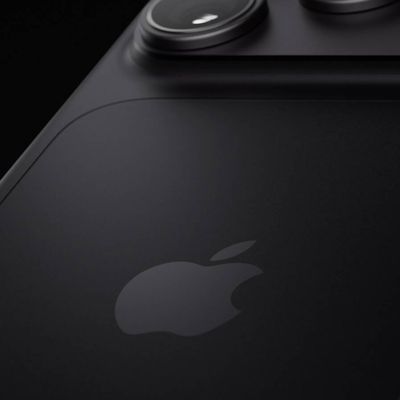
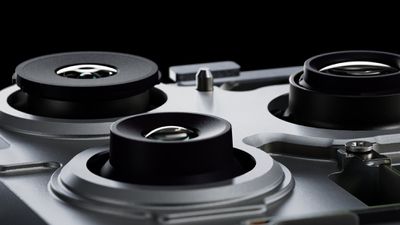
Apple is evaluating four camera upgrades for future iPhone models, with the first new feature scheduled for this year's iPhone 18 Pro models, according to a reputable Chinese leaker.
iphone 17 cameras zoom
The Weibo-based account Digital Chat Station claims that Apple has implementation plans for the following upgrades:

  • Variable aperture
  • 1/1.12-inch "ultra-large" main camera sensor
  • Enhanced optical image stabilization for ultra-wide lens
  • 200-megapixel periscope telephoto lens

The variable aperture is widely rumored to be introduced with the iPhone 18 Pro and iPhone 18 Pro Max, expected to launch this September. Apple supply chain analyst Ming-Chi Kuo reported in December 2024 that the main rear camera on both ‌iPhone 18 Pro‌ models will offer variable aperture. More recently in October, a report claimed that Apple is moving ahead with those plans and was discussing components with suppliers.

Apple has never implemented a variable aperture on an iPhone. From the iPhone 14 Pro through the iPhone 17 Pro, the main camera uses a fixed ƒ/1.78 aperture, meaning the lens remains fully open at all times when capturing images. In contrast, a variable aperture lets the camera control how much light reaches the sensor. In low-light conditions, it opens to admit more light, while in bright scenes, it closes to avoid overexposure. This should also give users more control over depth of field.

The other camera upgrades the leaker mentioned appear to be ones that Apple is testing for future models beyond the iPhone 18 Pro, with an unclear timeline for implementation.

Regarding the "ultra-large" main sensor, the 1/1.12-inch label is based on a legacy optical format, not a literal measurement. It dates back to video camera tubes, so the number doesn't correspond directly to the sensor's physical width. In practice, a 1/1.12-inch sensor has a diagonal of around 14.5mm – far smaller than the label might suggest, but very large by smartphone standards. It's the same size as Sony's LYTIA LYT-901, which is shipping in the Vivo X300 Ultra. It's significantly larger than the 1/1.28-inch main sensor the iPhone 17 Pro models use, and would offer improved low-light performance, dynamic range, and signal-to-noise ratio.

As for the 200-megapixel periscope telephoto lens, Digital Chat Station has mentioned multiple times that Apple is studying the technology, but they recently said it is unlikely to feature in an iPhone before 2028.

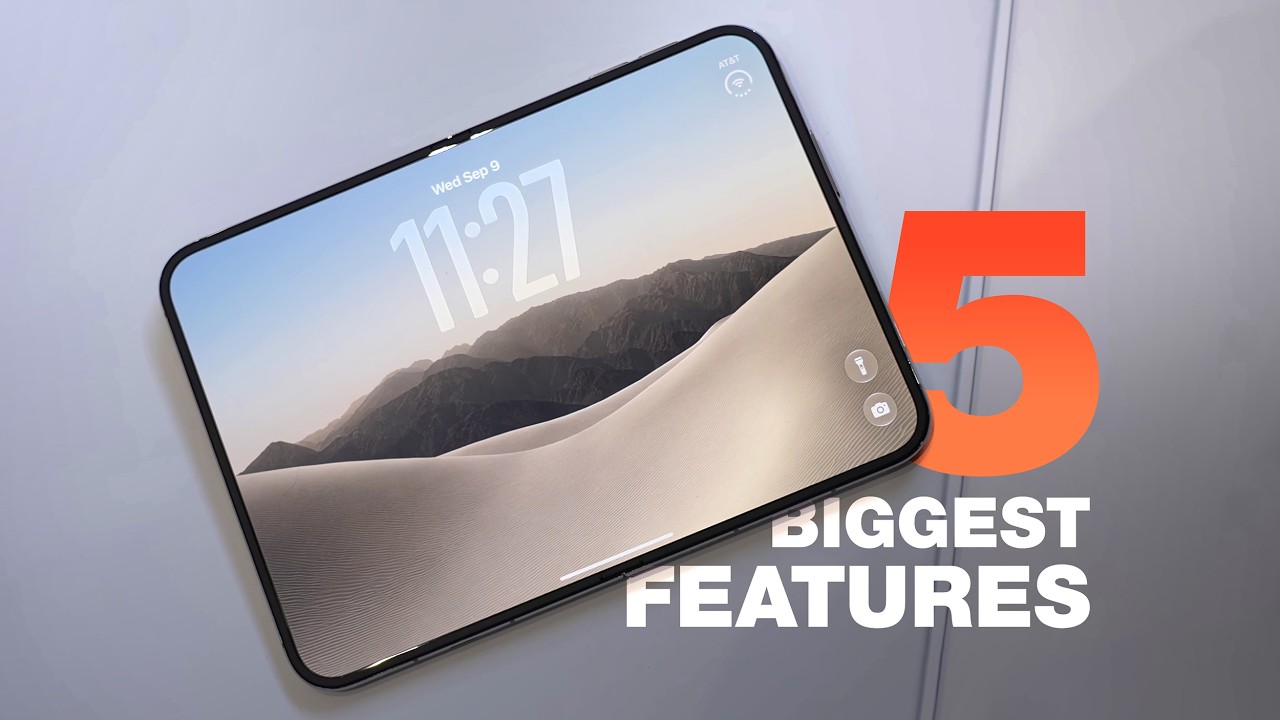
Digital Chat Station has more than three million followers on Weibo, and has a track record of accurately leaking Apple-related information. For example, they accurately revealed the overall design of the iPhone Air and iPhone 17 Pro, as well as the triple 48-megapixel rear camera system of the ‌iPhone 17 Pro.‌ Recently, the leaker claimed Apple's first foldable, expected to arrive alongside the iPhone 18 Pro models, will be called "iPhone Ultra."

Related Roundup: iPhone 18 Pro

Popular Stories

iphone 17 pro dark blue 1

Apple Will Finally Fulfill a Top Request With the iPhone 18 Pro

Wednesday April 1, 2026 2:20 pm PDT by
Many people have long wished for Apple to release a Pro or Pro Max model of the iPhone in red, and it might finally happen this year. The special new color that Apple is considering for the iPhone 18 Pro and iPhone 18 Pro Max this year is red, according to Bloomberg's Mark Gurman. Specifically, he said that Apple has tested a "deep red" finish for the two devices. If this rumor...
Dynamic Island iPhone 18 Pro Feature

iPhone 18 Pro Color Rumors Might Disappoint a Lot of People

Thursday April 2, 2026 3:00 pm PDT by
Fresh out of the rumor haze, Apple's iPhone 18 Pro color options are starting to take shape, and not everyone is going to be happy. According to Weibo leaker Instant Digital, Apple's next-generation premium iPhones still won't come in black in 2026. If the rumor is true, it will be the second consecutive year Apple has ditched what was arguably its most classic color option for the Pro...
iphone 17 cameras zoom

Apple Testing 200MP Telephoto iPhone Lens That Could Ship Next Year

Thursday March 26, 2026 4:04 am PDT by
Apple is evaluating a 200-megapixel telephoto camera sensor that could potentially ship in an iPhone as soon as next year, according to Digital Chat Station, a leaker on Chinese social media platform Weibo with a decent track record. In a post shared today, the leaker said Apple is actively testing a 200-megapixel 1/1.2" sensor similar to the one rumored for Oppo's upcoming Find X9 Ultra. ...

Top Rated Comments

everlast3434 Avatar
1 hour ago at 05:14 am
This will be the best camera they've ever shipped in an iPhone! I think I'm going to love it!
Score: 7 Votes (Like | Disagree)
Mac Fly (film) Avatar
59 minutes ago at 05:31 am

Before the inevitable comment of "why use a variable aperture on a smartphone sensor?", here are the reasons outside of light control and shutter speed control for video:

1. Solving the "Large Sensor" Problem

As Apple moves toward larger camera sensors (approaching the 1-inch mark), a fixed wide aperture actually becomes a disadvantage for close-up shots.


* The Issue: When a lens is permanently "wide open," the depth of field becomes so thin that if you take a photo of a document or a flower, only the very center is in focus while the edges are blurry.


* The Solution: By narrowing the aperture (e.g., to $f/4.0$ or $f/8.0$), Apple can increase the depth of field, ensuring that the entire subject stays sharp from edge to edge.

2. Spatial Video: Matching the "Two Eyes"
Spatial video works by recording simultaneously from two lenses (the Main and the Ultra Wide) to create a 3D effect. Currently, these two lenses have different physical apertures (e.g., $f/1.78$ on the Main vs. $f/2.2$ on the Ultra Wide).


* The Problem: Because the Main lens is "faster" (wider), it naturally has a shallower depth of field than the Ultra Wide. This creates a "stereo mismatch" where one of your eyes sees a blurry background while the other sees a sharp one. This can cause eye strain or a "dizzy" feeling when viewing the video in 3D on a Vision Pro.
* The Solution: With a variable aperture, the Main lens can stop down to match the Ultra Wide lens exactly. By ensuring both "eyes" have the same depth of field and sharpness, the 3D effect becomes significantly more realistic and comfortable to watch.

3. Portrait Mode: Building a "Perfect" Depth Map
The biggest challenge for Portrait Mode is "segmentation"—knowing exactly where your hair ends and the background begins.


* The Hardware Trick: A variable aperture allows the iPhone to potentially take two rapid-fire photos at different aperture settings (e.g., one at $f/1.4$ and one at $f/8.0$) without you even noticing.


* The Math: By comparing a "blurry" frame to a "sharp" frame from the exact same lens, the image processor can create a much more precise Depth Map. Since the perspective doesn't change between shots (unlike when using two different lenses), the edge detection around tricky areas like stray hairs, glasses, or transparent containers becomes much cleaner.

4. Portrait Mode: More "Optical," Less "Filter"
Most people can tell a "software" portrait from a "real" camera portrait because software blur often looks uniform and flat.


* Better Transitions: A variable aperture provides a natural optical roll-off. Instead of a harsh "cutout" look, the blur starts gradually from the subject's ears to the distant background.


* Hybrid Bokeh: Apple can use the physical aperture to provide the initial, natural blur and then use software to "enhance" it. This hybrid approach results in a photo that looks less like a "filter" and more like a high-end DSLR.

About the Aperture

Rumors suggest Apple's new aperture will use a membrane that can expand and contract ('https://ymcinema.com/2025/06/27/apple-reinvents-the-iris-new-patent-reveals-soft-membrane-aperture-for-future-iphone-cameras/') rather than mechanical blades like traditional apertures. This could provide cleaner looking bokeh.
Did you use an LLM to write this? Do you any thoughts of your own on the matter?
Score: 6 Votes (Like | Disagree)
winxmac Avatar
17 minutes ago at 06:13 am
Apple improves the hardware only to completely negate it with computational photography. The Apple Camera app needs to have an option for natural processing [or no processing] just like other camera apps in the App Store.
Score: 1 Votes (Like | Disagree)
23 minutes ago at 06:08 am

Did you use an LLM to write this? Do you any thoughts of your own on the matter?
they are my thoughts. just faster to have an llm type it out. does it make them wrong?
Score: 1 Votes (Like | Disagree)
1 hour ago at 05:30 am
Before the inevitable comment of "why use a variable aperture on a smartphone sensor?", here are the reasons outside of light control and shutter speed control for video:

1. Solving the "Large Sensor" Problem

As Apple moves toward larger camera sensors (approaching the 1-inch mark), a fixed wide aperture actually becomes a disadvantage for close-up shots.


* The Issue: When a lens is permanently "wide open," the depth of field becomes so thin that if you take a photo of a document or a flower, only the very center is in focus while the edges are blurry.


* The Solution: By narrowing the aperture (e.g., to f/4.0 or f/8.0), Apple can increase the depth of field, ensuring that the entire subject stays sharp from edge to edge.

2. Spatial Video: Matching the "Two Eyes"
Spatial video works by recording simultaneously from two lenses (the Main and the Ultra Wide) to create a 3D effect. Currently, these two lenses have different physical apertures (e.g., f/1.78 on the Main vs. f/2.2 on the Ultra Wide).


* The Problem: Because the Main lens is "faster" (wider), it naturally has a shallower depth of field than the Ultra Wide. This creates a "stereo mismatch" where one of your eyes sees a blurry background while the other sees a sharp one. This can cause eye strain or a "dizzy" feeling when viewing the video in 3D on a Vision Pro.
* The Solution: With a variable aperture, the Main lens can stop down to match the Ultra Wide lens exactly. By ensuring both "eyes" have the same depth of field and sharpness, the 3D effect becomes significantly more realistic and comfortable to watch.

3. Portrait Mode: Building a "Perfect" Depth Map
The biggest challenge for Portrait Mode is "segmentation"—knowing exactly where your hair ends and the background begins.


* The Hardware Trick: A variable aperture allows the iPhone to potentially take two rapid-fire photos at different aperture settings (e.g., one at f/1.4 and one at f/8.0) without you even noticing.


* The Math: By comparing a "blurry" frame to a "sharp" frame from the exact same lens, the image processor can create a much more precise Depth Map. Since the perspective doesn't change between shots (unlike when using two different lenses), the edge detection around tricky areas like stray hairs, glasses, or transparent containers becomes much cleaner.

4. Portrait Mode: More "Optical," Less "Filter"
Most people can tell a "software" portrait from a "real" camera portrait because software blur often looks uniform and flat.


* Better Transitions: A variable aperture provides a natural optical roll-off. Instead of a harsh "cutout" look, the blur starts gradually from the subject's ears to the distant background.


* Hybrid Bokeh: Apple can use the physical aperture to provide the initial, natural blur and then use software to "enhance" it. This hybrid approach results in a photo that looks less like a "filter" and more like a high-end DSLR.

About the Aperture

Rumors suggest Apple's new aperture will use a membrane that can expand and contract ('https://ymcinema.com/2025/06/27/apple-reinvents-the-iris-new-patent-reveals-soft-membrane-aperture-for-future-iphone-cameras/') rather than mechanical blades like traditional apertures. This could provide cleaner looking bokeh.
Score: 1 Votes (Like | Disagree)