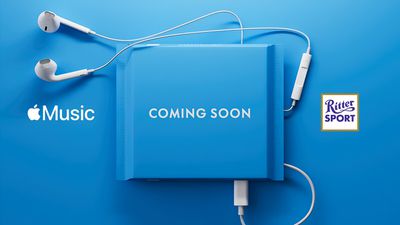
Apple is working with German confectionary brand Ritter Sport to offer a unique Apple Music promotion.
The collaboration, branded as "Limited Edition Ritter Sport x Apple Music," involves promoting iconic albums on Ritter Sport's iconic 100g square chocolate bars (via Macerkopf). There will be a QR code on the back of each bar that links directly to the album on Apple Music and provides a free trial subscription to the service.
Ritter Sport and Apple Music have selected five albums that have shaped German music history across different genres, including Cro's "RAOP," Marteria's "Happy for the Future II," Scorpions' "Crazy World," Sarah Connor's "Mother Tongue," and Helene Fischer's "Farbenspiel," for the series. They are each available on Apple Music in Dolby Atmos.
The promotion begins on Monday, March 2 in Germany, when the chocolate bars will begin to appear in stores across the country. Each bar costs €1.99 and they will be available for a limited time only.
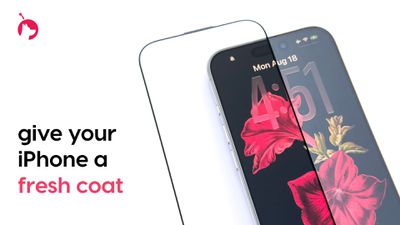
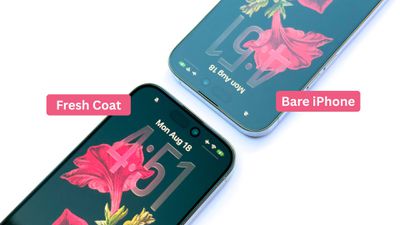
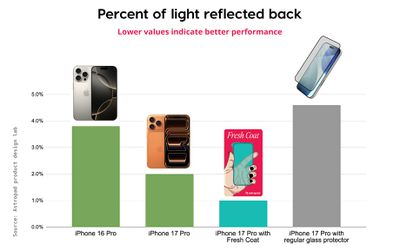
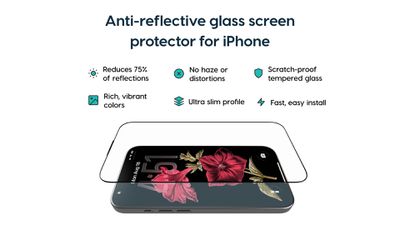
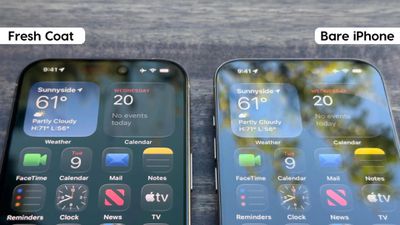
Fresh Coat is a screen protector that Astropad created with an optical-grade anti-reflective coating to reduce glare and provide a better iPhone viewing experience. The technology cuts reflections by 75 percent, while improving contrast and keeping colors vibrant. Unlike other anti-reflective screen protectors on the market, Fresh Coat adds no haze or distortion to the iPhone's display.
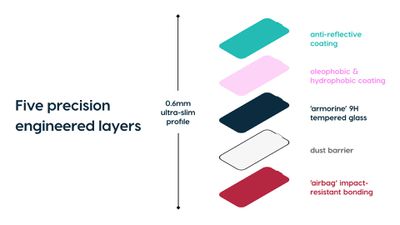
Priced at $30, Fresh Coat is made from a scratch-proof tempered glass that provides protection for the iPhone's display in addition to cutting down on glare and reflections. It's slim and doesn't add bulk to the iPhone even though there are five layers of protective technology at work. From the top down, there's an anti-reflective coating, an oleophobic and hydrophobic coating, a layer of tempered glass, a dust barrier, and an impact-resistant "airbag" bonding.
If you have an iPhone 17, it comes with an anti-reflective coating added by Apple. What you might not know is that you can't use just any screen protector with the iPhone 17. If you put a regular screen protector without an anti-reflective coating on, it nullifies the anti-reflective properties of that added coating.
Since Fresh Coat has its own anti-reflective coating, it improves on Apple's included anti-reflective layer, reducing glare even further. With Fresh Coat, the iPhone's screen is easy to see in any lighting conditions, there's less eye strain, and if you use Dark Mode, it looks even darker.
If you don't have an iPhone 17, Fresh Coat can provide an iPhone 17-style display upgrade, mirroring Apple's own reflection-reducing display coating. Fresh Coat is available for all iPhone 17 models, the iPhone 16 Pro and Pro Max, and the iPhone 15 Pro and Pro Max.
Astropad designed an installation process that's impossible to mess up, so you get perfect alignment on your iPhone without the hassle that comes with most screen protectors.
We have an iPhone 17 in white and a Fresh Coat screen protector for one lucky MacRumors reader. To enter to win, use the widget below and enter an email address. Email addresses will be used solely for contact purposes to reach the winner(s) and send the prize(s). You can earn additional entries by subscribing to our weekly newsletter, subscribing to our YouTube channel, following us on Twitter, following us on Instagram, following us on Threads, or visiting the MacRumorsFacebook page.
Due to the complexities of international laws regarding giveaways, only U.S. residents who are 18 years or older, UK residents who are 18 years or older, and Canadian residents who have reached the age of majority in their province or territory are eligible to enter. All federal, state, provincial, and/or local taxes, fees, and surcharges are the sole responsibility of the prize winner. To offer feedback or get more information on the giveaway restrictions, please refer to our Site Feedback section, as that is where discussion of the rules will be redirected.
The contest will run from today (February 27) at 9:00 a.m. Pacific Time through 9:00 a.m. Pacific Time on March 6. The winner will be chosen randomly on or shortly after March 6 and will be contacted by email. The winner will have 48 hours to respond and provide a shipping address before a new winner is chosen.
This week we tracked quite a few deals across numerous Apple products, including low prices on Apple Watch Series 11, AirPods Max, and iPhone 17 TechWoven cases, all of which are still available today. You'll also find great discounts on portable power stations and Samsung's new Galaxy S26 smartphones below.
Note: MacRumors is an affiliate partner with some of these vendors. When you click a link and make a purchase, we may receive a small payment, which helps us keep the site running.
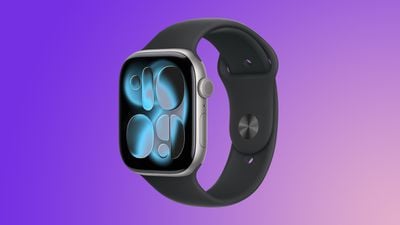
Apple Watch Series 11
What's the deal? Take $100 off Apple Watch Series 11
Amazon this week has all-time low prices on the Apple Watch Series 11, with $100 discounts across select models of the smartwatch. This time around, deals are more sparse and we're only tracking these discounts on three models of the smartwatch.
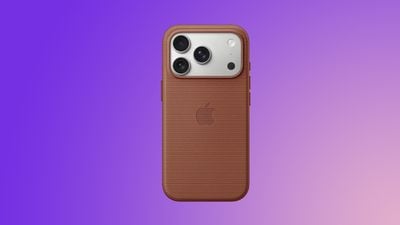
Amazon this week has big discounts across Apple's Clear, Silicone, and TechWoven Cases for the iPhone 17 and iPhone Air lineup. Items on sale include Clear, Silicone, and TechWoven Cases for the iPhone 17, iPhone 17 Pro, iPhone 17 Pro Max, and iPhone Air. We're also tracking a few discounts on other accessories like the FineWoven Wallet with MagSafe and Beats cases.
AirPods
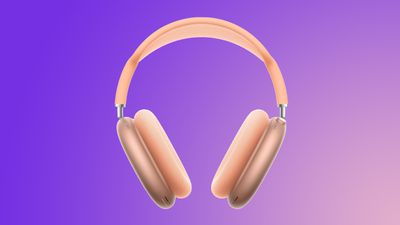
What's the deal? Take $30 off AirPods 4 and $100 off AirPods Max
Amazon this week is back with a notable discount on the USB-C AirPods Max, available for $449.00 in all five colors, down from $549.00. This is one of the first times in a few weeks that we've tracked every color of the AirPods Max on sale at $99 off.
Samsung
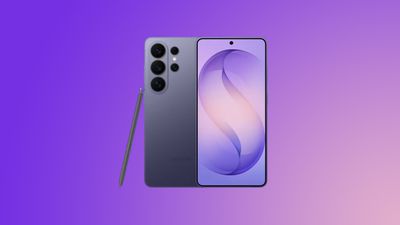
What's the deal? Save on Samsung's newest Galaxy S26 smartphones
Samsung this week debuted pre-orders for its newest line of Galaxy products, including the S26 smartphones and Galaxy Buds4. You can find a few early launch discounts on some of these products, plus discounts on Samsung's most popular monitors and TVs, with notable markdowns on products like The Frame TVs.
Anker and Jackery have introduced big discounts across their most popular portable power stations this week, including up to 56 percent off select models from each company. We're tracking Anker's best deals over at Amazon, while Jackery's discounts can be found on the retailer's own website.
If you're on the hunt for more discounts, be sure to visit our Apple Deals roundup where we recap the best Apple-related bargains of the past week.
Deals Newsletter
Interested in hearing more about the best deals you can find in 2026? Sign up for our Deals Newsletter and we'll keep you updated so you don't miss the biggest deals of the season!
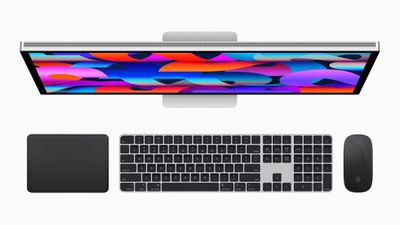
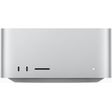
Macworld's Filipe Espósito today again reported that Apple appears to be developing two new Studio Display models with different specs.
Based on lines of code in "internal Apple files," which likely refers to a macOS Tahoe Kernel Debug Kit that leaked online last year, Espósito continues to believe that both of the new Studio Display models will feature ProMotion, enabling up to a 120Hz refresh rate, as well as HDR support for increased brightness and dynamic range.
For the higher-end Studio Display, the report has revealed two more potential upgrades that had yet to be rumored until now, including superior speakers and more and/or higher-spec ports. Apple says the current Studio Display has a "high-fidelity six-speaker system" that supports Spatial Audio, and the monitor has one Thunderbolt 3 port that connects to and charges a Mac, and three USB-C ports for connecting accessories.
The new Studio Display will likely feature at least one Thunderbolt 5 port, to ensure there is enough bandwidth for both 5K resolution at 120Hz and accessories. However, another leaker curiously claimed that at least one of the new Studio Display models will max out at 90Hz, so we will have to see which of these rumors is accurate. A boost to the current 60Hz refresh rate can make videos and scrolling look smoother to the eye.
Espósito said that the higher-end Studio Display could have a 32-inch screen, whereas the lower-end model would likely stick with a 27-inch screen. However, this particular claim was merely speculation, rather than info from the internal Apple files. Keep in mind that with a 32-inch screen, 5K resolution would not be Retina quality, so the resolution would have to increase to 6K like on Apple's higher-end Pro Display XDR.
Display industry expert Ross Young previously said that at least one new Studio Display would feature mini-LED backlighting. If so, perhaps Apple will opt to discontinue its Pro Display XDR with full-array LED backlighting and instead offer both lower-end and higher-end Studio Display configurations. But again, this is just speculation.
Another previously-rumored feature for at least one of the new Studio Display models is an A19 or A19 Pro chip, up from the A13 Bionic chip in the current model. This would contribute to improved performance, camera enhancements, and more.
Altogether, the full set of Studio Display upgrades could include a higher 120Hz refresh rate, HDR support for increased brightness and contrast ratio, improved speakers, Thunderbolt 5 support, mini-LED backlighting, a newer A19 or A19 Pro chip for performance and camera enhancements, and hopefully a larger 32-inch screen.
Apple reportedly plans to release the new Studio Display models in the first half of 2026. The current Studio Display launched in March 2022, alongside the first Mac Studio, so there has been a long wait for a refresh. With a new Apple monitor surfacing in a regulatory database last month, a launch should finally be getting close.
Apple's SVP of services Eddy Cue has revealed that Brazil is Apple TV's second-largest market by subscriber count and its fastest-growing, in an interview with Brazilian newspaper Folha de S. Paulo (via 9to5Mac).
Speaking on the sidelines of Apple's recent media event in Santa Monica where the company previewed its 2026 content slate, Cue acknowledged that Apple has yet to produce any original content in Brazil. Competitors like Netflix, Amazon, and Disney, meanwhile, have turned the country into a major production hub, leaving Apple in catch-up mode.
"It doesn't move as quickly as I'd like, especially if you want to be truly good, but we'll get there," Cue said. "I know Brazilians want quality – I appreciate that – and I also know there's a lot of opportunity in Brazil to create strong content."
Cue also reaffirmed Apple's commitment to theatrical releases through distribution partnerships, pointing to the success of "F1: The Movie," which was released in theaters by Warner Bros. and went on to earn an Oscar nomination. Cue conceded that "the bar for leaving home and going to the movie theater" is getting increasingly higher, but he believes the experience remains irreplaceable.
"There's no substitute for that experience – for watching a film collectively, going on a date at the movies, enjoying a night out with friends or children watching a film," Cue said. "It's something truly unique, and I believe it will become even more valuable over time."
At the time of the interview, Netflix was still in the running to acquire Warner Bros. Asked whether a potential deal could complicate Apple's theatrical distribution arrangements, Cue was unconcerned. "We have a great relationship with the Netflix team – I've known them for a long time – and the same is true of our relationship with Warner," he said. "I know Ted [Sarandos – Netflix CEO] very well. Well enough to believe we'll continue working together in the future."
Netflix has since dropped out of the bidding, with Paramount now widely expected to win ownership of Warner Bros. following regulatory approval. Meanwhile, Apple has struck a U.S. partnership with Netflix to bring the complete latest season of Formula 1: Drive to Survive to Apple TV.
A March 2025 report by The Information revealed that Apple TV subscriptions grew to around 45 million in 2024, but it was still losing more than $1 billion annually. The company has spent more than $5 billion a year on content since the service launched in 2019, but this was reduced by $500 million in 2024 in response to a push for cutbacks from Apple CEO Tim Cook and other executives.
Apple has asked a federal judge to dismiss a proposed class action lawsuit accusing the company of defrauding shareholders by overstating Siri's Apple Intelligence capabilities and misrepresenting its compliance with the Epic Games App Store injunction.
At WWDC in June 2024, Apple previewed two of Siri's most anticipated Apple Intelligence upgrades – personal context and onscreen awareness. The features were supposed to arrive as part of iOS 18 and were promoted the same year when launching the iPhone 16 models, but Apple is still working on them. In 2025, CEO Tim Cook acknowledged in 2025 that developing a "more personal" Siri was "taking a bit longer than we thought."
The delay led Apple to be accused in a March 2025 lawsuit of false advertising and unfair competition. But in a Wednesday filing in San Jose federal court covered by Reuters, Apple argued there is no proof executives knew at the time that either feature would be significantly delayed.
Apple's motion also pushed back on separate claims related to the Epic Games injunction, which required the company to let developers link users to external purchase options outside the App Store's 30 percent commission structure.
Judge Yvonne Gonzalez Rogers found Apple in "willful violation" of that injunction last year after the company introduced a new system that still charged developers a 27 percent fee on some external sales. A federal appeals court partially reversed her sanctions in December.
Apple said it never guaranteed its compliance procedures would be foolproof, and argued the fraud claims were unsubstantiated.
"It is no secret that Apple faced challenges and weathered ups and downs in its stock price in 2025, like many major companies," Apple said. "But plaintiff takes a massive and unsupported leap by claiming that securities fraud caused the temporary price drops."
The lawsuit covers shareholders who suffered losses between May 2024 and May 2025 and is led by South Korea's National Pension Service, the world's third-largest pension fund. Lawyers for the shareholders have not yet responded publicly to Apple's filing.
Apple plans to release a more personalized version of Siri powered by Google Gemini this year. It was expected to be part of iOS 26.4, but Bloomberg's latest report suggests the Siri functionality will not be ready in time to be included in it, so the new features could be pushed to iOS 26.5 or iOS 27.
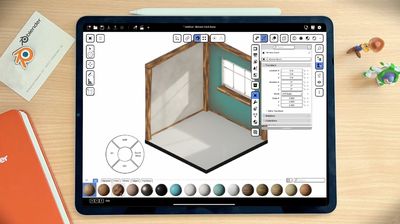
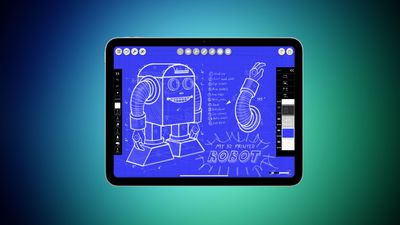
Blender's work on a native iPad version of its open source 3D creation suite has been shelved, according to the development team.
Back in July, Blender revealed that it was developing for iPad, with an iPad Pro version of its desktop software coming first, complete with a fully-featured multitouch interface and support for Apple Pencil Pro. No release date was announced at the time.
Now it doesn't look like that's about to happen anytime soon. In January, a status update appeared on Blender's GitHub page for iPad development saying that the project is on hold until further notice.
No reason for the halt in development was given in the notice. However, as spotted by YouTuber Brad Colbow, in a response to a comment offering help on the project, Blender developer Dalai Felinto said that the team was now focusing on Android tablets first instead.
During the fall at SIGGRAPH in Vancouver, Blender showed a live tech demo of the software running on iPad, so there's still hope that the project isn't completely dead and will resume at some point. We'll update this story if we learn anything more about a development timeline.
The latest Blender build for Apple silicon Macs can be downloaded for free from the Blender website.
Netflix has dropped out of the takeover battle for Warner Bros. Discovery, putting Paramount Skydance on course to win the whole WBD business.
The world's largest streaming service had been pegged to land a deal in which it would acquire Warner Bros., HBO, and HBO Max in a cash-and-stock deal valued at $72 billion in equity and $82.7 billion, including debt. But after Paramount submitted a final offer, valuing WBD at $111bn including debt, Netflix declined to match it.
In an announcement on Thursday, Netflix co-CEOs Ted Sarandos and Greg Peters said:
The transaction we negotiated would have created shareholder value with a clear path to regulatory approval. However, we've always been disciplined, and at the price required to match Paramount Skydance's latest offer, the deal is no longer financially attractive, so we are declining to match the Paramount Skydance bid.
We believe we would have been strong stewards of Warner Bros.' iconic brands, and that our deal would have strengthened the entertainment industry and preserved and created more production jobs in the U.S. But this transaction was always a 'nice to have' at the right price, not a 'must have' at any price.
Netflix shares surged by 8.5% in after-hours trading, indicating relief among investors that the streaming company has not risked overpaying for Warner Bros.
Warner's board said Thursday night that it still recommends Netflix's offer, but now views Paramount's bid as "superior" – its first sign of backing for the suitor that it labeled hostile when the takeover battle began in December.
Warner Bros. CEO David Zaslav said that Paramount's offer "will create tremendous value," and that WBD was "excited about the potential of a combined Paramount Skydance and Warner Bros Discovery."
Assuming Paramount's takeover is successful, it will give its owner Larry Ellison ownership of not only Warner Bros. and HBO, but also news channels CNN and CBS News. However, the deal still needs regulatory approval, so nothing is for certain just yet.
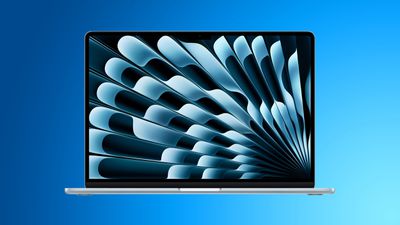
Along with the low-cost MacBook, Apple could introduce a refreshed version of the MacBook Air next week. Most of the focus will be on the new machine, but the MacBook Air is expected to get some useful internal updates.
M5 Chip
The next-generation MacBook Air will adopt the M5 chip, which Apple already introduced in the iPad Pro and MacBook Pro models that came out last year.
Apple's M5 chip uses third-generation 3-nanometer technology, and it features up to a 10-core CPU and up to a 10-core GPU with 3.5x faster performance than the M4 chip.
The M5's multithreaded CPU performance is up to 15 percent faster than the M4, and it offers 30 percent faster GPU performance. Apple added a Neural Accelerator to each GPU core to improve the speeds of GPU-based AI workloads. Unified memory bandwidth is 153GB/s, which is close to a 30 percent improvement over the M4's memory bandwidth. Unified memory architecture lets the chip use a single memory pool for running AI models on device, boosting GPU performance, and improving multithreaded performance in apps, so an upgrade there is meaningful. RAM will continue to start at 16GB, with 24GB and 32GB available as upgrade options.
Third-generation ray-tracing, second-generation dynamic caching, and enhanced shader cores bring improvements to gaming and other system-intensive tasks. An updated 16-core Neural Engine is more energy efficient than before, so we could see battery life improvements.
Storage tiers are likely to stay the same, starting at 256GB with 512GB, 1TB, and 2TB available as upgrade options.
Design
The MacBook Air got a design overhaul in 2022, and there are no signs that Apple is planning for an updated chassis in 2026. Apple often uses the same design for several years before updating, and design refreshes are usually tied to major new features.
There are rumors that the MacBook Air will get an OLED display sometime after Apple launches new MacBook Pro models with OLED technology in late 2026, so we could be waiting for OLED before we get another major design update.
We're expecting Apple to release the same 13-inch and 15-inch size options in 2026. Both will feature the same aluminum unibody design and fanless thermal system, along with a Retina LCD display.
The MacBook Air is likely to continue to offer two Thunderbolt 4/USB-C ports, and the same speaker, microphone, and camera setup.
Pricing
MacBook Air pricing is not expected to change, and it should continue to start at $1,099. There is a possibility that memory upgrades will be more expensive due to DRAM shortages that have driven prices up.
Release Date
Apple CEO Tim Cook teased product announcements that are set to start on Monday, so we could see the MacBook Air as soon as next week.
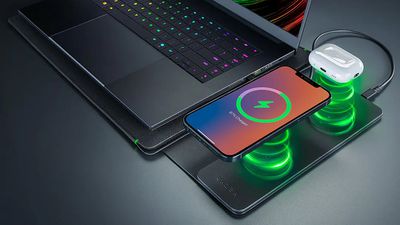
Razer today introduced a new 16-inch laptop sleeve that has an integrated wireless charging feature for smartphones and other small devices like earbuds. Priced at $130, the sleeve includes two MagSafe-compatible wireless charging zones, so it can charge an iPhone and AirPods at the same time.
The wireless charger is integrated into the top of the laptop sleeve, and the magnets serve as a clasp when the sleeve is closed and being used to transport a laptop. Power is delivered through a USB-C cable that can be plugged into a 30W+ power adapter or a Mac.
Charging speeds are limited to 15W, so you won't get full speed wireless charging on newer iPhones that support up to 25W wireless charging. The sleeve has one 15W charging spot for an iPhone and a 5W charging spot for the AirPods. It is not designed to charge two iPhones at once, both because there's just one 15W charger and because of space constraints.
There is built-in padding to keep a MacBook safe from drops, and a plush lining inside protects it from scratches. The exterior is black and made from a polyester material that's designed to resist wear and tear while also protecting a laptop from rain. Reinforced corners ensure no damage in case of accidental bumps.
The sleeve is sized to fit laptops up to 16 inches, so it works with Apple's 16-inch MacBook Pro.
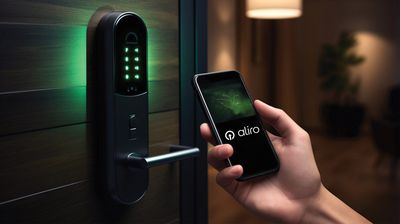
The Connectivity Standards Alliance, which includes Apple, today released the Aliro 1.0 specification. Aliro is a new standard aimed at improving the way that smart door locks work with smartphones and wearables.
Aliro supports interoperability between mobile devices, wearables, and access control readers, so smart locks can work with any smartphone or wearable device without the need for a dedicated app. It is aimed at improving smart locks for the home, but also for corporate offices, universities, and hotels.
Apple, Google, and Samsung support Aliro, and Aliro-enabled locks will be able to be added to wallet apps on iPhone and Android devices. Major smart home companies that produce smart locks have also signed on to support Aliro. The Alliance says that Apple, Allegion, Aqara, Google, HID, Kastle, Kwikset, Last Lock, Nordic Semiconductor, Nuki Home Solutions, NXP Semiconductors, Qorvo, Samsung, and STMicroelectronics will be among the first to achieve Aliro 1.0 certification.
With Aliro, more smart locks should support Apple Home Key for hands-free unlocking with NFC and UWB.
The Aliro 1.0 specification includes a framework for using asymmetric cryptography for secure interactions between user devices and readers, without sacrificing user privacy. It supports multiple communication methods, including NFC, Bluetooth LE, and ultra wideband (UWB).
Aliro will be updated over time to meet new market and ecosystem requirements. Features like secure key sharing will come in the future.
Apple today released visionOS 26.3.1, a minor update to the visionOS 26 operating system. visionOS 26.3.1 comes two weeks after the launch of visionOS 26.3.
visionOS 26.3 can be downloaded on all Vision Pro headsets by navigating to the Settings app, selecting the General section, and choosing the Software Update option. To install an update, the Vision Pro headset needs to be removed, and there is a software progress bar available on the exterior EyeSight display.
According to Apple's release notes for the update, it fixes a flicker issue that could happen when watching sports content with MultiView in the Apple TV app.
Apple today released a new update for Safari Technology Preview, the experimental browser that was first introduced in March 2016. Apple designed Safari Technology Preview to allow users to test features that are planned for future release versions of the Safari browser.
Safari Technology Preview 238 includes fixes and updates for Animations, CSS, Editing, Forms, Networking, Rendering, Scrolling, SVG, Web API, Web Inspector, WebAssembly, and WebRTC.
The current Safari Technology Preview release is compatible with machines running macOS Sequoia and macOS Tahoe, the newest version of macOS.
The Safari Technology Preview update is available through the Software Update mechanism in System Preferences or System Settings to anyone who has downloaded the browser from Apple's website. Complete release notes for the update are available on the Safari Technology Preview website.
Apple's aim with Safari Technology Preview is to gather feedback from developers and users on its browser development process. Safari Technology Preview can run side-by-side with the existing Safari browser and while it is designed for developers, it does not require a developer account to download and use.
One of the new products that we could see next week is a refreshed version of the low-cost iPad. As with the iPad Air, we're not expecting major changes, but it is expected to get some meaningful internal upgrades.
Design
The 12th-generation iPad isn't going to get a design update this year, and we're expecting it to have the same 11-inch edge-to-edge display with Touch ID Side Button and thick bezels.
Apple last updated the iPad's design with the 10th-generation model, giving the device a more modern look to better match the designs of the iPad Pro and iPad Air models. It's still a relatively new design, and Apple doesn't update the low-cost iPad's chassis often.
The low-cost iPad is only available in a single screen size, and it is Apple's thickest tablet at 7mm. It features a Retina LCD display with no ProMotion support, no P3 wide color, and no lamination (display technology that cuts down on glare, provides a more responsive feel, and allows for a thinner size) compared to Apple's other tablets.
Apple makes the low-cost iPad in several fun colors, and we could see some new shades in 2026. Current colors include blue, pink, silver, and yellow.
No changes are expected for the rear camera, front camera, USB-C port, or compatibility with accessories like the Apple Pencil.
A-Series Processor
The low-cost iPad will likely be equipped with Apple's A19 chip, which is the chip that Apple used for the iPhone 17. It is built on a 3-nanometer process and it will offer speed and efficiency improvements over the A16 chip that's in the current model.
The A16 chip that Apple used in 2025 does not support Apple Intelligence, but the A19 does, so that will mark a major update for Apple's affordable tablet. The 2026 model should be able to support Apple Intelligence features that are unavailable with the 2025 model.
The A19 also offers hardware-accelerated ray tracing for gaming improvements. The 11th-generation iPad has 6GB RAM, but Apple will need to bump that up to 8GB for Apple Intelligence.
N1 Chip
Apple introduced its own Wi-Fi and Bluetooth chip, called the N1, in the iPhone 17 models. The N1 was added to the iPad Pro, and it's possible that Apple plans to add the chip to all future devices coming in 2026 and beyond.
The N1 chip supports Wi-Fi 7, Bluetooth 6, and Thread networking technology for smart home devices.
The 11th-generation iPad is limited to Wi-Fi 6, so if the 12th-generation version gets Wi-Fi 7, it will be able to connect to faster 6GHz networks for the first time. Bluetooth 6 would also be an improvement over Bluetooth 5.3. There is a chance that Apple is reserving the N1 chip for its more premium devices, based on leaked internal code. If that's the case, the iPad won't include the N1 chip.
Apple Modem
Apple has designed C1 and C1X modem chips that it has used in iPhones and iPads in 2025, and the next-generation version of the iPad could also get an Apple-designed modem chip for cellular models.
Apple's modem chips are more power efficient than Qualcomm chips while providing similar performance.
Pricing
The 11th-generation iPad is priced starting at $349 for 128GB of storage, and there are so far no indications that pricing is going to change for the 12th-generation model.
Launch Date
Apple will likely launch the low-cost iPad sometime next week, just ahead of the Special Experience planned for March 4.
Global memory scarcity will cause a 13 percent drop in smartphone sales in 2026, according to IDC (via Bloomberg). DRAM is in short supply because AI companies are buying huge quantities of high-bandwidth memory (HBM) for servers in data centers, and manufacturers are prioritizing HBM instead of the memory used in consumer devices.
IDC says that the global memory supply has been drained into next year, putting smartphone makers in a tough spot. Prices have spiked because there's not enough memory to meet production needs, which will cause a smartphone market "crisis like no other."
Smartphone makers are expected to ship 1.1 billion devices in 2026, down from 1.26 billion in 2025.
"The tariffs and pandemic crisis seem a joke compared to this," said IDC Senior Research Director Nabila Popal. "The smartphone market will witness a seismic shift by the time this crisis is over -- in size, average selling prices and competitive landscape. We don't expect the situation to ease up until mid-2027, at least."
Cheap Android smartphones will be impacted most heavily by increasing DRAM costs, but Apple is well-positioned to avoid major impact because it focuses on more expensive, premium devices. Apple has more profit margin to work with and is better able to secure available DRAM supply.
Apple is expected to absorb higher memory costs in the short term, but it isn't unaffected by the shortages. Just today, a report suggested Apple is paying Samsung twice as much for the LPDDR5X memory chips that it needs for producing iPhone 17 models.
During Apple's January earnings call, Apple CEO Tim Cook said that memory price increases had a "minimal impact" on Apple's gross margin during the 2025 holiday quarter, but the company is expecting a "bit more of an impact" during the first calendar quarter of 2026.
IDC says that even when the DRAM shortage is resolved, memory prices are not expected to return to 2025 levels, so there could be a permanent shift toward higher-priced smartphones.
After several weeks of testing, Apple today released Xcode 26.3, an update that allows developers to use tools like Anthropic's Claude Agent and OpenAI's Codex for app creation directly in Xcode.
With support for agentic coding, Xcode can complete more complex app development tasks autonomously. Apple worked with Anthropic and OpenAI to configure their agents for use in Xcode and to ensure that AI models can access a full range of Xcode features.
Agents are able to create new files, examine code structure of a project, build a project directly and run tests, take image snapshots to check their work, and access Apple's full, up-to-date developer documentation.
Along with OpenAI and Anthropic models, Xcode 26.3 is compatible with any agent or tool that uses the open standard Model Context Protocol.
The iPhone and iPad can be used with NATO restricted level classified information after meeting NATO's information assurance requirements, Apple said today. No special software or settings are required.
Apple's devices are the first and only consumer mobile products that have reached this government certification level after security testing and evaluation by the German government. iPhones and iPads running iOS 26 and iPadOS 26 are now certified for use with classified data in all NATO nations.
In an announcement of the security clearance, Apple touted its security features.
Apple designs security into all of its products from the start, ensuring the most sophisticated protections are built in across hardware, software, and Apple silicon. This unique approach allows Apple users to benefit from industry-leading security protections such as best-in-class encryption, biometric authentication with Face ID, and groundbreaking features like Memory Integrity Enforcement. These same protections are now recognized as meeting stringent government and international security requirements, even for restricted data.
Apple's vice president of security Ivan Krstić said the achievement reflects Apple's commitment to security.
This achievement recognizes that Apple has transformed how security is traditionally delivered. Prior to iPhone, secure devices were only available to sophisticated government and enterprise organizations after a massive investment in bespoke security solutions. Instead, Apple has built the most secure devices in the world for all its users, and those same protections are now uniquely certified under assurance requirements for NATO nations -- unlike any other device in the industry.
Apple's iOS 26 and iPadOS 26 updates are listed on the NATO Information Assurance Product Catalogue, which says Apple devices are able to provide secure access to Mail, Calendar, and Contacts with built-in apps.
Note: Due to the political or social nature of the discussion regarding this topic, the discussion thread is located in our Political News forum. All forum members and site visitors are welcome to read and follow the thread, but posting is limited to forum members with at least 100 posts.
Apple's imminent series of announcements will focus on chip updates, rather than redesigned devices, according to a known leaker.
In a new post, the Weibo leaker known as "Fixed Focus Digital" said Apple's scheduled announcements for next week focus on refreshed devices with basic generational chip upgrades, rather than more fundamental redesigns.
Successors to the iPhone 16e, entry-level iPad, iPad Air, M4 MacBook Air, M4 Pro and M4 Max MacBook Pro, Apple TV, and HomePod are all rumored to arrive soon, offering little more than chip refreshes. The most significant new device in the immediate pipeline is the low-cost MacBook, which is set to feature an iPhone's A-series chip. Little is known about what the machine will look like beyond offering a 12.9-inch LCD display and a selection of fun color options, and there's a high chance it will re-use components from existing devices.
Apple devices with major new designs are still expected to arrive this year, such as the first foldable iPhone, a smart home hub product, and the M6-series MacBook Pro, but largely not until the second-half of the year.


 Note: MacRumors is an affiliate partner with some of these vendors. When you click a link and make a purchase, we may receive a small payment, which helps us keep the site running.