Apple Previews New Accessibility Features Powered by Apple Intelligence - MacRumors
Skip to Content

Apple Previews New Accessibility Features Powered by Apple Intelligence

Apple today announced a suite of accessibility updates that use Apple Intelligence to expand capabilities across VoiceOver, Magnifier, Voice Control, and Accessibility Reader, with additional new features for generated subtitles and wheelchair control via Apple Vision Pro.
iOS 27 Accessibility Feature
‌Apple Intelligence‌ powers several of the new features coming later this year:

  • VoiceOver Image Explorer uses ‌Apple Intelligence‌ to produce more detailed descriptions of images throughout the system, including photographs, scanned bills, and personal records. Users can also press the Action button on the iPhone to ask questions about what the camera viewfinder sees, with follow-up questions supported in natural language.
  • Magnifier brings Apple Intelligence-powered visual descriptions to its high-contrast interface for users with low vision, also accessible via the Action button, with support for spoken commands like "zoom in" or "turn on flashlight."
  • Voice Control gains natural language input so users can describe onscreen elements conversationally, such as "tap the guide about best restaurants" or "tap the purple folder," rather than memorizing exact label names or numbers. Apple says the feature can also help where on-screen elements lack proper accessibility labels.
  • Accessibility Reader gains support for more complex document layouts including scientific articles with multiple columns, images, and tables, plus on-demand summaries and built-in translation that retains a user's custom font, color, and formatting preferences.
  • Generated Subtitles use on-device speech recognition to automatically transcribe spoken audio in uncaptioned video content, including clips recorded on iPhone, received from friends and family, or streamed online, across the iPhone, iPad, Mac, Apple TV, and ‌Apple Vision Pro‌. Initially available in English in the U.S. and Canada.
  • Power Wheelchair Control for Apple Vision Pro uses the headset's precision eye-tracking system as an alternative input method for users who cannot operate a joystick, launching with support for the Tolt and LUCI alternative drive systems in the U.S. via Bluetooth and wired connections.

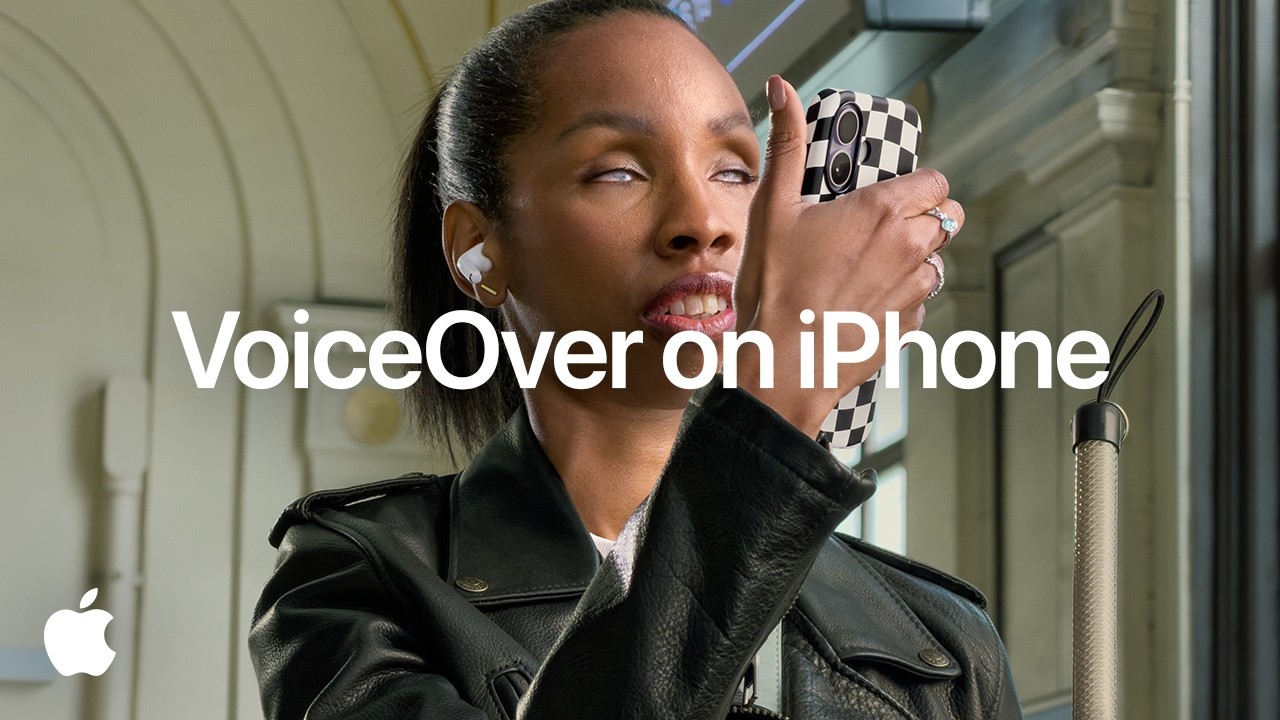
Apple shared a video about the new Voiceover feature:
Apple also announced a number of smaller additions coming later this year:

  • Vehicle Motion Cues are coming to visionOS to help reduce motion sickness when using Vision Pro as a passenger in a moving vehicle.
  • Apple Vision Pro will support face gestures for performing taps and system actions, plus a new way to select elements with one's eyes while using Dwell Control.
  • Made for iPhone hearing aids will gain more reliable pairing and handoff between Apple devices, with an improved setup experience across iOS, iPadOS, macOS, and visionOS.
  • Name Recognition, which notifies users who are deaf or hard of hearing if someone says their name, expands to more than 50 languages globally.
  • Larger Text support is coming to tvOS, allowing viewers with low vision to increase onscreen text size.
  • Sony Access controller is gaining support as a game controller on iOS, iPadOS, and macOS, with full button and thumbstick customization and support for combining two controllers.
  • FaceTime gains a new API allowing sign language interpretation app developers to add a human interpreter to an ongoing video call.
  • Touch Accommodations gain a new way to personalize setup in iOS and iPadOS.

Starting today, the Hikawa Grip & Stand for iPhone, an adaptive MagSafe accessory designed by Los Angeles-based designer Bailey Hikawa, is available globally in three new colors via the Apple Store online. The accessory was developed in collaboration with individuals with disabilities affecting grip, strength, and mobility, and is now available internationally via a partnership with PopSockets.

All of the announced features are expected to arrive later this year. Voice Control's natural language capabilities will be available in English in the U.S., Canada, the UK, and Australia.

Today's announcement is part of Apple's annual tradition of previewing upcoming accessibility features ahead of Global Accessibility Awareness Day, which falls on the third Thursday of May each year. While no firm release date is given for the features, they typically arrive with Apple's new operating system updates in the fall. This year that means iOS 27, iPadOS 27, macOS 27, tvOS 27, and visionOS 27, all of which are expected to be unveiled at WWDC in June before shipping in September.
Related Roundups: iOS 27, iPadOS 27

Popular Stories

Apple Silicon AI Optimized Feature Siri

Apple's Overhauled Siri Will Reportedly Run on Nvidia's Blackwell Chips

Thursday June 4, 2026 2:38 am PDT by
Apple will rely on Google's fleet of Nvidia chips to power its overhauled version of Siri when it launches in September, according to a new report from The Information. Last week, the outlet reported that Apple plans to highlight the on-device AI capabilities of its devices at WWDC next week, but queries that require cloud-based processing will still fall back on one of Google's large Gemini ...
Apple Intelligence General Feature 2

Google Gemini Could Be the Ceiling on Apple's AI Ambitions

Monday June 8, 2026 5:31 am PDT by
Apple analyst Ming-Chi Kuo says the real test of today's WWDC keynote is whether Apple can deliver better AI experiences than Google using the same Gemini models. Apple is using Google's Gemini to underpin the revamped version of Siri and new Apple Intelligence features. The key takeaway from WWDC, Kuo argues in a new post on X, will not be the short-term market reaction after the event. It...
apple intelligence architecture

Apple Reveals New AI Architecture Built Around Google Gemini Models

Monday June 8, 2026 10:38 am PDT by
Apple today announced a major overhaul of its Apple Intelligence platform, revealing a new architecture built on foundation models developed in collaboration with Google using the technologies behind the Gemini family. The new architecture centers on Apple Foundation Models co-developed with Google, which Apple says are adapted to run both on-device and on servers through its existing...

Top Rated Comments

John Apple Avatar
6 weeks ago

Accessibility Features powered by Apple Intelligence 🔄 TRASNLATING 🔄 The less fortunate must pay more for our devices to be usable to them
I think you might just be the MacRumors user with the worst takes ngl
Score: 11 Votes (Like | Disagree)
6 weeks ago

Accessibility Features powered by Apple Intelligence 🔄 TRASNLATING 🔄 The less fortunate must pay more for our devices to be usable to them
Except all these features are available in a free software update, so no idea what you are on about
Score: 9 Votes (Like | Disagree)
6 weeks ago

Apple today announced ('https://www.apple.com/newsroom/2026/05/apple-unveils-new-accessibility-features-and-updates-with-apple-intelligence/') a suite of accessibility updates that use Apple Intelligence to expand capabilities across VoiceOver, Magnifier, Voice Control, and Accessibility Reader, with additional new features for generated subtitles and wheelchair control via Apple Vision Pro.


Apple Intelligence powers several of the new features coming later this year:


* VoiceOver Image Explorer uses Apple Intelligence to produce more detailed descriptions of images throughout the system, including photographs, scanned bills, and personal records. Users can also press the Action button on the iPhone to ask questions about what the camera viewfinder sees, with follow-up questions supported in natural language.
* Magnifier brings Apple Intelligence-powered visual descriptions to its high-contrast interface for users with low vision, also accessible via the Action button, with support for spoken commands like "zoom in" or "turn on flashlight."
* Voice Control gains natural language input so users can describe onscreen elements conversationally, such as "tap the guide about best restaurants" or "tap the purple folder," rather than memorizing exact label names or numbers. Apple says the feature can also help where on-screen elements lack proper accessibility labels.
* Accessibility Reader gains support for more complex document layouts including scientific articles with multiple columns, images, and tables, plus on-demand summaries and built-in translation that retains a user's custom font, color, and formatting preferences.
* Generated Subtitles use on-device speech recognition to automatically transcribe spoken audio in uncaptioned video content, including clips recorded on iPhone, received from friends and family, or streamed online, across the iPhone, iPad, Mac, Apple TV, and Apple Vision Pro. Initially available in English in the U.S. and Canada.
* Power Wheelchair Control for Apple Vision Pro uses the headset's precision eye-tracking system as an alternative input method for users who cannot operate a joystick, launching with support for the Tolt and LUCI alternative drive systems in the U.S. via Bluetooth and wired connections.


Apple also announced a number of smaller additions coming later this year:

* Vehicle Motion Cues are coming to visionOS to help reduce motion sickness when using Vision Pro as a passenger in a moving vehicle.
* Apple Vision Pro will support face gestures for performing taps and system actions, plus a new way to select elements with one's eyes while using Dwell Control.
* Made for iPhone hearing aids will gain more reliable pairing and handoff between Apple devices, with an improved setup experience across iOS, iPadOS, macOS, and visionOS.
* Name Recognition, which notifies users who are deaf or hard of hearing if someone says their name, expands to more than 50 languages globally.
* Larger Text support is coming to tvOS, allowing viewers with low vision to increase onscreen text size.
* Sony Access controller is gaining support as a game controller on iOS, iPadOS, and macOS, with full button and thumbstick customization and support for combining two controllers.
* FaceTime gains a new API allowing sign language interpretation app developers to add a human interpreter to an ongoing video call.
* Touch Accommodations gain a new way to personalize setup in iOS and iPadOS.


Starting today, the Hikawa Grip & Stand for iPhone, an adaptive MagSafe accessory designed by Los Angeles-based designer Bailey Hikawa, is available globally in three new colors via the Apple Store online. The accessory was developed in collaboration with individuals with disabilities affecting grip, strength, and mobility, and is now available internationally via a partnership with PopSockets.

All of the announced features are expected to arrive later this year. Voice Control's natural language capabilities will be available in English in the U.S., Canada, the UK, and Australia.

Today's announcement is part of Apple's annual tradition of previewing upcoming accessibility features ahead of Global Accessibility Awareness Day ('https://accessibility.day'), which falls on the third Thursday of May each year. While no firm release date is given for the features, they typically arrive with Apple's new operating system updates in the fall. This year that means iOS 27, iPadOS 27, macOS 27, tvOS 27, and visionOS 27, all of which are expected to be unveiled at WWDC in June before shipping in September.
Article Link: Apple Previews New Accessibility Features Powered by Apple Intelligence ('https://www.macrumors.com/2026/05/19/new-accessibility-features-with-apple-intelligence/')
For all my frustrations with Apple, I do appreciate their investments in accessibility. I don't benefit from it directly but it is something I'm glad they continue to do. I believe they've been a leader in this (at least among mainstream devices).
Score: 7 Votes (Like | Disagree)
6 weeks ago

Wait a minute. The user can't operate a joystick but is going to have a VR headset on?
Yes.
Vision Pro is already being used by people with limited mobility.
Score: 6 Votes (Like | Disagree)
axantas Avatar
6 weeks ago


* Power Wheelchair Control for Apple Vision Pro uses the headset's precision eye-tracking system as an alternative input method for users who cannot operate a joystick, launching with support for the Tolt and LUCI alternative drive systems in the U.S. via Bluetooth and wired connections.

I am fortunate, not needing any of these supporting controls, but imagine, what this means for them who need it. Remember Stephen Hawking. This must be an incredible addition to their independence. I am really thrilled to read that.
Score: 5 Votes (Like | Disagree)
6 weeks ago

This year that means iOS 20, iPadOS 20, macOS 16, tvOS 20, and visionOS 3, all of which are expected to be unveiled at WWDC in June before shipping in September.

It does?
Interesting, can’t wait to go from 26.5 to… iOS 20 Beta 1.
Score: 5 Votes (Like | Disagree)