Apple CEO Tim Cook believes that his company will have opportunities to deliver "innovations that have never been seen before" this year.
"As I said at the beginning of my remarks, this was, in so many ways, a remarkable quarter for Apple, and we're excited for all the opportunities we'll have in the year ahead to deliver innovations that have never been seen before and enrich the lives of users every step of the way," said Cook, on an earnings call on Thursday.
Cook hypes up Apple's future on every earnings call, but "innovations that have never been seen before" is particularly bold wording compared to his usual comment about how the company's product pipeline is stronger than ever.
Google Maps now lets you talk to Gemini while following walking or cycling directions. The latest update is an extension to the AI chatbot's existing conversational navigation feature in driving mode that rolled out in November.
You can now ask Gemini hands-free questions without leaving the navigation screen. While walking, for example, you can ask things like "Tell me more about this neighborhood" or "Are there cafes with a bathroom along my route?" Cyclists can also check their ETA without taking their hands off the handlebars.
The embedded video below gives you an idea of how Gemini already works during driving navigation.
Google says the feature addresses the practical problem of typing while moving, which is awkward at best and dangerous at worst. The Gemini integration also supports follow-up questions, so you could, for example, ask for a budget-friendly restaurant with vegan options, then follow up with questions about parking.
Beyond discovery queries, users can also issue navigation commands like "Add stop," "Show alternative routes," or "Mute guidance." You can also ask practical questions such as "What's my next turn?" or "What's the weather like at my destination?"
To activate Gemini during navigation, tap the Gemini icon in the top-right corner or use the "Hey Google" invocation.
The feature is available now worldwide on iOS wherever Gemini is supported, with Android availability rolling out gradually.
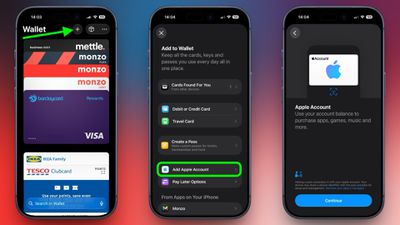
Apple has discontinued the iPhone Upgrade Program in the United Kingdom, moving to a more traditional financing system.
The change appears to be related to Apple ending its partnership with Barclays bank, which supported the iPhone Upgrade Program in the UK. The iPhone Upgrade Program webpage in the country now says:
The iPhone Upgrade Program is coming to an end, but we think you'll love what's next.
You don't need to do anything right now, just keep making your remaining payments. When it's time for your next iPhone, the Flexible Finance Account will offer you a new, more flexible way to upgrade.
The iPhone Upgrade Program allows customers to get a new iPhone annually with AppleCare+ included for a monthly fee. It essentially provides a 0% APR, 20 or 24-month loan, usually with an upfront payment. After 11-12 payments, users can upgrade to the latest model, provided they trade in their current device in good condition.
To replace the program in the UK, Apple has debuted a new "Flexible Finance Account" in partnership with Creation.
The Flexible Finance Account provided by Creation is a line of credit that lets you spread the cost of your next Apple device, and it's available exclusively at the Apple Store. The good news is, it gives you even more options when it's time for the latest iPhone. Whether applying in-store or online, choose a plan that works for you and get ready to upgrade.
When a new iPhone is released, users can trade in their old device, and use the credit to pay off their associated plan.
Creation and PayPal Credit now fully replace Barclays for general Apple device financing in the UK. The iPhone Upgrade Program continues to be available in other countries.
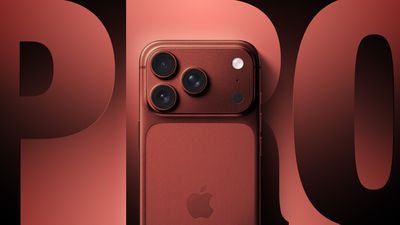
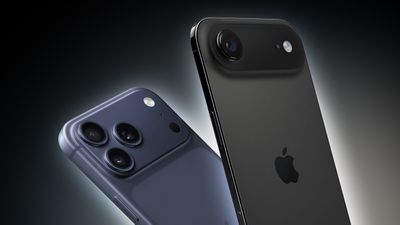
Apple's rumored plan to split its iPhone launch cycle beginning this year has gained additional credibility, with a new report from Nikkei Asia corroborating earlier claims from The Information, Bloomberg, and Apple analyst Ming-Chi Kuo.
According to Nikkei's sources, Apple will prioritize its first foldable iPhone along with iPhone 18 Pro and iPhone 18 Pro Max models for the second half of 2026, while the standard iPhone 18 will ship in the first half of 2027.
An updated iPhone 18e is also expected to appear in the first half of 2027. Nikkei's report does not mention this. It does note however that a second-generation iPhone Air is in Apple's pipeline, though it is not expected this year.
The staggered approach aims to both optimize resources and maximize Apple's revenue from premium models amid rising memory chip costs and supply chain pressures, according to the report.
One supplier executive told Nikkei that a smoothly functioning supply chain is "one of the key challenges" this year, adding that a marketing strategy change also factored into Apple's decision to prioritize its premium devices.
The report also notes that Apple is facing additional pressure as some of its suppliers have shifted resources toward AI companies like Nvidia, Google, and Amazon. Notably, Apple explicitly mentioned iPhone supply constraints during its recent earnings call on Thursday.
The pressure comes at a key time for Apple's ambitious new device: mass producing a foldable iPhone requires more complicated manufacturing techniques and new materials, so it's crucial for Apple to minimize production issues leading up to and during its expected launch in the fall.
For Apple's part, it has not officially confirmed any changes to its traditional annual fall iPhone release schedule.
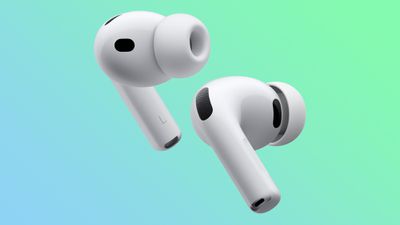
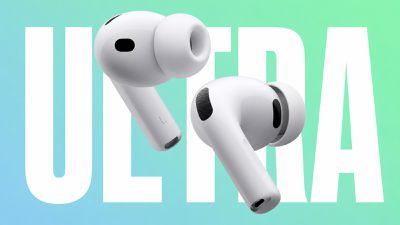
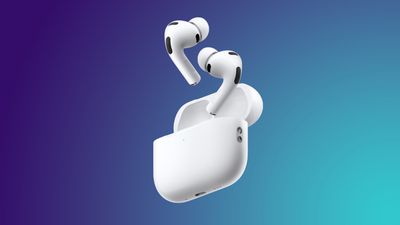
AirPods Pro 3 demand was so strong after the earbuds launched in September that their popularity reportedly "caught Apple off guard."
"AirPods Pro 3 were supply-constrained during the quarter, and we think we would have grown year over year if we would not have been constrained," Apple CEO Tim Cook told Reuters, in a report published alongside Apple's record-breaking earnings results for the fourth quarter of the 2025 calendar year.
Cook was referring to Apple's Wearable, Home, and Accessories segment, which saw around a 2% drop in revenue year-over-year. His comment implies that if Apple had realized AirPods Pro 3 were going to be such a hit, the company could have had more inventory ready to ship and might have actually had revenue growth in this segment.
AirPods Pro 3 no longer have any extended delivery delays on Apple's online store, so it would appear that Apple has caught up on supply by now.
AirPods Pro 3 feature increased active noise cancellation, improved sound quality, longer battery life per charge, heart rate monitoring during workouts, improved fit for many users, increased water resistance, a new XXS ear tip size, and more.
Cook said that rising memory chip prices had a "minimal impact" on Apple's gross margin in the fourth quarter of the 2025 calendar year, but he does expect a "bit more of an impact" on the company's gross margin in the current quarter.
Cook added that Apple is aware of the rising prices and "will look at a range of options to deal with that" over the long term, if necessary.
Apple reported record-breaking revenue of $143.8 billion last quarter, up 16% year-over-year, and it is predicting similar 13% to 16% year-over-year growth and gross margin of 48% to 49% in the current quarter, so the company is still reporting impressive earnings results despite concerns surrounding memory chip prices.
There are now more than 2.5 billion active Apple devices, the company announced today.
"We are also excited to announce that our installed base now has more than 2.5 billion active devices, which is a testament to incredible customer satisfaction for the very best products and services in the world," said Apple CEO Tim Cook, in a press release announcing the company's record-breaking earnings results.
Apple said it had more than 2.35 billion active devices in the year-ago quarter, and the number continues to rise. It shows that Apple has a massive opportunity to sell services, ranging from Apple Music subscriptions to iCloud+ storage plans to the all-new Apple Creator Studio bundle with Final Cut Pro, Logic Pro, Pixelmator Pro, and more apps.
Apple today reported earnings results for the fourth quarter of the 2025 calendar year, including record-breaking $143.8 billion revenue that was up 16% year-over-year. These results were driven in part by exceptionally strong iPhone sales.
iPhone revenue in the quarter was $85.2 billion, a new all-time high. That is up from $69.1 billion in the year-ago quarter, a 23% increase.
"iPhone had its best-ever quarter driven by unprecedented demand, with all-time records across every geographic segment," said Apple CEO Tim Cook, in Apple's press release announcing its earnings results. Cook told CNBC's Steve Kovach that demand for the iPhone last quarter was "simply staggering" and beat Apple's expectations.
The latest iPhone lineup includes the iPhone 17, iPhone Air, iPhone 17 Pro, and iPhone 17 Pro Max. Apple does not break down iPhone revenue on a model-by-model basis, and it did not comment on exactly which models were most popular. However, it did broadly state that iPhone revenue in the quarter was driven by the "iPhone 17 family."
The quarter encompassed the 2025 holiday shopping season, so it is safe to say that a lot of people were gifted a shiny new iPhone last month.
Apple today announced financial results for the first fiscal quarter of 2026, which corresponds to the fourth calendar quarter of 2025.
For the quarter, Apple posted revenue of $143.8 billion and net quarterly profit of $42.1 billion, or $2.84 per diluted share, compared to revenue of $124.3 billion and net quarterly profit of $36.3 billion, or $2.40 per diluted share, in the year-ago quarter.
Apple set all-time records during the quarter for total revenue, earnings per share, iPhone revenue, and services revenue. Total revenue was up 16 percent year-over-year, while earnings per share rose by 19 percent.
Gross margin for the quarter was 48.2 percent, compared to 46.9 percent in the year-ago quarter. Apple also declared a quarterly dividend payment of $0.26 per share, payable on February 12 to shareholders of record as of February 9.
"Today, Apple is proud to report a remarkable, record-breaking quarter, with revenue of $143.8 billion, up 16 percent from a year ago and well above our expectations," said Tim Cook, Apple's CEO. "iPhone had its best-ever quarter driven by unprecedented demand, with all-time records across every geographic segment, and Services also achieved an all-time revenue record, up 14 percent from a year ago. We are also excited to announce that our installed base now has more than 2.5 billion active devices, which is a testament to incredible customer satisfaction for the very best products and services in the world."
For the current quarter ending in March, Apple is projecting year-over-year revenue growth of 13% to 16% and gross margin between 48% and 49%.
Apple will provide live streaming of its fiscal Q1 2026 financial results conference call at 2:00 pm Pacific, and MacRumors will update this story with coverage of the conference call highlights.
The non-profit Electronic Frontier Foundation (EFF) today launched an "Encrypt It Already" campaign that calls on tech companies such as Apple, Google, Meta, and others to implement or expand end-to-end encryption on their platforms.
iCloud already provides end-to-end encryption for more than a dozen data categories by default. For users looking for additional protection, Apple offers an optional feature called Advanced Data Protection, which extends end-to-end encryption to iCloud Backup, Notes, Photos, Voice Memos, and more. But, the EFF wants Apple to go further.
For example, the EFF said Apple and Google should deliver on a promise to implement end-to-end encryption for RCS messaging. Last year, Apple said it planned to add support for end-to-end encrypted RCS messages to the Messages app in future iOS, iPadOS, macOS, and watchOS updates, but it did not provide a specific timeframe.
Starting with the iOS 26.3 beta, Apple appears to be laying the groundwork for carriers to be able to support end-to-end encryption for RCS messaging.
iMessage has already supported end-to-end encryption by default since 2011.
The EFF also called on Apple and Google to offer users per-app AI permissions, so Apple Intelligence and Google Gemini can be turned off in certain apps.
The non-profit organization said it is also important how tech companies communicate new implementations of end-to-end encryption. It encouraged the companies to write blog posts that summarize key details, publish technical papers and user documentation that go into further detail, and follow best practices for data minimization.
The EFF encourages people to use Apple's feedback form to let the company know that additional end-to-end encryption support is important to them.
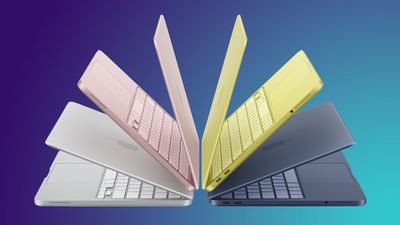
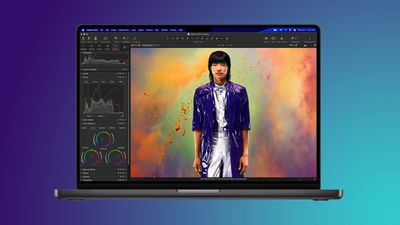
The launch of Apple Creator Studio on Wednesday would have been a fitting opportunity for Apple to unveil new MacBook Pro models with M5 Pro and M5 Max chips, but unfortunately it looks like that was nothing more than wishful thinking.
For now, all we have is a broad timeframe from Bloomberg's Mark Gurman, who expects new MacBook Pro models "in the first half of the year."
The next window for Apple to update the MacBook Pro might be tied to the upcoming release of macOS 26.3. In October, AppleInsider's Marko Zivkovic said the MacBook Pro models with M5 Pro and M5 Max chips are "expected to ship with macOS 26.3," at least as of the time that he wrote that. macOS 26.3 remains in beta testing, but it should be coming out soon, with a public release expected in the first half of February.
Like the Apple Creator Studio launch, though, the release of macOS 26.3 could come and go without any new MacBook Pro models. But, until a more specific release date is rumored, this is all we have to go on for now.
Keep in mind that Apple's marketing chief Greg Joswiak has often put out a social media teaser for upcoming launches lately, including for the 14-inch MacBook Pro with the standard M5 chip most recently. He did not put out a teaser before the new AirTag, but that was merely an accessory. So, perhaps we will have to wait for that.
Beyond the M5 Pro and M5 Max chips, the next MacBook Pro models are not expected to have any major changes. We recommend skipping the next models, unless you really need to upgrade, as the MacBook Pro is expected to receive a major redesign with an OLED touch screen, a thinner case, and more as soon as late 2026.
While reports have said there is a chance that the redesigned MacBook Pro does not arrive until 2027, there is precedent for two MacBook Pro refreshes in one year. In 2023, Apple released MacBook Pro models with M2 Pro and M2 Max chips in January, followed by models with M3 Pro and M3 Max chips in October.
In the meantime, the wait for the models with the M5 Pro and M5 Max chips continues.
Apple today confirmed to Reuters that it has acquired Q.ai, an Israeli startup that is working on artificial intelligence technology for audio.
Apple paid close to $2 billion for Q.ai, according to sources cited by the Financial Times. That would make this Apple's second-biggest acquisition ever, after it paid $3 billion for the popular headphone and audio brand Beats in 2014.
Q.ai has developed technology that can "analyze facial expressions" to understand "silent speech," according to the Financial Times.
"Patents filed by Q.Ai show its technology being used in headphones or glasses, using 'facial skin micro movements' to communicate without talking," the report said, adding that this could pave the way for "non-verbal discussions" with Siri.
Q.ai CEO Aviad Maizels previously founded another Israeli startup, PrimeSense, which was also acquired by Apple in 2013. Apple used PrimeSense's technology to develop Face ID, which debuted on the iPhone X in 2017.
Q.ai's founding team will join Apple, including Maizels, Yonatan Wexler, and Avi Barliya.
Apple's chipmaking chief Johny Srouji described Q.ai as "a remarkable company that is pioneering new and creative ways to use imaging and machine learning," in a statement shared with Reuters. "We're thrilled to acquire the company, with Aviad at the helm, and are even more excited for what's to come."
Note: Due to the political or social nature of the discussion regarding this topic, the discussion thread is located in our Political News forum. All forum members and site visitors are welcome to read and follow the thread, but posting is limited to forum members with at least 100 posts.
Apple's new AirTag introduces a series of small improvements, so how does it compare to the original model from 2021?
The second-generation AirTag arrives five years after the original, bringing improvements to tracking range, speaker output, and internal design while retaining the same outward design and accessory compatibility. At the same time, first-generation AirTags remain available from some retailers at reduced prices, raising the question of whether the newer model is worth choosing over the original, or whether the earlier AirTag still makes sense as a lower-cost option.
The comparison below outlines every difference between the two generations, including Apple-announced feature upgrades and hardware changes identified through teardowns. While both models perform the same core function of tracking items through the Find My network, there are some small differences worth noting:
Precision Finding on iPhone and Apple Watch (Series 9 and later and Ultra 2)
Earlier Bluetooth implementation
Upgraded Bluetooth with increased range
Bluetooth identifiers rotate at standard intervals
Bluetooth identifiers rotate more frequently
Standard speaker volume
Up to 50% louder speaker
Chime note in F
Chime note in G
Works on earlier supported iOS versions
Requires iOS 26.2.1 or later
Reset without a required wait between battery removals
Reset requires battery out for at least five seconds each cycle
11g weight
11.8g weight (around 7% heavier)
Back text listing "Assembled in China" and "Designed by Apple"
Back text listing IP67, NFC, and Find My
Thicker main PCB
Thinner main PCB with revised battery connectors, and additional test pads and markings
Smaller speaker coil
Slightly larger speaker coil
Speaker magnet more easily removable
Speaker magnet more firmly secured and harder to remove
Wider box with flat printed text and plastic pull tabs
Redesigned narrower box with updated artwork, raised UV printed text, and paper pull tabs
Folio-style inner tray holding up to two rows of two AirTags
Redesigned inner tray with simpler design holding up to four AirTags
For buyers choosing between the two AirTag models, the decision depends less on basic tracking and more on how and where an AirTag is typically used. Both generations rely on the same Find My network for long-distance location updates, offer similar battery life, and work with the same accessories, so neither model is considerably better for general item tracking.
The second-generation AirTag is likely to benefit users who frequently rely on Precision Finding rather than approximate location. The extended Ultra Wideband range makes it easier to determine the specific location of items, while the louder speaker improves audibility in noisy spaces or when an AirTag is buried inside a bag or suitcase. Support for Precision Finding on compatible Apple Watch models also makes the newer AirTag more convenient for users who often leave their iPhone behind.
The first-generation AirTag remains a practical option for the overwhelming majority of use cases, such as tracking keys, backpacks, or household items that are usually misplaced within short distances. If available at a meaningful discount, it may offer better value for users who do not need Precision Finding at extended range, do not use an Apple Watch for item location, or simply want basic Find My functionality at the lowest cost.
For existing AirTag owners, there is certainly no pressing need to upgrade. For new buyers, the second-generation AirTag simply offers the most complete feature set and greater flexibility going forward, acting as a moderate specification bump over the previous model.
Following a quiet start to 2026, the final week of January has been a busy one for Apple so far. There are new versions of the AirTag and the Black Unity band for the Apple Watch, and the Apple Creator Studio bundle is now available.
Apple also released iOS 26.2.1 and watchOS 26.2.1 updates, and iOS 26.3 beta testing continues.
While the launch of Apple Creator Studio would have been a fitting opportunity for Apple to unveil new MacBook Pro models with M5 Pro and M5 Max chips, unfortunately it looks like that proved to be nothing more than wishful thinking.
We have recapped our coverage of everything new below.
Amazon this week has a few notable sales from popular brands like Anker, Ecovacs, and Jackery. These include discounts on everything from MagSafe-compatible chargers to portable power stations and robot vacuums.
Note: MacRumors is an affiliate partner with Amazon. When you click a link and make a purchase, we may receive a small payment, which helps us keep the site running.
Amazon has discounts on multiple Anker charging accessories, including products like the 3-in-1 MagSafe-Compatible Charging Cube for $99.98, down from $149.95 and the SOLIX C300 Power Station with Lantern for $169.99, down from $249.00. You can find these deals and more in the lists below, and this time around none require any coupon codes.
If you're on the hunt for more discounts, be sure to visit our Apple Deals roundup where we recap the best Apple-related bargains of the past week.
Deals Newsletter
Interested in hearing more about the best deals you can find in 2026? Sign up for our Deals Newsletter and we'll keep you updated so you don't miss the biggest deals of the season!
"Pro Apps Bundle for Education" includes one-time-purchase versions of Apple's Final Cut Pro, Logic Pro, Motion, Compressor, and MainStage apps at a steep discount, with U.S. pricing set at $199.99. Purchasing each of the included apps separately costs $629.95, so the bundle provides more than $400 in savings.
Anyone who has already purchased the bundle separately can continue to use the apps.
Apple also appears to be cracking down on sharing the apps included in the bundle. According to a MacRumors tipster, sharing the apps with others as a ZIP file no longer works, as the recipient will receive an error when opening the apps.
Apple Creator Studio is a new subscription bundle that provides access to Final Cut Pro, Logic Pro, Pixelmator Pro, Motion, Compressor, and MainStage on the Mac and/or iPad, with U.S. pricing set at $12.99 per month or $129 per year. One-time-purchase versions of all six apps remain available on the Mac for now.
A subscription to Apple Creator Studio also unlocks "intelligent features" and "premium content" in apps like Pixelmator Pro, Numbers, Pages, Keynote, and later Freeform.
For college students, Apple Creator Studio costs only $2.99 per month or $29.99 per year.
This article has been revised to reflect that the Pro Apps Bundle for Education remains available through the Apple Education Store with the purchase of a Mac.
Lockdown Mode is an optional security feature designed by Apple to provide maximum protection against highly sophisticated digital threats. When enabled on your Apple device, it greatly reduces exposure to complex attacks by restricting certain features and network connections. Keep reading to learn how to use it across iPhone, iPad, and Mac.
For most users of Apple devices, the standard iOS, iPadOS, and macOS security protections should be sufficient, whereas Lockdown Mode is aimed at users who could be targets of cyberattacks, such as journalists, activists, and government employees. That said, any user can enable it on their device for what Apple calls an "extreme" level of security.
Lockdown Mode Protections
When enabled, Lockdown Mode strictly limits or disables the functionality of features, apps, and websites. Lockdown Mode protections include the following:
In the Messages app, most message attachment types other than images are blocked, and some features like link previews are unavailable.
Incoming FaceTime calls from people you have not previously called are blocked. Incoming invitations for other Apple services from people you have not previously invited are also blocked.
Some complex web technologies and browsing features, including just-in-time (JIT) JavaScript compilation, are disabled unless the user excludes a trusted site from Lockdown Mode. This protection applies to Safari and all other web browsers using WebKit across the iPhone, iPad, and Mac.
Shared albums will be removed from the Photos app, and new shared album invitations will be blocked.
When a device is locked, wired connections with other devices/accessories are blocked.
Configuration profiles cannot be installed, and the device cannot enroll into mobile device management (MDM), while Lockdown Mode is turned on.
Certain network protocols and services are restricted.
How to Enable Lockdown Mode on iPhone and iPad
Lockdown Mode is turned off by default on iPhone and iPad, but you can enable it by following these steps.
Open the Settings app.
Scroll down and tap Privacy & Security.
Scroll to the bottom and tap Lockdown Mode.
Tap Turn On Lockdown Mode.
Review the information about what features are restricted, then tap Turn On & Restart.
After the restart, Lockdown Mode will be active. You can confirm this by returning to Settings ➝ Privacy & Security ➝ Lockdown Mode, where a toggle will show that it's on.
How to Enable Lockdown Mode on Mac
Open System Settings.
Click Privacy & Security in the sidebar.
Under the "Security" section at the bottom, click Lockdown Mode.
Click Turn On Lockdown Mode.
Review the protections and click Turn On & Restart.
Your Mac will restart and Lockdown Mode will be enabled when it boots up.
How to Turn Off Lockdown Mode
Whether you're on iPhone, iPad, or Mac, these are the steps to follow:
In Settings on iPhone/iPad (or System Settings on Mac) go to Privacy & Security ➝ Lockdown Mode.
Tap or click the Lockdown Mode toggle to turn it off.
Confirm that you want to turn it off. Your device will restart to leave Lockdown Mode.
Configuring Allowed Websites and App Exceptions
While Lockdown Mode is active, some websites and certain app features may be blocked for security. Apple allows you to add exceptions in some areas.
For example, in Safari, if a site is blocked by Lockdown Mode, you may be offered an option to allow website exceptions. This lets specific sites load normally while Lockdown Mode remains enabled.
Some third-party apps may also appear in a list in Settings ➝ Privacy & Security ➝ Lockdown Mode ➝ Configure Web Browsing, and you can turn off Lockdown Mode for those apps individually. This lets an app continue to function normally if it was being restricted by Lockdown Mode's web content limitations.
Apple's iconic Fifth Avenue store in New York City is normally open 24/7, but it will be closed overnight on some days next week.
According to Apple's website, the store will be closing at 10 p.m. local time each night on Monday, February 2 through Wednesday, February 4. The store will re-open each morning at 8 a.m. local time during this period.
Apple is closing the store to complete maintenance on the signature glass cube entrance, according to a source familiar with the matter.
Apple's explanation internally is "preservation work."
Opened in 2006, Apple Fifth Avenue features a street-level glass cube entrance, leading to an underground store. Apple's CEO Tim Cook and other company executives often attend the store for major new product launches.
The store's cube has been outfitted with everything from a giant Apple Vision Pro headset outline to colorful Siri glow in recent years.