Apple recently introduced major price hikes across a number of products, including Macs, iPads, and more. This week, Apple's newly increased prices have begun to hit third-party retailers like Amazon, but there are a few select MacBook Pro models that are retaining original prices, which now represent solid discounts on each device.
Note: MacRumors is an affiliate partner with Amazon. When you click a link and make a purchase, we may receive a small payment, which helps us keep the site running.
14-Inch MacBook Pro
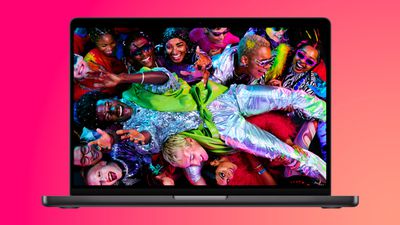
There are now just two models left of the 14-inch MacBook Pro at notable low prices in the wake of Apple's price hikes. Prices start at $2,549.99 for the 15-Core/24GB/2TB 14-inch M5 Pro MacBook Pro, now a $449 discount on the new price of this model. A similar 18-Core configuration is on sale for $2,749.99 as well, another $449 discount on the new price.
In terms of the larger display models, we're tracking four total discounts on Amazon. These start at $2,649.99 for the 24GB/1TB M5 Pro configuration ($349 off), and reach up to $4,349.99 for the 48GB/2TB M5 Max device ($649 off). If you're interested in any of these MacBook Pro notebooks, we recommend purchasing soon as these big markdowns aren't expected to last much longer.
If you're on the hunt for more discounts, be sure to visit our Apple Deals roundup where we recap the best Apple-related bargains of the past week.
Deals Newsletter
Interested in hearing more about the best deals you can find in 2026? Sign up for our Deals Newsletter and we'll keep you updated so you don't miss the biggest deals of the season!
After last week's craziness around Apple's major price hikes, things returned to a bit more of a normal flow this week, with the rumor mill offering up tidbits about the long-rumored touchscreen MacBook, the iPhone 18 lineup, and more.
This week also saw minor updates for iOS, iPadOS, and macOS that included a surprising number of security fixes, while a cyberattack at an Apple manufacturing partner has the company concerned about leaked confidential information, so read on below for all the details!
Top Stories
Apple's OLED 'MacBook Ultra' Will Stick With M5 Pro and M5 Max Chips
Last week, Bloomberg reported that Apple will be accelerating development of its M7 family of chips to deliver greater AI-focused capabilities sooner, but it also means Apple will not be releasing M6 Pro and M6 Max chips.
That revelation left open the question of which chips Apple is planning on using in its highly anticipated touchscreen "MacBook Ultra" rumored for release late this year or early next year, and Bloomberg now says Apple will be using M5 Pro and M5 Max chips for that product.
The news is likely to disappoint some who have been waiting for the new high-end MacBook, considering the M5 Pro and M5 Max have been used in the current MacBook Pro models since March, so the chips could be approaching a year old by the time the MacBook Ultra debuts.
As for the base MacBook Pro currently powered by the regular M5 chip, Bloomberg says there is an M6 model coming late this year, with a redesigned M7 model matching the upcoming MacBook Ultra to follow relatively soon after in the first half of 2027.
2027 iPhone 18 and iPhone 18e to Get 9GB RAM and A20 Chip
Apple is unsurprisingly "concerned" about the leak from its Indian manufacturing partner, as the files include detailed information about parts and suppliers for the upcoming iPhone 18 Pro and iPhone 18 Pro Max.
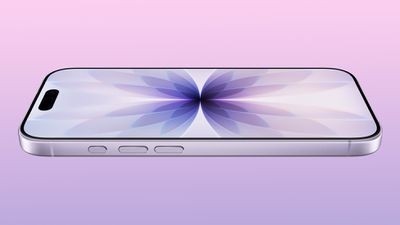
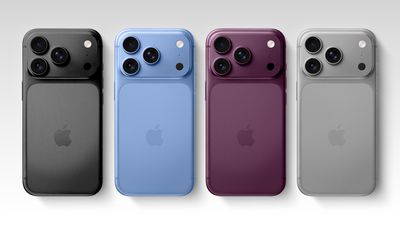
iPhone 18 Pro is Just a Few Months Away With These 10 New Features
Even aside from the Tata leak, a lot of information is already known about the iPhone 18 Pro and iPhone 18 Pro Max, which are expected to debut in September, so be sure to check out our overview.
Potential buyers should also be prepared for the possibility of a price shock, considering Apple's recent price increases across its iPad and Mac lineups. One market intelligence firm believes Apple could raise prices by up to $200 compared to the current iPhone 17 Pro lineup.
Play was a Mac and iPhone app that allowed designers to prototype iPhone app interfaces using Apple's SwiftUI frameworks, and then send them to Xcode. In 2025, the app won an Apple Design Award for innovation, but it is no longer available in the App Store and it is unclear what Apple's plans are for the intellectual property associated with it.
MacRumors Newsletter
Each week, we publish an email newsletter like this highlighting the top Apple stories, making it a great way to get a bite-sized recap of the week hitting all of the major topics we've covered and tying together related stories for a big-picture view.
The lower-end iPhone 18 and iPhone 18e will be equipped with 9GB of RAM, up from 8GB in the iPhone 17 and iPhone 17e, according to supply chain analyst Ming-Chi Kuo.
In a social media post, Kuo said the 1GB increase in RAM will ensure that Apple Intelligence features continue to run smoothly on the pair of devices.
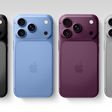
The higher-end iPhone 18 Pro, iPhone 18 Pro Max, and foldable "iPhone Ultra" will each have the same 12GB of RAM as the iPhone 17 Pro models, added Kuo.
Apple is expected to release the iPhone 18 Pro, iPhone 18 Pro Max, and the iPhone Ultra in September this year, while the iPhone 18, iPhone 18e, and a second-generation iPhone Air will reportedly be released around March 2027.
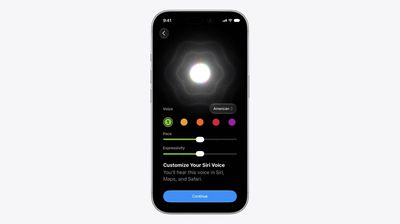
Even with an increased 9GB of RAM, two new Apple Intelligence features coming with iOS 27 will not be available on the iPhone 18 and iPhone 18e, including the ability to customize the expressiveness and pace of Siri's voice and a "major boost in accuracy" for speech-to-text dictation. This is because the latest advanced on-device Apple Intelligence model powering those two features requires a minimum of 12GB of RAM.
Here are the confirmed RAM amounts for the iPhone 17 series:
iPhone 17e: 8GB
iPhone 17: 8GB
iPhone 17 Pro: 12GB
iPhone 17 Pro Max: 12GB
The rumored RAM amounts for the iPhone 18 series and iPhone Ultra:
iPhone 18e: 9GB
iPhone 18: 9GB
iPhone 18 Pro: 12GB
iPhone 18 Pro Max: 12GB
iPhone Ultra: 12GB
The second-generation iPhone Air will presumably have 12GB of RAM, too.
RAM and NAND storage chips are currently expensive due to a supply shortage, resulting in Apple raising prices on more than a dozen products last month. For now, iPhones avoided price increases, but analysts have estimated that the iPhone 18 and iPhone 18e could cost $100 to $200 more than the iPhone 17 and iPhone 17e.
Tata Electronics, one of Apple's manufacturing partners in India, was hit by a ransomware attack that resulted in more than 200,000 internal files being posted online, including component lists, supplier data, and images of iPhone 18 Pro test units. The material was obtained illegally, and MacRumors has not seen the stolen files directly.
Among the leak's more surprising details is that the C2 modem may be limited to international models, succeeding the C1 and C1X modems already used in the iPhone Air, iPhone 17e, and M5 iPad Pro. A bill of materials for the U.S. variant instead lists Qualcomm components, including the SDX80M and other parts associated with mmWave 5G, a feature Apple's C-series modems still lack. U.S. carriers have spent years building out mmWave networks, making it a harder feature to drop from the Pro lineup than it was from the iPad Pro or a rumored cellular MacBook.
On the camera side, the rumored variable aperture main camera is this year's headline upgrade, though it's unclear how much of a real-world difference it will make compared to genuinely transformative jumps in past generations, like the 8x telephoto lens introduced on the iPhone 17 Pro or the and 48-megapixel sensor from the iPhone 14 Pro.
Pricing looms over rumors about the device. Apple has now raised prices across much of its lineup, citing a global memory chip shortage driven largely by AI data center demand. The Apple TV and HomePod price hikes drew particular criticism, since both products are several years old with no accompanying hardware changes.
Estimates for the iPhone 18 Pro itself point to a starting price as high as $1,399, up from $1,099 for the iPhone 17 Pro, an increase weighed against a modest RAM and battery bump, a smaller Dynamic Island, and a more capable N2 chip. A rumored 5G-via-satellite feature will likely offer limited access to specific services like Siri or Maps rather than full Safari browsing.
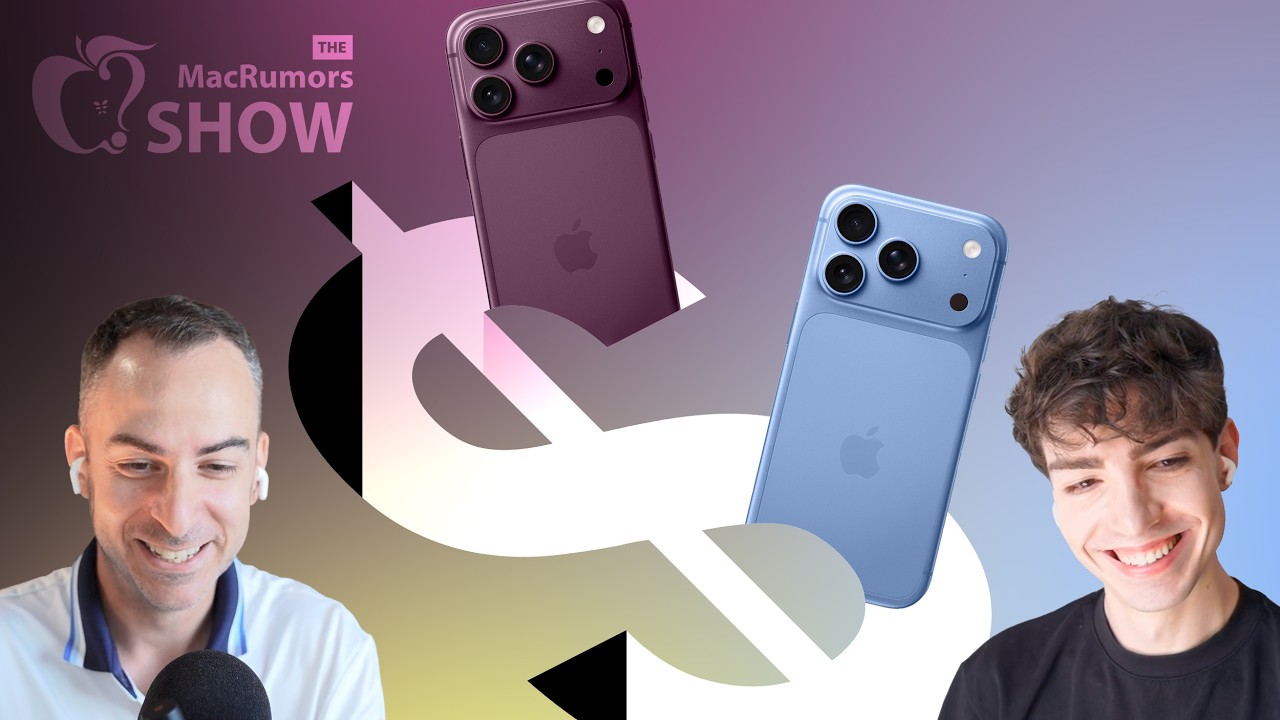
If you haven't already listened to the previous episode of The MacRumors Show, catch up to hear our discussion about potential price rises for the iPhone 18 lineup following Apple's wave of hikes yesterday, as well as plans for the Apple Watch Ultra 4 and camera-equipped AirPods.
The MacRumors Show is on X @MacRumorsShow, so be sure to give us a follow to keep up with the podcast. You can also email us at podcast@macrumors.com or head over to The MacRumors Show forum thread. Remember to rate and review the podcast, and let us know what subjects and guests you would like to see in the future.
The Apple Watch Series 12 could ship with a new health sensor built directly into one of its bands, according to a sketchy rumor from a known leaker.
The leaker known as "Kosutami" says the sensor will be injection-molded into a silicone band, and only a silicone band, apparently because Apple has not yet solved how to embed similar hardware in bands made from other materials. No detail was given on what the sensor is actually meant to measure.
[Censo-Wat]ch Series 12 gonna have a sensor on band, injection molded(to the silicon band, they hasn't yet figured out how to putting a sensor on band with other materials now.).
— Kosutami (@Kosutami_Ito) July 3, 2026
This is not the first time band-based sensing has been floated for Apple Watch, and the idea has reappeared repeatedly over the years, mainly as a result of Apple's patent filings. Back in 2017, a patent for modular band links that could each house a different function emerged, including blood pressure monitors and sweat sensors, followed later that year by a self-adjusting band patent that Apple said could also improve the accuracy of onboard biometric sensors by ensuring a snugger fit.
In 2019, a batch of smart band patents covered skin-texture authentication and other embedded functionality, and in 2021 a dedicated hydration sensor patent proposed the use of electrodes against the skin to measure electrolyte concentration in sweat. None of that patent activity has led to a shipping product so far, and Apple routinely files patents for concepts that never reach customers.
Kosutami's credibility as a source is mixed. While Apple has clearly researched adding sensors to Apple Watch bands extensively, the rumor is new, uncorroborated, and should be taken with a heavy pinch of salt for now.
The Apple Watch Series 12 is likely to be a minor upgrade featuring a new chip and little else is known about the device. It's expected to launch this fall alongside the iPhone 18 Pro and Apple's first foldable iPhone, continuing to use the same design introduced with the Series 10.
The code mentions a product codenamed B790 that can relay "two images from cameras on either side of [a] user's head." Gold speculated that the code could be referring to Apple's rumored smart glasses, but a more likely possibility is AirPods with cameras, which are reportedly further along in development compared to the glasses. AirPods Pro 3 were codenamed B788, while the smart glasses are reportedly codenamed N50.
Apple is rumored to be working on both "AirPods Ultra" and smart glasses with cameras, and Visual Intelligence is expected to be a core feature of these products. While wearing the camera-equipped AirPods or glasses, you would be able to look at something such as a house plant and have Siri provide you with information about it.
The code appears to instruct Visual Intelligence on how to function on the mystery device. It says the feature works with landmarks, text, and known objects, with the Eiffel Tower in Paris and a coffee mug cited as two examples.
/System/Library/AssetsV2/com_apple_MobileAsset_UAF_IF_PlannerOverrides/purpose_auto/9aaa6a204118137235983cc3f1eecae8a125c550.asset/AssetData/PCC/system_prompt_metadata/system_prompt.json seems to hint at some smart glasses codenamed B790 pic.twitter.com/IEmbfleth4
— sam henri gold (@samhenrigold) July 3, 2026
The code does not reveal much else, but it serves as yet another indication that Apple is actively developing more camera-equipped wearables.
According to the latest reporting from Bloomberg, both the "AirPods Ultra" and the smart glasses are currently slated to launch in late 2027.
This week's best deals include ongoing all-time low prices on AirTag 2, plus great discounts on the previous-generation M3 iPad Air, for anyone who wants to avoid price hikes on the M4 models. We're also tracking Fourth of July savings from popular accessory makers this weekend.
Note: MacRumors is an affiliate partner with some of these vendors. When you click a link and make a purchase, we may receive a small payment, which helps us keep the site running.
Fourth of July Deals
It's Fourth of July weekend, and we're tracking numerous sales across popular accessory companies right now. This includes sitewide deals at Anker, B&H Photo, Best Buy, OtterBox, ZAGG, and more. Many of these savings events will end on Sunday, July 5, so be sure to shop them this weekend before they're gone.
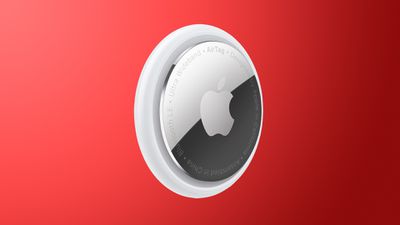
Apple's AirTag 2 is still available for the all-time low price of $89.00 this week, down from $99.00. This sale is on the 4-Pack of the AirTag 2, and it's one of the very few Prime Day deals that's stuck around since the event ended last week.
M3 iPad Air
What's the deal? Save on previous generation iPad Air tablets
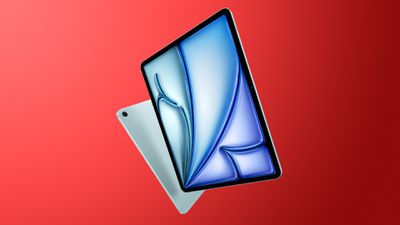
Best Buy's Fourth of July sale is currently running, and it features a big sale across Apple's previous generation M3 iPad Air tablets. You can find up to $400 off these devices during the event, and they're particularly notable when compared to the recently increased prices of the 2026 M4 iPad Air.
Samsung's newest monitors have been further discounted this week, with big savings on the Odyssey G8, ViewFinity S8, and Movingstyle Essential. All of these have discounts that have been applied automatically.
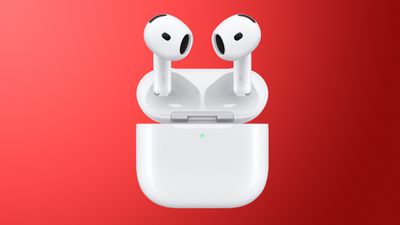
Amazon is offering the AirPods 4 for $99.00 this week, down from $129.00. This is another Prime Day deal that's stuck around all week, and it's an overall solid second-best price on the earbuds.
If you're on the hunt for more discounts, be sure to visit our Apple Deals roundup where we recap the best Apple-related bargains of the past week.
Deals Newsletter
Interested in hearing more about the best deals you can find in 2026? Sign up for our Deals Newsletter and we'll keep you updated so you don't miss the biggest deals of the season!
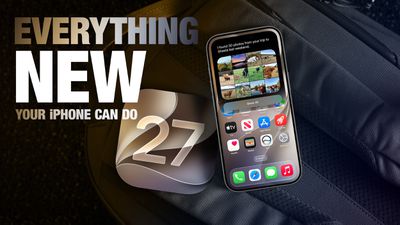
Apple will release iOS 27 in September, and despite the company's focus this year on refining its flagship operating system and nixing bugs, there are still many additional features on the way, not least of which is Apple's new context-aware Siri, re-tooled for the generative AI era.
This year's major iPhone software update isn't all about AI, though, as the following feature list testifies. iOS 27 remains in developer beta, while a public beta is expected to arrive this month.
Extend Your Photos and Lock Screen Wallpaper
A new wallpaper extension feature in iOS 27 uses Apple Intelligence to automatically expand a photo beyond its original boundaries so it fills the entire Lock Screen more naturally. If a photo is cropped too tightly, doesn't match your iPhone's aspect ratio, or it leaves empty space when positioned on the Lock Screen, iOS 27 can generate additional image content around the edges with the "Extend" option. It will analyze the existing image and create matching background details that blend with the original photo, so there's no need for aggressive cropping. The Extend option can also be found in the Photos app.
Organize Your Safari Tabs
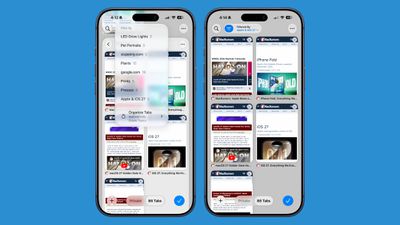
Safari uses Apple Intelligence to automatically organize your open tabs into related topics, making them easier to browse and manage. For example, if you're shopping for a new refrigerator while planning a vacation, Safari groups tabs for each activity into separate topic-based collections. You can enable this feature by opening Tab View, tapping the three-line icon in the top-right corner, and turning on Automatically Create Topics.
Use Natural Language for Reminder and Calendar Entries
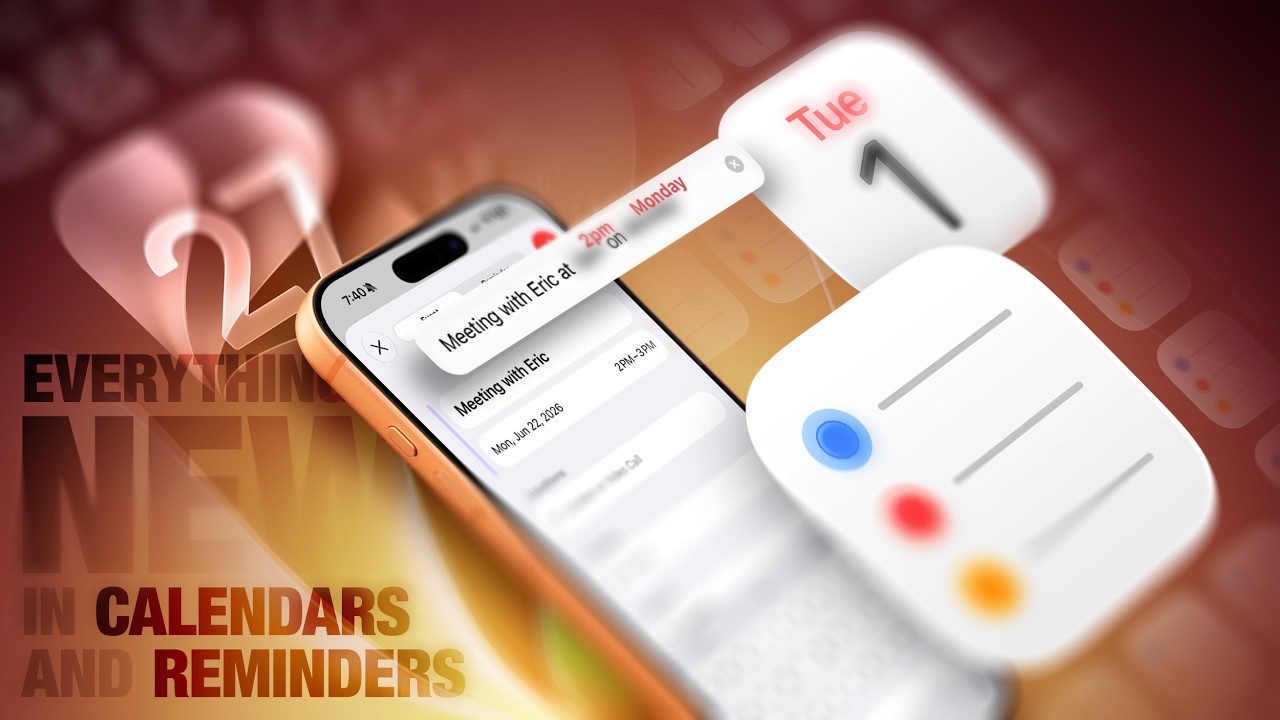
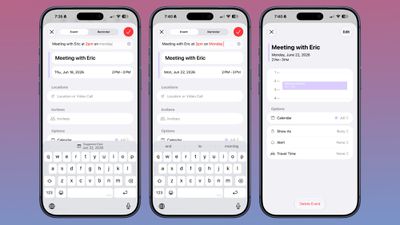
In the Reminders app, you can now create reminders using natural language, and Apple Intelligence will automatically fill in details such as the date, time, and location. For example, if you type "Pick up Dad at 6 p.m. tonight" or "Send the photos to Eric tomorrow at 3 p.m.," Reminders extracts the relevant information and adds it to the reminder automatically.
The Calendar app also supports natural language input, identifying people, dates, and locations as you type. You can then tap the suggested information to quickly add it to your event.
Inline Reply to Messages From Android Users
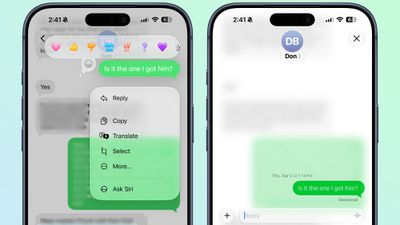
In the Messages app, you can now long press on a specific message from an Android user (a green chat bubble) and get an option to reply to it. That contrasts with iOS 26, where inline replies are limited to blue bubbles sent over Apple's iMessage platform.
Upgrade Your Wallet Passes
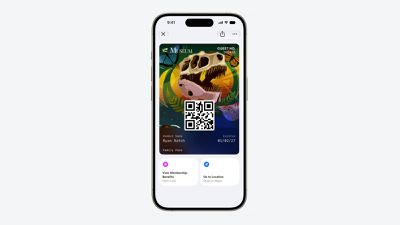
Apple has expanded the redesigned pass experience in the Wallet app with iOS 27, bringing the enhanced design introduced for airline boarding passes in iOS 26 to additional pass types. Membership, gift, loyalty, and rewards cards can now use a new Poster Generic layout with a background image, a logo, customizable header and footer fields, main information, and an optional barcode. Passes can also include up to two quick actions at the bottom, such as getting directions to a venue or checking a rewards points balance.
Describe Your Next Shortcut
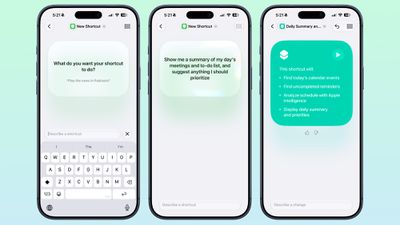
Apple Intelligence makes creating shortcuts much more accessible by letting you build them with natural language. Tapping New Shortcut in the Shortcuts app opens a Describe a Shortcut interface, where you simply explain what you want the shortcut to do. You can describe a single action or a more complex automation, and Apple Intelligence selects the appropriate actions and assembles the shortcut automatically.
For example, you could create a shortcut that sets tomorrow's alarm based on your first Calendar event, enables Sleep Focus, and dims the bedroom lights each evening, or one that displays your first meeting, the weather, and today's reminders every morning. Like existing shortcuts, these automations can be triggered by factors such as the time of day, your location, app activity, system events like taking a screenshot, incoming notifications, and more.
Get a Better Flyover of Your City
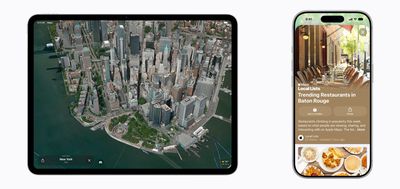
Apple is enhancing the Flyover feature in Maps with iOS 27, using Apple Intelligence models to improve aerial imagery with greater texture and sharper detail. Trees, buildings, and other landmarks appear more realistic, with more accurate geometry and improved lighting effects.
According to Apple, the update makes select cities around the world look more lifelike, from the shape of individual trees to the way light reflects off glass skyscrapers. Flyover already offers detailed 3D views of landmarks, roads, parks, and buildings in more than 350 cities, so iOS 27 is essentially using AI to further improve the quality of those visualizations.
Ask Siri What Your Camera Sees
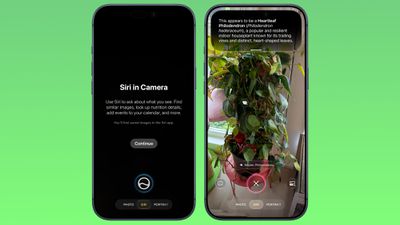
The iOS 27 Camera app has a new "Siri" mode that is available in addition to the video, photo, and other camera modes. The new mode uses Visual Intelligence to identify objects in the frame and provide information about them. It can be used to identify plants, animals, food, and more. If it's food you want info on, for example, it can tell you what it is, and how many calories are in it.
Other examples Siri mode can be used for include capturing a photo of an event flyer and adding a date to the Calendar app, text translation, splitting a bill, and more.
Make Your Lock Screen Clock More Compact
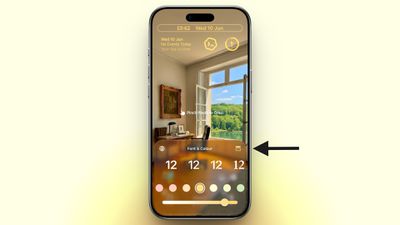
A new compact clock mode is available as a new Lock Screen layout option in iOS 27. Found in the top-right corner of the Font & Color panel, the option moves the time from its traditional large, centered position to a much smaller format alongside the date and widgets at the top of the screen. It's a nice option to have if you like a cleaner Lock Screen look that shows off your wallpaper more fully, and it's the complete opposite effect introduced in iOS 26 that stretches the clock down the screen.
Generate Photo-realistic Images with Image Playground
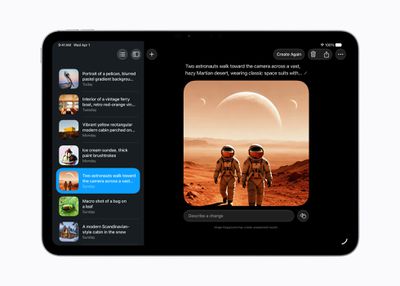
Apple's Image Playground has been a bit of an embarrassment up until now, being limited to cutesy re-renderings of actual photos and sketched illustrations. But the app gets a major update in iOS 27. Powered by a new generative model that runs on Private Cloud Compute, it can produce high-quality images in virtually any style, including photo-realistic output for the first time. All generated images automatically carry a hidden SynthID watermark to identify them as AI-generated. The app now also supports photo-based editing in addition to creation.
Tweak Liquid Glass Opacity
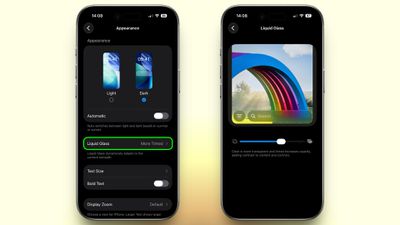
If Apple's Liquid Glass UI embrace in iOS 26 wasn't your thing, there's a way to tone it down. In iOS 27, Apple added a full Liquid Glass slider under Settings ➝ Appearance ➝ Liquid Glass. It changes the translucency of Liquid Glass elements, and you can choose a clear version of Liquid Glass that allows some of the background to show through, select a more opaque, tinted version that improves the legibility of text, or choose something in between.
Create a Slideshow from Any Album
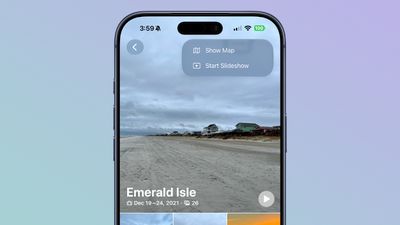
In iOS 27, you can create a slideshow from any album, collection, or selection of photos in the Photos app, rather than being limited to Memories. Open an album or select multiple photos, tap the menu button in the top-right corner, and choose Start Slideshow. Slideshows can be customized with different transition styles, slide durations, and background music, and then saved as a video or shared directly to social media.
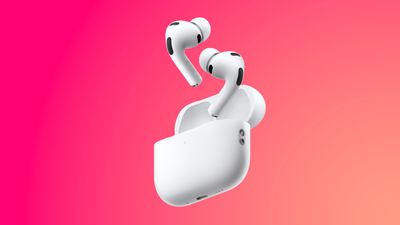
Development of Apple's rumored camera-equipped AirPods Pro has been halted, according to the leaker and prototype collector known as "Kosutami."
In a blunt post on X referencing a June post about the product "case" being "concluded," the leaker appeared to be correcting it to say that the project has been "suspended." No other details were provided.
The claim comes as quite a surprise, given that Bloombergreported in May that the camera-equipped AirPods Pro were nearing completion and had reached an "advanced" testing stage, suggesting early mass production could be imminent.
That said, the same report also noted that Apple could also opt to wait to launch the AirPods if it was not satisfied with the quality of the Visual Intelligence features in development for Siri.
The AirPods Pro's built-in cameras are said to feed visual information about the wearer's surroundings to Siri. The cameras would not be for taking photos or videos, but used solely for AI purposes. "Kosutami" claimed in February that the infrared cameras will allow for the AirPods Pro to be "connected with Apple Intelligence," and other reliable sources have since corroborated that claim. The new AirPods have been in development for around four years.
Apple reportedly wanted to start selling the camera-equipped AirPods Pro in the first half of 2026, but the product's launch was held back because the smarter, AI version of Siri was still being developed – it exists in the current iOS 27 beta, but it won't be widely available until the release of iOS 27 in September.
Bloomberg said Apple was expecting strong demand for the new AirPods Pro and had operations teams working to secure components for a launch in challenging circumstances, owing to the industry-wide shortage of memory chips and other silicon. It's not clear whether this is the reason behind Kosutami's claim that the project has been suspended.
Kosutami is best known as a collector of prototype Apple hardware, but they have occasionally shared accurate information about Apple's future product plans. For example, around 10 months before the iPhone 16 Pro launched, they correctly revealed that it would feature a metal-enclosed battery.
Earlier this year, three YouTube channels sued Apple, alleging that the company violated the U.S. Digital Millennium Copyright Act (DMCA) by unlawfully accessing and scraping millions of copyrighted YouTube videos to train its AI models.
In a class action lawsuit filed with the U.S. District Court for the Northern District of California in April, the owners of the YouTube channels h3h3Productions, MrShortGame Golf, and Golfholics alleged that Apple "deliberately circumvented" YouTube's protections against video scraping and "profited substantially" by doing so.
Apple's actions were "not only unlawful, but an unconscionable attack on the community of content creators whose content is used to fuel the multi-trillion-dollar generative AI industry without any compensation," the complaint alleged.
h3h3Productions is a well-known YouTube channel created by Ethan Klein and Hila Klein, and they later created the H3 Podcast. Their channels have millions of followers, while MrShortGame Golf and Golfholics have hundreds of thousands of followers. The channels filed equivalent lawsuits against Meta, Nvidia, ByteDance, and Snap.
Apple Responds
Apple responded to the lawsuit this week, according to a court document viewed by MacRumors. In short, Apple said the plaintiffs made the videos publicly available on YouTube and that it was permitted to access the videos under the DMCA. Apple said YouTube's Terms of Service likewise permitted the company to access the videos.
"Plaintiffs allege that they posted audiovisual works to YouTube, and that any member of the public can see them there," reads Apple's response. "No password. No payment. No lock. No key. Allegedly, YouTube employs technological measures to prevent unauthorized downloading. But because YouTube provides public access to the videos, the alleged technological measures do not control access to the works, as § 1201(a) requires."
Apple said the plaintiffs have ultimately failed to state a claim, and it requested that the court dismiss the lawsuit as a result.
Jon Prosser today responded to Apple's lawsuit over iOS 26 leaks, with the YouTuber placing much of the blame on his acquaintance Michael Ramacciotti.
As a refresher, Apple sued Prosser and Ramacciotti in July 2025 over alleged theft of the company's trade secrets. Apple alleged that the duo coordinated to break into former Apple software engineer Ethan Lipnik's development iPhone, in order to access and profit off details about "iOS 19," which ended up being called iOS 26.
Last year, Prosser leaked several details about "iOS 19" in videos shared on his YouTube channel Front Page Tech, several months before Apple announced the update at WWDC 2025. Later, an anonymous tipster informed Apple that the information was allegedly sourced from Lipnik's iPhone, which prompted the company to investigate.
Apple ultimately fired Lipnik and sued Prosser and Ramacciotti.
In a court document obtained by MacRumors, Prosser admitted to and denied many of Apple's claims, with some of the key ones summarized below:
Prosser denied that he planned or participated in any conspiracy or coordinated scheme with Ramacciotti for the purpose of injuring Apple.
Prosser admitted that he participated in a FaceTime video call with Ramacciotti, wherein Prosser was shown certain "iOS 19" features and apps running on the development iPhone.
Prosser denied that any of the information he viewed contained trade secrets.
Prosser denied knowing that the development iPhone belonged to Lipnik.
Prosser denied that he is in possession of any further confidential Apple information.
Prosser placed much of the blame on Ramacciotti. In the response, Prosser's attorney said that Ramacciotti's act of displaying the iOS 19 features on the FaceTime call was not induced by Prosser and, as such, Ramacciotti is "completely responsible" for the disclosure of Apple's alleged trade secrets, if any.
Prosser's attorney said Ramacciotti is responsible for all harm caused to Prosser.
Unfortunately, the attorney made several typos throughout the document, including writing that Prosser has "not knowledge" if iOS 19 was "unreleased."
Another typo made was "Prosser Michael Ramacciotti" in the paragraph below:
Prosser denies that he planned or participated in any conspiracy or coordinated scheme with Prosser Michael Ramacciotti ("Ramacciotti") for the purpose of injuring Apple. Any payments by Prosser were after the fact of the alleged theft by the former Apple employee, Michael Ramacciotti.
The case is before the U.S. District Court for the Northern District of California. Prosser has requested a jury trial on all issues so triable by a jury.
Warning: While the first public beta is usually more stable than the first developer beta, iOS betas often have bugs and performance issues. You may not be able to use some apps that you rely on, and issues can extend to CarPlay. Backing up your iPhone before installing beta software is highly recommended, and relying on a secondary iPhone altogether is always a good idea if possible.
iOS 27 is compatible with the iPhone 11 and newer, but Apple Intelligence features like Siri AI are limited to the iPhone 15 Pro and newer.
Keep in mind that the revamped version of Siri has a waitlist. To join the waitlist, open the Settings app on iOS 27 and tap on Siri and you will find it there. In some cases, it can take a few weeks to receive access to Siri AI and the Siri app.
Beyond the new Siri, iOS 27 features Liquid Glass design enhancements, performance improvements, expanded child safety features, and more.
Volkswagen is planning to offer Apple Wallet car keys in future vehicles, according to new server-side Apple code.
The code does not provide any more details, so we do not know which VW vehicle models will offer the feature or when.
With an Apple Wallet car key, you can use your iPhone or Apple Watch to lock, unlock, and start your vehicle. The feature is already offered by Audi, BMW, Hyundai, Kia, Genesis, Mercedes-Benz, Volvo, and select other automakers in various countries.
Stolen data from Apple manufacturing partner Tata Electronics appears to reveal that the iPhone 18 Pro will use different modem chips depending on the market it is sold in, with U.S. models retaining Qualcomm hardware while international models will feature Apple's in-house C2 modem.
The finding emerged from a wide-ranging cyberattack on Tata, which alongside Foxconn assembles the iPhone. More than 630GB of confidential data was stolen by a ransomware group calling itself "World Leaks" and has been circulating online. The material was obtained illegally and MacRumors has not seen the stolen files directly. AppleInsider conducted an analysis of the stolen files and said it could confirm the authenticity of several key documents.
Among the information that has attracted particular is a bill of materials apparently related to the U.S. variant of the iPhone 18 Pro, which lists multiple Qualcomm components rather than Apple's C2 modem, codenamed Ganymede. The Qualcomm parts referenced include the SDX80M, SDR875, QDM8771, QDM8720, PMK75, PMX75, and QET7100A, components associated with mmWave 5G support. International iPhone 18 Pro models, by contrast, are said to use the "C2," which would succeed the C1 and C1X modems currently found in the iPhone Air, iPhone 17e, and M5 iPad Pro.
The implication, as AppleInsider notes, is that the C2 still lacks mmWave capability, and that Apple is once again relying on Qualcomm to fill that gap for American carriers.
mmWave is the ultra-high-frequency band of 5G offered primarily by Verizon, delivering very fast download speeds over short distances. Apple's C1 and C1X modems are widely regarded as more power efficient than their Qualcomm counterparts, meaning U.S. iPhone 18 Pro buyers may see somewhat worse battery life than those purchasing the same device elsewhere.
Daring Fireball's John Gruber offered analysis of the practical tradeoffs involved. While 5G outpaced LTE in his tests, Gruber argued the difference has no meaningful impact on how the phone actually feels to use:
Having a phone that can pull 320 Mbps down over cellular is like having a car that can go 320 MPH — an interesting technical feat, but of no practical value to me whatsoever. I never feel like I'm waiting for anything to load because I'm on LTE. LTE is fast enough, and regular 5G is more than fast enough. 5G mmWave is simply a waste of battery life as far as I'm concerned.
On why Apple would not simply deploy the C2 everywhere rather than retaining Qualcomm for the U.S. market, Gruber pointed the finger squarely at carrier economics:
Faster-than-you-practically-need download speeds are a carrier bragging point. Longer battery life and plenty-fast-enough download speeds are an Apple bragging point. Verizon — and to a lesser extent, AT&T — spent a fortune building out mmWave networks. They don't want to sell flagship phones that don't support them. Apple's flagship iPhones have supported those networks since 2020. If Zivkovic's analysis of this stolen data from Tata is correct, and Apple is going to use Qualcomm's modems only in iPhone 18 Pro models sold in the U.S., I think the reason why is Verizon and AT&T bragging points, not any practical user benefit. And the result may be that U.S. iPhone 18 Pro models get somewhat worse battery life than those in the rest of the world.
The C2 modem has been a rumored feature of the iPhone 18 Pro for years as part of Apple's broader effort to reduce its reliance on Qualcomm. A split deployment, with the C2 handling most of the world while Qualcomm covers the U.S., would represent a significant step in that direction even if it falls short of a complete transition.
The iPhone 18 Pro and iPhone 18 Pro Max are expected to launch in the fall alongside the first foldable iPhone.
Beyond the usual annual updates to iPhones and Apple Watches in September, Apple's all-new smart home hub is expected to debut later this year. We are also expecting a foldable iPhone Ultra and long-awaited updates to the Apple TV, HomePod, and HomePod mini. And a redesigned MacBook Ultra with an OLED display is expected by early 2027.
July Update:Bloomberg's Mark Gurman this week reported that Apple has planned to update the 14-inch MacBook Pro base model with an M6 chip later this year, and that means the company is now rumored to have at least 16 new products in the pipeline for the rest of 2026. Our list of rumored new products has been updated accordingly.
Here is what to expect from Apple later this year, according to rumors.
Apple Watch Series 12: A faster S11 chip or newer, plus design changes such as Touch ID and/or more health sensors (disputed).
Apple Watch Ultra 4: A faster S11 chip or newer, plus design changes such as Touch ID and/or more health sensors (disputed). There may also be additional satellite features for the Apple Watch Ultra 3 and newer, such as Apple Maps via satellite and the ability to send and receive photos with Messages via satellite.
iPads
iPad 12: A16 chip → A18 chip or A19 chip with Apple Intelligence support.
Apple TV:A17 Pro chip with support for the more personalized Siri, and Apple's N1 chip with Wi-Fi 7 support. A built-in FaceTime camera has been rumored for a future Apple TV, but it is unclear if that will arrive with the next model.
HomePod mini:S9 chip or newer with support for the more personalized Siri, Apple's N1 chip with Wi-Fi 7 support, improved sound quality, a second-generation Ultra Wideband chip, and potentially new color options like red.
Home Hub: An all-new smart home hub featuring the more personalized version of Siri, a 6-inch to 7-inch square display, an A18 chip for Apple Intelligence, FaceTime, and more. Place it on a table or mount it on a wall.
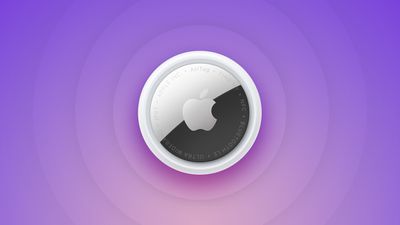
Apple's AirTag 2 is still available for the all-time low price of $89.00 this week, down from $99.00. This sale is on the 4-Pack of the AirTag 2, and it's one of the very few Prime Day deals that's stuck around since the event ended last week.
Note: MacRumors is an affiliate partner with Amazon. When you click a link and make a purchase, we may receive a small payment, which helps us keep the site running.
The new AirTag is equipped with a second-generation Ultra Wideband chip, enabling the Precision Finding feature to work up to 50% farther away from an item compared to the previous-generation model. You'll also find a small discount on the 1-Pack right now on Amazon.
If you're on the hunt for more discounts, be sure to visit our Apple Deals roundup where we recap the best Apple-related bargains of the past week.
Deals Newsletter
Interested in hearing more about the best deals you can find in 2026? Sign up for our Deals Newsletter and we'll keep you updated so you don't miss the biggest deals of the season!
If you pay for certain iCloud+ storage plans beyond the 5GB that Apple offers for free, you will receive two more perks on iOS 27 at no additional cost.
A summary of the two new iCloud+ perks on iOS 27:
Increased daily usage limits for some new Apple Intelligence features, including image generation in the revamped Image Playground app.
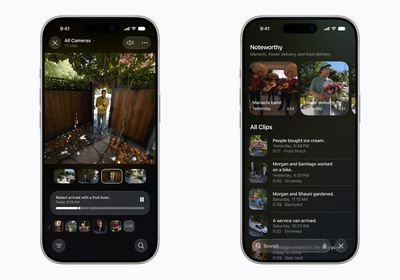
HomeKit Secure Video cameras receive generated video descriptions, search for camera clips, and automatic surfacing of noteworthy clips.
More details about each benefit are outlined below.
First, Apple said there will be daily usage limits for some of the new and enhanced Apple Intelligence features on iOS 27, including image generation. However, the company noted that "increased access" is available with "most" iCloud+ storage plans, which presumably means every plan except the base 50GB tier for $0.99 per month.
Apple said the limits are in place because the new features rely on "powerful server models," which are undoubtedly more expensive to run.
The underlying models that power Apple Intelligence are now based on Google's Gemini models, and this has resulted in improved Apple Intelligence features. Starting with iOS 27, for example, Apple's Image Playground app can generate "photorealistic" images. Apple has not disclosed the exact daily limits for image generation.
Second, Apple said at least some iCloud+ plans will now include Apple Intelligence features for compatible smart home cameras in Apple's Home app. These new features for HomeKit Secure Video cameras include generated video descriptions, the ability to search through camera clips, and automatic surfacing of noteworthy clips.
These perks will likely require an iCloud+ plan with at least 200GB of storage for $2.99 per month. If you have an Apple One Family ($25.95 per month) or Apple One Premier ($37.95 per month) plan, you should get these benefits too.
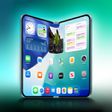
Apple's first foldable iPhone, with a book-style design featuring a ~5.5-inch outer display and a ~7.8-inch inner display with a minimal crease down the middle.
















 Note: MacRumors is an affiliate partner with Amazon. When you click a link and make a purchase, we may receive a small payment, which helps us keep the site running.
 Apple's software engineers recently began testing iOS 27.4, according to the MacRumors visitor logs.
 Note: MacRumors is an affiliate partner with some of these vendors. When you click a link and make a purchase, we may receive a small payment, which helps us keep the site running.





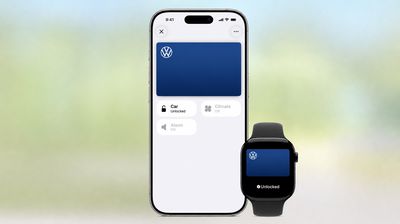 Volkswagen is planning to offer Apple Wallet car keys in future vehicles, according to new server-side Apple code.
 Note: MacRumors is an affiliate partner with Amazon. When you click a link and make a purchase, we may receive a small payment, which helps us keep the site running.