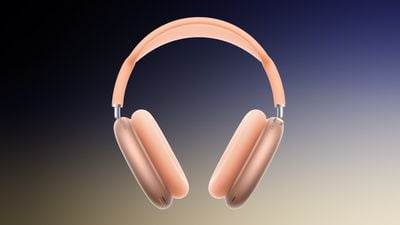







Apple's next-generation AirPods Pro will feature cameras to see around a user, according to the leaker and prototype collector known as "Kosutami."
In a new post on X, Kosutami said that the next AirPods Pro will be able to see around the wearer, presumably via cameras in each earbud. Supply chain analyst Ming-Chi Kuo said that the 2026 AirPods Pro will feature a "more significant" hardware upgrade in the form at least one tiny infrared camera. He previously said AirPods with infrared cameras could recognize hand gestures and provide an enhanced spatial audio experience with Apple's Vision Pro headset.
Kosutami added that the new AirPods Pro will be available at the same $249 price as the current model. This contrasts with previous rumors suggesting that the next AirPods Pro would be a secondary version of AirPods Pro 3 this year, sitting in the lineup alongside the current model.
The Chinese leaker known as "Instant Digital" corroborated the rumors about new AirPods Pro featuring infrared cameras for gesture controls, with some additional details and clarifications. Rather than being a new generation, the 2026 AirPods Pro will apparently be a pricier, high-end variant of the AirPods Pro 3 introduced in 2025, suggesting that both models will ultimately be on sale alongside each other. It is worth noting that Apple offers two version of the AirPods 4 at $129 and $179 price points, so this is a highly plausible move.
The current AirPods lineup has offerings priced at $129, $179, $249, and $549. An additional product between the $249 AirPods Pro 3 and $549 AirPods Max seems possible, especially given the rise of higher end Bluetooth earbuds from the likes of Bang Olufsen, Bowers & Wilkins, and Bose.
Regardless, back in September 2025, Kuo reported that Apple is planning to introduce a successor to the AirPods Pro 3 in 2026. This would be somewhat unusual since Apple normally waits around three years to make major changes to the AirPods' hardware. AirPods Pro 2 debuted at the iPhone 14 event in September 2022, and they were updated with a USB-C charging case and a few other tweaks in September 2023. Otherwise, Apple has waited about three years to update all of its AirPods models.
Whether they are a new, high-end version of the AirPods Pro 3 or full-fledged AirPods Pro 4, launch timing is currently unclear, but Apple typically announces new AirPods in the second half of the year. The original AirPods, AirPods Pro 2 and their subsequent USB-C revision, AirPods 4, and AirPods Pro 3 were all announced at Apple's annual iPhone event in September.
In 2021, Ferrari and its parent company Exor announced a multi-year creative partnership with LoveFrom, the design firm co-founded by Apple's former design chief Jony Ive and fellow designer Marc Newson. Now, in an event held at the Transamerica Pyramid, not far from LoveFrom's studio in San Francisco, Ferrari has shared the first results of that collab by unveiling the interior and interface of its first fully electric car, named "Luce" (Italian for "light").
In a writeup over at PRNDL, automotive journalist Jordan Golson describes how the Luce is designed around the premise that a car's interface should be operable largely by feel, with minimal visual distraction. Ive argues that touchscreens made sense for the iPhone because it solved a general-purpose problem, but it's not for driving: "To use touch in a car is something I would never dream of doing, because it requires that you look at what you're doing."
Following from that premise, the steering wheel and binnacle form a clear driving zone, where physical inputs are separated from visual outputs. Core functions such as climate, seat heating, and drive modes use dedicated mechanical switches and dials.
Physical controls trigger contextual responses on the displays, and the instrument binnacle combines layered OLED screens with physical depth and a real mechanical needle moving between them. The steering wheel itself is an exposed aluminum structure, where the glass-and-metal buttons are differentiated by touch, and the paddle shifters control EV functions like regenerative braking and torque delivery.
One of the standout features of the Luce is its glass key with an E Ink display. In your pocket it appears Ferrari yellow, and because E Ink is bistable, it consumes no power when static. When the driver enters the car, a magnet in the center console guides the key into a dedicated dock. Press it down, and the yellow fades to black as the key integrates with the glass surface of the console. Ive calls this "theater," re-imagining the ritual of starting up an electric car.
Head over to Golson's website for his full coverage, and watch his exclusive video above.
Ferrari has been unveiling its first fully electric car in three stages. The first reveal, held in Maranello last October, focused on the underlying technology, including the battery, motors, and platform. This second phase centers on the interior and interface. The exterior will be revealed in Italy in May.
YouTube Music is making users pay for lyrics. Originally introduced in 2020 as a free feature, song lyrics now sit behind a paywall – as part of a YouTube Premium or Music Premium subscription.
As spotted by 9to5Google, in the latest update currently rolling out, the Lyrics tab on the Now Playing screen displays the warning message, "You have [x] views remaining. Unlock lyrics with Premium."
Users get five free lyrics before a subscription is required. After that, users only see the first few lines, while the rest are blurred.
Google has been testing the change with a small subset of users for a few months already, and now it appears to be rolling out globally. Google has yet to confirm the change.
YouTube Music Premium costs $10.99 per month, and includes ad-free playback, offline downloads, and background listening. YouTube Premium, priced at $13.99, brings those benefits to the YouTube app.
It's possible that Google is trying to claw back costs paid to third-party services like LyricFind and MusixMatch, which the app seems to be using to retrieve lyrics. Whether the strategy outlives previous attempts by streamers to make users pay extra for the feature remains to be seen.
Last year, Spotify briefly put lyrics behind a paywall, but it rolled back the move after a user backlash.
Apple's new software updates to be previewed at 2026's Worldwide Developers Conference (WWDC) could be relatively modest, Bloomberg's Mark Gurman claims.
In today's "Power On" newsletter, Gurman said that iOS 27 will be unveiled at WWDC this year, and while it will deliver further Apple Intelligence improvements, the event will be "a fairly muted affair this year." The headline new software features will apparently be a "more personalized Siri with a chatbot interface," as previously rumored, but the software platforms will generally focus on performance improvements, bug fixes, and fine-tuning the design.
Gurman added that the first beta version of iOS 26.4 will release to developers during the week of February 23, featuring "some components" of the long-anticipated improvements to Siri.
WWDC 2026 is likely to be announced toward the end of March and take place in the first or second week of June. The major new software updates unveiled at the event will probably be available to developers in beta immediately after the keynote address, and release to the public in the fall.
Super Bowl LX is today, and there is a way for U.S. viewers to watch for free. Our instructions below are focused on the iPhone, iPad, Mac, and Apple TV, but this method will of course work across a variety of devices.
2026's Super Bowl has the New England Patriots facing the Seattle Seahawks at Levi's Stadium in Santa Clara, California, with the kickoff time scheduled for 3:30 p.m. Pacific Time / 6:30 p.m. Eastern Time. These two teams already met in the 2015 Super Bowl, which ended in a Patriots championship.
The big game is airing on NBC and streaming on Peacock Premium today.
"If I were to guess, Apple will ultimately meld its Health app with Fitness+ in some fashion — perhaps offering it as a combined subscription," said Gurman.
Gurman recently reported that Apple has scaled back plans for a separate Apple Health+ subscription service, which would have provided AI-powered health recommendations. However, he said some of the features that would have been part of Apple Health+ will be repurposed and rolled out individually.
Launched in 2020, Apple Fitness+ offers a library of trainer-led workout and meditation videos in Apple's Fitness app, across the iPhone, iPad, and Apple TV. In the U.S., the service costs $9.99 per month or $79.99 per year. Apple Fitness+ is also included in the Apple One Premier bundle for $37.95 per month.
In a recent all-hands meeting, Apple CEO Tim Cook told employees to "stay tuned" about the company's plans for its upcoming 50th anniversary. Apple was founded on April 1, 1976, so the company will turn 50 in a few more months.
I've been unusually reflective lately about Apple because we have been working on what do we do to mark this moment — 50 years. It's an extraordinary accomplishment. We've been going back through old archives, old photographs. We've been going back through the products, the services, the people, and I am struck by how much Apple has changed things, how much Apple has changed the world, how much Apple has given to the world. Are we going to celebrate it? You better believe it. We're not ready to say exactly how yet, so stay tuned. Yes. We're not a culture that looks back. So the group of people working on this have had to kind of build a different muscle for this, as our muscle is always about what's next. We've really had to work hard on this to get in a reflective state, but when you really stop and pause and think about the last 50 years, it makes your heart sing. It really does. I promise some celebration.
While it is likely that Cook was referring to a celebration for Apple employees, the company will almost certainly honor the occasion in a big way publicly too.
Apple went from flirting with bankruptcy in the late 1990s to becoming the world's most valuable public company in the early 2010s. It has introduced many iconic products, including the Macintosh in 1984, the iPod in 2001, the iPhone in 2007, and the Apple Watch in 2015. The company reported an all-time revenue record last quarter, driven by all-time high iPhone sales, so the company is still peaking financially.
Earlier this week, Anker debuted its new Prime 3-in-1 Wireless Charging Station with a launch discount on Amazon. If ordered this week, you can clip the on-page coupon on Amazon to get the accessory for $119.99, down from $149.99.
Note: MacRumors is an affiliate partner with Amazon. When you click a link and make a purchase, we may receive a small payment, which helps us keep the site running.
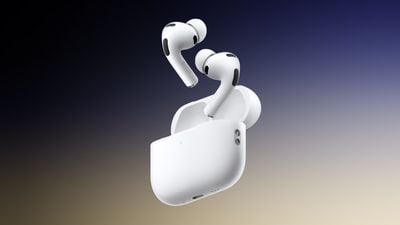
The Prime 3-in-1 Wireless Charging Station features Qi2.2 support, which lets a compatible MagSafe iPhone charge at up to 25W. It's the same speed as Apple's MagSafe charger, and it is 10W faster than the standard Qi2 MagSafe chargers. You can also simultaneously charge an Apple Watch and AirPods with the device.
Note: You won't see the deal price until checkout.
There are plenty of other Anker discounts happening on Amazon this week, including the Prime 14-in-1 Thunderbolt 5 Dock back at its all-time low price of $339.99, down from $399.99. You can find this accessory and more on sale in the lists below, and note that as of writing only the new Prime 3-in-1 Wireless Charging Station requires an on-page coupon.
If you're on the hunt for more discounts, be sure to visit our Apple Deals roundup where we recap the best Apple-related bargains of the past week.
Deals Newsletter
Interested in hearing more about the best deals you can find in 2026? Sign up for our Deals Newsletter and we'll keep you updated so you don't miss the biggest deals of the season!
New MacBook Pro models with the M5 Pro and M5 Max chips could arrive as soon as Monday, March 2, according to Bloomberg's Mark Gurman.
In today's "Power On" newsletter, Gurman said that the release of new MacBook Pro models is tied to the release of macOS Tahoe 26.3. The launch is said to be slated for as early as the week of March 2. He added that the M4 Pro and M4 Max models on sale today remain in short supply, indicating that the launch of new models is close.
Updated Mac Studio models "shouldn't arrive too long after the spring Mac refresh," according to Gurman. A new Studio Display and Mac mini continue to be on Apple's roadmap for this year, along with an all-new low-cost MacBook powered by an iPhone chip. The most significant Mac launch this year will be overhauled MacBook Pro models with OLED displays and touch support.
Apple is set to release the first beta version of iOS 26.4 later this month, providing the first real-world look at the Apple Intelligence features promised at WWDC 2024, Bloomberg's Mark Gurman claims.
Gurman revealed the timing in his "Power On" newsletter. Barring further delays, the first beta version of iOS 26.4 is apparently set to release to developers during the week of February 23. The update will "include some components" of the long-anticipated improvements to Siri.
Gurman added that iOS 27 will deliver further Apple Intelligence improvements, but WWDC will be "a fairly muted affair this year." The main new features will be a "more personalized Siri with a chatbot interface." Apple is said to be focused on improving performance, fixing bugs, and fine-tuning the design of its software platforms this year.
Apple is planning to launch new iPad and iPad Air models in the near future, Bloomberg's Mark Gurman reports.
Writing in today's "Power On" newsletter, Gurman explained that updated iPads are "coming soon," including a new entry-level iPad and a new iPad Air. Both devices are not expected to feature design changes or major enhancements, instead focusing on new chips. The 12th-generation iPad is set to feature the A18 chip, while the eighth-generation iPad Air will apparently feature the M4 chip. The iPad mini is said to be the only new iPad set to get a bigger upgrade this year, moving to an OLED display.
The new chip is perhaps most significant for the iPad, which will facilitate Apple Intelligence support on the device for the first time. Apple announced the 11th-generation iPad in March 2025 with the A16 chip, which does not support Apple Intelligence, despite the technology being widely available across Apple's other devices at that time.
The iPad saw strong sales over the holidays, largely driven by the entry-level model. Apple purportedly plans to market the new model heavily to enterprise customers.
Apple's iPhone 17e is set to launch "imminently" with at least four new features, according to Bloomberg's Mark Gurman.
In the latest edition of his "Power On" newsletter, Gurman said that the new lost-cost iPhone will feature the A19 chip first introduced with the iPhone 17 last year. The device will also address one of the most glaring omissions from the current generation and add MagSafe connectivity. The device is also apparently set to feature Apple's latest cellular modem, the C1X chip, as well as its N1 chip for Bluetooth, Wi-Fi, and Thread connectivity.
Gurman added that the device is set to be sold at the same $599 starting price as the iPhone 16e, proposing to offer more features for the same cost. Apple is said to be planning to market the iPhone 17e heavily to users in emerging markets and enterprises, and could benefit from weakened competition in the segment from competitors like Google and Samsung.
Apple is actively testing two major rear camera improvements for the iPhone, according to a reputable leaker.
The Weibo user known as "Digital Chat Station" claims that Apple is testing a new main camera for the iPhone with a variable aperture. A variable aperture allows the camera to adjust the amount of light that reaches the sensor. This means that in dark environments, the aperture can be opened to receive more light, while in light environments, it can be closed to prevent over-exposure. It also should provide users with greater control over depth of field, which refers to how sharp a subject appears in the foreground compared to the background.
The claim corroborates a multitude of previous rumors that the iPhone 18 Pro and iPhone 18 Pro Max will feature an upgraded main camera with a variable aperture. In December 2024, Apple supply chain analyst Ming-Chi Kuo was first to say that that the main rear camera on both iPhone 18 Pro models will offer variable aperture. A more recent report from October 2025 said Apple was moving ahead with plans to bring the technology to next-generation iPhones and was discussing components with suppliers.
Apple has never used a variable aperture on an iPhone camera before. The main cameras on all of the iPhone 14 Pro through iPhone 17 Pro models have a fixed aperture of ƒ/1.78, and the lens is always fully open and shooting with this aperture. Samsung Electronics previously brought a variable aperture camera to its Galaxy S9 and Galaxy S10 models in 2018 and 2019, but due to increased thickness and high price, it dropped the feature in 2020.
Secondly, the leaker reiterated their claim that that Apple is testing a new telephoto camera with a larger aperture for the iPhone 18 Pro. The iPhone 17 Pro models feature a telephoto camera with an ƒ/2.8 aperture. While the camera was upgraded to a 48-megapixel sensor, which was a substantial improvement over the 12-megapixel sensor used on previous generations, it retained the same aperture size. A larger aperture on the iPhone's telephoto camera would primarily improve light gathering, noise performance, shutter speed, and background separation.
Other rumors suggest that the iPhone 18 Pro models could also gain a teleconverter to increase effective focal length and improve zoom reach, as well as a 24-megapixel front-facing camera. They are expected to launch in the fall alongside the first foldable iPhone.
Apple today shared an ad that shows how the upgraded Center Stage front camera on the latest iPhones improves the process of taking a group selfie.
"Watch how the new front facing camera on iPhone 17 Pro takes group selfies that automatically expand and rotate as more people come into frame," says Apple. While the ad is focused on the iPhone 17 Pro and iPhone 17 Pro Max, the regular iPhone 17 and the iPhone Air have the same Center Stage front camera with this functionality.
Apple provided more details in its iPhone 17 press releases last year:
Users no longer have to rotate their iPhone to take a landscape selfie — they can now take photos and videos in portrait or landscape while holding their iPhone vertically, enabling a more comfortable, secure grip and centred gaze. For group shots, Center Stage for photos uses AI to automatically expand the field of view and can rotate from portrait to landscape to include everyone in the frame.
All four of the latest iPhone models are equipped with an 18-megapixel Center Stage front camera with a square image sensor.
Amazon this weekend has all-time low prices on the Apple Watch Series 11, with $100 discounts across numerous models of the smartwatch. This time around, we're tracking these record low prices on nearly every aluminum model.
Note: MacRumors is an affiliate partner with Amazon. When you click a link and make a purchase, we may receive a small payment, which helps us keep the site running.
You can get the 42mm GPS Apple Watch Series 11 for $299.00, down from $399.00, and the 46mm GPS model for $329.00, down from $429.00. On Amazon, you'll find four of the 42mm GPS models on sale at this all-time low price, and four of the 46mm GPS models on sale as well.
If you're shopping for cellular models, you can find record low prices on multiple models this week on Amazon. The 42mm cellular Apple Watch Series 11 has hit $399.00, down from $499.00, and the 46mm cellular model has hit $429.00, down from $529.00.
Head to our full Deals Roundup to get caught up with all of the latest deals and discounts that we've been tracking over the past week.
Deals Newsletter
Interested in hearing more about the best deals you can find in 2026? Sign up for our Deals Newsletter and we'll keep you updated so you don't miss the biggest deals of the season!
The iOS 26.3 release looks to be right around the corner with a highly anticipated iOS 26.4 update following right behind, so Apple software rumors were big in the news this week.
Hardware wasn't left out, however, as we're still awaiting a few early-year launches like the M5 Pro and M5 Max MacBook Pro, while we're also looking further down the road at major new products coming later in the year like the first foldable iPhone, so read on below for all the details on these stories and more!
Top Stories
iOS 26.3 and iOS 26.4 Will Add These New Features to Your iPhone
While the iOS 26.3 Release Candidate is now available to beta testers ahead of a public release, the first iOS 26.4 beta is likely still at least a week away. Following beta testing, iOS 26.4 will likely be released to the general public in March or April.
A separate leaker has indicated the foldable iPhone could feature the biggest-ever iPhone battery and eclipse rival devices, checking in at over 5,500 mAh in size. That would make it the largest capacity of any current or previous iPhone, as the iPhone 17 Pro Max has the biggest battery to date at 5,088 mAh.
Apple's CarPlay Ultra to Expand to These Vehicle Brands Later This Year
Last year, Apple launched CarPlay Ultra, the long-awaited next-generation version of its CarPlay software system for vehicles. Nearly nine months later, CarPlay Ultra is still limited to Aston Martin's latest luxury vehicles, but that should change fairly soon.
It is unclear if he is referring to Hyundai's upcoming IONIQ 3, as previously reported, or if it will be a different model.
Apple Changes How You Order a Mac
Apple recently updated its online store with a new ordering process for Macs, including the MacBook Air, MacBook Pro, iMac, Mac mini, Mac Studio, and Mac Pro.
There used to be a handful of standard configurations available for each Mac, but now you must configure a Mac entirely from scratch on a feature-by-feature basis. In other words, ordering a new Mac now works much like ordering an iPad.
New MacBook Pros Reportedly Launching Alongside macOS 26.3
"Apple's faster MacBook Pros are planned for the macOS 26.3 release cycle," wrote Gurman, in his Power On newsletter this week. "I'm told the new models — code-named J714 and J716 — are slated for the macOS 26.3 software cycle, which runs from February through March," he explained.
In 2022, Apple introduced a new Apple Home architecture that is "more reliable and efficient," and the deadline to upgrade and avoid issues is fast approaching.
In an email this week, Apple gave customers a final reminder to upgrade their Home app by February 10, 2026. Apple says users who do not upgrade may experience issues with accessories and automations, or lose access to their smart home in the app entirely. In addition, users who do not upgrade will miss out on newer features like robot vacuum cleaner support, and they will not receive important security fixes and performance improvements.
MacRumors Newsletter
Each week, we publish an email newsletter like this highlighting the top Apple stories, making it a great way to get a bite-sized recap of the week hitting all of the major topics we've covered and tying together related stories for a big-picture view.
In the iOS 26.4 update that's coming this spring, Apple will introduce a new version of Siri that's going to overhaul how we interact with the personal assistant and what it's able to do.
The iOS 26.4 version of Siri won't work like ChatGPT or Claude, but it will rely on large language models (LLMs) and has been updated from the ground up.
Upgraded Architecture
The next-generation version of Siri will use advanced large language models, similar to those used by ChatGPT, Claude, and Gemini. Apple isn't implementing full chatbot interactions, but any upgrade is both better than what's available now and long overdue.
Right now, Siri uses machine learning, but it doesn't have the reasoning capabilities that LLM models impart. Siri relies on multiple task-specific models to complete a request, going from one step to another. Siri has to determine the intent of a request, pull out relevant information (a time, an event, a name, etc), and then use APIs or apps to complete the request. It's not an all-in-one system.
In iOS 26.4, Siri will have an LLM core that everything else is built around. Instead of just translating voice to text and looking for keywords to execute on, Siri will actually understand the specifics of what a user is asking, and use reasoning to get it done.
LLM Improvements
Siri today is usually fine for simple tasks like setting a timer or alarm, sending a text message, toggling a smart home device on or off, answering a simple question, or controlling a device function, but it doesn't understand anything more complicated, it can't complete multi-step tasks, it can't interpret wording that's not in the structure it wants, it has no personal context, and it doesn't support follow-up questions.
An LLM should solve most of those problems because Siri will have something akin to a brain. LLMs can understand the nuance of a request, suss out what it is someone actually wants, and take the steps to deliver that information or complete the requested action.
We already know some of what LLM Siri will be able to do because Apple described the Apple Intelligence features it wants to implement when iOS 18 debuted.
Promised Siri Apple Intelligence Features
Apple described three specific ways that Siri will improve, including personal context, the ability to see what's on the screen to know what the user is talking about, and the capability to do more in and between apps.
Siri will understand pronouns, references to content on the screen and in apps, and it will have a short-term memory for follow-up requests.
Personal Context
With personal context, Siri will be able to keep track of emails, messages, files, photos, and more, learning more about you to help you complete tasks and keep track of what you've been sent.
Show me the files Eric sent me last week.
Find the email where Eric mentioned ice skating.
Find the books that Eric recommended to me.
Where's the recipe that Eric sent me?
What's my passport number?
Onscreen Awareness
Onscreen awareness will let Siri see what's on your screen and complete actions involving whatever you're looking at. If someone texts you an address, for example, you can tell Siri to add it to their contact card. Or if you're looking at a photo and want to send it to someone, you can ask Siri to do it for you.
Deeper App Integration
Deeper app integration means that Siri will be able to do more in and across apps, performing actions and completing tasks that are just not possible with the personal assistant right now. We don't have a full picture of what Siri will be capable of, but Apple has provided a few examples of what to expect.
Moving files from one app to another.
Editing a photo and then sending it to someone.
Get directions home and share the ETA with Eric.
Send the email I drafted to Eric.
Bigger Than Promised Update
In an all-hands meeting in August 2025, Apple software engineering chief Craig Federighi explained the Siri debacle to employees. Apple had attempted to merge two separate systems, which didn't work out.
There was one system for handling current commands and another based on large language models, and the hybrid approach was not working due to the confines of the current Siri architecture. The only way forward was to upgrade to the second-generation architecture built around a large language model.
In the August meeting, Federighi said Apple had successfully revamped Siri, and that Apple would be able to introduce a bigger upgrade than it promised in iOS 18.
"The work we've done on this end-to-end revamp of Siri has given us the results we needed," Federighi told employees. "This has put us in a position to not just deliver what we announced, but to deliver a much bigger upgrade than that we envisioned."
Adopting Google Gemini
Part of Apple's problem was that it was relying on AI models that it built in-house, and that were not able to match the capabilities of competitors. Apple started considering using a third-party model for Siri and other future AI features shortly after delaying Siri, and in January, Apple announced a multi-year partnership with Google.
For the foreseeable future, Apple's AI features, including the more personalized version of Siri, will use a custom model Apple built in collaboration with Google's Gemini team. Apple plans to continue work on its own in-house models, but for now, it will rely on Gemini for many public-facing features.
Siri in iOS 26.4 will be more similar to Google Gemini than Siri today, though without full chatbot capabilities. Apple plans to continue to run some features on-device and use Private Cloud Compute to maintain privacy. Apple will keep personal data on-device, anonymize requests, and continue to allow AI features to be disabled.
What's Not Coming in iOS 26.4
Siri is not going to work as a chatbot, so the updated version will not feature long-term memory or back-and-forth conversations, plus Apple plans to use the same voice-based interface with limited typing functionality.
Apple's Embarrassing Siri Delay
In what became an infamous move, Apple went all-in showing off a smarter, Apple Intelligence-powered version of Siri when it introduced iOS 18 at the 2024 Worldwide Developers Conference. Apple said these features would come in an update to iOS 18, but right around when launch was expected, Apple admitted that Siri wasn't ready and would be delayed until spring 2026.
Apple executives went on a press tour to explain the Siri shortcomings after WWDC 2025, promising bigger and better things for iOS 26, and explaining what went wrong. The Apple Intelligence Siri features we saw at WWDC 2024 were actually implemented and weren't faked, but Siri wasn't working as well as expected behind the scenes and Apple was dealing with quality issues.
Since Apple advertised the new Siri features with the iPhone 16, some people who bought the iPhone because of the new functionality were upset about the delay and sued. Apple was able to quietly settle the case in December 2025, so most of the Siri snafu has been resolved.
Internal Restructuring
The misstep with Siri's debut and the failure of the hybrid architecture led Apple to restructure its entire AI team. Apple AI chief John Giannandrea was removed from the Siri leadership team, with Vision Pro chief Mike Rockwell taking over instead.
Apple CEO Tim Cook was no longer confident in Giannandrea's ability to oversee product development, and Giannandrea is set to retire in spring 2026. Rockwell reports to Federighi, and Federighi told employees that the new leadership has "supercharged" Siri development. Federighi has apparently played an instrumental role in changing Apple's approach to AI, and he is making the decisions that will allow the company to catch up to rivals.
Apple has struggled with retaining AI employees amid the Siri issue and recruitment strategies from companies like Meta. Meta poached several key AI engineers from Apple, offering pay packages as high as $200 million. At Apple's August all-hands meeting, Cook and Federighi aimed to reassure employees that AI is critically important to the company. "There is no project people are taking more seriously," Federighi said of Siri.
Cook said that Apple will "make the investment" to be a leader in AI.
iOS 26.4 Siri Launch Date
Apple has promised that the new version of Siri is coming in spring 2026, which is when we're expecting iOS 26.4. Testing on iOS 26.4 should begin in late February or early March, with a launch to follow around the April timeframe.
LLM Siri Compatibility
The new version of Siri will presumably run on all devices that support Apple Intelligence, though Apple hasn't explicitly provided details. Some new Siri capabilities may come to older devices as well.
iOS 27 Chatbot Upgrade
Apple plans to upgrade Siri even further in the iOS 27 update, turning Siri into a chatbot. Siri will work like Claude or ChatGPT, able to understand and engage in back and forth conversation.
Details about the Siri interface and how a chatbot version of Siri will work are still in short supply, but iOS 26.4 will be a stop on the path to a version of Siri able to actually function like products from Anthropic and OpenAI.
It's been four months since the iPhone Air came out, and it hasn't exactly been a resounding success. Sales are reportedly so low that Apple is delaying the next-generation model. MacRumors videographer Dan Barbera shares what it's been like using Apple's thinnest and lightest iPhone on a daily basis over the last few months.
With its super thin design, the iPhone Air still impresses even months later. It's much lighter than the other iPhone models, and a pleasure to use because of it. The iPhone Air is Apple's best one-handed smartphone, plus it impresses everyone who tries it out.
The frosted glass texture is attractive, and thanks to that titanium frame, it's durable. The glass resists fingerprints, plus it's not slippery, so it can be used without a case. That's a good thing, since a case tends to ruin the ultra thin feel. The iPhone Air is all glass, though, so it's still breakable if dropped and AppleCare+ is recommended.
The iPhone Air has the smallest battery in the iPhone 17 lineup, and there was a lot of concern that it wouldn't last all day. As long as you're not using it for high-end gaming, the battery is totally fine. Dan hasn't had a problem with battery life for day-to-day activities like browsing social media, YouTube, navigating, and using CarPlay.
If you're someone who only uses the Wide camera on the iPhone, you might not miss the Ultra Wide or Telephoto lenses, but having only a single-lens rear camera is one of the iPhone Air's major downsides. You get 1x and 2x zoom, but no 0.5x mode, no macro lens, and no 5x telephoto lens. It's definitely a dealbreaker for some people.
There's also only a single speaker, and while it's fine for use in quiet rooms, if you like to use your iPhone for things like listening to music in the shower, it might not be good enough.
The biggest thing wrong with the iPhone Air is the price tag. Sure, it's light, thin, and has an impressive design, but it's $999. For $200 less, you can get the standard iPhone 17 with two cameras and near identical performance, and for $100 more, you can get the iPhone 17 Pro, which has three cameras and faster performance. The only sacrifice is thinness, and it's clear that most people aren't willing to pay more to lose features for a thin and light design.
At this point, it's not entirely clear when a new iPhone Air is coming out. Rumors originally suggested we'd get the second-generation model in the fall of 2026, but sales were below expectations, so Apple is holding back on a new model to make some changes.
The next iPhone Air could have a second camera and display improvements like a smaller Dynamic Island to make it more appealing, with a potential launch happening in spring 2027.