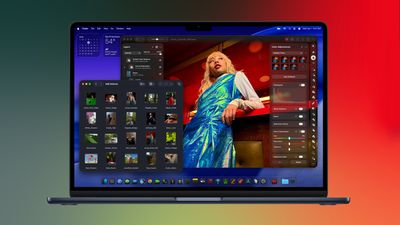
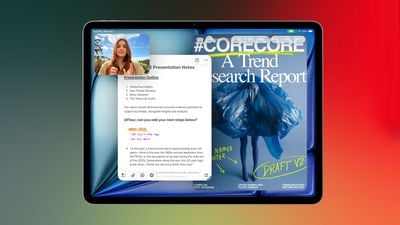
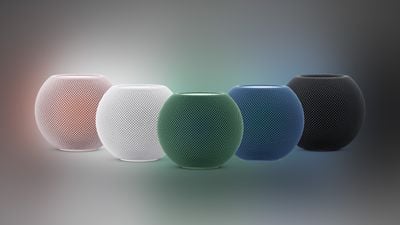
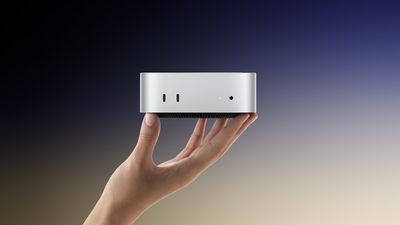
Prime Big Deal Days sales are already starting, and have now hit Apple's brand new Mac mini and Mac Studio computers. You can get up to $199 off these 2026 devices with Amazon's latest savings.
Note: MacRumors is an affiliate partner with some of these vendors. When you click a link and make a purchase, we may receive a small payment, which helps us keep the site running.
One of the best deals is on the M5 Max Mac Studio with 36GB RAM and a 512GB SSD, on sale for $2,299.99, down from $2,499.00. Regarding the Mac mini, you can get the 16GB RAM/256GB SSD Mac mini for $779.99, down from $899.00, and the 24GB RAM/512GB SSD model for $1,549.99, down from $1,699.00.
For more of the best early Prime Big Deal Days discounts, be sure to check out our main article with sales on Apple Watch, AirPods, and more. If you're on the hunt for more discounts, be sure to visit our Apple Deals roundup where we recap the best Apple-related bargains of the past week.
Deals Newsletter
Interested in hearing more about the best deals you can find in 2026? Sign up for our Deals Newsletter and we'll keep you updated so you don't miss the biggest deals of the season!
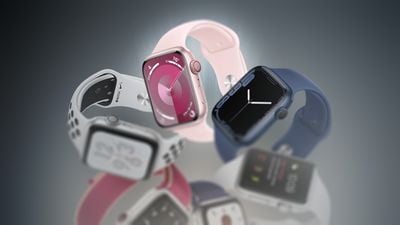
Big Apple Watch discounts have started arriving ahead of Prime Big Deal Days, including new low prices on Apple Watch Series 12 and Apple Watch Ultra 4. These deals join some Apple Watch SE 3 discounts that we began tracking over the weekend, alongside other major early Prime Big Deal Days markdowns.
Note: MacRumors is an affiliate partner with Amazon. When you click a link and make a purchase, we may receive a small payment, which helps us keep the site running.
Starting with the Apple Watch Series 12, you can get the 42mm GPS model for $349.99 and the 46mm GPS model for $399.99, both of which are $49 discounts and new all-time low prices. Both of these models have two colors available at these all-time low prices, and you'll find a few cellular options on sale as well.
For the Apple Watch Ultra 4, you can get the Natural model with the Translucent Gray Ocean Band for $699.99, down from $799.00. This is another new all-time low price for Prime Day, and as of writing it's the only color we're tracking at this price. Additionally, there are a few Milanese Loop models on sale for $99 off ahead of Prime Day.
If you're on the hunt for more discounts, be sure to visit our Apple Deals roundup where we recap the best Apple-related bargains of the past week.
Deals Newsletter
Interested in hearing more about the best deals you can find in 2026? Sign up for our Deals Newsletter and we'll keep you updated so you don't miss the biggest deals of the season!
For the first time since February 2023, Apple has released a firmware update for the MagSafe 3 charging cable for the MacBook Pro and MacBook Air.
Specifically, Apple last week released firmware version 3.2.0 for the USB-C to MagSafe 3 Cable. The previous firmware version for the cable was 3.1.12.
It is unclear what is included in the latest firmware, as Apple does not publish release notes for this. The update will be installed automatically over time when the cable is connected to a Mac and a power adapter. There is no way to manually apply it.
Apple does not expose the MagSafe cable's firmware version in macOS's System Information tool.
Amazon today has every AirPods Max 2 color on sale for $429.00, down from $549.00, marking one of the best early Prime Day deals yet. This is one of the lowest prices we've ever seen on the AirPods Max 2, and the sale is available in Blue, Midnight, Orange, Purple, and Starlight colors.
Note: MacRumors is an affiliate partner with Amazon. When you click a link and make a purchase, we may receive a small payment, which helps us keep the site running.
AirPods discounts have started to arrive early ahead of Prime Big Deal Days official kickoff tomorrow, and you can also get the AirPods Pro 3 for the all-time low price of $179.00 right now, down from $249.00.
We've been tracking all of the best early Prime Day discounts, also including great deals on MacBook Air, Apple Watch, and more. If you're on the hunt for more discounts, be sure to visit our Apple Deals roundup where we recap the best Apple-related bargains of the past week.
Deals Newsletter
Interested in hearing more about the best deals you can find in 2026? Sign up for our Deals Newsletter and we'll keep you updated so you don't miss the biggest deals of the season!
Apple appears to have quietly tripled the number of iCloud Mail aliases users can create, increasing the limit from three to nine. The increase was first noticed last week by a Reddit user, and picked up shortly after by a member of the MacRumors forums. MacRumors can confirm the change is live at iCloud.com.
The increased limit has not been mentioned by Apple, so it could conceivably be a test, but that seems unlikely. It's a nice perk to have, but as of this writing, Apple's iCloud User Guide still says the maximum number of aliases allowed is three.
A new open-source tool is making waves in the Mac community by helping users reclaim valuable storage space taken up by Apple's AI models. Called "RemoveMacAI," the command line tool disables Apple Intelligence on macOS 27, removes its downloaded models, and prevents them from being downloaded again.
In macOS 27, Apple removed the toggle to disable Apple Intelligence wholesale, and simply disabling individual features doesn't remove the models from your Mac's drive. As explained by the developer, RemoveMacAI gets around this by using a configuration profile to switch off Apple's own asset management service and remove the models.
It then configures the system so attempts to download the removed models are redirected to a closed local port, preventing them from immediately coming back. And it does all this without disabling System Integrity Protection (SIP) or manually deleting files from protected system locations, unlike some older tools have.
The tool can free up roughly 12GB of space depending on which models are present on your Mac. That said, some users are reporting cases of Apple Intelligence models having taken up a lot more space, which they've now reclaimed.
With the Apple models gone, you lose all Siri-related AI features, Writing Tools, Genmoji, Image Playground, ChatGPT integration, summaries, smart replies, inline predictions, Photos Clean Up, Spatial Photos, and Xcode predictive completion. Even so, plenty of users appear happy to make the sacrifice to free up space, especially on non-upgradeable Macs with 256GB of storage. The profile reportedly persists across updates. And if you're wondering, dictation still works. There's also a revert command to restore everything AI-related.
The project has attracted hundreds of GitHub stars since its release last week, and there's lots of discussion on Reddit and Hacker News about the need for such a tool. Just be aware that MacRumors isn't endorsing RemoveMacAI, and anyone using it does so at their own risk.
The developer has mentioned one caveat, and it's that some of the configuration-profile restriction keys that the tool relies on were deprecated by Apple in macOS 26.4. While they still work in macOS 27.0.1, a future version could always change that. Something to keep in mind.
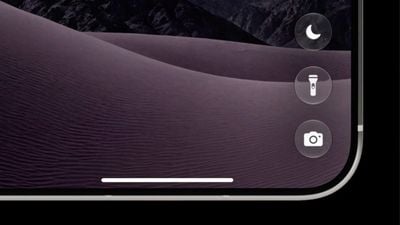
Code explorer pdfu has shared a new feature tidbit for the upcoming iPhone Duo. Apple is reportedly introducing new Focus mode controls on the device's Lock Screen.
When a Focus mode is active, a new button appears above the bottom controls that lets you toggle it off and on while you remain on the Lock Screen. The active Focus also appears in the status bar above the clock when you unlock the device.
Apple has rebuilt iOS 27 to adapt in real time to the company's first foldable iPhone, reshaping the interface as the device folds, unfolds, and switches between its two displays.
New on iPhone Duo: redesigned Focus controls on the Lock Screen.
When a Focus mode is active, a button above the bottom controls lets you turn Focus off and back on until you leave the Lock Screen.
Your active Focus also appears in the status bar above the clock. https://t.co/Z0vFRLRAAR
— pdfu (@itspdfu) October 4, 2026
Apple's upgraded Siri AI could remain unavailable in the European Union for several months yet, according to Bloomberg's Mark Gurman. In his latest Power On newsletter, Gurman said a delay of around five months would be the "absolute best-case scenario," with European users potentially facing an even longer wait while Apple negotiates its compliance with the bloc's digital rules.
Gurman reckons Apple is withholding the upgrade to pressure the European Commission, hoping that frustrated customers will push for changes to its approach, and he compared the situation with Apple Intelligence's delayed EU rollout. Note that Siri AI is not available in the EU on iPhone or iPad, but EU users have access to it on Mac.
15 years ago today, Steve Jobs passed away from pancreatic cancer at the age of 56. It was the day after Apple executives introduced the iPhone 4s at a media event on the company's Infinite Loop headquarters campus.
In the days following his passing, Apple began posting comments from fans on its "Remembering Steve" webpage. Apple continues to maintain the page, highlighting some of the over one million submissions from people around the world who "shared their memories, thoughts, and feelings about Steve."
The company marked the first anniversary of his passing with a photo and audio slideshow on its website, and we are expecting something similar this anniversary. Throughout his tenure as Apple CEO, Tim Cook traditionally shared words of remembrance on social media and with Apple staff on this day. In his new role as executive chairman, he is continuing that tradition.
There are people who leave a mark on the world, and then there are people who change it entirely. Steve changed the world and so many lives in the process. He certainly changed my life forever. His spirit lives on in everything he created and everyone he inspired. https://t.co/8p08BcSlTS
— Tim Cook (@tim_cook) October 5, 2026
This year we have also seen a tribute from the new chief executive, John Ternus.
The way Steve taught us to care about every detail, every experience, every person, still guides our work today. Forever grateful.
— John Ternus (@johnternus) October 5, 2026
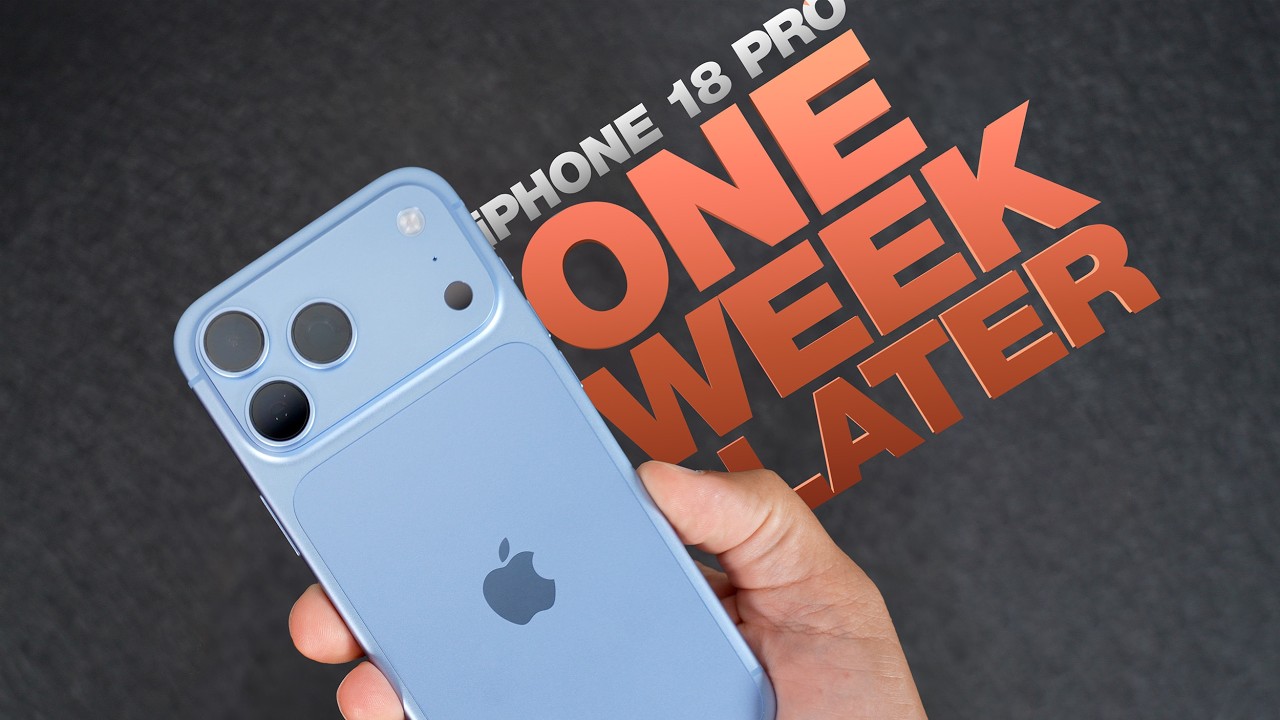
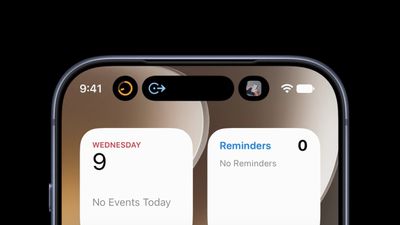
On iPhone 18 Pro models, Apple slimmed down the cutout where the Dynamic Island lives, allowing the latter to support up to three simultaneous Live Activities. But it turns out there's a catch.
As noted by code explorer pdfu, the third Live Activity in iOS 27 is only ever a system activity, such as Now Playing or navigation – it can't be another app. So if you own a new iPhone 18 Pro and were wondering why you hadn't seen as many Live Activities in the Dynamic Island as perhaps you were expecting, that's why.
Since becoming Apple's CEO last month, John Ternus has made product design a "major priority," according to Bloomberg's Mark Gurman.
"Ternus already had some involvement with the design studio as Apple's head of hardware engineering, given the close coordination required between the two functions," he said, in his Power On newsletter today. "Since becoming CEO, however, he has immersed himself in the industrial design and human interface teams."
Ternus goes "hands-on" in Apple's design studio "several times a week, sometimes visiting multiple times in a single day," whereas Apple's former CEO Tim Cook typically visited the studio for "about an hour once a month, at most," according to Gurman.
Unlike Cook, who is better known as a supply chain expert, Ternus comes from an engineering background. As such, Gurman said that Ternus is largely leaving Apple's finances to financial chief Kevan Parekh and its supply chain to operations chief Sabih Khan, giving him more time to focus on engineering and design.
All in all, Apple now has a product person running the show.
Apple recently posted a job listing for an "iCup Supply Specialist" who would be responsible for ensuring that "all Apple employees have access to freshly brewed coffee in their break room."
MacRumors contributor Aaron Perris highlighted the job listing this weekend, but it turns out that Apple has been using the "iCup" name since at least 2014. The individual hired will be required to drive between locations and "sanitize, clean, restock, and manage up to 90 bean-to-cup coffee machines."
Bloomberg's Mark Gurman today said the new MacBook Pro models with OLED displays will be "significantly lighter" than the existing MacBook Pro models.
"Apple has reengineered the machine's interior, miniaturizing parts and rearranging components to make the computer much easier to carry," he said, in his Power On newsletter. Currently, the MacBook Pro weighs up to 4.7 pounds, while the MacBook Air weighs up to 3.3 pounds and the MacBook Neo weighs 2.7 pounds.
With this newly-reported detail, the new models are now rumored to have six new features:
OLED display
Touch-screen capabilities
Dynamic Island instead of a notch
M5 Pro and M5 Max chips
Thinner design
"Significantly lighter" design
Thinner and lighter go hand in hand.
Apple plans to release the MacBook Pro models with OLED displays in October or November this year, according to Gurman. In his newsletter, he reiterated that Apple is testing the laptops with macOS 27.2, which is currently in beta.
The OLED models are expected to be higher-end, higher-priced models that sit above the existing MacBook Pro models in Apple's lineup.
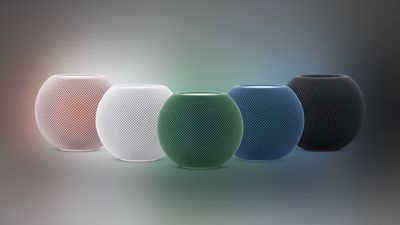
Last week, Bloomberg's Mark Gurman reported that Apple plans to unveil an all-new smart home hub, a new HomePod mini, and a new Apple TV 4K on Tuesday, October 13.
In his Power On newsletter today, Gurman specified that "Apple is planning to hold an event" that day.
Earlier this week, we began tracking early Prime Day deals on Apple-related accessories, and now Amazon has introduced major early deals on Apple products as well. This includes AirPods, iPads, MacBooks, and more, all available at some of the lowest prices of the year so far.
Note: MacRumors is an affiliate partner with Amazon. When you click a link and make a purchase, we may receive a small payment, which helps us keep the site running.
As is typical for Prime Day deals, these markdowns are very time sensitive, so sales listed below may disappear fast, and new ones may appear even faster. With this in mind, we'll keep this article updated throughout the event, and keep an eye on the MacRumors front page as we'll be posting particularly great deals in separate articles this week.
Lastly, and perhaps most importantly, Amazon Prime Day requires you to have an Amazon Prime membership to take advantage of the discounts. Amazon Prime costs $14.99 per month or $139.00 per year, and it comes with a 30-day free trial for new subscribers.
AirPods
The best AirPods discount so far this Prime Day is on the AirPods Pro 3, available for the record low price of $179.00, down from $249.00. We haven't seen a deal this good since over the summer, during the first Prime Day event in June.
Amazon is taking $200 off nearly every M5 MacBook Air model for Prime Big Deal Days, including both 13-inch and 15-inch models. These are the best prices we've seen on the M5 MacBook Air in the wake of Apple's summertime price hikes.
In terms of 13-inch models, Amazon has the 16GB/512GB 13-inch MacBook Air for $1,099.00, down from $1,299.00. This one is available in three colors on Amazon, and it's accompanied by the 16GB/1TB and 24GB/1TB model for $200 off as well.
For the 15-inch M5 MacBook Air models, prices start with the 16GB/512GB model for $1,299.00, down from $1,499.00. You can also get the 16GB/1TB model for $1,599.00, down from $1,799.00, all $200 off and the best prices we've seen in months.
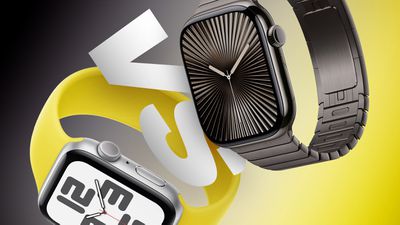
Rare deals have hit the Apple Watch SE 3 for Prime Big Deal Days, with prices now starting at $199.00 for the 40mm GPS model and increasing to $229.00 for the 44mm GPS model. Both of these are $50 discounts and matches for the record low prices on each device.
For the Apple Watch Series 12, you can get the 42mm GPS model for $349.99 and the 46mm GPS model for $399.99, both of which are $49 discounts and new all-time low prices. Both of these models have two colors available at these all-time low prices, and you'll find a few cellular options on sale as well.
For the Apple Watch Ultra 4, you can get the Natural model with the Translucent Gray Ocean Band for $699.99, down from $799.00. This is another new all-time low price for Prime Day, and as of writing it's the only color we're tracking at this price. Additionally, there are a few Milanese Loop models on sale for $99 off ahead of Prime Day.
Amazon this week has multiple discounts on the M4 iPad Air, providing up to $149 off these 2026 models. These remain the best prices we've seen in the wake of Apple's summer price hikes, and many deals are being matched at Best Buy.
The new iPad Air features the M4 chip, C1X modem, and N1 networking chip, which brings support for Wi-Fi 7 and Bluetooth 6. In terms of design, the 2026 models are identical to the 2025 iPad Air tablets, with an edge-to-edge display, slim bezels, and aluminum chassis.
Amazon has low prices on every Wi-Fi model of the iPad mini 7, starting at $499.00 for the 128GB Wi-Fi tablet, down from $599.00. You'll also find a few deals on cellular models during this early Prime Day sale.
If you're on the hunt for more discounts, be sure to visit our Apple Deals roundup where we recap the best Apple-related bargains of the past week.
Deals Newsletter
Interested in hearing more about the best deals you can find in 2026? Sign up for our Deals Newsletter and we'll keep you updated so you don't miss the biggest deals of the season!
Amazon has the AirPods Pro 3 available for $179.00 this week, down from $249.00. This is a match of the all-time low price on the AirPods Pro 3, which we haven't tracked since around June.
Note: MacRumors is an affiliate partner with some of these vendors. When you click a link and make a purchase, we may receive a small payment, which helps us keep the site running.
This model of the AirPods Pro launched in September 2025 and has 2x better Active Noise Cancellation than the previous generation, better audio quality, a revised fit that's meant to improve comfort and stability, Live Translation for in-person conversations, and heart rate sensing for workouts.
Head to our full Deals Roundup to get caught up with all of the latest deals and discounts that we've been tracking over the past week.
Deals Newsletter
Interested in hearing more about the best deals you can find in 2026? Sign up for our Deals Newsletter and we'll keep you updated so you don't miss the biggest deals of the season!
Things are getting crazy in the Apple rumor world, as even though the iPhone 18 Pro and several other products have only just launched and the iPhone Duo is right around the corner, there's even more to come imminently.
October 13 looks to be the date for an introduction of Apple's revamped smart home portfolio, including the home hub device we've been hearing about for ages. This week also saw word that Apple's supply chain is struggling to meet production yield goals for the iPhone Duo ahead of its launch, while iPhone 18 Pro owners are now getting a chance to put the devices through their paces, so read on below for all of the details!
Top Stories
Three New Apple Smart Home Products Coming on October 13
Apple will reportedly debut its long-rumored smart home hub product, as well as the new HomePod mini and Apple TV models, and while he didn't specify how Apple will introduce them, signs are pointing to some sort of event.
Apple retail stores have reportedly also received confidential boxes that are marked "Do Not Open Until October 8" and which are likely to contain merchandising materials. It's unclear, however, if they are for the upcoming iPhone Duo launch or something related to the smart home product introduction.
Apple Smart Home Hub to Feature iMac G4-Style Design
The smart home hub is said to feature a square 6-inch display, with variants that can be placed on a countertop or mounted on a wall. It features a single FaceTime camera on the front, with microphones and speakers in its connected base.
A person said to be close to Foxconn's supply chain told China's Jiemian News that final assembly yields for Apple's first foldable iPhone were only slightly above 60% as of September 17. The source said that, under Apple's current quality standards, it could take another six months to a year for the assembly line to reach a mature yield.
According to the source, Foxconn is repeatedly adjusting equipment, assembly processes, and production settings as it makes the iPhone Duo at scale. The source also said suppliers were waiting to see whether Apple would ease any quality requirements to accelerate production.
iPhone 18 Pro First Impressions: What Do You Think So Far?
It's been almost two weeks since the iPhone 18 Pro models launched, and we want to hear from MacRumors readers. What do you think of Apple's newest iPhones? If you upgraded from an older phone, was it worth it? What about upgrading from an iPhone 17 Pro? What problems are you running into? Anything you love so far?
MacRumors readers have already been sharing early opinions on the MacRumors forums, and there are interesting discussion threads to read through. For early reviews and hands-on images, make sure to check out the first impressions and photos thread.
Ternus apparently wants Apple to "broaden its range of devices and create a leaner organization with a greater focus on engineering." One proposal under consideration is to rely less on Apple's traditional spring and fall product release cycles, and introduce new devices more quickly and throughout the year. Ternus has also purportedly indicated that Apple must become "more experimental" to remain competitive in the era of artificial intelligence.
MacRumors Newsletter
Each week, we publish an email newsletter like this highlighting the top Apple stories, making it a great way to get a bite-sized recap of the week hitting all of the major topics we've covered and tying together related stories for a big-picture view.
Apple today confirmed that a "small number" of iPhone 18 Pro Max users on the AT&T network have experienced an issue that causes the device to lose cellular service, thereby preventing phone calls, text messages, and data from working. Thousands of users complained about the issue across the Apple Support Community and other platforms.
Apple said it released iOS 27.0.1 earlier this week and an AT&T carrier settings update earlier today to help prevent more iPhone 18 Pro Max users from being impacted by this issue going forward. In a statement shared with MacRumors, Apple strongly encouraged all iPhone 18 Pro Max users to update to iOS 27.0.1 now. To install the update, open the Settings app on your iPhone and tap on General → Software Update.
The carrier settings update for the iPhone 18 Pro Max will automatically download for AT&T users over the next 14 days, according to Apple. To manually trigger the update, users can open the Settings app and tap on General → About.
Apple's full statement:
We have identified an issue affecting a small number of iPhone 18 Pro Max users on the AT&T network that may cause a device to lose service and be unable to make calls. We released iOS 27.0.1 earlier this week and strongly encourage all iPhone 18 Pro Max users to update now, and are also issuing a carrier settings update today. These updates together are meant to help prevent this issue from occurring.
Notably, Apple said that iPhone 18 Pro Max devices that have been affected by this cellular issue on the AT&T network cannot have service reactivated with a software update. Instead, Apple said the device must be replaced entirely, and it advises affected customers to contact Apple Support or AT&T, or visit an Apple Store or AT&T location.
Apple said it has only observed this issue with iPhone 18 Pro Max users on the AT&T network. No other iPhone models or carriers are known to be impacted.
Apple did not disclose the underlying cause of the issue. U.S. models of the iPhone 18 Pro Max rely on Qualcomm's Snapdragon X80 modem for cellular connectivity, while variants of the device sold in all other countries are equipped with Apple's custom C2 modem. It is unclear if this modem difference is a factor in this AT&T issue.
It is also unclear if there will eventually be an Apple Service Program dedicated to this issue. In the meantime, it sounds like Apple Stores will replace affected iPhone 18 Pro Max devices for free, so book an appointment with the Genius Bar if necessary.
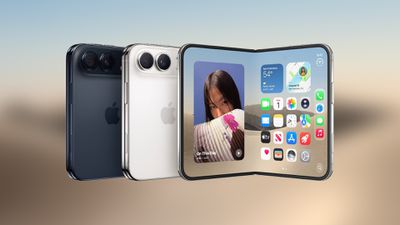
Apple's first foldable iPhone, with a book-style design featuring a 5.4-inch outer display and a 7.6-inch inner display with a minimal crease down the middle.


















 Note: MacRumors is an affiliate partner with some of these vendors. When you click a link and make a purchase, we may receive a small payment, which helps us keep the site running.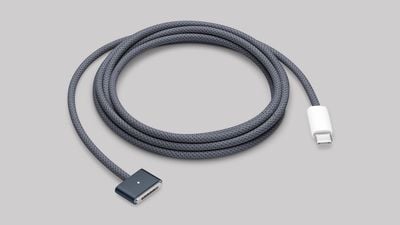
 Apple appears to have quietly tripled the number of iCloud Mail aliases users can create, increasing the limit from three to nine. The increase was first noticed last week by a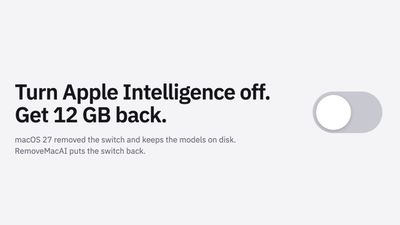
 Apple's upgraded Siri AI could remain unavailable in the European Union for several months yet, according to Bloomberg's Mark Gurman. In his latest
 On iPhone 18 Pro models, Apple slimmed down the cutout where the
 Apple recently posted a