








Apple's beautiful Passeig de Gràcia store in the heart of Barcelona reopened today, after being closed for around three months for renovations.
According to the Spanish blog Applesfera, the store's large video wall has been replaced with a dedicated Apple Pickup station for online orders. The indoor trees and wood cube seats that surrounded the screen have also been removed. With these fixtures removed, the store's iconic glass staircase is more visible again.
In addition, the store's terrazzo floor has received a brighter white finish.
Apple Passeig de Gràcia first opened in 2012, and it is one of the company's flagship retail locations. The store is on one of the most popular avenues in Barcelona, inside a historic former bank building with a stunning stone facade.
Apple plans to hold an Apple Watch Activity Challenge to celebrate Global Running Day on Wednesday, June 3.
To complete the challenge, Apple Watch owners will be required to record a running workout of at least 5K on Global Running Day.
On June 3, the world runs as one. This Global Running Day, record a running workout of at least 5K (3.1 mi) to earn this award. Use the Workout app or any app that records workouts to Health.
As a reward, Apple Watch owners can unlock a dedicated award in the Fitness app, plus animated stickers that can be used in the Messages app.
Apple has been celebrating Global Running Day since 2024, and it comes after the April 2026 Earth Day and International Dance Day Activity Challenges.
Apple's iOS 26.6 update appears to add new wording around blocked contact limits, though it is unclear if the actual limits have changed.
Code in the beta suggests users will get a warning if they exceed the maximum number of blocked contacts. "You've reached the maximum number of blocked contacts. To block additional callers, remove a blocked contact in Settings," reads the alert, which is titled "Blocked Contacts Limit Reached."
Based on discussions on social media and Apple's Support Communities, some users have been unable to block additional contacts after hitting a 20,000 limit. Other people have mentioned running into issues after 8,000, and some have experienced issues with even fewer phone numbers blocked. Apple does not offer documentation on blocking limits.
With limits in the thousands at least, it's unlikely most people have had blocking problems, though a person who is blocking spam callers regularly could eventually hit a cap. iOS 26.6 might make it clearer when a limit has been reached, and what to do about it.
Removing older blocked contacts is the solution, which can be done by going to Settings > Apps > Phone > Blocked Contacts. There is no bulk unblocking tool, and the easiest way to remove a contact is to swipe left on each entry. Alternatively, you can select Edit, tap on the red minus button next to each contact, and choose the unblock option.
iOS 26 added an Ask Reason for Calling option that sends calls from people who aren't in your Contacts directly to voicemail, which is an easier option for spam call management than blocking phone numbers. With the feature turned on, a caller can state their reason for calling and the person receiving the call can decide whether to pick up. Alternatively, all calls from unknown numbers can be silenced and sent to voicemail with no alert using the Silence option.
Missed calls and voicemails from unknown callers can also be filtered into a separate Unknown Callers list in the Phone app. Some carriers also offer a separate spam detection option that can send calls from known spammers to the Spam list.
Apple seeded the first beta of iOS 26.6 to developers today, and the software may soon be made available to public beta testers. A public release is likely several weeks away. So far, there are no other known features in iOS 26.6.
Apple today provided the first beta of an upcoming macOS Tahoe 26.6 update to developers for testing purposes, with the update coming two weeks after Apple launched macOS Tahoe 26.5.
Developers can download the macOS Tahoe 26.6 update by opening up the System Settings app, selecting the General category, and then choosing Software Update. Beta Updates will need to be enabled, and a free developer account is required.
With macOS 27 set to be unveiled in less than a month, Apple is likely focusing most of its attention on the new software. We are not expecting any major new features in macOS Tahoe 26.6.
The beta is limited to developers right now, but a public beta is expected in the next week or two.
Apple today seeded the first betas of upcoming iOS 26.6 and iPadOS 26.6 updates to developers for testing purposes, with the software coming two weeks after Apple released iOS 26.5 and iPadOS 26.5.
Registered developers can download the betas from the Settings app on the iPhone or iPad by going to the General section and selecting Software Update.
With the debut of iOS 27 approaching in early June, Apple is wrapping up work on iOS 26. We are not expecting any major new features in the iOS 26.6 update, and it will likely focus on bug fixes and performance improvements.
Apple today provided developers with the first betas of upcoming watchOS 26.6, tvOS 26.6, and visionOS 26.6 betas for testing purposes. The software two weeks after Apple launched the 26.5 versions of each platform.
The software updates are available through the Settings app on each device, and because these are developer betas, a free developer account is required.
There's no word on what's in the software as of yet. watchOS, tvOS, and visionOS often get few features in each new beta, with updates primarily focusing on bug fixes and performance improvements.
Apple will likely provide public beta testers with access to the tvOS 26.6 and watchOS 26.6 betas in a week or two, but visionOS 26.6 will remain limited to developers.
Android manufacturers are planning to adopt Apple's split launch strategy, releasing high-end and standard models in separate windows rather than simultaneously, according to the leaker known as "Digital Chat Station."
The leaker made the claim in a new post on Weibo this week, saying the "Android camp may repeat this style of play" with Pro series and standard models launching separately in a move to "comprehensively go head-to-head" with Apple. The leaker described it as a move to "fully benchmark" Apple, suggesting the motivation is competitive rather than logistical.
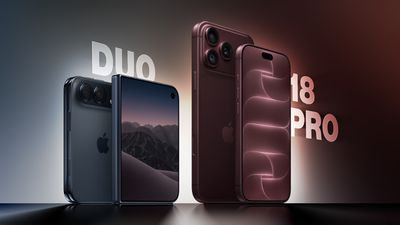
The same post reiterated earlier predictions about Apple's plans. Starting this year, Apple is widely expected to break from its long-standing September release cycle by splitting the iPhone 18 lineup across two windows: the iPhone 18 Pro, iPhone 18 Pro Max, and the first foldable iPhone are expected to launch in fall 2026, while the standard iPhone 18, iPhone 18e, and a second-generation iPhone Air are expected in spring 2027.
Digital Chat Station attributed the delay partly to supply pressure on memory and 2nm chip production, which is an explanation consistent with Nikkei Asia's corroborating report in January, which also cited a deliberate commercial motive to maximize revenue from premium models before cheaper alternatives arrive.
Supply chain analyst Ming-Chi Kuo and The Information have also supported the rumor of the split launch. Kuo framed the strategy as a way to prevent "diluted marketing efforts" as Apple's lineup expands to six devices and to address the "marketing gap" created by Chinese Android brands that typically launch their flagships in the first half of the year, a window Apple has historically ceded entirely to Android.
If Android brands do adopt the same release plan, it would mark a noticeable departure from current practice. Samsung, Apple's most direct competitor, launches its Galaxy S flagship family, standard, Plus, and Ultra, simultaneously each February or March, then launches foldables in a separate mid-year event in July. All tiers of the S series ship together and there is no equivalent of deliberately holding the base model back.
Xiaomi regularly launches flagship models in China several months before a global rollout, and its Ultra-tier models often arrive weeks or months after standard and Pro variants within the same generation. Oppo and Vivo similarly stagger Ultra devices relative to their base flagships, but in each case the split is led by entry level models debuting first, followed by high-end devices.
Should Android manufacturers adopt Apple's new plan, it would largely represent an inversion of the current approach, with premium models leading and standard devices following months later.
For many years now, it has been rumored that the Apple Watch will eventually gain non-invasive blood sugar monitoring capabilities, which would enable millions of people with diabetes to track their blood glucose levels without needing to prick their skin with a needle or wear a dedicated continuous glucose monitor.
According to Bloomberg's Mark Gurman, Apple recently shifted oversight of the project from its platform architecture chief Tim Millet to Zongjian Chen, a senior engineer overseeing advanced technologies within the company.
He framed this change as positive news for the project, which has apparently been in development for more than 15 years.
"Some view the transition as a sign the work may finally be progressing to a point where Chen, known as someone who delivers, can ramp up development of the technology into an eventual consumer-grade offering," he said.
In 2023, Gurman reported that Apple's system would rely on a laser that would emit light under the skin to determine a person's blood glucose level.
"The system uses lasers to emit specific wavelengths of light into an area below the skin where there is interstitial fluid — substances that leak out of capillaries — that can be absorbed by glucose," he said. "The light is then reflected back to the sensor in a way that indicates the concentration of glucose."
An algorithm would ultimately determine a person's blood glucose level, and the feature could also alert users to potential signs of prediabetes.
While the project has new leadership, the Apple Watch is still unlikely to gain non-invasive blood sugar monitoring for several more years, if ever. But if Apple eventually achieves this moonshot, the Apple Watch would provide diabetic people with a more comfortable and convenient solution for keeping track of their blood sugar.
The Pro iPhone models are unlikely to return to titanium in the near future due to the heat dissipation demands of local AI, according to a known Weibo leaker.
The claim comes from the leaker known as "Fixed Focus Digital," and pushes back on an earlier report from "Instant Digital," who suggested Apple was weighing up the use of liquid metal or an improved titanium alloy as a longer-term replacement for aluminum iPhone frames. Fixed Focus Digital argues that aluminum's thermal properties make it the only practical choice for now, given the processing requirements of AI features. The leaker adds that this is not an Apple-specific issue, noting that Android and Huawei HarmonyOS devices also prioritize aluminum for the same reason.
Instant Digital's earlier report argued that Apple's switch from titanium to aluminum for the iPhone 17 Pro was a compromise solution while it continued to develop longer-term alternatives. The leaker claimed Apple was exploring both liquid metal and revised titanium alloys for future Pro models, with both materials reportedly already earmarked for the upcoming foldable iPhone.
Apple switched away from titanium following overheating complaints on the iPhone 15 Pro and iPhone 16 Pro models, although the iPhone Air continues to use it. Fixed Focus Digital's assessment suggests aluminum is more deeply entrenched in Apple's plans than Instant Digital's framing implied, at least for the foreseeable future. The iPhone 18 Pro is expected to retain the same aluminum unibody design as the iPhone 17 Pro models, meaning any material change is unlikely before 2027 at the earliest.
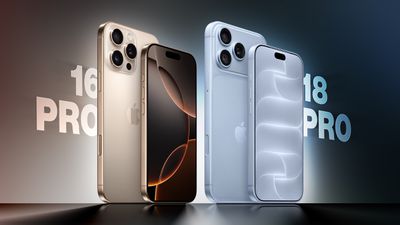
Below, we have recapped 10 features rumored for the iPhone 18 Pro models, as of May 2026:
Dark Cherry: The special color for the iPhone 18 Pro models will reportedly be Dark Cherry, alongside Light Blue, Dark Gray, and Silver. The existing Cosmic Orange and Deep Blue colors are expected to be discontinued.
Variable Aperture: The main 48-megapixel Fusion camera on both iPhone 18 Pro models is rumored to have a variable aperture, which would allow users to control the amount of light that passes through the camera's lens and reaches the sensor. This would provide greater control over depth of field. However, given that iPhones have smaller image sensors due to smartphone size constraints, it is unclear exactly how meaningful this improvement would be.
A20 Pro Chip: Apple's next-generation A20 Pro chip is expected to use TSMC's first-generation 2nm process, whereas the A19 Pro chip is 3nm. With a 2nm architecture and a new packaging design, the A20 Pro chip should deliver solid year-over-year performance and power efficiency gains.
C2 Modem: Apple's custom C1 cellular modem for 5G and LTE debuted in the iPhone 16e last year, and that was followed by a C1X chip in the iPhone Air. Apple says the C1X modem is up to twice as fast as the C1 modem, and the most power-efficient modem in an iPhone ever. The improvements should continue with Apple's third-generation C2 modem in the iPhone 18 Pro models.
5G via Satellite: With the C2 modem, the iPhone 18 Pro models will reportedly support 5G via satellite for web browsing without Wi-Fi or cellular connectivity.
N2 Chip: Most of the iPhone 17 models and the iPhone Air are equipped with an Apple-designed N1 chip that enables Wi-Fi 7, Bluetooth 6, and Thread. Apple says the N1 chip also improves the overall performance and reliability of features like Personal Hotspot and AirDrop. iPhone 18 Pro models are expected to have Apple's next-generation N2 chip, but it is not yet known what improvements would come with this upgrade.
Simplified Camera Control: Apple is expected to simplify the Camera Control button on the iPhone 18 Pro models, by removing touch sensitivity and haptic feedback. The redesigned button will only have pressure sensitivity.
Redesigned Rear Ceramic Shield: The rear Ceramic Shield area for MagSafe is rumored to feature a more frosted and seamless appearance on the iPhone 18 Pro models compared to the current two-tone design.
Amazon today has introduced a new record low price on the 512GB 13-inch M5 MacBook Air, available for $899.99, down from $1,099.00. This deal is available in all colors and as of writing only Amazon has the discount.
Note: MacRumors is an affiliate partner with Amazon. When you click a link and make a purchase, we may receive a small payment, which helps us keep the site running.
This new price is about $50 cheaper when compared to past sales. Amazon also has $149 off the 1TB models of the 13-inch M5 MacBook Air, which match all-time low prices on these devices. Delivery dates vary depending on the color selected, but most will arrive before the end of the month.
If you're on the hunt for more discounts, be sure to visit our Apple Deals roundup where we recap the best Apple-related bargains of the past week.
Deals Newsletter
Interested in hearing more about the best deals you can find in 2026? Sign up for our Deals Newsletter and we'll keep you updated so you don't miss the biggest deals of the season!
Apple's first foldable iPhone is running into mass production yield problems at the pre-assembly stage, the leaker known as "Fixed Focus Digital" claims.
In a post today on Weibo, Fixed Focus Digital said Apple's troubles are not related to hinge reliability, as was previously reported, but rather due to surface-mount technology (SMT) during pre-assembly, with production yields failing to ramp up. The leaker framed the situation as somewhat concerning, stopping short of suggesting the fall launch is at risk.
The update arrives days after a separate leaker known as "Instant Digital" reported that the device's hinge was consistently failing to meet Apple's quality control standards under conditions of prolonged, high-frequency opening and closing. Instant Digital described that issue as one that "must be resolved with absolute perfection," though a follow-up post suggested the hinge difficulties were unlikely to affect the expected release window.
DigiTimesreported in April that production was already running roughly one to two months behind schedule, while still maintaining that a fall 2026 launch remained on track, with mass production planned to begin in July. Fixed Focus Digital reported in April that price negotiations with Apple's assembly partner were a potentially disruptive factor.
Whatever the precise nature of the problems, the picture that has emerged across multiple supply chain sources in recent weeks is one of unusual production difficulties. That said, a fall launch does not appear to be at risk; Bloomberg's Mark Gurman reported in April that the foldable iPhone remains on track for a September debut alongside the iPhone 18 Pro models, and that Apple is aiming to put it on sale at roughly the same time or slightly later. Gurman noted at the time, however, that "the release is six months away and production has yet to ramp up" and "the timing isn't final."
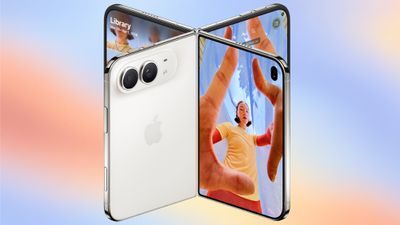
The foldable iPhone is expected to feature a 7.8-inch inner display and a 5.5-inch cover display, the A20 chip and C2 modem, a Touch ID power button instead of Face ID, and two rear cameras, with pricing rumored at around $2,000.
Ferrari today unveiled the Luce, its first fully electric car, designed with help from Apple's former design chief Jony Ive.
"Designed with Sir Jony Ive and Marc Newson at the creative collective LoveFrom, a singular design language unites the exterior, interior, and interface with clarity and refined simplicity throughout," said Ferrari.
The exterior of the car has a "smooth, continuous, and uninterrupted" design, with a "shell-like form" and "floating front and rear aerodynamic wings."
The interior has "precision-engineered mechanical buttons, dials, toggles, and switches" combined with "multifunctional digital displays."
The three-spoke steering wheel is machined from 100% recycled aluminum.
The four-door, five-seat Luce is powered by four electric motors providing up to 1,035 horsepower, and it is equipped with a high‑capacity 122 kWh battery. Ferrari says the car can accelerate from 0-100 km/h (0-62 mph) in just 2.5 seconds.
A dedicated app offers climate controls and charging settings, and it displays the car's status.
Luce pricing starts at €550,000 ($640,000) in Europe, with production set to begin in late 2026. The car will launch in the U.S. in the second quarter of 2027.
Apple was rumored to be working on its own electric vehicle for more than a decade, but the project was ultimately canceled in 2024.
Reports and rumors suggest the next MacBook Pro that Apple will release might not be a MacBook Pro at all. It could actually be something altogether new and more exciting – a "MacBook Ultra" – positioned above the Pro as Apple's top-tier laptop, suggesting that the current M5 Pro and M5 Max models will remain on sale when it launches.
The MacBook would be just the latest Apple product to carry the Ultra name, which already spans the Apple Watch Ultra and CarPlay Ultra (not forgetting Apple's top-end Ultra-designated silicon chips). This is likely to bring a markedly higher price point for the new machines. It fits into a broader trend at Apple, where the company is seeking to offer more models at more price points, such as the new MacBook Neo at an unprecedented $599 price point.
Below, we've listed the features we are expecting in the MacBook Ultra, which is likely to go on sale either later this year or in early 2027. As things stand, the latter time frame is now looking more likely, owing to the global memory chip shortage.
OLED Display
Bloomberg's Mark Gurman and analyst Ming-Chi Kuo say Apple is readying OLED technology for these models, and industry reports corroborate their claims. Samsung Display is said to be making the panels, and the supplier has invested heavily in an 8.6-generation OLED production line in South Korea. The line recently reached a key milestone for mass production.
The MacBook Pro will utilize hybrid OLED technology, similar to that used in Apple's latest iPad Pro. This display technology combines a glass substrate with thin-film encapsulation, offering improved brightness, contrast, and power efficiency compared to current MacBook Pro models, which use LCD displays with mini-LED backlighting.
Touch Screen
The new MacBook Pro is expected to become the first Mac to support touch input directly on the display. It's a notable shift from Apple's longstanding position against bringing touchscreen functionality to the Mac.
Apple previously experimented with touch controls through the OLED Touch Bar on earlier MacBook Pro models, but the feature was ultimately discontinued following a lukewarm reception. Rather than positioning the MacBook Pro as a touch-centric device like the iPad, Apple is reportedly planning to let users move seamlessly between touch and traditional trackpad or mouse input across the system.
This will require updates to macOS to make it more touch friendly, and users will reportedly be able to tap or click on-screen elements, and controls will change based on input method. If a user taps on a menu bar item, for example, it will display a larger set of controls optimized for touch.
Thinner Design
Gurman has reported that Apple is working to make the OLED MacBook Pro significantly thinner, as part of the company's plan to create "the thinnest and lightest products in their categories across the whole tech industry." (Think the latest iPad Pro and iPad Air – two of the thinnest devices the company has ever made.) Indeed, the reporter has said there's a good chance that the next MacBook Pro model will represent a "true overhaul" for the laptop, thanks to the combination of the OLED display and thinner design.
Notably, the MacBook Pro got thicker and heavier with its most recent redesign in 2021. A major highlight was the reintroduction of several ports that were removed in previous iterations in favor of chassis thinness. How Apple will make its redesigned MacBook Pro thinner without removing the functionality it reintroduced fairly recently is the big question.
Dynamic Island
Apple's highly anticipated OLED MacBook Pro could ditch the current notch for a display cutout potentially similar to the iPhone's Dynamic Island, according to Bloomberg. Such a move would mirror Apple's iPhone evolution, since the iPhone's notch became the current Dynamic Island starting with the iPhone 14 Pro models in 2022.
As with the iPhone, the Mac Dynamic Island will be interactive and it will contextually expand based on the app or Mac feature in use. The change should address long-standing user complaints about the notch, which physically ingresses into the macOS menu bar.
M6 Processor Architecture
The redesigned MacBook Pro models are expected to boast M6 Pro and M6 Max chips, which could adopt a completely new packaging based on TSMC's 2nm process that allows components such as the CPU, GPUs, DRAM, and Neural Engine to be more tightly integrated.
Terms like "3nm" and "2nm" describe generations of chip manufacturing technology, each with its own set of design rules and architecture. As these numbers decrease, they generally indicate smaller transistor sizes. Smaller transistors allow more to be packed onto a single chip, typically resulting in increased processing speed and improved power efficiency.
Based on where the industry's headed, Apple is likely to heavily market the processors as optimized for AI workflows.
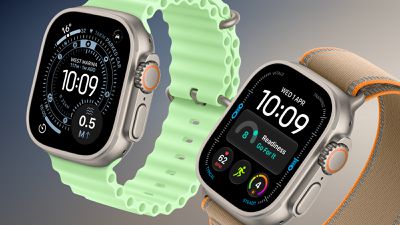
Apple will unveil watchOS 27 during its WWDC 2026 keynote on Monday, June 8, and a handful of new features have been rumored already.
The first developer beta of watchOS 27 should be available immediately following the keynote, and a public beta typically follows in July. The update should be released to all users with a compatible Apple Watch model in September.
Below, we recap watchOS 27 rumors so far.
Improved Heart Rate Tracking
In his Power On newsletter today, Bloomberg's Mark Gurman said watchOS 27 will include improvements to heart rate tracking, but he did not elaborate.
On watchOS 26, the following Apple Intelligence features are available on an Apple Watch when it is paired with an iPhone 15 Pro or newer:
Workout Buddy
Live Translation in Messages
Notification Summaries
When it announced the dates for WWDC 2026, Apple promised to unveil "AI advancements" across its platforms, and it can be reasonably assumed that watchOS 27 will include some additional Apple Intelligence features powered by the iPhone.
New Satellite Features
Apple Watch Ultra 3 has built-in satellite connectivity, enabling Emergency SOS, Find My, and Messages via satellite without any reliance on an iPhone.
Amazon last month announced plans to acquire Globalstar, the satellite company that powers Apple's satellite features on the iPhone 14 and newer and the Apple Watch Ultra 3. In turn, Amazon announced that it has signed an agreement with Apple to provide satellite connectivity for current and future iPhone and Apple Watch features.
Stability Focus
Apple is largely focused on "stability, performance, and smaller refinements" for watchOS 27, rather than on major new features and capabilities, according to Gurman. This suggests that the update could include many bug fixes.
Anker's Prime 3-in-1 Wireless Charging Station is still available for $104.99 on Amazon this weekend, down from $149.99. This is one of Anker's newest accessories, and Amazon's sale today is a match of the all-time low price.
Note: MacRumors is an affiliate partner with some of these vendors. When you click a link and make a purchase, we may receive a small payment, which helps us keep the site running.
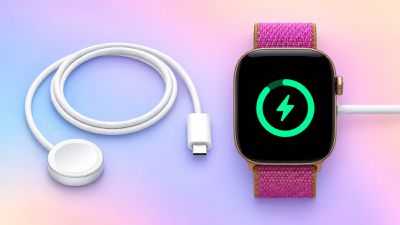
The Prime 3-in-1 Wireless Charging Station features Qi2.2 support, which lets a compatible MagSafe iPhone charge at up to 25W. It's the same speed as Apple's MagSafe charger, and it is 10W faster than the standard Qi2 MagSafe chargers. You can also simultaneously charge an Apple Watch and AirPods with the device.
There are plenty of other Anker discounts happening on Amazon this week, including Anker's Prime 14-in-1 Docking Station for $339.98, down from $399.99. Below you'll find a list of the best Anker discounts on Amazon this week, also including wall chargers, portable chargers, and more.
If you're on the hunt for more discounts, be sure to visit our Apple Deals roundup where we recap the best Apple-related bargains of the past week.
Deals Newsletter
Interested in hearing more about the best deals you can find in 2026? Sign up for our Deals Newsletter and we'll keep you updated so you don't miss the biggest deals of the season!
Apple is readying the subdomain genai.apple.com, according to MacRumors contributor Aaron Perris, but it does not yet lead to a live web page. The genai.apple.com subdomain has been added to Apple's domain name servers a few weeks ahead of Apple's annual developers conference WWDC, where the company has promised to announce "AI advancements" across its software platforms.
Apple's website already has an Apple Intelligence page, so it is unclear what the company's plans are for genai.apple.com at this time. The subdomain is clearly related to generative AI, which has been popularized by chatbots such as ChatGPT and Claude in recent years.
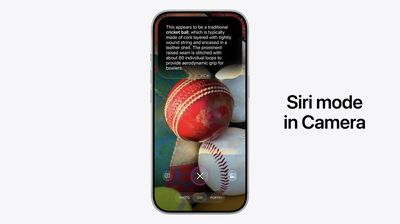
Apple's next major software releases like iOS 27, iPadOS 27, and macOS 27 are expected to include many new Apple Intelligence features, including a more personalized version of Siri with on-screen awareness. Similar to other chatbots like ChatGPT, a dedicated Siri app will reportedly allow users to have back-and-forth conversations.