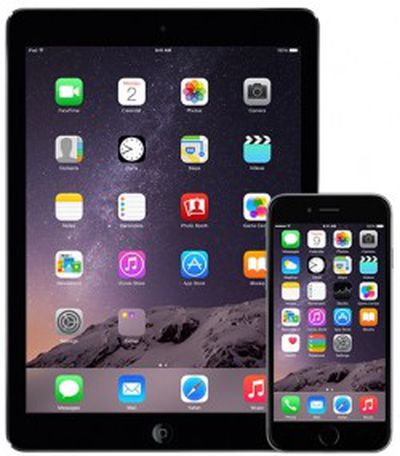
Google on Thursday updated Gmail for iOS with a trio of notable new features: quick actions, the ability to email files from other apps and a new attachment viewer. Gmail users on iPhone and iPad can now attach photos and documents to Gmail from other apps such as Instagram using the updated in-app share sheet, and open attachments from Gmail into any app.
Taking advantage of Apple's addition of interactive notifications in iOS 8, quick actions enable Gmail users to archive or reply to emails directly from a notification without leaving the app. The functionality also works for notifications in Notification Center and on the Lock screen. The latest release of Gmail for iOS pushes the app to version 4.0 on the App Store.
What's New in Version 4.0 • Take quick actions - Archive or reply to messages directly from a notification • Email files from other apps - Attach photos and documents to Gmail right from your favorite apps • New attachment viewer - Open attachments from Gmail into any app
Microsoft is today introducing a preview of the next iteration of its office software designed for Mac users, Office 2016. Office 2016 for Mac is the company's first major Mac release since Office 2011, and it brings new versions of Word, Excel, and PowerPoint with redesigned Retina-optimized interfaces, new features, and a heavy focus on collaboration and cloud integration.
Office 2016 for Mac, which is free to all Mac users running OS X Yosemite during the preview period, is the next step in Microsoft's plan to make its Office products available anywhere, anytime, on any device, and as such, it's been designed to work with Office 365 and OneDrive. Users will get the best experience when signed into Office 365 because that allows them to access all of their documents on all of their devices, but an Office 365 account is not required to use the software.
Office 2016 for Mac has adopted many elements previously found in both the Windows version of Office and in the mobile Office apps, released last year. There's a new Ribbon that reorganizes tools and formatting options, a task pane interface for greater graphics customization within all three apps (which can be manipulated and repositioned within each app), new themes and styles, and there's a Yosemite-style look that takes advantage of features like full-screen support.
Office 2016 for Mac is powered by the cloud so you can access your documents anytime, anywhere, and on any device. It’s unmistakably Office – but thoughtfully designed to take advantage of the unique features of the Mac. The new apps offer full retina display support with thousands of retina-optimized graphics, full screen view for native immersive experiences, and even little Mac affordances like scroll bounce.
Microsoft believes that cloud connectivity is a key feature that people have come to expect from their software, so that's become a focal point for the company. With cloud support, Office 2016 for Mac lets users access a list of files created on any device, keep files up to date on all of their devices, and collaborate with other users. Each of Microsoft's new Office apps have received several new cloud-based features and other updates, as outlined below.
Word 2016 focuses heavily on collaboration. It's designed to improve the multi-author experience, with a consistent sharing interface at the top right of the app. Through this menu, users can invite coworkers to work on a document, send out links, and see who a document has been shared with.
Threaded comments have been added to the Mac for the first time and in Word's new Styles pane, users can make detailed edits on styles within the app as they can on Office for Windows.
Excel 2016 has deeper data analysis functionality with advanced statistical functions. There are also Slicers in PivotTables, a popular Windows feature that should make it easier for users to analyze large chunks of data to find patterns. With Office 2011, many users were frustrated that the Mac shortcut keys were not the same as the Office for Windows shortcut keys, so Microsoft has made all Windows shortcuts available on the Mac. Users already used to existing Mac shortcuts can continue to use them.
PowerPoint 2016 has a revamped presenter view, which is similar to the presenter view in the PowerPoint for iOS app. In the top left, the presenter sees exactly what the audience sees, including animations in real time. There's also a visual preview of the next slide, access to notes, a timer, and thumbnails for the entire slide deck.
As with the other two apps, there are deeper editing tools available through the right-side pane, which allows for functions like customized animations or shapes, with results that can be seen in real-time.
Along with Word, Excel, and PowerPoint, Microsoft's Office 2016 for Mac preview also includes Outlook for Mac, which was released in October, and Microsoft OneNote for Mac, released last March. Outlook for Mac has been limited to Office 365 users since its release, but as of today, it's available for anyone to use.
The Office 2016 for Mac preview has a built-in feedback mechanism, which Microsoft is hoping its customers will use to report bugs and share what they like and don't like about the software. Customer feedback will be an important tool that helps Microsoft decide on the next features to add to its software. According to Microsoft, the company is "data obsessed" and reads all of the feedback it receives.
Though it's been years since Microsoft last delivered a software update, the company plans to introduce bug fixes and feature updates quickly in the future, as such updates are possible now that the Microsoft Office experience is unified as a service across a range of devices.
Microsoft's Office 2016 for Mac preview is available today at no cost for all Mac users. It is officially supported on machines running OS X Yosemite. Microsoft has plans to launch the software in the summer following this beta testing period.
Apple may give customers the ability to engrave personalized messages onto the upcoming Apple Watch, according to French Apple and tech site iPhonote [Google Translate].
According to the website's source, who remained anonymous due to their "involvement at Apple", the company would offer an engraving option similar to that of products like the iPhone, iPad, and iPod lines.
The contact, however, remains unsure of whether the feature would be available on the Apple Watch's launch date or not. They remain "almost certain", however, that the customization option will emerge for the device eventually.
An engraving option certainly makes sense for Apple's new fashion-focused wearable, especially considering that essentially all of the company's mobile products include the personalization option, but the small footprint of the Watch does raise questions on where the actual engraving would be located.
The heart rate sensor located on the device's backside takes up nearly all of the real estate of the 38mm or 42 mm device, although drastic character count limitations could perhaps fit truncated messages around the sensor. There's also a possibility that more room could be found on the device's side opposite the Digital Crown, but until Apple officially announces the engraving service, it remains to be seen where the personal messages would fit onto the wearable.
Despite being announced nearly six months ago, a number of details on the Apple Watch have yet to be revealed in the lead-up to its April launch. Last week, the company sent out invites for the "Spring Forward" media event to take place Monday, March 9 and for which most evidence points towards a heavy focus on pricing and launch day details for the new wearable device.
After initially reporting that iOS 8.2 would be released to the public this week, BGR now claims that the upcoming software update will arrive next week as Apple decided to seed one last beta to employees and carrier partners for testing. The final GM carries a build number of 12D508 and includes Health app improvements, stability enhancements and bug fixes.
While the initial report was incorrect, this new timeframe appears more plausible given Apple's upcoming "Spring Forward" media event for the Apple Watch on March 9. Apple also promised that a fix would be prepared by next week for the recently discovered "FREAK" security vulnerability affecting devices such as the iPhone, iPad and Mac. The security flaw was disclosed to Apple well in advance of the public.
The release notes for iOS 8.2 outline several improvements to Apple's stock Health app, including the ability to select units of measurement for body temperature, weight, height, distance and blood glucose. The software update also delivers stability enhancements for Mail, Flyover in Maps, Music, VoiceOver and Made for iPhone hearing aids.
Health App improvements
Adds the ability to select the unit of measurement for body temperature, weight, height, distance, and blood glucose
Improves stability when dealing with large amounts of data
Includes the ability to add and visualise workout sessions from 3rd-party apps
Addresses an issue that may have prevented users from adding a photo in Medical ID
Fixes units for vitamins and minerals
Fixes an issue where Health data wouldn’t refresh after changes data source order
Fixes an issue where some graphics showed no data values
Adds a privacy setting that enables turning off tracking of steps, distance, and flights climbed
A number of bug fixes have been made in iOS 8.2, including a long-awaited fix for the so-called "GMT bug" causing calendar syncing issues for several iPhone and iPad users. Google quietly fixed the GMT bug on their backend early last month, but Microsoft Exchange calendar users have still been experiencing syncing issues. Other bug fixes are outlined in the full release notes shared in the MacRumors discussion forums.
iOS 8.2 will also include support for the Apple Watch ahead of its launch in April.
The U.S. Patent and Trademark Office today published a patent application created by Apple, detailing a method for the extensive waterproofing of various components within a device, possibly an iPhone, thus creating a completely waterproof smartphone without the need of a special case (via Patently Apple).
Originally filed in September of 2013, the patent application describes a "hydrophobic coating" to be layered onto integral parts within a device, like its printed circuit board. Apple describes achieving this using a "plasma-assisted chemical vapor deposition (PACVD) process" that would adhere the coating substance onto the surface of the printed circuit board in such a way as to not take up much additional room in the already small casing of a smartphone.
In the bigger picture, immersing electronic devices in water generally has predictably negative results. Through testing it has been determined that high voltage power components are more likely to short or malfunction after only brief exposure to liquids or moisture. More specifically, exposed metal areas having high voltage differentials in close proximity can easily experience short circuit events when corrosion or water immersion bridges the gap between such areas.
By providing an insulating layer or barrier around these highly susceptible parts, water resistance can be substantially increased without obscuring functional openings leading into a device housing of a particular electronic device. A thin hydrophobic (i.e., water resistant) conformal coating having a thickness between at least one and ten microns can be applied to a substrate using a plasma-assisted chemical vapor deposition (PACVD) process. The PACVD process charges the surface of the substrate so that the coating can be bonded to the charged surface.
Though not completely waterproof as Apple's new patent intends a device to be, Tim Cook recently stated that the company's upcoming Apple Watch will in fact be a bit more water resistant than previously thought. He stated that he wears his personal Apple Watch everywhere, "even in the shower." If so, the Watch will be the company's first device with such a water resistant claim.
While the patent application doesn't specifically state what device the waterproof process could be attributed to, it's easy to see the company reasoning the method for use on iPhone and iPad. Although, like with all other patents, the practicality of a completely waterproof iPhone launching anytime soon is highly unlikely, but it's always an interesting glimpse behind the scenes regarding what the company may be considering for its future.
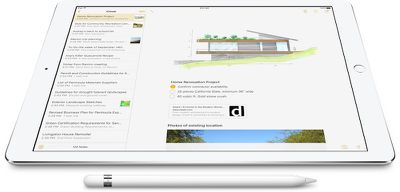
Apple's much-rumored 12.9-inch "iPad Pro" could have Oxide LCD display technology and will enter mass production in the third quarter of 2015, according to DigiTimes. The report, citing sources within the supply chain, claims that Apple has elected to use oxide panels for the tablet after weighing the cost versus performance of display technologies a-Si, TFT LCD and Oxide LCD.
"Market rumors over the last six months have stated that Apple would aim to release the device in the first half of the year, with mass production occurring in the first quarter. The company, however, has been assessing different panel technologies ranging from a-Si, TFT LCD and Oxide LCD in terms of cost versus performance, and has only recently decided to move forward with Oxide technology."
The report adds that Sharp, LG Display and Samsung Display have been sending Apple display samples as they compete to secure component orders for the iPad Pro. Sharp is expected to be the main supplier due to its advantages in Oxide LCD display production, with LG also in the running to be a secondary vendor. The panel suppliers will reportedly produce limited supply in May and begin mass production in July and August.
KGI Securities analyst Ming-Chi Kuo, who has a respectable track record at reporting on Apple's upcoming product plans, also forecasted in November that the iPad Pro would be equipped with an oxide panel for "high resolution, quick response, and high color saturation," with manufacturing difficulties pushing mass production of the tablet into the second quarter of 2015.
Oxide LCD technologies, one of the most popular being "IGZO," have been used since the original iPad Air and allow for thinner and more power efficient displays. Expected to have a large 12.9-inch screen, it would make sense for the iPad Pro to have an Oxide LCD display to ensure that the extra screen real estate is not a drain on battery life.
Bloomberg Businessreported late Wednesday that Apple missed the mark on second quarter production of the iPad Pro and that manufacturing of the tablet is now slated to begin around September. The larger-screened tablet, rumored to potentially have USB 3.0 ports for faster data transfer, could help Apple reverse four quarters of declining iPad sales as overall tablet market growth has slowed.
German carmaker BMW on Thursday denied that its discussions with Apple involved developing an electric car, according to Reuters. German automotive magazine Auto Motor und Sportreported hours earlier that Apple and BMW were in close negotiations about developing the automaker's all-electric i3 vehicle into a so-called "Apple Car."
"The BMW spokesman said: 'We are in regular talks with companies from the IT and telecommunications sector, including Apple, concerning topics like connected vehicles. Developing or building a car is not a topic of these discussions.'"
The German report claimed that the electric car could be manufactured by BMW and sold at Apple Stores, with Apple developing a full-fledged operating system for the vehicle that integrates with the car's fuel consumption and driving data. It is plausible that Apple is working to expand its CarPlay efforts on the dashboard, but it remains to be seen how closely integrated the platform will be with future vehicles.
Multiple reports claim that Apple is working on an electric car that is possibly self-driving and could enter production in 2020. Some other reports, however, downplay the rumors by suggesting that Apple is working on expanding its presence in vehicles through CarPlay. Any electric car project at Apple is likely in the early stages of research and development at this time.
Despite rumors earlier this week suggesting the 12-inch Retina MacBook Air could see a launch during Apple's upcoming March 9 media event, The Wall Street Journal tonight released a report indicating the notebook won't be shipping until Q2 2015. The site shared the tidbit in a detailed report on upcoming features that might be added to the larger-screened 12.9-inch "iPad Pro."
While suppliers are gearing up to ship the new 12-inch MacBook Air in large quantities in the second quarter, Apple's launch schedule remains unclear, the people said.
A Q2 2015 shipment date for the 12-inch MacBook Air suggests Apple could be planning to launch the notebook around June, possibly at its Worldwide Developers Conference. Apple has launched products during WWDC before, introducing the Mac Pro in 2013 and the Retina MacBook Pro in 2012.
Rendering of the 12-inch MacBook Air next to an existing MacBook Air by Martin Hajek
Aside from a potential launch date for the notebook, there's one other significant point of interest in The Wall Street Journal's report -- a clear distinction between the 12-inch MacBook Air and the 12.9-inch iPad Pro. Some users have speculated that due to the similarity in screen size and the iPad-like features rumored for the 12-inch Retina MacBook Air, the two products are actually one, but this new report makes it very clear that Apple is developing two separate product lines.
Separately, Apple also plans to broaden its product offering with a new 12-inch MacBook Air, people familiar with the matter said.
Earlier this year, Apple's suppliers started mass production of a 12-inch MacBook Air, featuring a higher resolution display, they said.
There is some convergence between the two products, despite the fact that one is an iPad and one is a MacBook. The 12-inch MacBook Air is rumored to have iPad-like colors, fewer ports, and no Magsafe charger, while tonight's WSJ report points towards an iPad with USB ports, but it's likely the two products will continue to be separated by operating system.
Though Apple may not plan to launch the 12-inch Retina MacBook Air during its March 9 event, there's still a good chance the company may refresh its existing 11 and 13-inch MacBook Air lineup, which are overdue for an update. Screenshots said to be from a 13-inch MacBook Air with a Broadwell processor and integrated Intel HD 6000 graphics were shared this afternoon, suggesting a refresh is imminent.
Following up on a report from earlier today claiming Apple has pushed back its plans for the so-called "iPad Pro", asking suppliers to begin production in September rather than this quarter, The Wall Street Journal weighs in with its own claim that Apple is indeed now targeting the second half of this year for the mass production of the device.
Beyond timing, the report also claims Apple is still tweaking plans for the iPad Pro's design and feature set, with the company considering including USB 3.0 ports to accommodate data transfer and peripherals connectivity.
“Apple has continued to rework some of the features of the larger iPad. It is now considering the faster technology for data synchronization between the larger iPad and other computing devices,” said the person. [..]
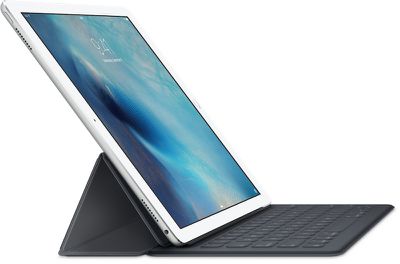
The company has also been considering adding ports to connect to a keyboard and mouse, the people said.
Apple is reportedly also looking into ways to speed up charging time for the iPad Pro, as the device will almost certainly come with an even higher-capacity battery than the iPad Air family.
Finally, The Wall Street Journal's sources indicate the iPad Pro's display does indeed measure 12.9 inches diagonally, marking a substantial increase over the iPad Air family's 9.7-inch display. Rumors have been split between 12.9 inches and 12.2 inches for the iPad Pro's display.
Ahead of Apple's upcoming "Spring Forward" event that is expected to see the company unveiling more information about the Apple Watch, a new website has been launched that allows users to explore all of the different casing and band combinations for the device.
Using images taken from Apple's Apple Watch website, MixYourWatch lets users pair each of the six different Apple Watch casings (stainless steel, space gray stainless steel, aluminum, space gray aluminum, gold, and rose gold) with the 16 different bands made of fluoroelastomer, leather, and steel.
Rumors have suggested that Apple plans to allow users to purchase extra bands to wear with their Apple Watch devices, but the band options for the various models will be limited. For example, on Apple's website, the Leather Loop band is only listed as being available for the 42mm Apple Watch, while the Modern Buckle is only available for the 38mm Apple Watch.
Some of the combinations are not particularly attractive, like the space gray aluminum Apple Watch paired the green fluoroelastomer band, and the site gives an excellent overview of how different Apple Watch combinations will look before the device's launch.
Another site, launched yesterday, is also worth checking out. Watch Aware's Apple Watch apps site offers an interactive Apple Watch app experience, giving us a look at what apps will look like on the Apple Watch.
Apple has opted to delay production on the rumored larger-screened "iPad Pro" due to issues with display panel supply, reports Bloomberg. Manufacturing on the tablet will reportedly begin in September, rather than earlier in the year.
Production of the 12.9-inch-screen iPad is now scheduled to start around September because of delays involving the supply of display panels, said one of the people, who asked not to be identified because the details aren't public. Apple had initially planned to begin making the larger version this quarter, people familiar those plans had said.
This isn't the first time that rumors have hinted at delays for the iPad Pro. Apple was said to be targeting an early 2015 release date for the tablet last year, but those plans were reportedly put on hold. Back in October, The Wall Street Journal said that Apple had opted to delay mass production on the iPad in order to focus on iPhone 6 Plus production, and in November, KGI Securities analyst Ming-Chi Kuo said production could be delayed until Q2 2015 because of difficulties related to the production of display components. With production delayed until September, the tablet could see a release in late 2015.
Apple is planning to use the "iPad Pro," as the media calls it, to boost its flagging iPad sales. The tablet is expected to measure in somewhere between 12.2 and 12.9 inches, dwarfing both the 9.7-inch iPad Air 2 and the 7.9-inch iPad mini 3.
Apple began its efforts to decorate the Yerba Buena Center for the Arts in San Francisco yesterday, putting up the scaffolding that would allow workers to hang colorful banners and logos, and as of today, the first decorations have gone up.
Starting this morning, workers were spotted in the basket of a bright orange cherry picker, placing a banner across the glass of the Yerba Buena Center for the Arts where Apple will hold a special "Spring Forward" media event on March 9. The initial banner panels, which include Apple's iconic Apple logo, use the same general colors that were seen on the event invite, in shades of green ranging from pistachio to honeydew merging into shades of blue.
Workers have only just begun decorating the event center and it's likely the building's entire side will feature the same graduated lotus flower Apple design that was seen on the invitation, so colors should expand from green to blue to purple over the next few days as the company finishes preparations for Monday's event.
Apple's "Spring Forward" affair is said to be focused on the Apple Watch, and the company is expected to unveil additional details about the device, including information on battery life, pricing, and a launch date. Apple may also be planning to use the event to unveil the 12-inch Retina MacBook Air and/or refreshed 11 and 13-inch MacBook Airs.
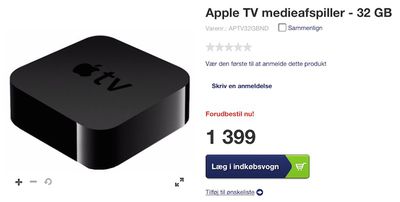
The event will kick off on Monday, March 9 at 10:00 a.m. Pacific Daylight Time. Apple plans to provide live coverage of the event on its website and through a channel on the Apple TV, and MacRumors will also be covering the event with both a live blog here on MacRumors.com and through our MacRumorsLive Twitter account.
Apple could potentially be one of HBO's launch partners for its web-only service, which may be called "HBO Now." News of HBO's web-based subscription service first surfaced in October of 2014, after HBO CEO Richard Plepler shared the company's plans at an investor presentation.
The service, aimed at cable cutters, will allow users to access HBO content without a cable subscription for a set monthly fee. With the launch of a cable-free subscription service, HBO will become the first major premium content provider to cease limiting its television and movie offerings to cable subscribers.
According to Learmonth, HBO's web-only subscription will launch in April alongside the premiere of the fifth season of Game of Thrones, which takes place on April 12. The service is said to cost $15 per month, which is roughly how much it costs to subscribe to HBO through a cable company. A partnership with Apple would allow the service to be watched on the Apple TV, much like the existing version of HBO's service, HBO Go. HBO Go is available to all existing HBO subscribers on a variety of devices like the iPad and Apple TV, but it requires an HBO subscription through a cable or satellite provider.
Cable companies like Time Warner and Comcast have long been reluctant to offer piecemeal pricing and companies like HBO have previously avoided moving away from traditional cable models in order to preserve the status quo and avoid upsetting existing revenue streams.
The introduction of HBO's service will be a major victory for cord cutters, and it could encourage other content providers to introduce similar offerings. Content providers' reluctance to shift away from traditional cable pricing models has been one of the major factors that's prevented Apple from establishing deals for its own service in the past.
Apple's MacBook Air hasn't been updated since last April, which means the company's line of ultraportable notebooks is due for a refresh. New screenshots from the forums of Chinese site Feng.com suggest an update is imminent, depicting the specifications of a MacBook Air with one of Intel's Broadwell processors. According to the user who posted the screenshots, they're from a 2015 MacBook Air that was produced by Foxconn.
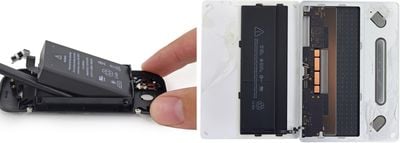
The screenshots show the system information for a low-end 13-inch MacBook Air (MacBookAir7,2) with an Intel Core 1.6GHz i5-5250U processor and Intel HD Graphics 6000, which is what we would expect to see. The machine ships with 4GB of RAM and continues to use a display with a resolution of 1440 x 900. The battery appears to be very similar to the battery in the existing 13-inch MacBook Air.
The notebook is running a custom version of OS X Yosemite 10.10.2 with a build number of 14C2043, another marker we would expect to find in a new machine. The serial number provided is not registered with Apple and comes up as invalid, but that may be due to its unreleased status. There is no information within the screenshots that indicates the information has been faked, but there's also no concrete detail that earmarks them as real, either, aside from the fact that they closely align with what we would expect to see in the next MacBook Air refresh.
A chart suggests that the 13-inch MacBook will come in three iterations. The first two will use the 1.6GHz Core-i5 processor and will ship with either 128 or 256GB of storage. The higher-end model will use the Intel Core i7-5650U 2.2GHz chip and will ship with 8GB of RAM and 512GB of flash storage. There will be a variety of upgrade options as well.
There is no information available on the 11-inch MacBook Air, but it will use the same Broadwell chips and will offer many of the same upgrade options.
As for when the MacBook Air refresh will come, that's unknown. It appears the machines are ready to go, so it's very possible that Apple will announce the refresh during its upcoming March 9 event. Rumors initially suggested the MacBook Air might be quietly updated on February 24, but that date came and went, leaving a potential refresh date up in the air.
Apple's March 9 event is said to be focused on the Apple Watch, but it's possible the company will use the time to unveil other products as well. Rumors have suggested the 12-inch Retina MacBook Air may also make an appearance at the event, and there's a possibility Apple could unveil all three machines at the same time.
As with the MacBook Pro, it's likely the 12-inch Retina MacBook Air will initially be sold alongside existing MacBook Air machines due to differences in price. Over time, the Retina MacBook Air may replace the existing MacBook Air, just as the Retina MacBook Pro replaced the standard MacBook Pro.
Following several months of experimentation with how it curates the music portion of its iTunes Store, Apple has rolled back some of those changes to restore an emphasis on editorial rather than sales-based criteria, according to Billboard.
The news comes after a few independent record labels voiced concern over their artists being lost under the better-performing singers and albums of bigger labels. The company has apparently to not fully eliminate sales-based algorithms for deciding on what content to feature, but have "toned down" that aspect to allow editorial discretion to once again steer the offerings on iTunes' main page.
After a few weeks of experimenting with that presentation, the iTunes teamed toned down the algorithm and re-asserted the role that editorial discretion has in choosing which music is highlighted in the store. "iTunes will always be driven by editorial discretion," says a source who is familiar with Apple's online store philosophy. "Editorial choice will always be at the heart of what music is featured in the store."
Despite the introduction of the sales-focused algorithm towards the end of 2014 and into the new year, the indie music market still found itself fairly well-represented on the storefront. As Billboard reports, the sector got 40 percent of carousel ads on the main page of iTunes, 50 percent of the "New Music" section, 37 percent of the "Hot Tracks" section, and 20 percent of what Apple calls the "Bricks", the rectangular-shaped ads populating the store.
Indie labels were worried that they would get lost in the shuffle with all the changes happening in the iTunes Store. They were concerned that a sales velocity algorithm playing a strong role in determining what would be featured in its sliders would bolster the advantage of the majors, who tend to have bigger-selling records.
Various other concerns of smaller labels were alleviated, as well, including iTunes' ongoing effort to clean up song duplicates in the storefront, to an extent where some songs were taken down despite being in compliance with the company's rules. But, as one indie executive noted, if a proper case is made to bring back the music, Apple will listen. "iTunes are flexible; they are not an account who says 'its our way or the highway.'"
Perhaps the biggest shift on the back-end of iTunes relates to how pre-order numbers factor into album sales. Previously, pre-order numbers were added to launch day sales, rocketing popular pre-release albums to the top of charts on release. The new configuration wipes pre-order figures away on launch day and starts all albums on level ground, requiring albums to garner successful day one-and-onward launches to hit the top spots.
Apple has been steadily building up iTunes in preparation for the future integration with Beats Music this year. The company has most recently hired BBC Radio DJ Zane Lowe to possibly work on its iTunes Radio service and acquired media analytics company Semetric to integrate its Musicmetric tracking service into the iTunes/Beats refresh. Apple has also been seeking expertise in music journalism, perhaps to fill out editorial content appearing alongside listings in the iTunes Store.
The next-generation iPhone is expected to ship with 2GB of RAM and could also have a pre-installed Apple SIM, according to AppleInsider. The so-called "iPhone 6s," and presumably the "iPhone 6s Plus," would be adopting both features from the iPad Air 2, which also has 2GB of RAM and a pre-installed Apple SIM.
Both the iPhone 6 and iPhone 6 Plus, and all previous models dating back to the iPhone 5, have 1GB of RAM and must be used with a SIM card obtained from an individual carrier. Apple SIM, introduced alongside the iPad Air 2, allows you to choose between a variety of carriers without locking into long-term plans. Participating U.S. carriers include AT&T, Sprint and T-Mobile.
"The same source also told AppleInsider that Apple is strongly considering shipping its next-generation handset with the Apple SIM pre-installed. That piece, which also made its debut with the iPad Air 2, allows consumers to sign up for mobile data plans from any participating carrier directly from the Settings app without long-term contracts and to switch providers at any time."
While the report claims that Apple is strongly considering including a pre-installed Apple SIM on the next iPhone, the company's vice president of iPhone, iPod and iOS product marketing Greg Joswiak downplayed the idea last year because of the higher number of iPhone customers that purchase their smartphone directly from a carrier.
"It's about the customer experience," he said during an appearance here at Re/code's Code/Mobile conference. "We ultimately don't know who you are going to use as the carrier, [and] we want to make it as easy as possible."
Joswiak said Apple has not discussed putting the Apple SIM into iPhones, but said that because of the way most customers buy an iPhone--through a carrier directly--the Apple SIM is not as well suited. "I don't think you're going to go to the Verizon store and say, 'Can you hook me up with AT&T?,'" he said.
These rumors are rather predictable given that Apple typically improves the hardware specifications of iPhones and iPads each year, although the addition of a pre-installed Apple SIM on iPhone may still not materialize due to tough opposition from carriers. Verizon, for example, was notably absent as a participating carrier for Apple SIM when the iPad Air 2 was released last year.
Apple is expected to announce its next-generation iPhones in September per usual. The "iPhone 6s" was also rumored to have 2GB of RAM and Force Touch in January based on sources within Apple's supply chain. Few other details about the upcoming iPhones are known, aside from a disputed claim that the devices will include a DSLR-like dual-lens camera system.
Branding website Brandchannel recently revealed the winners of the Brandcameo 2015 Product Placement Awards, which names the movies and brands with the most proliferation within Hollywood films over the past year. For the first time since 2011, Apple nabbed the 2014 Award for Overall Product Placement, appearing in 9 of the 35 films that topped the U.S. box office last year.
Brandchannel mentions the most influential Apple moments in films last year, perhaps the most popular of which is an extended scene in Marvel's blockbuster Captain America: The Winter Soldier, in which two of its protagonists use a MacBook Pro inside an Apple Store to hack into secretive S.H.I.E.L.D. data.
A quick tangential reference to an iPod Shuffle in The Lego Movie also helped Apple reign over previous winners like Budweiser (2013) and Mercedes-Benz (2012), and just barely beat out the likes of Coca-Cola and Sony for the award.
Apple bested both Coca-Cola and Sony by a single appearance, for which Apple can thank "The Lego Movie." The Apple logo doesn't appear in the film but Lord Business does talk about his iPod Shuffle. Recent winners Budweiser (2013) and Mercedes-Benz (2012) showed up in a distant five and six times respectively.
Other appearances include in "Ride Along," "The Other Woman," "Neighbors," "The Fault in Our Stars," "Think Like a Man Too," "Gone Girl" and "Ouija."
The website mentions that while Apple's return to product placement dominance in 2014, appearing in just over 25 percent of the top box office films, is a step up from the last few years, the company's brand appearances still remain well below its peak performance years. The brand saw the most proliferation in its "golden age" of 2009, appearing in nearly 50 percent of all number 1 movies that year. It dropped to 42.5 percent in 2011 and to just 15 percent in 2013.
The newly Apple-owned brand Beats, unfortunately, won the 2014 Award for Worst Product Placement. The company's popular Bluetooth speaker, the Beats Pill, popped up in a scene in the critically-panned Transformers: Age of Extinction, wherein Stanley Tucci creates a Pill using his mind and the fictional "Transformium" material that pushes much of the film's plot into motion.
The international debut of the Apple Watch in magazines across the world continues this week with the wrist-worn device making a cover appearance on Chinese fashion magazine YOHO. The upcoming April issue of the magazine features actor and pop icon Archie Kao wearing an Apple Watch Sport with a white band on the cover and showcases other fashion shots of the wrist-worn device in a related story.
Kao has been acting in Hollywood films and TV shows for nearly two decades, making regular appearances in series such as Chicago P.D., Power Rangers Lost Galaxy and CSI: Crime Scene Investigation. The actor was born in Washington D.C., but splits his time between living in Los Angeles and Beijing. He married Chinese actress Zhou Xun at a charity event in Hangzhou, China in July 2014.
Apple has been marketing the Apple Watch in a number of magazines over the past few months, including Self, Vogue, Style and East Touch, as it continues to position the wrist-worn device as a fashion item. Apple is expected to provide more details about the Apple Watch at its highly-anticipated "Spring Forward" media event on March 9th at the Yerba Buena Center for the Arts in San Francisco.