Apple today announced that it will soon open a new retail store at Piazza Liberty, or Liberty Square, in Milan, Italy.
As revealed in city planning documents earlier this year, the store will be located entirely below the outdoor amphitheater. The sales floor will be accessible by walking down a staircase situated between two waterfalls that form part of the larger fountain. There will also be an elevator available.
Apple is developing the store in partnership with architecture firm Foster and Partners, who have helped design many of the company's most significant retail spaces around the world and its new Apple Park headquarters.
Apple's retail chief Angela Ahrendts wants Apple Stores to be more of community gathering places, rather than just a place to buy the latest iPhone or iPad. As part of those plans, Apple Piazza Liberty will be an open space for all to "have a break, be with friends, and discover new interests."
The store will feature Apple's next-generation retail design with indoor trees and a large screen for "Today at Apple" sessions and other events.
Following the release of mobile games Miitomo, Super Mario Run, Fire Emblem Heroes, and the upcoming Animal Crossing iPhone app, Nintendo's next big franchise coming to smartphones will be The Legend of Zelda, according to sources speaking with The Wall Street Journal. The sources said that Animal Crossing will hit mobile devices sometime "in the latter half of 2017," and a smartphone version of The Legend of Zelda would launch afterwards.
That would make The Legend of Zelda the fifth game Nintendo develops for iOS and Android devices in partnership with developer DeNA. Originally, all five games were supposed to launch before March 2017, but only Miitomo, Super Mario Run, and Fire Emblem Heroes made that deadline. Around the release of Fire Emblem Heroes, Nintendo said that it plans to launch two to three smartphone games every year from now on.
It isn't yet clear if The Legend of Zelda will see a 2017 or 2018 launch, or how much Nintendo will charge players for the game. Recently, a Nintendo senior official described Fire Emblem Heroes' freemium model an "outlier," saying that the company prefers the pay-once price tag of Super Mario Run, suggesting The Legend of Zelda might follow in the latter game's footsteps.
Nintendo Co. plans to bring its videogame franchise “The Legend of Zelda” to smartphones, people familiar with the matter said, the latest step by the Kyoto company to expand its mobile-games lineup.
The people familiar with the matter said the “Animal Crossing” smartphone app is likely to be released in the latter half of 2017, and “The Legend of Zelda” would follow that, although they cautioned that the timing and order of the releases could be changed. Nintendo is developing the games with Tokyo-based DeNA Co.
The decision by Nintendo to focus on The Legend of Zelda next follows the recent launch of the Nintendo Switch and success of The Legend of Zelda: Breath of the Wild. If the company is to continue the pattern it has set by Super Mario Run and Fire Emblem Heroes, the iPhone version of The Legend of Zelda is likely to see a simplified, mobile-friendly iteration of the gameplay and mechanics from the franchise, and could potentially communicate with the console version like Animal Crossing is expected to do.
The Wall Street Journal also commented on a new game coming from Nintendo-owned The Pokémon Company, which is described only as a "new card-game app." The sources declined to further comment on The Pokémon Company's plans, but a new iPhone game centered around the popular real-life trading cards that the franchise is known for appears to be a likely explanation for the upcoming game. It's almost been a year since Pokémon Golaunched in the New Zealand, Australia, and the United States, and became a hit soon after around the world.
Drone videographer Matthew Roberts today uploaded a new video about Apple Park, this time showcasing the construction progress that Apple has made on its new campus over the past year. The video starts in June 2016 and goes up through Roberts' most recent drone updates in April and May 2017, where last minute pieces of construction were being put into place as the first small batch of employees moved into the new workspace.
Roberts separated the video to focus on the major buildings and features at Apple Park, allowing viewers to watch all the progress that has been made on the central "Spaceship" building, Steve Jobs Theater, main tunnel, R&D facility, fitness center, parking garage, and atrium. Even the large mound of dirt that loomed over the site during the first weeks of construction gets some focus in the video.
Apple Park began as an idea by former CEO Steve Jobs, who pitched the plans for the campus to the Cupertino City Council in 2011, with a completion date for 2015. Demolition on the site began in 2013, and construction delays eventually pushed back a late 2016 opening to the spring of 2017. In February, Apple officially named the campus "Apple Park."
Construction is still ongoing at the campus, with the Steve Jobs Theater expected to open sometime later in the year, and small landscaping details continuing to be worked on as more employees move into the buildings. Eyes have been on Apple Park's construction since it began, with interesting coverage including nighttime footage, aerial photography, and even a recreation of the campus in Minecraft.
Apple recently paid around $200 million to acquire Lattice Data, a firm that aims to turn unstructured "dark data" such as text and images into structured data that can then be handled with traditional data analysis tools. News of the acquisition comes from TechCrunch, and Apple has essentially confirmed the acquisition by issuing its standard statement on the topic.
Lattice uses machine learning techniques to take mass amounts of initially unusable data and turn it into properly labeled and categorized data that can be used for AI, medical research, and more.
It’s unclear who Lattice has been working with, or how Apple would intend to use the technology. Our guess is that there is an AI play here: Our source said that Lattice had been “talking to other tech companies about enhancing their AI assistants,” including Amazon’s Alexa and Samsung’s Bixby, and had recently spent time in South Korea.
TechCrunch says the deal closed "a couple of weeks ago," with roughly 20 Lattice engineers having joined Apple.
Prominent KGI Securities analyst Ming-Chi Kuo has released a "2017 WWDC highlights" report, outlining his expectations for next month's keynote event. While he expects the typical previews of the next versions of iOS, macOS, watchOS, and tvOS, he also predicts we will see several hardware-related announcements.
One major debut Kuo expects to see is the long-rumored 10.5-inch iPad Pro, which he says has a greater than 70 percent chance of debuting at the event based on the timing of production ramp-up, which he sees as happening at the end of the current quarter. In line with previous rumors, Kuo believes the 10.5-inch iPad Pro will have a similar form factor as the current 9.7-inch model, squeezing in a larger display thanks to narrower bezels.
The newly designed 10.5” iPad Pro will have a similar form factor to the 9.7” model, but will feature a larger display thanks to narrow bezels. The new design should improve the user experience and help gain traction in the corporate/ commercial sectors. We forecast 10.5” iPad shipments of 5.0-6.0mn units in 2017F, accounting for 15% of total 2017F iPad shipments.
Kuo also reiterates his belief that there is a greater than 50 percent chance Apple will unveil its Siri smart speaker at WWDC. He previously said that the speaker may not actually launch until later in the year, but an announcement at WWDC would give developers time to begin building support for the product.
In our April 28 Insight report (“Apple’s first home AI product to see cyclical shipments of over 10mn units; main competitor is Amazon Echo”), we offered estimates for the new home AI/ Siri speaker line. We also believe this new product will come with a touch panel.
For the first time, Kuo says Apple's speaker will include a touch panel display, a detail that has remained unclear since rumors began. Most previous rumors have made no mention of whether the product will include a display, but Phil Schiller recently suggested such smart speaker products would benefit from the inclusion of a screen.
Apple's WWDC keynote kicks off at 10:00 am Pacific Time on Monday, June 5, and MacRumors will have full coverage of the event as it unfolds.
Apple's so-called "iPhone 8" with an OLED display and wireless charging is widely expected to cost in the neighborhood of $1,000 in the United States, and Wall Street analysts continue to guess just how much it'll sell for.
The latest prediction comes from Goldman Sachs analyst Simona Jankowski, who today said she expects the rumored high-end iPhone to be available in 128GB and 256GB storage capacities for $999 and $1,099 respectively. Unlike the iPhone 7, she doesn't believe the iPhone 8 will be available in 32GB.
An excerpt from her research note distributed today:
Relative to the 128GB iPhone 7 Plus, we estimate the new features and higher commodity prices to increase the bill of materials by over $70, which we expect Apple to offset via a $130 price increase, resulting in a starting price of $999 for the 128GB capacity and $1,099 for the 256GB capacity (we don’t expect the iPhone 8 to come in 32GB).
Apple's most expensive smartphone to date is the iPhone 7 Plus with 256GB of storage, which retails for $969 in the United States.
UBS analyst Steven Milunovich shared entirely different pricing expectations last month, so it's clear that analysts are simply guesstimating. He thinks the iPhone 8 will come in 64GB and 256GB storage capacities for $850-$900 and $950-$1,000 respectively. His research note didn't mention 32GB or 128GB models.
The takeaway here is that the iPhone 8 will likely be very expensive. The device's exact price tag is likely privy only to Apple at this point, however, so treat any estimate with a healthy dose of skepticism for now.
Goldman Sachs raised its 12-month price target for Apple's stock to $170, up from $164, based on strong iPhone 8 expectations.
ExoLens and Zeiss have teamed up to create some high-quality lenses designed to take iPhone photography to the next level. At $200, the ExoLens PRO with Optics by Zeiss Wide-Angle Kit for the iPhone 7 and iPhone 7 Plus is almost the price you'd pay for a standalone camera, but the lens is distortion free, compact, and enhances the range of images you can capture with your iPhone.
There are dozens of inexpensive lenses on the market, but most of the cheaper options are unable to measure up to the quality you get with the $199 Zeiss/ExoLens combo.
Design
The ExoLens PRO comes in a padded box and ships alongside several mounts to fit different sized iPhones, including the iPhone 7, iPhone 6s, and iPhone 6s Plus.
Right out of the package, the ExoLens PRO stands apart from other lens options. It's over an inch tall and similar in circumference to a standard pill bottle, with a solid weight to it. The outside of the lens is made from aluminum, and the glass of the lens itself is protected with caps on each side when not in use. Zeiss branding is on the side of the lens, which looks more like a small DSLR lens than a standard iPhone lens.
Inside the box, there are two carrying bags for the lens and any accessories, along with an aluminum lens hood and an installation guide.
Apple is "working rapidly" to expand Apple Pay to additional countries in Asia and Europe, and there's increasing evidence and reports that suggest the service may launch in Italy and Germany in the near future.
MacRumors discovered a colored version of the image stored on Apple's servers that makes it easier to see Italy highlighted.
Apple's regional Italian website has listed Apple Pay as "coming soon" since March, so it's only a matter of time—WWDC?—before the payments service launches in the country. At launch, Apple Pay will work with Visa and MasterCard in Italy through participating banks UniCredit, Boon, and Carrefour Banca.
Meanwhile, German blog iPhone-Ticker reports that Apple Pay should launch in Germany in the fall or winter. As in some other countries, however, the negotiations between Apple and German banks allegedly continue to be challenging, likely as both sides struggle to reach an agreement over fees and control.
Last October, Germany was similarly highlighted on the Apple Pay availability map, but only for a brief period of time.
Apple Pay launched in the United States in October 2014, and it has since expanded to 14 other countries and regions: Australia, Canada, China, France, Hong Kong, Ireland, Japan, New Zealand, Russia, Singapore, Spain, Switzerland, Taiwan, and the United Kingdom. There was also a rumor that Belgium could be added this month.
Accessory manufacturer Satechi today launched a new $99.99 Type-C Pro Hub for the 13-inch and 15-inch 2016 MacBook Pros, featuring a total of seven ports to make up for the inclusion of only Thunderbolt 3/USB-C ports on the 2016 MacBook Pro.
The new hub is similar in design to the Type-C Hub compatible with Apple's original 12-inch Macbook, but includes two Thunderbolt 3 dongles that take up both ports on either side of the new MacBook Pros with Touch Bar. The hub is compatible with the non-Touch Bar MacBook Pro as well.
After users plug the hub in, they can gain access to a passthrough Thunderbolt 3 port, a USB-C port, and the following ports missing from Apple's device: 4K HDMI, 2 USB 3.0 ports, and both SD and microSD card readers.
The Thunderbolt 3 port supports quick data transfer of speeds up to 40Gbps, as well as passthrough charging for both 13-inch (61W) and 15-inch (87W) models of the MacBook Pro. Users can output 1080p video at 60Hz via the HDMI port, and up to 4K video at 30Hz.
Both the USB 3.0 and USB-C ports include transfer speeds of up to 5 GB/s, while the photo and video editing capabilities of the SD card slots provide data transfer speeds of up to 104 MB/s.
Those interested can purchase the Type-C Pro Hub from Satechi's website for $99.99 starting today. Like the company's other products, the hub comes in MacBook color-matching Silver and Space Gray, and has a brushed aluminum finish to complement Apple's aesthetics.
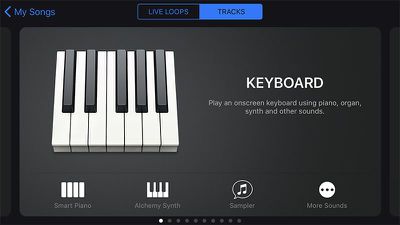
Google this week announced an update coming soon to its iOS Google Allo app, which will introduce neural network-generated stickers that are personalized to match your own distinct look. The company said that the new feature will combine neural networks and the work of artists to turn your selfies into unique sticker packs, which can then be used in Allo, the company's messaging app.
The process to generate the stickers is relatively simple, according to Google, with the sticker packs of your likeness being created "on the fly" after you take a selfie. If you aren't happy with some aspects of the stickers, a few customization options will appear so you can tweak and personalize even more. You can take a selfie with a few filters for a more comical sticker pack, or opt for results that more closely resemble you.
Google went deeper into the process of developing the neural network for the new sticker pack feature in Allo, as well as how the collaborative artists working with the company affected the end results. The pack that will debut at launch is said to be the first in a line of artistic styles -- Google said it "speaks to your sarcastic side" -- and future updates will add different emotive artwork that "might be more cute for those sincere moments."
The first pack was designed by artist Lamar Abrams, who works as a story boarder on Steven Universe, and whose feature designs for Allo help account for more than 563 quadrillion potential combinations of personal stickers.
To create an illustration of you that captures the qualities that would make it recognizable to your friends, we worked alongside an artistic team to create illustrations that represented a wide variety of features. Artists initially designed a set of hairstyles, for example, that they thought would be representative, and with the help of human raters we used these hairstyles to train the network to match the right illustration to the right selfie.
We then asked human raters to judge the sticker output against the input image to see how well it did. In some instances, they determined that some styles were not well represented, so the artists created more that the neural network could learn to identify as well.
Google Allo launched last year and combined standard messaging threads, photo editing, and stickers with the company's AI helper Google Assistant. The AI could be brought up directly within a chat thread to find somewhere nearby to eat (even by using related emojis, like the taco), search for a YouTube video, and more.
A few of the 563 quadrillion combinations that can come from Abrams' basic feature illustrations
Google didn't confirm when the new neural network update would appear on Google Allo for iOS [Direct Link], but Android users can use the selfie feature right now.
Apple today announced that Corning, the makers of Gorilla Glass, will be the first major benefactor of its $1 billion Advanced Manufacturing Fund, which was announced by Apple CEO Tim Cook earlier this month.
Corning is a long-time Apple Supplier, and its Gorilla Glass products have been used in the iPhone and the iPad for several years. Corning Incorporated will receive $200 million from Apple's new fund, which aims to foster innovation among American manufacturers and lead to more U.S. jobs. The investment will support Corning's research and development, capital equipment needs and state-of-the-art glass processing, according to Apple's press release.
"Corning is a great example of a supplier that has continued to innovate and they are one of Apple's long-standing suppliers," said Jeff Williams, Apple's chief operating officer. "This partnership started 10 years ago with the very first iPhone, and today every customer that buys an iPhone or iPad anywhere in the world touches glass that was developed in America. We're extremely proud of our collaboration over the years and we are investing further with Corning who has such a rich legacy of innovative manufacturing practices."
Apple said Corning's 65-year-old Harrodsburg facility in Kentucky has been integral to the 10-year collaboration between the two companies and will be the focus of its investment.
"Corning's longstanding relationship with Apple has not only led to significant glass innovations that have enabled new capabilities for consumers, it has also helped create nearly 1,000 American jobs and allowed us to continue growing and expanding in the US," said Wendell P. Weeks, Corning's chairman, chief executive officer and president. "This investment will ensure our plant in Harrodsburg remains a global center of excellence for glass technology."
Since the founding of Gorilla Glass in 2007, the partnership has created and sustained nearly 1,000 U.S. jobs across Corning's R&D, manufacturing and commercial functions, according to Apple, including over 400 in Harrodsburg. Corning is said to have procured enough renewable energy to cover all of its Apple manufacturing in the U.S.
A U.S. judge presiding over Waymo's trade-secrets theft lawsuit against Uber has asked federal prosecutors to investigate the claims in the case, it emerged on Thursday (via Bloomberg).
U.S. district judge William Alsup also partially granted Waymo's bid for an injunction against Uber's self-driving efforts, and rejected Uber's arguments that the trade secret allegations should proceed in private.
Specifically, former Google employee Anthony Levandowski is accused of stealing 14,000 confidential files that included data on Waymo's laser-based radar (LiDAR) system, which the company called "one of the most powerful parts" of its self-driving technology.
In referring the case to the U.S. Department of Justice, Judge Alsup said that in the absence of "smoking gun" proof of wrongdoing by Uber, he was not taking a position on whether or not charges are warranted, but noted there was "ample evidence" that Levandowski had breached his duty of loyalty to Waymo.
Uber declined to comment on the referral to prosecutors, while Levandowski has already recused himself from LiDAR-related work while the case is ongoing, but the news is yet another setback for the ride-hailing service as it attempts to revive its tarnished image following multiple controversies over recent months.
The Department of Justice is already investigating the company over its use of "secret" software that allowed its drivers to operate in areas where Uber was banned or restricted. The so-called "greyball" software is said to have allowed the company to identify undercover officials and block them from booking rides, in order to prevent them from proving that Uber was operating illegally.
Last month it emerged that Apple CEO Tim Cook threatened to pull Uber's app from the App Store in early 2015 after discovering that it was secretly "fingerprinting" iPhones that used the app. Uber said it used the identification method to prevent fraud, despite knowing the tactic is a clear violation of Apple's app privacy guidelines.
Apple today launched a new iPhone 7 video series entitled "How to Shoot on iPhone 7," featuring a range of tutorial videos that it's uploaded both to a new website and to its YouTube channel.
There are five videos on YouTube, which are designed to teach iPhone 7 and 7 Plus owners how to use the camera on their devices to capture various types of photos, including panoramas, portraits, action shorts, and more.
Each video is approximately 40 seconds in length and features a clear step-by-step tutorial on how to use each feature directly on the iPhone. For the Portrait Mode video, for example, step 1 is swiping over to Portrait Mode, while Step 2 is looking for the depth effect tag before taking the shot.
All of the videos are super simple and are going to be most useful for people who don't often use the camera or who haven't invested a lot of time in learning the features. Each video is just one or two steps, covering readily available photo features. The most complicated video, for example, covers taking a vertical panorama.
The videos on Apple's website are more specific and could be useful even to those who are familiar with the iPhone camera, as they contain tips like shooting at the golden hour for the best light, shooting a backlit subject, capturing a group portrait, shooting with street light, capturing a unique angle, and many more.
Sleep expert Roy J.E.M Raymann, who joined Apple back in 2014, has left the company and moved on to SleepScore Labs, where he will serve as Vice President of Sleep Science and Scientific Affairs.
Raymann joined Apple as the company was developing the Apple Watch, and at the time, his hiring spurred rumors that the device would have sleep tracking capabilities, which never materialized.
Prior to joining Apple, where he served as "Health and Health Technologies Staff," Raymann was at Philips where he founded the Philips Sleep Experience Laboratory, a non-clinical sleep research facility.
According to his LinkedIn profile, while at Apple, Raymann worked on Night Shift, the Bedtime alarm, display recommendations and color filters, and HealthKit and ResearchKit.
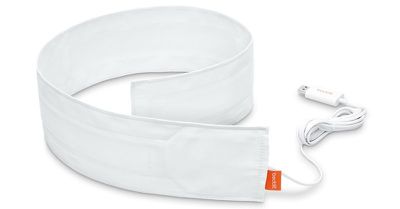
News of Raymann's departure comes just days after Apple acquired Beddit, a company that produces a sensor-equipped sleep monitoring system.
It's not yet clear what Apple plans to do with Beddit's technology, but Apple is continuing to sell the Beddit sleep monitor and has updated its privacy policy to note that it is collecting sleep-related data that could influence future projects at the company.
Apple plans to make a major Apple TV announcement at WWDC that should delight Amazon Prime subscribers - the addition of an Amazon Prime Video app for the Apple TV.
The news comes courtesy of BuzzFeed's John Paczkowski, who often accurately shares details on Apple's plans ahead of events. According to Paczkowski, sources of Apple's plans say the company will announce an Amazon Prime Video app during its keynote event.
There are tentative plans for the app to go live in the summer, but its official release date could change.
With Amazon Prime Video on the Apple TV, Amazon also plans to resume offering the Apple TV through Amazon.com. Amazon stopped offering the Apple TV and the Google Chromecast in 2015, citing Amazon Prime Video incompatibility as the reason why. It is not known when the Apple TV will return to the Amazon website.
News of a potential deal between Apple and Amazon that would see the app made available on the Apple TV first surfaced last week. At the time, Apple and Amazon were said to be close to an agreement, and now an agreement has been reached.
Amazon Prime Video is one of the only major streaming video services that is currently absent from the Apple TV, and Apple TV owners have long wanted to see the Prime Video app on Apple's device.
The Apple Watch's built-in heart rate monitor is 97 percent accurate when detecting the most common form of an abnormal heart rhythm when paired with an algorithm to sort through the data, according to a new study conducted by the University of California, San Francisco and the team behind the Cardiogram app (via TechCrunch).
There were 6,158 participants in the study, all of whom used the Cardiogram app on the Apple Watch to monitor their heart rate. Most were known to have normal EKG readings, but 200 suffer from paroxysmal atrial fibrillation (an occasional irregular heartbeat).
Data from these participants, along with data taken from normal Cardiogram users, was used to build a neural network that could recognize the abnormal heart rhythms solely from data collected by the Apple Watch. As of today, Cardiogram says its algorithm can almost always successfully determine when a patient is in atrial fibrillation.
In order to validate the model, we obtained gold-standard labels of atrial fibrillation from cardioversions. In a cardioversion, a patient experiencing atrial fibrillation is converted back to normal sinus rhythm, either chemically or with a shock to the heart. 51 patients at UCSF agreed to wear an Apple Watch during their cardioversion.
We obtained heart rate samples before the procedure, when the patient was in atrial fibrillation, and after, when patient's heart was restored to a normal rhythm. On this validation set, our model performed with an AUC of 0.97, beating existing methods.
Cardiogram is a startup that's aiming to garner more information from the data collected by the Apple Watch. The study, which Cardiogram has raised funding for, started in March of 2016 and will continue as UCSF and Cardiogram work to refine the neural network and detect other conditions beyond atrial fibrillation.
Cardiogram plans to put in additional work before using its algorithm to start notifying Cardiogram users of arrhythmias. The company needs to conduct further testing to make sure the algorithm works in a variety of conditions and it needs to work on scaling it so it can be used continuously by all Cardiogram users.
The Cardiogram app can be downloaded from the App Store for free. [Direct Link]
Apple plans to bring its iTunes app to the Windows 10 Store, Microsoft announced today at its Build developer event. iTunes, is, of course, already available on the Windows platform, but adding it to the Windows Store will make it easier for Windows users to find the software.
Gaining iTunes for the Windows Store is a win for Microsoft, as the Windows store is currently lacking many key apps like Google's Chrome browser and Spotify. Microsoft has strict app requirements that some companies aren't able to work with.
The addition of iTunes could potentially drive more customers to use the Windows 10 Store, with iTunes said to be one of the apps that Windows users search for most often.
According to Microsoft, iTunes will be added to the Windows Store by the end of this year.
At its Build 2017 conference this morning Microsoft announced that its upcoming Windows 10 Fall Creators Update will include integration with iOS, allowing developers using Microsoft Graph to link desktop apps to mobile apps on both iPhone and Android devices (via The Verge). Users will be able to start apps on a Windows computer and, with the help of Microsoft's AI Cortana, pick up their iPhone to resume the experience exactly where they left off.
The update will also include a multi-platform cloud clipboard that will let users copy content and paste it across Windows, iOS, and Android. The new multi-device transition features coming to Windows 10 function similarly to Continuity on iOS and macOS devices.
Cortana lets users pick up where they left off on other devices
This new pick up feature is particularly useful on mobile devices, where Microsoft hopes app developers will start to link their desktop apps to resume experiences on devices like an iPhone or Android handset. Microsoft is also creating a cloud clipboard that will roam across Windows, iOS, and Android to let people copy content from a PC and paste it on a phone.
Other Windows 10 updates coming this fall include Timeline, which works in conjunction with the cross-platform pick-up feature and shows users a list of previously used apps across their devices. Additionally, OneDrive Files On-Demand will introduce an easier way to control when documents are downloaded to a device from the cloud, and a cosmetic update to Fluent Design will subtly change how the OS looks.
Timeline on Windows 10
The company continued integration with Apple's ecosystem by announcing the Xamarin Live Player preview, a live coding environment that will let developers test and debug iOS apps on Windows computers, which marks the first time iPhone and iPad apps can be developed without needing a Mac (via Thurott). Live Player will launch as an extension of the just-launched Visual Studio IDE, and will come with an app for iOS [Direct Link] and Android.
With Xamarin Live Player, developers will be able to do everything from their Windows-based PC: Just connect your Android device, iPhone, or iPad to the PC via USB and you can target those devices directly during development.
“Simply pair your device with Visual Studio by scanning a QR code, and hit debug like you normally would,” Nat explains. “The application is deployed in seconds to the Live Player app, enabling you to quickly develop and test your changes without having to recompile and redeploy your application. And you can set breakpoints and debug your application, on device, and over the air.”
Microsoft Build 2017 started on May 10 and ends tomorrow, May 12, and includes technical sessions and keynote speakers centered on developers and the tools they use to create applications and services. More information about upcoming Build 2017 events can be found right here.