Apple's M1 iMac (7-Core GPU, 256GB) has returned to its all-time low price of $1,099.99 in Pink on Amazon, down from $1,299.00. Only the Pink color option is available to ship in February.
Note: MacRumors is an affiliate partner with some of these vendors. When you click a link and make a purchase, we may receive a small payment, which helps us keep the site running.
This deal previously appeared once in January, marking today's sale only the second time in 2023 that we've tracked this record low price on the M1 iMac. As of writing, only Amazon is offering this sale.
Amazon also has the M1 iMac (8-Core GPU, 256GB) for $1,299.99, down from $1,499.00. This is another match for an all-time low price on the M1 iMac, and it's available in five colors right now on Amazon.
Apple has reportedly ordered OLED panels from LG Display and Samsung for its next generation of iPad Pro models, which are widely expected to arrive next year.
Business Korea reports that Apple placed orders for the development of 10.9-inch and 12.9-inch OLED panels from the two display companies, while rival Chinese display maker BOE lost out.
Apple reportedly placed orders for the development of 10.9-inch and 12.9-inch panels for the iPad with Samsung Display and LG Display. BOE was excluded.
Korean display makers are planning to produce OLED panels for the iPad at their current sixth-generation (1500mm x 1850mm) line.
According to a separate report from Taiwan's Economic Daily News, Apple has not yet finalized the order volume of OLED displays for iPad Pro, but it may divide the order equally between the two Korean factories mentioned above.
Apple is developing 11.1-inch and 13-inch OLED iPad Pro models that will come out in the first quarter of 2024, according to display analyst Ross Young, who has a good track record for Apple rumors.
It's not entirely clear why the display dimensions are different in the two latest Korean reports, which appear to be citing the same industry sources. Previous reports have indicated Apple plans larger 11.1-inch and 13-inch screen sizes for the OLED iPad Pro models with potentially slimmed-down bezels rather than an overall change in the size of the device.
At the current time, Apple sells a 12.9-inch mini-LED iPad Pro and an 11-inch iPad Pro with a traditional LCD display, as mini-LED has continued to be reserved for the higher-end iPad Pro model. With the 2024 update, Apple could return to feature parity between the two iPad Pro models.
There is also a question mark over the launch timing of Apple's planned new MacBook models with OLED displays. Both of today's reports suggest new OLED 14-inch and 16-inch MacBook Pro models will arrive in 2026. However, Bloomberg's Mark Gurman reports that a new MacBook Pro with OLED display could be coming in 2025, and this could also be the first touchscreen Mac.
An all-new "compute module" device has been spotted in Apple beta code, hinting that new hardware may soon be on the way.
The new "ComputeModule" device class was spotted in Apple's iOS 16.4 developer disk image from the Xcode 16.4 beta by 9to5Mac, indicating that it runs iOS or a variant of it. The code suggests that Apple has at least two different compute modules in development with the identifiers "ComputeModule13,1" and "ComputeModule13,3."
The modules' purpose is unclear, but speculation argues that they are designed for the Apple silicon Mac Pro – potentially serving as a solution to enable a modular interface for swappable hardware components or add additional compute power via technologies like Swift Distributed Actors. There is also a chance that the compute modules could be designed for Apple's upcoming mixed-reality headset or something else entirely.
Yesterday, recent Apple Bluetooth 5.3 filings were uncovered, a move that often precedes the launch of new products, so the compute module finding could be the latest indication that new Apple hardware is likely on the horizon.
WhatsApp is actively working on an ability for iPhone users to edit messages after they have been sent over the popular Meta-owned encrypted chat platform.
With iOS 16, Apple introduced the ability to edit or unsend recently sent iMessages. Telegram also offers a similar edit-after-sending feature. Now it looks like WhatsApp will be next.
To edit a sent message, users will need to tap and hold on a chat bubble and select the Edit option. According to WaBetaInfo, WhatsApp users can expect to be able to edit a message for up to 15 minutes after sending it, which is the same duration that Apple gives iMessage users wanting to edit sent messages. In contrast, Telegram gives users 48 hours to do their editing.
The ability to edit sent messages will be released in a future update of the app to some WhatsApp beta testers, but as the feature is under development, the public rollout schedule is unknown.
In other Meta-related developments, WhatsApp is also said to be experimenting with private newsletters. WABetaInfo discovered code in a recent beta for Android that includes references to the feature, which is described as a private space in the Status tab that lets users share content with followers.
Last week, WhatsApp began rolling out picture-in-picture support, allowing users to continue their video call in a small window while doing something else on their iPhone.
Up until now, Apple was expected to release four models in its upcoming iPhone 15 series that replicate the 6.1-inch and 6.7-inch screen sizes of its iPhone 14 series, but a new leak suggests the base iPhone 15 model will have a slightly larger display.
iPhone 15 on left, iPhone 15 Pro on right
According to 3D CAD files obtained by 9to5Mac that designer Ian Zelbo turned into renders, the iPhone 15 will have a display size of 6.2 inches. Whether this size will be common to the smaller of the two "Pro" models is uncertain, although previous CAD leaks suggest the body of the latter device is a few millimeters smaller than the 6.1-inch iPhone 14 Pro, with a thinner bezel and a deeper curve around the edges.
Unlike the iPhone 15 Pro CAD leak, the base iPhone 15 CAD does not suggest this model will have capacitive buttons. Otherwise, the iPhone 15 CAD renders corroborate previously established rumors, including a dual camera setup, the pill-shaped Dynamic Island being adopted on all four iPhone 15 models, and USB-C adoption in lieu of a Lightning port.
iPhone 15 on left, iPhone 15 Pro on right
Apple's iPhone 15 series is expected to launch in the usual September timeframe. For more on the features we can expect to see from the iPhone 15, we have a dedicated iPhone 15 roundup.
Last September, Chinese smartphone maker realme hosted an online competition titled "What's your dream island like?" in which it asked its "loyal fans" to submit ideas for how it could implement what was essentially a copycat version of the iPhone 14 Pro's Dynamic Island on its own devices. So, what version of Apple's innovation did the company settle on?
As reported by Smartprix, realme CEO Madhav Sheth briefly shared an image on Twitter of what he calls the "Mini Capsule," a new feature of the company's upcoming C-series phone that looks similar to Apple's Dynamic Island, just with nowhere near the functionality.
Based on the image, and a video subsequently shared by @OnLeaks, realme's slightly wider Mini Capsule looks as if it is limited to animating in response to battery charging status, and that's about it. If the feature does anything else, realme isn't letting on.
By contrast, Apple's Dynamic Island utilizes the pill-shaped area at the top of the display to showcase relevant contextual app and system information to users. When making an Apple Pay payment, for example, Dynamic Island expands into a square shape to match the Face ID confirmation interface, and when on a phone call, it expands to be larger so you can have phone controls right at your fingertips.
realme isn't the only Android device maker to co-opt Apple's latest iPhone UI feature. Chinese brand LeEco has also launched a new smartphone that's basically a shameless knockoff of the iPhone 14 Pro series, right down to the triple-lens rear camera design and Dynamic Island. There have also been apps in Android's Google Play Store that attempt to replicate the look and behavior of Dynamic Island.
Rumors suggest this year's iPhone 15 models will look similar to the iPhone 14 models, but the pill-and-hole cutout will expand to the entire lineup. That means all iPhone 15 models will have no notch, instead adopting the Dynamic Island introduced in the iPhone 14 Pro models.
Apple's long-rumored AR/VR headset has yet to be announced, but Nikkei Asia today reported that the company's manufacturing partner Foxconn is already developing a cheaper second-generation version of the headset.
Image Credit: Ian Zelbo
The report cites an unnamed "executive with knowledge of the development" who claims that Apple's first headset will be "extremely expensive," with industry estimates ranging from $3,000 to $5,000. The source believes Apple's second-generation headset will have a more affordable price within the territory of "a high-end Mac computer."
From the report:
Foxconn is also helping with the AR project, four people told Nikkei Asia. The longtime iPhone assembler will work on parallel development of a cheaper second-generation AR device, four sources said. Foxconn's focus will be on automating mass production and improving production performance to help Apple lower overall costs, according to two people familiar with the plans.
Apple's plans to release a cheaper version of its AR/VR headset were first reported last month by The Information's Wayne Ma and Bloomberg's Mark Gurman. The headset would supposedly use more affordable components, such as lower-resolution lenses.
Apple's first headset is expected to be announced at WWDC in June and will reportedly have over a dozen cameras, dual 4K lenses, advanced eye and hand tracking, a physical knob similar to the Apple Watch's Digital Crown, and many other advanced features. On the software side, the device is said to have an iOS-like interface with a grid of apps.
iPhone 15 models will be equipped with a more power-efficient OLED display driver chip manufactured based on a 28nm process, compared to 40nm for current models, according to a report today from Taiwan's Economic Daily News.
The primary benefit of the 28nm chip would be reduced power consumption, which could contribute to longer battery life for iPhone 15 models.
While no major display upgrades have been rumored for the next iPhones, the Dynamic Island is expected to expand to the standard iPhone 15 and iPhone 15 Plus. The bezels around the display are also expected to be thinner on the iPhone 15 Pro models, which could give those devices a similar appearance as the Apple Watch Series 8.
For the latest rumors about the iPhone 15 lineup, read our roundups linked below.
Microsoft today announced the rollout of new Bing, Skype, and Edge apps for the iPhone and the iPad, all of which feature the chat-based AI-powered search capabilities that the company unveiled earlier in February.
The redesigned Bing mobile app has an overhauled look and a new chat experience. Tapping on the Bing icon at the bottom of the app opens up a chat session, where users can ask the Bing chatbot questions that range from simple to complex. Answers can be displayed as bullet points, text, or simplified responses.
Like the desktop version of Bing, the mobile version allows for complex searches that can help with things like planning a trip itinerary or researching a television to buy. Microsoft allows users to refine their searches by asking for more details, clarity, and ideas. Bing is also able to perform creative tasks like writing an email, crafting a poem, creating a quiz for trivia night, providing prep for a job interview, and more.
The Bing app also includes voice-based search capabilities, plus the Bing experience is available from the homepage of the Microsoft Edge mobile app.
Along with AI updates for the Bing and Microsoft Edge apps, Microsoft is revamping the Skype app for iOS to add AI-powered Bing search. Microsoft says that Bing integration will add "helpful and fun new scenarios and capabilities."
As an example, a group of Skype users can add Bing to their group and answer questions and provide information to the entire group, useful for travel planning. When catching up with friends, Bing can provide information from the web, with text able to be displayed in multiple ways.
Updated Bing, Skype, and Microsoft Edge apps are available worldwide in a preview capacity for those who are on the Bing preview experience. Microsoft says that there could be hiccups related to bandwidth for a few days, but it is working on a fix.
Microsoft is still rolling out Bing preview access "as fast as possible" and there is a waitlist available.
Images said to depict the standard iPhone 15 model were today provided to MacRumors and shared on Twitter by leaker Unknownz21, giving us our first look at the iPhone 15's design in full.
The images show off the USB-C port at the bottom of the iPhone, which is replacing the Lightning port that Apple has used for every iPhone since 2012. The entire iPhone 15 lineup will transition to USB-C due to charging port laws implemented in the European Union.
Who needs half-baked renders when you have the real thing?
Here’s an early base model iPhone 15.
(More info exclusively via @MacRumors, for now 😊) pic.twitter.com/LKPzJ8YwfE
— Unknownz21 🌈 (@URedditor) February 22, 2023
The front of the iPhone 15 is also visible, and as this is the entry-level iPhone 15, there are no major design changes to the chassis compared to the iPhone 14. Rumors have indicated that the Dynamic Island that was introduced with the iPhone 14 Pro and Pro Max will come to the iPhone 15 and iPhone 15 Plus, in addition to the iPhone 15 Pro models. Note that the published images have been edited to be lower quality as requested by the original source that shared the photos, as it makes the origin more difficult to trace. The device in the images is an early iPhone 15, which Apple calls D37, and while it is unlikely that there have been changes to the design, it is a possibility.
Earlier this month, Unknownz21 shared an image of the iPhone 15 Pro chassis, but that was limited to the USB-C port. Still, that image provided details on some of the design changes that Apple is making to the iPhone 15 Pro lineup, such as deeper curves. These changes are not expected for the iPhone 15. In addition to an iPhone 14-style design, it will be equipped with an A16 chip, Wi-Fi 6, and a Qualcomm X70 modem.
Apple today released a new update for Safari Technology Preview, the experimental browser Apple first introduced in March 2016. Apple designed the Safari Technology Preview to test features that may be introduced into future release versions of Safari.
Safari Technology Preview release 164 includes bug fixes and performance improvements for Web Inspector, CSS, JavaScript, ResizeObserver, Rendering, Web Animations, WebAuthn, Media, HTTP, Editing, Web API, and Safari Web Extensions.
The current Safari Technology Preview release is version 16.4 and is compatible with machines running macOS Ventura and macOS Monterey.
The Safari Technology Preview update is available through the Software Update mechanism in System Preferences or System Settings to anyone who has downloaded the browser. Full release notes for the update are available on the Safari Technology Preview website.
Apple's aim with Safari Technology Preview is to gather feedback from developers and users on its browser development process. Safari Technology Preview can run side-by-side with the existing Safari browser and while designed for developers, it does not require a developer account to download.
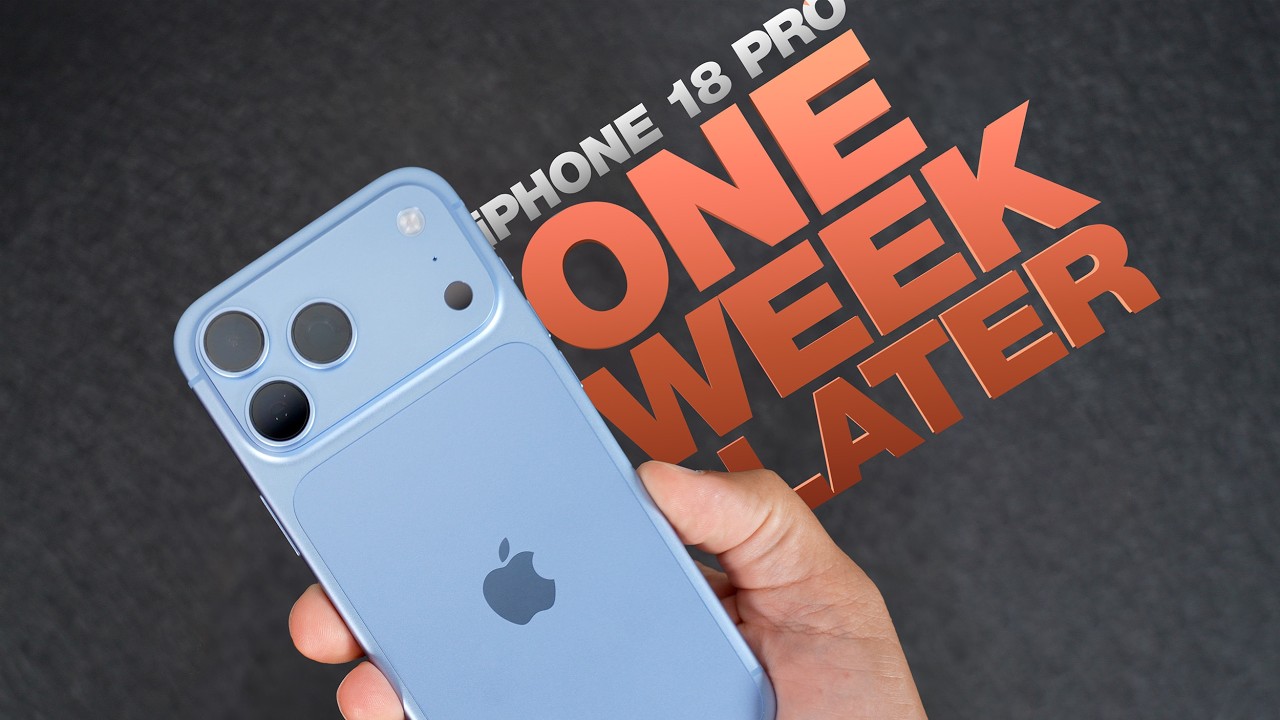
Apple is planning to release its first foldable iPhone in fall 2026 alongside the iPhone 18 Pro and iPhone 18 Pro Max. We don't know the name of the foldable iPhone yet, but rumors suggest that Apple might be planning to call it the "iPhone Ultra."
iPhone Ultra was a name that was first rumored for a high-end iPhone 16 model, but Apple didn't end up using the name. Now it's sounding like the iPhone Ultra name might actually be used.
Foldable iPhone Design
Apple tested several fold styles and device sizes, including smartphones with a middle fold that opens horizontally into an iPad-sized device and a clamshell design that folds in half vertically. Apple went with the book-style foldable that will have an outer display and camera that can be used when the iPhone is closed, and a larger, inner display that offers more screen space.
The foldable iPhone could have a titanium alloy casing with a hinge made from stainless steel and titanium with liquid metal components, and there could be a dual-lens rear camera along with a single front-facing camera.
Analyst Jeff Pu believes the foldable iPhone will have a frame that's made from titanium and aluminum. Apple could use titanium for the stress bearing parts of the frame to ensure that it doesn't bend, and aluminum in other areas for heat dissipation and to keep weight low.
Apple analyst Ming-Chi Kuo believes that Apple might not opt for Face ID, instead installing a Touch ID side button. It's possible that would allow Apple to save valuable real estate inside to keep the device as thin as possible, but it would be a definite change as Apple just eliminated Touch ID from the iPhone lineup with the launch of the iPhone 16e.
Apple will need to overhaul iOS to be able to better transition from a small display to a larger display, but luckily iPadOS already exists. The foldable iPhone will allegedly have a display with a 4:3 aspect ratio, much like the iPad.
Size
Current rumors suggest that the foldable iPhone will feature a display that's around 5.5 inches when it's folded in half, and a larger 7.8-inch iPad-like display when it's opened up.
It could be as thin as 4.5mm when it is unfolded, and 9mm to 9.5mm when it is closed. If it is 4.5mm, when open, the foldable iPhone will be Apple's thinnest device by far. That title is currently held by the 12.9-inch iPad Pro, which is 5.1mm thick. Some rumors suggest it will be a few millimeters thicker, but it is expected to be thinner than current iPhones.
According to one leaker, the inner (unfolded) display will measure in at 7.76 inches with a 2,713 x 1,920 resolution, while the outer display (folded) will measure in at 5.49 inches with a 2,088 x 1,422 resolution and a 4:3 aspect ratio. Another leaker has suggested it will have a 7.6-inch display size when unfolded.
Minimal Crease
The 2026 foldable iPhone reportedly has no visible crease, a problem that affects most foldable devices on the market. Apple is said to have pursued eliminating the crease "regardless of cost," and the company has developed a "new material property" that makes the crease disappear. The crease has been described as "nearly invisible" when the iPhone is unfolded.
Samsung's Galaxy Z Fold
One of the reasons that Apple waited so long to release a foldable iPhone is because it struggled to make a device that did not have a visible crease, but it may be a problem that has now been largely solved given the uptick in rumors.
Apple is planning to use ultra-thin glass for the foldable iPhone, and Chinese manufacturer Lens Technology could be Apple's primary glass supplier. Corning is likely to provide the raw materials to Lens Technology, with Apple choosing the supplier because of its expertise in glass strengthening and minimizing side cracks after cutting.
The foldable iPhone will use a new type of display panel created by Samsung, using a custom display process that Apple has the trademark for. The process includes integrating touch sensors directly into the display panel, reducing overall thickness by approximately 19 percent. The engineering advancement brings a lighter build and a more rigid display structure, and the display meets Apple's requirements for thinness, power efficiency, and brightness.
Apple could use a structural glass mid-frame to minimize the visible display crease in the fold, while applying a color filter-on-encapsulation layer together with a circular polarizer module to improve color purity and light transmission.
Advances in optically clear adhesive (OCA) have been important in Apple's quest to minimize the visible crease in the iPhone Ultra. Very subtle shifts in alignment of the display panel components can cause micro-cracks or deformation, leading to a visible crease. OCA formulations stay pliable during gradual bending, and can flow into microscopic irregularities to reduce light scattering and the visibility of the crease.
Leakers suggest the iPhone Ultra will have a crease depth that's under 0.15mm, which is shallow and should be less noticeable to the eye and to the touch than a crease that is deeper. The crease angle is under 2.5 degrees. The crease angle describes how sharp the fold line appears when the display is unfolded. A smaller angle suggests a smoother, flatter transition across the fold.
Smartphone makers like Samsung do not publish details on crease measurements, so it is difficult to compare Apple's crease design rumors to existing foldable devices.
Hinge Design
To minimize the crease in the display, Apple plans to use liquid metal for the iPhone's hinge, which will improve durability. This is one technique that might allow Apple to get rid of the crease that has plagued other foldable smartphones. Apple's hinge will be higher quality than hinges used for other foldable smartphones.
Liquid metal, or amorphous metal, has a structure that is more resistant to bending, deformation, and denting than traditional metal. Its properties are derived from the manufacturing method, which involves rapid heating and cooling. Its structure makes it tougher than titanium alloy, and it has a stainless steel look. Apple may also use a combination of titanium and stainless steel for the hinge.
Apple is allegedly running into issues with the foldable iPhone's hinge, but the problem isn't expected to impact launch timing. The hinge is failing to meet Apple's quality control standards under prolonged, high-frequency opening and closing.
Design Mockups
A 3D printed mockup version of the iPhone Ultra provides an idea of what the device will look like. The mockup isn't spot on because we don't know Apple's exact specifications for the iPhone Ultra as of yet, but it is in line with multiple rumors that we've heard at ~7.6 to 7.8 inches when open and 5.5 inches when closed.
It's smaller than the iPad mini, but it will have the largest display of an iPhone to date. It's rumored to have a 4:3 aspect ratio, and it will be short and wide, featuring a book-like form factor.
The first alleged iPhone Ultra dummy model came out in early April, and more images followed later in the month. We don't know if these images are reflective of the iPhone Ultra's actual design, but they have all of the design features that have been rumored, along with the right sizing.
There is a raised camera bump that does not span across the entire back of the device, which is expected. It has a two-lens camera system, and a thin chassis.
The dummy models show no signs of an Action Button or a MagSafe magnetic ring for charging purposes, so it's possible these features will be missing due to the thinness of the device. We're also not expecting a SIM slot, much like the iPhone Air.
One rumor has described the darker color as a shade of indigo rather than black. The color is said to be similar to the iPhone 17 Pro's Deep Blue finish. The Deep Blue color is one of the darker blues that Apple has debuted, but it is clearly a blue shade and not black.
Repairability
The foldable iPhone will reportedly have a design that makes it easier to repair than other foldable smartphones on the market. Chinese leaker Instant Digital said Apple used "rigorous underlying engineering logic" with a modular design that eliminates the internal ribbon cable routing that often complicates competing foldables.
Apple put the motherboard on the right side of the device, and the cables for the volume buttons run upward instead of across the back of the display to maximize internal space. Apple is said to be using an innovative stacked design that dedicates almost all space to the display and battery.
No Face ID
Because the iPhone Ultra is so thin, there isn't room for a TrueDepth camera system. It won't use Face ID, and will instead have a Touch ID side button, similar to an iPad.
There will be a front-facing hole punch camera for both the inner and outer displays for selfies, but unlocking the iPhone biometrically will be done with Touch ID.
A20 Chip
The foldable iPhone will use Apple's A20 chip, built on TSMC's 2nm process.
The transition to 2nm will allow for more transistors in each chip, which will boost performance. The A20 chips could be up to 15 percent faster and 30 percent more efficient than A19 chips. Apple is also expected to use TSMC's Wafer-Level Multi-Chip Module (WMCM) chip packaging technology. WMCM will see RAM directly integrated on the chip's wafer with the CPU, GPU, and Neural Engine.
Incorporating RAM this way could bring faster performance for overall tasks, better thermal management, and improved Apple Intelligence.
RAM
The iPhone Ultra is expected to feature 12GB RAM.
Cameras
The foldable iPhone could have an under-display camera for the interior of the device, with a single hole punch camera for the exterior when it's folded up. The under-display camera is not expected to feature Face ID, with Apple instead adopting Touch ID. The camera could have a 24-megapixel resolution, which would be an industry first. Some Android devices use under-display cameras, but not at that high resolution.
The foldable iPhone rear camera setup will have a Main lens and an Ultra Wide lens with no Telephoto lens. Rumors suggest that both lenses will be 48 megapixels, which isn't too surprising because current iPhone models have 48-megapixel lenses.
Battery
Apple worked to increase the power efficiency of its first foldable display in an effort to maximize battery life, and rumors suggest that the foldable iPhone will have decent battery life despite a thin size. Apple reduced the display driver integrated circuit (IC) from 28nm to 16nm, which could lead to battery savings. Apple plans to use high-density battery cells for the foldable iPhone.
The foldable iPhone could have a battery in the 5,400 to 5,800 mAh range, which would make it the largest battery capacity that Apple has used in an iPhone. The iPhone 17 Pro Max has the current largest battery at 5,088 mAh.
Apple Pencil?
Apple tested an Apple Pencil for the foldable iPhone, but it is unlikely that the accessory will see a launch. Apple's test accessory was stubbier than the version made for the iPads, but otherwise similar.
iOS Updates
The foldable iPhone will allegedly have a display with a 4:3 aspect ratio, much like the iPad. Since the display will be close to the iPad mini in size, the foldable iPhone is going to be able to run two apps side-by-side for the first time, with a simplified version of multitasking available.
Apple is updating iOS to accommodate the larger iPhone Ultra display, and in addition to being able to use two apps at once, the iPhone Ultra apps will also have sidebars on the left, similar to iPadOS.
Though Apple is making some iPad-like updates to iOS for the iPhone Ultra, it's not going to run iPadOS and it won't support iPad apps. Apple does plan to make APIs that will make it easy for developers to transition their apps to an iPhone Ultra layout.
Pricing
Apple's first foldable iPhone could cost nearly twice as much as the iPhone 17 Pro Max.
The iPhone Ultra will have three storage options, including 256GB, 512GB, and 1TB. One rumor suggests that approximate pricing could be as follows:
256GB - ~$2,320
512GB - ~$2,610
1TB - ~$2,900
Launch Date
We've heard back and forth rumors on release timing. Some rumors have suggested the iPhone Ultra will be delayed past September because of late stage production issues, while others suggest it's on time for a September launch. It is expected to debut at Apple's September iPhone event, but a launch could come a bit later.
In March, a Barclays analyst suggested the iPhone Ultra could be introduced in September alongside the iPhone 18 Pro, but launch later, perhaps as late as December.
A report from DigiTimesreconciles the launch timing rumors, suggesting that there is indeed a delay in the test phase, but Apple may be able to make up ground during the mass production phase. Mass production was set to begin in June 2026, but it has been pushed back to August.
If the iPhone Ultra does launch in September alongside the iPhone 18 Pro models, it's likely it will be in short supply. Reports agree that the device is complex and manufacturing isn't smooth sailing. In December, Apple analyst Ming-Chi Kuo said production challenges could cause supply shortages into 2027.
Rovio this week announced that it is renaming Rovio Classics: Angry Birds to "Red's First Flight" on the iPhone and the iPad, due to the "impact" that the "Classics" name and title was having on its wider games portfolio.
Rovio did not go into specifics on how the game is affecting its other titles, but Rovio Classics: Angry Birds is a paid app with no in-app purchases, unlike Angry Birds Friends, Angry Birds Journey, and Angry Birds 2, three other Rovio games that encourage microtransactions. Development resources for the Classic game could be used on other apps that bring in more money.
Customers who go to search for Angry Birds in the App Store will now be encouraged to download one of the newer titles with in-app purchase options rather than shown the paid $0.99 Classics option.
The Angry Birds Classics title will be unlisted from the Google Play Store on Thursday, and it will be renamed on the App Store. Customers who have already paid for and downloaded Rovio Classics: Angry Birds will be able to continue to play it after the app has been unlisted/renamed.
Rovio said that this is "sad news" for fans and the team that worked on Rovio Classics: Angry Birds, but the company hopes fans will transition to its other titles.
Angry Birds is one of the most well-known mobile games, and it has been around since 2009. The franchise has spawned multiple titles, two movies, books, comics, theme park attractions, and merchandise. Rovio Classics: Angry Birds was introduced just about a year ago after Rovio took the time to rebuild it with a new game engine.
Apple has made notable progress on noninvasive blood glucose monitoring technology, according to a new report from Bloomberg's Mark Gurman. Planned as a future Apple Watch feature, Apple wants to use the function to allow diabetics and others to test their blood glucose levels without needing to prick the skin for blood testing.
To test glucose levels without blood, Apple is developing a silicon photonics chip that uses optical absorption spectroscopy to shine light from a laser under the skin to determine the concentration of glucose in the body. The technology is in a "proof-of-concept" stage that is viable, but needs to be condensed to a size that can fit into a wearable.
At the current time, the prototype device is sized similarly to an iPhone and can be attached to a person's arm. That is smaller than a prior version that was big enough that it required a tabletop.
TSMC developed the main chip to power the prototype, but Apple previously worked with Rockley Photonics to create sensors and chips for glucose monitoring. Rockley Photonics in 2021 unveiled a digital sensor system that it said could monitor body temperature, blood pressure, glucose trends, hydration, alcohol, lactate, and more. Rockley Photonics made it clear that Apple was its biggest customer in regulatory filings, but Apple ultimately ended the relationship.
Apple has hundreds of engineers in its Exploratory Design Group (XDG) working on the project, but the technology is still years off. According to Bloomberg, the XDG is akin to Google's X research and development project, and it is Apple's most secretive undertaking. Apple has spent hundreds of millions of dollars developing noninvasive glucose monitoring.
Apple initially started work on alternative glucose monitoring after purchasing RareLight in 2010 under the instruction of Steve Jobs. For many years, Apple used a startup called Avolante Health LLC to work quietly on the project in a secret facility before it was transitioned to the XDG.
The under-skin glucose detection technology has been undergoing human trials for the past 10 years, with Apple using a test group of people who have prediabetes and type 2 diabetes, as well as those who have not been diagnosed as diabetic.
Apple wants to be able to warn people if they're prediabetic, enabling lifestyle changes before full-blown diabetes is developed. Apple's regulatory team is holding early discussions about getting government approval for the technology.
Apple this week filed a new listing in the Bluetooth Launch Studio database, a move that sometimes foreshadows the launch of new products. The filing does not mention any specific products, but it lists the latest Bluetooth 5.3 standard and references a prior macOS-related listing, suggesting the filing could be related to upcoming Macs.
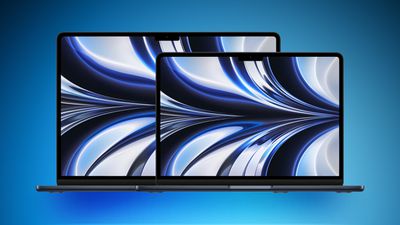
Apple is rumored to be planning new versions of the MacBook Air and the Mac Pro for release in the first half of 2023. The new MacBook Air is expected to feature a larger 15-inch display and the M2 chip, while the new Mac Pro is expected to have the same design as the 2019 model with a new M2 Ultra chip. Both new Macs could be announced as early as March or April, potentially alongside the release of macOS 13.3. However, there remains a possibility that the new Macs will not be announced until WWDC in June or later.
Bluetooth 5.3 offers benefits such as improved reliability and power efficiency, according to the Bluetooth SIG, the organization behind the standard. Apple has added Bluetooth 5.3 to several recent products, including the iPhone 14 series, the latest Apple Watch models, the new 14-inch and 16-inch MacBook Pro and Mac mini, and more.
Apple typically goes back and adds new products to existing Bluetooth Launch Studio listings once they have launched. It's still unclear if Apple plans to hold a March or April press event this year or if new products would be announced via press releases.
Apple already updated the 13-inch MacBook Air with the M2 chip in July 2022, while the Mac Pro has not been updated since December 2019 and remains the last Intel-based Mac that Apple sells brand new. The new MacBook Air and Mac Pro could be the last models in the M2 series, as Apple is expected to transition to the M3 chip later in the year.
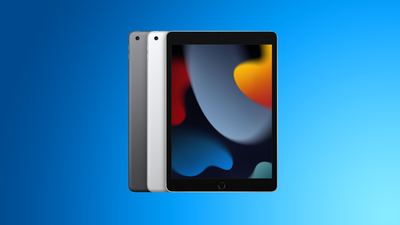
Apple's previous-generation iPad is seeing a few solid discounts today on Amazon, including both Wi-Fi and cellular models. This is Apple's 10.2-inch iPad that came out in 2021 and includes the A13 Bionic chip and lacks the full-screen design of the 2022 models.
Note: MacRumors is an affiliate partner with Amazon. When you click a link and make a purchase, we may receive a small payment, which helps us keep the site running.
Starting with the 64GB Wi-Fi iPad, you can get the silver version for $269.00 on Amazon, down from $329.00. Compared to past sales, this is a good second-best price on the 2021 iPad. It's been months since we've seen any deal on this iPad, much less an all-time low price, so this is a good opportunity to save on the tablet.
Moving to the 256GB Wi-Fi iPad, this model is on sale for $399.00 in both silver and space gray, down from $479.00. This sale is a record low price on this version of the iPad, and each model will ship in early March.
Lastly, Amazon has the 256GB cellular iPad for $529.99, down from $609.00. This is another all-time low price on the iPad, and it's only available in Silver.
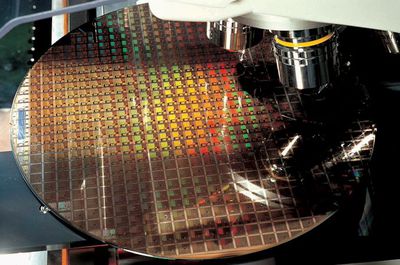
Apple has reportedly secured all available orders for N3, TSMC's first-generation 3-nanometer process that is likely to be used in the upcoming iPhone 15 Pro lineup as well as new MacBooks scheduled for launch in the second half of 2023.
According to a paywalled DigiTimes report, Apple has procured 100% of the initial N3 supply, which is said to have a high yield, despite the higher costs involved and the decline in the foundry's utilization rate in the first half of 2023. Mass production of TSMC's 3nm process began in late December, and the foundry has scaled up process capacity at a gradual pace with monthly output set to reach 45,000 wafers in March, according to the report's sources.
Apple is widely expected to adopt TSMC's 3nm technology this year for the A17 Bionic chip likely to power the iPhone 15 Pro and iPhone 15 Pro Max models. The 3nm technology is said to deliver a 35% power efficiency improvement over 4nm, which was used to make the A16 Bionic chip for the iPhone 14 Pro and Pro Max.
The latter two iPhone models were the first smartphones to feature chips built on the 4nm process, and it looks like Apple is again attempting to be first to market with models based on the latest cutting-edge semiconductor technology.
Apple plans to release a new MacBook Air in the second half of 2023, and it may be equipped with a 3nm chip, according to a January report from DigiTimes. However, display industry analyst Ross Young in December claimed that a 15-inch MacBook Air would be released in the first half of 2023. If DigiTimes' outlook turns out to be accurate, then perhaps both 13-inch and 15-inch MacBook Airs with M3 chips based on 3nm technology will launch in the second half of 2023 instead.
Looking further ahead, Apple analyst Ming-Chi Kuo believes 14 and 16-inch MacBook Pros coming in 2024 will feature M3 Pro and M3 Max chips that are built on TSMC's 3nm process. MacBook Pro models with the M3 Pro and M3 Max chips will go into mass production in the first half of 2024, according to Kuo.
The 3nm technology will offer improved performance and better power efficiency compared to the current chips manufactured on a 5-nanometer process, including the M2 Pro found in Apple's current high-end Mac mini and the M2 Pro and M2 Max used in its latest 14 and 16-inch MacBook Pro models.
TSMC is poised to move to N3E – an enhanced version of N3, its first-generation 3nm technology – to commercial production in the second half of this year, and Apple will be the first customer to adopt the process, according to another report this week from DigiTimes. Nikkei Asia reported in September that Apple could adopt N3E for devices launching as soon as this year, but we've not seen any other reports corroborating this roadmap.
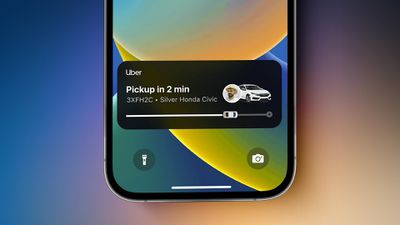
Uber today announced it is updating its iPhone app with Live Activities support in over 1,200 cities around the world following several months of testing. The new version of the app will be available on the App Store starting this morning.
Live Activities is an iOS 16 feature that allows iPhone users to stay on top of real-time events right on the Lock Screen on all iPhones and in the Dynamic Island on the iPhone 14 Pro and iPhone 14 Pro Max. The feature will make it easier for iPhone users to track the live progress of an Uber ride at a glance without opening the app, including the latest ETA, the trip status, and the vehicle's description and license plate number.
Apple announced that Uber would support Live Activities back at WWDC 2022, and the feature has been in testing in select countries since late last year. With the latest update to the Uber app, the feature is available around the world.
Live Activities will also be supported by the Uber Eats app for food deliveries "in the coming months," according to a company spokesperson.
Apple's first foldable iPhone, with a book-style design featuring a 5.4-inch outer display and a 7.6-inch inner display with a minimal crease down the middle.


 Note: MacRumors is an affiliate partner with some of these vendors. When you click a link and make a purchase, we may receive a small payment, which helps us keep the site running.
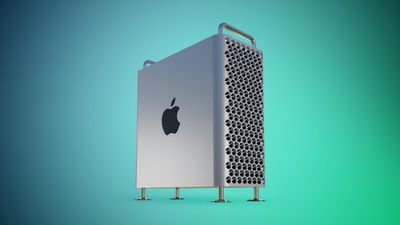

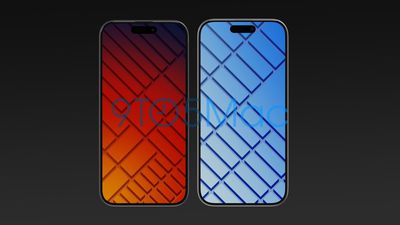
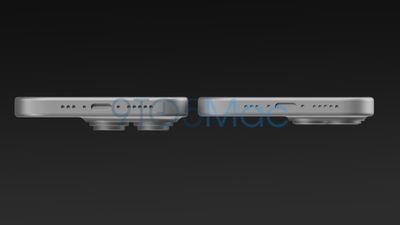

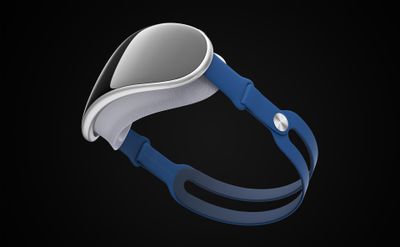
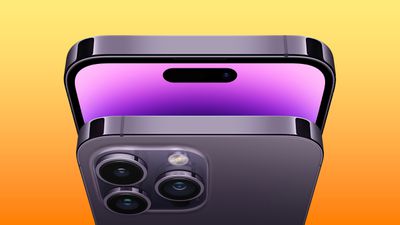




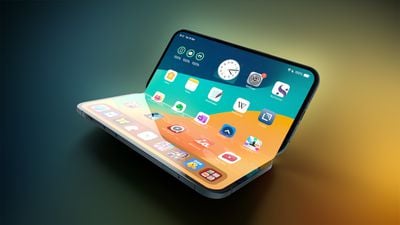
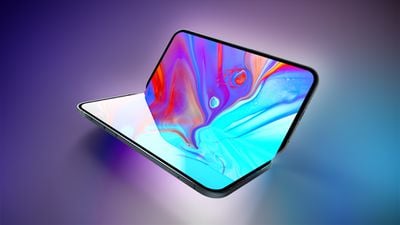

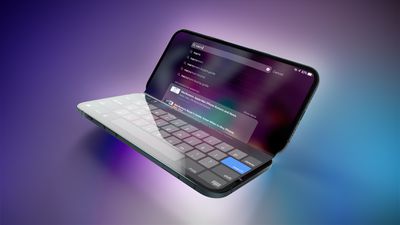


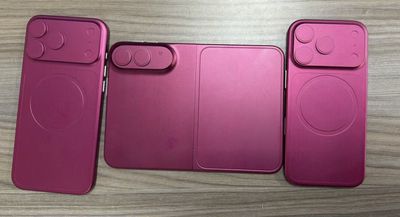
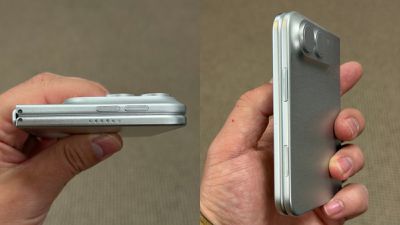 Image via


 Note: MacRumors is an affiliate partner with Amazon. When you click a link and make a purchase, we may receive a small payment, which helps us keep the site running.