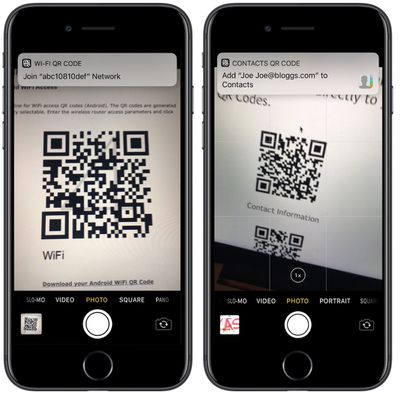
The iOS Camera app will finally be able to recognize QR codes within iOS 11, as was discovered yesterday during the developer-focused beta launch of Apple's new mobile operating system. On current iterations of iOS, users have to find and download a third-party QR code scanning application if they wish to use their iPhone, iPad, or iPod touch to scan a code.
When iOS 11 launches in the fall, the Camera app will natively provide a QR scanning function to all users. Some beta users have taken to Twitter to share a glimpse of the feature in action, and it appears expectedly straightforward: open the Camera app, point the iOS device at a QR code, and tap on the drop-down notification to act upon it.
Some examples that have been shared include joining a Wi-Fi network, adding someone to your contacts, and -- presumably -- any other scanning opportunities currently offered by QR code technology. The feature is turned on by default, but can be toggled on/off within the Camera section of the Settings app.
Check out the MacRumorsiOS 11 tidbits post for more information about what can be found in the newest version of iOS.
To determine your Mac's model year, click on the Apple logo in the top-left menu bar and select About This Mac.
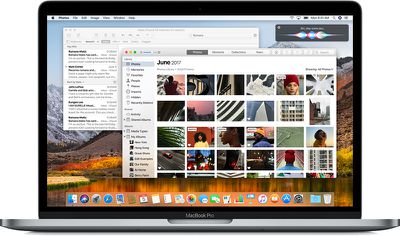
The first macOS High Sierra beta was released to registered Apple developers on Monday. A public beta will be available in late June through the Apple Beta Software Program. The software update will be officially released in the fall.
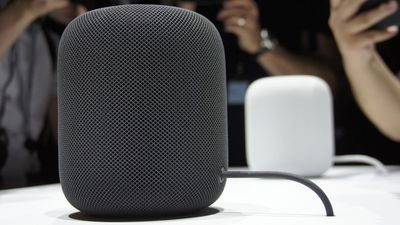
Following an unveiling at WWDC yesterday, Apple let members of the press get a close-up look at its new Siri-enabled speaker, HomePod, but due to the loudness of the area it was impossible for WWDC attendees to really determine HomePod's sound quality. Now, a few websites have gotten the chance to hear how HomePod sounds in a normal environment, and shared their opinions of the device online.
According to Mashable, Apple played listeners five songs across four genres and the device had "very good audio." The HomePod starts up by playing 360-degree audio to itself so it can learn the space it's in, and then adjusts any subsequent music that's played with the knowledge of the size of the room.
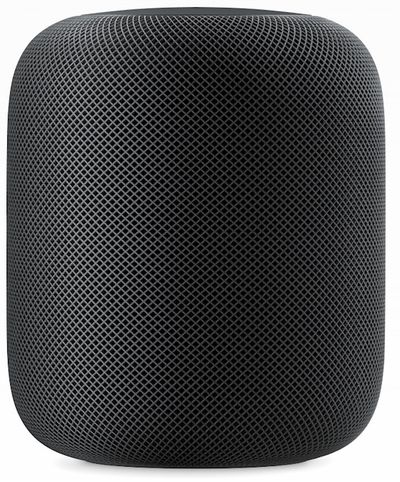
HomePod requires constant AC power for music playback
Mashable said this worked, and "no matter where I walked in the small listening room, the sound was consistent."
The audio wasn't just loud — filling a room with sound, good or bad, is easy — it was rich. The highs were sharp, but not broken. The lows were deep, sonorous, but not chest-thumping.
A classic song with a far less complex mix sounded warm and true and one of Kendrick Lamar’s beat-heavy tunes showed off the HomePod’s bass prowess, I also listened to a live recording of the Eagles' Hotel California on a pair of HomePods. I noticed that the audience cheers primarily came from one speaker, along with some ambient music sounds and the mains came from the HomePod almost directly in front of me. I did not feel like I was at the live concert, but I was still impressed with the audio quality.
Mashable noted that Apple had in-room comparisons with its competitors, including Sonos Play:3 and Amazon Echo, and that the HomePod easily beat the two other speakers in pure music playback quality. The site noted the disadvantages users face if they don't use Apple Music, and was unsure how any of the smart home controls would work as press was only allowed access to non-functional demo units, but was ultimately left impressed with HomePod, calling it a "very good speaker" and looking forward to testing it more as December grows nearer.
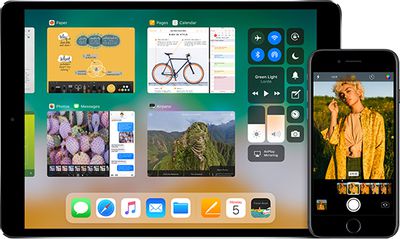
Apple on Monday introduced iOS 11, the next major version of its mobile operating system for iPhone, iPad, and iPod touch.
iOS 11 is compatible with 64-bit devices only, meaning the iPhone 5, iPhone 5c, and iPad 4 do not support the software update.
iOS 11 is compatible with the following iPhone, iPad, and iPod touch models:
iPhone
iPhone 7 Plus
iPhone 7
iPhone 6s
iPhone 6s Plus
iPhone 6
iPhone 6 Plus
iPhone SE
iPhone 5s
iPad
12.9-inch iPad Pro (first-generation)
12.9-inch iPad Pro (second-generation)
9.7-inch iPad Pro
10.5-inch iPad Pro
iPad (fifth-generation)
iPad Air 2
iPad Air
iPad mini 4
iPad mini 3
iPad mini 2
iPod touch
iPod touch (6th generation)
The first iOS 11 beta was released to registered Apple developers on Monday. A public beta will be available in late June through the Apple Beta Software Program. The software update should be officially released in September.
Apple CEO Tim Cook revealed on Monday that the company has been helping the U.K. government investigate terror attacks in the country, despite being criticized by officials for its steadfast support of digital services that use end-to-end encryption.
"We have been cooperating with the U.K. government not only in law enforcement kind of matters but on some of the attacks," Cook said during a Bloomberg Television interview on Monday. "I cannot speak on detail on that. But in cases when we have information and they have gone through the lawful process we don't just give it but we do it very promptly."
Cook went on to suggest that rather than breaking encryption and risking the security of millions of users' private data, technology companies could provide police with metadata – revealing when, where, and who sent and received messages, but not their content – which could be extremely helpful in criminal investigations. "Metadata, if you're putting together a profile, is very important,” said Cook.
The comments follow a third attack in as many months in the U.K., which has reignited the debate surrounding online surveillance in the country. The current Conservative government is demanding new powers that would force technology companies to compromise encryption protocols.
In the wake of Saturday's terrorist attack at London Bridge, Prime Minister Theresa May again called for new laws to regulate the internet, demanding that internet companies do more to remove places online where terrorists can communicate. "We cannot allow this ideology the safe space it needs to breed," she said. "Yet that is precisely what the internet and the big companies that provide internet-based services provide."
Recently the U.K. government passed a bill that could theoretically mean companies are legally bound to do comply with such requests, although the practicalities of such a law have been repeatedly questioned by security experts. Apple's privacy and encryption policy has also been criticized by U.S. law enforcement officials and the company publicly clashed last year in court with the FBI over the issue.
Note: Due to the political nature of the discussion regarding this topic, the discussion thread is located in our Politics, Religion, Social Issues forum. All forum members and site visitors are welcome to read and follow the thread, but posting is limited to forum members with at least 100 posts.
Apple announced a new version of its Metal graphics technology during Monday's keynote at the Worldwide Developers Conference. As part of macOS High Sierra, Metal 2 will officially support external GPUs, allowing any Mac with a Thunderbolt 3 port to benefit from graphics hardware powerful enough to run demanding virtual reality applications and games.
The native VR support in macOS High Sierra also opens up the possibility for Mac owners to hook up VR headsets to their computer for the first time. And in a concurrent related announcement, Steam game platform creator Valve also revealed in a blog post on Monday that it is making a beta version of its SteamVR software development kit available on Mac, offering players the same 360-degree, room-scale tracking as the Windows and Linux variants.
On the development side, we have worked closely with Epic and Unity to make Mac extensions of content built on those engine technologies as simple as possible. Extension tools for those engines, and others, are available as part of this beta.
We've also worked with Mozilla to help enable WebVR support on Firefox, so macOS-based web developers can start trying out VR.
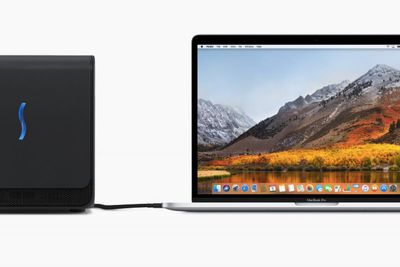
In addition to the Valve partnership, Apple announced it is also selling its own external graphics enclosure to developers who want to work on graphically intensive VR and 3D applications and games, although Apple noted that external GPU support likely won't arrive for consumers until spring 2018.
Apps that use Metal, OpenCL, and OpenGL can now take advantage of the increased performance that external graphics processors can bring. The External Graphics Development Kit includes everything you need to start optimizing advanced VR and 3D apps on external graphics processors with macOS High Sierra.
Apple's External Graphics Development Kit comes with a Sonnet external GPU chassis with Thunderbolt 3 and 350W power supply, an AMD Radeon RX 580 8GB graphics card, a Belkin USB-C to 4-port USB-A hub, and a promo code for $100 towards the purchase of a HTC Vive VR headset.
The External Graphics Development Kit costs $599 and requires a Mac with Thunderbolt 3 running the latest beta version of macOS High Sierra. The other caveat is that customers have to be a member of the Apple Developer Program to be eligible to purchase the kit.
The kit can be bought directly from Apple's website, although Apple cautions that the HTC Vive promo codes have limited availability and are distributed on a first-come, first-served basis.
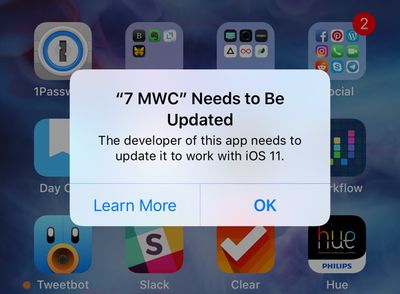
Ahead of the launch of iOS 11, there were several signs suggesting 32-bit apps would no longer be supported in the new operating system, which has been confirmed with the release of the first iOS 11 beta.
When attempting to open a 32-bit app when running iOS 11, the app refuses to launch, offering up a message that says the app needs to be updated to work with iOS 11.
32-bit apps are also not available when searching in the new version of the App Store, and previously downloaded 32-bit apps can't be installed through the Purchased tab.
Over the course of the last several months, warnings about 32-bit apps have gotten increasingly dire. With the launch of iOS 10.1 in October of 2016, Apple started warning customers that older apps "may slow down your iPhone."
In January of 2017, the first iOS 10.3 beta featured an even more serious message when launching a 32-bit app, which specifically read "This app will not work with future versions of iOS."
Given the warnings, it should come as no surprise that Apple has eliminated support for 32-bit apps, but it does render many older apps that have worked for years without updates unusable. There are likely many users who continue to use 32-bit apps regularly who will be surprised to find that those apps no longer work when iOS 11 rolls out to the public.
Apple started supporting 64-bit apps when the iPhone 5s launched in September of 2013. As of June 2015, all apps and app updates must use the 64-bit architecture, so apps that are still 32-bit have not been updated in at least two years.
Current iOS 10 users can check to see if there are any 32-bit apps on their iOS devices in the Settings app. Go to General --> About --> Applications to get to the "App Compatibility" section that lists any outdated apps.
iOS 11 is only compatible with devices that feature a 64-bit chip, meaning it works with everything that has an A7 or newer chip. Specifically, iOS 11 is compatible with iPhone 5s, SE, 6 Plus, 6, 6s Plus, 6s, 7 Plus, and 7, along with the new fifth-generation iPad, the iPad Air, the iPad Air 2, all iPad Pro models, the iPad mini 2 and later, and the 6th generation iPod touch.
Following today's Worldwide Developers Conference keynote that saw the debut of new software and hardware products, Apple has updated and simplified its iCloud storage pricing tiers.
The 1TB storage option has been eliminated, while the 2TB storage option has dropped in price to $9.99 per month, which is what 1TB of storage was previously priced at. Essentially, at the highest data tiers, customers are getting more storage space for less money. Pricing for Apple's 50GB and 200GB iCloud storage plans remains unchanged.
The new pricing tiers in the United States:
- 50GB: $0.99 - 200GB: $2.99 - 2TB: $9.99
While U.S. prices are listed above, the same changes have been made in all countries where iCloud storage is available. 1TB storage options have been eliminated across the board, while 2TBs of storage is now available at the lower 1TB cost.
Many users have been hoping Apple will increase the free iCloud storage option, but following today's update, free iCloud space continues to cap out at 5GB. In iOS 11 and macOS High Sierra, Apple is offering an option to share a 200GB or 2TB iCloud storage plan with family members, which is perhaps the reason behind the price drop.
The new storage plans are available immediately on all iOS devices.
Amid a day of new hardware and software reveals from Apple, the company also announced the launch of Monument Valley 2, which is out now exclusively on the iOS App Store for $4.99 [Direct Link]. Released by ustwo Games, Monument Valley 2 is the sequel to the popular 2014 iOS game Monument Valley, which tasked players with navigating a princess through a series of increasingly difficult optical illusion mazes.
According to the developer, Monument Valley 2 follows in its predecessor's footsteps with all-new levels that are "filled with illusory, meditative puzzles," but this time players are guiding a mother, named Ro, and her child through the game's puzzles. Ustwo Games notes that knowledge of the original game isn't needed to enjoy the sequel, but the two games are set in the same universe.
Dan Gray, head of studio at ustwo Games says, "We wanted to find the perfect reason to return to Monument Valley, and the story of a mother who's not only a parent but a creator of this world is a narrative we felt compelled to tell. We spent two years hiring some of the industry's most talented people for this team, and we're excited to show this whole new take on a game fans have been asking for."
The game's major features include:
A standalone adventure - A completely new story from the Monument Valley universe. You don’t need to have previously played Monument Valley to enjoy Monument Valley 2.
Individually crafted puzzles - Enjoy beautiful levels filled with illusory, meditative puzzles, using brand new interactions to explore the changing dynamics between characters.
Contemporary visuals - Artwork inspired by an eclectic mixture of architectural styles, artistic movements and personal influences, each translated into stunning geometric structures.
Beautiful audio - Immerse yourself in uniquely melodic interactive soundscapes, tailored perfectly to every step of Ro and her child's journey.
Monument Valley 2 is available to download now on the iOS App Store for iPhone, iPad, and iPod touch devices running iOS 9 or later, and costs $4.99. [Direct Link]
Apple today updated its Apple Beta Software Program website to announce that iOS 11, macOS High Sierra, and tvOS 11 public betas will be available for public beta testers in the near future.
Apple has offered macOS and iOS public betas for several years now, giving non-developers a chance to try out new software features ahead of a public launch while also providing Apple with extra feedback, but tvOS is a new addition.
For the first time, with tvOS 11, Apple plans to allow non-developers to install the beta software. To download the tvOS 11 beta, public beta testers will need to connect an Apple TV to a computer running iTunes using a USB-C cable. The tvOS software is then installed on the Apple TV using iTunes, with subsequent updates available over-the-air.
The tricky installation requirements are likely the reason why previous tvOS betas haven't been made available publicly.
It's not entirely clear when the tvOS beta will be made available to public beta testers, but during the keynote, Apple said iOS and macOS High Sierra would be available for public testers in late June, so that's presumably when the new public tvOS 11 beta will also be available.
As for features, Apple has not yet detailed what's new in tvOS 11 and it received little coverage during the keynote event aside from the mention of a new Amazon Prime Video app that's coming to the Apple TV later this year.
In an interview today with Bloomberg TV, Apple CEO Tim Cook said customers will be "blown away" by the experience of the HomePod.
"I think people are going to love it. I know they are," said Cook. "I think they're going to be blown away by the experience."
When questioned about why a customer should choose to purchase the HomePod over the Amazon Echo or Google Home, especially considering it's the most expensive of the three, Cook said Apple's focus was on creating a "breakthrough speaker" that delivers a high-quality audio experience in the home.
"What we tried to do is build something that is a breakthrough speaker first," said Cook. "Music is deep in our DNA, dating back to iTunes and iPod. We wanted something that, number one, sounded unbelievable. I think when people listen to it, they're going to be shocked over the quality of the sound."
A portion of Apple CEO Tim Cook's interview with Bloomberg TV today
Nevertheless, Cook acknowledged that both Apple and customers want a speaker that does more than simply play music.
"Of course, it does a lot of other things, right, and all of those are important as well, but we wanted a really high-quality audio experience," said Cook.
"There's a lot of things you can do with it," he added. "There's a lot of things that Siri knows how to do from the phone. We'll start with a patch of those as [Apple marketing chief] Phil [Schiller] showed today during the keynote, and then you can bet there's a nice follow-on activity there as well."
Cook said Apple has been working on the HomePod for "multiple years," and as usual, it wasn't focused on being first to the market.
"We didn't have the first MP3 player. We didn't have the first smartphone. We didn't have the first tablet," he said. "For us, it's not about being first. It's about being the best, and giving users an experience that delights them every time. We don't let that impatience result in shipping something that's just not great."
Cook also briefly reflected on today's iOS 11 announcements, ARKit serving as a "foundation" for Apple's augmented reality efforts, and why he elected against joining U.S. President Donald Trump's various councils and committees.
HomePod will be available in December for $349 in the United States, Australia, and the United Kingdom. It'll launch in other countries next year.
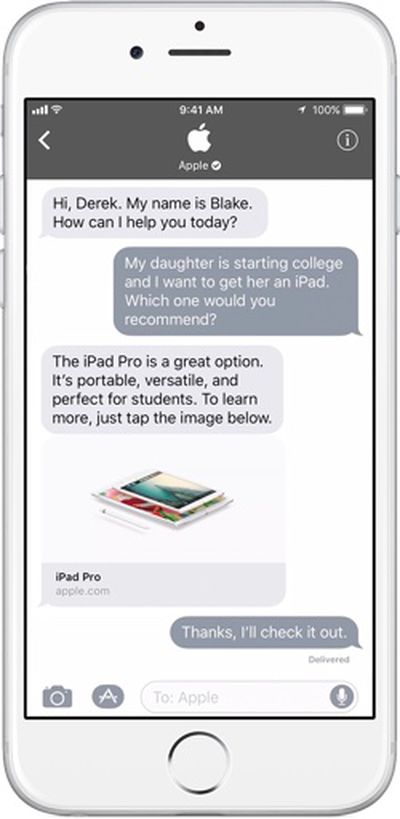
On Apple's Developer site, there's a section outlining an upcoming iOS 11 Messages feature called "Business Chat."
Business Chat wasn't mentioned during the keynote event, but based on the text that describes the feature, it's going to allow businesses to make themselves available for quick chats directly in Messages for customer service purposes. Customers will be able to find businesses using Safari, Maps, Spotlight, and Siri, and then initiate iMessage conversations.
Business Chat is a powerful new way for businesses to connect with customers directly from within Messages. Using Business Chat, your customers can get answers to questions, resolve issues and complete transactions on their iPhone, iPad, and Apple Watch. Customers can find your business and start conversations from Safari, Maps, Spotlight, and Siri.
As The Verge points out, Business Chat will allow Apple to compete with social networks like Facebook and Twitter, where businesses use direct messaging functionality to interact with customers.
Features like Apple Pay and calendar integration will be added to the Business Chat option, allowing customers to make purchases right in a chat session, and it will also support third-party apps so businesses can develop custom features.
Apple plans to provide more details on Business Chat during a developer session that will take place on June 9 at 10:00 a.m. Pacific Time.
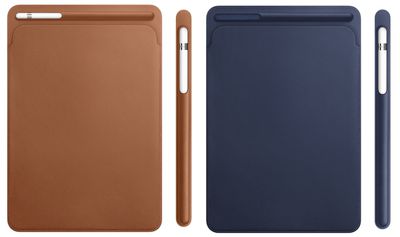
With the debut of new iPad Pro models today at WWDC, Apple has introduced a few new accessories for its tablets. Two of the new additions to the iPad Pro accessory line are called the Leather Sleeve for 10.5-inch iPad Pro and the Leather Sleeve for 12.9-inch iPad Pro, and they include a sleeve for the iPad Pro as well as a slot for users to store their Apple Pencil. The cases cost $129.00 for the 10.5-inch iPad Pro and $149.00 for the 12.9-inch iPad Pro.
To match, Apple has also debuted a new $29.00 Apple Pencil Case, which acts as standalone storage for Apple's stylus accessory. Both the Leather Sleeve and Pencil Case come in Saddle Brown, Taupe, Midnight Blue, and Black.
Users interested in the more traditional Smart Cover can buy a version of Apple's popular case for their new 10.5-inch iPad Pro at a price of $49.00, in seven colorways: Mist Blue, Pollen, Flamingo, White, Pink Sand, Midnight Blue, and Charcoal Gray. A Smart Keyboard for 10.5-inch iPad Pro is up for sale on Apple's website at $159.00.
Both iPad Pro sizes have received new Leather Smart Cases as well, with the 10.5-inch iPad Pro version costing $69.00 and the 12.9-inch iPad Pro version costing $79.00.
To stay up-to-date on all the latest WWDC news, or to catch up with anything you might have missed, be sure to check out the MacRumorsWWDC 2017 event recap post.
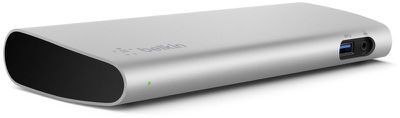
Belkin today announced that its Thunderbolt 3 Express Dock HD is available for purchase on the Belkin website, in Apple retail stores, and on Apple.com.
Priced at $349, Belkin's Thunderbolt 3 dock is one of the more expensive dock options available on the market, but for that price, it features an aluminum body, a stylish tapered design, 85 watts of power delivery for charging Apple's 15-inch MacBook Pro, and a range of ports.
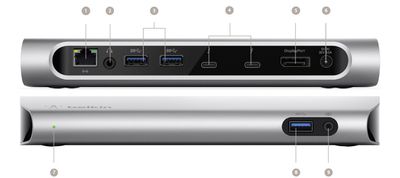
The dock includes Two Thunderbolt 3 USB-C ports, three USB-A ports, one DisplayPort, a Gigabit Ethernet port, an Audio In/Out port, and a second Audio Out port. Up to five Thunderbolt devices can be daisy-chained from the dock and it offers a 170W power adapter to supply power to attached peripherals while also charging a MacBook Pro.
Belkin's dock is able to support a single 5K monitor or two 4K monitors, and it supports data transfer speeds of up to 40Gb/s.
We went hands-on with the Belkin Thunderbolt 3 Express Dock HD last week, so make sure to check out our review for more details and to see how it measures up to other Thunderbolt 3 docks.
Today's Worldwide Developers Conference keynote featured more than two hours of non-stop announcements and product unveilings, resulting in the most eventful and jam-packed WWDC we've had in years.
We've condensed Apple's multi-hour keynote into just seven minutes, so if you don't have time to watch the full range of announcements, you can get a quick recap.
Along with new versions of iOS, macOS, tvOS, and watchOS, Apple also used today's event to launch a number of products. Starting today, Apple is selling refreshed iPad Pro models, new iMacs, new MacBooks, new MacBook Pro models, new Apple Watch bands, and updated MacBook Air machines.
That wasn't the end of the event, though. Apple also shared details on two upcoming products, the pro-oriented $4,999 "iMac Pro" and the $349 "HomePod," the company's much-rumored Siri-powered speaker that's designed to compete with products like the Amazon Echo while also offering up amazing sound quality. Both the iMac Pro and the HomePod are launching in December.
For a full recap of our coverage today, and more detail on what was announced, check out our extensive event recap post.
Make sure to stay tuned to MacRumors.com this week, because we're going to be sharing in-depth videos highlighting the new features in iOS 11, macOS High Sierra, watchOS 4, and tvOS, and we'll be publishing detailed roundups on everything you need to know about Apple's upcoming software updates and new products.
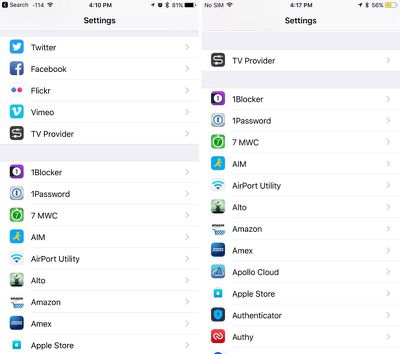
In iOS 11, Apple has eliminated built-in integration with Twitter, Facebook, Flickr, and Vimeo, a feature that allowed users to store their account information and access it within third-party apps that needed to use those services.
The Facebook, Twitter, Flickr, and Vimeo options have been removed in the Settings app, and according to Axios, the four apps will now be treated like other apps, using the iOS sharing extensions that were introduced back in 2014 with iOS 8.
iOS 10 left, iOS 11 right
Rather than continue to add support for different social services, Apple went with a different approach, adding sharing extensions with iOS 8 in 2014. Until now, it has maintained the single sign-on for Twitter and Facebook in addition to supporting the sharing extensions for a wider range of apps.
Direct sign-in options were first introduced in iOS in 2011. Twitter integration was made available in 2011, while Facebook integration came in 2012. Support for Flickr and Vimeo was added in 2013 with iOS 7.
iOS 11 introduces a huge number of major changes to the operating system, ranging from a redesigned Control Center experience to a host of new features specific to the iPad, but along with all of these major changes, outlined in our iOS 11 announcement post, there are also dozens of smaller changes that have been added to the beta.
Below, we've outlined some of the smaller but still significant tweaks that went unmentioned during Apple's whirlwind keynote announcement.
- Lock Screen - The Lock screen has a new look with a bolder font for the passcode numbers and lighter circles that don't feature a white outline.
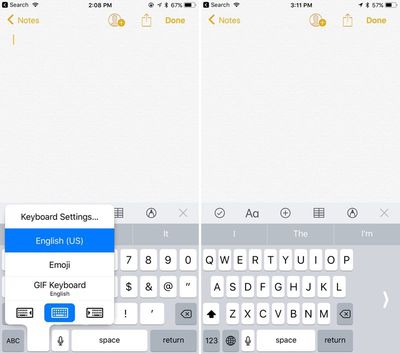
- One-handed keyboard - On the iPhone, there's a new option for a one-sided keyboard that can be enabled by pressing down on the globe keyboard button. It moves the keyboard to either the left or right side of the device.
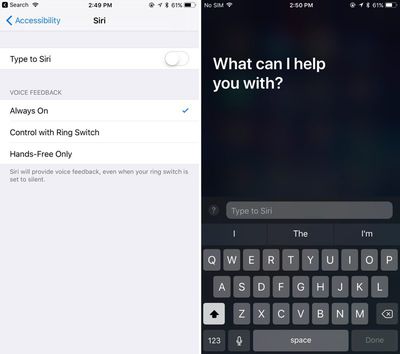
- Type to Siri - There's an Accessibility feature that enables Type to Siri. With this option toggled on, when Siri is accessed via a Home button press, it brings up a keyboard where you can type something to Siri.
- iPad keyboard changes - On the iPad, symbols and numbers accessible via the shift key are visible on the keys themselves. The alternate symbols and numbers are accessed by pulling down on the key and releasing.
Following the WWDC 2017 keynote today in San Jose, Apple invited members of the media for some hands on time with HomePod, its new Siri-enabled smart speaker and hub for controlling HomeKit accessories.
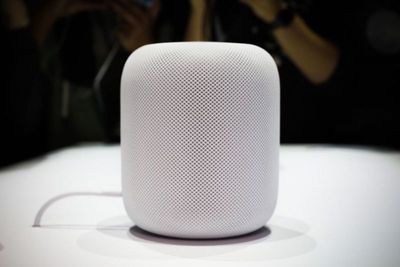
CNET has shared a gallery of HomePod pictures that provides a close-up look at the speaker, which looks somewhat like a smaller Mac Pro covered in a seamless mesh fabric. It'll be available in White and Space Gray.
The top of the HomePod has a glossy finish with Siri colors glowing in the center. Since it's designed for home use, the HomePod doesn't have a battery, so it must be plugged into a wall outlet or other power source at all times.
Meanwhile, Engadget has shared a gallery of iMac Pro pictures that show the all-in-one desktop computer in its stealthy new Space Gray finish, accompanied by a color-matched Magic Keyboard, Magic Mouse, and Magic Trackpad.
Apple said both the HomePod and iMac Pro will be available in December for $349 and $4,999 respectively.



 Following today's Worldwide Developers Conference keynote that saw the debut of new software and hardware products, Apple has updated and simplified its iCloud storage pricing tiers.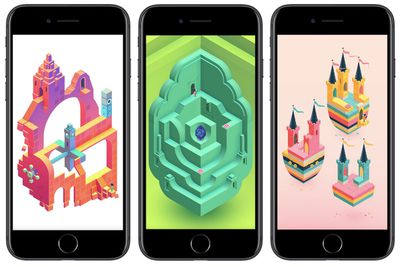

 On Apple's Developer site, there's a section outlining an upcoming iOS 11 Messages feature called "