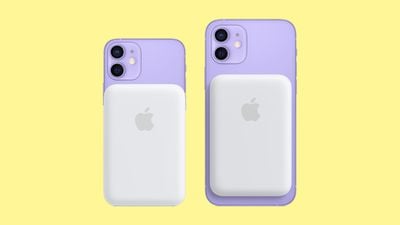
Apple's new MagSafe Battery Pack will begin arriving to customers around the world this week, and one lucky person has already snagged one.
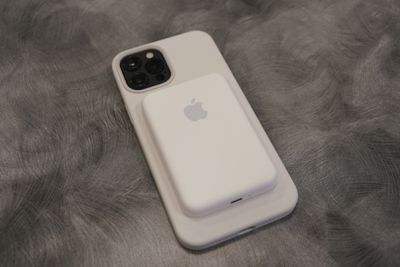
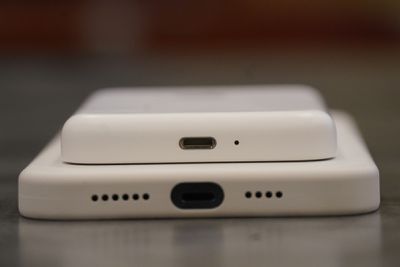
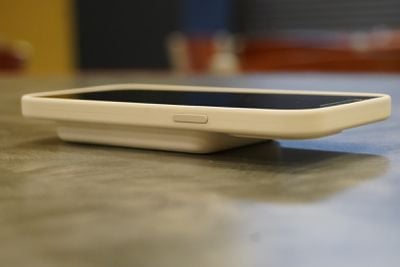
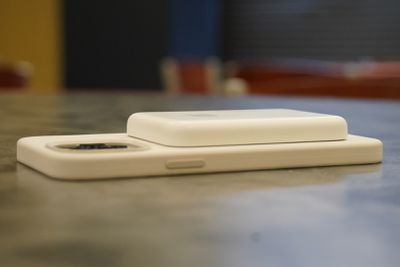
Steven Russell from Memphis, Tennessee said he managed to pick up the MagSafe Battery Pack from a local Apple Store over the weekend, and he has since shared photos on Reddit, providing a closer look at its design and thickness.
Russell shared some early impressions of the battery pack, noting that it is designed with hard but smooth plastic and has a very strong magnetic attraction to his iPhone 12 Pro, even with Apple's silicone MagSafe case on the device. He added that while the battery pack is quite thick, its rounded edges make it comfortable to hold.
Priced at $99 in the United States, the MagSafe Battery Pack attaches magnetically to the back of the iPhone 12 mini, iPhone 12, iPhone 12 Pro, or iPhone 12 Pro Max, providing additional hours of battery life. Apple says the battery pack is able to wirelessly charge the iPhone at up to 5W on the go, or at up to 15W when the battery pack is connected to a 20W or higher power adapter with a Lightning to USB-C cable.
When you attach the MagSafe Battery Pack to an iPhone 12 running iOS 14.7 or later, it will automatically begin to charge the iPhone and a charging status will appear on the Lock screen. iOS 14.7 is currently in beta and should be released within the next few days.
The MagSafe Battery Pack can be ordered on Apple's online store in a white color only and currently has a late July delivery estimate.
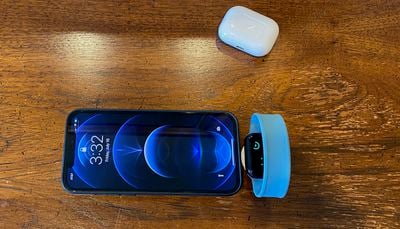
Update: Russell has also confirmed that the MagSafe Battery Pack can wirelessly charge AirPods, which is to be expected, as the battery pack is functionally equivalent to the MagSafe Charger in this regard.
One more thing to add. I have been asked if it wirelessly charges AirPods. Answer appears to be yes. pic.twitter.com/2WCcKSOlbI
— Steven Russell (@stevenrussell) July 19, 2021
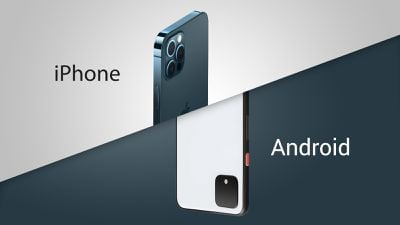
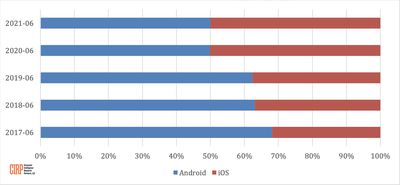
Activations of iOS and Android devices are now evenly split in the United States, with little sign of movement toward either platform dominating over the past two years, according to data sourced by Consumer Research Intelligence Partners (CIRP).
CIRP estimates that iOS and Android each had 50 percent of new smartphone activations in the year ending this quarter. iOS's share of new smartphone activations climbed from 2017 to 2020, but has now remained at its peak level for a second consecutive year.
CIRP Partner and Co-Founder Josh Lowitz said that the finding is significant because for several years, Android smartphones "had a significant edge, with over 60 percent of customers opting for an Android phone in most quarters. In the past couple of years, though, iOS has closed the gap, and now splits the market with Android."
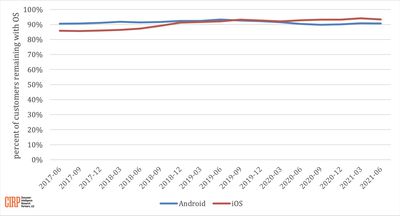
Both Android and iOS users have had a high level of loyalty historically. Android loyalty has varied very slightly, in a narrow range of 90 to 93 percent in the past four years. iOS loyalty, on the other hand, has gradually increased over the past four years, from a low of 86 percent in early 2018 to 93 percent in the most recent quarter ending in June 2021.
Loyalty and tendency to switch platforms may explain some of the change in the share of new smartphone activations, where iOS has gained loyalty in a market with a limited amount of switching. CIRP Partner Mike Levin explained:
In the most recent quarter, Apple had an edge in loyalty, with 93 percent of prior iPhone owners upgrading to a new iPhone, compared to 88 percent of Android owners staying with Android. Over several years, iOS gained about five percentage points in loyalty, while Android remained flat. This allowed Apple to steadily increase the iOS share of new smartphone activations.
CIRP's latest data was based on a survey of 500 U.S. subjects that activated a new or used smartphone in the period from April to June this year. Given the small sample size, there is certainly some margin of error to these numbers, but the data provides a reliable look at activations and loyalty over time as it uses the same survey each quarter.
Amazon is offering up to $59 in savings on Apple's AirPods this week, including the regular model and the AirPods Pro. If you're shopping for the AirPods Pro, you can get these for $189.99 on Amazon, down from $249.00.
Note: MacRumors is an affiliate partner with Amazon. When you click a link and make a purchase, we may receive a small payment, which helps us keep the site running.
This price is beating the typical Amazon sale by $7, and it's the best sale currently available at a major Apple reseller online this week. This is also the most common sale that we've tracked on the AirPods Pro in 2021, typically seen at both Woot and on Amazon.
For the lower-cost model, Amazon has the AirPods with Wired Charging Case for $119.99, down from $159.00. We've seen this model drop to $109 in the past, but this is another example of rare sales that haven't reemerged very often since their popularity earlier in 2021.
Lastly, the AirPods with Wireless Charging Case is marked down to $149.99, from $199.00. Similar to the previous sale, this is a solid second-best option given that we haven't seen any steeper discounts on this model of AirPods since early 2021.
We track sales for every model of the AirPods in our Best AirPods Deals guide, so be sure to bookmark that page while you shop around for the wireless headphones.
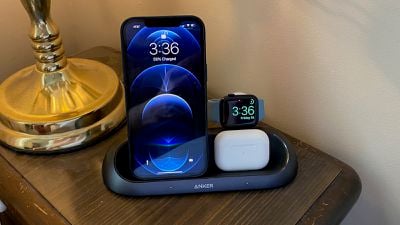
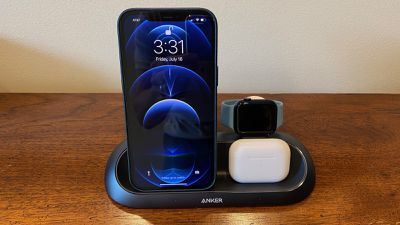
Back at CES, Anker announced the PowerWave Go 3-in-1 Stand, a docking station for iPhone, Apple Watch, and AirPods that also includes a removable power bank to charge your devices on the go, and after a few months to finalize the product, it's launching today.
I've had a few days to try out the PowerWave Go, and I can say that it's a clever gadget that comes in handy for those steeped in the Apple ecosystem. I've been using Belkin's MagSafe 3-in-1 charger at my bedside for the past few months, so swapping it out for the PowerWave Go made for a convenient comparison.
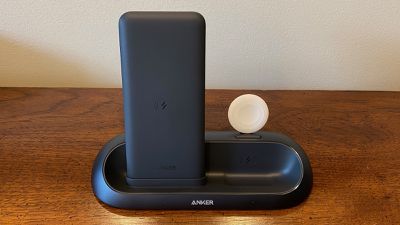
The PowerWave Go is made largely of gray plastic, but it looks nice and feels solid. The front of the main body is dominated by a depression which houses a slot for the rechargeable power bank that doubles as the phone charger portion of the device, as well as a spot for wirelessly charging an AirPods or AirPods Pro case.
On top of the body behind the AirPods charging spot is a USB-C port where the separate Apple Watch charging module connects. Fully assembled, it's a fairly attractive-looking charger that offers a versatile setup.
One limitation worth noting is that Anker says the unit is not compatible with the iPhone 12 mini, as the smaller size of the device prevents the charging coils from lining up properly in stand mode. The phone will work fine in power bank mode.
The whole docking station is powered through a single five-foot USB-C to USB-C cable and the 45-watt version of Anker's new ultra-compact Nano II GaN chargers, with both the charger and cable included in the box.
In this desktop mode, the PowerWave Go supplies up to 10 watts of charging power for a phone, although an iPhone will be limited to 7.5 watts due to Apple's limitations on non-MagSafe charging solutions. It will also supply 5 watts each to the AirPods charging spot and the USB-C port for the Apple Watch charger.
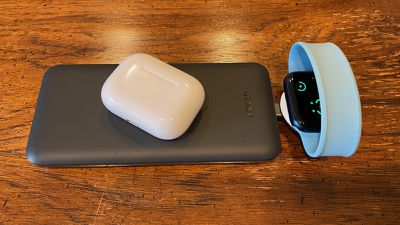
When you're ready to go on the road, you can just grab the removable power bank from the base as it's simply held in place magnetically and receives its power through pogo pin contacts. On its own, the power bank can then supply up to 10 watts of wireless charging power and up to 20 watts from a USB-C port.
If you also need to charge your Apple Watch on the go, all you need to do is pop the Apple Watch charging module of the main body of the PowerWave Go and attach it to the USB-C port on the power bank and you're all set. Anker includes a plastic cover to protect the USB-C connector on the Apple Watch module while it's loose, but I can see myself losing that in no time. USB-C ports are pretty hardy though, so I'm not too concerned about losing the cover.
Since the Apple Watch charging module uses USB-C, you can also use it separately without the power bank or docking station, such as by connecting it directly to a USB-C power adapter or to a USB-C port on a computer.
The power bank holds up 10,000 mAh of charge at 3.7 volts for a total of 37 Wh of energy. That's enough to fully charge most iPhone models around two to four times. The power bank can also be charged directly over USB-C, so you don't need to have access to the PowerWave Go base to recharge it. And thanks to passthrough charging, you can also wirelessly charge your phone while recharging the power bank.
In comparing the PowerWave Go to Belkin's 3-in-1 dock, there are some aspects I prefer about each of them. As a first point of comparison, the Belkin stand supports MagSafe while Anker the stand does not. I find MagSafe handy for making it easy to set my iPhone to charge with a very clean look, but the PowerWave Go's stand is essentially just as easy as far as getting my phone into charging position.
The PowerWave Go won't charge as quickly as the MagSafe Belkin charger, but I'm generally using it overnight so speed isn't really a factor and can actually be a detriment if too much heat is generated. The MagSafe aspect of the Belkin also means that support is limited to the iPhone 12 lineup at the moment, while the PowerWave Go can support a broader range of Qi-compatible devices.
The power bank on the PowerWave Go has a fairly bright blue light on its side that comes on whenever it's charging a device in either stand mode or portable mode. So for those who are sensitive to light at night, that's something to be aware of.
I definitely prefer the AirPods charging spot on the PowerWave Go over the Belkin one, at least for the AirPods Pro I use daily. It's super easy to just drop them into their spot on the PowerWave Go, while the Belkin has more of a slight depression on a flat surface and it takes longer than I'd like for the charging light to come on and confirm that I have the case positioned correctly. The Belkin setup does allow for larger devices like another phone to be charged in the AirPods spot, but it's at slower speeds and not something I've ever needed to use.
The portable conversion aspect of the PowerWave Go is of course something the Belkin 3-in-1 can't match, and I like that I can just pick up the power bank and Apple Watch charger and be ready to go. I've been using Apple's MagSafe Duo Charger for the little bit of traveling I've done recently, but the PowerWave Go portable setup offers more flexibility given that it doesn't need to be plugged in.
All of this convenience doesn't come cheaply, with the PowerWave Go priced at $179.99, which is $40 more than the Belkin dock when purchased through Apple. But with a quality build supporting a number of Apple devices, a removable high-capacity power bank with wireless charging, and Anker's excellent 45W wall charger also included, there's a lot of value in this package.
Note: Anker provided MacRumors with a PowerWave Go for the purpose of this review. No other compensation was received. MacRumors is an affiliate partner with Amazon. When you click a link and make a purchase, we may receive a small payment, which helps us keep the site running.
Apple TV+ original animated shows were named three times in the Daytime Emmy Award winners for children's programming announced over the weekend.
According to Variety, original Apple TV+ film "Here We Are: Notes for Living on Planet Earth" won its nomination for "Outstanding Special Class Daytime Animated Program." For her work on the film, animator Anne Moth also received an award for "Outstanding Individual Achievement in Animation."
Meanwhile, Apple Original "Stillwater" won an Emmy for "Outstanding Editing for a Preschool Animated Program," and had nominations in several other categories. "Helpsters" was also named in multiple categories but was ultimately unable to bag an award.
Daytime Emmy ceremonies were aired on Saturday and Sunday, and streamed via the web and the Emmy app, where they remain available to watch. The winners of the 73rd Annual Primetime Emmy Award winners will be announced on September 19, 2021, when Apple TV+ comedy "Ted Lasso" will hope to bring home more awards after receiving nominations in several categories including "Best Comedy."
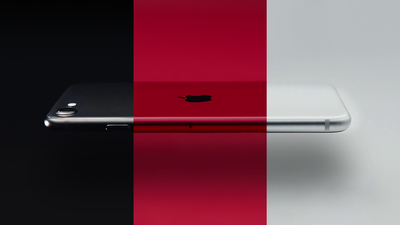
Apple plans to update the iPhone SE, its 4.7-inch entry-level iPhone, with an updated A14 Bionic processor from the iPhone 12 series in the first half of next year, according to a report from DigiTimes.
DigiTimes' report follows in the footsteps of reliable Apple analyst Ming-Chi Kuo, who reported last month the iPhone SE would receive an updated processor and 5G capabilities in the first half of 2022. Kuo says the new iPhone SE, which has marketed well for customers looking for smaller handsets, will be the "cheapest 5G iPhone ever" and is hoped to bolster Apple's position in the increasingly competitive 5G market.
The iPhone SE was originally released in March of 2016 as a small entry-level iPhone to replace the iPhone 5S, released three years earlier. Apple updated the iPhone for the first time in April of last year with the A13 Bionic processor borrowed from the iPhone 11, a larger screen, a new design, and improved cameras. According to reports, the upcoming iPhone SE 3 will sport fewer changes, featuring only the improved A14 Bionic processor and 5G.
The iPhone SE is the only iPhone within Apple's current lineup that features a Touch ID sensor and a Home Button, and that design will continue with the iPhone SE 3 next year, according to DigiTimes and Ming-Chi Kuo. Looking further out, Apple is reportedly planning to redesign the iPhone SE with a punch-hole screen design rather than a notch in 2023.
Journalists, lawyers, and human rights activists around the world have been targeted by authoritarian governments using phone malware made by Israeli surveillance firm NSO Group, according to multiple media reports.
An investigation by 17 media organizations and Amnesty International's Security Lab uncovered a massive data leak, indicating widespread and continuing abuse of the commercial hacking spyware, Pegasus, which can infect iPhones and Android devices and enable attackers to extract messages, emails, and media, and record calls and secretly activate microphones.
The leak contains a list of over 50,000 phone numbers that are believed to have been identified by clients of NSO as possible people of interest. Forbidden Stories, a Paris-based nonprofit media organization, and Amnesty International had access to the leaked list and shared that access with media partners as part of reporting consortium the Pegasus project. Forensic tests on some of the phones with numbers on the list indicated that more than half had traces of the spyware.
The company behind the software, NSO, denies any wrongdoing and claims its product is strictly for use against criminals and terrorists, and is made available only to military, law enforcement and intelligence agencies.
In a statement given to media organizations in response to the Pegasus project, NSO said the original investigation which led to the reports was "full of wrong assumptions and uncorroborated theories."
NSO does not operate the systems that it sells to vetted government customers, and does not have access to the data of its customers' targets. NSO does not operate its technology, does not collect, nor possesses, nor has any access to any kind of data of its customers. Due to contractual and national security considerations, NSO cannot confirm or deny the identity of our government customers, as well as identity of customers of which we have shut down systems.
In an earlier version of the spyware, surveillance activity depended on the phone user clicking on a malicious link sent to them in a text or email (so-called "spear-phishing"). However, the most recently discovered version doesn't require interaction from the user and can instead exploit "zero-click" vulnerabilities – bugs or flaws in the OS – to succeed.
For example, Amnesty's Security Lab and Citizen Lab found an iPhone running iOS 14.6 could be hacked with a zero-click iMessage exploit to install Pegasus.
It also indicates that Apple has a MAJOR blinking red five-alarm-fire problem with iMessage security that their BlastDoor Framework (introduced in iOS 14 to make zero-click exploitation more difficult) ain't solving.
— Bill Marczak (@billmarczak) July 18, 2021
Meanwhile, media organizations involved in the project plan to reveal the identities of people whose number appeared on the list in the coming days. They are said to include hundreds of business executives, religious figures, academics, NGO employees, union officials and government officials. Disclosures which began on Sunday have already revealed that the numbers of more than 180 journalists are already known to be among the data.
WhatsApp sued NSO in 2019 after it alleged the company was behind cyber-attacks on thousands of mobile phones involving Pegasus. NSO denied any criminal wrongdoing, but the company has been banned from using WhatsApp.
Update: Apple has provided the following statement condemning the use of the zero-click exploit against journalists, lawyers, and human rights activists to The Guardian.
In a statement, the iPhone maker said: “Apple unequivocally condemns cyber-attacks against journalists, human rights activists, and others seeking to make the world a better place. For over a decade, Apple has led the industry in security innovation and, as a result, security researchers agree iPhone is the safest, most secure consumer mobile device on the market.”
Apple also said that security was a dynamic field and that its BlastDoor was not the end of its efforts to secure iMessage.
“Attacks like the ones described are highly sophisticated, cost millions of dollars to develop, often have a short shelf life, and are used to target specific individuals,” it said. “While that means they are not a threat to the overwhelming majority of our users, we continue to work tirelessly to defend all our customers, and we are constantly adding new protections for their devices and data.”
Note: Due to the political or social nature of the discussion regarding this topic, the discussion thread is located in our Political News forum. All forum members and site visitors are welcome to read and follow the thread, but posting is limited to forum members with at least 100 posts.
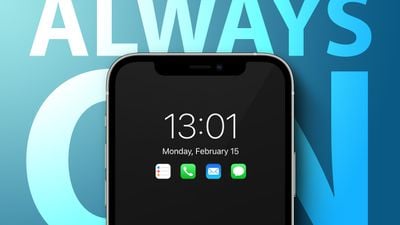
Following a successful supercycle launch of the iPhone 12 last year, Apple aims to make another "big splash" with its upcoming 2021 iPhones, which can be expected to feature larger batteries, smaller notches, improved performance, and more advanced displays that may sport an always-on mode.
In the latest publication of his weekly Power On newsletter, Bloomberg journalist Mark Gurman outlines what customers can expect from this year's iPhone. According to Gurman, in line with previously leaked battery capacities, the new iPhones will feature larger batteries that may be used to power displays with a 120Hz refresh rate and possibly an Apple Watch-inspired always-on mode.
With recent Apple Watch models, the display can remain on at a lower brightness and variable refresh rate. This allows wearers to see their watch face at all times. Gurman says that Apple may bring similar functionality to the 2021 iPhone, allowing customers to possibly see information such as the time, date, and their notifications at all times on their display.
This would be made possible thanks to LTPO displays which can power efficiently keep the display on at a lower brightness at all times, without a significant impact on battery life.
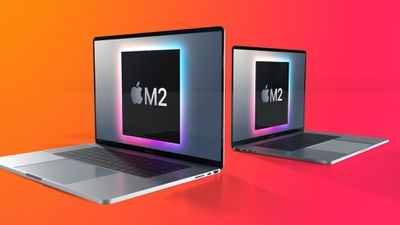
Apple can be expected to release its redesigned 14-inch and 16-inch MacBook Pros sometime between September and November, as part of another packed fall season for new product launches, according to Bloomberg journalist Mark Gurman.
Gurman notes that Apple had originally planned to release the new MacBook Pros earlier this year, but continued complications around mini-LED production delayed their launch.
The new MacBook Pros are expected to be high in demand thanks to several significant features and changes. On top of a new design featuring flat-edges and more ports, Apple plans to include mini-LED displays in the new laptops, the same one used in the high-end 12.9-inch iPad Pro announced this past April. Faster Apple silicon chips will also power the new MacBook Pros. Learn more about everything we know about the upcoming MacBook Pros with our guide.
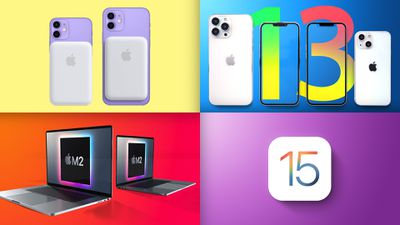
Apple this week surprised us with the debut of a new $99 MagSafe Battery Pack for the iPhone 12 lineup, taking the place of the full battery cases Apple has traditionally launched for its iPhones.
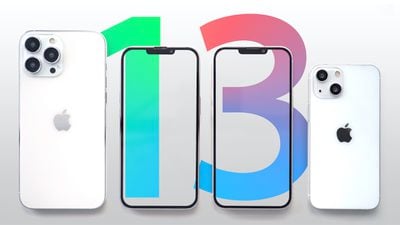
Other news and rumors this week included the release of the third betas of iOS 15 and Apple's other upcoming operating systems, our best look yet at the iPhone 13 in the form of some dummy units we were able to get our hands on, and a rumored webcam upgrade for the upcoming redesigned MacBook Pro models. Read on for details on these stories and more!
We're likely about two months away from Apple unveiling its rumored iPhone 13 lineup with several new features, including a smaller notch, a smoother 120Hz display on Pro models, camera upgrades, and potentially even a new Matte Black color option.
The new MacBook Pro models would be following in the footsteps of the latest iMac models, which are also equipped with a 1080p webcam for crisper video quality in this Zoom and FaceTime era. MacBook Pro models are currently equipped with a 720p webcam.
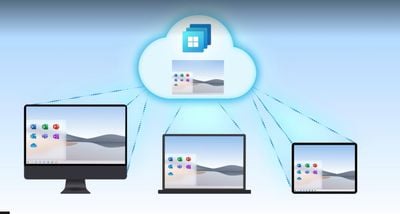
While the browser-based service will be limited to businesses when it launches in early August, it is conceivable that the feature will become available for consumers at some point in the future.
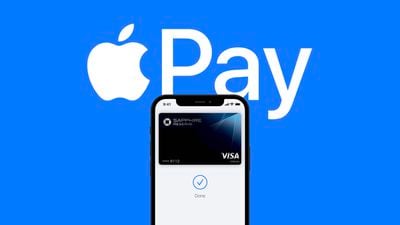
The feature could be similar to Apple Card Monthly Installments, except with no Apple Card required, making monthly installments available to a much wider group of iPhone users.
MacRumors Newsletter
Each week, we publish an email newsletter like this highlighting the top Apple stories, making it a great way to get a bite-sized recap of the week hitting all of the major topics we've covered and tying together related stories for a big-picture view.
More than 125 people have died in unprecedented flooding in Germany, Belgium, and the Netherlands, with high waters damaging roads, homes, bridges, and other infrastructure. Another 1,300 people are missing, with multiple small villages devastated by flood waters.
Our hearts are with all those affected by the devastating flooding across Germany, Belgium and Western Europe. Apple will be donating to support relief efforts.
— Tim Cook (@tim_cook) July 16, 2021
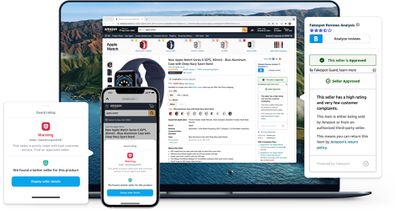
Fakespot, which is known for analyzing reviews from popular websites to determine their accuracy, today had its iOS app removed from Apple's App Store.
According to The Verge, Amazon sent Apple a takedown request, which led to the app being pulled. Fakespot's iOS app just launched in June, and it was designed to allow users to log into Amazon and buy items while using the Fakespot engine to analyze the reviews.
Amazon said that Fakespot's app was "wrapping" the website without permission and that the app could potentially be exploited to steal Amazon customer data. Amazon sent the initial takedown notice in June, and today, Apple kicked the app from the App Store.
Amazon claimed that Fakespot violated Apple's 5.2.2 App Store guideline that prevents apps from using, accessing, monetizing access to, or displaying content from a third-party service if not authorized to do so. A statement from Amazon said that the app was giving customers "misleading information" about Amazon sellers.
"The app in question provides customers with misleading information about our sellers and their products, harms our sellers' businesses, and creates potential security risks. We appreciate Apple's review of this app against its Appstore guidelines."
Fakespot founder Saoud Khalifah told The Verge that Apple did not give it an opportunity to solve the problem. "We just dedicated months of resources and time and money into this app," he said. He went on to say Amazon's willingness to "bully little companies" showcases "cracks in their company."
A search for Fakespot confirms that the Fakespot app is no longer available for download from the iOS App Store. While it was active, it had more than 150,000 installs.
Fakespot is well known for analyzing Amazon reviews and providing a rating or grade on how many of those reviews come from actual people. Amazon says that it regularly analyzes products with reviews that Fakespot calls out as untrustworthy, but that Fakespot's findings "were wrong more than 80% of the time."
Amazon says that Fakespot does not have the appropriate information to "accurately determine the authenticity of a review." Fakespot's website continues to be active and is available for Amazon shoppers to use, plus there is a browser extension for Chrome and Firefox.
Update: Apple in a statement provided to MacRumors explained that the dispute was between Amazon and Fakespot, and that Fakespot had been contacted multiple times.
This was a dispute over intellectual property rights initiated by Amazon on June 8 and within hours we ensured both parties were in contact with one another, explaining the issue and steps for the developer to take to keep their app on the store and giving them ample time to resolve the issue. On June 29, we again reached out to Fakespot weeks before removing their app from the App Store.
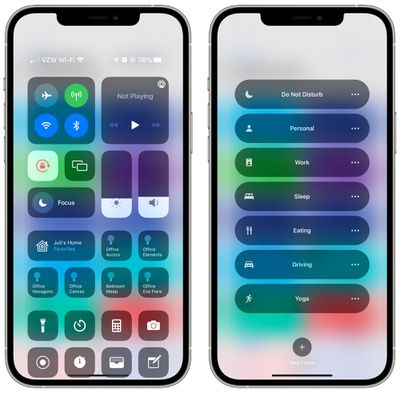
Apple has long had a Do Not Disturb function that can be activated when you want to mute incoming notifications to avoid being bothered, but with iOS 15, Apple is taking Do Not Disturb to a new level with Focus.
With Focus, you set an activity that you're doing, such as working, exercising, reading, or spending time with family, and block out the notifications that are unrelated to those tasks. It's basically Do Not Disturb but with more options for refining what you see and what you don't see. This guide highlights everything that you need to know about iOS 15's Focus mode.
Accessing Focus Mode
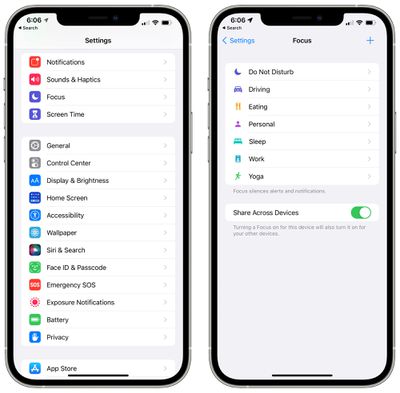
Focus, like Screen Time, lives in the Settings app. It's grouped up with Notifications, Sounds & Haptics, and Screen Time on iOS.
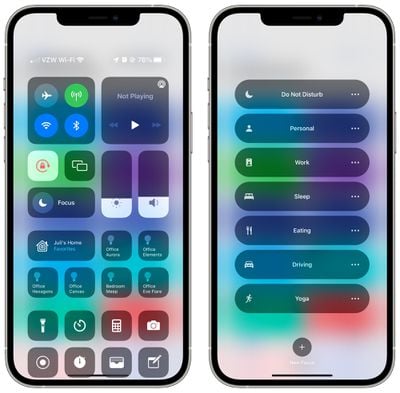
You can also activate, manage, and create new focuses through the Control Center on iPhone, iPad, and Mac.
Creating and Editing Focuses
In a nutshell, with any Focus mode, you can select who can contact you and which apps, if any, can send you notifications. Focus mode lets you personalize the people and apps able to contact you based on what you're doing.
Apple has several pre-made Focus options like Do Not Disturb, Driving, and Sleep, but you can also create your own Focus modes and choose which apps are able to send you notifications.
You can set up different Focus modes for work, personal time, working out, gaming, reading, cooking, or anything else you can think of where you don't want to be disturbed.
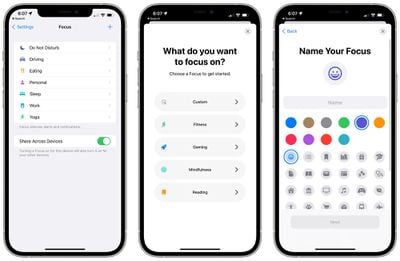
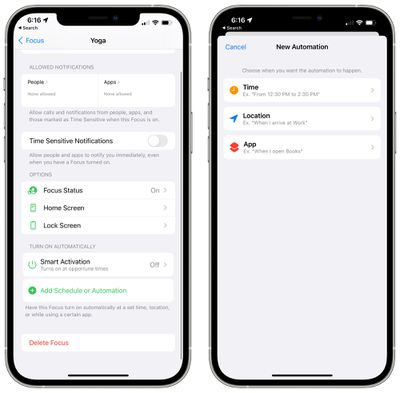
In the Focus section of Settings or through the Control Center, you can tap on the "+" button to create a new Focus, or tap on one of the existing Focus modes to tailor it to better suit your needs.
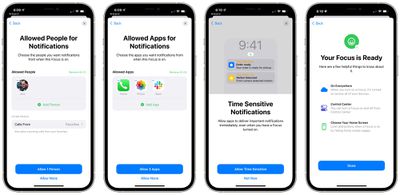
You can select a pre-prepared Focus goal or create something entirely custom, choosing an icon and an icon color. With any Focus mode, you can decide if you want to get notifications from people during the Focus, and if so, which people.
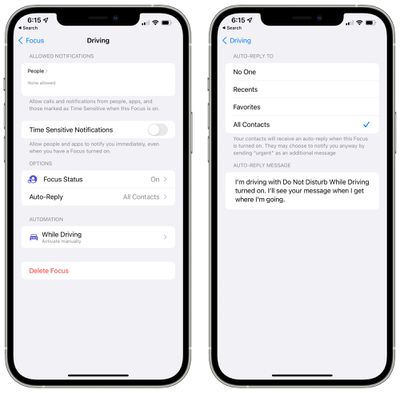
From there, you can select which apps are allowed to send you notifications, and then you can choose whether or not you want to receive Time Sensitive notifications.
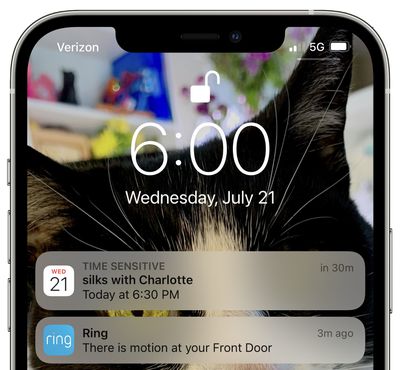
Time Sensitive notifications are a new notification class in iOS 15. A notification marked as time sensitive can be allowed to bypass Focus mode. Notifications that are classed as time sensitive are those that are immediately important, such as someone at the door, a food delivery, a ride pickup, and more.
When creating a Focus, your device will use on-device intelligence and data gathered about your past activity to suggest apps and people you might want to allow notifications from.
Activating a Focus
To activate one of your Focus modes, just toggle it on using the Control Center. This is the simplest way to turn on a Focus, disable a Focus, and swap between Focus modes.
When a Focus is active, the Control Center will display the name and the icon of the Focus mode, so you know at a glance that a Focus is turned on. Focus modes also display on the Lock Screen of your iPhone.
When you activate a Focus on one device, it activates across all of the devices you're signed into with your Apple ID so you won't be disrupted even if you switch from an iPhone to an iPad or a Mac.
If you want Focus mode to be activated on one device and not another, you can toggle off "Share Across Devices" in the Focus mode section of the Settings app.
Letting People Know Focus Mode is Active
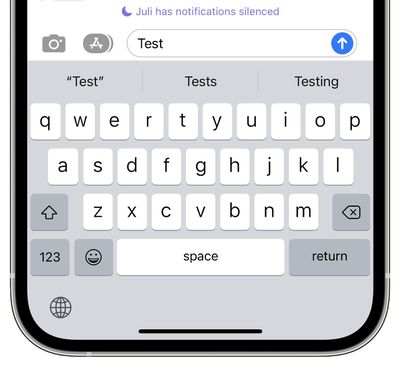
In any Focus that you create or edit, you can opt to toggle on the "Focus Status" option. This option lets apps like Messages tell people that you have your notifications silenced.
When someone goes to send you an iMessage, if Share Focus Status is toggled on, they'll see a small message at the bottom of the app that says "[Person] has notifications silenced." People can choose to send a message anyway regardless of Focus status if there's something important that needs to be shared.
Focus Status sharing is available in Apple's built-in apps like Messages and there's also an API for developers to build it into their apps too.
Auto-Reply
For some Focus modes like Driving, you can activate an "Auto-Reply" option that will let people know that you're busy and will get back to them later. Auto-Reply messages can be customized, and this is an option for the previous Do Not Disturb While Driving feature that has been folded into Focus.
Breakthrough Messages
If you have your Focus Status on and are blocking incoming notifications, people can opt to send an urgent message. You can choose to allow or or disallow urgent messages, which bypass your restrictions.
Lock and Home Screen Refinements
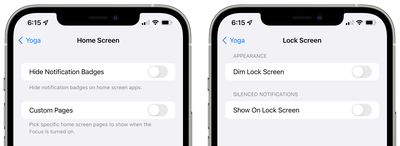
With a Focus mode enabled, you can choose to show only select app pages and hide all notification badges from the Home Screen. With this feature, you can dedicate a specific screen of apps to a given Focus mode, blocking out distractions like social networking apps and leaving you only with what's relevant.
On the Lock Screen, you can choose to use a dim feature and decide whether silenced notifications should be shown on the Lock Screen.
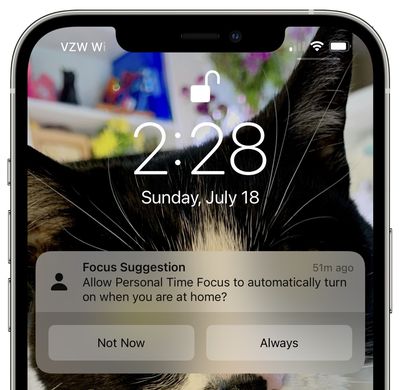
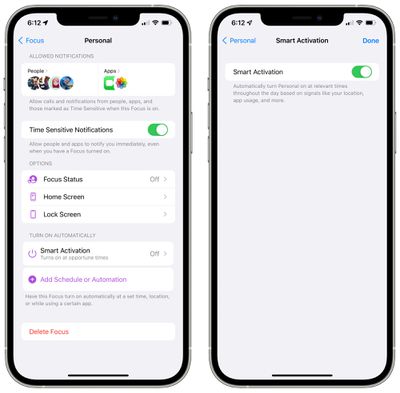
If you toggle on the Focus Smart Activation feature, your device will use signals like your location and app usage to decide when to automatically turn on a Focus mode throughout the day. With this enabled, your iPhone might activate a work Focus mode when you leave the house in the morning to head to the office, turning it off again when you get home.
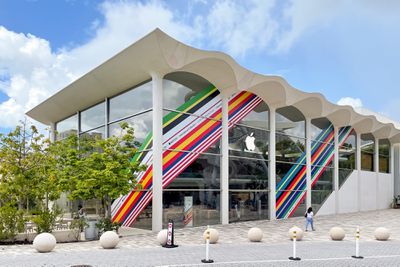
Apple has decorated some of its retail stores around the world with a series of colorful stripes that are designed to celebrate the International Collection of Apple Watch bands that were released in June.
Several photos of the decorated Apple Store locations have been shared on Twitter, showing off stripes in different country colors. Both the new Apple Watch bands and the striped Apple Store decorations come ahead of the 2021 Olympic Games that are set to begin in Tokyo, Japan on Friday, July 23. Apple Stores in Japan, Italy, the U.S., and other countries are featuring the new design.
Apple's International Collection features Apple Watch bands dedicated to the following countries:
Australia
Belgium
Brazil
Canada
China
Denmark
France
Germany
Great Britain
Greece
Italy
Jamaica
Japan
Mexico
Netherlands
New Zealand
Russia
South Africa
South Korea
Spain
Sweden
United States
Bands are priced at $49.99 each and feature the same design and materials as other Sport Loop options. Apple has also made matching watch faces available.
AirPods Max have now reached a full $100 off their original price tag of $549.00, available only on Adorama as of writing. You can get all AirPods Max colors for $449.00 during this sale, including Pink, Silver, Sky Blue, Green, and Space Gray.
Note: MacRumors is an affiliate partner with Adorama. When you click a link and make a purchase, we may receive a small payment, which helps us keep the site running.
This sale beats the current Amazon price tag by about $30, and is now a new all-time low price on the AirPods Max. The high-end headphones are in stock on Adorama and ready to ship, and the retailer does offer some free shipping options.
Shoppers should note that there have been a few oddities on Adorama's website today, and you may notice the $100 off deal disappear when clicking through various colors on the retailer's page. Closing out and clicking back into the website through one of the links in this article does seem to help.
AirPods Max feature Active Noise Cancellation technology and the same Transparency mode, Adaptive EQ, and spatial audio features that are in the AirPods Pro. For charging, the headphones come with a Smart Case made out of a soft material that puts AirPods Max in an ultra low-power state to preserve battery charge when not in use.
We track sales for every model of the AirPods in our Best AirPods Deals guide, so be sure to bookmark that page while you shop around for the wireless headphones.
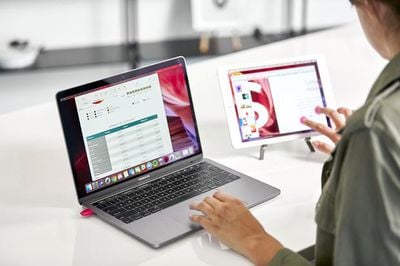
For this week's giveaway, we've teamed up with Astropad to offer MacRumors readers a chance to win a Luna Display adapter that can turn an extra Mac or iPad into a secondary display for a primary Mac.
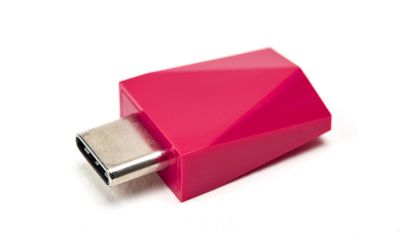
Priced at $130, the Luna Display adapter dongle is designed to plug into a Mac using a USB-C port (on newer Macs) or a Mini DisplayPort, and when paired up with the Luna Display software, a main Mac (or even a PC) can be connected to an iPad or another Mac using Wifi.
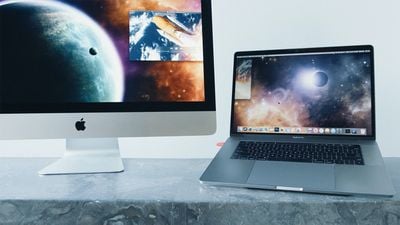
With this setup, you can take advantage of old hardware or add an extra display to your workflow without having to spend money on another device.
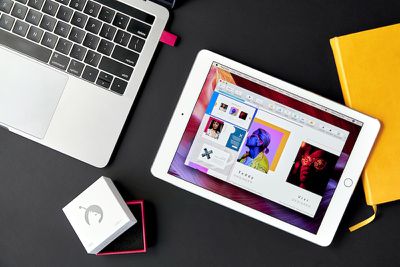
The Luna Display extends a Mac's display to the secondary Mac or iPad, allowing the device to be used as a second screen, something that's especially useful as people continue learning and working from home.
Apple's iPad and Mac do have a built-in Sidecar function that can turn an iPad into a secondary display for a Mac without the need for an accessory, but this only works with a Mac and an iPad while the Luna Display supports Mac-to-Mac connectivity. Luna Display is also able to work with older iPads that don't support Sidecar.
Starting this fall, Apple will allow Mac to Mac AirPlay with macOS Monterey, but Luna Display still has multiple benefits over AirPlay technology. AirPlay is limited to newer Mac models and up to 1080p display resolution, and the trackpad and keyboard only work with the primary Mac.
Luna Display offers full native resolution, works with older Mac models, offers keyboard and trackpad support for both Macs, and offers low latency performance. As of May, the Luna Display's Mac-to-Mac feature works over Ethernet and Thunderbolt in addition to WiFi.
With Mac-to-Mac mode, the primary Mac needs to be running OS X El Capitan or later, while the secondary Mac can be running OS X Mountain Lion or later, so the dongle works with machines that are quite old, giving them new life. For the best performance, Astropad suggests a 2012 MacBook Air, MacBook Pro, Mac mini, iMac, or later, or a 2013 Mac Pro or later.
Luna Display provides full keyboard, trackpad, and mouse support on both connected Macs in Mac-to-Mac mode, and it has native support for M1 Macs. PC owners can use the Luna Display adapter for Windows, which extends the desktop from PC to iPad, allowing devices to work interchangeably.
For iPads, the Luna Display is compatible with the iPad 2 or later, all iPad mini models, all iPad Pro models, and all iPad Air models, with iOS 9.1 or later as the only requirement. Performance is faster on newer iPads, but older models work well too.
We have five Luna Display adapters to give away to MacRumors readers. To enter to win, use the Gleam.io widget below and enter an email address. Email addresses will be used solely for contact purposes to reach the winners and send the prizes. You can earn additional entries by subscribing to our weekly newsletter, subscribing to our YouTube channel, following us on Twitter, following us on Instagram, or visiting the MacRumorsFacebook page.
Due to the complexities of international laws regarding giveaways, only U.S. residents who are 18 years or older and Canadian residents (excluding Quebec) who have reached the age of majority in their province or territory are eligible to enter. To offer feedback or get more information on the giveaway restrictions, please refer to our Site Feedback section, as that is where discussion of the rules will be redirected.
The contest will run from today (July 16) at 11:00 a.m. Pacific Time through 11:00 a.m. Pacific Time on July 23. The winners will be chosen randomly on July 23 and will be contacted by email. The winners will have 48 hours to respond and provide a shipping address before new winners are chosen.
Apple today seeded the second public beta of the macOS 12 Monterey beta to public beta testers, allowing non-developers to test the new macOS Monterey software ahead of its public release. The second beta comes two weeks after Apple released the first macOS Monterey public beta.
Public beta testers can download the macOS 12 Monterey update from the Software Update section of the System Preferences app after installing the proper profile from Apple's beta software website.
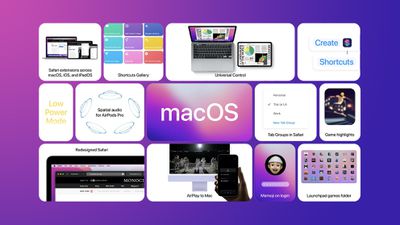
macOS Monterey introduces quite a few major updates for the macOS operating system. Universal Control, for example, lets a single mouse, trackpad, and keyboard be used across multiple Mac or iPad devices, and it's now possible to AirPlay directly to a Mac from an iPhone, iPad, or even another Mac.
Safari has an updated tab bar and support for Tab Groups to keep tons of tabs organized, and FaceTime now features support for spatial audio, Portrait Mode (M1 Macs only) and Voice Isolation for cutting out background noise. A SharePlay FaceTime feature lets Apple TV users watch TV, listen to music, and share their screens with one another.
Shared With You, another new feature, keeps track of the music, links, podcasts, news, and photos that people are sent in Messages, highlighting it in the relevant apps. Notes has a new Quick Note feature for jotting down thoughts, and the Shortcuts app is now available on the Mac.
A dedicated Focus mode helps people stay on task by cutting out background distractions based on what's going on, and there's an updated Maps app with a whole slew of new features. With Live Text, Macs can now detect text in photos or provide details on animals, art, landmarks, plants, and more in images.
Mail Privacy Protection hides IP and prevents tracking through invisible pixels, and iCloud Private Relay keeps Safari browsing protected. There are many other new features in macOS Monterey, with a complete overview available in our macOS Monterey roundup.
In the developer beta that corresponds to the second public beta, Apple changed the default design of the Safari tab bar following multiple usability complaints. There's now a dedicated address bar at the top of the Safari window, with tabs arranged below it, rather than an all-in-one integrated design. Those who preferred the original design can use the View menu to toggle off "Show Separate Tab Bar."
Apple today seeded the second betas of iOS and iPadOS 15 to public beta testers, allowing non-developers to download and test the new updates ahead of their fall release. The second public betas come two weeks after Apple released the first public betas.
Public beta testers who have signed up for Apple's beta testing program can download the iOS and iPadOS 15 updates over the air after installing the proper certificate from the Public Beta website.
iOS 15 is adding new features for FaceTime, tools for reducing distractions, updated notifications, and privacy enhancements. FaceTime supports SharePlay for watching TV, listening to music, or screen sharing with friends, while a Shared with You feature keeps track of the songs, website links, pictures, and more that friends send you.
Focus is designed to help keep you on task by cutting out notifications you don't want while you're busy, and there's a new notifications summary feature that prevents you from being inundated with unimportant notifications throughout the day.
Safari has a redesigned look with a compact tab bar that's located at the bottom of the screen, plus Tab Groups let users save open tabs for later. Maps has a new zoomed out globe view and a new 3D view in select cities, plus there's more road detail and an AR-based walking direction feature.
The Wallet app will support IDs and more kinds of keys in iOS 15, and Photos gains updates to Memories and a new Live Text feature that uses on-device intelligence to recognize the text in an image, making it searchable and copyable. Spotlight is better than ever, and processing for Siri requests is now done directly on device.
Mail Privacy Protection in the Mail app stops senders from seeing your IP address and knowing if you've opened up an email, and an App Privacy Report gives you details on how often apps use permissions like camera and location access.
There are a ton of other new features available in iOS and iPadOS 15, with full details available in our roundup. The latest developer beta introduced Safari refinements, updates to the Focus interface, and more, all of which should be in the second public beta.
Apple has also seeded new public betas of tvOS 15 and watchOS 8 to its public beta testing group. tvOS 15 can be downloaded by opening up the Settings app on the Apple TV, navigating to the Software Updates section under "System," and then toggling on "Get public Beta Updates" after signing up to beta test on Apple's public beta website.
watchOS 8 can be downloaded can be downloaded after upgrading your iPhone to the public beta version of iOS 15. After installing iOS 15, the proper watchOS 8 profile from Apple's beta software website must also be installed. The software can be accessed by going to General > Software Update in the Apple Watch app on iPhone. To update, Apple Watch needs to have 50 percent battery life, it must be placed on the charger, and it must be in range of the iPhone.


 Note: MacRumors is an affiliate partner with Amazon. When you click a link and make a purchase, we may receive a small payment, which helps us keep the site running.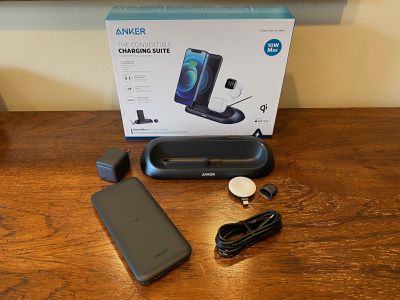


 Note: MacRumors is an affiliate partner with Adorama. When you click a link and make a purchase, we may receive a small payment, which helps us keep the site running.