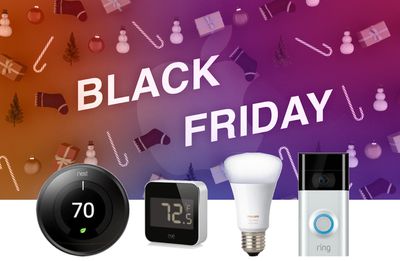
Black Friday in the United States is well underway, and many retailers are offering discounts on tons of smart home devices, both HomeKit-enabled and those without HomeKit support.
Almost every major store has discounts on products from companies like Google, Nest, Hue, and more, so we've rounded up some of the best smart home deals available this year below.
Note: MacRumors is an affiliate partner with some of these vendors. When you click a link and make a purchase, we may receive a small payment, which helps us keep the site running.
Make sure to check out our full Black Friday Roundup to find great deals on all of the best Apple products, accessories, and much more before the shopping event ends.
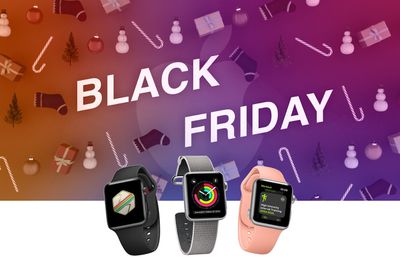
Apple refreshes the Apple Watch every year, and for the latest Series 5 models that were released in September, not many third-party retailers are offering discounts.
For older Apple Watch models, though, there are some significant deals that can be had if you don't mind missing out on the always-on display and the new compass app. Multiple retailers have deals on the Series 4 (now discontinued) and Apple's super cheap Series 3, which is still being manufactured.
Note: MacRumors is an affiliate partner with some of these vendors. When you click a link and make a purchase, we may receive a small payment, which helps us keep the site running.
Apple Watch Series 3
Walmart has the absolute lowest price on the Apple Watch Series 3, offering the 38mm model for $129, a $70 discount off of the standard $200 price tag. The 44mm model will be available for $159, down from the regular price of $229. However, stock already appears to be selling out at most Walmart stores.
Target is selling the Apple Watch Series 3starting at $170 for the 38mm, a $30 discount off of the regular price. The 42mm model will be priced at $200, also a $30 discount.
Best Buy is offering some small $10 discounts on the Apple Watch Series 3, but these aren't worth picking up if you can get one of the other, better deals.
Apple Watch Series 4
Best Buy is offering the Apple Watch Series 4 for $50 to $300 off depending on the model. 40 and 44mm aluminum models with standard sport bands are discounted by $50, while cellular models are discounted by $100.
Some stainless steel models are discounted by $300, dropping the price to $400 from $700, but these deals are not online and will need to be located in retail stores.
Apple Watch Series 5
Amazon is offering $20 off Apple Watch Series 5 (40mm and 44mm), with an additional $24 saved at checkout, providing the best overall sale on the newest Apple Watch models today.
Sprint does have some discounts on the new Apple Watch Series 5, if you're shopping for a cellular watch that you can add onto an existing smartphone plan. You can get 50 percent off any Apple Watch in this sale, Series 5 included. The discount will be delivered via monthly credits on a 24 month billing agreement, and you'll need one active handset already on the Sprint account.
Make sure to check out our full Black Friday Roundup to find great deals on all of the best Apple products, accessories, and much more before the shopping event ends.
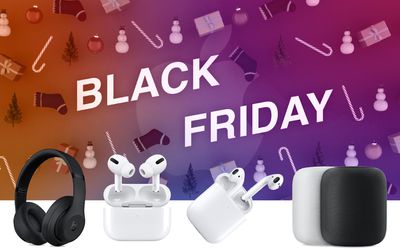
Black Friday deals are kicking off, and many third-party retailers offer discounts on a range of headphones and speakers, including AirPods, HomePods, Beats, and more.
Below, we've rounded up some of the best deals that we've found on audio products of all kinds, from Apple's own devices to various third-party options.
Note: MacRumors is an affiliate partner with some of these vendors. When you click a link and make a purchase, we may receive a small payment, which helps us keep the site running.
AirPods
Multiple retailers are offering discounts on the AirPods with Charging Case and with Wireless Charging Case. Walmart has the best deal on the standard AirPods with charging case (no wireless charging), selling them for $129, which is a discount of $30 off of the regular $159 price.
As for the AirPods with Wireless Charging Case, the best online deal is from Amazon. The site is discounting the AirPods with Wireless Charging Case to $155, which is a discount of $44. That matches the lowest price we've ever seen on the AirPods with Wireless Charging Case.
If you happen to live near a Meijer store, though, you can get an even better deal. Meijer is selling the AirPods with Wireless Charging Case for just $149, a $50 discount off of the regular $199 price. The Meijer deal is available in-store only.
There are a few other lesser deals on the AirPods that we're listing below in case any of the main deals sell out, but if you're in the market for AirPods, make sure to check out Walmart and B&H Photo first.
AirPods With Charging Case (Amazon) - $129 ($30 off)
AirPods With Charging Case (Best Buy) - $140 ($20 off)
AirPods With Charging Case (Target) - $145 ($15 off)
AirPods With Wireless Charging Case (Target) (Best Buy) - $165 ($35 off)
AirPods Pro
There are no retailers offering specific Black Friday sales on the brand new AirPods Pro as they were just introduced in October, but Amazon has been selling the earbuds at the discounted price of $235 for a few weeks now.
HomePod
Best Buy has the most significant savings on the HomePod, dropping the price from $300 to $200, a $100 discount.
Make sure to check out our full Black Friday Roundup to find great deals on all of the best Apple products, accessories, and much more before the shopping event ends.
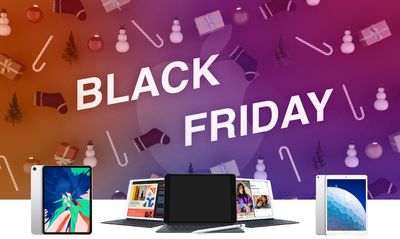
Apple's iPads are a popular purchase choice during Black Friday because many of the major retailers offer up steep discounts on various models, including the iPad Pro, iPad Air, and the already super affordable 10.2-inch seventh-generation iPad.
Below, we've rounded up all of the best deals that we've found for the iPad so if you're looking to pick up a new tablet either for yourself or for a holiday gift, you're going to want to check out the list below.
Note: MacRumors is an affiliate partner with some of these vendors. When you click a link and make a purchase, we may receive a small payment, which helps us keep the site running.
10.2-inch iPad
Even though the 10.2-inch iPad was just released in September 2019 and already has a low starting price of $329, multiple retailers are offering it even cheaper this year.
Target, Best Buy, Walmart, and Staples are all offering the 32GB Wi-Fi only 10.2-inch iPad for $250, which is an $80 discount and the lowest price that we've seen since launch.
$250 for the 10.2-inch iPad is a great deal, and this is the tablet that's ideal for most users. It features a larger display than prior entry-level models, it supports the Apple Pencil, and it even works with Apple's Smart Keyboard for the first time.
If you're looking for the higher-capacity 128GB model, the best price you're going to get is from Amazon. Amazon is offering the 128GB 10.2-inch iPad for $330, which is a discount of $100 off of the original $429 price tag.
iPad Pro
If you're a My Best Buy member (which is free), you can get select iPad Pro models for a discount of $150 to $200. According to Best Buy, pricing will start at $650, which is $150 off of the $799 price of the entry-level 11-inch 64GB WiFi-only iPad Pro.
Most other retailers aren't offering specific Black Friday discounts on the iPad Pro, but Amazon has some deals available:
If you're looking for an older, more affordable model with a lot of storage, Walmart is selling the 10.5-inch iPad Pro with 512GB of storage for $699, down from $999.
iPad Air
As with the iPad Pro, there are few Black Friday specific deals on the iPad Air because most retailers are focusing on discounting the 10.2-inch iPad. Amazon has some of the only discounts available.
Make sure to check out our full Black Friday Roundup to find great deals on all of the best Apple products, accessories, and much more before the shopping event ends.
Black Friday is upon us and that means many deals on iPhones, from straight-up discounts to trade-in and financing incentives. Below, we've rounded up some of the best offers available for iPhones in the United States.
Unfortunately, iPhone deals rarely come without strings attached, so be prepared to purchase a device on a carrier installment plan in most cases and make sure to read all of the fine print when signing up.
iPhone 11, 11 Pro, and 11 Pro Max
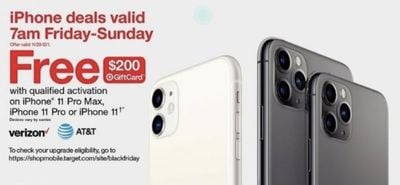
Walmart is offering some of the best Black Friday deals on the latest iPhones this year, including a $300 Walmart eGift card towards future purchases with the activation of a new iPhone 11, iPhone 11 Pro, or iPhone 11 Pro Max on a qualifying AT&T, Verizon, or Sprint device payment plan.
You can get up to an additional $250 on another Walmart eGift card with an in-store trade-in of a qualifying older iPhone in good condition, for a total of up to $550 in Walmart eGift cards for the latest iPhones.
Best Buy is offering savings of up to $500 on an iPhone 11 or iPhone 11 Pro with qualified activation on Verizon, AT&T, or Sprint and in-store trade-in of an older iPhone. Depending on the value of the iPhone traded in, this deal lowers the total price of an iPhone 11, iPhone 11 Pro, or iPhone 11 Pro Max to $199, $499, or $599, respectively, with the cost divided into 24 monthly payments.
T-Mobile is offering up to $700 off the iPhone 11 Pro or iPhone 11 Pro Max, or the iPhone 11 for free, with the trade-in of an iPhone 7 or newer in good condition. The credit will be applied over a 24-month installment plan.
Verizon and Sprint are offering a buy-one-get-one-free deal on the iPhone 11, with $700 in bill credits applied over a 24-month installment plan with the purchase of two new iPhone 11 devices, each with an unlimited data plan. Verizon has a similar deal for the purchase of two iPhone 11 Pro or iPhone 11 Pro Max devices.
Older iPhones: XS, XS Max, XR, 8, and 8 Plus
Walmart is offering up to a $450 Walmart eGift card towards future purchases with the activation of a new iPhone XS, iPhone XS Max, or iPhone XR on a qualifying AT&T, Verizon, or Sprint device payment plan.
You can get up to an additional $250 on another Walmart eGift card with an in-store trade-in of a qualifying older iPhone in good condition, for a total of up to $700 in Walmart eGift cards.
AT&T is offering the iPhone XR for free on a qualifying installment agreement, with the $600 price of the device divided into 30 monthly bill credits. You must add a line to a new or existing account, pay taxes on the $600 amount up front, activate an unlimited data plan for $75 per month or higher, and pay a $30 activation fee.
T-Mobile is offering up to $450 off the iPhone 8 Plus or the iPhone 8 for free with the trade-in of an iPhone 5 or newer in good condition. The credit will be applied over a 24-month installment plan.
Verizon is offering the iPhone 8 for $5 per month on a 24-month instalment plan. Activation of a new line is required. No trade-in required.
Apple's Black Friday Shopping Event
Apple is offering a $50 Apple Store gift card with the purchase of a SIM-free iPhone 8, iPhone 8 Plus, or iPhone XR from Black Friday until Cyber Monday. The deal does not apply to the iPhone 11, iPhone 11 Pro, or iPhone 11 Pro Max, purchases via the iPhone Upgrade Program, refurbished iPhones, or carrier-locked iPhones.
The offer is available via Apple.com, by phone at 1-800-APPLE, and at Apple Stores in the United States. Gift card values vary in other participating countries.
More Black Friday Deals
Make sure to check out our full Black Friday roundup to find great deals on Macs, iPads, other Apple products, accessories, and more.
Note: MacRumors is an affiliate partner with some of these vendors. When you click a link and make a purchase, we may receive a small payment, which helps us keep the site running.
Apple's four-day Black Friday shopping event is now live in the United States, offering customers free Apple Store gift cards worth up to $200 with the purchase of select new Apple products.
Gift card values in the United States:
$200 for 13-inch MacBook Pro, iMac, or iMac Pro
$100 for MacBook Air
$100 for iPad Pro
$100 for Beats Studio3 Wireless
$50 for SIM-free iPhone 8, iPhone 8 Plus, or iPhone XR
$50 for 10.5-inch iPad Air or iPad mini 5
$50 for HomePod
$50 for Beats Solo3 Wireless, Powerbeats3 Wireless, or Powerbeats Pro
$25 for Apple Watch Series 3, regular AirPods, Apple TV 4K, or Apple TV HD
Apple is not offering gift cards for its latest products, including the 16-inch MacBook Pro, AirPods Pro, iPhone 11 and iPhone 11 Pro models, or Apple Watch Series 5 models, while the Mac mini, iPod touch, old Mac Pro, refurbished products, education-discounted products, and carrier-locked iPhones are also ineligible.
The offer is available via Apple.com and at Apple Stores in the United States through December 2, which is Cyber Monday, an increasingly popular online-focused shopping holiday that follows Black Friday.
The gift card promotion has also gone live in Australia, New Zealand, Canada, and several countries in Europe.
Black Friday marks one of the few times in a year that Apple offers deals on its products, but as usual, better deals can be found elsewhere. Be sure to read our Black Friday roundup for the latest offers from third-party resellers on the latest iPhones and iPads, the 16-inch MacBook Pro, AirPods Pro, and more.
Amazon is offering an impressive deal on the 2019 MacBook Air, offering the base model for just $799 in the United States. That's the lowest price we've ever seen and $300 less than Apple's regular price of $1,099.
The notebook is listed at $899, but if you proceed to checkout and choose no-rush shipping, the price becomes $799.
This is the latest MacBook Air model with a True Tone display, released in July 2019.
The notebook features 8th-generation Intel Core processors, Touch ID, two Thunderbolt 3 ports, the Apple T2 chip with Hey Siri support, louder speakers, and more. Note that, unlike the new 16-inch MacBook Pro, the latest MacBook Air still has a butterfly keyboard that may experience issues with sticky or nonfunctioning keys.
The base model is configured with a 1.6GHz dual-core Core i5 processor, 8GB of RAM, a 128GB SSD, and Intel UHD Graphics 617.
Starting on Black Friday, a slightly better deal will be available at Micro Center stores for those who live near one of their 25 locations. They'll be offering the 2019 MacBook Air for just $779 for in-store pickup only, but quantities will be limited.
Note: MacRumors is an affiliate partner with Amazon. When you click a link and make a purchase, we may receive a small payment, which helps us keep the site running.
Apple's four-day Black Friday shopping event is now live in Australia and New Zealand, offering customers free Apple Store gift cards worth up to A$320 or NZ$320 with the purchase of select new Apple products.
The gift card amounts are as follows in Australia and New Zealand:
$320 for 13-inch MacBook Pro, iMac, or iMac Pro
$160 for MacBook Air
$160 for iPad Pro
$160 for Beats Studio3 Wireless
$80 for SIM-free iPhone 8, iPhone 8 Plus, or iPhone XR
$80 for 10.5-inch iPad Air or iPad mini 5
$80 for HomePod
$80 for Beats Solo3 Wireless, Powerbeats3 Wireless, or Powerbeats Pro
$40 for Apple Watch Series 3, regular AirPods, Apple TV 4K, or Apple TV HD
Based on that, gift card amounts in the U.S. should be around the following:
$200 for 13-inch MacBook Pro, iMac, or iMac Pro
$100 for MacBook Air
$100 for iPad Pro
$100 for Beats Studio3 Wireless
$50 for SIM-free iPhone 8, iPhone 8 Plus, or iPhone XR
$50 for 10.5-inch iPad Air or iPad mini 5
$50 for HomePod
$50 for Beats Solo3 Wireless, Powerbeats3 Wireless, or Powerbeats Pro
$25 for Apple Watch Series 3, regular AirPods, Apple TV 4K, or Apple TV HD
Apple is not offering gift cards for its latest products, including the 16-inch MacBook Pro, AirPods Pro, iPhone 11 and iPhone 11 Pro models, or Apple Watch Series 5 models, while the Mac mini, iPod touch, old Mac Pro, refurbished products, education-discounted products, and carrier-locked iPhones are also ineligible.
The offer is available via Apple.com in each country and at Apple Stores in Australia through December 2, which is Cyber Monday, an increasingly popular online-focused shopping holiday that follows Black Friday.
Apple will extend its Black Friday shopping event to the United States, Canada, and many European countries as the clock turns to Friday around the world. Last year, Apple offered gift cards worth up to $200 in the United States.
Black Friday marks one of the few times in a year that Apple offers deals on its products, but as usual, better deals can be found elsewhere. Be sure to read our Black Friday roundup for the latest offers from third-party resellers on the latest iPhones and iPads, the 16-inch MacBook Pro, AirPods Pro, and more.
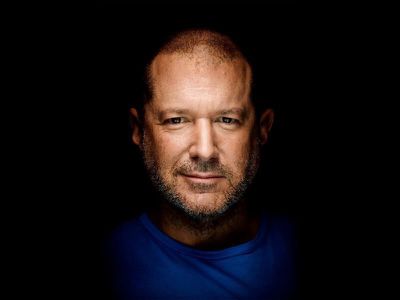
Apple today removed Jony Ive from its leadership page on its website, suggesting that he has officially departed the company after nearly three decades. The change was spotted by French blog MacGeneration.
Jony Ive portrait by Brian Bowen Smith
Ive led Apple's design team since 1996. Promoted to Chief Design Officer in 2015, he had been responsible for all design at Apple, including the look and feel of Apple products like the iPhone, Mac, and Apple Watch, packaging, and major architectural projects such as Apple Park and Apple Stores.
In June, Apple announced that Ive would depart the company as an employee later this year to form an independent design company named LoveFrom with his designer friend Marc Newson. Apple said it will remain one of Ive's primary clients.
"Jony is a singular figure in the design world and his role in Apple's revival cannot be overstated, from 1998's groundbreaking iMac to the iPhone and the unprecedented ambition of Apple Park, where recently he has been putting so much of his energy and care," said Apple CEO Tim Cook in June.
Apple said its operations chief Jeff Williams will "spend more of his time" working with the company's design team in their studio. Evans Hankey and Alan Dye, vice presidents of Industrial Design and Human Interface design at Apple, respectively, will now report to Williams as part of the transition.
Ahead of World AIDS Day, which takes place on December 1, Apple has begun turning the Apple Store logos of many of its retail locations red. Apple's red logos are an annual tradition and mark one of the few times a year that Apple changes its logo colors.
Photos of Apple Store locations with red logos have begun popping up on Twitter and Instagram, and by the time December 1 rolls around on Sunday, Apple's stores worldwide will be temporarily featuring the new design.
Apple will be promoting World AIDS Day in its retail locations over the course of the next week. From November 25 to December 2, Apple will donate $1 to (RED) for every purchase made with Apple Pay on Apple.com, the Apple Store app, and Apple retail stores, up to a total of $1 million.
(RED) has been a longtime Apple partner charity, and since 2006, Apple has raised more than $220 million through promotions like this and the sale of (RED)-branded products and accessories. Funds raised by (RED) go towards HIV/AIDS programs in Africa as part of The Global Fund to fight AIDS, Tuberculosis, and Malaria.
In 2007, Apple launched the original iPhone, kickstarting the modern smartphone era which is now dominated by iPhone and Android devices. We've had 19 generations of iPhones so far, with the latest models, the iPhone 17, iPhone 17 Pro, iPhone 17 Pro Max, and iPhone Air, introduced in September 2025 and the iPhone 17e introduced in March. Apple follows an annual update cycle, introducing new flagship models while discounting prior-year models and selling them at more affordable price points.
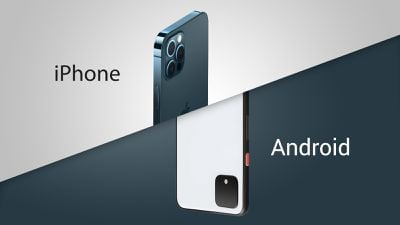
iPhone vs Android
Over the years, Android and iPhone smartphones have evolved to the point where feature-wise, they're similar in function and capability. Android smartphones are made by multiple manufacturers, but the core operating system is provided by Google, which leads to a wider variety of phones and price points to choose from, but weaker integration between software and hardware.
Apple's control of both the iPhone and the operating system (iOS) provides a more consistent experience along with ongoing support. With iOS 26, Apple supports all iPhones that were introduced in the last four years, so the majority of active iPhone owners can and do upgrade to the newest version of iOS that Apple rolls out each year.
Android updates are often more inconsistent and often don't make it to all Android-based smartphones because each manufacturer has to implement support on an individual basis. Google also does yearly Android updates, but the reality is that a lot of older Android smartphones don't get the new software.
With Apple's control and curation of the iPhone experience, the iPhone is largely considered to be the more secure platform, and Apple has made it a point to focus heavily on privacy. Apple's iOS is less customizable than Android, so for individuals who prefer flexibility and customization options, the Android operating system may be worth looking at.
How Do iPhone Updates Work?
Here are the basics you should know about how Apple updates the iPhone and the iOS operating system.
Each fall, typically in September, Apple releases a new series of flagship smartphones. These often come at high prices and feature the latest technologies, with Apple offering high-end models and still high-end but more affordable models. Prior-year iPhones often stick around with lower price points as cheaper alternatives to the latest and greatest technology, and occasionally, Apple launches a lower-cost iPhone outside of the normal fall timeline.
At the current time, Apple's flagship iPhone lineup includes the iPhone 17e (2026), iPhone 17 (2025), iPhone 17 Pro (2025), iPhone 17 Pro Max (2025), and iPhone Air (2025).
Apple also debuts an updated version of iOS at the same time that new iPhones launch, but new versions of iOS are pre-introduced every year at Apple's annual Worldwide Developers Conference to give developers time to incorporate new features and technologies into their apps ahead of when the software becomes available to the public. The current iPhones run iOS 26.
In this guide, we go over all of the iPhones that are in the current Apple lineup, offer up some buying suggestions, and provide tips and resources for both new and existing iPhone owners.
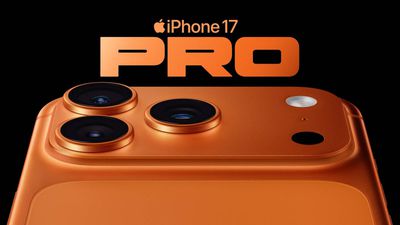
iPhone 17 Pro and iPhone 17 Pro Max ($1,099+)
The iPhone 17 Pro and iPhone 17 Pro Max are Apple's current high-end flagship devices with all of the top-of-the-line features and the most bells and whistles. The Pro models are for those who want to get the most out of their iPhones with the latest feature set.
Pricing on the iPhone 17 Pro starts at $1,099, while pricing on the iPhone 17 Pro Max starts at $1,199. The two iPhones are nearly identical when it comes to feature set, and it's only display size and battery capacity that set the two devices apart.
The iPhone 17 Pro Max has a larger 6.9-inch display, while the iPhone 17 Pro has a 6.3-inch display. Apple transitioned from titanium to aluminum this year, because it's a material with better thermal conductivity. Both iPhone 17 Pro models have a unibody aluminum frame, Ceramic Shield 2 front glass that's more durable than before, and a Ceramic Shield cutout at the back for MagSafe charging. Colors this year include Cosmic Orange, Deep Blue, and Silver.
The iPhone 17 Pro and Pro Max feature edge-to-edge OLED displays with slim bezels. A pill-shaped Dynamic Island continues to house the front-facing camera and hardware used for Face ID authentication, and it is integrated into the iPhone so it can show notifications and Live Activities. There is a customizable Action button on the left side, and a Camera Control for activating the Camera app on the right.
Apple introduced a new A19 Pro chip in the iPhone 17 Pro and Pro Max with a 6-core CPU, a 6-core GPU with neural accelerators, a 16-core Neural Engine, and 12GB RAM. It is faster and more efficient than the A18 Pro in the prior-generation models, plus the iPhone 17 Pro models are less likely to overheat and cause processor throttling because of a new vapor chamber cooling system.
Apple redesigned the camera bump, and it's now a camera "plateau" that takes up most of the top rear of the iPhone. It houses some iPhone components, providing Apple with more space for a larger battery. There continues to be a three-lens camera setup with a 48-megapixel Fusion camera, a 48-megapixel Ultra Wide camera that also supports Macro shots, and a new 48-megapixel Telephoto lens with 4× and 8× optical zoom options. There are also pro photo and video features like ProRes RAW recording, Log 2 recording, and genlock support.
Crash Detection is able to determine if you've been in a serious car accident, alerting emergency services, and there's also an Emergency SOS via satellite feature for getting help if you're out of range of Wi-Fi and cellular. Satellite connectivity can be used to send text messages and update your location, too. Apple designed a new N1 networking chip for the iPhone 17 Pro models, and it supports Wi-Fi 7 and Bluetooth 6.
Both iPhone 17 Pro models offer significant improvements to battery life, lasting up to six hours longer than prior-generation models. They are equipped with a USB-C port and support up to 25W MagSafe and Qi 2.2 charging.
Other features include IP68 water resistance, ProMotion 120Hz refresh rate for the display, faster 5G, better scratch and drop resistance, an upgraded 18-megapixel front-facing camera, and faster USB-C charging with USB 3 transfer speeds.
Key Features:
Highest end, highest price
Triple-lens camera: Main (Wide), Ultra Wide, and Telephoto
48-megapixel Fusion lens with ProRAW support
48-megapixel Telephoto lens with up to 8× optical zoom
48-megapixel Ultra Wide lens with macro capability
A19 Pro chip
Up to 2TB storage
12GB RAM
Largest batteries
Action and Camera Control buttons
Vapor chamber cooling system
Aluminum frame
Bottom Line: The iPhone 17 Pro and iPhone 17 Pro Max are the iPhones to choose if you want the absolute best camera capabilities that you can get in an iPhone, with the Pro Max being the top-of-the-line model due to its increased display size, and longer battery life. In terms of performance, there isn't much of a difference between the iPhone 17 Pro models and the iPhone 17, with camera capabilities, heat efficiency, and battery distinguishing them.
iPhone Air ($999+)
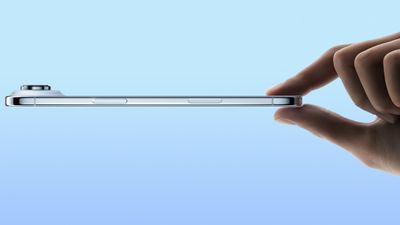
The iPhone Air is an entirely new iPhone that replaces the prior iPhone 16 Plus in the lineup. It is Apple's thinnest and lightest iPhone to date, measuring just 5.6mm thick and weighing 165 grams. It is significantly thinner than the 8.75mm thick iPhone 17 Pro models.
Priced starting at $999, the iPhone Air is more affordable than the iPhone 17 Pro models, but more expensive than the standard iPhone 17. It is the iPhone to get if you want to prioritize a thin and light design over feature set, because it is not without compromise.
The iPhone Air has limited camera functionality and a smaller battery than the other iPhone 17 models, but performance is otherwise similar.
Because of the thin build and the 6.5-inch display, the iPhone Air has a titanium frame. Titanium is sturdier than aluminum, and multiple bend tests have proven that the iPhone Air is not going to bend in a pocket. To get the iPhone so thin, Apple tucked the A19 Pro chip, Dynamic Island, front-facing camera, and rear camera into a horizontal pill-shaped camera plateau at the back of the iPhone. The iPhone Air comes in Sky Blue, Space Black, Cloud White, and Light Gold.
While the iPhone Air and iPhone 17 Pro models both have an A19 Pro chip, the iPhone Air is made from titanium so it is not as thermally efficient, and there's no vapor chamber cooling system. It has a 5-core GPU instead of a 6-core GPU, so it's not quite as fast as the iPhone 17 Pro models when it comes to GPU-intensive tasks.
The iPhone Air has the same 120Hz ProMotion display as the iPhone 17 Pro, and it also uses the more durable and scratch resistant Ceramic Shield 2 material. It uses Face ID for facial recognition, so there's a Dynamic Island, and it has the new 18-megapixel front-facing camera with Center Stage functionality.
Apple didn't have space for multiple rear cameras, so there is a single-lens 48-megapixel Fusion lens in the iPhone Air. It cannot capture Ultra Wide, Telephoto, macro, or spatial images or video. The 48-megapixel Fusion camera is the same as the Fusion camera in the other iPhone models, and it can take high-quality 1× and 2× images.
The iPhone Air uses the N1 networking chip with Wi-Fi 7 and Bluetooth 6, plus it has an Apple-designed C1X modem that Apple says is 2× faster than the C1. Other iPhone 17 models use Qualcomm modem chips, and the C1X does not support mmWave 5G speeds. The iPhone Air is eSIM only because there wasn't room for a physical SIM tray, and there's only a single speaker.
The iPhone Air has the smallest battery in the 2025 iPhone lineup, but with optimizations enabled by the N1 networking chip and the A19 Pro chip, it lasts for up to 27 hours when playing video. The iPhone 17 Pro lasts for up to 33 hours, and the Pro Max lasts for up to 39 hours. Apple created a MagSafe Battery pack just for the iPhone Air, but it costs $99.
Wireless charging maxes out at 20W on the iPhone Air instead of 25W, but it can be fast charged over USB-C like the other iPhone models. Crash Detection, Emergency SOS via satellite, and Messages via satellite are available as well.
Compared to the other iPhone 17 models, the iPhone Air is thinner, lighter, and the lightest on features because of the lack of multiple cameras. It is the only iPhone that has a titanium frame, and it doesn't have a battery that lasts as long as other models.
Key Features:
Thin, light design
120Hz ProMotion display
Titanium frame
Ceramic Shield 2 display
Single-lens 48-megapixel rear camera
A19 Pro chip
eSIM only
Bottom Line:The iPhone Air is novel because it is the first new design that Apple has introduced in several years, but you won't get the camera capabilities or battery life that you get with the other iPhone models. Depending on your device usage, the battery may not last all day, and the add-on battery pack is an additional cost. If you want to prioritize the latest design with a thinner, lighter build and don't mind missing out on camera features or the premium price, the iPhone Air is the iPhone to get.
iPhone 17 ($799+)
Sold alongside the iPhone 17 Pro and iPhone 17 Pro Max, the iPhone 17 is Apple's most affordable flagship iPhone. Apple did away with the "Plus" model this year, so there is only a single lower-cost standard model available. It is missing some of the higher-end camera and performance features to keep the price lower, but there is more feature parity between the standard iPhone and the Pro models this year than ever before.
Apple increased the display size of the iPhone 17, and it is now 6.3 inches, the same size as the iPhone 17 Pro. The bezels have been slimmed down, and Apple also brought 120Hz ProMotion display technology to the iPhone 17 for the first time. ProMotion displays have been a Pro feature for years now, so it is a significant upgrade. Along with ProMotion, Apple also added an Always-On display, so the iPhone 17 can show the time, Lock Screen widgets, and notifications without the need to tap the display or raise the iPhone.
The iPhone 17 has an aluminum frame, but it isn't the same durable unibody frame that Apple made for the iPhone 17 Pro. It has a Ceramic Shield front, but it didn't get the Ceramic Shield 2 upgrade, or the Ceramic Shield back, so it isn't as durable or scratch resistant. It uses Face ID and has a Dynamic Island with the same 18-megapixel front-facing camera that Apple added to all of iPhone 17 models.
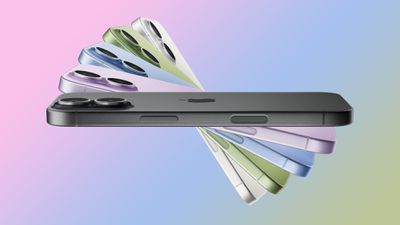
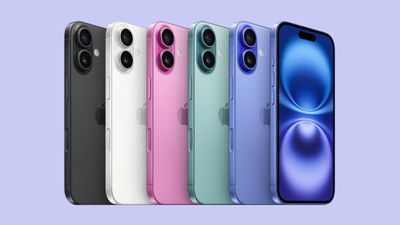
There's an Action button and a Camera Control, so you have all the same control options that you have with the more expensive iPhone options. The iPhone 17 has the best color range, and it is available in White, Black, Mist Blue, Sage, and Lavender.
While the iPhone Air and the iPhone 17 Pro models have an A19 Pro chip, the iPhone 17 has the standard A19 that's not quite as fast when it comes to CPU and GPU performance. It's still plenty quick though, and supports ray tracing and console-quality games.
There is a dual camera system that features an upgraded 48-megapixel Ultra Wide and 48-megapixel Fusion (Wide) lenses with no Telephoto lens. The primary camera can be cropped in to a 2× zoom, so 0.5×, 1×, and 2× options are supported. Most of the camera features that are available with the iPhone 17 Pro models are also supported on the iPhone 17, with the exception of the Telephoto capabilities and the pro video features like capturing video in 4K at 120 frames per second.
If you need pro video features like support for shooting in ProRAW and ProRes, you'll want to look at the iPhone 17 Pro models. Apple didn't change the design of the iPhone 17 camera, so it has a vertical bump and not the camera plateau that the other iPhone 17 models got.
The iPhone 17 models have support for mmWave (U.S. only) and sub-6GHz 5G, and they also have a USB-C port and offer MagSafe and Qi 2.2 charging at up to 25W. USB-C charging is faster than before, and you can get a 50 percent charge in 20 minutes with a 40W or higher power adapter. Battery life is way up this year thanks to the A19 and a new Apple-designed N1 networking chip with Wi-Fi 7 and Bluetooth 6.
The iPhone 17's battery lasts for up to 30 hours when watching video, which is eight hours longer than the iPhone 16.
Crash Detection, Emergency SOS via satellite, and Messages via satellite are available as well. Compared to the Pro models, the standard iPhone 17 lacks the upgraded Ceramic Shield 2, vapor chamber cooling system, the Telephoto camera lens, and the A19 Pro chip.
Key Features:
Dual-lens camera: Fusion (Wide), Ultra Wide
120Hz ProMotion refresh rate
Larger 6.3-inch display
Crash Detection
USB-C port
A19 chip
8GB RAM
Bottom Line:The iPhone 17 offers many of the same features as the iPhone 17 Pro and Pro Max at a more affordable price, and it's the iPhone recommend for most people. It's $300 less than the iPhone 17 Pro and $200 less than the super thin iPhone Air, and there are fewer features than ever that you're missing out on by choosing the affordable model. Compared to the iPhone 17 Pro, the iPhone 17 is primarily lacking camera capabilities. Compared to the iPhone Air, the iPhone 17 is thicker, heavier, and smaller.
iPhone 17e ($599+)
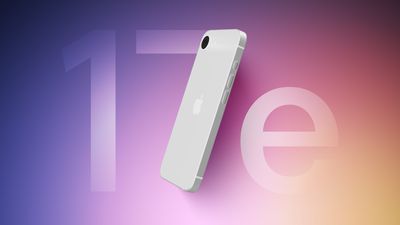
Priced starting at $599, the iPhone 17e is modeled after the iPhone 14. It has an all-display design with Face ID, but it has an older-style notch rather than a Dynamic Island. The design wasn't updated with the 2026 refresh.
The iPhone 17e has a 6.1-inch OLED display, and it has 8GB RAM and an A19 chip that supports Apple Intelligence. It uses the C1X modem, which is twice as fast as the C1 modem in the prior-generation model. While there is no mmWave 5G support, there seems to be no compromise to the more widespread sub-6GHz 5G speeds.
There is a single-lens rear camera in the iPhone 17e, and it is the same as the 48-megapixel Wide camera that's in the iPhone 17. It can take 1× and 2× photos, but there is no 0.5× option and no telephoto features.
The iPhone 17e's battery lasts for up to 26 hours when watching video. It charges via USB-C or wirelessly using MagSafe. MagSafe is a new addition to the iPhone 17e this year, and the prior-generation iPhone 16e did not support the feature. Apple also added more storage, so the iPhone 17e starts at 256GB for $599.
Finding in the Find My app, and it is limited to Wi-Fi 6, so it will not connect to the 6GHz networks available with Wi-Fi 6E and Wi-Fi 7 routers.
Other features include Crash Detection, Emergency SOS via Satellite, and Messages via Satellite, but these are also features available with other iPhone models.
Key Features:
Face ID with notch
Older design
A19 chip
MagSafe charging
C1X modem
Lower price
Bottom Line:The iPhone 17e is Apple's lowest-price iPhone, and it is worthwhile if you can live without a dual-lens camera system, the Dynamic Island, and don't mind the smaller 6.1-inch display and the older design. It has some of the same features as the iPhone 17 at a $200 lower price point, but you will miss out on newer camera technology, faster performance, and ProMotion displays.
iPhone 16 and iPhone 16 Plus ($699+)
The iPhone 16 and iPhone 16 Plus are Apple's prior-generation mainstream flagship devices that are now being sold at a discount. They have older technology and are lacking some of the new features that Apple introduced with the iPhone 17, such as the 48-megapixel Ultra Wide lens and the new 18-megapixel front-facing camera.
When it comes to design, the iPhone 16 is essentially identical to the iPhone 17, and it features a Dynamic Island, an Action button, a Camera Control, and a USB-C port. The iPhone 16 has a prior-generation A18 chip and 8GB RAM. The A18 has a 6-core CPU, 5-core GPU, and 16-core Neural Engine, but it is not as fast or efficient as the A19. Both iPhone 16 models support Apple Intelligence.
The iPhone 16 Plus is the only larger-sized more affordable iPhone that Apple offers because there is no equivalent iPhone 17 model. The iPhone 16 has a 6.1-inch display, so it's smaller than the iPhone 17. The iPhone 16 Plus has a 6.7-inch display, which is not a size that Apple offers anymore in its latest phones.
There is a dual-lens camera system with a 48-megapixel Fusion lens, but the Ultra Wide lens is limited to 12 megapixels, while Apple updated the Ultra Wide lens in the iPhone 17 to 48 megapixels. MagSafe charging and Qi2.2 support are available for wireless charging up to 25W, and they can fast charge to 50 percent in 30 minutes.
The iPhone 16 models have support for mmWave (U.S. only) and sub-6GHz 5G and use the X71 Qualcomm chip, one generation behind the Qualcomm chip in the new iPhones. Battery life is shorter than on iPhone 17 because of the major gains Apple made in efficiency in 2025.
Key Features:
Dual-lens camera: Main (Wide), Ultra Wide
Crash Detection
USB-C port
Action button
Camera Control
A18 chip
Bottom Line:The iPhone 16 and 16 Plus are solid devices that will perform well at an affordable price, but keep in mind that the iPhone 17 is such a notable upgrade that it may be worth paying $100 more for the newest iPhone this year. The iPhone 16 models do not support 120Hz ProMotion refresh rates, and they don't have the upgraded 48-megapixel Ultra Wide camera that's in the iPhone 17. They also lack the faster A19 chip and the Apple-designed N1 networking chip that's much more efficient for longer battery life. A prior-generation iPhone is usually a good way to save money, but this year, we don't recommend it.
Frequently Asked Questions
There's no one single iPhone that's best for everyone, and picking the right smartphone needs to take into account factors like budget, desired battery life, preferred feature set, and more.
If you want the absolute best photographic capabilities for example, you're going to want the iPhone 17 Pro or iPhone 17 Pro Max, and if you want something that has a solid feature set at a great price, the iPhone 17e or the iPhone 17 is what you'll want to look at. If you want the latest design, consider the iPhone Air.
Below, we've outlined some of the best iPhone choices based on different scenarios or features that you might be looking for.
Which iPhone Has the Best Battery Life?
With the efficient A19 Pro chip, N1 networking chip, and thicker design, the iPhone 17 Pro Max has the longest battery life for any iPhone to date at up to 39 hours when watching videos. The iPhone 17 Pro lasts for up to 33 hours, the iPhone 17 lasts for up to 30 hours, and the iPhone Air lasts for up to 27 hours.
Which iPhone Has the Best Camera?
With their updated triple-lens camera systems including a 48-megapixel Fusion lens, 48-megapixel Telephoto lens, 48-megapixel Ultra Wide lens, and LiDAR Scanners, the iPhone 17 Pro and iPhone 17 Pro Max have the best iPhone cameras that you can get. Both of the new iPhones include a three-lens camera system with the same feature set. This year, the Telephoto lens has been upgraded to 48 megapixels, and it supports 4× and 8× optical zoom options.
The Fusion lens supports 24-megapixel and 48-megapixel high-resolution photos through the Photonic Engine, and the Ultra Wide lens supports 24-megapixel images that have the detail from the combined pixels of the 48-megapixel resolution. Using computational photography, the Fusion camera can be set to 24mm, 28mm, and 35mm focal lengths to better mirror what's possible with DSLRs.
All four iPhone models this year have an upgraded 18-megapixel front-facing camera with a square sensor that allows you to take selfies in portrait or landscape orientation without rotating your iPhone.
Which iPhone Has Touch ID?
Unfortunately, none of Apple's iPhones have Touch ID. It has been phased out, and Face ID is the only option.
Which iPhone is Best For One-Handed Use?
The iPhone 17e is the smallest iPhone at 6.1 inches, but the iPhone Air is the lightest iPhone that's available. They won't work for one-handed use for everyone, but they are the best options depending on whether you want to optimize for smaller screen size or lighter weight.
Which iPhone Has the Best Design?
The iPhone Air features the first notable design change that we've seen to the iPhone in years. It's the thinnest and lightest iPhone to date, and it has the most eye-catching design because it's new and the camera plateau is different.
Which iPhone is the Best Value?
With dual 48-megapixel cameras, a 6.3-inch display, an A19 chip, ProMotion display support, MagSafe connectivity, Wi-Fi 7, 5G, Face ID, Camera Control, Action button, and extended battery life, the iPhone 17 offers several Pro features at a more affordable price.
When you look at feature set and price, the iPhone 17 is the best value for what you get. But if you're aiming for affordability, the $599 iPhone 17e is also an excellent option. It has a 48-megapixel Fusion camera, OLED display, and sub-6GHz 5G connectivity at Apple's lowest price point.
Which iPhone Has the Most Features?
If you want the iPhone with the most bells and whistles, that's the iPhone 17 Pro and iPhone 17 Pro Max. These iPhones offer OLED displays, triple-lens cameras, an A19 Pro chip and a new thermal design, larger maximum storage capacities, and longer battery life.
Compared to the iPhone 17 models, the iPhone 17 Pro and Pro Max have better camera capabilities. The absolute best would be the iPhone 17 Pro Max because of its larger display and bigger battery.
In More Detail
Still not sure? We have deeper dives comparing the iPhone 17 models to each other and to the prior-generation iPhone models.
Following a recent Bloomberg report claiming that the new AirPods Pro are experiencing "much higher" than expected demand, the Nikkei Asian Review reports that Apple has asked its supplier Luxshare Precision to double production of the high-end earphones to two million units per month.
The report adds that Apple has also asked Luxshare and fellow Chinese manufacturer Goertek to boost production of the regular AirPods at their Vietnam-based factories, although it is unclear by how much..
AirPods Pro are currently estimated for delivery around December 31 through Apple's online store in the United States, so orders placed today are not guaranteed to arrive in time for Christmas. However, authorized resellers such as Amazon, Best Buy, AT&T, and T-Mobile still quote delivery within the first week of December.
AirPods are considered to be the world's best selling truly wireless earphones, with surging popularity since their release in late 2016. Together with the Apple Watch, the earphones have been a driving force behind growth in Apple's wearables category, which recently set new fourth quarter revenue records worldwide.
Note: MacRumors is an affiliate partner with Amazon. When you click a link and make a purchase, we may receive a small payment, which helps us keep the site running.
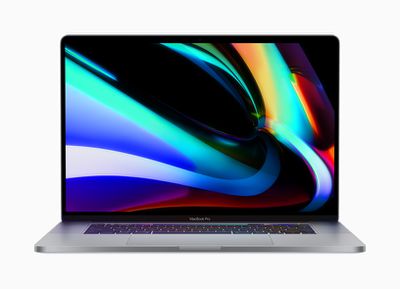
B&H Photo is offering $200 discounts on the two main configurations of Apple's 16-inch MacBook Pro. Sale prices start at $2,199.00 for the 512GB model and rise to $2,599.00 for the 1TB model.
Note: MacRumors is an affiliate partner with B&H Photo. When you click a link and make a purchase, we may receive a small payment, which helps us keep the site running.
To date these are some of the lowest prices that we've tracked on the brand-new 16-inch MacBook Pro, either beating or matching previous sales offered at Expercom, Amazon, Best Buy, and Adorama.
Besides the main configurations, B&H Photo is also discounting a few custom configurations with upgraded RAM and different processors. You can see the full list of 16-inch MacBook Pros on sale at B&H Photo right here.
For more holiday shopping, head to our Deals Roundup to browse the latest Apple-related sales, and then visit our Black Friday Roundup to prepare for all of the deepest discounts coming on Friday.
Update: In its Apple Store app, Apple has confirmed that its new Eaton Centre location opens Saturday, December 14 at 9:00 a.m. local time.
Original story follows.
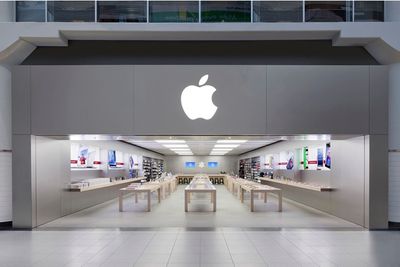
The construction barriers covering an all-new Apple Store are nearly ready to come down at North America's busiest shopping mall.
Apple is set to open an over 10,000-square-foot store at the Eaton Centre in Toronto, Canada as early as December, according to a source, who said the grand opening will likely occur within the first half of the month.
Apple's existing store at the Eaton Centre
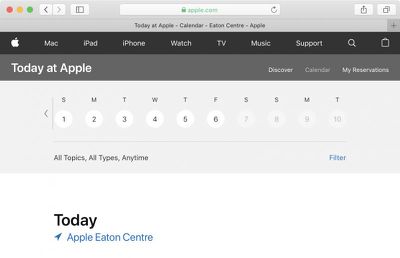
Unlike other Apple Stores, Today at Apple sessions at the existing Apple Eaton Centre location abruptly end after Friday, December 6, suggesting that the new store could open on Saturday, December 7. However, our source believes that employee training could push back the opening until Saturday, December 14.
MacRumors was first to report on Apple's plans for a new store at the Eaton Centre back in January, when Apple filed a building permit for a new street-level store near the Queen Street entrance to the mall. The new store will take over a space recently vacated by apparel retailer Abercrombie & Fitch.
Apple's new store will be more than twice as large as the current 4,977-square-foot store, according to an Eaton Centre floor plan. The extra space is much needed, as not only is the Eaton Centre the busiest shopping mall in North America, but it is home to Apple's only store in Toronto's downtown core.
Apple has three other stores in Toronto at Yorkdale, Sherway Gardens, and Fairview, all within shopping malls. Rumors suggest Apple plans to open its first street-facing store at The One, an upcoming condominium and retail complex slated to open by 2022 at the busy intersection of Yonge and Bloor in Toronto.
Apple plans to release 5.4-inch and 6.7-inch iPhones with thinner OLED displays in 2020, according to Korea's ETNews.
The report claims the so-called iPhone 12 Pro and iPhone 12 Pro Max models will adopt a Samsung technology called Y-OCTA that allows touchscreen circuitry to be directly patterned on the OLED panel without the need for a separate layer, resulting in a thinner display and lower production costs.
It's unclear if the thinner display technology would translate to overall thinner iPhones next year. Notably, the iPhone 11 Pro and iPhone 11 Pro Max are actually slightly thicker and heavier than the iPhone XS and iPhone XS Max, respectively, as Apple added larger batteries in this year's devices.
Samsung will supply Y-OCTA displays to Apple for both the 5.4-inch and 6.7-inch iPhones, while the lower-cost 6.1-inch model will stick with traditional film-based displays supplied by both Samsung and LG, the report adds. Chinese display maker BOE may be out of the running as a supplier for 2020 iPhones.
Multiple reports have claimed that Apple eventually plans to release an iPhone with both Face ID and under-screen Touch ID, although it is unclear if the device will arrive in 2020 or 2021. The under-screen Touch ID would potentially allow users to authenticate by holding a finger anywhere on the display.
Apple just released the AirPods Pro in late October, but there are already a bunch of knockoffs and replicas on the market to appeal to those who might not be able to afford the $250 asking price of the AirPods Pro.
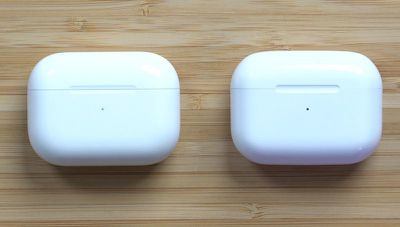
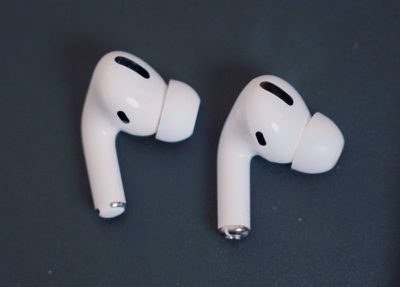
We picked up the $95 i500 Pro TWS Earbuds, a set of AirPods Pro replicas that are remarkably similar in design to Apple's real AirPods Pro and that even advertise some of the same features, like Apple's proprietary H1 chip. In the photos and videos below, the real AirPods are on the left.
Price wise, these fakes are $95, which is almost half the price of the AirPods Pro. That's super expensive for a knockoff, so before reading on, know that we do not recommend purchasing these fakes or any fake AirPods Pro models because you're never going to get the feature set, sound quality, and build quality that you get from Apple's own earbuds.
When it comes to design, the Air i500 Pro TWS look identical to the AirPods Pro. The earbuds themselves are similar to the AirPods Pro with almost no design deviations, and there's even a matching Wireless Charging Case that wirelessly charges the case itself and the fake AirPods inside.
Just looking at the Air i500 Pro TWS next to AirPods, you're probably not going to be able to tell the difference between the two. There are some minor design discrepancies so they're not totally identical, but if you're not inspecting them up close side by side, it's tough to tell. The Air i500 Pro earbuds do feel lighter and the lid feels a bit different in use, but again, most people might not notice.
On the website, the fake earbuds claim to have a Qualcomm chip and Apple's proprietary H1 chip that allows for quick swapping between devices, simple setup, "Hey Siri" functionality, and more, and these features do appear to work. We don't know if it's a copy of the H1 chip and there are rumors floating around that the company is using spoofed MAC addresses, but functionally, these have some of the AirPods Pro tech on the surface.
Connecting is similar to AirPods Pro in that you just need to open the case and then hold down a button on the back, and when connecting, a battery level indicator pops up on the iPhone just like the real thing. Battery levels are even displayed inside of the battery widget in the Today portion of the notification interface.
Wireless charging works, "Hey Siri" is functional, music playback pauses when an earbud is taken out of the ear, and battery life seems to be similar to real AirPods Pro, but the similarities end there. The i500 Pro TWS has no force sensor and does not support squeeze gestures, and the key AirPods Pro feature - active noise cancellation - is not included.
There are zero noise cancellation features and there's no Transparency mode either, though there is a decent seal within the ear. Sound quality isn't terrible, but it doesn't measure up to the AirPods Pro or the standard AirPods. There's little bass and too much treble, and the sound is not as crisp and clear as the sound from the actual AirPods.
Superficially, the Air i500 Pro TWS look like the AirPods Pro, but functionally, these have none of the "Pro" features that make the AirPods Pro a worthwhile purchase. We don't recommend spending $95 on a knockoff version of the AirPods, but these earbuds do provide an interesting look at how far companies will go to make fake Apple products.
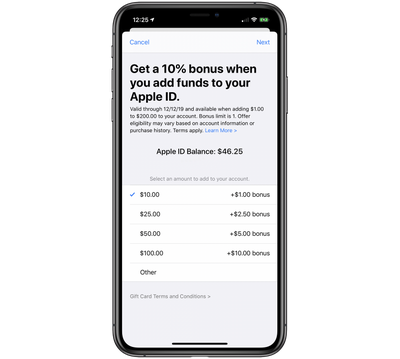
Apple is once again offering a promotion that provides a 10 percent cash bonus when adding funds directly to an Apple ID account in the United States and other countries from a linked credit or debit card.
Apple is offering the 10 percent bonus for fund additions between $1 and $200, with the maximum bonus credit topping out at $20.
The credit can be used for purchasing iTunes movies and TV shows, buying apps, paying app subscription fees, buying books, paying for iCloud storage, paying for Apple Music, paying for Apple Arcade, and more.
Apple kicked off this promotion earlier in November, and it will be available through December 12, 2019. It's a good way to get a bit of an extra bonus for App Store credit, and this week's Black Friday app deals can ensure that your money goes even further.
Apple last week debuted new Smart Battery Cases designed for the iPhone 11, iPhone 11 Pro, and iPhone 11 Pro Max, with each case adding 50 percent additional battery life to its respective iPhone.
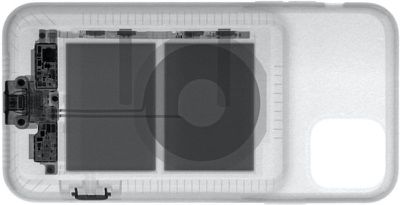
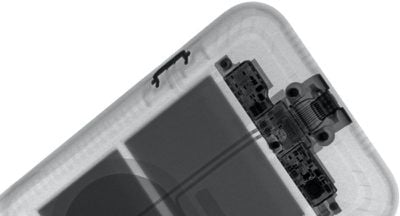
Noted repair site iFixit and Creative Electron today did an x-ray teardown of the new battery cases to take a quick glimpse at what's inside and how the near camera button feature works.
Compared to last year's battery cases, the new cases have a camera button on the right side that's designed to open the camera when it's pressed. With the Camera app open, pressing the button takes a photo, and holding it down takes a QuickTake video.
According to iFixit's x-rays, the camera button works though a little circuit board in the case, which has a thin, flexible circuit that runs to the photo button. The circuit board is designed to connect to the camera button through the Lightning port at the bottom of the case.
The button is designed to be just a bit recessed to prevent it from activating in a pocket or a bag, and you do need to hold it down for just a bit to open the camera app to begin with. All in all, it's a useful little feature that adds some nice utility to the Smart Battery Case.
There's little else of interest in the x-ray, but the inductive charging coil is visible, as is the 10.9v battery and other internal circuitry that makes the case functional.
For more on Apple's Smart Battery Cases for the iPhone 11, iPhone 11 Pro, and iPhone 11 Pro Max, make sure to check out our guide.


 Note: MacRumors is an affiliate partner with some of these vendors. When you click a link and make a purchase, we may receive a small payment, which helps us keep the site running.
 Note: MacRumors is an affiliate partner with some of these vendors. When you click a link and make a purchase, we may receive a small payment, which helps us keep the site running.
 Note: MacRumors is an affiliate partner with some of these vendors. When you click a link and make a purchase, we may receive a small payment, which helps us keep the site running.
 Note: MacRumors is an affiliate partner with some of these vendors. When you click a link and make a purchase, we may receive a small payment, which helps us keep the site running.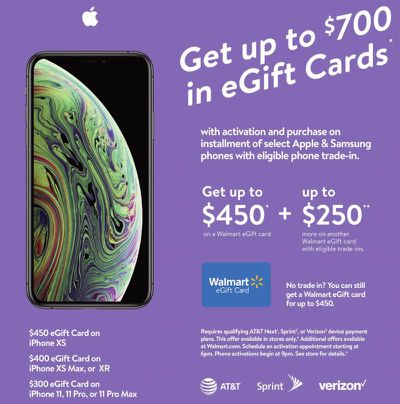





 Note: MacRumors is an affiliate partner with B&H Photo. When you click a link and make a purchase, we may receive a small payment, which helps us keep the site running.