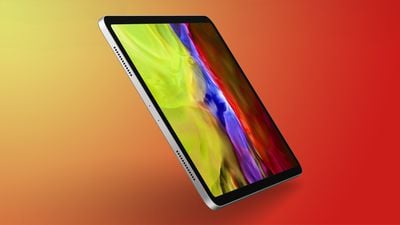
Amazon today has Apple's 128GB Wi-Fi 12.9-inch M1 iPad Pro for $999.00, down from $1,099.00. This is a new all-time low price on this model, and it's only available at Amazon.
Note: MacRumors is an affiliate partner with some of these vendors. When you click a link and make a purchase, we may receive a small payment, which helps us keep the site running.
It's also only available in the Space Gray color option. The tablet is in stock and sold by Amazon, so if you have Prime shipping you can get the iPad Pro delivered as fast as this Thursday in the United States.
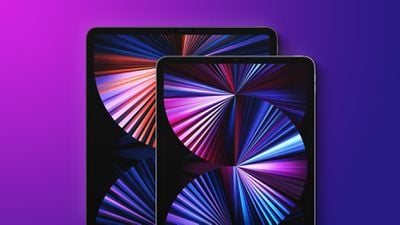
The newest iPad Pro has Apple's M1 chip, a 12.9-inch Liquid Retina XDR display with ProMotion, a TrueDepth camera system, a 12-megapixel wide-angle camera and a 10-megapixel ultra wide-angle camera.
For even more iPad deals, head to our full Best Deals guide for iPad. In that guide we track the best discounts online for iPad, iPad mini, iPad Air, and iPad Pro.
Popular Apple TV+ show "Ted Lasso" has earned an Emmy award nomination in the Comedy series category, where it will be competing against "Black-ish," "Cobra Kai," "Emily in Paris," "Hacks," "The Flight Attendant," "The Kominsky Method," and "Pen15."
Jason Sudeikis, who plays Ted Lasso on the TV series, has also been nominated for Outstanding Lead Actor in a Comedy Series. He's up against Anthony Anderson (Black-ish), Michael Douglas (The Kominsky Method), William H. Macy (Shameless), and Kenan Thompson (Kenan).
"Ted Lasso" received a total of 20 nominations [PDF], with additional nominations in categories like Outstanding Supporting Actor in a Comedy Series, Outstanding Design for a Narrative Program, Outstanding Casting for a Comedy Series, Outstanding Directing for a Comedy Series, and more.
A few other Apple TV+ shows received Emmy nominations as well. "Servant" received a nomination for Outstanding Cinematography for a Single-Camera Series, "Boys State" was nominated for Outstanding Documentary and Outstanding Directing for a Documentary, the Billie Eilish documentary was nominated for Outstanding Music Direction and Outstanding Picture Editing for a Nonfiction Program, and Mariah Carey's Christmas Special got a nomination for Outstanding Contemporary Makeup.
"Central Park" stars Tituss Burgess and Stanley Tucci were both nominated for Outstanding Character Voice-Over Performance, and "Mythic Quest" and "The Year Earth Changed" have both been nominated for Outstanding Narrator. "Mythic Quest" also received a nomination for Outstanding Sound Editing for a Comedy or Drama Series. And finally, Apple's "Carpool Karaoke" series received a nomination for Outstanding Short Form Comedy. A full list of Apple's nominations can be found in Apple's Newsroom announcement.
The winners of the 73rd annual Emmy awards will be announced on Sunday, September 19.
The Car Connectivity Consortium today announced that its Digital Key 3.0 specification with support for Ultra Wideband and Bluetooth LE connectivity is finalized and now available to members, including Apple.
In 2020, Apple introduced a digital car key feature that allows users to unlock and start a compatible vehicle by holding an iPhone or Apple Watch near the driver-side door. The feature is powered by the NFC-based Digital Key 2.0 specification, and once Apple moves to Digital Key 3.0, users will be able to unlock and start a compatible vehicle without needing to take their iPhone out of their pocket or bag.
The improved Ultra Wideband version of Apple's car key feature would require devices with the U1 chip like iPhone 11 and iPhone 12 models.
Digital Key 3.0 also improves security, as Ultra Wideband's precise location awareness is said to prevent relay attacks, where the radio signal between the iPhone and vehicle is jammed or intercepted by another party. NFC support is maintained to ensure backward compatibility and, in Apple's case, the ability to use the car key feature to unlock a vehicle for up to five hours after an iPhone has run out of battery power.
Similar to credit cards and boarding passes, digital car keys are stored in the Wallet app on an iPhone or Apple Watch running iOS 13.6 or watchOS 6.2.8 or newer. So far, the feature is only compatible with select BMW models manufactured since July 2020, but a Korean report claimed that Hyundai plans to start offering the feature later this year.
Apple previously said the new version of its car key feature with Ultra Wideband support would be available in 2021, but the company did not provide an exact timeframe. BMW previously said its first vehicle with support for Digital Key 3.0 would be available in Europe starting in late 2021 and in North America by early 2022.
The airline JetBlue has today announced that it will be equipping its pilots with the M1iPad Pro.
JetBlue was one of the first airlines in the United States to adopt digital documentation in the cockpit. The airline first received Federal Aviation Administration approval to give iPads to all pilots in 2013, which enabled pilots to use the iPad for operational tracking apps, hosting system maintenance checks, checking real-time weather patterns to avoid turbulence, accessing procedures and manuals, and more. In 2015, JetBlue became the first airline to accept Apple Pay in-flight.
Now, JetBlue will begin rolling out Apple's latest iPad Pro featuring the M1 chip to all new pilots and will replace older models that are currently in use over time.
iPad Pro is the right fit for the cockpit, with its thin, light design and large, bright Liquid Retina display. The new iPad Pro features the industry-leading M1 chip, which offers next-level performance when pilots are running more than a dozen apps throughout the duration of the flight. iPad Pro's fast 5G capabilities delivers better performance and access to next-generation download and upload speeds.
The iPad Pro will provide "safety-critical functions" to crewmembers and will future-proof the company with powerful hardware for years to come.
Apple has been granted a broad patent for a periscope camera system, which is rumored to be coming to the iPhone for the first time as soon as next year.
The patent, spotted by Patently Apple, is simply titled "Folded camera," and was filed with the United States Patent and Trademark Office.
Periscope camera systems attempt to address the problem of internal size constraints inside a smartphone that can limit image quality. The patent explains:
The advent of small, mobile multipurpose devices such as smartphones and tablet or pad devices has resulted in a need for high-resolution, small form factor cameras that are lightweight, compact, and capable of capturing high resolution, high quality images at low F-numbers for integration in the devices... Thus, a challenge from an optical system design point of view is to provide an imaging lens system that is capable of capturing high brightness, high resolution images under the physical constraints imposed by small form factor cameras.
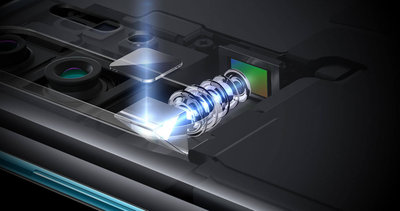
With folded camera optics, light absorbed by the image sensor is bent or "folded," allowing for increased optical zoom and improved image quality while maintaining a compact lens design appropriate for smartphones. The patent describes some of these advantages, saying that "the prisms provide a "folded" optical axis for the camera, for example to reduce the Z-height of the camera."
Periscope technology would allow for significantly increased optical zoom on iPhones, well beyond the current 2x and 2.5x limits on the iPhone 12 Pro and iPhone 12 Pro Max, respectively. Huawei's P40 Pro+ smartphone, for example, features a periscope lens with up to 10x optical zoom.
Apple's folded camera system includes two light folding elements, such as prisms, and an independent lens system located between the two light folding elements. This lens system includes an aperture stop and a lens stack. The lens system may be moved independently of the light folding elements to provide autofocus and optical image stabilization.
The shapes, materials, and arrangements of the refractive lens elements in the lens stack may be selected to capture high resolution, high quality images while providing a sufficiently long back focal length to accommodate the second prism.
The first iPhone models featuring a periscope camera lens system are expected to arrive in 2022 or 2023. Apple analyst Ming-Chi Kuoinitially said that the technology would come to the iPhone in 2022, but has since revised his expectation to say 2023. Other reports, such as from The Elec, have maintained that the periscope camera will arrive on at least some iPhone models in 2022.
Apple was initially said to have run into trouble developing its own periscope camera system because much of the technology is guarded by other patents, and thus was looking to purchase the components from the patent holders instead. Samsung, for example, owns the "ball-type actuator" technology used in many periscope lenses.
The granting of this patent may indicate that Apple had found a way to get around the reach of existing patents by developing its own technology with two light folding prisms, where only one prism would normally be used. This may avoid the need to license or buy components from patent holders while retaining the advantages of a periscope system.
Nevertheless, the patent serves as yet another indication that Apple is advancing its plans to bring a periscope camera to the iPhone to improve image quality and optical zoom capability, as well as potentially reduce the need for a rear camera bump.
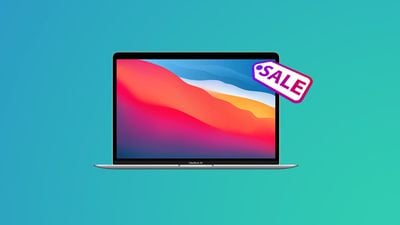
Amazon, B&H Photo, and Adorama today are discounting the M1 MacBook Air to match previous record low prices for both 256GB and 512GB storage options. To start, you can get the 256GB model for $899.00 today on Adorama, down from an original price of $999.00.
Note: MacRumors is an affiliate partner with Amazon. When you click a link and make a purchase, we may receive a small payment, which helps us keep the site running.
Only Silver and Space Gray are available at this price on Adorama. You can also find this sale on Amazon, with a $50 automatic coupon applied at checkout on the Gold and Silver colors. Gold is available to ship in one to two business days, and Silver will be in stock soon, according to Amazon.
Likewise, the 512GB version of the M1 MacBook Air is seeing a notable discount to $1,099.00, down from $1,249.00. This is a record low price for the notebook, and it's available in all colors. For Silver and Space Gray, you'll find an automatic coupon that will be applied to your order at the checkout screen. The same sale can be found at B&H Photo on the Gold model.
You can find even more discounts on other MacBooks by visiting our Best Deals guide for MacBook Pro and MacBook Air. In this guide we track the steepest discounts for the newest MacBook models every week, so be sure to bookmark it and check back often if you're shopping for a new Apple notebook.
In iOS 15, Apple has expanded support for drag and drop functionality across apps on iPhone, allowing you to move files, images, and selected chunks of text from place to place.
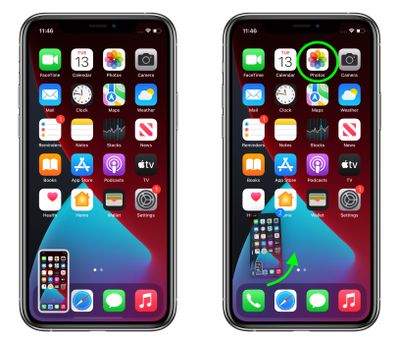
Cross-app drag and drop has actually been available on the iPad since 2017, but now Apple has extended the feature to the iPhone with iOS 15. In addition to apps, the multi-finger action also works with screenshots. The following steps show you how it works.
Take a screenshot in the usual way, by pressing the Side button and the Volume Up button at the same time.
Press and hold on the screenshot thumbnail in the bottom-left corner of the screen, and wait a moment for the white frame around it to disappear.
With another finger, tap the app that you want to use the screenshot in. We're opening the Photos app in our example, but you could open Files, Messages, Mail, Notes, or something else.
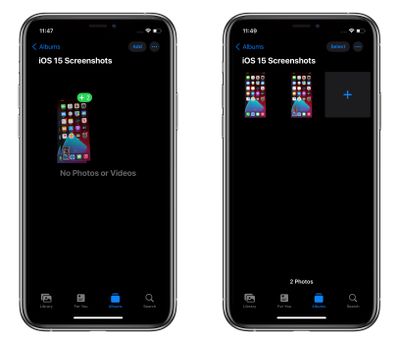
Navigate to where you want to use the screenshot. We're selecting a specific album we created, called "iOS 15 screenshots."
Move the screenshot into the area you want it, then let go with your finger to drop it in place. In our example, the screenshots are instantly saved in the specified location.
You may have noticed that we've dragged two screenshots in our example – that's just a "meta" result of capturing screenshots of the screenshot-taking process (the thumbnail of the earlier screenshot remains in the next). However, it also serves to highlight that drag and drop supports the selection of multiple items by tapping them with another finger.
It's worth noting that drag and drop results in duplication rather than movement of content, so the screenshot still gets automatically saved in your camera roll. But in iOS 15 you have the ability to immediately pick up a copy of the image and do something more specific with it, like save it to a newly created album, which is useful if your workflow involves lots of screenshots.
The first public beta of iOS 15 is available now, and the official release should come to all compatible iPhones in September.
Microsoft Edge has won over many users with its frequent feature updates and tight integration of Microsoft's design language with that of macOS. Underlining its commitment to continue raising the bar for the Chromium-based browser, the company today updated its feature roadmap to reflect what else is coming to Edge down the pipe.
Microsoft's "What's Next" page for Edge comes across as more of a checklist that its internal developers work from, and as such, some newly listed features, like Tab groups (coming this month) and the option to hide the titlebar (September 2021), have been known about for some time. Several previously unknown features have been revealed though, and one enterprising Reddit user has collated the new additions to the page, reproduced below.
Free form text boxes added to PDF documents: Starting with version 94, we are adding support for free form text boxes to PDF documents that you can use to fill in forms and add visible notes.
Launch PWA instead of browser with URL links: Starting in Microsoft Edge version 97, you can opt into launching the browser in a PWA rather than the full native browser.
Tab Groups: The ability to categorize tabs into user-defined groups helps you more effectively find, switch and manage tabs across multiple workstreams. To enable this, we are turning on tab grouping beginning with Microsoft Edge version 93.
Citation support added to Collections: Starting with Microsoft Edge version 95, we have improved the Collections experience, especially for students and researchers. Collections will start supporting citations and reading lists.
New policy to support more flexibility in Microsoft Edge startup: Beginning with Microsoft Edge version 94, enterprise administrators will have more flexibility in the options they choose in their startup policy. This will include the ability to specify the start page, add/remove additional pages, and Continue where you left off, while ensuring that the set of pages specified by policy are also opened.
Video Picture in Picture (PiP) from hover toolbar: Beginning in Edge version 93, it will become even easier to enter Picture in Picture (PiP) mode. When you hover over a supported video, a toolbar will appear that allows you to view that video in a PiP window.
Free form highlighting on PDFs: Starting in Microsoft Edge version 94, the PDF viewing and markup experience will be improved with the addition of freeform highlighters. This will allow you to highlight sections on PDFs that you may not have access to comment on as well as scanned documents.
Notification from web apps show as coming from the PWA: Beginning with Microsoft Edge version 94, notifications from progressive web applications PWAs will no longer show as coming from Microsoft Edge, but rather will display the name of the web app instead.
Hide the title bar while using Vertical Tabs: Get the extra few pixels back by hiding the browser's title bar, while in Vertical Tabs. Starting with Microsoft Edge version 93, you can go to edge://settings/appearance and under the Customize Toolbar section select the option to hide the title bar while in Vertical Tab mode.
Automatic translation for unknown languages: Starting in Microsoft Edge version 94, when you navigate to a page that displays in a language that is not one that you have set up as known, Microsoft Edge will automatically translate the content of the page to your primary language. We will then give you the option to return to the original page or disable further automatic translations.
Initial Preferences in Microsoft Edge: Deploying Microsoft Edge to your enterprise will become easier starting in version 93, with the addition of Initial preferences.
Improved handoff between IE mode and the modern browser: Starting with Microsoft Edge version 95, the transition between the modern browser experience and the IE mode experience will improve. Referrer headers, post data, forms data and request methods will now be forwarded properly across the two experiences.
Control-flow Enforcement Technology (CTE): Microsoft Edge will begin supporting an even safer browsing mode that uses hardware-dependent control flow for browser processes on supported hardware (Intel 11th Gen. or AMD Zen 3). You can disable CET by manipulating Image File Execution Options (IFEO) using group policy.
Family Safety: Improved protection on sites such as youtube.com: Families using Microsoft Family Safety will soon see improvements to Content filters. Parents will also have more peace of mind knowing filtering settings for Allowed sites and Blocked sites will be improved for sites such as youtube.com to prevent children from navigating to videos that aren't allowed.
Family Safety: Allow many EDU sites with a single click: Families using Microsoft Family Safety will soon see improvements to Content filters. When using "Only use allowed websites" mode, parents will see an option to add a list of educational sites to the allow list with one click.
Earlier this year, Microsoft released a Kids Mode for Edge that allows children to discover the web in a fun way while limiting their access to only approved sites. Prior to that, Microsoft brought vertical tabs to Mac, sleeping tabs, a password generator, new visual themes, and more.
The browser can be downloaded from the Microsoft Edge website. Are you a fan of Edge? Let us know in the comments.
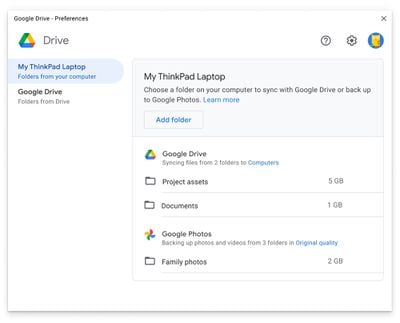
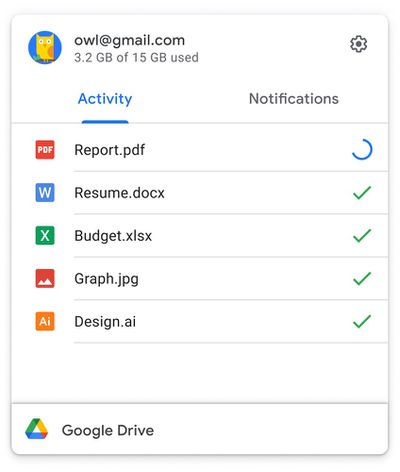
Earlier this year, Google announced that it planned to unify its Drive File Stream and Backup and Sync apps into a single Google Drive for desktop app. The company now says the new sync client will roll out "in the coming weeks" and has released additional information about what users can expect from the transition.
To recap, there are currently two desktop sync solutions for using Google Drive – Drive File Stream, which is for business users, and Backup and Sync, which is designed for personal use. The rollout of Google Drive for desktop will consolidate these two clients into a single app. Indeed, some Drive File Stream users on version 45 or later will already see the name change implemented.
Drive for desktop will perform the same functions as the two older apps – giving users access to their cloud-based files and photos directly on their desktop, and automatic syncing of files to the cloud in the background. From Google's blog post:
We're unifying these sync clients into the new Drive for desktop, bringing people the best and most used features from both Backup and Sync and Drive File Stream, including the ability to:
Upload and sync photos and videos to Google Photos and/or Google Drive
Sync external storage devices to the cloud, including flash drives and external hard drives
Mirror Drive files on your desktop, which stores your files on your local device and enables quicker access to your content.
Over the next few weeks, users on macOS and Windows will see prompts asking them to transition to Drive for desktop, which Google recommends doing before September 2021. After that date, users will see in-app alerts notifying them they'll need to transition to continue syncing their files.
More information about the Drive for desktop transition for business users can be found in Google's Workspace Updates blog post.
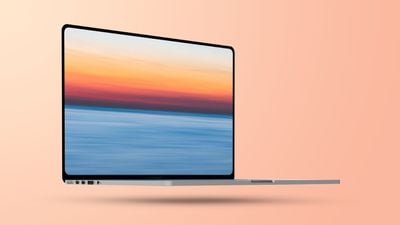
Apple is seemingly preparing for high demand for its upcoming redesigned 14-inch and 16-inch MacBook Pros, and, as a result, has reportedly enlisted a second supplier for its mini-LED displays ahead of their launch.
According to DigiTimes, Apple has added Luxshare Precision Industry as the second supplier for surface mounting technology (SMT) for mini-LED displays. Apple had previously only contracted SMT, or Taiwan Surface Mounting Technology as its supplier for SMT processes in the mini-LED 12.9-inch iPad Pro and the upcoming MacBook Pros.
Apple first introduced a mini-LED display in its high-end 12.9-inch iPad Pro this past April. While the new iPad was announced in April, shipments of the device did not begin until later in May due to high demand and difficult production yield rates. Fueled by a global chip shortage and the continued global health crisis, Apple and its suppliers have faced challenges the past year in maintaining production of new devices.
The upcoming MacBook Pros are expected to be in high demand thanks to several long-awaited features and changes. Alongside a more powerful Apple silicon chip, the new MacBook Pros are rumored to include the first major redesign to the MacBook Pro since 2016, including flat-edges, removing the Touch Bar, and additional ports.
DigiTimes says the new MacBook Pros are expected to launch in the fourth quarter of the year, which runs from October through December. The publication previously cited sources claiming an end-of-third-quarter launch for the new models, but early fourth quarter is more in line with industry expectations. Apple last year announced its M1 Apple silicon processor and an updated Mac mini, MacBook Air, and MacBook Pro at a digital event in November.
Apple aims to manufacture the batteries that will be used in its autonomous vehicle in the United States, rather than sourcing them from suppliers in other countries, according to a new report from DigiTimes.
Apple, which reportedly is mulling manufacture batteries for Apple Car in the US, may work with Taiwanese makers rather than Chinese ones, according to industry sources.
Taiwan-based Foxconn or Advanced Lithium Electrochemistry (Aleees), both of which plan to set up factories in the US, stand a chance of working with Apple on car batteries, the sources said.
Apple reportedly was looking to work with China's two largest battery suppliers, CATL and BYD, but Apple's insistence on using US-made batteries for Apple Car is making such partnerships seem unlikely, said the sources. None of these companies have confirmed the reports.
The report says that Foxconn, one of Apple's largest suppliers, and Advanced Lithium Electrochemistry, plan to set up plants in the United States, where the Apple Car battery production may take place. While the majority of Apple's products are assembled in China, many components are sourced from suppliers all around the world.
In the iPhone, for example, Apple uses glass made in Kentucky by Corning Glass, while other parts, such as the parts of the camera, are made by suppliers in Japan. With the Apple Car, which is still some years away, Apple is likely to take a similar approach to diversify its production supply chain.
AT&T today announced new features that will be provided to its Unlimited Elite customers, which is its highest-tier and most expensive data plan at $85 per month.
Starting this week, Unlimited Elite customers will have access to unlimited data that is not slowed down at peak times after hitting a specific data cap. AT&T says that all Unlimited Elite customers can continue to access high-speed data regardless of how much data they've used.
AT&T Unlimited Elite previously included 100GB of premium data, after which AT&T would temporarily slow data speeds at times of peak usage.
AT&T is also increasing mobile hotspot data from 30GB to 40GB, so Unlimited Elite customers can use more data when tethered. HBO Max, which is included in the Unlimited Elite plan, can now be streamed in 4K resolution.
Additionally, AT&T is building in ActiveArmor security, which is designed to automatically block fraud calls and notify users of spam risk alerts.
The Unlimited Elite plan includes unlimited talk and text, 5G access, unlimited texting to more than 120 countries, and six months of Stadia Pro access. These new features will be automatically rolling out to all Unlimited Elite customers this week.
Disney today told subscribers that it is raising the price for its ESPN+ standalone streaming service. Starting on August 13, the monthly price will increase from $5.99 to $6.99, and the yearly price will increase from $59.99 per year to $69.99 per year.
Prices for UFC pay-per-view matches will remain unchanged, and the bundle that includes Disney+, Hulu, and ESPN+ will not be increasing. That bundle will continue to be priced at $13.99 per month.
This is the second time that Disney has raised ESPN+ pricing, with the cost going up $1 to $5.99 for new subscribers last year.
Disney recently inked a deal with the National Hockey League for 75 exclusive games, and it also acquired rights to live stream Wimbledon. As of April, ESPN+ had close to 14 million subscribers.
Note: MacRumors is an affiliate partner with ESPN+. When you click a link and make a purchase, we may receive a small payment, which helps us keep the site running.
California State University today announced the launch of a new CSUCCESS program that is designed to provide equitable opportunities to students through the use of technology.
The first phase of the initiative will see CSU providing a 64GB iPad Air, Apple Pencil, and Apple Smart Keyboard Folio to all incoming first year and transfer students at eight participating campuses in Fall 2021. Students will need to register to participate, and the CSUCCESS website says that with a keyboard attachment and pencil, the iPad Air is "comparable to a laptop."
CSU Chancellor Joseph I. Castro said that the initiative will "assure that students have immediate access to innovative, new mobile tools they need to support their learning," with the iPad Air serving as a "powerful tool" that will prepare students for their future careers.
Susan Prescott, Apple's Vice President of Education and Enterprise Marketing, said that Apple is "thrilled" about the iPad Air rollout at CSU campuses.
"At Apple, we believe that education is a powerful force for equity and opportunity, and that technology can empower all students to achieve their goals," said Susan Prescott, Apple's Vice President of Education and Enterprise Marketing. "We're thrilled that iPad Air and the incredible education apps in the App Store will be central to the experience at CSU campuses across California, and will play a part in the learning and career development of students from Humboldt to San Marcos."
Students at the CSU campuses located in Bakersfield, Channel Islands, Fresno, Humboldt, Los Angeles, Maritime Academy, Northridge and San Marcos will be participating in the first phase of the program.
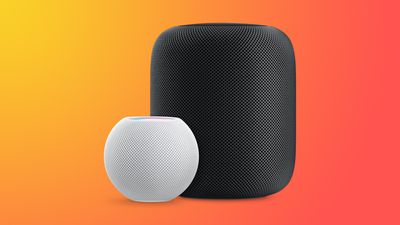
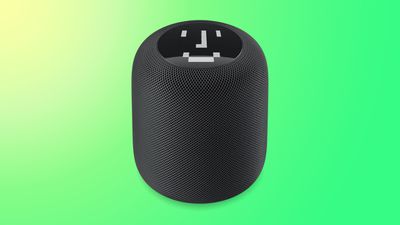
Apple today released a new beta version of the HomePod 15 software, and it appears that the update introduces Lossless Audio support for the HomePod and the HomePod mini.
Back in June, Apple added higher-quality Lossless Audio and Spatial Audio support to Apple Music, but at launch, Lossless Audio was not available on the HomePod or the HomePod mini. Apple in a support document clarified that Lossless Audio would come to the HomePod and HomePod mini in the future, and it appears the higher quality audio will be available this fall when the new HomePod 15 software is available to the public.
According to 9to5Mac, those who have the HomePod 15 beta software can enable Lossless Audio by opening up the Home app, tapping the Home icon in the upper left corner, selecting "Home Settings" and then tapping the user profile.
From there, scroll down to "Media" and select the "Apple Music" tab, toggling on "Lossless Audio." When playing a song that supports Lossless quality, the Apple Music player will feature a Lossless icon to make it clear that you're listening to the Lossless tier.
It is not clear if there are other features in the HomePod 15 beta, but the prior updates have led to complaints about sudden failures and overheating, which may have been caused by the new software.
The HomePod 15 beta is available on an invite-only basis from Apple and it is not widely available to developers or public beta testers.
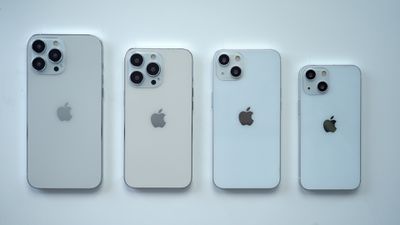
Apple's 2021 iPhone models aren't expected to launch until September, but thanks to rumors, CAD drawings, and renderings, we already know what to expect. Dummy models are now circulating, and we got our hands on a set to give MacRumors readers an overview of the leaks that we've been seeing for months now.
We have dummy models of the iPhone 13, iPhone 13 mini, iPhone 13 Pro, and iPhone 13 Pro Max, and mockups like these are often created for case manufacturers. There's a lot of money in being first to release a case for a new device, with dummy models created based on specifications and details that leak from Apple's manufacturing partners.
In our experience, dummy models are most often accurate and are generally reliable representations of new devices that Apple plans to release. These dummy models in particular appear to line up with many of the rumors that we've heard about the new iPhones. That said, there's always a possibility that some of these design tweaks and changes could be off.
We're not expecting any major design changes this year, and the dummy models look similar to the iPhone 12, 12 mini, 12 Pro, and 12 Pro Max, coming in the same sizes. We may see some very small differences in thickness in some of the models, but for the most part, the iPhone 13 lineup will look a lot like the iPhone 12 lineup.
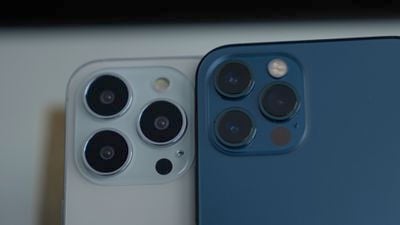
iPhone 12 Pro vs. iPhone 13 Pro
Apple is rumored to be cutting down on the size of the notch in the iPhone 13 lineup and there are changes that are noticeable on the dummy model. The microphone has been relocated to the top bezel of the device, which is perhaps the design change that will allow for a slimmed down front-facing camera module. The dummy models are designed for case makers and don't have an accurate display setup that demonstrates notch size, so we have to rely on rumors for that.
The general body design may be the same, but there are notable changes to some of the camera designs. Apple is introducing some new camera features, such as Sensor-Shift Stabilization across the iPhone 13 lineup as well as improvements for the iPhone 13 Pro, so the rear camera setups of these dummy models are not identical to the iPhone 12 lineup.
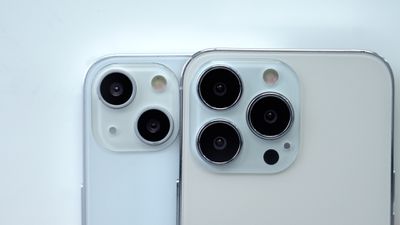
iPhone 13 dummy and iPhone 13 Pro dummy
Apple is bringing the iPhone 13 Pro in line with the iPhone 13 Pro Max, so the camera bump is much bigger than the iPhone 12 Pro camera bump. It's on par in size with the camera bump of the iPhone 13 Pro Max, so iPhone 12 Pro cases are not going to fit the iPhone 13 Pro.
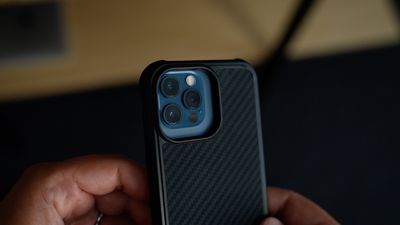
That's abundantly clear when putting an iPhone 13 Pro case on an iPhone 12 Pro. We have iPhone 13 cases from Armadillotek that are designed using some of the same specifications that likely went into the dummy models, and the camera cutout is much larger.
iPhone 13 Pro case on on iPhone 12
The iPhone 13 Pro Max looks nearly identical to the iPhone 12 Pro Max, though the camera bump is a bit larger. The dummy model has different lens sizes with slightly larger lenses, but other than that, there are no changes. Case makers don't necessarily need spot-on lens size accuracy for developing a case, but there could be some changes to the lenses as some camera upgrades are expected.
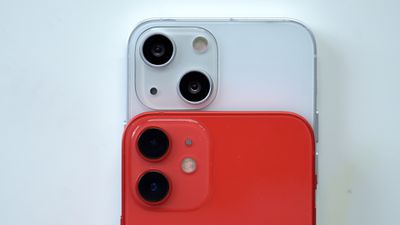
As for the iPhone 13 and iPhone 13 mini, Apple is rearranging the camera lenses into a diagonal layout that features a flash at the top right of the camera module and a microphone at the bottom left, with the Wide and Ultra Wide lenses positioned diagonal to one another. This may be a change introduced to support the rumored Sensor-Shift Stabilization feature, which is currently limited to the Pro models.
iPhone 12 vs. iPhone 13
The dummy models suggest the iPhone 13 will feature a repositioned SIM tray and slight changes to the location of the volume buttons, while the SIM tray may be slightly shifted on other models.
We may not be getting major design changes this year, but Apple is rumored to be adding improved 5G, a faster A15 chip, and a 120Hz ProMotion display for Pro models, so there's still a lot to look forward to in the iPhone 13 lineup.
Apple today released a new version of the HomePod 15 beta software that's designed to go along with the iOS 15, iPadOS 15, tvOS 15, and macOS Monterey betas.
The new software comes as multiple HomePod owners running the original HomePod 15 beta have complained of sudden failures and heat issues that have rendered their HomePods non-functional.
HomePod beta software is distributed on an invite-only basis to select users, so there is no update that can be downloaded by developers or the general public.
There are ways to get the HomePod software if you're not a part of Apple's testing group, but because it's designed for a small number of users on an invite-only basis, we do not recommend using any alternate method to obtain the update.
It is beta software and can be unreliable, as the multiple reports of hardware failures demonstrate. These issues have also affected those with the 14.6 release software, but there does not appear to be a new public version of the HomePod software at this time.
The release notes for the HomePod 15 update do not offer any information and do not indicate whether the failure issue has been addressed.
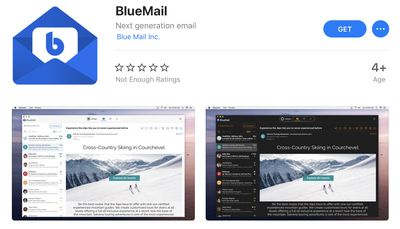
Apple has been fighting an antitrust lawsuit against Blix, the developer of BlueMail, an app that was removed from the App Store in June 2019 after violating Apple's App Store guidelines.
Blix accused Apple of manipulating search results in its App Store to suppress third-party competition, and it also claimed that Apple had copied its patented messaging technology for the Sign In with Apple feature.
Blix had its lawsuit dismissed in December, but then refiled. Apple asked the judge to toss out the case, and the motion was granted, with the case being dismissed a second time on Friday. In a statement, Apple said that Blix had "alleged false conspiracy theories and anti-competitive claims," and that the judge's decision confirms that Apple has "consistently acted legally."
"Blix, a member of the Coalition for App Fairness and frequent complainer to press and regulators, alleged false conspiracy theories and anti-competitive claims against Apple. The court correctly rejected these claims and threw out Blix's case. This case demonstrates that Apple has consistently acted legally by introducing its own innovative products and features that promote competition."
According to the judge, Blix was unable to prove in court that Sign In with Apple restricted competition or that Apple's actions were harming competition.
Apple's current policy of requiring Sign In With Apple whenever any SSO product is offered permits new competitors and competition (including Blix) because it does not foreclose the use of other SSOs. Allowing competition is the opposite of unlawfully constraining competition, so, again, Blix has failed to state a claim.
Blix is one of several major developers that have joined the anti-Apple Coalition for App Fairness, a group that is against Apple's alleged anti-competitive policies and App Store fees. Other members include Spotify, Basecamp, Corellium, Epic Games, and Tile, all companies that have also had legal issues with Apple.
Update: In a statement, Blix said that it is disappointed by the court's decision.
Blix accurately described Apple’s monopoly power in mobile OS, and Apple chose not to contest that in court. At the same time, we are disappointed by the court's decision to somewhat signal that Apple can put sand in the gears to competitors and change its developer guidelines as it sees fit. This includes kicking BlueMail off the App Store for 8 months, stonewalling BlueMail for many weeks a year later and various other bullying tactics. These are facts that Apple did not refute in court.
We are glad that the fairness movement we’ve started for app developers to speak out the truth against Apple continues to gain momentum and we have high hopes that the Biden administration, the EU Commission, Australia and other countries will limit Apple's disproportionate power.
Blix will continue to fight for the fundamental and essential app developers’ rights and will stand firm in allowing fair and balanced competition. The digital markets would be much more innovative had Apple allowed for true competition. The ability to innovate by small businesses continues to be at stake.
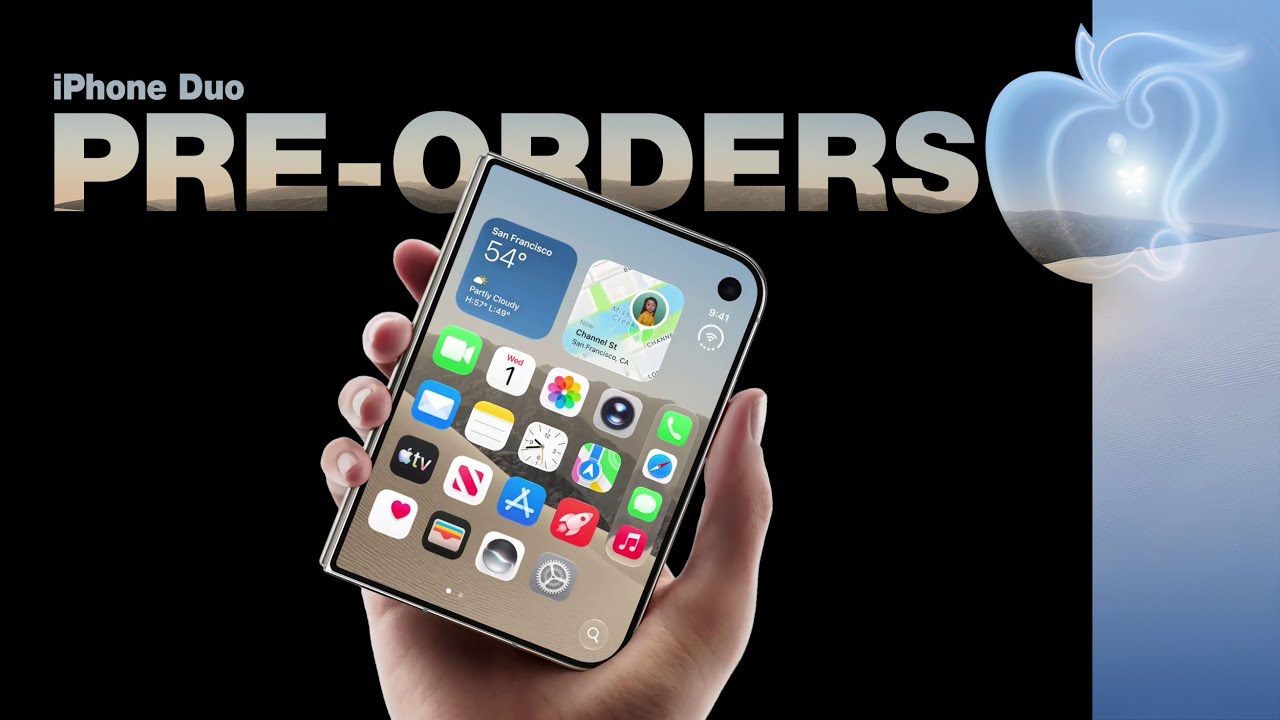
Apple's first foldable iPhone, with a book-style design featuring a 5.4-inch outer display and a 7.6-inch inner display with a minimal crease down the middle.


 Note: MacRumors is an affiliate partner with some of these vendors. When you click a link and make a purchase, we may receive a small payment, which helps us keep the site running.


 Note: MacRumors is an affiliate partner with Amazon. When you click a link and make a purchase, we may receive a small payment, which helps us keep the site running.