













Apple just released the second-generation AirTag, five years after the original model debuted. There's been a lot of time for Apple to come up with improvements, so we thought we'd test out the new model to see what's changed, and whether it's worth upgrading from the first-generation AirTag.
Unfortunately, Apple didn't update the design of the AirTag 2, so it looks almost identical to the original model. The only thing that's changed is the text on the back, which is now in caps and includes wording about the IP67 waterproofing, and that doesn't count as any kind of design change.
It would have been nice to have different design options or a rechargeable battery, but the AirTag is the same coin shape and it still uses CR2032 batteries. Apple didn't mention anything about battery life improvements, so the AirTag 2 still lasts about a year before you need to swap it out.
While there aren't external updates, Apple did boost connectivity. The AirTag 2 uses an upgraded version of Bluetooth and it has a second-generation Ultra Wideband (UWB) chip, so it can be tracked from further away over Bluetooth, and the close-range Precision Finding feature works over longer distances.
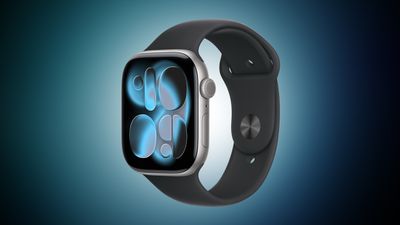
According to Apple, Precision Finding works from up to 50 percent further away, so when you lose your AirTag indoors or are close to it, a UWB-enabled iPhone (the iPhone 11 and later) can lead you right to it. Apple also enabled Precision Finding on the Apple Watch Series 9 and later and the Apple Watch Ultra 2 and later, which is super useful. You can't use an Apple Watch to locate an original AirTag nearby, and it's probably the best addition to the second-generation version.
You can even add a quick access toggle for Precision Finding to the Apple Watch for instant access to tracking down an AirTag without digging through menus. It's a much more natural way to find your items.
In our testing, Precision Finding on the Apple Watch worked reliably, tracking down an AirTag indoors even with walls and furniture in the way. The interface is the same as the Precision Finding interface on iPhone, just scaled down to an Apple Watch size. You'll get a directional arrow and distance to help you accurately track down the AirTag.
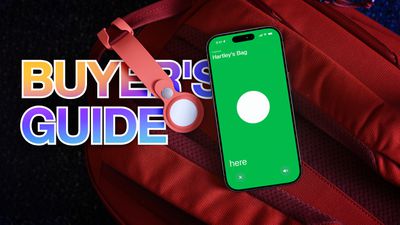
When pitting the original AirTag against the AirTag 2 with iPhone Precision Finding, the AirTag 2 was clearly superior. Both AirTags were tucked inside a backpack, and placed out of line of sight.
The original AirTag had a hard time with walls and objects, and required us to be closer to the backpack to get a connection. The AirTag 2 picked up signal from much further away, and kept the signal as we walked toward the backpack. It even worked with the AirTag 2 on a different floor, and kept its connection in a large office building.
Apple also updated the internals of the AirTag 2 to upgrade the sound, and it is noticeably louder. It is a pretty big improvement in audibility, and you will notice the difference between the two. The sound is sharper and easier to pinpoint, and it is much less likely to blend into background noise. It makes it easier to find items, but it also improves the AirTag 2's anti-stalking capabilities. It's harder to tuck an AirTag away and mute its sound, and Apple also made the speaker module more difficult to remove with additional adhesive.
The AirTag 2 is still priced at $29, with Apple offering a pack of four for $99, so it's a solid deal, especially with the tracking improvements. For most people, it's probably not worth upgrading to an AirTag 2 if you already have an original AirTag, but if you're someone that heavily relies on AirTags on a regular basis, it could be a good idea to pick up a couple of the second-generation versions.
 Apple Passeig de Gràcia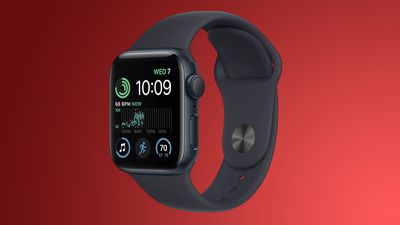



 Note: MacRumors is an affiliate partner with Amazon. When you click a link and make a purchase, we may receive a small payment, which helps us keep the site running.