Apple today released the seventh beta of iOS 13, and an image hidden within the update suggest Apple is going to hold an event to show off new iPhones on Tuesday, September 10.
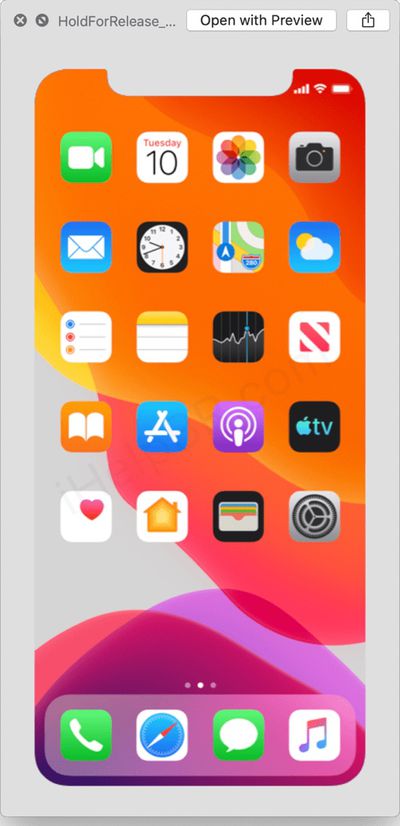
An iOS 13 screenshot in the beta, covertly named "HoldForRelease," features the Calendar app with the date set to Tuesday the 10th.
The screenshot was originally found by iHelpBR, and the site points out that a similar screenshot was found last year ahead of the September 12 iPhone event with a September 12 date.
September 10 is a very likely date for the iPhone event based on the dates of past iPhone events, and we would be surprised were it not held on that date. Almost all iPhone events in recent history have been held during the second week of September, and generally on Tuesdays.
Last year's Wednesday, September 12 event was an anomaly because September 11 fell on a Tuesday and Apple prefers Tuesday or Wednesday to Monday in order to give members of the media time to travel.
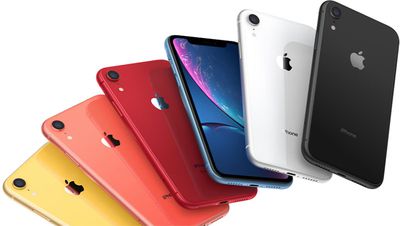
We've also heard the September 10 date bandied about from multiple sources that have contacted us. All three new iPhones are expected to debut at the event and see a release shortly after. Last year, the iPhone XS and XS Max were released in September ahead of the iPhone XR, which came in October.
With the iPhone event likely to be held on September 10, pre-orders for the new devices could take place on September 13 with a launch to follow on September 20. Apple often releases iOS updates two days ahead of when new iPhones become available, so iOS 13 could be released on September 18.
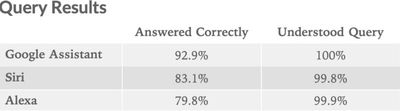
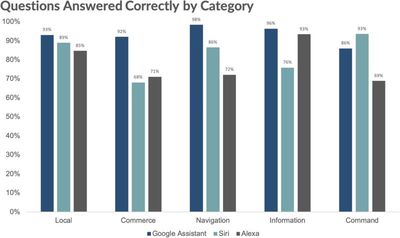
In an annual test comparing Google Assistant, Siri, and Alexa on smartphones, Loup Ventures' Gene Munster found that Siri was able to correctly answer 83 percent of questions, beating Alexa but trailing behind Google Assistant.
Munster asked each digital assistant 800 questions during the test to compare how each one responded. Alexa answered 79.8 percent of questions correctly, while Google Assistant answered 92.9 percent of questions correctly.
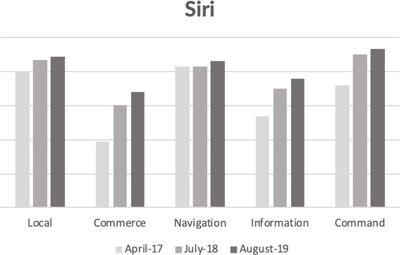
Compared to last year, Siri has seen improvement. During the July 2018 test, Siri answered 79 percent of questions correctly compared to the 83 percent of questions answered right this time around. Alexa last year was at 61 percent while Google Assistant was at 86, so there have been digital voice assistant improvements across the board.
This test covered smartphones specifically, comparing iPhones and Android devices. Munster says that smartphones were isolated from smart speakers because while underlying technology is similar, "use cases vary." Siri was tested on an iPhone running iOS 12.4, Google Assistant on a Pixel XL, and Alexa in the iOS app.
Questions were based on five categories and all assistants were asked the same 800 questions. Each question set was designed to "comprehensively test a digital assistant's ability and utility." Some of the sample questions across each of the categories:
Local - Where is the nearest coffee shop?
Commerce - Order me more paper towels.
Navigation - How do I get to Uptown on the bus?
Information - Who do the Twins play tonight?
Command - Remind me to call Jerome at 2 pm today
Siri did best in the command, local, and navigation categories, faring less well in the information and commerce categories. Siri actually won out in the command category, but trailed behind Google Assistant in other categories.
Siri continues to prove more useful with phone-related functions like calling, texting, emailing, calendar, and music. Both Siri and Google Assistant, which are baked into the OS of the phone, far outperformed Alexa in the Command section.
Munster says that the continued rate of improvement "continues to surprise" based on the notable improvements that each voice assistant has demonstrated over the course of the last few years.
In the future, Loup Ventures expects to see further improvements from extending the feature sets of each voice assistant.
Apple today released the seventh beta of iOS 13 to developers, bringing new bug fixes and refining iOS 13 and iPadOS features introduced in previous betas.
Now that we're up to the seventh beta, changes and tweaks are getting much more minor, but there are still a few new things worth noting.
- Folders - Folder backgrounds are once again gray, with changes made in the previous beta reverted.
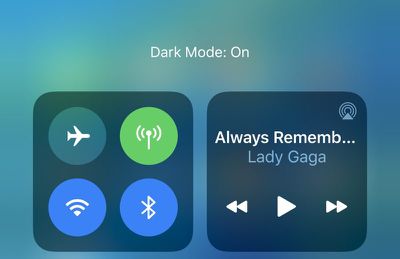
- Dark Mode - The Dark Mode Control Center widget wording has been tweaked. Instead of saying Light Appearance or Dark Appearance, it now says Light Mode or Dark Mode.
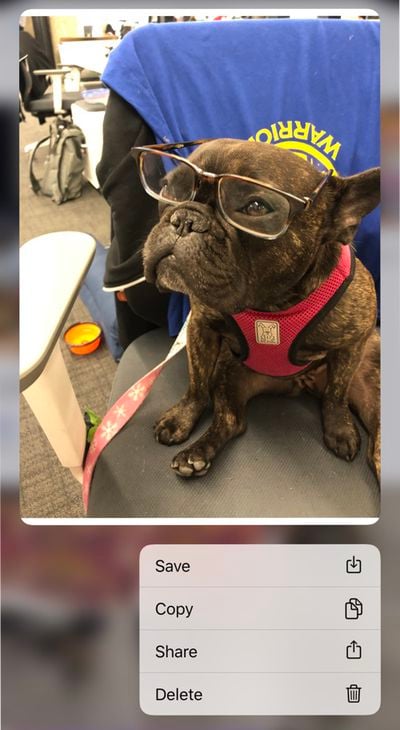
- Deleting Attachments in Messages - You can once again delete photo and other attachments from Messages. In a conversation, tap on the "i" and long press on a photo, link, or document to bring up a menu to delete it.
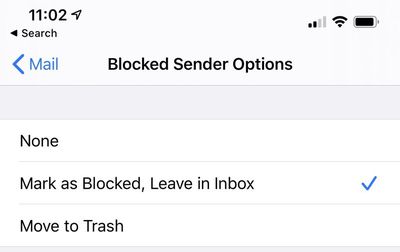
- Blocked Senders in Mail - There are new options to determine what to do with messages from blocked senders. You can move them to the trash or mark as blocked and leave them in the inbox (the default option).
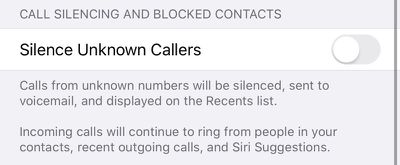
- Silence Unknown Callers - When toggling on Silence Unknown Callers, there's new text in the Phone app that lets you know incoming calls will continue to ring from people in your contacts, recent outgoing calls, and Siri Suggestions.
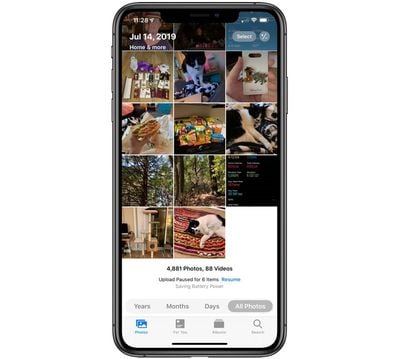
- All Photos View - When viewing "All Photos" in the main Photos tab in iOS 13, Photos are displayed in a grid three across instead of the smaller thumbnails that were available before by default.
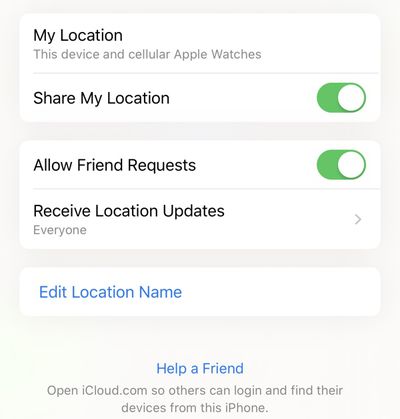
- Find My - Notify When Found is now working in the Find My app in this beta. There's also a new "Help a Friend" option in the Me tab that opens up iCloud.com so a friend can locate a lost device.
- Do Not Disturb - Do Not Disturb settings now sync properly between iPhone and Apple Watch.
Know of a feature that's new in iOS 13 beta 7 that we left out? Make sure to let us know in the comments and we'll update this article. For more on what's new in iOS 13, make sure to check out our iOS 13 roundup.
Apple today seeded the seventh betas of iOS 13 and iPadOS to developers for testing purposes, a week after releasing the sixth betas and two months after unveiling the new operating system at the Worldwide Developers Conference.
Registered developers will need to download the profile for the iOS 13 and iPadOS betas from Apple's Developer Center. This beta, like earlier betas, can be downloaded over-the-air once the proper profile has been installed.
Apple split iOS 13 and iPadOS into separate updates in 2019, one designed for iPhone and one designed for iPad. iPadOS is identical to iOS 13 in almost every way, though there are some iPad-specific features such as new multitasking capabilities. For the most part, the two operating systems share the same features.
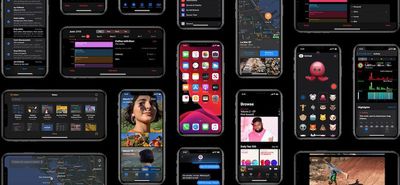
iOS 13 is a huge update with a long list of new features. Perhaps the most noticeable outward-facing change is a systemwide Dark Mode that changes the entire look of the operating system from light to dark, darkening everything from system elements to apps.
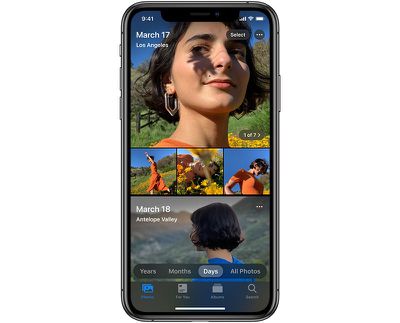
Apple overhauled the Photos app, introducing a new Photos tab that curates your entire Photos library and shows you a selection of highlights organized by day, month, or year, and there are revamped Photo editing tools.
For the first time, you can edit video right in the Photos app, cropping, rotating, applying filters, and adjusting lighting and color. There's a new High-Key Mono lighting effect, and for Portrait Lighting in general, intensity can be adjusted.
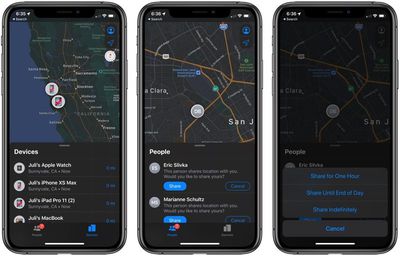
There's a less obtrusive volume HUD, a new Find My app that combines Find My iPhone and Find My Friends and lets you track your devices even with they don't have an LTE or WiFi connection.
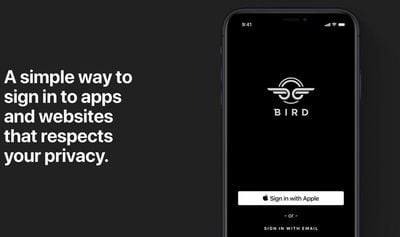
A Sign In with Apple feature (not yet active) gives you a convenient and data safe way to sign into apps and websites, providing an alternative to Facebook and Google sign in options. Apple's even able to generate single-use randomized email addresses so you don't have to give your real info to apps and websites.
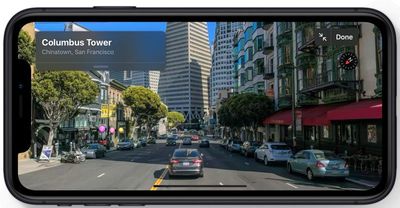
Maps features a new street-level "Look Around" mode and a Collections feature for making lists of places, Reminders has been entirely overhauled to make it more functional, there's a profile option in Messages along with new Memoji and Animoji stickers, and Siri has a new voice.
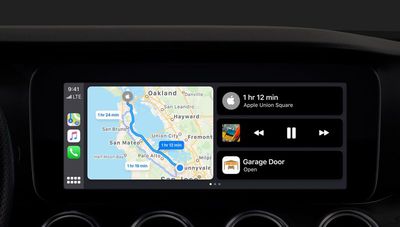
CarPlay in iOS 13 has been overhauled with a new look, multiple sets of AirPods (or Powerbeats Pro) can be connected to the same phone so you can share music with a friend, Siri on HomePod can detect multiple voices for multi-user support, and HomePod also supports Handoff.
There are a ton of additional new features and changes coming in iOS 13, and for a full rundown of what you can expect, you should check out our iOS 13 roundup.
Each new beta brings new features and changes to iOS 13, and the sixth beta added a Dark Mode toggle to Control Center, changes to folder transparency, updates to some privacy warnings, new splash screens, and more.
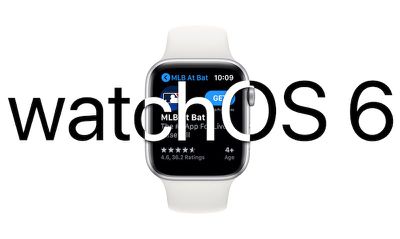
Apple today seeded the seventh beta of watchOS 6, the software that runs on the Apple Watch. The new beta comes a week after the sixth beta and two months after Apple first unveiled the new watchOS update at the Worldwide Developers Conference.
To install the watchOS 6 beta, you'll need the proper configuration profile, which can be obtained through the Apple Developer Center. Once the profile is in place, the beta can be downloaded using the dedicated Apple Watch app on the iPhone by going to General > Software Update.
Installing the software requires the Apple Watch to have 50 percent battery. It also needs to be put on a charger and it has to be in range of the iPhone.
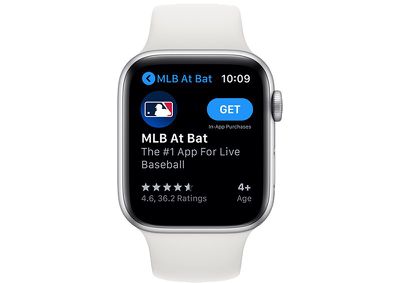
watchOS 6 is a major update that offers up a long list of new features. First and foremost, there's an App Store right on the Apple Watch, so you can find and download new Apple Watch apps on your wrist.
Apple Watch apps no longer need to have an iPhone component, which means developers can create standalone Apple Watch apps for the first time. Apps are able to take advantage of new APIs so you'll be able to do things like follow along with a workout or listen to streaming music from third-party services.
Since Apple Watch apps are now independent of apps on the iPhone, you can now remove some built-in apps from the Apple Watch, a feature that was enabled in beta 3.
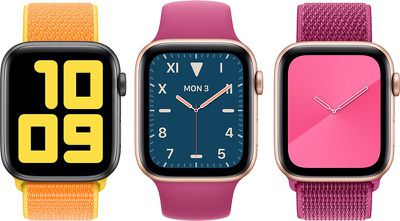
There are several new watch faces in watchOS 6, including Numerals Mono and Duo with huge numbers, Modular Compact, a Gradient watch face that shifts over the course of a day, a Solar Dial watch face that visualizes the sun in a 24 hour path around the dial, and the California watch face with a mix of standard numbers and roman numerals.
A new Taptic Chimes feature provides a silent touch on the wrist at every hour, and if sound is turned on, you'll hear an audible chime. You can also hold two fingers on the Apple Watch's display to hear the time spoken out loud.
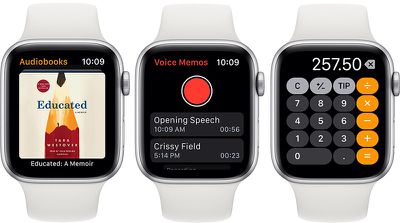
There are new Audiobooks, Voice Memos, and Calculator apps, along with a new Noise app that warns you if you're exposed to sound that's too loud and a new Cycle Tracking app for period tracking. Activity Trends, visible on the iPhone, are also available to chart your fitness progress and make sure your fitness trends are improving.
New complications are available for wind speed, chance of rain, and the new Noise app, plus there's a Voice Memos complication for recording a memo quickly, a cellular strength complication, and a complication for the Calculator that opens up the app.
Siri can now provide full web search results right on the watch when asked a question, and for Mac users, the Apple Watch can now approve Mac security prompts.
When it launches in the fall, watchOS 6 will be available on all Apple Watch models with the exception of the original Apple Watch, released in 2015. For more on what's new in watchOS 6, make sure to check out our watchOS 6 roundup.
Apple today seeded seventh beta of an upcoming tvOS 13 update to developers, one week after seeding the sixth beta and two months after unveiling the tvOS 13 software at the Worldwide Developers Conference.
Designed for the fourth and fifth-generation Apple TV, the new tvOS 13 developer beta can be downloaded onto the Apple TV via a profile that's installed using Xcode.
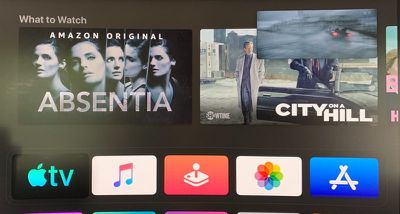
tvOS 13 introduces an updated Home screen aimed at making it easier to discover new content. Apps are now able to play full-screen video previews right on the Home screen, similar to Netflix.
Multi-user support is available for the first time, letting more than one profile exist on the Apple TV so each family member can have their own customized Apple TV interface with separate recommendations, music playlists, and Watch Now lists.
Switching between profiles can be done with the new Control Center, which offers up profiles, the time and date, search, a Now Playing widget, AirPlay controls, and a sleep option.
tvOS 13 gets the Apple TV ready for Apple Arcade, Apple's new gaming service that's coming to the Apple TV, iOS, iPadOS, and macOS later this year. Apple Arcade will offer unlimited access to more than 100 new and exclusive games, for one subscription fee.
As part of the Apple Arcade preparations, Apple has implemented support for the Xbox Wireless Bluetooth Controller and the PlayStation DualShock 4 Controller, both of which can be connected to an Apple TV over Bluetooth.
There are new under the sea themed screensavers created in partnership with the BBC Natural History Unit, which also created "Blue Planet." There's also a new Picture-in-Picture feature. Picture-in-Picture lets you continue to watch TV shows or movies while using a different app, adjusting settings, or otherwise navigating through the tvOS 13 operating system.
tvOS 13 is available to registered developers and public beta testers at this time and will see an official public launch this fall alongside iOS 13, iPadOS, macOS Catalina, and watchOS 6.
What's new in beta 7: In the new tvOS 13 beta, full screen trailers for movies and TV shows now play in the background of the Apple TV app. This was previously limited to Apple Music, but is a feature that was shown off at WWDC.
There are a few new deals that have popped up today, including Twelve South's new back-to-school sale, the latest discounts from Anker, and more. We've rounded up each sale below, so be sure to browse them all before they expire.
Anker
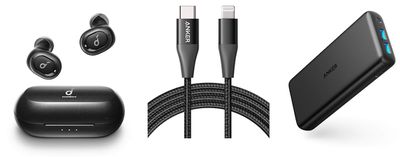
As always, Anker has a slew of bargains happening on Amazon this week, with sales on power banks, Bluetooth speakers, wireless chargers, and more. These accessories have had their discounts applied automatically, so discount codes are not required (although an on-page coupon sometimes needs to be clipped).
Note: MacRumors is an affiliate partner with these vendors. When you click a link and make a purchase, we may receive a small payment, which helps us keep the site running.
On Twelve South, you can save on a variety of the company's best accessories during its new sitewide sale. The sale offers a 15 percent discount sitewide on TwelveSouth.com with the coupon code 12SchoolInSession.
Twelve South has rounded up some ideas that you can use the code on if you're going back to school soon. This includes its new StayGo USB-C hub, the Curve for MacBook, Journal CaddySack, BookBook vol. 2 for MacBook, and more.
Pad & Quill
Pad & Quill has its own sale this week, offering up to 25 percent off its office and work space accessories. This includes leather bags and briefcases, iPhone cases, iPad Pro cases, MacBook Pro cases, and even leather desk pads.
The retailer also has up to 50 percent off select items, including cases for the iPhone and iPad. Pad & Quill said that these discounts are being offered for a limited time, so be sure to head to the company's website and shop the sales before they expire.
AT&T iPhone Offers
AT&T is offering a few new deals on iPhones this month, including the iPhone 7, iPhone 8, and the newer iPhone XR, XS, and XS Max models.
To start, you can get the 32GB iPhone 7 for $0 for 30 months when bought on a qualifying installment agreement with a wireless plan. The same goes for the 64GB iPhone 8.
AT&T is also holding a limited time BOGO event, where you can get the iPhone XR at no extra cost, if you pay for another iPhone in full. Both devices must be bought on a qualifying installment plan with an eligible AT&T unlimited plan.
The iPhone XR will be free after bill credits are dispersed over 30 months. You can also get a $300 Visa Reward Card when purchasing a new line of service and any iPhone 8, 8 Plus, XR, X, XS, or XS Max priced up to $1,449.99 (excluding the 64GB iPhone 8). Head to AT&T's cell phones online storefront to browse every smartphone and special offer going on right now.
Be sure to visit our full Deals Roundup for more information on the latest Apple-related sales.
Apple today announced that its retail store in Zurich, the most populous city in Switzerland, will be moving at the end of the month.
Apple's upcoming store at Rennweg 43 via MacPrime
As noted by Swiss blog MacPrime, Apple Bahnhofstrasse will be relocating to Rennweg 43 on Saturday, August 31, just down the street from its current Bahnhofstrasse 77 address. The new store will still be just steps away from Bahnhofstrasse, a main downtown street in Zurich known for shopping.
Apple Bahnhofstrasse originally opened in 2009. Apple has three other stores in Switzerland in Basel, Geneva, and the outskirts of Zurich.
Apple is searching for a large office in Manhattan with between 200,000 and 500,000 square feet of space, according to New York real estate site The Real Deal. One source cited in the report believes Apple may end up securing up to 750,000 square feet of space, suitable for up to 5,000 employees by rule of thumb.
55 Hudson Yards render
The report, highlighted by Cult of Mac, claims Apple has considered a range of properties such as 50 Hudson Yards, One Madison Avenue, and the under-redevelopment James A. Farley Building on Eighth Avenue.
While other tech giants like Google, Facebook, and Amazon each have a sizable presence in New York City, Apple has leased a smaller 45,000-square-foot office on Fifth Avenue in the Flatiron District since 2011. Apple has also rented a six-story loft mansion on Duane Street in Tribeca to hold briefings with the media.
Earlier this year, the New York Post reported that Apple was in advanced talks for about 60,000 square feet of space at 55 Hudson Yards.
Update: Corephotonics has filed an additional lawsuit against Apple in August 2019, alleging that the dual-lens camera systems in the iPhone 7 Plus, iPhone 8 Plus, iPhone X, iPhone XS, and iPhone XS Max infringe on 10 of its patents.
Original story from November 2017 follows.
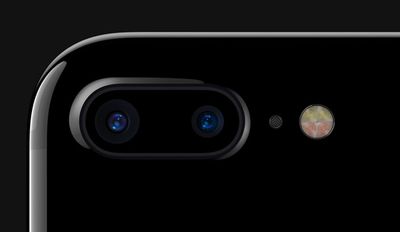
Corephotonics, an Israeli maker of dual-lens camera technologies for smartphones, has filed a lawsuit against Apple this week alleging that the iPhone 7 Plus and iPhone 8 Plus infringe upon four of its patents.
The patents, filed with the U.S. Patent and Trademark Office between November 2013 and June 2016, relate to dual-lens camera technologies appropriate for smartphones, including optical zoom and a mini telephoto lens assembly.
Corephotonics alleges that the two iPhone models copy its patented telephoto lens design, optical zoom method, and a method for intelligently fusing images from the wide-angle and telephoto lenses to improve image quality.
iPhone X isn't listed as an infringing product, despite having a dual-lens camera, perhaps because the device launched just four days ago.
Corephotonics showed off some of its technologies at Mobile World Congress last year. In particular, it demonstrated software capable of combining the images of two separate camera lenses to create a more detailed picture, including the ability to optically zoom up to 5x with no moving parts.
Corephotonics, founded in 2012, describes itself as a pioneer in the development of dual camera technologies for mobile devices. The company's founders, led by Tel Aviv University professor Dr. David Mendlovic, have decades of experience in the fields of optics and miniature digital cameras.
In its complaint, a copy of which was reviewed by MacRumors, Corephotonics said one of its first acts as a company was to contact Apple. Despite receiving "many encouraging reports" and "positive feedback" from the iPhone maker, the companies never reached a license of any kind.
As one of its first acts as a company, Corephotonics reached out to Apple in the hopes of establishing a strategic partnership. Corephotonics received many encouraging reports and positive feedback from Apple about its technology, but the parties never concluded a license to the Corephotonics technology.
Corephotonics said Apple proceeded to release the iPhone 7 Plus with a dual-lens camera in September 2016, and has been willfully infringing upon its patents since that time. Corephotonics says Apple has knowledge of its patents, one of which the iPhone maker allegedly submitted as prior art in a patent application.
Corephotonics even claims Apple's "lead negotiator" said it "would take years and millions of dollars in litigation" before Apple might owe anything.
In fact, after one failed effort to negotiate a license, Apple's lead negotiator expressed contempt for Corephotonics’ patents, telling Dr. Mendlovic and others that even if Apple infringed, it would take years and millions of dollars in litigation before Apple might have to pay something.
It's worth noting that Apple acquired another Israeli camera company, LinX Imaging, back in 2015. LinX also specialized in creating multi-aperture camera equipment for mobile devices, and Apple presumably incorporated some of its technologies into the iPhone 7 Plus and iPhone 8 Plus cameras.
Corephotonics is seeking damages of an amount to be proven in a jury trial, plus permanent injunctive relief. The complaint was filed with a U.S. District Court in Northern California, where Apple is headquartered.
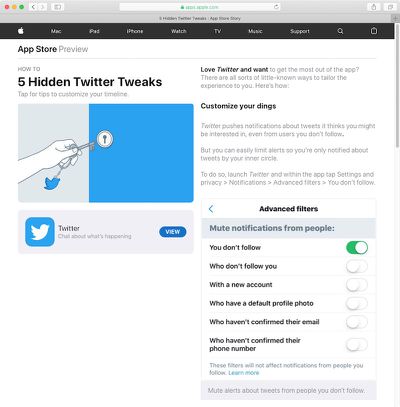
Apple redesigned its App Store app in iOS 11, introducing a new "Today" tab with editorials about featured apps and developers, tips and how tos, and more to help customers discover new and useful apps.
As noted by 9to5Mac, Apple recently extended these Today stories to the web, making the content fully accessible on the desktop.
The new two-column layout features a title card on the left and content on the right, ranging from text and images to app lists and links. Previously, the web previews simply directed users to the App Store on an iOS device.
Today stories can be read on the web by opening a story from an iOS device, scrolling down to the bottom, and tapping "share story."
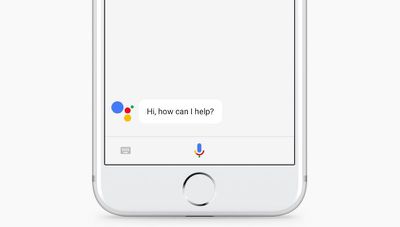
Google Assistant is about to gain a new reminder feature that allows you to get someone else to do your bidding.
Called Assignable Reminders, the feature lets you set reminders for other people, so long as they are in your Google Contacts or opted in to your Family Group.
You can create a reminder using your voice ("Hey Google") or text, and set it to be delivered to a phone or via a smart device at a certain time, or make it geo-location aware so it shows up when the person arrives at a particular place, like the home or office.
According to Google, Assignable Reminders can be set to repeat, and you'll be able to check a history of reminders you sent to other people and any that have been assigned to you.
For children under 13 to use assignable reminders, they must be granted access to the Assistant on Google Home by adults in the household, and all users can block someone from sending them Assignable Reminders.
Assignable Reminders will roll out over the next few weeks in the U.S., the U.K., and Australia. The feature will work on Google's smart speakers, Android devices, and iPhones and iPads with the Google Assistant app installed.
Google's Assistant app is a free download for iOS, available on the App Store. [Direct Link]
Apple's WebKit team has published a "WebKit Tracking Prevention Policy" that details a range of anti-tracking measures it has developed and the types of tracking practices it believes are harmful to users.
Inspired by Mozilla's anti-tracking policy, the document posted to the WebKit blog provides an insight into the anti-tracking features built into Apple's Safari browser that the team hopes to see in all browsers one day.
This document describes the web tracking practices that WebKit believes, as a matter of policy, should be prevented by default by web browsers. These practices are harmful to users because they infringe on a user's privacy without giving users the ability to identify, understand, consent to, or control them.
Apple introduced Intelligent Tracking Prevention in iOS 11 and in Safari 11 in macOS High Sierra 10.13 and has been working to develop ITP ever since. For example, in February Apple released iOS 12.2 and Safari 12.1 for macOS, both of which included ITP 2.1 featuring enhancements that block cross-site tracking.
The new WebKit policy highlights Apple's continuing efforts to target all forms of cross-site tracking behavior, even if it's in plain view.
WebKit will do its best to prevent all covert tracking, and all cross-site tracking (even when it’s not covert). These goals apply to all types of tracking listed above, as well as tracking techniques currently unknown to us.
If a particular tracking technique cannot be completely prevented without undue user harm, WebKit will limit the capability of using the technique. For example, limiting the time window for tracking or reducing the available bits of entropy — unique data points that may be used to identify a user or a user’s behavior.
In addition to cross-site tracking, the document outlines several other tracking practices it deems harmful to users, and says WebKit will treat circumvention of its anti-tracking measures "with the same seriousness as exploitation of security vulnerabilities."
If a party attempts to circumvent our tracking prevention methods, we may add additional restrictions without prior notice. These restrictions may apply universally; to algorithmically classified targets; or to specific parties engaging in circumvention.
For more on tracking definitions, the unintended impact of anti-tracking measures, and exceptions to the rules, check out the full WebKit Tracking Prevention Policy on the WebKit blog.
The report doesn't reveal the reason for the delay, but it could be that the company is taking extra care not to replicate Samsung's mistake of unveiling a folding phone that's not fit for purpose.
Samsung initially planned to launch the Galaxy Fold in the spring, but ended up delaying the launch after several reviewers experienced broken Galaxy Fold devices after just a few days.
The Galaxy Fold is now set to launch in September – before the Mate X – after being delayed in order for Samsung to make some design changes.
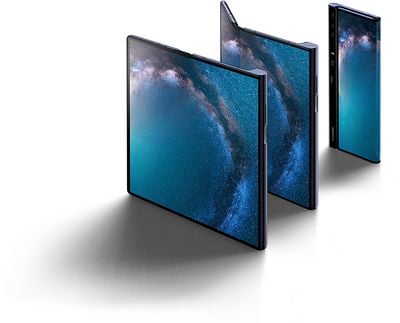
The Mate X uses what Huawei calls a "Falcon Wing" design with a stretchable hinge that allows the smartphone to transform from a 6.6-inch OLED smartphone to an 8-inch OLED tablet, making it bigger than the Galaxy Fold.
It also folds in the opposite direction of Samsung's phone, so the display is visible on both the front and back of the device when collapsed down to smartphone view. The "wing" at the side houses the camera and allows the Mate X display to be notch free.
Samsung is pricing its Galaxy Fold at $1,980, but the Mate X is even more expensive at $2,600.
There have been some suggestions that Apple is exploring folding screen technology, but right now there are no rumors indicating Apple plans to actually release a foldable smartphone in the near future.
Apple has refreshed several of its Macs in 2019, including the MacBook Air, the MacBook Pro, and the iMac, so we thought it would be a good time to round up some useful Mac accessories.
In our latest YouTube video, MacRumors videographer Dan Barbera goes over some of his favorite products that he uses with his own Mac.
Incase Textured Hardshell Case in Woolenex ($69) - Incase, a well-known Apple accessory maker, has a range of different cases for Mac notebooks, protecting them from drops, scratches, and other minor damage. The Textured Hardshell Case in Woolenex is an Apple Store exclusive designed for Apple's USB-C notebooks. It's a hard shell with a polyester-based fabric coating that feels like cotton and repels moisture. It features ventilation options and is fitted to your MacBook so it doesn't add a lot of bulk.
Mophie Powerstation USB-C XXL ($150) - Mophie's power banks are well-designed and reliable, and this model offers up 19,500mAh and comes equipped with a 30W USB-C port so you can use it to charge a Mac notebook or an iPad Pro. It's not going to charge a MacBook Pro at full speed, but it has enough power to add some extra battery life. On the downside, Mophie is super expensive, and there are other alternatives on the market, including many that we've tested.
Anker PowerPort II ($30) - Anker makes a whole range of excellent power adapters that can be used in lieu of your standard Apple chargers, including the PowerPort II. The PowerPort II features a 30W USB-C port and a 19.5W USB-A port for charging both USB-C and USB-A devices. It's not going to charge a MacBook Pro at maximum speed because it's only 30W, but it still works when time isn't an issue and it's a good way to avoid having to carry multiple power adapters when you travel. Anker has higher-powered power adapters too, which are also worth checking out. Apple sells this same PowerPort II for $60 with a USB-C cable, but it's a better deal to buy it standalone.
OWC USB-C Travel Dock ($55) - OWC's USB-C Travel Dock is designed to add additional ports to your Mac notebook. It comes equipped with a built-in USB-C cable so it's ideal for travel, and it has a 4K HDMI port, an SD card reader, two USB 3.1 Type-A ports, and a USB-C passthrough port that supports up to 100W of power for charging even the 15-inch MacBook Pro at full speed.
Satechi Monitor Stand ($90) - If you have an iMac, check out Satechi's line of monitor stands, which are designed to add additional front ports and lift your iMac up to eye level. The built-in USB-C hub in the stand features an SD and micro SD card slot, a 3.5mm headphone jack, 3 USB Type-A ports, and a USB-C ports.
Know of other favorite Mac accessories that we didn't mention here? Feel free to share them in the comments.
Note: MacRumors is an affiliate partner with some of these vendors. When you click a link and make a purchase, we may receive a small payment, which helps us keep the site running.
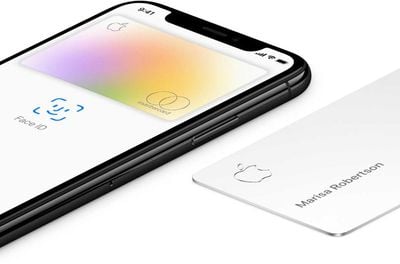
Apple last week announced an Apple Card Preview period and has since been rolling out Apple Card availability to many iPhone users ahead of a wider launch.
Apple aimed to make the Apple Card available to as many people as possible and there have been reports of people with credit scores in the 600s being approved, but there are still reasons why someone might get denied.
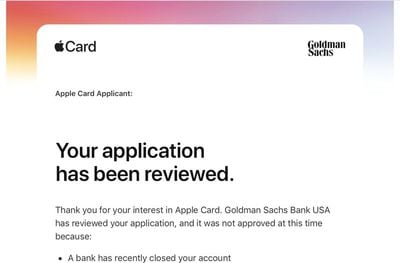
In a new support document shared today, Apple outlines the various reasons why someone might be declined, including low credit score, frequent credit card applications, heavy debt and low income, tax liens, bankruptcy, property repossession, past due debt obligations, a recent checking account closure by a bank, past due medical debt, and more.
Apple's support document has a detailed list of explanations for those who were declined, and when you apply for Apple Card, if you are declined by Goldman Sachs (Apple's partner) you'll get a reason why so you can cross reference it here for more information.
The document also explains how credit scores are determined (debt payments, hard credit inquiries, debt level, credit age, open loans, and more), and it details how customers can get a free credit score copy and dispute errors with TransUnion if mistakenly declined for a card. Apple recommends customers check for common errors that can be included in a credit report if there's an issue.
For customers who were declined because their identity could not be verified, Apple offers several recommendations such as verifying that application info is accurate and making sure ID scans (when requested) are clear and include an ID that's not expired and with a last name that matches the application.
When requesting an Apple Card, Goldman Sachs does a soft credit check that does not impact your credit score. Being declined or declining Apple's offer will not require a hard inquiry, which is only done when you actually accept the Apple Card.
Apple says that credit limit is determined by income and minimum payment amounts associated with existing debt, which is used to assess ability to pay.
Right now, Apple Card is limited to customers who have received an invite from Apple, but Apple appears to be sending out quite a lot of invitations to those who have signed up to be notified about Apple Card on the Apple Card website. A wide release for Apple Card could come in the next few weeks.
Last week, iPhone repair site iFixit highlighted a new iPhone feature described as a "dormant software lock" designed to prevent customers who get unauthorized battery repairs from seeing the battery health of their devices.
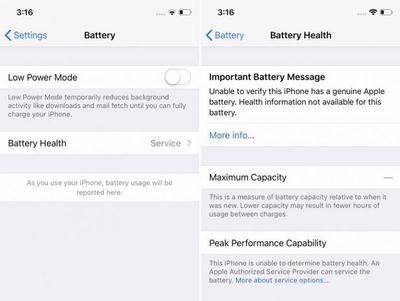
On an iPhone XS, XS Max, or iPhone XR, getting a repair from a non-Apple authorized source results in a message that says "Unable to verify this iPhone has a genuine battery," with the iPhone refusing to display battery health information.
Apple today provided a statement on the issue to iMore, confirming that it did indeed introduce "a new feature" last year that brings up the aforementioned message when a non-authorized battery repair is made, with the aim of protecting customers from "damaged, poor quality, or used batteries."
We take the safety of our customers very seriously and want to make sure any battery replacement is done properly. There are now over 1,800 Apple authorized service providers across the United States so our customers have even more convenient access to quality repairs.
Last year we introduced a new feature to notify customers if we were unable to verify that a new, genuine battery was installed by a certified technician following Apple repair processes. This information is there to help protect our customers from damaged, poor quality, or used batteries which can lead to safety or performance issues. This notification does not impact the customer's ability to use the phone after an unauthorized repair.
On an iPhone XR, XS, or XS Max that has a battery replaced outside of an Apple Store or an Apple Authorized Service Provider, the iPhone will simply read "Service" and will provide the messaging about a battery that can't be verified.
The battery health feature that lets customers see the health of their batteries is blocked and not available, with no measurement of maximum capacity or peak performance capacity.
iFixit discovered that this message pops up regardless of the battery being used. An unauthorized repair from a shop using a genuine Apple battery from another iPhone displays the warning message just as a third-party non-Apple battery does.
According to Apple, the notification about the non-genuine battery does not affect a customer's ability to use the phone after the repair, but it is of course going to make customers wary of third-party repair shops that are not authorized by Apple.
The only way to avoid the messaging when getting a battery replacement on an iPhone XS, XS Max, XR (and presumably future iPhones) is to get that repair done through Apple. Apple charges $69 for an out-of-warranty replacement battery in its newest iPhones, which is more expensive than many third-party repair shops.
Repairs are free with AppleCare+ and when iPhones are under the one-year standard warranty, but as these iPhones age and are no longer covered, customers will need to shell out more money for an Apple-certified repair or live with a non-functioning battery health feature.
Research from YouTube channel The Art of Repair suggests that Apple's newest iPhones use a Texas Instruments microcontroller on the battery, which is designed to authenticate the battery.
Repairs from Apple and Apple Authorized Service Providers likely use Apple's proprietary RepairCal diagnostics software to reset the "Service" status when doing a battery replacement, something that can't be replicated by non-Apple repair shops without the required equipment.
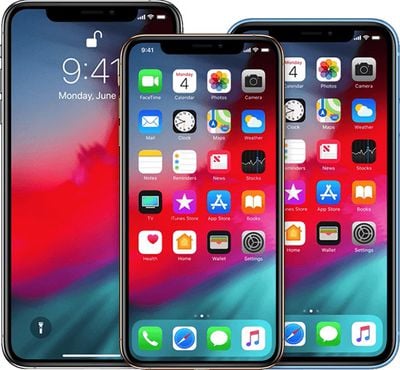
We're likely less than a month away from a trio of new iPhones, and ahead of time, an anonymous user claiming to be a Foxconn factory worker in China has shared alleged details about the upcoming devices on Chinese question-and-answer site Zhihu. The list was posted July 30 and surfaced on Slashleaks today.
While many of the details in the list have already been rumored, or at the very least sound plausible, this information is unverified and obviously could be faked. In other words, keep your expectations in check.
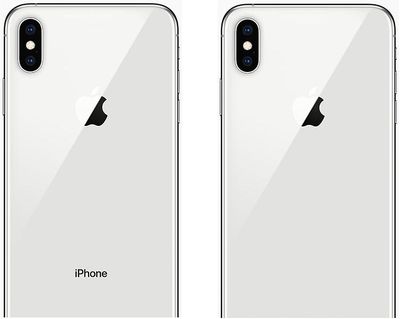
The rear glass is said to have a matte appearance, in line with analyst Ming-Chi Kuo claiming all three 2019 iPhones will feature frosted glass casing.
Interestingly, the leak suggests that the "iPhone" branding will be removed from the back of the devices. This isn't something we've heard before, but it is certainly possible that Apple believes the iPhone is now distinguishable enough for the name to be removed in favor of a more minimalistic design.
As for the front, the design of the 2019 iPhones is said to be virtually the same as 2018 models, including the notch. However, due to the widely rumored removal of 3D Touch, the display is expected to be slightly thinner.
The supposed Foxconn employee claims the next iPhone XS Max will have a 3,969 mAh battery capacity — this is the first time we've seen that number. Other details in the list have been widely rumored, including triple-lens rear cameras, the Lightning connector living on, and 3D Touch being dropped.
Last, the new iPhones are said to be available in similar 64GB, 256GB, and 512GB storage capacities, like the current iPhone XS and iPhone XS Max. It is unclear if this includes the iPhone XR, which currently tops out at 256GB.
Again, this information has not been confirmed, so this falls into the "sketchy rumor" category. In just a matter of weeks, we'll find out for certain.


 Note: MacRumors is an affiliate partner with these vendors. When you click a link and make a purchase, we may receive a small payment, which helps us keep the site running.