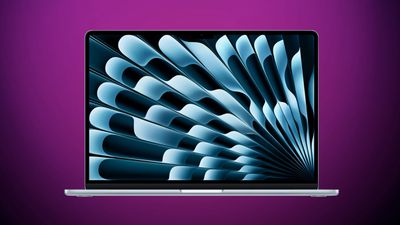
Apple has published its MacBook Neo repair manual, and it reveals some big repairability news: the keyboard can be replaced individually.
For many years, replacing the keyboard in a MacBook has required replacing the entire Top Case, which refers to the top half of the aluminum shell surrounding the keyboard. For example, the latest MacBook Air has a "Top Case with Keyboard" part, and the latest MacBook Pro models have a "Top Case with Battery and Keyboard" part.
For the MacBook Neo, there are separate Keyboard, Keyboard with Touch ID, and Top Case parts, and Apple shows how to replace the keyboard individually. While there are still more than 40 screws involved to replace the keyboard on its own, the process is much easier than replacing an entire Top Case, which requires lots of disassembly.
More importantly for customers, the MacBook Neo's individual keyboard parts will likely be much more affordable when they become available on Apple's self-service store. In the U.S., Top Case parts for recent MacBook Air and MacBook Pro models cost around $400 to $600. The standalone Keyboard and Keyboard with Touch ID parts for the MacBook Neo will likely be hundreds of dollars cheaper by comparison, but exact pricing remains to be seen.
MacBook Neo launched on Wednesday, and it has been praised for its value and performance. Now, improved repairability is another positive.
Apple today announced that it will celebrate the company's 50th anniversary over the coming weeks, but it has yet to reveal any specific plans.
Apple was founded on April 1, 1976, so the company will turn 50 on April 1, 2026.
"While Apple is known for looking forward, this milestone offers a special moment to reflect on the journey that has brought the company here, to celebrate the people and communities who have thought different with us, and to honor the enduring values that continue to guide our work," said Apple, in a press release.
Apple said its celebrations will recognize the "creativity, innovation, and impact that people around the world have made possible with Apple technology."
"Thinking different has always been at the heart of Apple," said Apple CEO Tim Cook. "It's what has driven us to create products that empower people to express themselves, to connect, and to create something wonderful. As we celebrate 50 years, we are deeply grateful to everyone who has been part of this journey and who continues to inspire what comes next."
The letter touches on the upcoming 50th anniversary and says that "the world is moved forward by people who think different." For those unaware, "Think Different" was a famous advertising slogan used by Apple in the late 1990s to early 2000s.
"At Apple, we're more focused on building tomorrow than remembering yesterday," said Cook, in the letter. "But we couldn't let this milestone pass without thanking the millions of people who make Apple what it is today."
The letter touches on the upcoming 50th anniversary and says that "the world is moved forward by people who think different." For those unaware, "Think Different" was a famous advertising slogan used by Apple in the late 1990s to early 2000s.
"At Apple, we're more focused on building tomorrow than remembering yesterday," said Cook, in the letter. "But we couldn't let this milestone pass without thanking the millions of people who make Apple what it is today."
Fifty years ago in a small garage, a big idea was born. Apple was founded on the simple notion that technology should be personal, and that belief — radical at the time — changed everything.
April 1st marks 50 years of Apple. From the first Apple computer to the Mac, from iPod to iPhone, iPad to Apple Watch and AirPods, as well as the services we use every day — the App Store, Apple Music, Apple Pay, iCloud, and Apple TV — we've spent five decades rethinking what's possible and putting powerful tools into people's hands. Through every breakthrough, one idea has guided us — that the world is moved forward by people who think different.
That's because progress always begins with someone — an inventor or scientist, a student or storyteller — who imagines a better way, a new idea, a different path. That spirit has guided Apple from the start. But it has never belonged to us alone.
Every invention we bring into the world is just the beginning of a story. The most meaningful chapters are written by all of you — the people who use our technology to work, learn, dream, and discover. You've made breakthroughs and launched businesses. You've cheered up loved ones in the hospital and captured your toddler's first steps. You've run marathons, written books, and rekindled friendships. You've chased your curiosity, found your new favorite song, and shared stories that connect us all.
In your hands, the tools we make have improved lives, and sometimes even saved them. And that is what inspires us — not what technology can do alone, but everything you can do with it.
At Apple, we're more focused on building tomorrow than remembering yesterday. But we couldn't let this milestone pass without thanking the millions of people who make Apple what it is today — our incredible teams around the world, our developer community, and every customer who has joined us on this journey. Your ideas inspire our work. Your trust drives us to do better. Your stories remind us of all we can accomplish when we think different.
If you've taught us anything, it's that the people crazy enough to think they can change the world are the ones who do.
So here's to the crazy ones.
The misfits. The rebels. The troublemakers. The round pegs in the square holes. The ones who see things differently.
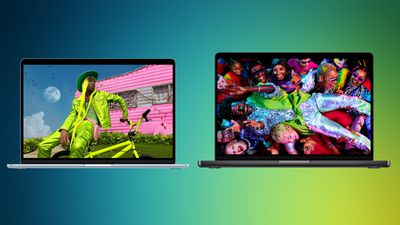
Apple's new M5 MacBook Air and M5 Pro/M5 Max MacBook Pro just launched yesterday, and now Amazon has the first cash discounts on these models. You'll find $49 off nearly every new MacBook model on Amazon, without the need of a membership or clipping a coupon.
Note: MacRumors is an affiliate partner with Amazon. When you click a link and make a purchase, we may receive a small payment, which helps us keep the site running.
Before today, the only offers we were tracking were Best Buy gift cards with the purchase of a new MacBook. This makes Amazon's discounts the first cash markdowns on Apple's new products that we've seen so far.
Although these are just $50 discounts, if you're shopping for the brand new MacBook Air and MacBook Pro, it'll be the best deals you can find online right now. Amazon provides an estimated delivery date around March 17 for most of the laptops.
If you're on the hunt for more discounts, be sure to visit our Apple Deals roundup where we recap the best Apple-related bargains of the past week.
Deals Newsletter
Interested in hearing more about the best deals you can find in 2026? Sign up for our Deals Newsletter and we'll keep you updated so you don't miss the biggest deals of the season!
Apple's first foldable iPhone will feature 12GB of RAM supplied by Samsung, with the latter set to begin DRAM shipments in the second quarter of this year in line with Apple's production schedule.
Korea-based media outlet The Bell reports that Samsung was able to negotiate a substantially higher price than previous memory contracts with Apple, owing to tightening global memory supply amid the AI server build-out.
The price of a 12GB LPDDR5X module, which is already used in the iPhone Air and iPhone 17 Pro, has risen sharply from around $30 at the beginning of 2025 to roughly $70 at the start of this year.
Despite Apple's typical multi-vendor strategy, the company is said to be expanding the share of iPhone memory it sources from Samsung due to rapidly rising memory prices. Concentrating a much larger share of orders with Samsung should allow Apple to secure more predictable deliveries and potentially benefit from economies of scale, even as overall component costs rise.
That said, companies such as SK hynix and Micron are also believed to have secured DRAM purchase orders from Apple for its first foldable, though these are expected to enter the supply chain at a much later date.
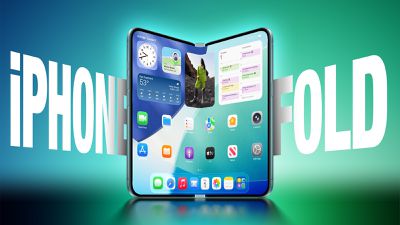
Apple's book-style foldable will operate like a cross between an iPhone and an iPad, recent reports suggest. When closed, it will resemble a traditional slab-style iPhone, but when open, it will be closer to the size of the iPad mini. Rather than a tall design, Apple is using a wider design than its competitors, and it is expected to have a 4:3 aspect ratio.
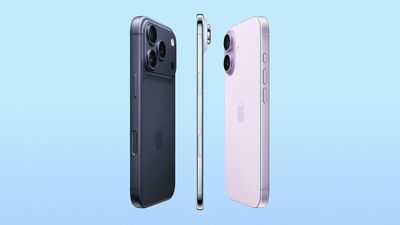
The foldable iPhone or "iPhone Fold" is expected to launch in September alongside the iPhone 18 Pro and iPhone 18 Pro Max.
The storage capacity options for Apple's upcoming book-style foldable iPhone have allegedly leaked, along with their approximate pricing.
According to the Weibo-based leaker Instant Digital, Apple will offer iPhone Fold storage capacities in the following three tiers:
256GB – ~$2,320
512GB – ~$2,610
1TB – ~$2,900
For context, Apple presently offers the iPhone 17 Pro in the same three storage options – 256GB, 512GB, and 1TB – with the iPhone 17 Pro Max offered in a fourth 2TB storage option costing $1,999. Note that the corresponding storage prices shown above are approximate USD conversions from Chinese yuan at the current exchange rate, and shouldn't be taken as reflective of the final price in the U.S. As such, consider them ballpark figures.
The starting price of the foldable iPhone could be nearly twice as much as the iPhone 17 Pro Max, and Apple could put it somewhere between $1,800 and $2,500, which is double what the iPhone 17 Pro costs. The latest rumors suggest it will be on the higher side of that estimate, and these approximate storage tier prices appear to bear that out.
Apple is planning to launch a MacBook Air with an OLED display, but it won't come for several years after the MacBook Pro is updated with OLED screen technology.
We're not going to see an OLED MacBook Air until at least 2028, according to Bloomberg. Large, high-quality OLED displays are expensive, and it will take some time for the technology to come down in price enough that it can be used in Apple's midrange devices.
Apple brought OLED to the 11-inch and 13-inch iPad Pro models in 2024, introducing the first larger-sized OLED screens. The iPhone and Apple Watch have used OLED for years, but it is more complicated with bigger displays. Apple wants to transition its flagship Mac and iPad models to OLED, with OLED eventually used across all product lines.
OLED displays have better contrast than the LCD and mini-LED displays that Apple is using for current Macs, providing richer colors and deeper blacks. OLED also supports wider viewing angles and is often more power efficient because black pixels don't light up.
A MacBook Pro with a touchscreen OLED display is in development, and rumors suggest that we're going to get it as soon as late 2026, though Apple analyst Ming-Chi Kuo said today that we could be waiting until early 2027.
Kuo also said that we won't see an OLED MacBook Air until 2028 or 2029, so the MacBook Air will likely continue to use LCD display technology until then. It's possible Apple could do an interim mini-LED update, but there are no rumors suggesting that's the case yet.
Weekly MLB games are set to return to the Apple TV subscription service on Friday, March 27, Apple said today. The fifth Friday Night Baseball season will begin with the Los Angeles Angels facing off against the Houston Astros, followed by the Cleveland Guardians playing against the Seattle Mariners.
Apple TV will air weekly MLB doubleheaders each Friday during the 25-week 2026 season. MLB fans in 60 countries and regions will be able to watch the games with enhanced production quality and expert commentary.
"'Friday Night Baseball' on Apple TV continues to elevate how fans experience the game," said Oliver Schusser, Apple's vice president of Apple Music, Apple TV, Sports, and Beats. "With cutting-edge production -- including the integration of iPhone to capture immersive new perspectives -- and a full season of marquee matchups available without local broadcast restrictions, we're delivering a modern, premium broadcast experience designed for fans everywhere."
Starting on the March 26 opening day, U.S. fans will also be able to watch the MLB Big Inning show each weeknight with live look-ins and in-game highlights, plus there is a full slate of MLB-related content coming to Apple TV like Countdown to First Pitch, MLB Daily Recap, and MLB This Week.
The full Friday Night Baseball schedule for the first half of the season can be found on Apple's website.
Friday Night Baseball is included for free with an Apple TV subscription, and no additional subscription package is required. Apple TV is priced at $12.99 per month.
Apple today released iOS 16.7.15, iPadOS 16.7.15, iOS 15.8.7, and iPadOS 15.8.7, updates designed for older iPhones and iPads that are not able to run newer versions of iOS and iPadOS.
iPhone and iPad users can install the updates by opening up the Settings app, going to General, and selecting the Software Update option. Those with automatic updates turned on will see the new software installed automatically in the coming days.
According to Apple's release notes, the updates include important security fixes.
Apple has committed to providing security updates for iPhones for at least five years after launch, but often Apple provides security fixes for a much longer period of time. Earlier this year, the iPhone 5s got a new software update 13 years after it initially launched.
The upcoming foldable iPhone that Apple plans to debut this September will operate like a cross between an iPhone and an iPad, reports Bloomberg.
When the device is opened up, the UI will have an iPad-like layout that supports multitasking with two apps side-by-side. No iPhone to date has supported running multiple apps on the display at the same time, beyond simple picture-in-picture mode features.
Many apps will feature sidebars on the left of the display, and developers will be given tools to adapt their existing apps for the new interface.
The iPad interface makes sense because the iPhone Fold is something of an iPhone and iPad hybrid. When closed, it will resemble a traditional slab-style iPhone, but when open, it will be closer to the size of the iPad mini. Rather than a tall design, Apple is using a wider design than its competitors, and it is expected to have a 4:3 aspect ratio.
A wider display will make the iPhone Fold more useful for side-by-side apps, video watching, and similar tasks that people are used to doing with an iPad. When the iPhone Fold is closed, the outer display will look like a standard iPhone. It will display apps and it will have a hole-punch front-facing camera for selfies, but there isn't Face ID support. Instead, Apple is using a fingerprint sensor that's included in the power button. The camera area will still support Dynamic Island features for Live Activities and relevant notifications even though there's no TrueDepth system.
Apple did test a camera that was underneath the inner display, but it produced poor images compared to the hole punch version, so Apple opted for a visible camera. The rear area will have dual cameras, but no triple-lens camera system because of space constraints.
Though the iPhone Fold will have a display with some features that are also available on the iPad, it will run iOS, not iPadOS. It will not support the full range of multitasking features that are available on the iPad, and it won't run existing iPadOS apps.
Apple plans to price the iPhone Fold somewhere around $2,000, and it will be the most expensive iPhone in the 2026 lineup.
Happy MacBook Neo launch day! Apple's $599 notebook is finally here, and we picked one up to take a look at the new machine and share some first impressions.
The MacBook Neo looks like a MacBook Air, but a little bit smaller. It comes in fun colors, including Citrus, Blush, and Indigo, plus a plain Silver shade. It's lightweight, has rounded corners, and it's an all-around nice machine, especially compared to bulkier Windows PCs. The display is as bright as the MacBook Air display at 500 nits, and it has nice vivid colors.
The base model comes with a 256GB SSD and no Touch ID button for the color-matched keyboard, but the higher-tier 512GB model priced at $699 does have Touch ID.
Since this is a $599 MacBook, there are some compromises. You only get two USB-C ports and no Thunderbolt, plus no MagSafe or fast charging option. Only one of the USB-C ports is USB3, so you'll need to use that one if you want to connect an external display. It supports a 4K 60Hz display.
The trackpad isn't the same Force Touch trackpad you'll find on the MacBook Air or MacBook Pro, but it's just as usable with the exception of the pressure-based options. There is a physical click rather than the Haptic Force Touch click, but the entire button can click so you can press anywhere. The keyboard is identical to the keyboard of the MacBook Air in terms of feel.
Apple designed new speakers for the MacBook Neo, and they're side-firing for the first time. Maximum sound is a little limited, but sound quality is otherwise decent for a laptop. The microphones for video calls are good at isolating out background noise, but the camera is limited to 1080p so it's not quite as good as the camera Apple uses for more expensive MacBook models.
In terms of performance, the MacBook Neo has an A18 Pro chip and it's limited to 8GB RAM, but that's plenty for simple tasks like browsing the web, watching videos, editing documents, and doing homework. In a quick test opening 54 pre-installed apps on the MacBook Neo, it didn't struggle, and it was able to handle all of those apps without an issue.
We're going to do a deep dive into performance and battery life in the future once we've been able to spend more time with the MacBook Neo, so make sure to keep an eye on the site for more videos.
Following the release of his new book Apple: The First 50 Years, tech columnist David Pogue is hosting an Apple at 50: Five Decades of Thinking Different event at the Computer History Museum in Mountain View, California tonight.
"From the early garage days of the 1970s, to the heyday of the Macintosh in the 1980s, to Apple's transformation in the 2000s with the iPhone, the program will explore how Apple repeatedly redefined itself while holding fast to a distinctive vision," the Computer History Museum said, in the YouTube stream's description.
The event will feature speakers from across multiple Apple eras, including:
John Sculley: Apple's CEO from 1983 to 1993
Chris Espinosa: Apple's longest-serving employee
Avie Tevanian: Apple's former Chief Software Technology Officer
Jon Rubinstein: Apple's former SVP of Hardware Engineering (appearing by video)
Pogue is a CBS Sunday Morning correspondent, and he spent many years writing about Apple and technology for The New York Times and Macworld.
In a social media post, Pogue said the event will also feature Ronald Wayne, the lesser-known third co-founder of Apple alongside Steve Jobs and Steve Wozniak. It is unclear if Wayne will be attending the event in person or if he will speak.
Wayne sold his 10% share of Apple back to Jobs and Wozniak just 12 days after the company was established in 1976, to avoid personal financial risk. His share of the company would be worth hundreds of billions of dollars today.
The live stream is below.
Pogue said there will be seven key Apple figures participating in the event, so there should be two others beyond the names listed above. Perhaps it is a surprise.
The Computer History Museum has an Apple at 50 page with a timeline of the company's history, old photos, interviews, rare prototypes, and more.
In time for Apple's 50th anniversary on April 1, 2026, the 608-page book explores the first five decades of the company's history. Pogue interviewed 150 key people who shaped Apple into what it is today, including Wozniak, Sculley, former design chief Jony Ive, and others.
The book provides "new facts that correct the record":
In time for Apple's 50th anniversary, CBS Sunday Morning correspondent David Pogue tells the iconic company's entire life story: how it was born, nearly died, was born again under Steve Jobs, and became, under CEO Tim Cook, the most valuable company in the world. The book features full-color photos, new facts that correct the record and illuminate its subversive culture, and fresh interviews with the legendary figures who shaped Apple into what it is today.
Note: MacRumors is an affiliate partner with Amazon. When you click a link and make a purchase, we may receive a small payment, which helps us to keep the site running.
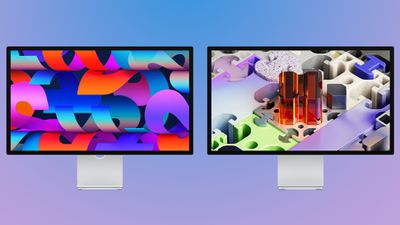
The Apple Studio Display and Studio Display XDR are equipped with A19 and A19 Pro chips, respectively, and each display has 128GB of internal NAND storage.
With A-series chips, the Studio Displays run an iOS-based operating system, which is what the internal storage space is used for. The A19 and A19 Pro handle camera processing for the Center Stage camera, color calibration, USB and Thunderbolt device management, spatial audio, and more.
Storage space is necessary for the existing software, downloading new firmware updates over time, and perhaps for diagnostics, but the storage is not used for user-facing features.
The prior-generation Studio Display had 64GB of storage, so the new displays have double the capacity. Apple likely found it more affordable to use existing NAND storage from its iPhone supply chain rather than to invest in smaller modules with less storage. Most of the 128GB is probably unnecessary.
Along with 128GB of storage, the Studio Display has 8GB RAM and the Studio Display XDR has 12GB RAM. The new displays launched today, and are now available for purchase from the online Apple Store and Apple retail locations.
X-Plane, which is advertised as being the "world's most advanced flight simulator," is coming to Apple's Vision Pro in the next month or so.
The upcoming visionOS 26.4 update adds support for NVIDIA's CloudXR 6.0 platform, and this will enable Vision Pro users to wirelessly stream immersive PC games from NVIDIA RTX-powered servers via Wi-Fi, including the flight simulator X-Plane 12. According to Justin Ryan, the simulator will stream at up to 4K at 120 FPS.
Vision Pro users will be able to connect their own flight simulation hardware for an immersive flying experience. If you have a physical yoke or throttle, Apple's augmented reality framework ARKit uses image detection to recognize them and place them inside your virtual cockpit, as shown in Ryan's demo below (via 9to5Mac).
Here’s a first look at X-Plane 12 on Apple Vision Pro!
With visionOS 26.4 and NVIDIA CloudXR 6.0, the simulator streams wirelessly at up to 4K/120fps to your headset.
And if you have a physical yoke or throttle, ARKit uses image detection to recognize them and place them inside… pic.twitter.com/FTYzJH9ALP
— Justin Ryan ᯅ (@justinryanio) March 11, 2026
X-Plane 12 is available on Windows, Mac, and Linux for $59.99, or as a DVD for $99.99. A companion app for visionOS will be available in the Vision Pro's App Store "later this spring," according to the announcement. visionOS 26.4 is currently in beta testing, and the update is expected to be released in late March or early April.
Apple and Samsung produced nearly the same number of smartphones in 2025, tying for the top position in global smartphone production, according to a new report from TrendForce.
Global smartphone production reached approximately 1.254 billion units in 2025, rising 2.5% year over year. The research firm says Apple and Samsung each produced nearly 240 million smartphones during the year, tying for the top position in global production.
TrendForce says the smartphone market in the first half of 2025 benefited from China's government subsidy programs, which stimulated demand, while the second half of the year was supported by the traditional seasonal peak driven by new flagship smartphone launches.
Apple's production increased significantly toward the end of the year following the launch of the iPhone 17 lineup. TrendForce said Apple's smartphone production rose more than 50% quarter over quarter in the fourth quarter of 2025, supported by strong shipments of the company's latest iPhone models.
The report adds that the iPhone 17 series benefited from well-positioned retail pricing, which helped drive strong market performance. TrendForce suggests that if Apple adopts a more aggressive pricing strategy in 2026, it could help sustain both production and sales momentum.
Looking ahead, the broader smartphone industry is expected to face mounting cost pressures. TrendForce says surging memory prices are likely to significantly increase smartphone production costs in 2026. As a result, global smartphone output is projected to decline by at least 10% year over year to around 1.135 billion units.
According to the firm, smartphone manufacturers will face a difficult choice between raising retail prices to preserve margins or lowering device specifications to maintain shipment volumes, with the entry-level segment expected to be most affected by rising component costs.
Beyond Apple and Samsung, several other manufacturers ranked among the largest producers in 2025. Xiaomi (including Redmi and POCO) ranked third with production close to 170 million units, followed by OPPO (including OnePlus and Realme) with 143 million units.
Vivo placed fifth, while Transsion (the company behind TECNO, Infinix, and itel) ranked sixth after sharply cutting production late in the year due to inventory adjustments and demand concerns in emerging markets. Honor ranked seventh after accelerating production toward the end of 2025, while Lenovo (including Motorola) ranked eighth with roughly 61 million smartphones produced during the year.
Apple supply chain analyst Ming-Chi Kuo today said the MacBook Pro will receive a "major upgrade" with an OLED display by early next year.
In a blog post, Kuo said the new MacBook Pro will be released between late 2026 and early 2027.
With an OLED display, the MacBook Pro would have better image quality compared to the current models with LCD displays and mini-LED backlighting. Advantages of OLED displays include more vivid colors, higher contrast ratio, and wider viewing angles, and they can be more power efficient depending on the content being displayed.
The next-generation MacBook Pro is expected to feature many other upgrades, including a thinner design, a touch screen, a Dynamic Island, and M6 Pro and M6 Max chips manufactured with TSMC's 2nm process. It has been rumored that Apple might even expand its C1X or C2 modem to the MacBook Pro for built-in cellular connectivity.
With all of these new features, higher prices are likely. For this reason, it was recently reported that the model with an OLED display might be a so-called "MacBook Ultra" that is positioned above the MacBook Pro in the lineup.
Kuo expects the MacBook Air to receive an OLED display as well, but not until 2028 or 2029.
Apple just released MacBook Pro models with M5 Pro and M5 Max chips, but if you are interested in bigger upgrades, it might be best to wait. The last MacBook Pro redesign occurred in 2021, so these moments do not come along too often.
Apple today announced three new games coming to Apple Arcade in April, along with several updates to existing titles on the service.
The three new games heading to Apple Arcade next month are as follows:
DREDGE+: A complete edition of the award-winning fishing adventure where players explore eerie archipelagos, dredge the ocean floor for hidden treasures, and uncover mysteries lurking beneath the waves. The Apple Arcade version includes all previously released downloadable content, including The Pale Reach, The Iron Rig, and Blackstone Key, along with a custom rod.
Unpacking+: A relaxing puzzle game centered on unpacking belongings and arranging them in a new home. As players organize items across different rooms, they gradually piece together the story of the life they are unpacking.
My Very Hungry Caterpillar+: An interactive experience based on Eric Carle's beloved children's character where players care for their own caterpillar, feeding and playing with it as it grows and eventually transforms into a butterfly.
All of the new games will be available on April 2, 2026. Two Apple Arcade titles are also set to receive updates in the coming weeks:
Disney SpellStruck: A Star Wars crossover arriving March 19 adds Adventure Mode levels inspired by Star Wars: Episode V – The Empire Strikes Back and introduces Darth Vader and Lando Calrissian as playable characters.
Puyo Puyo Puzzle Pop: A new game mode called Puyo Puyo Garden arrives April 9 to celebrate the franchise's 35th anniversary, allowing players to grow and battle their own unique Puyo.
Apple Arcade is a subscription service that provides access to hundreds of games across the iPhone, iPad, Mac, Apple TV, and Apple Vision Pro. All of the games are free of ads and in-app purchases, and the service continues to expand its catalog of more than 200 titles.
In the U.S., Apple Arcade costs $6.99 per month, and it is also bundled with other Apple services in all Apple One plans. Apple Arcade can be accessed through the App Store and the Apple Games app.
With the latest version of the Apple Invites app on the iPhone, released today, the app's Home Screen widget has received a small but useful enhancement.
In August, the app gained a Home Screen widget that counts down the days until an upcoming event, but you had to choose a specific event. Starting today, though, a new "Next Upcoming" option can automatically refresh the widget with your next closest event as they pass by. You can still set a specific event manually if you prefer.
The update also contains bug fixes and performance improvements.
Released in February 2025, the Apple Invites app makes it easy to invite people to events, such as birthday parties and baby showers. First, you create an event invitation, which can include a description, a custom background, and even a shared photo album. Then, you can generate a link to the event that you can share with invited guests.
The ability to create an event in the app is limited to iCloud+ subscribers, but anyone who receives an event link can RSVP for free. In the U.S., the cheapest iCloud+ plan with 50GB of storage currently costs 99 cents per month.



 Note: MacRumors is an affiliate partner with Amazon. When you click a link and make a purchase, we may receive a small payment, which helps us keep the site running.