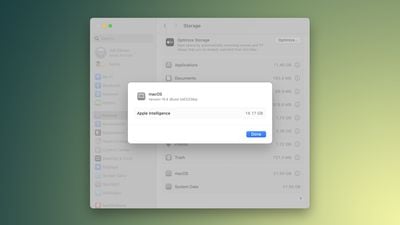
Making the change led to accusations that Apple was trying to hide the size of Apple Intelligence, and so with the fourth macOS 15.4 beta that came out today, Apple made Apple Intelligence's storage requirements easy to find once again.
To see Apple Intelligence storage space, you can go to System Settings > General > Storage and click the info button next to the macOS listing. That brings up a popup that shows the version of macOS installed and the storage space taken up by Apple Intelligence and it's the same way that System Settings works in the current release version of macOS Sequoia, 15.3.2.
It is possible that the missing Apple Intelligence storage feature in the earlier macOS 15.4 beta was a bug. Users who had System Integrity Protection (SIP) disabled were able to see the information without issue, and Apple appeared to have made the Apple Intelligence storage assets unavailable to anyone with SIP enabled.
For reference, SIP protects the Mac by preventing unauthorized code from being run, and it can only be turned off in Recovery Mode. Disabling SIP is typically only used by developers testing apps, and most users always have it on. Given that Apple returned the Apple Intelligence storage space listing to all users, it was perhaps something unintentional, though it remains unclear.
Apple says that Apple Intelligence can consume up to 7GB of storage space on a Mac, though it appears to be taking up more space on some Macs in macOS Sequoia 15.4. Apple Intelligence requires dedicated storage space because it downloads machine learning models and assets to Apple devices so that some functions can be run locally.
Disabling Apple Intelligence is the only way to keep the feature from using up space on a Mac.
Apple's new store at Crocker Park will be larger and more modern than its original store at the shopping center, which first opened in 2008. At many of Apple's newer stores, there is an Apple Pickup station where customers can collect online orders, along with a Genius Bar with counters set at varied heights for improved accessibility.
"Get ready," says Apple. "Great things are in store."
Powerful multi-port power banks are becoming increasingly popular to keep our ever-growing array of gadgets charged up, and Alogic's new Ark Pro power bank brings some nice versatility to the table.
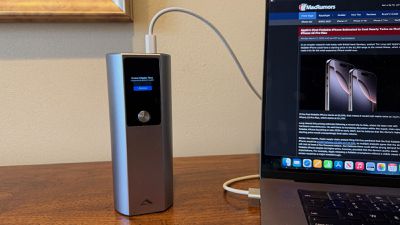
I've spent a few weeks testing out the Ark Pro, and I've found that it packs a nice punch with 27,600 mAh of juice and a trio of USB ports and the ability to charge a laptop at up to 140 watts.
You'll find a lot of beefy power banks coming in at around this same mAh rating, and that's because 27,600 mAh translates to 99.36 Wh in this battery, which is just under the 100 Wh limit for carrying it on an airplane without needing to get approval from the airline. Apple's 16-inch MacBook Pro similarly comes in just below this limit at 99.6 Wh, but due to inherent inefficiencies in energy transfer you won't be able to fully charge a completely depleted 16-inch MacBook Pro from empty with the Ark Pro. A 14-inch MacBook Pro with its 72.4 Wh battery will fare better, as will MacBook Air models that come in even lower.
In my testing, I was able to get around 70% of a full charge for a 16-inch M1 Pro MacBook Pro out of a topped-off Ark Pro, which is pretty solid but also a sign of how much energy is lost from power banks in heat and other inefficiencies when charging up other devices.
My 2021 MacBook Pro requires a MagSafe connection for fast charging, and I was able to pull up to 125 watts or so from the Ark Pro over MagSafe for relatively speedy charging, though the wattage does vary significantly depending on the charge states and temperatures of both devices, with the Ark Pro regulating its output to help prevent overheating. Charging the laptop with a USB-C to USB-C cable topped out at around 84 watts, though you should be able to do better with newer MacBook Pro models that support fast charging directly over USB-C.
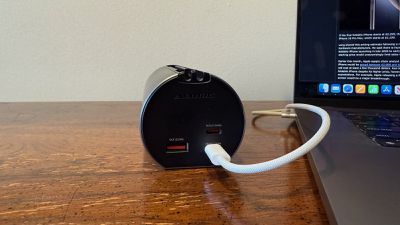
The Ark Pro features two USB-C ports and a USB-A port, providing some good flexibility to keep both modern and legacy devices charged up. You'll only be able to use one of the two USB-C ports if you want to charge at the maximum of 140 watts, though it can simultaneously charge another device through the USB-A port at up to 22.5 watts. If you use both USB-C ports, output will drop to 65 watts for each of them.
Passthrough charging is supported, so you can plug a USB-C cable from another power source such as a wall outlet into one of the USB-C ports on the Ark Pro and another cable from a second Ark Pro USB port to a device, and the power bank will handle both input and output power simultaneously.
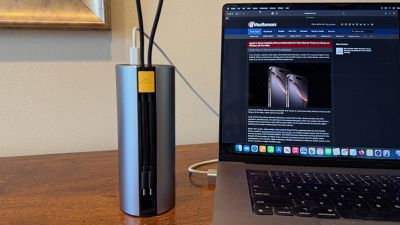
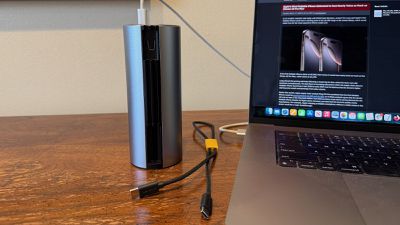
One clever design feature of the Ark Pro is an included USB-C cable that doubles as a lanyard for the power bank. While other companies like Anker offer some smaller power banks with integrated cables that can also serve as lanyards, the Ark Pro's cable is entirely removable to provide more flexibility for various charging needs.
The cable includes a sliding clip that locks into a channel in the body of the power bank, with the clip and the USB-C connectors leveraging the weight of the power bank to stay in place. I was a bit skeptical of this setup at first, hesitant to risk carrying a fairly hefty power bank by only the cable secured in this way, but it's worked just fine in my testing.
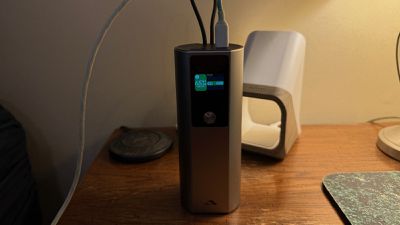
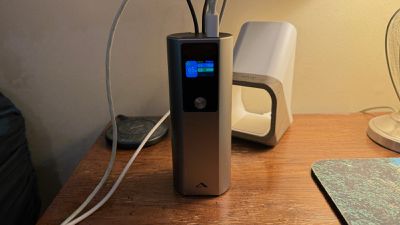
Another handy feature that's been making its way into more and more power banks is a digital display, and the Ark Pro has a nice color one that helps you keep tabs on charging status for both input and output.
The display background turns green when the power bank is being recharged, and it displays the current battery level down to a hundredth of a percentage point, as well as the current input wattage for the USB port in use and an estimate of how long it will take to fully charge the power bank at the current rate.
When you're using the Ark Pro to charge other items, the display backgrounds turn blue and you can similarly see the current output wattage per port, updating several times per second depending on how rapidly the power draw is changing, as well as an estimate of how long the power bank will last given its current charge level and power draw.
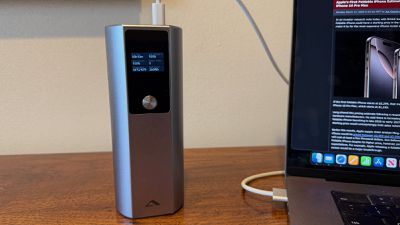
Pressing the silver button below the display wakes up the display when nothing is connected, allowing you to quickly check the Ark Pro's power level. While charging with the display active, pressing the button again brings up some interesting statistics for the power bank including battery health (what percentage of the original capacity is currently the maximum charge level), the number of cycles the battery has gone through, the current battery temperature, the length of the current charging session, and more.
The button can be pressed again to access the one setting option for the Ark Pro, and that's whether the display remains active at all times during charging in either direction or if it turns off after 30 seconds. The 30-second setting will obviously preserve more battery life for actual charging, and you can always wake up the display with a press of the button to check on things, but at least during my testing for this review I left it on the Always setting so I could watch what was happening with the power bank more closely.
Given the nearly 100 Wh capacity of the Ark Pro, it definitely has some heft to it, weighing around 680 grams (1.5 pounds). It is fairly compact in its sleek aluminum shell, however, measuring 155 mm (6.1 in) by 65 mm (2.6 in) by 60 mm (2.4 in) without accounting for the USB-C cable lanyard. It's plenty small enough to toss in a backpack or bag, though it will definitely add some weight, and this definitely isn't something to carry around in a pocket unless we're talking about a large-pocketed coat or similar item.
All of this portable power doesn't necessarily come cheaply, with the Ark Pro regularly priced at $153.99. Alogic does run fairly frequent sales though, often with discounts in the 20% range, so keep an eye out for one of those opportunities if you're interested in buying.
Note: Alogic provided MacRumors with the Ark Pro power bank for the purposes of this review. No other compensation was received. MacRumors is an affiliate partner with Alogic. When you click a link and make a purchase, we may receive a small payment, which helps us keep the site running.
Apple today released a new update for Safari Technology Preview, the experimental browser that was first introduced in March 2016. Apple designed Safari Technology Preview to allow users to test features that are planned for future release versions of the Safari browser.
Safari Technology Preview 215 includes fixes and updates for CSS, Images, JavaScript, Networking, Scrolling, Text, Web API, and Web Extensions.
The current Safari Technology Preview release is compatible with machines running macOS Sonoma and macOS Sequoia, the newest version of macOS.
The Safari Technology Preview update is available through the Software Update mechanism in System Preferences or System Settings to anyone who has downloaded the browser from Apple’s website. Complete release notes for the update are available on the Safari Technology Preview website.
Apple’s aim with Safari Technology Preview is to gather feedback from developers and users on its browser development process. Safari Technology Preview can run side-by-side with the existing Safari browser and while it is designed for developers, it does not require a developer account to download and use.
On February 9, Apple started offering "extra credit" for Mac trade-ins in the U.S. and select other countries, but the offer is quite misleading.
Apple's website says the extra trade-in credit for Macs is available with the purchase of an eligible new Apple device through April 2, yet the values listed have already decreased before that date, which is something the average customer likely wouldn't realize.
As of February 9, the listed trade-in values had increased by between $10 and $50 in the U.S., but some of the values have already decreased since then.
Apple could choose to argue that the trade-in values would have dropped even lower had the "extra credit" boost not been in effect, but to us it still feels disappointing, if not disingenuous, for the company to have lowered some of the values prior to April 2.
The chart below provides an overview of the situation.
Model
Values as of Today
Values as of February 9
Values as of February 8
MacBook Pro
Up to $860
Up to $925
Up to $915
MacBook Air
Up to $410
Up to $435
Up to $425
MacBook
Up to $120
Up to $140
Up to $90
iMac
Up to $315
Up to $315
Up to $305
iMac Pro
Up to $435
Up to $455
Up to $405
Mac mini
Up to $325
Up to $375
Up to $365
Mac Studio
Up to $1,150
Up to $1,150
Up to $1,140
Mac Pro
Up to $710
Up to $720
Up to $670
So, if you are planning to trade in your Mac, know that the "extra" credit might actually mean even less credit than you would have received last month.
Trade-ins can be completed on Apple's website or at an Apple Store, and the credit can be applied towards the purchase of a new Apple product, or placed on an Apple gift card for later use. Visit the trade-in page on Apple's website for more details.
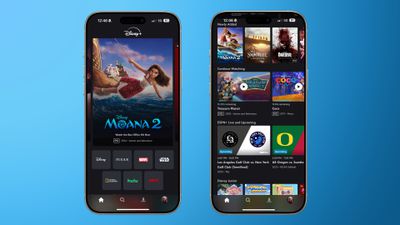
Disney has introduced a new promotion on its streaming service this month, offering a bundle of Disney+ (with ads) and Hulu (with ads) for $2.99 per month for four months. This offer represents a savings of 72 percent on the Disney+/Hulu bundle, and after four months it will return to the traditional $10.99 per month price point.
Note: MacRumors is an affiliate partner with Disney+. When you click a link and make a purchase, we may receive a small payment, which helps us keep the site running.
To get the deal, head to the promotion landing page on the Disney+ website and click on the Disney+/Hulu bundle option. This offer covers the ad-supported Disney+ and Hulu streaming plans, and it's valid only for new and eligible returning subscribers.
After the end of the four month promotional pricing, the service will automatically renew at $10.99 per month, unless you cancel. Disney says that this offer will run through 11:59 p.m. PT on March 30, so you'll have only this month to take advantage of the deal.
If you're on the hunt for more discounts, be sure to visit our Apple Deals roundup where we recap the best Apple-related bargains of the past week.
Deals Newsletter
Interested in hearing more about the best deals you can find in 2025? Sign up for our Deals Newsletter and we'll keep you updated so you don't miss the biggest deals of the season!
Apple recently began selling a MagSafe-compatible wireless charging stand that can charge a combination of up to four iPhones and AirPods simultaneously.
Designed by Zens, the Quattro Wireless Charger Pro 4 is available exclusively on Apple's online store, with U.S. pricing set at $149.95.
The stand has two levels, which are each embedded with two MagSafe chargers that can provide up to 15W of power for wireless charging. That means the MagSafe chargers built into the stand are based on the first-generation MagSafe standard, as the second-generation MagSafe standard can reach speeds of up to 25W.
Zens says each iPhone charging on the stand can charge to 35% in 30 minutes.
This stand lacks Apple Watch charging pucks, but there is another with one.
The stand connects to a wall outlet with an included 65W power adapter and a power cord, with various plug adapters included for international use.
Apple today provided developers with the fourth beta of an upcoming macOS Sequoia 15.4 update for testing purposes. The new beta is available a week after Apple released the third beta.
Registered developers can opt-in to the macOS Sequoia beta through the Software Update section of the System Settings app. An Apple ID associated with an Apple Developer account is required to get the beta.
macOS Sequoia 15.4 brings Mail Categorization to the Mac for the first time, reorganizing the Mail app into dedicated categories like transactions, updates, promotions, and primary, a category that surfaces the most important emails first. The update brings a range of new emoji characters to the Mac.
For Apple News+ subscribers, there is a dedicated News+ Food section with recipes, articles about restaurants, and other related content. There's a new Sketch style in Image Playground, the option to create Memory Movies in the Photos app, and Apple Intelligence is expanding to new languages.
Apple plans to release macOS Sequoia 15.4 in early April.
Apple today seeded the fourth betas of upcoming iOS 18.4 and iPadOS 18.4 updates to developers for testing purposes, with the software coming a week after Apple released the third betas.
iOS 18.4 and iPadOS 18.4 can be downloaded from the Settings app on a compatible device by going to General > Software Update.
With iOS 18.4, Apple is adding the Priority Notifications Apple Intelligence feature, which is designed to determine which of your notifications are the most important, highlighting them in an easy-to-see dedicated section on the Lock Screen.
The update includes a new Apple News+ Food section for Apple News+ subscribers, plus it adds the Sketch style to Image Playground so you can generate images that look hand drawn. Apple Intelligence is also available in more languages, including French, German, Italian, Portuguese (Brazil), Spanish, Japanese, Korean, and Chinese (simplified), along with localized English for Singapore and India.
There are new emoji characters, and a dedicated Vision Pro app that allows Vision Pro owners to find and download content, manage the headset, control guest experiences, and more, right from the iPhone.
Mail Categorization has expanded to the iPad, and there's a new Ambient Music feature for playing relaxing music from Control Center. There are a number of other smaller features too, with details available in our iOS 18.4 features guide.
Apple plans to release iOS 18.4 and iPadOS 18.4 in early April.
Apple today provided developers with the fourth betas of upcoming visionOS 2.4, tvOS 18.4, and watchOS 11.4 updates for testing purposes. The software is available a week after Apple seeded the third betas.
The betas are available to registered developers, and can be downloaded from the Settings app on each device.
Of the three new software betas, the visionOS 2.4 update is the most notable because it brings Apple Intelligence to the Vision Pro for the first time. Apple Intelligence features available in visionOS include Writing Tools, Genmoji, Memory Movie, Image Playground, Priority Notifications, and ChatGPT integration.
The update will include a dedicated Spatial Gallery app, which will offer a curated selection of spatial videos, photos, and panoramas from artists, filmmakers, and photographers. Apple is also bringing a Vision Pro app to the iPhone for Vision Pro management, and it will let users find and download apps, add content to a watch list, and more.
With visionOS 2.4 and iOS 18.4, an iPhone can be used to set up Guest Mode on the Vision Pro, making it much easier to let people try out the headset. When a guest puts on the Vision Pro, a prompt appears on the iPhone, and the Vision Pro owner is able to choose what apps the guest can use and can see what the guest is doing via AirPlay.
Apple plans to release visionOS 2.4, tvOS 18.4, and watchOS 11.4 in early April.
1Password has introduced new deals on a few of its plans this week, offering up to 50 percent off the password management app. With these sales you can get 25 percent off 1Password for Individuals and 50 percent off 1Password for Families.
Note: MacRumors is an affiliate partner with 1Password. When you click a link and make a purchase, we may receive a small payment, which helps us keep the site running.
The Individual plan is now priced at $2.24 per month with annual billing, down from $2.99 per month, and the Families plan is now priced at $2.49 per month with annual billing, down from $4.99 per month. Each plan comes with a 14 day free trial to 1Password.
These deals are available only to new 1Password customers, and the discounted prices are available only for the first year of your new 1Password plan with annual billing. Once the first year ends, the plans will return to their regular prices.
1Password is a password management app that is compatible across Apple devices, including iPhone and Mac. It allows you to create and store strong passwords across all of your most important online accounts, and alert you when your passwords are compromised.
If you're on the hunt for more discounts, be sure to visit our Apple Deals roundup where we recap the best Apple-related bargains of the past week.
Deals Newsletter
Interested in hearing more about the best deals you can find in 2025? Sign up for our Deals Newsletter and we'll keep you updated so you don't miss the biggest deals of the season!
In an investor research note today with British bank Barclays, analyst Tim Long said Apple's first foldable iPhone could have a starting price in the $2,300 range in the United States, which would make it by far the most expensive iPhone model ever.
If the first foldable iPhone starts at $2,299, that means it would cost nearly twice as much as the iPhone 16 Pro Max, which starts at $1,199.
Long shared this pricing estimate following a recent trip to Asia, where his team met with hardware manufacturers. He said there is increasing discussion within the supply chain about a foldable iPhone launching in late 2026 to early 2027, but he believes that the device's higher starting price would unsurprisingly limit sales volume.
Earlier this month, Apple supply chain analyst Ming-Chi Kuo predicted that the first foldable iPhone would be priced between $2,000 and $2,500, so multiple analysts agree that the device will cost at least a few thousand dollars. Kuo believes there could still be strong demand for the foldable iPhone despite its higher price, however, provided that the device's quality meets expectations. For example, Apple releasing a foldable smartphone without a visible crease in the screen would be a major breakthrough.
Kuo said the first foldable iPhone would feature a 7.8-inch inner display, a 5.5-inch outer display, two rear cameras, one front camera, a Touch ID power button instead of Face ID, and a high-density battery. He expects the device to be as thin as 4.5mm when unfolded, and between 9mm and 9.5mm when folded. He expects the device to have a titanium exterior, but the hinge would use a mix of titanium and stainless steel.
Kuo said the foldable iPhone would enter mass production in the fourth quarter of 2026.
With the foldable iPhone at least a year and a half away, keep in mind that this pricing estimate is surely just an educated guess.
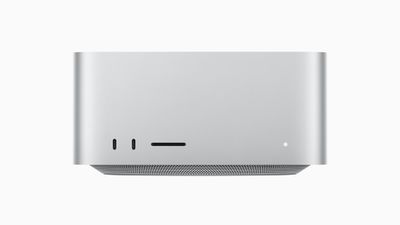
YouTuber Dave Lee of Dave2D fame has demonstrated how Apple's new Mac Studio equipped with an M3 Ultra chip can efficiently run a huge version of the DeepSeek R1 AI model locally, provided that users spec the machine with the maximum 512GB of memory.
According to Lee's testing, the 671 billion parameter AI model can be executed directly on Apple's high-end workstation, but it requires substantial memory resources, consuming 404GB of storage and requiring the manual allocation of 448GB of video RAM through Terminal commands.
The M3 Ultra's unified memory architecture is key to this performance, allowing the system to handle a 4-bit quantized version of DeepSeek R1 efficiently. The quantization slightly reduces accuracy, but it maintains all parameters and delivers approximately 17-18 tokens per second, which is sufficient for many practical applications.
Perhaps most impressively, the Mac Studio accomplishes this while consuming under 200 watts of power. Comparable performance on traditional PC hardware would require multiple GPUs drawing approximately ten times more electricity.
The capability to run such advanced AI models locally offers privacy advantages for sensitive applications like healthcare data analysis, where sending information to cloud services raises security concerns.
However, this performance doesn't come cheap – a Mac Studio configured with M3 Ultra and 512GB of RAM starts at around $10,000. Fully maxed out, an M3 Ultra Mac Studio with 16TB of SSD storage and an Apple M3 Ultra chip with 32-core CPU, 80-core GPU, and 32-core Neural Engine costs a cool $14,099. Of course, for organizations requiring local AI processing of sensitive data, the Mac Studio offers a relatively power-efficient solution compared to alternative hardware configurations.
Apple says the M3 Ultra is the fastest Mac chip it has ever released, thanks to its strategy of fusing two M3 Max chips together using the company's "UltraFusion" technology. This makes the chip's specs double that of the M3 Max.
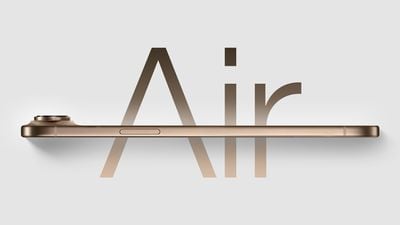
Apple prototyped a larger ultra-slim iPhone 17 Air with a 6.9-inch display, but ultimately decided not to go ahead with the device because of fears that it could be susceptible to bending, according to a new report.
When it first started work on the phone, it prototyped a device with a 6.9-inch screen — matching the Pro Max. Apple pulled the plug on that over fears that a thin device with a giant screen would be susceptible to bending. The company suffered such a controversy in 2014 — "Bendgate" — when the iPhone 6 Plus would sometimes warp when in a tight pocket.
Earlier this month, we reported on a rumor out of China claiming that the iPhone 17 Air shares the same dimensions as the iPhone 17 Pro Max, with the only difference being in the thickness of the devices. It's quite possible the rumor had its origins in Apple's canned prototype.
Corroborating rumors indicate that the iPhone 17 Air that Apple will launch in September will feature a 6.6-inch display with 120Hz ProMotion support, a Dynamic Island, an A19 chip, a single 48-megapixel rear camera, and Apple's custom-made C1 modem. Gurman has been told that the device may start at roughly $899 in the U.S., which is the same price point as the iPhone 16 Plus that the ultra-thin device is believed to be replacing in Apple's smartphone lineup.
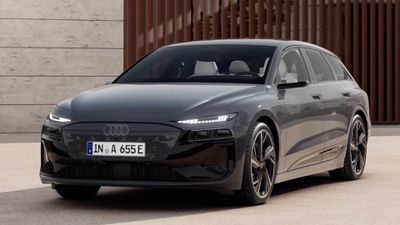
Audi has enabled support for Apple's digital car key feature in its latest A6 Avant e-tron model, bringing Apple Car Keys to the automaker's electric car platform for the first time (via Mac4Ever).
Car Keys allows an iPhone or Apple Watch with NFC capabilities or Ultra Wideband to unlock a vehicle through the Wallet app. A digital version of a car key is stored in Wallet, and unlocking can be done simply by holding an Apple Watch or iPhone near a compatible vehicle's NFC reader.
A tap on the door handle is enough to initiate an unlock. Face ID authentication is a security option, but Apple also offers an Express Mode that eliminates the need to authenticate for a faster unlocking process.
The Audi A6 e-tron is the second model on on Premium Platform Electric (PPE) platform. Audi shares its PPE with Porsche, and it is expected that all the next vehicles in the group will support digital car keys.
Code changes discovered last October by MacRumors in Apple's Wallet app backend indicated that Apple has been preparing support for digital car keys for certain Volvo, Polestar, and Audi vehicles.
Apple introduced digital car key support in 2022, and select car brands like BMW, BYD, Hyundai/Genesis/Kia, Lotus, Mercedes-Benz, and RAM have implemented support for the feature. Apple maintains a full list of vehicles that support car keys on its CarPlay model availability webpage.
Apple's manufacturing partner Foxconn plans to begin assembling AirPods at its factory in Hyderabad, India in April, the Press Trust of India said today.
The report did not indicate which AirPods models will be manufactured in India, but it did say that all units produced will be exported to other countries.
AirPods production in India will further diversify Apple's supply chain. The company and its manufacturing partners have been gradually assembling more products in countries such as India and Vietnam in recent years, including select iPhone and Mac models.
Even with the push into additional countries, Apple still heavily relies on China and Taiwan for manufacturing.
Pu said the iPhone shipment outlook in 2025 is expected to be "lukewarm," due in part to Apple delaying personalized Siri features until some point "in the coming year." Looking ahead, he expects the foldable devices to boost Foxconn's business in 2026.
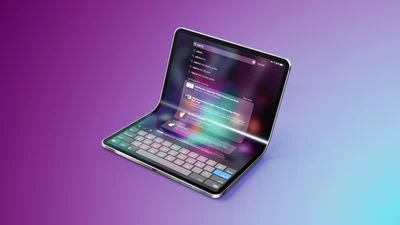
Rumors about foldable iPhones and iPads have been circulating for many years, and it appears that the devices are finally getting closer to launching, barring major setbacks. Depending on exactly when mass production begins in the second half of 2026, the devices could launch either later next year, or at some point in 2027.
Australian tech enthusiast Sonny Dickson today shared photos of dummy models for all four iPhone 17 models launching later this year.
Dummy models are often based on leaked designs and dimensions, and they allow accessory makers to prepare cases for upcoming iPhone models.
In line with previous rumors, the iPhone 17 Pro and iPhone 17 Pro Max each have an elongated rear camera bump, housing three camera lenses, an LED camera flash, and a microphone. The so-called iPhone 17 Air has a similar rear camera bump, but with only a single lens. Last, the regular iPhone 17 has the same design as the iPhone 16.
Notably, these dummy models reveal a few potential features for the iPhone 17 Air that we had yet to hear about, including MagSafe and the Action button. There were some concerns that the iPhone 17 Air might lack MagSafe due to its ultra-thin design, but it appears the device will offer the feature after all, if these dummy models are accurate.
The inclusion of an Action button instead of a Ring/Silent switch is not much of a surprise, but it is still good to see the first evidence of this change.
A report earlier today said the iPhone 17 Air will also have a Camera Control button, and the dummy model reflects that.
A side-by-side view of the dummy models reveals that the iPhone 17 Air will look noticeably thinner than the other three iPhone 17 models.
As usual, Apple should announce its new iPhone lineup in September.


 The typical design of a newer Apple Store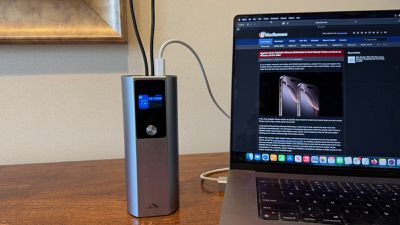
 Note: MacRumors is an affiliate partner with Disney+. When you click a link and make a purchase, we may receive a small payment, which helps us keep the site running.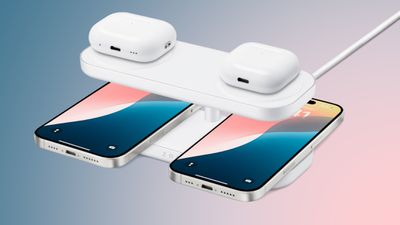

 Note: MacRumors is an affiliate partner with 1Password. When you click a link and make a purchase, we may receive a small payment, which helps us keep the site running.