Users of popular Mac desktop extension app Duet Display are being advised not to update to macOS 10.13.4, due to "critical bugs" that prevent the software from communicating with connected iOS devices used as extra displays.
When installed on a Mac and an iPad (or iPhone) and the two devices are connected using a Lightning cable or 30-pin connector, Duet allows users to extend their macOS desktop space on the Retina display of the iOS device. However, unspecified changes in the latest update to macOS High Sierra, released by Apple yesterday, causes the Duet client app to hang, and users are being advised to hold back from upgrading, at least for now.
Duet's developers are recommending that users contact Apple through the company's online bug reporting form to get the issue prioritized. In the meantime, the developers are "actively looking" into workarounds to reinstate Duet's functionality in macOS 10.13.4.
Duet Display is priced at $19.99 in the App Store, and unlocking the Pro features to turn the iPad Pro into a drawing tablet costs an additional $19.99 per year through an in-app subscription. Duet Display is available from the App Store. [Direct Link]
Update: Users of other desktop extension apps like Air Display and iDisplay are also reporting incompatibility with macOS 10.13.4. DisplayLink-enabled USB graphics devices are also reportedly affected. There's some speculation that Apple's added eGPU support in 10.13.4 is the underlying cause of the issues. We'll keep readers updated if we hear more.
Last week we explained how you can use a simple Terminal command to insert spaces in your macOS Dock and visibly group together app icons. In this article, we're going to highlight another simple Terminal hack that turns the Dock into more of a straightforward app switcher by making it display only apps that are currently running on your Mac.
Seeing only active apps at the bottom of your desktop can be a refreshing change if your Dock has become cluttered with various app shortcuts over time, and you can always use Spotlight (key combination Command-Space to activate) or an alternative method to launch your Mac apps.
When following the simple steps below, just bear in mind that Terminal is a powerful app, so make sure you enter the commands properly, especially if you're not familiar with it.
How to Show Only Active Apps in Your Dock
Launch the Terminal app found in Applications/Utilities. (To quickly open the Utilities folder in Finder, select Go -> Utilities from the menu bar, or use the key shortcut Shift-Command-U.)
At the Terminal prompt, type the following command and press Enter: defaults write com.apple.dock static-only -bool true; killall Dock
Your Dock will reboot in order to show only the currently running apps on your Mac in the order they were launched.
How to Revert the Dock Back to Its Original State
If you decide you don't like this way of using the Dock, follow the steps below to return it to its usual behavior.
Launch the Terminal app again if it's not already open.
At the Terminal prompt, type the following command and press Enter: defaults write com.apple.dock static-only -bool false; killall Dock
Your Dock will reboot and revert to showing both running and non-running apps.
If there's a specific active app that you'd like to hide from the Dock for whatever reason, there are a couple of third-party utilities that might help. Dock Dodger is a free drag-and-drop tool that can hide certain apps from the Dock even when they're running (once placed on the tool's droplet, you have to restart the app in question to hide it, although our success rate varied depending on the app). If you're willing to open your wallet, GhostTile is a more recent and reliable paid-for alternative with similar functionality.
Apple today released macOS High Sierra 10.13.4, the fourth major update to the macOS High Sierra operating system available on Apple's Macs. macOS High Sierra 10.13.4 comes more than two months after the release of macOS High Sierra 10.13.3, which brought fixes for the Spectre vulnerability.
macOS High Sierra 10.13.4 can be downloaded directly from the Mac App Store or through the Software Update function in the Mac App Store on all compatible Macs that are already running macOS High Sierra.
macOS High Sierra 10.13.4 introduces bug fixes and performance improvements for issues that have been discovered since the release of macOS High Sierra 10.13.3. The update brings support for Business Chat, which will allow you to interface with businesses like Wells Fargo and Lowe's right in the Messages app, and it includes official support for external graphics processors (eGPUs).
There are also several other small bug fixes and tweaks, as listed in the release notes:
The macOS High Sierra 10.13.4 update improves the stability, performance, and security of your Mac, and it is recommended for all users. This update:
- Adds support for Business Chat conversations in Messages in the US - Adds support for external graphics processors (eGPUs) - Fixes graphics corruption issues affecting certain apps on iMac Pro - Allows jumping to the right-most open tab using Command+9 in Safari - Enables sorting Safari bookmarks by name or URL by right clicking and choosing "Sort by..." - Fixes an issue that may prevent web link previews from appearing in Messages - Helps protect privacy by only AutoFilling usernames and passwords after selecting them in a web form field in Safari - Displays warnings in the Safari Smart Search Field when interacting with password or credit card forms on non-encrypted web pages - Displays privacy icons and links to explain how your data will be used and protected when Apple features ask to use your personal information
The update also introduces the smoke cloud wallpaper that was previously only available on the iMac Pro and it introduces a warning when opening up a 32-bit app as part of an effort to phase them out.
In the future, Apple plans to phase out 32-bit Mac apps, just like it did with 32-bit iOS apps. Apple says macOS High Sierra is the last version of macOS that will support 32-bit apps "without compromises."
MyFitnessPal parent company Under Armour today announced that MyFitnessPal has been the victim of a hacking incident, which has seen personal details of approximately 150 million user accounts accessed in a data breach.
MyFitnessPal is a popular health and fitness iOS app and website that's used by many iPhone and iPad owners, and it is consistently among the top Health and Fitness apps in the App Store.
The breach, which happened in late February, included usernames, emails, and encrypted passwords. Credit card numbers from paying customers were not accessed.
Under Armor has already been sending emails and in-app messages to its customers who were affected by the breach. The company says it is working with "leading data security firms" to assist in its investigation.
MyFitnessPal users will be required to change their passwords.
Apple today released an updated version of iTunes, iTunes 12.7.4, which introduces a new music video experience for Apple Music. A music video section lets users discover new and popular music videos in the Browse section of Apple Music, and there's an option to create Apple Music playlists for videos.
Apple's full release notes for iTunes 12.7.4 are below:
iTunes now includes a new music video experience for Apple Music. Find what's new and popular in Music Videos within Browse, and play videos back-to-back with music video playlists.
Today's iTunes update can be downloaded from the Mac App Store for free using the Software Update function.
iTunes 12.7.4 follows iTunes 12.7.3, a January update that introduced support for HomePod. iTunes 12.7, released last September, was the last major update to iTunes, eliminating the built-in App Store to focus solely on music, movies, TV shows, podcasts, and audiobooks.
On our YouTube channel, we've got a monthly series that highlights new, interesting, fun, and useful apps that we think are worth downloading and checking out.
There are so many apps on the iOS App Store, which makes it hard to find new content, and it can also be easy to overlook great apps that are a bit older. We've designed our app lists to include apps - both old and new - that we personally recommend and have used over the course of the month.
Pocket Penguins (Free) - Here in the Bay Area, we have a great place that's part zoo, part science museum, and part research institute called the California Academy of the Sciences. The California Academy of Sciences is home to a bunch of endangered African penguins (as part of a breeding program), which you can watch through the Pocket Penguins app. It's a penguin livestream that's on 24/7, and it's a fun second screen activity (there's an Apple TV app too) or something to do when you need a wildlife breather. If you like the penguins, you may also like the stingray feed.
Hop (Free) - There's a popular game called Hop, but we're talking about the email app in this week's video. Hop is a team-based email app that's designed to make your email more like a chat conversation than a traditional email inbox. It's supposed to make sending and managing emails much faster for those of us who need some assistance cutting down on the inbox time.
Pod Calendar (Free) - Pod Calendar is a free app that's a simple, light alternative to the standard Calendar app on the iPhone and iPad. It uses color coding for all of your events so it's easy to see what's going on at a glance, and it uses natural language for adding new entries quickly. There's support for multiple calendars, multiple reminders, an interaction history for your contacts, and tools for sending quick emails and messages.
Zedge Wallpapers (Free) - As the name suggests, this is an app for downloading wallpapers. When we upload videos, we get a lot of questions about the wallpaper we're using. A lot of the time, the wallpapers in our videos are from this app. Check it out if you're looking for a fresh look for your iPhone - there are thousands to choose from.
PUBG(and Fortnite) (Free) - Unless you're living under a rock, you've heard of PUBG and Fortnite, both of which are battle royale-style games that are super popular right now. The idea is to kill or be killed, with the aim of the game to be the last person standing. PUBG and Fortnite both came out on iOS recently, with PUBG available to everyone and Fortnite available as a beta. You might not think a battle royale game would work on an iOS device, but both of these games are surprisingly good and worth checking out.
If you have favorite iOS apps, make sure to share them with us. We'll check out what you have to recommend and we may just include them next month. Want more apps? Check out our February recommendations.
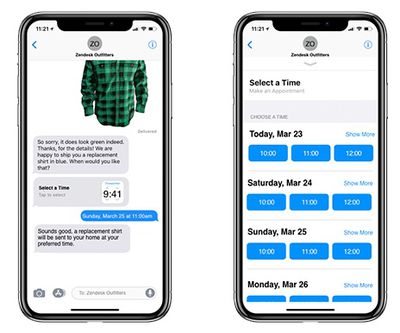
Zendesk is partnering with Apple to introduce support for the Business Chat beta feature that's available in the Messages app on iOS devices running the new iOS 11.3 update.
With Business Chat integration, retailers who use Zendesk tools for customer support will be able to interact with customers using the Messages app, providing more prompt and responsive support.
"Today's customer expects to communicate with businesses in the same way they do with friends, on whatever channel is most convenient for them." said Caitlin Henehan, VP & GM of Zendesk Chat. "Zendesk's integration with Apple Business Chat Beta will allow customers to engage with businesses on a much more personal level through Message. Companies will be able to provide timely responses and interact on the channel that is familiar and accessible to the consumer."
First announced when iOS 11.3 was previewed in January, Business Chat is designed to allow iPhone, iPad, and macOS users to communicate directly with businesses right within the Messages app. Business Chat allows users to chat with businesses, schedule appointments, and make purchases.
As with most of its services, Apple focused on privacy with Business Chat. No business is provided with a user's contact information and chats can be ended at any time.
In addition to Zendesk support, several major companies are supporting Business Chat at launch, including Lowe's, Discover, Hilton, and Wells Fargo. Additional businesses are likely to begin adopting the feature in the near future.
Business Chat is currently in beta and is available to users who are running iOS 11.3 in the United States.
A few weeks ago MacRumorsannounced a partnership with accessory maker Twelve South, offering spring break travelers the chance to get five vacation-friendly items discounted by 15 percent. That sale will end tomorrow, March 30, so be sure to head over to TwelveSouth.com and use the promo code MacRumorsSpringBreak on any of the items listed below before the code expires.
Customers browsing Twelve South this week should also note that the company has discounted its BookBook case for iPad and iPad Pro by $20 following the launch of the sixth-generation iPad on Tuesday. The case fits the new 2018 iPad as well as the 9.7-inch iPad Pro first released in 2016, and comes in Brown ($59.99, down from $79.99) and Rutledge ($79.99, down from $99.99).
RAVPower also has a sale ending tomorrow, this one on a pair of wireless chargers at Amazon, with savings of 20 percent hitting both the HyperAir stand and HyperAir pad. We reviewed both stands recently and came away impressed with each device, although the HyperAir stand just beat out the HyperAir pad in our charging time tests.
If you're still on the lookout for a new charging mat for an iPhone 8, 8 Plus, or X, head over to Amazon and use promo code MACRPC69 to bring the stand down to $39.99, from $49.99, and use promo code MACRPC66 to bring the pad down to $30.59, from $39.99.
Anker typically has numerous sales on Apple-related accessories happening at Amazon, and this week the company is offering 30 percent off USB-C charging and power accessories that should make nice companions with Apple's recent line of MacBooks. There's also a collection of portable chargers, power strips, and iPhone cases up for sale.
Below you'll find a list of Anker's latest deals, including the dates they expire and the promo codes needed for each sale. Note that prices exclude shipping and handling fees, but Amazon Prime members will get the usual 2-day free shipping.
Head over to our full Deals Roundup for more sales information, including a free $25 e-gift card from Best Buy with the purchase of the new 9.7-inch iPad, along with the retailer's ongoing discounts on MacBook Air, iPad mini 4, and more.
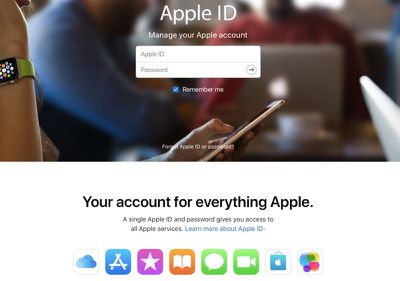
Apple will soon introduce an updated website for managing Apple IDs, which will allow Apple users to download a copy of all of their data stored by the company, reports Bloomberg.
Customers will be able to download data like their Contacts, photos, music preferences, Calendar information, and more. The site will essentially let users download all information stored across Apple's apps and services.
Apple also plans to allow customers to use the site to correct personal information, disable their Apple ID account, and permanently delete an Apple ID.
At the current time, there is no way for users to download their data or delete their accounts without directly contacting Apple.
Apple is making the change to comply with the European Union's new General Data Protection Regulation, which goes into effect on May 25.
Apple plans to release the new web-based privacy tools in Europe in early May, with an expansion to come to other countries at a later date.
The iOS 11.3 update, released this morning, also has privacy improvements in the form of new privacy splash screens that are displayed within each of Apple's apps when you open them for the first time to explain what data Apple collects and why.
Alongside iOS 11.3, watchOS 4.3, and tvOS 11.3, Apple today released a new 11.3 software update designed for the HomePod.
This marks the first software update that's been released for the HomePod since it became available for purchase in February.
The new HomePod software will be installed automatically on the HomePod after you update to iOS 11.3, but you can also manually update and check your software version by following the instructions in our HomePod software how to.
It's not clear what new features are included in the HomePod software just yet, but we are waiting on both AirPlay 2 and a feature to allow two HomePods to be paired together for stereo sound. Apple's release notes don't divulge any details about what might be included, suggesting these features have not been implemented.
According to the release notes, the update "includes general improvements for stability and quality."
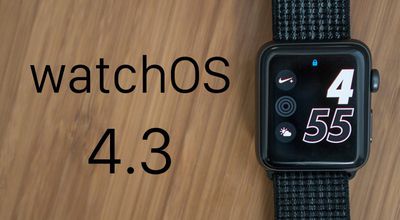
Apple today released watchOS 4.3, the third major update to the watchOS 4 operating system that runs on the Apple Watch. watchOS 4.3 comes more than three months after the release of watchOS 4.2, the last major update that brought Apple Pay Cash.
watchOS 4.3 can be downloaded through the dedicated Apple Watch app on the iPhone by going to General --> Software Update. To install the new software, the Apple Watch needs to have at least 50 percent battery, it needs to be placed on a charger, and it needs to be in range of the iPhone.
watchOS 4.3 introduces support for Nightstand mode when the Apple Watch is positioned in a portrait orientation, a feature that was previously only available when the watch was placed in landscape orientation on its side.
Today's update also reintroduces a much-desired feature that allows music playing on the iPhone to be controlled using the Music app on the Apple Watch.
In previous versions of watchOS, starting with watchOS 4, the Music app could only be used to control music playing on the watch itself. watchOS 4.3 returns pre-watchOS 4 functionality and once again allows you to select the music playing on your iPhone from the Apple Watch. With watchOS 4.3, you're also able to control playback and volume on the HomePod using the Apple Watch.
Other new features in watchOS 4.3 include a new charging animation when the Apple Watch is placed on the charger and a new app loading animation when opening up an app. You'll also now see your Activity data on the Siri watch face, and the battery complication more accurately reports battery life.
Apple today released tvOS 11.3, the second major update to the tvOS operating system designed for the fourth and fifth-generation Apple TV models. tvOS 11.3 comes more than three months after the release of tvOS 11.2, and a month after the release of a minor tvOS 11.2.6 update.
tvOS 11.3 can be downloaded over the air through the Settings app on the Apple TV by going to System --> Software Update. Apple TV owners who have automatic software updates turned on will be upgraded to tvOS 11.3 automatically.
tvOS 11.3 introduces performance improvements and bug fixes for issues discovered following the release of tvOS 11.2.6.
The update introduces enhancements to Match Content support, automatic frame rate switching on the fourth-generation Apple TV (a feature that was added to Apple TV 4K in a past update), and automatic mode switching for AirPlay video sessions.
The TV app, designed to let users find and watch television shows and movies aggregated from entertainment apps, is expanding to Brazil and Mexico. Brazil is also gaining Siri support on Apple TV 4K and the fourth-generation Apple TV.
Early beta versions of tvOS 11.3 included support for AirPlay 2, allowing the Apple TV to be added to the Home app as part of a HomeKit setup and enabling multi-room audio across multiple Apple TVs.
AirPlay 2 functionality was, however, removed in the third beta of tvOS 11.3, eliminating these features. AirPlay 2 was not re-added during the beta testing period, so it's likely Apple is saving the feature for a future update.
Apple today released iOS 11.3, the twelfth official update to the iOS 11 operating system that first came out in September of 2017. iOS 11.3 comes more than a month the launch of iOS 11.2.6, a minor update that fixed a bug causing crashes due to the incorrect rendering of a character in the Indian language Telugu.
The iOS 11.3 update is available on all eligible devices over-the-air in the Settings app. To access the update, go to Settings --> General --> Software Update. Eligible devices include the iPhone 5s and later, the iPad mini 2 and later, the iPad Air and later, and the 6th-generation iPod touch.
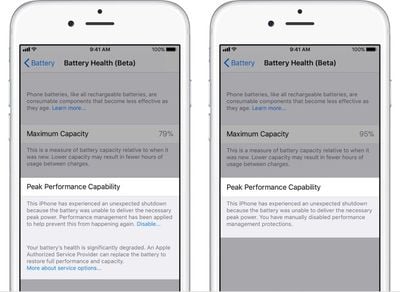
iOS 11.3 is a major update that introduces a long list of new features, including several that Apple has been promising for months. The update introduces a new "Battery Health" feature that's designed to provide iOS users with more information about their batteries, and it is a function Apple promised to introduce following backlash over the power management features added to older iPhones.
Battery Health offers details on maximum battery capacity and peak performance capability, and for devices with degraded batteries, it provides information on if and when a device is being throttled with performance management features. It also provides a way for customers who do have a device with a degraded battery to turn off performance management all together.
By default, iOS 11.3 disables performance management on the iPhone, and the feature is only re-enabled once a device experiences an unexpected shutdown. Battery Health is only for the iPhone, but on the iPad, Apple is introducing new iPad charge management for tablets that are plugged in for long periods of time.
iOS 11.3 introduces ARKit 1.5, a new version of ARKit that will allow developers to do even more with augmented reality apps. ARKit 1.5 more accurately maps irregularly shaped surfaces, has image and object recognition, and allows virtual objects to be placed on vertical surfaces like walls.
The iOS 11.3 update includes a new Health Records feature in the U.S. that aggregates all of your medical records in one easy-to-access place (as long as you have a participating provider). Apple has outlined participating medical providers and offered up details on Health Records in a press release shared today.
There are four new Animoji (dragon, bear, skull, and lion) on the iPhone X in iOS 11.3, and updates have been made to some existing standard emoji, as outlined by Emojipedia. The lion emoji, for example, is a little less sad, while the skull emoji has gained a jaw.
There are also several other smaller features worth noting in iOS 11.3. A new "For You" section in Apple News displays hand-picked content and top videos, support for Advanced Mobile Location (AML) offers a more accurate location when placing an emergency call in a supported country, software authentication for HomeKit is included to greatly expand the number of devices that can support HomeKit, to make it easier to find relevant people to follow. and a new Privacy screen and icon will show up whenever Apple asks you for info. The privacy screen is reflected in several new splash screens that pop up when you first open apps.
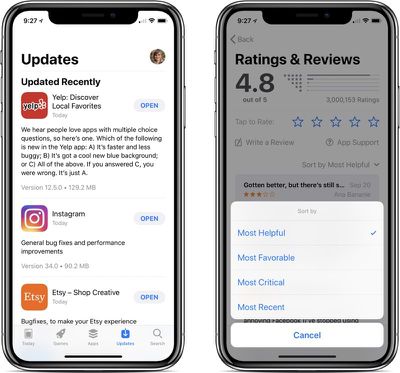
In the App Store, you can finally sort reviews by most helpful, most favorable, most critical, and most recent, a handy change for better finding the app info you're looking for, and in the Updates tab, more details are available about app update size. Just ahead of the release, Apple added a new music videos section to Apple Music, and improvements have also been made to friend suggestions in Apple Music to make it easier to find people who like what you like.
The release of iOS 11.3 includes support for Business Chat in the U.S., which will let you interface with businesses like Wells Fargo, Delta, Hilton and Lowe's right in the Messages app. Improvements have been made to security in Safari, Handoff and Universal Clipboard have been improved, there are new Accessibility features, and bug fixes for keyboards.
The update also addresses several notable software bugs including an issue that could cause incoming calls not to activate the iPhone's screen, a bug that prevented voicemail playback, an oversight that did not allow parents to approve child purchases using Face ID, a Bluetooth bug that prevented proper syncing of contacts and music playback in a vehicle, and more. Apple's full release notes for the update are below:
iOS 11.3 introduces new features including ARKit 1.5 with support for more immersive augmented reality experiences, iPhone Battery Health (Beta), new Animoji for iPhone X users, and more. This update also includes stability improvements and bug fixes.
Augmented Reality - ARKit 1.5 allows developers to place digital objects on vertical surfaces like walls and doors in addition to horizontal surfaces - Adds support for detecting and incorporating images like movie posters or artwork into AR experiences - Supports a higher resolution real world camera view when using AR experiences
iPhone Battery Health (Beta) - Displays information on iPhone maximum battery capacity and peak performance capability - Indicates if the performance management feature that dynamically manages maximum performance to prevent unexpected shutdowns is on and includes the option to disable it - Recommends if a battery needs to be replaced
iPad charge management - Maintains battery health when iPad is connected to power for prolonged periods of time, such as when it is used in kiosks, point of sale systems, or stored in charging carts
Animoji - Introduces four new Animoji on iPhone X: lion, bear, dragon and skull
Privacy - When an Apple feature asks to use your personal information, an icon now appears along with a link to detailed information explaining how your data will be used and protected
Business Chat (Beta) - US only - Communicate with companies to easily ask questions, schedule appointments, and make purchases inside the built-in Messages app on iPhone and iPad
Health Records (Beta) - US only - Access health records and view lab results, immunizations, and more in a consolidated timeline in the Health app
Apple Music - Features a new music video experience, including an updated Music Videos section with exclusive video playlists - Find friends that have similar tastes using updated suggestions in Apple Music that reveal genres people enjoy and mutual friends that follow them
News - Top Stories now always appear first in For You - Watch Top Videos curated by News editors
App Store - Adds ability to sort customer reviews on product pages by Most Helpful, Most Favorable, Most Critical, or Most Recent - Improves Updates tab information with app version and file size
Safari - Helps protect privacy by only AutoFilling usernames and passwords after selecting them in a web form field - Includes warnings in the Smart Search Field when interacting with password or credit card forms on non-encrypted web pages - AutoFill for usernames and passwords is now available in web views within apps - Articles shared to Mail from Safari are now formatted using Reader mode by default when Reader is available - Folders in Favorites now show icons for the bookmarks contained within
Keyboards - Adds two new Shuangpin keyboard layouts - Adds support for connected hardware keyboards using the Turkish F keyboard layout - Improves Chinese and Japanese keyboards for better reachability on 4.7-inch and 5.5-inch devices - Enables switching back to the keyboard after dictation with just one tap - Addresses an issue where auto-correct could incorrectly capitalize some words - Fixes an issue on iPad Pro that prevented the iPad Smart Keyboard from working after connecting to a captive Wi-Fi access point - Fixes an issue that could cause the Thai keyboard to incorrectly switch to the numeric layout when in landscape mode
Accessibility - App Store adds accessibility support for bold and large text for display customization - Smart Invert adds support for images on the web and in Mail messages - Improves RTT experience and adds RTT support for T-Mobile - Improves app switching on iPad for VoiceOver and Switch Control users - Addresses an issue where VoiceOver incorrectly described Bluetooth status and badge icons - Fixes an issue where end call button might not be presented in the Phone app when using VoiceOver - Fixes an issue where in-app app rating was not accessible with VoiceOver - Resolves an issue when using Live Listen that could distort audio playback
Other improvements and fixes - Introduces support for the AML standard which provides more accurate location data to emergency responders when SOS is triggered (in supported countries) - Adds support for software authentication as a new way for developers to create and enable HomeKit compatible accessories - Podcasts now plays episodes with a single tap, and you can tap Details to learn more about each episode - Improves search performance for users with long notes in Contacts - Improves performance of Handoff and Universal Clipboard when both devices are on the same Wi-Fi network - Fixes an issue that could prevent incoming calls from waking the display - Addresses an issue that could delay or prevent playback of Visual Voicemail - Resolves an issue that prevented opening a web link in Messages - Fixes an issue that could prevent users from returning to Mail after previewing a message attachment - Fixes an issue that could cause Mail notifications to reappear on the Lock screen after they had been cleared - Resolves an issue that could cause time and notifications to disappear from the Lock Screen - Resolves an issue that prevented parents from using Face ID to approve Ask to Buy requests - Fixes an issue in Weather where current weather conditions may not have been updated - Fixes an issue where contacts may not sync with a car's phone book when connected over Bluetooth - Addresses an issue that could prevent audio apps from playing in cars when the app was in the background
Betas of iOS 11.3 included a Messages on iCloud feature that Apple has been working on for several months, but the iOS 11.3 release notes do not include a mention of Messages on iCloud, suggesting the feature has been delayed for a second time. With Messages on iCloud, all of your iMessages are stored in the cloud, allowing them to sync across devices (even new ones) and saving valuable storage space on your iPhones and iPads.
Early betas also included AirPlay 2 support for iOS 11.3 and tvOS 11.3, but the feature was removed in iOS 11.3 beta 3 and it was not reintroduced in a later beta, suggesting it has been pushed back to a later update.
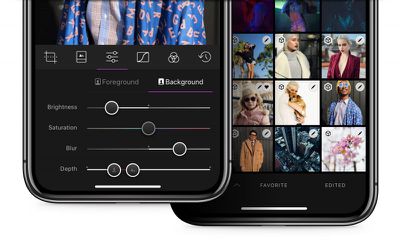
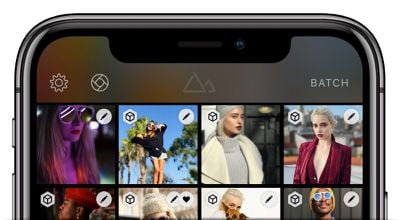
Popular photo editing app Darkroom reached version 3.5 today, introducing the ability to edit Depth shots taken on supporting iPhone cameras, along with several other notable new features.
After updating to v3.5, Darkroom will automatically load the depth map for Portrait photos encountered in the library and recreate applied blur from scratch, handing control of its strength and location back to the user. Thanks to a new depth range selector, it's now possible to define exactly where the foreground and the background are.
Meanwhile, in what the developers are calling an industry first, Darkroom 3.5 now features Depth-Aware filters. These come premium Portrait Filter pack to be depth-aware. Each filter will automatically adjust foreground and background settings to optimize the focal point of the image on the face, not on the background. User-created filters with depth settings also now carry over those settings to the filter itself.
Additionally in this release, Darkroom's RAW engine has been rebuilt to take full advantage of the Extended-Range color space of Raw files, which should enable photographers to dramatically improve the amount of detail that's recoverable from shadows and highlights. Similarly, the brightness, contrast, highlights and shadows sliders have been rebuilt to operate in the extended space, offering finer-grain tone control.
Elsewhere, the developers have undertaken app-wide performance refinements in an effort to make photo editing in Darkroom as fast as photo browsing. There's also now a dedicated button at the top of the library view for accessing popular third-party camera app Halide, ready for when the announced Darkroom X Halide integration goes live.
Darkroom is a free download from the App Store and includes in-app purchases for some tools. [Direct Link].
French developer Pierre Blazquez today shared what he claims are the final iOS 11.3 release notes, supposedly obtained from Apple's servers. His tweet contains images of the release notes in English for the United States.
Apple blog Mac4Ever shared the release notes in French, which we've translated and embedded below in English.
While there aren't too many surprises, it's worth noting that Messages on iCloud is not listed, despite being enabled in the latest iOS 11.3 and macOS 10.13.4 betas. Apple did say the feature is included in the betas "for testing and evaluation purposes," so it was never entirely clear if it would be ready for the final release.
Beyond that, the release notes seemingly confirm Apple's new Battery Health feature on iPhones will still be considered a beta feature in the iOS 11.3 public release, Advanced Mobile Location support where available, App Store review sorting, and improved charging management for always-plugged-in iPads.
As expected, there are also new accessibility features, a wide range of stability improvements and bug fixes, and other enhancements:
Augmented Reality
ARKit 1.5 allows developers to place virtual objects on vertical surfaces like walls and doors in addition to horizontal surfaces
Adds support for detecting and incorporating images like movie posters or artwork into AR experiences
Supports a higher resolution real-world camera view when using AR experiences
iPhone Battery Health (Beta)
Displays information on iPhone maximum battery capacity and peak performance capability
Indicates if the performance management feature that dynamically manages maximum performance to prevent unexpected shutdowns is on and includes the option to disable it
Recommends if a battery needs to be replaced
For more information on batteries and performance, visit this website: https://support.apple.com/en-us/HT208387
iPad charge management
Maintains battery status when the iPad is plugged in for extended periods of time, such as when used in a kiosk or point-of-sale system, or stored in a charging cart.
Animoji
Four new Animoji available on the iPhone X: lion, bear, dragon and skull.
Privacy
When an Apple feature asks to use your personal information, an icon now appears with a link to access detailed information about how your data will be used and protected.
Business Chat (Beta) — US Only
Communicate with companies to easily ask questions, schedule appointments, and make purchases inside the built-in Messages app on iPhone and iPad
Health Records (Beta) — US Only
Access health records and view lab results, immunizations, and more in a consolidated timeline in the Health app
Apple Music
Provides a new experience in video clips, including a Revised Video Clips section featuring exclusive video playlists.
Find friends with similar tastes through Apple Music's improved suggestions, which list the genres that the users and mutual friends follow.
News
The main titles now always appear first in "For You."
Watch the best videos selected by News editors.
App Store
Four options now allow you to sort the customer reviews on the product pages: the most useful, the most favorable, the most critical or the most recent.
The Updates tab now shows the version of the app and the size of the file.
Safari
Promotes the protection of privacy by notifying usernames and passwords until they have been selected in a web form field.
Presents warnings in the smart search field when the user interacts with password entry forms or credit card data on unencrypted web pages.
Automatic filling of usernames and passwords is now available in apps' web views.
By default, articles shared via Mail from Safari are now formatted using Reader mode, if the drive is available.
In Favorites, folders now have icons for the bookmarks they contain.
Keyboards
Adds two Shuangpin keyboard layouts.
Supports connected physical keyboards using Turkish F layout.
Improves Chinese and Japanese keyboards for better accessibility on devices with a 4.7-inch or 5.5-inch screen.
Allows you to return to the keyboard with a simple touch after the dictation.
Fixes a problem that could cause the capitalization of the first letter of some words by the automatic correction feature.
Fixes an issue on the iPad Pro that prevented the iPad Smart Keyboard from working after connecting to a captive Wi-Fi hotspot.
Fixes a problem that could cause undesirable activation of the digital layout on the Thai keyboard in landscape mode.
Accessibility
The App Store now supports accessibility options "Bold Text" and "Large Font" for customizing the display.
Smart Reversal now supports images on the web and in Mail messages.
Enhances the RTT experience and supports RTT service for T-Mobile.
Improves app selection on the iPad for VoiceOver users and selection control.
Corrects a problem with the incorrect description of the Bluetooth status icon and the Bluetooth icon by VoiceOver.
Fixes a problem that may prevent the end of call button from appearing in the Phone app when using VoiceOver.
Fixes an issue preventing access to an app's built-in ranking with VoiceOver.
Fixes a problem that may cause distorted audio playback when using real-time listening.
Other Enhancements and Fixes
Supports AML technology, which provides more accurate location data to emergency services during an emergency call (in countries where this technology is available).
Supports software authentication, which provides developers with a new way to create and activate HomeKit-compatible accessories.
Podcasts now plays episodes with a single tap, and you can tap Details to learn more about each one.
Improves search performance for users with long notes in Contacts.
Improves the performance of Handoff and the universal clipboard when both devices are connected to the same Wi-Fi network.
Fixes a problem that may prevent incoming calls from activating the screen.
Fixes a problem that may prevent or prevent voicemail playback.
Fixes an issue that prevents opening a web link in Messages.
Fixes a problem that may prevent users from returning to Mail after previewing an attachment to a message.
Fixes a problem that could cause the deleted screen to reappear on the locked screen.
Fixes a problem that can cause the time and notifications to disappear on the locked screen.
Fixes an issue that prevents parents from using Face ID for approving purchase authorization requests.
Fixes a problem that could prevent updating of the current weather conditions in Weather.
Fixes a problem that could prevent the synchronization of contacts with a vehicle directory when connected via Bluetooth.
Fixes a problem that may prevent an audio app from playing content in a vehicle while it was in the background.
iOS 11.3 remains in beta testing, but a public release appears to be imminent, as the software update was seeded for the new iPad yesterday.
Apple recently confirmed that there will be an iOS 11.4 software update, perhaps including Messages on iCloud and AirPlay 2.
In Apple's latest promo for Apple Pay, sports fans can save 20 percent on gear when paying with Apple Pay in the Fanatics app or on Fanatics.com.
To see the discount, make a purchase worth $25 or more on Fanatics, then enter the coupon code APPLEPAY20 during checkout to redeem the 20 percent off savings. The promo runs from today, March 29, through April 4 at 11:59 p.m. ET.
Fanatics' website has a complete collection of brands and merchandise offered under the promotion, as well as a detailed list of exclusions at the bottom of this page.
Apple's new promotion also highlights sporting goods stores like Champs Sports, Dick's Sporting Goods, and Foot Locker, as well as sporting event apps like MLB Ballpark, StubHub, and Gametime.
Apple has launched a consistent series of promos for Apple Pay over the past few months, most recently including food deliveries from Grubhub, Seamless, and Eat24. Each new promotion also reminds users that they can pay friends back for a variety of things using Apple Pay Cash.
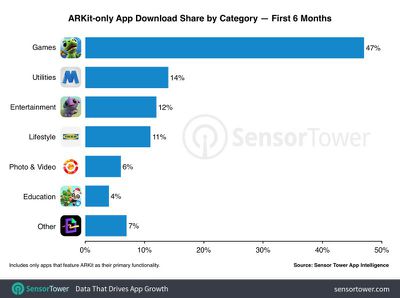
Since ARKit debuted within iOS 11 on September 19 last year, iPhone and iPad owners worldwide have downloaded and installed more than 13 million ARKit-only apps. The data comes from Sensor Tower, which broke down the most popular categories of augmented reality apps fueled by ARKit, the top 10 free and paid apps, highest grossing apps, and more.
Games remain the dominant category for ARKit-only apps -- or those apps built "expressly using" Apple's framework -- having grown from representing 35 percent of downloads one month after iOS 11's launch, to 47 percent today. The second place category, Utilities, decreased from 19 percent last October to 15 percent in March. Rounding out the top six were Entertainment, Lifestyle, Photo & Video, and Education.
Charts via Sensor Tower
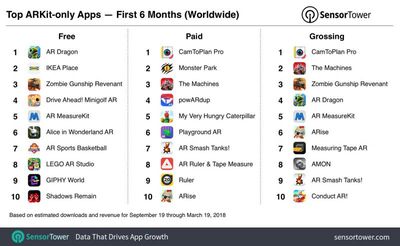
Sensor Tower pointed out that for the games-specific charts, the top spots of all three sections (free, paid, grossing) were "still occupied by many of the same titles that found success several months ago," suggesting not much variation in ARKit-only gaming on the App Store. On the other hand, when the researchers looked at non-game apps they saw multiple newcomers rising on the charts, like LEGO AR Studio -- "a testament to the popularity of kid-focused AR content on the App Store thus far."
From what we’ve seen in our latest analysis, ARKit-only apps only continue to grow in terms of installs and the number of experiences available to users. This isn’t including the numerous ARKit-compatible apps that have added some degree of AR functionality in the past six months and have pushed the number of AR apps on the App Store well beyond 2,000 to date.
There’s clearly substantial room for growth in terms of user base and revenue, but also ambition when it comes to this burgeoning category, and the apps above have built a solid foundation for what’s to come, especially as the capabilities of ARKit evolve and expand with future versions of iOS.
Popular free game "AR Dragon" retained the top spot as the most-downloaded free ARKit-only app and game during the framework's first six months of availability. Other augmented reality apps that remain popular on the App Store include IKEA Place (#2 free apps), AR MeasureKit (#5 free apps/#5 top grossing), and CamToPlan Pro (#1 paid apps). For both paid and grossing categories, ARKit app downloads are leaning "predominantly" to the Utilities category.
Apple CEO Tim Cook has described augmented reality as "profound" in the past, claiming that Apple is in a "unique position" to lead when it comes to the technology. He thinks that AR will become "as key as having a website" for brands, and sees ARKit as the start of something much bigger: "This is very much like in 2008 when we fired the gun in the App Store. That's what it feels like to me and I think it will just get bigger from here."
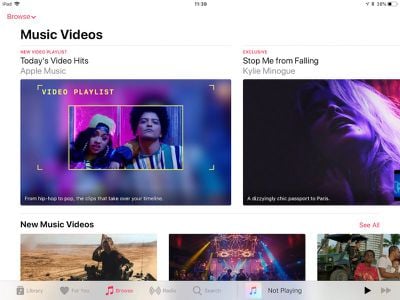
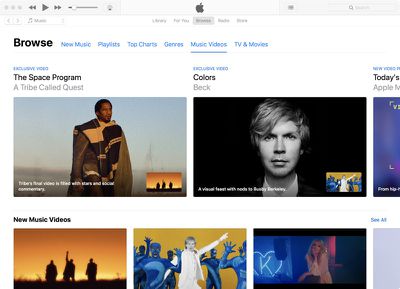
Apple this morning added a new Music Videos section to its Apple Music streaming service for $9.99 monthly subscribers.
The new section is accessed by way of the Browse panel in iTunes on macOS and iOS 11, and is currently showcasing several music videos that have been available on the service for some time, along with Apple Music exclusives from the likes of Kylie Minogue and Beck. A curated "Today's Video Hits" playlist and artist spotlight on Taylor Swift are also featured.
Word of new music video content for Apple Music subscribers came via Apple when it outlined many of the upcoming changes in iOS 11.3 in a preview announcement at the beginning of the year.
The company said Apple Music would "soon be the home for music videos," allowing subscribers to stream all the music videos they want without ads, as well as view and create music video playlists. Users can also expect regularly updated editorial and music video recommendations from Apple, based on the user's music tastes.
We're still waiting for the official release of iOS 11.3 to drop. Several beta versions of iOS 11.3 have been made available to developers and public testers since Apple's preview announcement, but the new Apple Music video category has been introduced separately and is already appearing for a lot of iPhone and iPad users running iOS 11.2.6 and for Mac users with iTunes 12.7 or later installed.
Apple's first foldable iPhone, with a book-style design featuring a 5.4-inch outer display and a 7.6-inch inner display with a minimal crease down the middle.



















 French developer Pierre Blazquez today