Following in the footsteps of companies like Facebook, Instagram, and Twitter, YouTube this week confirmed that it is "experimenting" with a way to organize its users Subscription Feeds that removes reverse chronological order and uses algorithms to "personalize" the video order. The news came from the @TeamYouTube Twitter account after it responded to a disgruntled user (via iGeneration).
YouTube's Subscription Feed traditionally begins with a "Today" banner, presenting users with a reverse chronological list of every video that has been posted by the YouTubers they subscribe to, going back to "Yesterday," "This Week," "This Month," etc. For those in the experiment, this order is replaced with what Team YouTube calls a "personalized order," which appears to use a viewer's watch history and other factors to recommend videos from their subscriptions that the company thinks the user will want to watch.
Just to clarify. We are currently experimenting with how to show content in the subs feed. We find that some viewers are able to more easily find the videos they want to watch when we order the subs feed in a personalized order vs always showing most recent video first.
— Team YouTube (@TeamYouTube) May 23, 2018
YouTube already presents "Recommended" videos on its homepage and in the sidebar of other videos, leading many YouTubers to respond negatively to the change of the last chronological list of videos that could be found on the service. It's unclear what platforms the experiment is currently taking place on, but if it launches for all users it would likely affect YouTube across mobile, desktop, TV, and more.
Using algorithms to surface content has long been popular among social media networks. Facebook's News Feed has done this for years, and Instagram followed in March 2016 stating that as it's grown its users "often don’t see the posts [they] might care about the most," although the company has made slight tweaks to the algorithms since then. For its part, Twitter as a whole still shows tweets from new to old, but it does choose to surface non-chronological content with features like "In case you missed it," displaying followers' liked tweets among your own, ads, and more.
Apple Pay is launching a new promo today, offering new Postmates customers the chance to get their first delivery free when they check out with Apple Pay. This summer promotion is a bit lengthier than previous offers from Apple, running through 11:59 p.m. on June 30.
Apple notes in the fine print of the deal that the offer is only applicable to new customers who have not previously made an order on Postmates. Otherwise, you can place your first order, use Apple Pay to check out, and wave the delivery fee. No promo code is required.
The summer-themed e-mail promotion also highlights other stores where Apple Pay is accepted, like Whole Foods, Gap, and Crate and Barrel, where Apple says you can "find all you'll need to entertain" for summertime parties. In apps, the company encourages you to pay using Apple Pay in Overstock, Jet, and Kohl's.
Apple previously partnered with Postmates in one of these promotions during the holidays last year, offering free deliveries on all orders over $20 if you used Apple Pay to sign up for Postmates Unlimited. More recently, the company has promoted Hayneedle, 1-800-Flowers, and Instacart.
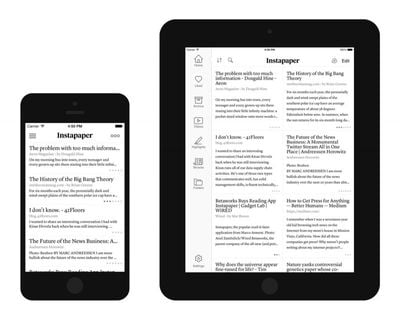
Popular read-it-later service Instapaper has temporarily suspended user access across Europe as it comes to terms with the EU's impending General Data Protection Regulation (GDPR) laws.
In a message sent to users yesterday – subsequently shared via Twitter courtesy of tech reporter Owen Williams - the bookmarking service said it needs extra time to make necessary changes to comply with GDPR before the deadline on Friday, May 25.
Starting tomorrow May 24, 2018, access to the Instapaper service will be temporarily unavailable for residents in Europe as we continue to make changes in light of the General Data Protection Regulation (GDPR), which goes into effect May 25, 2018. We apologize for any inconvenience, and we intend to restore access as soon as possible.
If you have any questions about your account, would like us to generate an export of your saves, or want to check in on our progress, please let us know at support@help.instapaper.com. We look forward to having the same Instapaper service you know and love accessible in Europe in the very near future. Thanks for your patience.
Instapaper gave no indication how long the service would be suspended, and offered no further details on why it has waited until now to take action, almost two years after companies were informed of the GDPR timeline.
Created by Marco Arment in 2008, Instapaper was one of the first apps that implemented read-it-later functionality, and it was certainly one of the most widely used and well-known apps in the genre. The service was acquired by Pinterest in 2016, which may have complicated efforts for GDPR compliance given the potential for data sharing between the parent company and its subsidiary.
Businesses that interact with users in the EU must comply with the GDPR law, which sets out requirements on the collection, storage, and handling of personal data. Companies who fail to do so by the deadline risk heavy fines.
On Wednesday, Apple launched a new Data & Privacy website, which provides customers in the European Union, Iceland, Liechtenstein, Norway, and Switzerland with the ability to download all the personal information tied to their Apple ID account.
Apple has signed a deal with Volkswagen to use Volkswagen vans as self-driving shuttles designed to transport employees around its various campuses and office buildings in the San Francisco Bay Area, reports The New York Times.
Apple has been working on developing the shuttle program, called "PAIL" or Palo Alto to Infinite Loop, since last summer. At the time news of Apple's work on the program first surfaced, the company was said to be planning to install its own self-driving software in a commercial vehicle from an automaker, which has turned out to be Volkswagen.
One of the Lexus SUVs Apple uses to test its autonomous driving software
Under the terms of the deal, T6 Transporter vans from Volkswagen will be turned into self-driving shuttles for employees.
Apple's self-driving shuttle program is said to be behind schedule and "consuming nearly all of the Apple car team's attention," hinting at ongoing problems on its car-related project, which has already been scaled back.
Apple originally had grander plans for autonomous vehicles and over the course of the past several years, attempted to ink deals with companies like BMW and Mercedes-Benz, which would have led to the development of an all-electric autonomous vehicle.
According to today's report, no deal was able to be established because Apple was asking potential partner companies to "hand over control" of data and design, something no car manufacturer was prepared to do.
Apple is now working on its shuttle program and has been testing several Lexus SUVs equipped with self-driving hardware and software out on the streets of Cupertino and surrounding areas. Beyond the shuttle plan, Apple is said to have no clear idea of what it's going to do with its autonomous driving project.
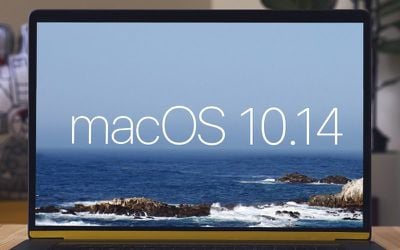
Apple is expected to preview the next-generation version of macOS, macOS 10.14, at the keynote event for the Worldwide Developers Conference, set to be held on June 4. Though the keynote is less than two weeks away, we've heard little about what we might expect to see in the new version of macOS aside from the possibility of cross-compatible Mac and iOS apps.
With so few rumors about macOS 10.14 available, we turned to the MacRumors community to ask our readers what they would like to see the most in the next version of macOS.
Unified macOS and iOS design - With rumors of apps compatible with both iOS devices and Macs, MacRumors reader Glmnet1 would also like to see a more unified design between Macs and iOS devices. What that might look like is unclear, and while it could happen at some point, it's not likely for this year as we're not expecting major design changes with iOS 12 or macOS 10.14.
Apple iOS apps for Mac - In the same vein, based on cross platform app rumors, several MacRumors readers would like to see iOS-exclusive apps like Apple News, Health, Activity, and Home made available on the Mac. A dedicated Apple Music app that's separate from iTunes is also on at least one reader's wishlist, as is an improved version of iTunes.
HomeKit - A way to control HomeKit devices on Mac is a highly requested feature, either through the aforementioned Home app for the Mac or through Siri. At the current time, while Siri is available on macOS, the personal assistant can't control HomeKit devices from the Mac.
Complications as Menu Bar items - Complications are limited to the Apple Watch, but since the device's debut, Apple Watch users have been hoping for their expansion to other platforms, including macOS and iOS. MacRumors reader ButteryScrollin would like Apple Watch-style complications to be added to the Mac's Menu Bar, introducing new quick-access shortcuts.
Split-Screen improvements - MacRumors reader bmac89 would like some iPad-like improvements to the Mac's split-screen functionality, with options for dragging to resize or dismiss a split-screen view, opening apps into a split-screen view from the Dock or Spotlight, and initiating split-screen in the same way.
APFS improvements - With macOS High Sierra, Apple introduced a new Apple Filesystem. The rollout of APFS was something of a nightmare for Apple customers who have Fusion drives that combine SSDs with traditional hard drives, and to this day, Apple has not implemented APFS support for Fusion drives. MacRumors reader Ncrypt would also like to see Apple use APFS to allow for macOS updates to install in the background to cut down on installation times.
Group FaceTime - Group FaceTime is on both the macOS 10.14 and iOS 12 wishlists, and while it's something Apple is rumored to be working on, it's not clear if this is a feature that's ready for debut.
As with iOS 12, many readers listed performance and stability improvements at the top of their wishlists for macOS 10.14, and it's likely this is on Apple's to-do list as well. Apple is rumored to have delayed some macOS 10.14 and iOS 12 features to 2019 in order to focus on internal improvements following a slew of high-profile bugs that have impacted iOS 11 and macOS High Sierra.
What new features are you hoping Apple adds to macOS 10.14? Let us know in the comments. Make sure you check out our macOS 10.14 roundup for more on what we might see in the update, including possible naming choices. We've also got a separate iOS 12 wishlist that has a list of what MacRumors readers are hoping will come to iOS in 2018.
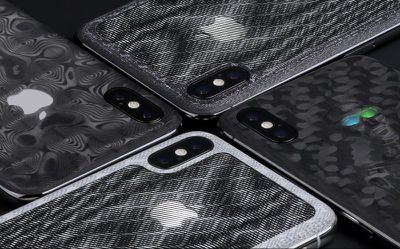
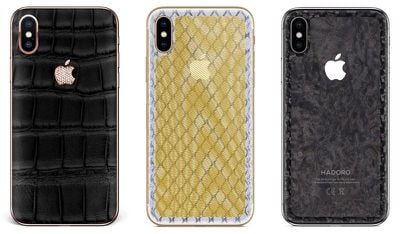
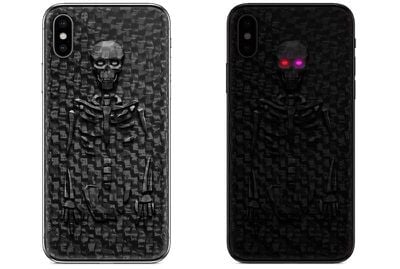
Hadoro, a Parisian company that specializes in high-priced upscale iPhone cases, custom iPhones, and Apple Watch bands, today released a new lineup of custom iPhone X models made from a range of luxury materials including wood, sapphire glass, carbon fiber, marble, and alligator leather set in anodized stainless steel frames.
It's not cheap to replace the entire casing of an iPhone with a new shell crafted from expensive, rare materials, so these iPhones, priced at 4,500 to 8,900 euros ($5,250 - $10,400) are not designed for the average Apple customer.
The most expensive of the devices replace the glass body of the iPhone X with a gold-plated frame covered in alligator leather complete with a diamond Apple logo, while some of the more affordable options are made from anodized, gold plated stainless steel covered with Karelian birch, sourced from a small forest in Finland.
Several other iPhones feature back panels made from durable, scratch proof sapphire glass, which as we know, Apple at one point explored as a material for the iPhone. The Moire Gold iPhone X, for example, features sapphire glass with a silkscreen printed moiré design nestled in a frame made from black anodized stainless steel and carbon fiber.
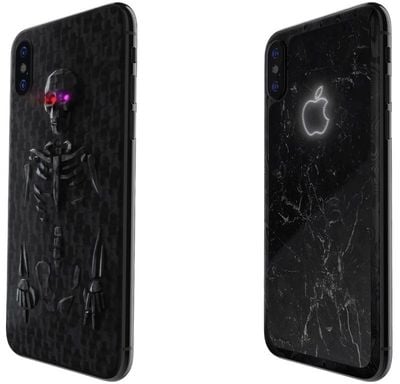
The craziest of Hadoro's iPhone X models is a carbon fiber model that has a 3D image of a skeleton with glowing eye sockets. The eyes of the skeleton light up whenever the iPhone is turned on, and the color can be customized in the device settings.
All of these modified iPhones start out as the 256GB iPhone X and then have the housing, buttons, and Apple logo replaced with new materials. In many cases, the logos on these devices light up thanks to the modifications put in place. Core functionality remains intact, but for devices where the glass has been replaced by other materials, wireless charging is likely to be affected.
The aforementioned light up Apple logos glow whenever the iPhone is turned on or when an incoming call or text message is received, and the settings can be tweaked on the phone itself.
Replacing the casing of the iPhone naturally voids the standard Apple warranty, but people able to shell out thousands of dollars for a fancy iPhone aren't likely too concerned about that. Hadoro does, however, include a one-year warranty with purchase.
If you have $5,000+ earmarked for a new iPhone, you can check out Hadoro's full custom iPhone X collection on its website.
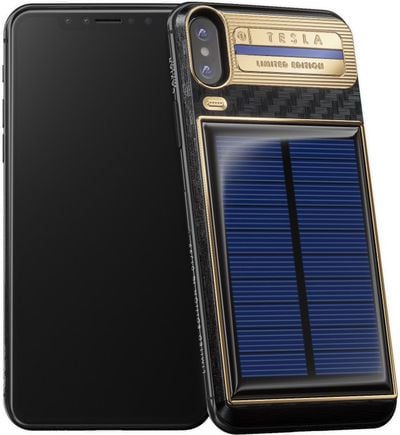
There's been a market for insanely priced custom iPhone models for years now, and Hadoro isn't the only one selling crazy custom devices. Caviar, another manufacturer known for creating iPhones from custom materials, recently debuted the iPhone X Tesla, an iPhone inspired by Tesla vehicles that is able to charge using solar power.
The iPhone X Tesla is is priced at just over $4,600, and for that price, you get the aforementioned solar charger with shock resistant panel and a custom carbon fiber frame. Caviar also has a range of other custom iPhone X models for those seeking the most ostentatious designs available.
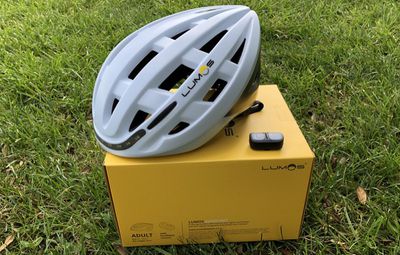
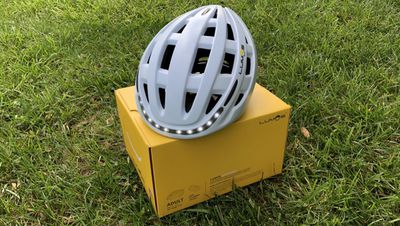
Earlier this month, smart bike helmet Lumos debuted at Apple retail stores and online, leveraging technology to help make your ride safer. Outfitted with a total of 48 LEDs on the front and back in red, white, and yellow, the Lumos helmet significantly increases your visibility to drivers and pedestrians while also allowing you to signal upcoming turns.
Since its Kickstarter launch, Lumos has supported bike helmet turn signals using a two-button remote mounted on the handlebars, lighting up yellow LEDs on the corresponding side of the helmet at the front and rear. A brand-new feature adds Apple Watch gesture support, letting you calibrate the system to detect bicycle arm signals based on watch orientation and automatically turn on the left or right signals on the helmet accordingly.
My wife Laura is an avid cyclist, so she was a good test subject for the Lumos helmet, which she has taken out on several group rides over the past few weeks. She came away impressed with some of the helmet's features and the comforting feeling of being more visible as it became darker in the evening, but other aspects still need some tweaking.
Installation
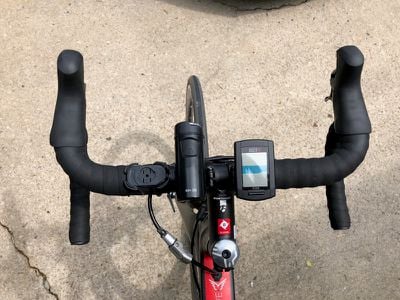
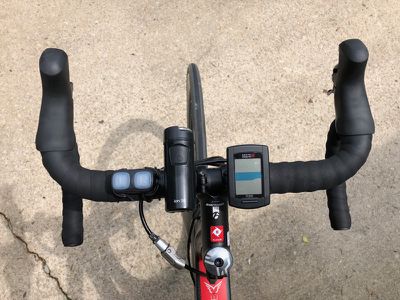
Mounting the turn signal remote is a relatively simple affair, using a pair of rubber rings to wrap around the handlebars and secure the remote base, and then the remote itself simply twists onto the base to lock it in. It's an easy installation process that fits a variety of handlebar diameters, although if you've already got a headlight and bike computer mounted on your handlebars you might find yourself running out of room to mount the Lumos remote.
Remote base attached on left side of handlebars
In fact, given the other items already on her handlebars, Laura's only option was to mount the remote base on her grip tape, which made securing it a bit tricky with the uneven and somewhat squishy surface. She would have preferred some sort of stem mounting option to keep it within easy reach on her crowded handlebars. But depending on the style of bike you ride and the accessories you have, the crowding may not be an issue for you.
Remote attached to base
Crowding issues aside, the simple installation process is a benefit for commuter cyclists in particular, making it easy to take the remote with you so that it doesn't get stolen from your parked bike. The remote also needs to be recharged periodically, so easy installation and removal are key.
Getting on the Road and Signaling
Pairing everything up is also simple, just holding some buttons on the helmet and remote and coordinating with the iPhone app and then you're good to go. It's easy to use the remote to signal left and right turns, with large, easy-to-press buttons that light up while a turn is being signaled, although you do have to manually press the button again to turn off the signaling.
Gesture-based Apple Watch signaling should make life significantly easier while also encouraging riders to use arm signals that help make drivers aware of upcoming movements, although Laura had a bit of trouble getting it to work consistently at first. There is a calibration process that walks you through holding your left arm straight out to signal a left turn and then pointed upward to signal a right turn.
Yellow lights in chevron shape flash when signaling a left turn
The calibration process is quick, requiring you to hold your arm in a neutral position on the handlebars and then while signaling left and right, but once she was out on the road for her first ride, Laura found that gesture recognition was rather finicky. Initially, it would register only one direction, and after she stopped and recalibrated only the other direction would register. Several recalibrations during that ride failed to result in consistent signaling.
On her second ride, however, she apparently found a sweet spot in the calibration, as it was much more consistent in recognizing her arm movements and properly signaling. On the downside, limitations in the movements the watch's accelerometer can detect did result in some unintended signaling. Waving to a friend or even scratching her nose activated the turn signals, and with your hands frequently moving around on the bike to adjust grip, wipe away sweat, or grab a drink of water, it's easy to unintentionally activate the turn signals.
When using the Apple Watch to initiate turn signals on Lumos, you have to shake your wrist to turn off the signal once you've completed your turn, and Laura found that she had to shake rather vigorously to get the signals to turn off.
The helmet also beeps while the turn signal is activated, which gives you some important feedback considering you can't see the lights on your head. The beeping is clearly audible to others around you, which can be a benefit or annoying depending on your environment and your biking companions, although you can adjust the frequency of the beeping.
The beeping is also nondirectional, as it comes from the main electronics center in the rear of the helmet. It would be nice if Lumos had a speaker on each side near your ears to give you audible confirmation of which signal is flashing. At the very least, different beeping tones or patterns for each direction would be helpful.
It would also be nice if the remote and Apple Watch worked better together, such as allowing either one to deactivate the turn signal regardless of which method was used to activate it, or having the appropriate button on the remote flash when the signal has been activated via Apple Watch. As it stands, the two methods of triggering the turn signal work essentially independently.
One interesting benefit to using Lumos is that it encourages more consistent use of arm signals in general. With many riders not adequately signaling their turning intentions, tying those signals into the watch on your wrist and your helmet gives you extra motivation to use those arm signals. Some of that is undoubtedly a novelty effect that will wear off with regular usage, but it still provides a bit of incentive to signal.
Lighting Modes
Lumos offers three distinct lighting modes, steady, rapid flash, and slow flash. Which one you use is largely personal preference based which one you believe will make you most visible, but it's worth noting that the helmet's battery will last significantly longer if you use one of the flashing modes rather than steady mode. Switching between modes is accomplished by short presses on the single power button at the rear of the helmet. It's easy to do unless the helmet is on your head, so make sure you decide which mode you want before you start riding, or else pull over to a safe place to change it. For the most part, however, it's simply going to be "set it and forget it" at the beginning of your ride.
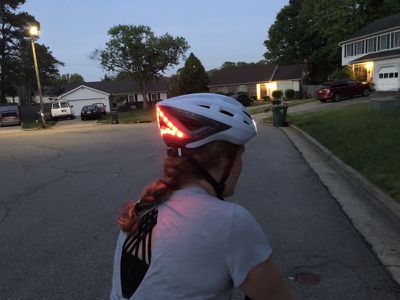
Rear lights at dusk
Laura felt that all three modes were sufficiently bright, offering a comforting feeling that she could be easily seen on the road, particularly as it started to get darker out in the evening. The lights appeared roughly as bright as the taillight she uses on her road bike, although Lumos advises that the helmet should not be used as a substitute for mounted bike lights.
The front helmet lights in particular are only intended to make you more visible, and you're still going to want a more focused headlight for your bike to help you see where you're going and make you even more visible at dusk or at night.
Front lights in daylight
As with regular bike lights, Lumos really won't do much for you during the day, particularly in bright sunlight.
Braking
Lumos has rolled out a new beta feature that illuminates extra red lights on the rear of the helmet to signal that you're coming to a stop. The feature is intended to automatically sense hard braking using an accelerometer inside the remote control.
Unfortunately, Laura was unable to get the feature to activate properly during her on-road testing. The feature seemed to work in simulated stopping scenarios holding the remote in the hand off the bike, and it briefly worked during some testing on the bike when the helmet stopped registering gestures from her Apple Watch, so maybe there was some conflict between the watch and the remote. Hopefully this is something Lumos can continue to refine to make it perform more consistently, and as noted it is still considered a beta feature.
App Tracking
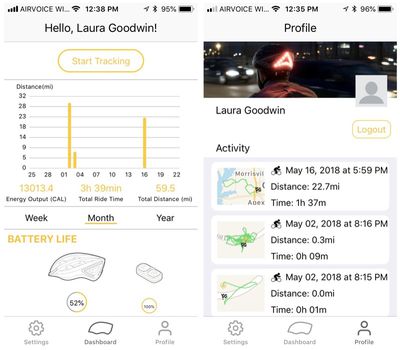
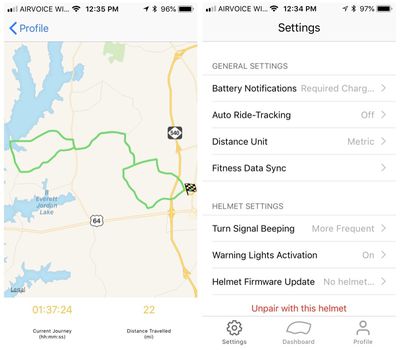
The Lumos iPhone app includes a variety of features, including battery status of the helmet and remote, as well as advanced tracking for your rides. With GPS tracking, the Lumos app will map your rides and break down various statistics like calories burned, watts generated, and more.
The app can also be set to automatically start tracking when the helmet senses you've begun riding, so you can't forget to hit the start button on your tracking. Lumos also supports Strava and Apple Health, making it easy to integrate with your other exercise and health tracking.
Battery Life
Lumos says the battery on the helmet last about six hours in flashing mode or about three hours in steady mode. That's pretty accurate based on Laura's testing, which saw a fully charged helmet drop to 46 percent at the end of a ride that lasted about an hour and 45 minutes with the helmet in steady lighted mode. The remote should last anywhere from a week to a month on a single charge, depending on use.
Both the helmet and the handlebar remote charge using a USB-A cable with a proprietary magnetic connector on the other end. The connector allows for low-profile ports on the helmet and remote, but the magnetic connection isn't the strongest. On the helmet in particular, Laura had to be very careful to make sure it was connected properly and then be extremely gentle when moving the helmet at all during charging to prevent the cable from coming loose. Fully charging the helmet takes a couple of hours, while the remote is a bit faster.
Wrap-up
A decent bike helmet can cost $100 or more, and lights for your bike quickly add up as well, so $180 for a helmet with a bright array of lighting mounted high on your front and back doesn't seem out of line, not to mention the added safety factor of turn signals and potentially brake lights. If you don't need the turn signals and brake light capabilities, Lumos offers a cheaper "Lite" version of the helmet for $140 that only has the front and rear lights for visibility.
The regular Lumos helmet is offered in Pearl White, Charcoal Black, and Cobalt Blue, while the Lite version is available in Polar White and Charcoal Black. The regular and Lite versions are also available through Amazon.
Lumos has also just launched pre-orders for a version that includes the increasingly popular MIPS technology that can lessen forces experienced in certain types of impacts. The MIPS Lumos helmet in black will begin shipping in mid-July and is available for pre-order at a discounted price of $199.99, down from the regular $219.99 pricing.
Laura was impressed with the fit of Lumos, as she frequently has trouble finding helmets that fit well and that was certainly not the case with Lumos, even though it's designed as a one-size-fits-all helmet for head sizes of 54–62 cm (21.3–24.4 inches).
Lumos is really aimed at commuter cyclists, where frequent turns in congested urban environments and relatively short rides are the norm. It's a bit less useful for road cyclists who take fewer turns and for whom longer rides might exceed the battery life of the helmet, although those rides are typically in daylight when lights are less important. Even for road cyclists, the bright lights mounted on your head offer great visibility to vehicles around you, and it's comforting to know the most important part of your body is most visible.
There are a few quirks with Lumos, most of which should be able to be fixed via software updates, so hopefully Lumos will continue to refine performance based on user feedback and data collected from testing.
Even with those quirks, the safety factor Lumos brings is a tremendous benefit that makes the helmet worth considering, and the Apple Watch turn signal gestures are a clever way to make the technology integration feel more natural. Overall though, Lumos does seem to require a decent bit of fiddling to keep things working properly, which might be okay if you're into the latest tech gadgetry, but if you just want to hop on your bike and go, you might not get as much fun out of it.
Note: Lumos provided the bike helmet to MacRumors free of charge for the purposes of this review. No other compensation was received. MacRumors is an affiliate partner with Amazon and may earn commissions on purchases made through links in this article.
A second class action lawsuit has been filed against Apple over problematic keyboards in recent MacBook and MacBook Pro models.
Like the first lawsuit last week, this complaint alleges that small amounts of dust or debris accumulating on 2015-and-later MacBook and 2016-and-later MacBook Pro keyboards can render the butterfly switch mechanism underneath individual keys non-functional, according to court documents obtained by MacRumors.
In some cases, the butterfly switches can also break entirely, resulting in the affected key becoming detached from the keyboard.
MacRumors first highlighted customer complaints about the 2016 MacBook Pro keyboard over a year ago, including non-functional keys, strange high-pitched sounds on some keys, and keys with a non-uniform feel. An excerpt from the complaint, filed on Tuesday by law firm Schubert Jonckheer & Kolbe in Northern California district court:
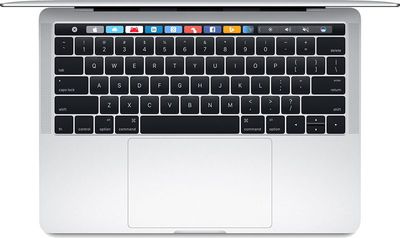
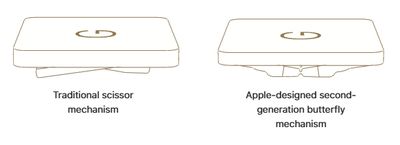
Butterfly switch keyboards, which Apple began to use in 2015 on MacBooks and in 2016 on MacBook Pros, are even lower profile than scissor switch keyboards. They still prop up the keys with two intersecting pieces of plastic, but their profile is so low that the key barely "travels" at all when it is depressed. True to the name, butterfly switches are also extremely delicate, held in place by four tiny threads of brittle plastic.
Because of their very low profile, butterfly switch keyboards are resistant to the accumulation of debris underneath the keys. However, when dust or other tiny particles do get beneath the keys, they are capable of rendering the butterfly switches nonfunctional. Further, the keys cannot be removed without risk of damage to the keyboard, which may void Apple's warranty.
Much of this second lawsuit echoes the first, including the proposed class:
This action is brought on behalf of all persons in the United States who purchased, other than for resale, a model year 2015 or later Apple MacBook or a model year 2016 or later MacBook Pro laptop, which are equipped with "butterfly switch" keyboards.
The complaint alleges that "thousands of consumers" have suffered from these issues, with customer complaints prevalent across blog posts, tweets, comments on forums like MacRumors, an ongoing Change.org petition that has received over 27,000 signatures, and even a satirical song and video.
The complaint adds that Apple is "aware of" or "should have known" about the defect through either pre-release product testing, customer complaints, or a combination of the two, but has "at all times failed to disclose that the keyboard is defective" because repairs and replacements prove to be costly.
Apple knew or should have known of the butterfly keyboard defects before the Laptops were ever sold to the public, as a result of standard pre-release product testing. Further… Apple knew or should have known that that the Laptops were defective shortly after the 12-inch MacBooks were initially launched in 2015, and shortly after the MacBook Pros were launched in 2016, because, shortly after each launch, the keyboard was the subject of numerous consumer complaints published on the Company's website and a variety of internet message boards, such as MacRumors, social and traditional media, and retailer websites. Apple continuously monitors its own website as well as other web pages, including MacRumors…
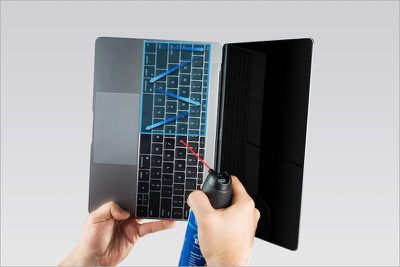
This complaint, like the first, acknowledges that Apple provides a support document with instructions to clean the keyboard of a MacBook or MacBook Pro with "an unresponsive key or "a key that feels different than the other keys," but notes that the steps "will not permanently repair the defect."
Instead, many customers have to resort to the Genius Bar. In the United States, Apple charges an out-of-warranty fee of $700 to replace the keyboard on affected MacBook Pro models, as the process requires replacing the entire top case assembly, the aluminum enclosure housing the keyboard, trackpad, and speaker grilles.
The complaint shares an experience had by Joey Baruch, one of three named plaintiffs alongside Remy Turner and Christopher Martin:
On July 21, 2017, plaintiff Joey Baruch purchased a MacBook Pro 13 inch from an Apple Store in Sherman Oaks, California, and paid $1,974.91. Following his purchase, Mr. Baruch set up his Laptop for use pursuant to the instructions provided. Shortly after his purchase, Mr. Baruch noticed the sporadic failure of certain keys, including the space bar, and the "R", "T" and "Enter" keys. This problem impaired Mr. Baruch's ability to use the Laptop.
Once the problem began, Mr. Baruch tried to clean the keyboard using compressed air or a cloth to improve its performance, but the problem progressively got worse. By early 2018, the keyboard performance became so bad that Mr. Baruch needed to take his Laptop in for repair. He brought it to the Apple Store in Sherman Oaks, California. Mr. Baruch is informed and believes his keyboard was replaced. The repair occurred at or about the end of March 2018, and took approximately 5 days.
Shortly thereafter, however, the issue resumed on the new keyboard, including the space bar sticking. The Laptop’s poor performance has become a substantial distraction for Mr. Baruch. Mr. Baruch continues to experience repeated failures with the functionality of the keyboard on his MacBook Pro.
Apple is accused of, among other things, violating California's Unfair Competition Law and Consumer Legal Remedies Act, the Magnuson-Moss Warranty Act, the Song-Beverly Consumer Warranty Act, and breach of express warranty.
The complaint demands that Apple pays punitive damages in an amount to be proven at trial, publicly discloses the defect, and reimburses customers for all costs attributable to the defective MacBook or MacBook Pro keyboards. A jury trial has been demanded in Northern California district court.
Given the overlapping claims, it is likely that the complaints regarding the keyboards will eventually be consolidated into one class action lawsuit.
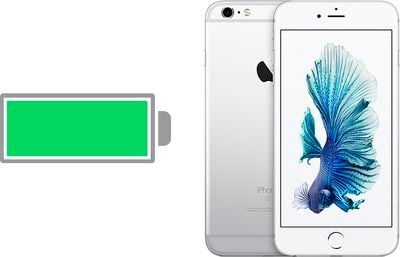
Apple is providing a $50 credit to all customers who paid for an out-of warranty battery replacement for an iPhone 6 or later between the dates of January 1, 2017 and December 28, 2017, the company announced today.
The $50 credit is an extension of Apple's $29 battery replacement program, which went into effect in December of 2017 to provide lower-cost battery replacement options to customers potentially affected by performance throttling due to battery degradation.
All customers who had a battery replacement from an Apple Store, Apple Repair Center, or an Apple Authorized Service Provider are eligible for the $50 credit, which will be provided as an electronic funds transfer or a credit on the credit card used to pay for the battery replacement.
Apple is only issuing refunds for replacements completed at an Apple authorized service location, so those who may have received repairs from a third-party repair outlet will not be eligible for a refund.
The program is available to customers who paid the full $79 price for an out-of-warranty battery replacement on an iPhone 6, 6 Plus, SE, 6s, 6s Plus, 7, or 7 Plus. The $50 credit will bring the price paid for the replacement down to $29, the same price Apple is charging for replacement batteries through the end of 2018. While Apple is offering $50 in the United States, battery replacement credits in other countries will vary based on the original price of the out-of-warranty replacement.
Those who paid for an out-of-warranty battery replacement will be contacted by Apple via email between May 23 and July 27 with instructions on how to receive the credit. Customers who believe they are eligible for a credit but have not received an email by August 1 should contact Apple support for assistance.
Apple has been offering lower-cost batteries following controversy over power management features quietly introduced in older iPhones with the iOS 10.2.1 update in early 2017.
The power management options were introduced to prevent unexpected shutdowns during times of peak power draw on devices with degraded batteries, but Apple faced heavy criticism for not disclosing the fact that the power management features throttled the processor on older iPhones with less than optimal batteries, resulting in slower performance.
The throttling was discovered in late 2017 and many customers were left feeling deceived by Apple. To make up for the disclosure oversight, Apple apologized, introduced a $29 battery replacement program, disabled throttling by default in iOS 11.3, and added new features to iOS to introduce more detailed information about battery health so customers will know when a degraded battery is impacting performance.
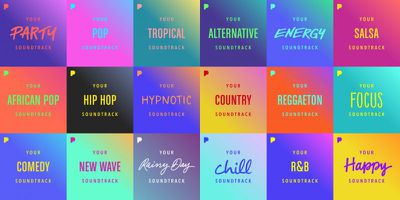
After a slow rollout began in March, Pandora today announced that all Premium tier subscribers can now access their own personalized music playlists. Similar to Apple Music and Spotify, Pandora's selection of playlists personally curate a specific collection of tracks, but Pandora focuses on moods, activities, and genres (via TechCrunch).
For example, Pandora can create "Your Energy Soundtrack," "Your Happy Soundtrack," "Your Rainy Day Soundtrack," "Your R&B Soundtrack," and more, with about 25 songs each. As a comparison, Apple Music's personal curation focuses on New Music Mix, Chill Mix, and Favorites Mix, offering songs aimed at introducing you to new artists, serving up relaxing tunes, and generating a collection of what the service decides are your favorite tracks.
Image via TechCrunch
Pandora Premium users can send links to their friends (even if they're on the free tier) as a way to share their personalized playlists. The free tier users will have to watch a video ad to listen to the playlist and test out other paid features as well -- an ability Pandora debuted last December.
In regards to how the app curates the playlists, Pandora says it uses its "Music Genome" and machine learning algorithms to continously determine what music you listen to most often. Combined with human curators, Pandora then gathers songs into the new "Soundtrack" playlists to "perfect the lists and update them, as needed."
Apple Music updates its Mixes on specific days every week, but Pandora's offering appears to be a bit more nebulous. During the rollout phase of the feature, the app was creating "up to four new playlists" for each user every week, and it would continue until it "maxed out" the user's playlist categories. TechCrunch explains further: "This "max" is not a flat number, but varies by user. For example, someone who listens to a lot of different types of music may continue getting new playlists for weeks."
Pandora is offering the stable of personalized playlists as a way to entice its free users to upgrade to Pandora Premium, which runs for $9.99/month. Originally a live radio streaming service only, Pandora launched Premium in 2017 to compete with Apple Music and Spotify, combining its existing radio features into an on-demand music streaming service.
Moving forward, Pandora is planning to release more playlist categories and themes in the coming months. Pandora chief performance officer Chris Phillips says, "This is the beginning of a whole suite of themed playlists that we will automatically build and tailor to each Premium user. In the coming months, we'll be rolling out more even more themes for you to unlock."
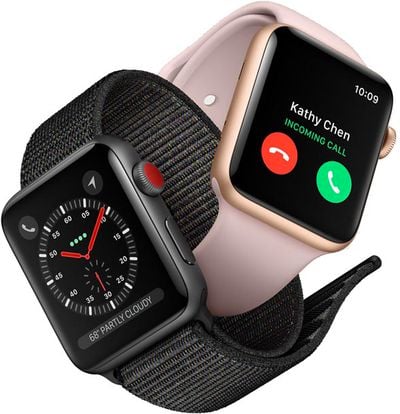
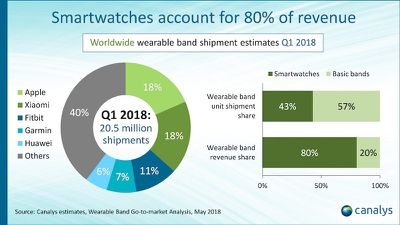
Specifically, the Apple Watch accounted for an estimated 59 percent of the worldwide cellular-enabled smartwatch market in the first quarter of 2018, according to data shared by research firm Canalys today.
Canalys senior analyst Jason Low says the cellular capabilities have been key to the success of the Apple Watch Series 3 lineup:
Key to Apple's success with its latest Apple Watch Series 3 is the number of LTE-enabled watches it has been able to push into the hands of consumers. Operators welcome the additional revenue from device sales and the added subscription revenue for data on the Apple Watch, and the list of operators that sell the LTE Apple Watch worldwide is increasing each month.
Low added that Apple has taken advantage of a lack of high-end competition in the cellular-enabled smartwatch market:
While the Apple ecosystem has a strong LTE watch offering, the lack of a similar product in the Android ecosystem is glaring. If Google decides to pursue the opportunity with a rumored Pixel Watch, it would jump-start much needed competition in this space.
There are a handful of Wear OS smartwatches with LTE available, such as the LG Watch Sport, LG Watch Urbane, and Huawei Watch 2, but third-party app support and software updates are lackluster compared to the Apple Watch.
Canalys estimates that Apple Watch shipments totaled 3.8 million units in the quarter, including non-cellular models, making it the world's most popular wearable, even though several other competitors in the top five sell a wide range of comparatively inexpensive fitness trackers and activity bands.
Chinese company Xiaomi, for example, shipped an estimated 3.7 million wearables in the quarter, but Canalys notes that more than 90 percent of those shipments were Mi Bands, priced as low as $20 to $25 in the United States.
Apple Watch pricing starts at $249 for Series 1 models, while Series 3 models with LTE retail for $399 and up, in the United States.
Apple doesn't break out Apple Watch sales as it does with iPhones, iPads, and Macs. Instead, it groups the watch under its "Other Products" category, alongside the Apple TV, AirPods, Beats, iPod, HomePod, and accessories. Canalys and other research firms look for clues in Apple's earnings reports to estimate shipments.
Apple Watch had another great quarter with revenue growing by strong double-digits year-over-year to a new March quarter record. Millions of customers are using Apple Watch to help them stay active, healthy, and connected, and they have made it a top-selling watch in the world.
Apple Watches have grown so popular that, in the final three months of 2017, worldwide shipments outpaced all Swiss watch brands combined for the first time, according to IDC senior research director Francisco Jeronimo.
Last December, The Walt Disney Company outlined plans to acquire 21st Century Fox and a collection of its subsidiaries for $52.4 billion in stock. Those plans have been under regulatory scrutiny for months and have yet to be finalized, and now Comcast has confirmed it is in "advanced stages" of sending Fox a "superior" all-cash offer in hopes of besting Disney's all-share offer (via Bloomberg).
Previous reports about Comcast's potential bid also referenced an all-cash deal, and put an estimate above Disney's to as much as $60 billion in cash from Comcast for the designated Fox assets. Comcast's press release today does not disclose an offer amount, but the company says the structure and terms of any offer would be "at least as favorable to Fox shareholders as the Disney offer."
Comcast says that its work to finance the offer for some of Fox's assets is "well advanced," and the company has already prepared to file key regulatory statements. Of course, no final decision has yet been made, but analyst Daniel Ives notes that, "If Comcast won these assets from the arms of Disney, it would be a devastating blow to [Disney CEO] Bob Iger."
In view of the recent filings with the U.S. Securities and Exchange Commission by The Walt Disney Company (“Disney”) and Twenty-First Century Fox, Inc. (“Fox”) in preparation for their upcoming shareholder meetings to consider the acquisition of Fox by Disney, Comcast Corporation (“Comcast”) confirms that it is considering, and is in advanced stages of preparing, an offer for the businesses that Fox has agreed to sell to Disney (which do not include the Fox News Channel, Fox Business Network, Fox Broadcasting Company and certain other assets).
Any offer for Fox would be all-cash and at a premium to the value of the current all-share offer from Disney. The structure and terms of any offer by Comcast, including with respect to both the spin-off of “New Fox” and the regulatory risk provisions and the related termination fee, would be at least as favorable to Fox shareholders as the Disney offer.
As of now, recent reports have stated that the Comcast/Fox offer's final fate may rely on the government's decision regarding AT&T's acquisition of Time Warner. Similar to AT&T owning DirecTV, Comcast owns NBCUniversal, and both companies are looking into purchasing large TV programming entities.
Because of this, it's believed Comcast will take a wait-and-see approach, and if a U.S. judge rules against AT&T on antitrust grounds in a trial coming next month, Comcast is expected to back off of Fox's assets. If AT&T wins the case and Comcast moves forward with a bid, Bloomberg Intelligence analyst Paul Sweeney says the Disney vs. Comcast bidding war would be intense: "Disney is likely to put up quite a fight."
Disney and Comcast are looking at Fox's entertainment assets in hopes of expanding their reach outside of the United States, as well as stocking their streaming back catalogs with a quick rush of content. Movie assets that either company could gain from 21st Century Fox include Fox Searchlight Pictures and Fox 2000, homes of movies like Avatar, X-Men, Fantastic Four, Deadpool, The Grand Budapest Hotel, The Shape of Water, and Gone Girl.
For TV shows, Fox's TV production companies include Twentieth Century Fox Television, as well as FX Productions and Fox21, which bring viewers shows like The Simpsons, This Is Us, and The Americans. Notably, the winning bidder would gain Fox's 30 percent stake in Hulu, and if Disney acquires the company it would become a majority shareholder of the streaming service.
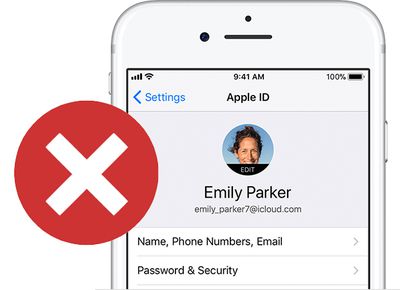
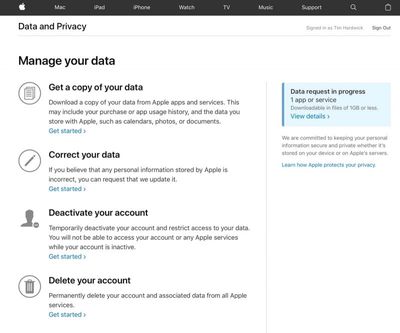
Apple has launched a new Data and Privacy website that enables users to request a copy of all of the data associated with their Apple ID accounts that the company maintains on its servers. The page also provides options to delete or deactivate an Apple ID by following the step-by-step instructions outlined below.
Keep in mind that deleting an Apple ID account and any associated data is a permanent, irreversible* action. After your account is deleted, Apple can't reopen or reactivate your account or restore any of your data, and you will no longer be able to access any of the content and services listed below.
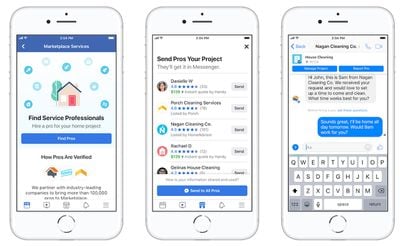
Facebook today updated its mobile Marketplace to include home service professionals, such as house cleaners, plumbers, and contractors.
The company says that Marketplace will integrate with existing service professional marketplaces like Handy, HomeAdvisor, and Porch to provide users with an all-in-one location for finding help around the house. In total, there will be hundreds of thousands of top-rated professionals available across the United States to browse through.
Similar to other Facebook pages, professionals will have ratings, reviews, credentials, and their location to ensure that they're nearby. When you find multiple people who might be a match for your project, you can describe the task and use Messenger to send it to multiple professionals at once and judge their responses.
According to Facebook, there have been an increasing number of users asking for recommendations related to home services, totaling "millions of people" since the beginning of 2018, leading to the launch of the new feature.
The updated Facebook Marketplace is starting to roll out today on iOS and Android, and the social network says that it will be available for all U.S. users in the coming weeks.
Apple supplier Foxconn Technology Group is making a shift in its expansion plans to Wisconsin in the United States, where it will now produce small to medium-size displays for Apple and other customers. This is a change from its original plan of having the Wisconsin plant produce large television displays, and the move to smaller displays is said to help lower initial costs at the factory (via Nikkei).
In total, Foxconn's Wisconsin plant will make displays for car infotainment systems, personal computers, tablets, smartphones, smaller televisions, and other "niche products." If the supplier kept on track with building large TV displays, the output would have required a "more complete" local supply chain lacking in the state, and a greater initial monetary investment for production equipment.
"Previously, Foxconn planned to build a 10.5th-generation display manufacturing factory, which is more suitable for large-sized displays," supply chain sources told Nikkei.
"But later they figured out that it might be more feasible and efficient to build a sixth-generation display plant or an 8.5th-generation factory from which they could move some equipment from Asia."
The incomplete local supply chain is believed to have been one of the bigger obstacles to Foxconn's large panel plans in Wisconsin. Sources speaking to Nikkei said, "It would require other companies like Corning to also set up a glass substrate facility nearby, as it's almost impossible to ship fragile, huge size glass materials from a distant place."
Foxconn has been open to building a facility in the U.S., with news becoming more frequent in late 2016 and the eventual Wisconsin home tipped by sources speaking with The Associated Press in June 2017. Foxconn confirmed the Wisconsin/TV display plant later in the summer, with plans of investing $10 billion into the location and initially employing 3,000 workers, with the potential to expand to as many as 13,000.
As Apple CEO Tim Cook pointed out in a recent interview, many parts of the iPhone are created in the U.S. (like the display glass and Face ID module), but the components manufactured in the U.S. are then shipped abroad, with devices assembled by suppliers like Foxconn in China. Because of this, Cook said: "It's not true that the iPhone is not made in the United States. We have always made the parts here. People just look at where the final product is assembled." In a global world, Cook explained, manufacturing and assembly needs to be done in a variety of places.
Apple has launched a new Data & Privacy website that includes an option for Apple users to download all the data associated with their Apple ID account that the company keeps on its servers.
The data download that users are able to request includes purchase and app usage history, calendars, reminders, photos, and documents stored in iCloud, Apple Music and Game Center statistics, marketing history, and AppleCare support history.
The data download option arrives before the GDPR deadline and is currently limited to Apple accounts registered in the European Union, Iceland, Liechtenstein, Norway, and Switzerland, but Apple says it will roll out the service worldwide "in the coming months".
The new Data & Privacy site also includes links that customers can use to update their account details, temporarily deactivate their account, or delete it permanently.
Apple supplier TSMC (Taiwan Semiconductor Manufacturing Company) has started production on the next-generation 7-nanometer A12 chips that will be used in the 2018 iPhone lineup, reports Bloomberg.
TSMC in late April announced that its 7-nanometer process node has entered into high volume manufacturing, but did not specify that it was working on the Apple A12 processors set to be built into the iPhones that are expected in September.
The new 7-nanometer chips will offer approximately 40 percent power and area benefit over the 10-nanometer process used for the A11 processors in the 2017 iPhones. As Bloomberg says, the chips will be smaller, faster, and more efficient.
TSMC is believed to be the sole partner Apple is working with on the A12 chip. TSMC was also Apple's only supplier for the A11 chips in the iPhone X, 8, and 8 Plus.
All three of Apple's 2018 iPhones are expected to adopt the A12 chips that are currently in development. Rumors suggest Apple is working on a second-generation 5.8-inch OLED iPhone that's a successor to the iPhone X, a larger 6.5-inch OLED iPhone that can be thought of as an "iPhone X Plus," and a lower-cost 6.1-inch LCD iPhone.
Along with A12 chips, all three are expected to include a TrueDepth camera system for Face ID capabilities and an edge-to-edge design with minimal bezels and no Home button.
The United States Federal Bureau of Investigation provided Congress with "grossly inflated" statistics on the number of electronic devices it has been been unable to access due to encryption, reports The Washington Post.
Last year, the FBI claimed to have been locked out of close to 7,800 devices that were connected to crimes, but the actual number of devices that were inaccessible is smaller, closer in scope to between 1,000 and 2,000. The FBI discovered an error in the method used for counting encrypted smartphones last month, and has not yet completed a full internal audit to determine the correct number.
"The FBI's initial assessment is that programming errors resulted in significant over-counting of mobile devices reported," the FBI said in a statement Tuesday. The bureau said the problem stemmed from the use of three distinct databases that led to repeated counting of the same phones. Tests of the methodology conducted in April 2016 failed to detect the flaw, according to people familiar with the work.
The FBI's inflated numbers are a problem because FBI director Christopher Wray has, at several points in time, used those statistics to warn of the dangers criminals using encryption to "go dark" and evade law enforcement oversight.
Back in October, for example, Wray said the inability to access such a large number of encrypted smartphones was a major problem. "To put it mildly, this is a huge, huge problem," said Wray. "It impacts investigations across the board - narcotics, human trafficking, counterterrorism, counterintelligence, gangs, organized crime, child exploitation."
In another such speech in January, Wray used the inflated figure to describe encryption as an "urgent public safety issue."
"While the FBI and law enforcement happen to be on the front lines of this problem, this is an urgent public safety issue for all of us. Because as horrifying as 7,800 in one year sounds, it's going to be a lot worse in just a couple of years if we don't find a responsible solution."
These kinds of statistics have also been used by the FBI to advocate for backdoors into encrypted devices like the iPhone.
In 2016, for example, Apple and the FBI had now-famous dispute over the iPhone 5c used by San Bernardino shooter Syed Farook. The FBI demanded that Apple create a tool to allow law enforcement officials to disable passcode security features so they could hack into the device, effectively weakening its protection.
Apple staunchly refused and argued that such a request could set a "dangerous precedent," a position the company has maintained since then as law enforcement officials have continued to advocate for backdoor device access.
Apple, as part of the Reform Government Surveillance coalition, recently released a statement condemning proposals for backdoors into electronic devices, and in March, Apple engineering chief Craig Federighi said that backdoor access would "inject new and dangerous weaknesses into product security."
"Weakening security makes no sense when you consider that customers rely on our products to keep their personal information safe, run their businesses or even manage vital infrastructure like power grids and transportation systems," Federighi said.
Despite the FBI's error counting the number of encrypted devices it has been unable to access during criminal investigations, the agency maintained that encryption is a "serious problem" in a statement to The Washington Post.
"Going Dark remains a serious problem for the FBI, as well as other federal, state, local and international law enforcement partners. ... The FBI will continue pursuing a solution that ensures law enforcement can access evidence of criminal activity with appropriate legal authority."
Note: Due to the political nature of the discussion regarding this topic, the discussion thread is located in our Politics, Religion, Social Issues forum. All forum members and site visitors are welcome to read and follow the thread, but posting is limited to forum members with at least 100 posts.
Apple's first foldable iPhone, with a book-style design featuring a 5.4-inch outer display and a 7.6-inch inner display with a minimal crease down the middle.