Apple is expected to begin trial production of a trio of new iPhone models in the second quarter of 2018 at the earliest, as it looks to avoid a repeat of the issues caused by the initial low yield rates on production of 3D sensor modules for the iPhone X last year, according to Taiwanese website DigiTimes.
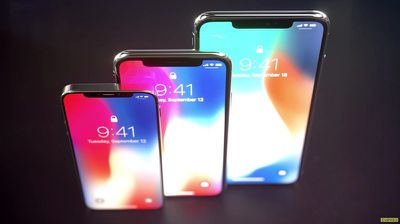
iPhone X2, iPhone X2 Plus, and iPhone SE 2 mockup by Curved.de
The report, citing supply chain sources, claims Apple's fast-tracking of the trial production will help push ahead the delivery schedules for the 2018 iPhones, meaning it should have more plentiful supply available for pre-orders.
The sources cited add that sales of the iPhone 8, iPhone 8 Plus, and iPhone X have been "lower than expected," but they believe the earlier production will help Apple to "rekindle" its smartphone momentum. Apple's supply chain partners are said to be "generally more optimistic" about order prospects this year.
Leading up to the iPhone X launch, multiple reports claimed Apple was having issues with ramping up production of the device. KGI Securities analyst Ming-Chi Kuo pegged the TrueDepth camera system as the primary reason for the supply bottleneck, due to its complex 3D facial recognition technologies.
Kuo added that the yield issues began to stabilize by late October, but when pre-orders began on October 27, shipping estimates for the iPhone X quickly fell back to 5-6 weeks around the world. The estimates gradually improved over the following weeks, and the device was fully in stock by mid December.
Looking ahead, Apple is widely rumored to launch a so-called iPhone X2, iPhone X2 Plus, and a cheaper 6.1-inch model with Face ID, but with design tradeoffs like an LCD screen and no wireless charging. And if today's report proves accurate, getting your hands on one of the new models should be easier this fall.
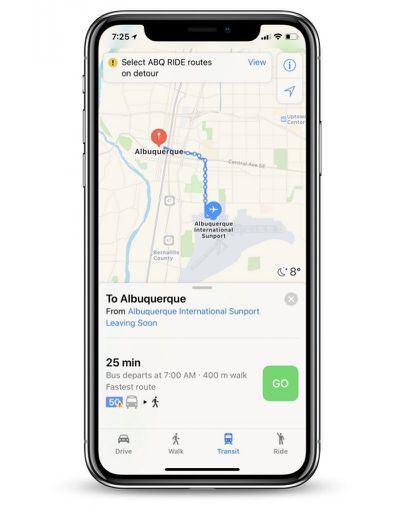
Apple is beginning to update Apple Maps with transit directions in Albuquerque, New Mexico, allowing residents of the city to navigate around it using various methods of public transportation.
To enable transit between two locations within Albuquerque, tap the "Transit" tab at the bottom of Apple Maps once you enter your route. This will surface a series of transit stops on the trip, along with relevant caution advisories, route detour information, fastest route options, and more.
One of the transit options available for Albuquerque residents is ABQ Ride, a local agency that operates within the city with a variety of bus routes for commuters. When applicable in certain cities, transit directions also support subways, trains, and ferries, and in 2016 Apple added support for Amtrack's full system of train routes across the United States and in select Canadian cities.
In 2015 Apple first launched transit in Apple Maps, limited to Baltimore, Berlin, Boston, Chicago, London, Los Angeles, Mexico City, New York, Philadelphia, San Francisco, Sydney, Toronto, and around 300 cities in China. In the three years since then, Apple has expanded the feature to dozens of additional cities around the world.
Apple Maps rival Google Maps updated yesterday with an expansion of its own transit features, adding options for New York, Hong Kong, Taipei, Paris, Los Angeles, Delhi, Moscow, Singapore, Madrid, Barcelona, Kiev, and Budapest, with "more on the way."
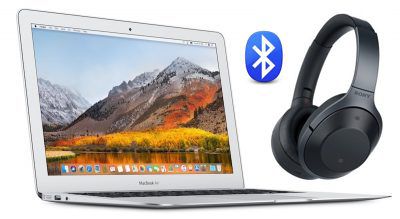
How good your digital music sounds often comes down to which file format it's encoded in. Be that as it may, every Mac audio setup is only as strong as it's weakest link, and if your Bluetooth connection isn't up to scratch, even the best BT headphones will fail to deliver a decent wireless listening experience.
By design, all Bluetooth devices support the low-power SBC audio compression codec as standard. Fortunately, modern Macs also support AAC (Apple's preferred iTunes codec) and aptX, which Android devices often use. These two codecs offer higher quality audio and generally lower latency than SBC, which is why most third-party wireless headphones on the market support one or the other, and sometimes both.
Yet for whatever reason, despite their AAC/aptX support, some headphones fall back to the bog-standard SBC codec when connected to a Mac. This can lead to a particularly underwhelming audio experience, not to mention latency-related sync issues, which will be a distinct concern if you use your headphones while gaming or watching movies.
Thankfully, it's possible to force macOS to connect to your headphones using one of the two superior codecs. In this article, we'll show you how to do so using Apple's Bluetooth Explorer utility. (And if you're comfortable opening a Terminal window, we've included a couple of commands at the end that do the same thing.)
But first, it's worth checking which codecs your brand of headphones actually supports: Look for codec logos on the box, and make sure to check for references to codecs in the manual and any accompanying/online spec sheets.
Once you've established that your headphones support aptX and/or AAC, you'll want to identify which codec is being activated when you connect the headphones to your Mac. Follow these steps to find out.
How to Identify Which Bluetooth Codec is Active
Establish a Bluetooth connection between your Mac and headphones in the normal manner.
Play some audio on your Mac so that it's streaming to the headphones.
Now hold down the Option (Alt) key and click on the Bluetooth symbol in the menu bar. (If you don't see it there, you need to check Show Bluetooth in menu bar in System Preferences -> Bluetooth.)
Hover your mouse cursor over the headphones in the connection list. You should see the headphones' Active Codec shown in grey.
If your headphones are using AAC or aptX, you don't need to do anything. Without going into the technical details, both standards provide relatively stable wireless connections and – as far as Bluetooth goes – comparably decent sound quality. However, if the codec shown is SBC, you'll probably want to change it. Here's how.
How to Force-Enable aptX and AAC Codecs in macOS
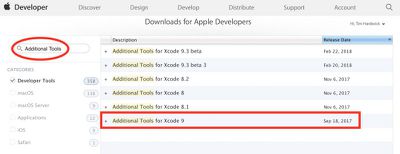
Open a web browser, navigate to Apple's developer downloads page, and download Additional Tools for Xcode 9 [Direct Link] which contains Apple's Bluetooth Explorer utility. Note that to access the page you'll need to register for a free Apple developer account if you don't already have one. Alternatively, use Google to find the Bluetooth Explorer utility hosted elsewhere and skip to step 5, but if you're not downloading from Apple, be sure to screen the file for malware.
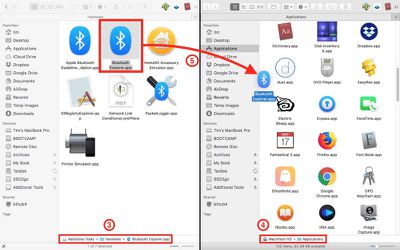
Once downloaded, double-click the Additional Tools dmg file to mount it on your desktop.
Open the Additional Tools drive and navigate to the Hardware folder.
Open your Mac's Applications folder in another Finder window or tab.
Drag Bluetooth Explorer into your Mac's Applications folder and launch the app from there.
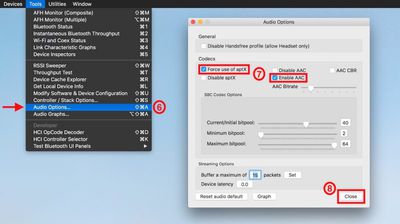
From the Bluetooth Explorer menu bar, select Tools -> Audio Options.
In the Codecs section, tick the checkboxes alongside Enable AAC and/or Force use of aptX (depending on your issue). Make sure Disable AAC and Disable aptX are left unchecked.
When your Mac reboots, you can confirm that the codec change has been applied by following the first series of steps in this article.
Terminal commands for enabling AAC and aptX Codecs
To enable aptX, input the following command, press Enter, and type your user password if prompted: sudo defaults write bluetoothaudiod "Enable AptX codec" -bool true
Alternatively, to enable AAC, input the following and press Enter: sudo defaults write bluetoothaudiod "Enable AAC codec" -bool true
To disable either codec via Terminal, simply replace -bool true with -bool false at the end of the command.
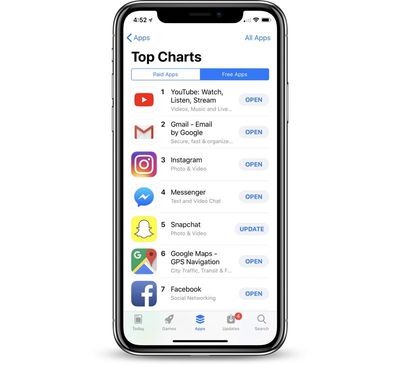
YouTube today achieved a milestone, becoming the Top Grossing Free iPhone app in the U.S. App Store for the first time, according to data app analytics site Sensor Tower shared with TechCrunch.
Prior to today, the highest ranking YouTube had hit on the Top Grossing charts was #3, and the United States marks the first country where YouTube has reached the number one spot.
YouTube has been climbing up the Top Grossing charts at a more rapid pace since the 2015 launch of YouTube Red, YouTube's paid service that provides users with ad-free videos, music, and exclusive content. YouTube Red is priced at $9.99 per month.
Sensor Tower says YouTube grossed approximately $14 million in February of 2018, a 133 percent year-over-year increase from last year. In March, YouTube has already earned $12 million, with iOS revenue up 150 percent year-over-year.
YouTube's App Store revenue does not include the money YouTube brings in through YouTube Music, YouTube Gaming, Google Play, rental purchases, or money. It's limited to YouTube Red and Super Chat, a feature that allow viewers to tip content creators during live streams.
If you have an iPhone X, you're probably well aware of the Animoji feature within the Messages app, which is designed to let you send cute little animated videos of emoji animals that adopt your facial expressions and voice.
What you might not have known, though, is that Animoji can also be used as simple stickers. You can send a still Animoji image in Messages as a reaction, or use it like other iMessage stickers.
Sending a non-animated Animoji with a custom expression is pretty simple -- you just need to tap.
Open a Messages conversation.
Tap the Messages App Store icon.
Choose Animoji.
Pick your favorite Animoji.
Make an expression.
Rather than tapping the red record button, tap right on the Animoji itself.
Once you've tapped on the Animoji, a still image of the expression you were making will be input into the chat bar, and you can tap on the blue arrow to send it to the person you're conversing with.
Using an Animoji as a Sticker
Animoji can be manipulated like any other sticker, and to do so, you're going to follow the same steps from above.
Open a Messages conversation.
Tap the Messages App Store icon.
Choose Animoji.
Pick your favorite Animoji.
Make an expression.
Instead of tapping, place a finger over the Animoji and drag it up into the Messages field, where it can be placed over any chat bubble, image, or sticker.
While in drag mode, an Animoji behaves like any other sticker. Keep your finger on it and use pinch gestures to make it smaller or slide a finger over the screen to rotate it to a different angle.
In addition to our standalone articles covering the latest Apple news and rumors at MacRumors, this Quick Takes column provides a bite-sized recap of other headlines about Apple and its competitors on weekdays.
2. Apple is an exception to nearly every rule: Dutch entrepreneur Haje Jan Kamps explains how using Apple as a template for how to build a startup is not a great idea due to its unparalleled hardware design, logistics, and even packaging.
Commentary: As the world's most valuable company, Apple has tremendous leverage over its supply chain and logistical partners like Foxconn and UPS respectively. Given how valuable a contract with Apple can be, these companies will bend over backwards to accommodate the iPhone maker in any way.
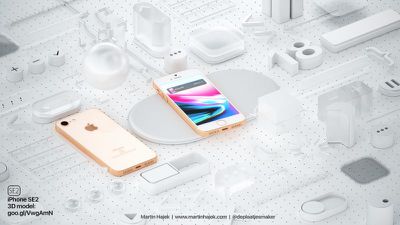
3. 3D designer Martin Hajek shares iPhone SE 2 renders: The concept imagines the iPhone SE with a glass back for wireless charging, in the same color as the gold iPhone 8. Overall, the device looks like a refined version of the current iPhone SE, which is likely what we can expect if it does receive a refresh.
Facebook CEO Mark Zuckerberg this afternoon addressed the ongoing Cambridge Analytica situation, in which Cambridge Analytica used personal data acquired from Facebook in an illicit manner by a third-party app to create targeted political advertisements during the 2016 election.
Zuckerberg outlined a multi-step response that Facebook plans to take to prevent this situation from recurring, and one feature Facebook will add is a new tool at the top of the News Feed which will let people see which apps they've used.
Any app used on the Facebook platform has access to a user's personal data, so the Facebook tool will let people see which apps have their info and it will offer up an easy way to revoke permissions.
This tool is already available through Facebook's privacy settings, but the company plans to make it more accessible to all users.
Back in 2014, Facebook implemented changes to reduce the amount of data apps had access to (the CA data was pre-2014), and Facebook says it will now investigate all apps that had access to large amounts of information before the platform change.
We will conduct a full audit of any app with suspicious activity. We will ban any developer from our platform that does not agree to a thorough audit. And if we find developers that misused personally identifiable information, we will ban them and tell everyone affected by those apps.
Zuckerberg also says Facebook plans to remove developers' access to data if an app hasn't been used in three months, and the amount of data provided to an app when a user signs in will be further restricted to name, profile photo, and email address. Access to posts or other private data will require users to explicitly approve the action.
The Cambridge Analytica scandal has resulted in a massive "Delete Facebook" movement from users concerned over the data Facebook collects and how it's used, and Facebook stock has sharply declined this week.
Facebook users who are not satisfied with Zuckerberg's response can permanently delete a Facebook account by clicking this link. Before doing so, it's recommended Facebook users download an archive of their content so no photos are lost.
Note: Due to the political nature of the discussion regarding this topic, the discussion thread is located in our Politics, Religion, Social Issues forum. All forum members and site visitors are welcome to read and follow the thread, but posting is limited to forum members with at least 100 posts.
In a piece covering growing consumer interest in mobile gaming, TechCrunch's Matthew Panzarino spoke to Apple's vice president of product marketing, Greg Joswiak, and several prominent game developers to get opinions on the state gaming on iOS.
According to Joswiak, with developers now able to bring full multiplayer console-style experiences to iOS devices, like the recently released Fortnite and PUBG mobile games, mobile gaming is at a tipping point. Platforms like iOS are able to offer unique combinations of hardware and software that see regular updates and improvements, which has led to impressive new gaming technology over the course of the last few years.
"Every year we are able to amp up the tech that we bring to developers," he says, comparing it to the 4-5 year cycle in console gaming hardware. "Before the industry knew it, we were blowing people away [with the tech]. The full gameplay of these titles has woken a lot of people up."
Joswiak says Apple is able to bring a "very homogenous customer base to developers" with 90 percent of devices running the current version of iOS, which allows developers to introduce new features and target the capabilities of new devices more quickly than on other platforms like Android, giving Apple's App Store a competitive edge.
Ryan Cash, one of the developers behind the newly released Alto's Odyssey game, told TechCrunch that there's a "real and continually growing sense that mobile is a platform to launch compelling, artful experiences."
"This has always been the sentiment among the really amazing community of developers we've been lucky enough to meet. What's most exciting to me, now, though, is hearing this acknowledged by representatives of major console platforms. Having conversations with people about their favorite games from the past year, and seeing that many of them are titles tailor-made for mobile platforms, is really gratifying.
According to Joswiak, gaming has always been one of the App Store's most popular categories, and the iOS 11 redesign of the App Store that splits gaming into its own category has grown interest in mobile gaming even more. "Traffic to the App Store is up significantly, and with higher traffic, of course, comes higher sales."
One aspect of the new App Store design that developers are appreciative of is the new "Today" tab that provides customers with a look at some of the work that goes into creating a mobile game.
Dan Gray, one of the developers behind Monument Valley 2, said that it lets people know that indie games really are a "labour of love for a small group of people" and not created by a corporation of 200 people. "Hopefully this leads to players seeing the value in paying up front for games in the future once they can see the craft that goes into something," he said.
SpellTower creator Zach Gage told TechCrunch that games have "never had the cultural reach that they do now" because of the App Store and "these magical devices that are in everyones pockets." He went on to say that people are beginning to recognize that "iOS devices are everywhere" and are "the primary computers of many people," which is leading to more iOS development.
The full interview with comments from Joswiak and several other game developers is over at TechCrunch and is well worth reading for those interested mobile gaming.
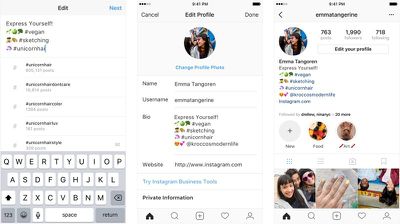
Instagram today made a change to user bios, allowing "#" hashtags and "@" links to other Instagram users.
Starting today, when you add a @ or a # to your Instagram bio, it will become a live link that leads either to a hashtag page or to another profile.
Instagram says it has implemented this change to allow users to better express themselves and their interests in their profiles, adding information like #guitarlover, #pencilsketching, #makeuptutorial, and more.
To add a hashtag or link in your bio, you need to navigate to "Edit Profile" and select the "Bio" section. When typing a # or a @ here, you will see a list of recommended hashtags and accounts. Selecting a hashtag or an account you want to add will automatically link it in your bio.
For privacy reasons, Instagram says that when you mention someone else's profile in your bio, they'll receive a notification and can remove the link to their profile if desired.
Apple today released a new update for Safari Technology Preview, the experimental browser Apple first introduced two years ago in March of 2016. Apple designed the Safari Technology Preview to test features that may be introduced into future release versions of Safari.
Safari Technology Preview release 52 includes bug fixes and feature improvements for Service Workers, Loading, JavaScript, CSS, Web API, Accessibility, Web Driver, Web Inspector, WebAssembly, and Media. Today's update also removes support for running legacy NPAPI plug-ins other than Adobe Flash.
Apple's aim with Safari Technology Preview is to gather feedback from developers and users on its browser development process. Safari Technology Preview can run side-by-side with the existing Safari browser and while designed for developers, it does not require a developer account to download.
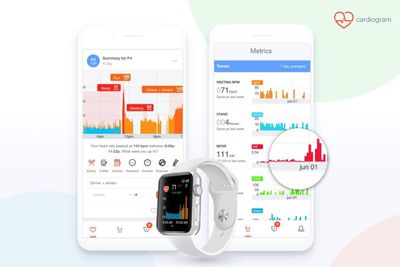
The heart rate monitors built into the Apple Watch and other wearable devices can detect abnormal heart rhythms with 97 percent accuracy, according to a new study conducted by the team behind the Cardiogram app for Apple Watch in conjunction with researchers at the University of California, San Francisco.
More than 139 million heart rate and step count measurements were collected from 9,750 users of the Cardiogram app who also enrolled in the UC San Francisco Health eHeart Study, with the data used to train DeepHeart, Cardiogram's deep neural network.
Once trained, DeepHeart was able to read heart rate data collected by wearables, distinguishing between normal heart rhythm and atrial fibrillation with a 97 percent accuracy rate, both when testing UCSF patients with known heart issues and Cardiogram participants.
At a 97 percent accuracy rate, Cardiogram's study suggests the Apple Watch alone does a better job of detecting abnormal heart rhythms than FDA-approved accessory KardiaBand. From Cardiogram co-founder Johnson Hsieh:
97% accuracy refers to the c-statistic, or area under the sensitivity-specificity curve. Surprisingly, both the sensitivity and specificity of DeepHeart were even higher than an FDA-cleared Apple Watch ECG attachment -- 98% (vs 93%) sensitivity and 90% (vs 84%) specificity.
Published in JAMA Cardiology this morning, the study confirms the results from a similar preliminary study done in May of 2017. According to Cardiogram, today's study marks the first peer-reviewed study in a medical journal that demonstrates popular wearables from companies like Apple, Garmin, Polar, LG, and others can detect a major health condition.
Atrial fibrillation, or an abnormal heart rhythm, is a condition that can be indicative of major health problems and it can lead to heart failure and stroke. Atrial fibrillation often goes undiagnosed, which is where the Apple Watch and other wearables can help. The Apple Watch won't replace a traditional EKG, but it can alert people to a problem much earlier than it might otherwise be detected. From the study's conclusion:
This proof-of-concept study found that smartwatch photoplethysmography coupled with a deep neural network can passively detect AF but with some loss of sensitivity and specificity against a criterion-standard ECG. Further studies will help identify the optimal role for smartwatch-guided rhythm assessment.
In addition to studies on the Apple Watch's ability to detect atrial fibrillation, Cardiogram and UCSF have also been working to determine if the Apple Watch heart rate monitor can also detect conditions like hypertension, sleep apnea, and early signs of diabetes. Preliminary studies have suggested all of these conditions could be spotted in data collected by Apple Watch and other common wearable devices.
Apple has been working with researchers at Stanford on its own study to determine whether the heart rate sensor in the Apple Watch can be used to detect abnormal heart rhythms and common heart conditions. While in the study, if an abnormal heart rhythm is detected, participants will be contacted by researchers and asked to wear an ePath monitor to test heart health.
Apple Watch owners can sign up to participate in the Apple Heart Study by downloading and installing the Apple Heart Study app. Those who want to join Cardiogram's studies can install the Cardiogram app and sign up to join the mRhythm study.
Over the years, Apple has included its products in well-known television shows and movies as a way to spread awareness and promote recent launches of its iPhones, iPads, and more. Variety today reported that the company is appearing to increase the presence of these promotional campaigns, with some TV shows including direct connections to the Cupertino company in the closing credits.
Fox's cop drama 9-1-1 includes multiple instances of Apple's iPhone as the main smartphone for its characters, and each episode ends with a "promotional consideration sponsored by Apple" message. According to the report, Apple has recently moved from simple "surprising cameos" to taking directly credited roles in popular TV shows as it does in 9-1-1.
Ad agency the Omnicom Group -- which buys ad time for Apple -- denied having anything to do with purchasing the 9-1-1 appearances. Although Apple and Fox declined to officially comment, marketing professor P.K. Kannan noted that amid the growing prices of Apple products, placing iPhones and MacBooks in the hands of celebrities could garner more attention than a regular TV ad. It usually takes a little while before Apple's latest phones appear regularly in TV shows, and 9-1-1 appears to still be using pre-iPhone X devices.
“They need to sell their increasingly more expensive smartphones to keep their revenues flowing in,” notes P.K. Kannan, a marketing professor at the University of Maryland’s Robert H. Smith School of Business. “Producers and marketers of hardware have a tough problem when they release new models – convincing the customers of their older models to upgrade to the new versions.”
Getting a new iPhone “in the hands of a cool celebrity in a movie or music video or TV program is more likely to garner attention and interest rather than a straight and persuasive TV advertisement,” says Kannan. “If done right, product placements can lead to more viral campaigns than other forms of ads. Apple is probably counting on this.”
As Variety pointed out, Apple's promotional placements are also "substantially cheaper" than normal commercials.
The in-show placements aren’t necessarily free – supplying product costs something – but they are substantially cheaper than traditional TV commercials. And that frees Apple up to spend heavily in more obvious ways. Among 2016 and 2017 TV programs, Apple spent the most on NBC’s “Sunday Night Football,” according to Kantar Media, a tracker of ad spending. Last season, the average cost of a 30-second ad in that show was $728,434, according to Variety’s annual survey of primetime ad prices.
A few days before the original iPad launched in April 2010, an episode of ABC's Modern Family revolved around lead character Phil Dunphy's quest to find one of the new tablets on launch day. Five years later, the sitcom set an entire episode on the screen of Claire Dunphy's MacBook and was shot using an iPhone 6 and iPad Air 2. Neither instance included the promotional disclosure message that has appeared on 9-1-1, and Apple "didn't pay a cent" for its devices' integral parts in each story.
Although one HBO spokesperson explained that "products in shows are creative decisions, not product placements," Variety said that for many professionals in advertising and production circles, these decisions are still "aimed at selling tech." In an interesting aside, a person close to the production of Showtime's Homeland pointed out that the show tries to keep its main characters supplied with smartphones from Apple, Google, Blackberry, and Samsung, while preventing these same phones from appearing "in the hands of evil figures."
Apple is also planning to launch its own slate of original TV programs, where users can likely expect to see characters using many of the company's own products. Although the debut of the service is still uncertain, we're now up to about 12 shows confirmed to eventually launch on the streaming platform. These include shows from M. Night Shyamalan, Damien Chazelle, Steven Spielberg, and more.
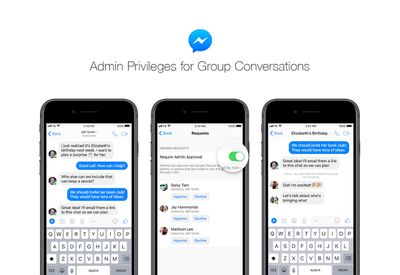
Facebook today announced the rollout of a new feature in Messenger called "Admin Privileges." With this toggled on, the company said that it will give specific users in a group chat "more control" over who partakes in the chat, and should help boost the app's privacy.
If you have admin privileges you'll be able to approve or decline new members before they join the chat, remove members already in a chat, and promote or demote any other person as an admin. The company said that the feature should help large groups who need to get in touch but may not be connected to on Facebook, like for a friend's surprise party.
There are also new joinable links that any member can create and send out to potential new members, which an admin will then be able to approve. These admin privileges will be turned off by default:
The great thing about admin privileges in Messenger is they work in the background; if your group chat doesn’t need that level of control, it won’t get in the way of your group messaging. You’ll have the option to decide if you’d like admin approval for approving new members, but this preference is off by default in your group chat settings.
Today's Facebook Messenger update launches at the same time that Facebook is facing immense scrutiny for its involvement with consulting firm Cambridge Analytica, which itself has been tied to President Trump's 2016 election campaign. According to recent reports, the firm improperly amassed information from 50 million Facebook users without their consent and used that data to "target messages to voters."
In the wake of these reports, investigations have been opened into Facebook's actions and several politicians have asked Facebook CEO Mark Zuckerberg to testify about the events. A new "#DeleteFacebook" campaign has now launched on Twitter, which WhatsApp co-founder Brian Acton took part in. Facebook owns WhatsApp, but Acton left the company earlier in 2018 to start his own non-profit organization.
A Facebook spokesperson mentioned that the company was "deceived" by Cambridge Analytica and didn't know about its actions. One Facebook shareholder, Fan Yuan, has filed a lawsuit against the company alleging it had some knowledge of Cambridge Analytica's data siphoning and made "materially false and/or misleading" claims regarding the company's handling of user data.
“The entire company is outraged we were deceived,” the statement continued. “We are committed to vigorously enforcing our policies to protect people’s information and will take whatever steps are required to see that this happens.”
As the scandal continues to grow, the Federal Trade Commission has also begun looking into whether Facebook potentially "violated an agreement with the agency." Zuckerberg has yet to comment on the issue.
Back in January, Facebook announced a series of privacy-focused updates, which were planned for a rollout ahead of a May 25 deadline for compliance with the General Data Protection Regulation in the EU. At the time, Facebook also revealed a new overhaul for the news feed that would favor friends and family posts over publishers. Zuckerberg said that this update would lessen the time its users spend on Facebook, but cause the time to "be more valuable."
Note: Due to the political nature of the discussion regarding this topic, the discussion thread is located in our Politics, Religion, Social Issues forum. All forum members and site visitors are welcome to read and follow the thread, but posting is limited to forum members with at least 100 posts.
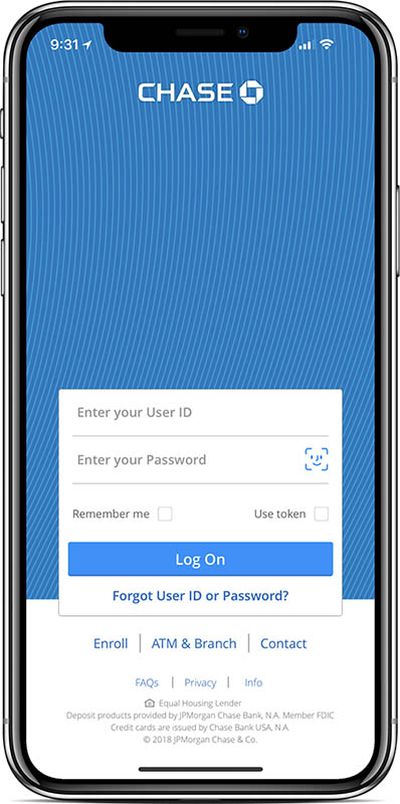
While not mentioned in the release notes, Chase Bank today finally updated its iOS app to be optimized for the iPhone X's taller display.
Chase Mobile was one of the most widely used apps that lacked full support the iPhone X, as we noted earlier this month. Other notable absentees include iMovie, Amazon Alexa, Inbox by Gmail, Google Authenticator, and NBC Sports, but many developers told MacRumors that updates are in the works.
Starting in April, Apple says all new iOS apps submitted to the App Store must support the iPhone X display. The rule doesn't apply to existing apps.
Here's what else is new in the latest Chase Mobile version:
New "Profile & Settings" screen makes it easier to access alerts, messages, documents, and settings.
Conveniently set up and manage automatic payments for Chase credit cards.
Add pay-from accounts from other banks to pay your Chase credit card bill.
Eligible customers can add their accounts from other banks, and use them to transfer money to and from their Chase accounts.
Chase Mobile is available for free on the App Store for iPhone and supports both Touch ID and Face ID for login authentication.
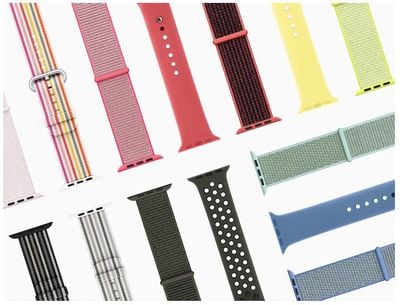
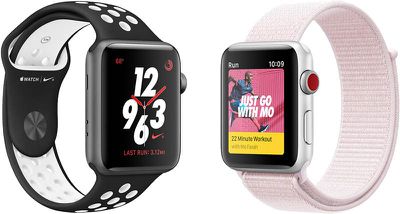
Apple today debuted a new Spring Collection of Apple Watch bands, available to order from Apple.com and at select Apple Stores and Apple Authorized Resellers across the United States and other countries later this month.
Woven Nylon bands now include an updated stripe pattern, and there's new colors of the Sport Band, Sport Loop, and Classic Buckle.
Sport Band in Denim Blue, Lemonade, and Red Raspberry
Woven Nylon in Black Stripe, Blue Stripe, Gray Stripe, and Pink Stripe
Sport Loop in Flash Light, Hot Pink, Marine Green, and Tahoe Blue
Classic Buckle in Spring Yellow, Electric Blue, and Soft Pink
Apple Watch Series 3 (GPS + Cellular) will include new 38mm and 42mm Space Gray Aluminum Case with Black Sport Loop models.
Apple said the Nike Sport Loop will now be sold separately in a variety of colors matching with the latest Nike running shoes. There's also new colors for the Nike Sport Band, which Apple already sells separately:
Nike Sport Loop in Black/Pure Platinum, Bright Crimson/Black, Cargo Khaki, Midnight Fog, and Pearl Pink
Nike Sport Band in Barely Rose/Pearl Pink, Black/White, and Cargo Khaki/Black
Apple Watch Nike+ (GPS + Cellular) will include new 38mm and 42mm Space Gray Aluminum Case with Midnight Fog Nike Sport Loop models.
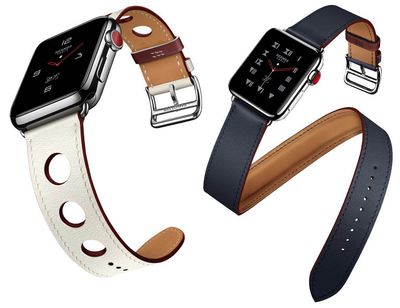
For Apple Watch Hermès, the Single Tour Rallye and Double Tour bands now display contrasting paint details:
38mm Double Tour in Indigo with rouge H polished edge and rouge H contrasted loop
38mm Double Tour in Blanc with rouge H polished edge and rouge H contrasted loop
42mm Single Tour Rallye in Indigo with rouge H polished edge and rouge H contrasted loop
42mm Single Tour Rallye in Blanc with rouge H polished edge and rouge H contrasted loop
Following rumors of his plans to leave Apple earlier this year, The Wall Street Journal today reported that Jimmy Iovine will transition into a "consulting role" with Apple Music this August. Iovine won't completely leave Apple and his involvement with Apple Music behind, but will step back from daily involvement, people familiar with his plans stated.
At the time of the original rumor, Iovine denied he would leave the company: "I am committed to doing whatever Eddy [Cue], Tim [Cook] and Apple need me to do, to help wherever and however I can, to take this all the way. I am in the band." As of now, it's unclear what exactly he will be doing in his consulting role with the streaming music service, but upon his transition he will no longer be the public face of Apple Music.
Iovine reportedly plans to spend more time with his family while at the same time supporting Apple Music and Apple senior vice president Eddy Cue "as needed." According to people close to Iovine, the transition from Beats' "edgy culture" to Apple's focus on "appealing to the masses" proved to be a challenge.
While Iovine was the public face of Apple Music and held meetings with employees and artists in Los Angeles, in recent years "most of Apple Music's operations" had been designated to Robert Kondrk and Jeff Robbin, overseeing business and engineering sides respectively. Cue is said to now be deciding on whether to continue divvying up responsibilities between Kondrk and Robbin, promoting one to a more public role, or hiring someone outside of Apple to become the new Iovine.
Iovine has been with the Apple Music team since 2014, when Apple acquired Beats Electronics and the Beats Music streaming service, both of which were co-founded by Iovine and Dr. Dre. Before that acquisition, Iovine has had a long history with Apple, first pitching a subscription music service to Steve Jobs in 2003.
Iovine's transitioning this August will be timed with the vesting of stock he acquired when first joining Apple. In January, he said that the bulk of his stock "vested a long time ago," and while a tiny portion remains unvested, it's "not what [he] thinks about." Still, the people familiar with his plans have now confirmed that the timing of his transition is in some part "linked" to the Apple shares he received in the Beats acquisition.
According to the WSJ, Iovine's stepping back from leadership makes him "one of the last" of the Beats team that Apple gained following the acquisition in 2014.
Mr. Iovine is one of the last of a team of prominent music executives Apple gained when it bought Beats Electronics LLC in 2014 for $3 billion. Former Chief Executive Ian Rogers, Beats co-founder Dr. Dre and Nine Inch Nails frontman Trent Reznor, another top Beats executive, have all left or distanced themselves from the company since the Apple deal, people familiar with the business said. Beats President Luke Wood, who oversees the headphone business, remains.
In his time at Apple, Iovine grew Apple Music to amass 36 million subscribers as of March 2018, while also pushing for the service to include more than just music and helping to launch shows like Carpool Karaoke. Before the launch of that show, as well as Planet of the Apps, Iovine said he hoped Apple Music would be "an entire pop cultural experience."
Apple is ranked sixth on LinkedIn's annual list of the top 50 companies where professionals most want to work in the United States.
Apple moved up one spot after ranking seventh in 2017. The top five spots belong to Amazon, Alphabet, Facebook, Salesforce, and Tesla, while NBCUniversal, The Walt Disney Company, Oracle, and Netflix round off the top ten.
LinkedIn says the list is based on billions of data points generated by over 546 million users on the site, with four areas of focus: interest in the company, engagement with the company's employees, job demand, and employee retention.
Job demand: At what rate are people viewing and applying to job postings, including paid listings, unpaid ones and those linked from other sites?
Engagement with the company: How many professionals are viewing a company's career page? How many new followers has the company attracted?
Interest in its employees: How many non-employees are viewing and asking to connect with a company's employees?
Retention: Are employees sticking around for at least a year?
It's worth noting that many different lists are published each year, and the results can often vary significantly. In December, for example, Apple ranked 84th on Glassdoor's annual list of the best companies to work at in the United States.
YouTube will soon place more advertisements in between music videos for some users, in an attempt to "smoke out" anyone who treats YouTube like a free music video playlist service and convince them to pay for its upcoming subscription music service (via Bloomberg). YouTube's unnamed service is described as a "necessary counterweight" to Apple Music and Spotify, and was last rumored to be launching this month.
The news came from a recent SXSW interview with YouTube's global head of music, Lyor Cohen, who went so far as to say that the company is trying to "frustrate" free YouTube users so that they're subsequently "seduced" into paying for a monthly subscription. The new service will include exclusive videos, music playlists, and more, all aimed at "die-hard music fans."
People who treat YouTube like a music service, those passively listening for long periods of time, will encounter more ads, according to Lyor Cohen, the company’s global head of music. “You’re not going to be happy after you are jamming ‘Stairway to Heaven’ and you get an ad right after that,” Cohen said in an interview at the South by Southwest music festival.
“There’s a lot more people in our funnel that we can frustrate and seduce to become subscribers,” Cohen said. “Once we do that, trust me, all that noise will be gone and articles people write about that noise will be gone.”
Cohen said that YouTube is trying to "be good partners" with the music industry, while also hoping to silence any rumors about the company's alleged harm to the industry and its artists. Over the years, some people have criticized YouTube for copyright violations in videos and underpaying artists and record companies. According to Cohen, this "noise" will end once the subscription service debuts.
A date for that launch has still not been given, but "thousands" of Google employees are said to be testing it right now.




 Facebook CEO Mark Zuckerberg this afternoon addressed the ongoing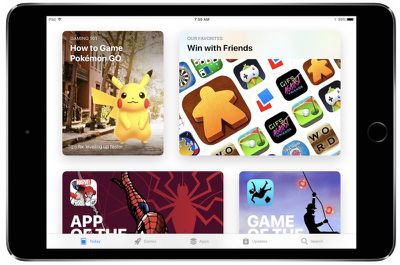
 Apple today