With luxury watchmakers turning their attention to the smartwatch market ahead of the Apple Watch launch later this year, Montblanc is one of the first to announce specific plans. As noted by aBlogtoWatch, Montblanc's initial foray is an "e-Strap" accessory band for traditional watches that connects wirelessly to a smartphone.
The Montblanc e-Strap incorporates a small 0.9-inch wide screen into a high-quality leather band that attaches to a traditional analog watch. The screen lays flat against the underside of the wrist, allowing users to receive notifications, count steps, and control music playback on a connected smartphone. The band connects to an iPhone or iPad via Bluetooth and offers up to five days of battery life.
How impressive as a connected wearable device will the e-Strap's electronic module be? It will have a 0.9 inch monochromatic OLED touchscreen display with a 128x36 pixel resolution. That isn't exactly industry changing, but this is more than just a mere notification device. Montblanc has made it clear that in addition to basic calls, texts, e-mails, calendars, social media, and reminder notifications, the e-Strap will function as an activity monitor/tracker with a pedometer and accelerometer to measure data that feeds into an included iPhone or Android phone app.
The e-Strap will reportedly sell separately for 250 Euros and will also be available initially as an option with select Timewalker Urban Speed watches. The band will, however, apparently be compatible with all 42-mm or 43-mm wide Timewalker watches.
Montblanc is one of several luxury watchmakers adding smartwatch-inspired products to their 2015 portfolios. Timex and Fossil reportedly are partnering with Qualcomm and Intel, respectively, on upcoming smartwatches, while Swiss watchmaker TAG Heuer is exploring partnerships and acquisitions in order to jumpstart its own smartwatch projects.
As reported by 9to5Mac, Apple's iCloud.com Photos app has been experiencing difficulties for the past few days, with many users reporting the icon missing from the web interface entirely and the direct link to the app also producing a "problem loading application" error. In our own testing today, performance has been spotty, with the icon missing at times but present at other times. Even when the icon is present, clicking it has sometimes generated error messages while at other times properly loading the Photos app, albeit with some delays.
Apple has not commented on the situation, and the company's status page shows no issues with any iCloud web apps. As a result, the reason for the issues remains unknown.
The iCloud Photos app is part of Apple's iCloud Photo library, which was introduced in beta alongside iOS 8.1. The service stores all iOS photos and videos and shares them across platforms. Images can be viewed using the iOS Photos app and the iCloud Photos web app, which was last updated in November with the ability to upload photos to the user's library from the web interface. Apple is also working on an upcoming Photos app for Mac, which will replace Aperture and iPhoto.
With the new year, Apple has made a few price adjustments to its products and services, led by an increased yearly fee for the company's developer programs in a number of European countries, as first noticed by German blog Apfelpage [Google Translate].
The Apple-focused blog reports that German developers are now facing a €99 ($119) per year subscription charge for Apple's various developer programs, up from a previous €80 ($96) subscription fee. The price changes presumably affect all EU markets, as Apple typically has consistent pricing across member countries except for occasional differences due to variations in tax rates. Apple's developer programs are priced at $99 per year in the United States.
The price increase is also in effect for the UK, where the price has been adjusted from £60 ($92) a year to £79 ($121) as noted by 9to5Mac. Across the board, the European developer program has been about on par with or slightly above the cost in the U.S. when adjusted for currency rates. Following the weakening of many world currencies compared to the U.S. dollar in recent months, however, Apple's price increases in those countries will help reset the company's desired pricing matrix but increase costs somewhat for developers overseas.
Elsewhere, the prices of Apple physical products are seeing slight hikes in a few countries. Apple Toolboxreports Apple has increased the price of products like the Mac, iPhone, and iPod in Turkey, a country where the company's products are already among the highest priced in the world. And the increase in prices may not stop there, as the Turkish Minister of Economy recently announced a plan to gain favor for products made in Turkey by introducing taxes on imported smartphones, computers, and tablets.
A MacRumors reader has also pointed out that the Norwegian people will be facing higher prices for Apple products, with the new iMac with Retina 5K Display and iPhone 6 seeing 8.3 and 12 percent increases respectively. The MacBook Pro with Retina Display received the biggest price jump, going from 10,790 kr to 12,590 kr, roughly a 14 percent increase in the cost of the device.
Apple has been known to adjust the price of its products alongside fluctuating currency values, most drastically just last month when the Russian ruble saw a sharp drop in value, causing the company to temporarily shut down its Russian online store and return with significant price hikes days later.
Though far less dramatic, these price inflations seen in other parts of the world appear due to the weakening of the Turkish lira and Norwegian krone in recent months. Even so, it's not entirely clear why the company instituted the price change to these select few foreign markets, and whether or not other countries could see a similar price hike in the future, as many other currencies have also been weakening against the U.S. dollar.
Apple's retail locations in Japan have begun sales of the "Fukubukuro", also known as a "lucky bag", which offer an assortment of products at a steep discount. Japanese blog Mac Otakara (Google Translate) was present at the Apple Store in Nagoya to discover the exact content of the various bags among customers, with some shoppers receiving big-ticket items like iPads and MacBooks.
This year's lucky bags sell for 36,000 yen ($300) and come in four different configurations, with common items including an Apple TV, a 4000 mAh Mophie Powerstation external battery pack, an Incase Icon backpack, an iTunes gift card, and Beats by Dre Powerbeats2 wireless earbuds. For the most valuable Fukubukuro bag, Apple included an 11-inch MacBook Air with a Power Support Air Jacket and a Twelve South PlugBug dual charger along with the common items.
Other variants of the bag offer a fifth-generation 16GB iPod touch, a 16GB iPad mini 3 or a 16GB iPad Air 2 alongside the common items. The iPad lucky bags also feature Logitech's UE Boom portable speaker.
Apple's grab bags are sold as is, and returns are not allowed unless a product is defective. The promotion is limited to Apple Stores in Japan, although they are usually met with long lines of shoppers hoping to purchase their own lucky bag.
Thanks to the iPhone 6, the iPad Air 2, the iPad mini 3, OS X Yosemite, and iOS 8, 2014 was a major year for Apple. The iPhone 6 and 6 Plus brought new screen sizes and a radical redesign, while iOS 8 and OS X Yosemite introduced deep integration between Apple's mobile and desktop operating systems.
The past year has seen an impressive display of innovation and new ideas, but upcoming product releases and rumors suggest that 2015 may be an even more monumental year for Apple.
Along with the Apple Watch, which Apple has said will launch in early 2015, we will likely see major updates across the Mac lineup due to the availability of Intel's next-generation Broadwell chips. An Apple TV update has long been in the works and could see a 2015 debut, and as it has done every year, Apple will undoubtedly update its iPad and iPhone lineup, along with releasing new versions of iOS and OS X.
As we did last year, we've highlighted Apple's prospective 2015 product plans, outlining what we might see from Apple over the course of the next 12 months based on current rumors.
UK retailer Phones4U shut down its online store and closed its retail operations earlier this year when the struggling company entered administration, the UK equivalent of bankruptcy. Now in the middle of the administration process, Phones4U is ready to liquidate its existing stock of products, including its entire inventory of iPhones, iPads and Beats headphones.
UK auction house John Pye Auctions is handling the liquidation of Phones4U stock, which includes more than 600,000 items worth £10.8m in what is the UK's biggest auction of the year. Among the auction items are Beats headphones, iPhone 5/5c units, iPad Air and iPad mini models.
The items are being sold in individual lots for public purchasing and not wholesale trade job orders. Online bidding is active now with many auctions listed with zero bids. For auctions that do have bids, prices are currently very low. Some entry-level iPad mini and iPad Air models are available for as little as £2 ($3USD).
It appears that the auction site will accept bids from both within the UK and from international buyers, but the auction house will not be shipping items. Buyers must pick up items in person or make their own arrangements for shipment.
Bidding on the auction ends Tuesday, January 6, 2015 with a public showing available on Monday, January 5, 2015 from 10am to 2pm at John Pye & Sons warehouse in Staffordshire.
Earlier this week, Apple debuted a new "Start Something New" campaign on its Japanese site, showcasing individuals using its latest products and creative apps to make art and capture photos.
As of today, the company's new campaign has been expanded to several other countries, including the United States and many locations across Europe and Asia.
Apple also highlights individual creator stories, sharing the tools that each person uses to create their pieces. Japanese artist Nomoco, for example, uses an iPad Air 2 and the Brushes 3 app to make paintings.
Nomoco's approach to making art is organic and tactile. She is inspired by movement and light, and even the way an ink drop splashes can guide her next move. So when she painted digitally for the first time, it was natural for her to use her fingers. With iPad Air 2 and the Brushes 3 app, Nomoco was able to create this ethereal series exactly as she had imagined it.
Other artists, like Marcelo Gomes and Jingyao Guo use various photography and sketching apps to make stylized photos and drawings. Several photographers like Jared Chambers and Christian Weber use popular photo editing app VSCO Cam to edit photos, and Apple apps like iMovie and Final Cut Pro are used by videographers Matt Pyke and Thayer Allyson Gowdy.
Several iOS tools are featured as well, including Exposure Control, Burst Mode, and HDR, which various photographers use in the art creation process. Apple's "Start Something New" campaign follows in the footsteps of its previous "Your Verse" iPad campaign, which demonstrated the many ways people have incorporated Apple's iPad into their daily lives.
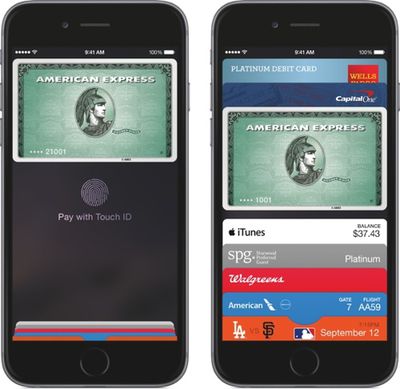
Several iPhone 6 owners on Apple support forums and in MacRumors forums are reporting an issue with Apple Pay after making changes to the their phones that automatically reset the Apple Pay service (via 9to5Mac). These activities include restoring a phone, logging out of iCloud and possibly removing a passcode from the device.
Following such changes, Apple automatically removes the associated credit cards from Apple Pay as a security measure to protect a user's sensitive financial information in case of loss or theft of the phone. Users are then required to repeat the setup process and re-add their credit cards to the mobile payment service. It is during this restoration step, however, that the process fails for some users.
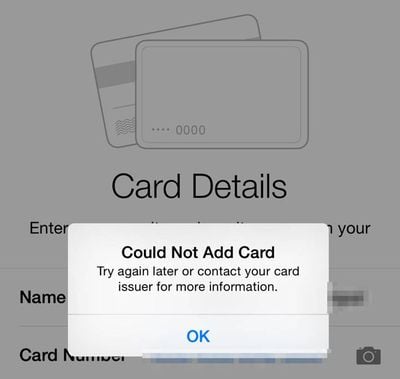
Upon failure, users are greeted with an alert advising them to contact their card issuers. Subsequent calls to banks confirmed the cards not associated with the Apple Pay service, but the phone still fails to accept the card information. Apple support is typically unable to fix the issue and, in many cases, Genius Bar technicians have replace the phones with new or refurbished units in order to restore Apple Pay functionality.
The issue likely involves the secure enclave on the iPhone that stores the Apple Pay information. It is possible that the automatic removal of Apple Pay information does not clear the enclave properly, leaving behind details that block the addition of credit card information. This apparent glitch in the service appears to only affect users who made changes that disabled Apple Pay and removed cards automatically. Users who manually remove their cards are able to add new and previously used cards back to Apple Pay without an issue.
It is not clear how many iPhone 6 owners are affected by this issue. It could be a system-wide glitch affecting all Apple Pay users or an issue with only a small number of iPhone 6 and 6 Plus handsets. Not surprisingly, Apple has yet to comment officially on the matter.
A new class action lawsuit was filed against Apple on Tuesday in a U.S. federal court, alleging the company's newest version of iOS doesn't properly inform its users just how much storage space it will occupy once downloaded.
As reported by Siliconbeat, the lawsuit is claiming that iOS 8 can take up as much as 23.1 percent of the overall storage capacity of an iOS device, but that fact isn't actively advertised when customers purchase a new Apple product, or go to download the new software update. The plaintiffs point to personal moments akin to sporting events or weddings where users are desperate for more storage as Apple preying on consumers for more profit.
"Using these sharp business tactics, defendant gives less storage capacity than advertised, only to offer to sell that capacity in a desperate moment, e.g., when a consumer is trying to record or take photos at a child or grandchild’s recital, basketball game or wedding," alleges the plaintiffs in the case.
William Anderson, the plaintiffs' attorney of Cuneo Gilbert & Laduca, a Washington, D.C.-based law firm, seeks both damages and changes to Apple's policies specifically under California state law.
"We feel that there are a substantial number of Apple consumers that have been shortchanged," Anderson said in a statement. "And we’ll be pursuing the claims vigorously."
Anderson continued to sound off support not only for consumers facing storage issue following the download of iOS 8, but those who purchased an iPhone or iPad with iOS 8 already installed.
iOS 8 launched back in September, including a bevy of new features like Continuity and allowing third-parties to access Touch ID and its keyboard functionality. A few days after launch, problems such as battery drain and slow Wi-Fi began cropping up for some iOS 8 users. Apple's further attempts to remedy the rocky launch with steady updates caused even largerproblems with cell service outage and spotty Touch ID issues.
A late-October update brought much-anticipated support for Apple Pay, amongst other features, and began putting the service back on track. As of early November the newest operating system was installed on 60 percent of active iOS devices.
Despite the company's continued efforts to address iOS 8 bugs, the plaintiffs of the new class action are attempting to use Apple's own branding of iOS 8 - "The biggest iOS release ever" - as a hidden piece of subtext hinting at the hefty amount of storage the operating system requires.
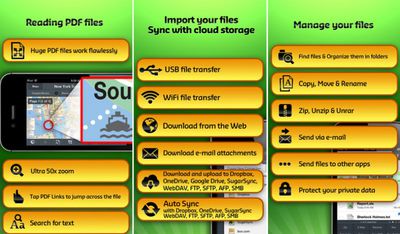
PDF reader app GoodReader has removed a number of operations related to iCloud Drive to comply with Apple's guidelines. Specifically, developer Good.iWare has disabled GoodReader's ability to create and delete new folders inside iCloud along with the ability to move iCloud files. The developer called the iCloud usage policy "mandatory" and also included VoiceOver compatibility along with a big fix for opening iCloud containers.
Important iCloud functionality change: - to ensure the compliance to Apple's iCloud usage policy, the following operations have been disabled: creation of new folders inside iCloud, deletion of folders inside iCloud, moving of files and folders inside iCloud. We apologize for the inconvenience, but the iCloud usage policy is mandatory.
The changes to GoodReader come a week after Panic's file management app Transmit was forced to disable its send to iCloud Drive feature which also led to the removal of all Share Sheet file transfers to other third-party services. However, Apple later reversed its course on Transmit as the app reinstated its sending feature in an update shortly after.
While Apple introduced a number of new features with iOS 8, a number of developers have been forced to remove key features from their apps for reasons that are unclear. For instance, Notification Center widget Launcher was removed after the launch of iOS 8 in September, and Apple has also asked apps like Drafts and Neato to remove widget functionality. Apple also asked calculator app PCalc to remove the calculator functionality from its Notification Center widget, but later reversed its decision.
The city of New York is considering new measures (PDF) that would allow drivers to pay their parking tickets with alternative payment methods like Apple Pay, PayPal, and Bitcoin, reportsMarketWatch. Currently, the city says it is collecting roughly $600 million in parking ticket revenue each year, as the region's Department of Finance is looking for a "convenient way for motorists to expeditiously pay their parking tickets via a smartphone or mobile device."
The primary objective of this RFI is to identify and assess mobile platforms that support the payment of parking tickets and learn about their current use and future viability. A secondary objective is to identify existing mobile platforms that support the request for a hearing of parking tickets and learn about their current use and future viability.
New York City's Department of Finance also outlined its requirements for the new payment system, noting that it should allow users to take a picture of a ticket or scan it in to see the details of a parking violation. The city also notes that the graphical user interface (GUI) of the mobile payment system should be "simple" and allow for quick payments that meet payment-industry standards for security.
New York City drivers are currently able to pay for tickets online, via mail or at a courthouse, but the current online system is incompatible with mobile devices and subjects credit and debit card payments to a 2.5% fee. The city hopes to gain more knowledge on a new mobile parking ticket payment system by January 15 through its formal Request for Information, but there are no definite dates as to when the new measures would be implemented.
News reports and rumors have gone back and forth multiple times over whether Samsung or the Taiwan Semiconductor Manufacturing Company (TSMC) will produce the A9 chips designed for use in next-generation iOS devices as the two companies compete for Apple's business.
In December, a report suggested Samsung had already begun production on the A9 chips, but a new analyst prediction shared by the Taipei Times suggests that TSMC, not Samsung, may be Apple's main A9 chip supplier due to its more favorable production yield.
"The two companies' technological capabilities are similar, so the key factor will be whose mass-production yield is better," MIC director Chris Hung (洪春暉) told reporters on the sidelines of the event. Hung added that the chances of TSMC remaining the main supplier are higher because of its better yields.
While one company will win the right to produce the bulk of Apple's next-generation chips, Apple may spread orders of the A9 processor across multiple suppliers in order to cut down on risk. The best yield results in the lowest price for Apple, so the company that manages to produce the most usable chips from a single wafer (a semiconductor material) will likely win the bulk of orders from Apple.
The continually shifting Samsung vs. TSMC rumors reflect the ongoing competition between the two chip manufacturing companies and demonstrate just how important Apple contracts are to suppliers. As we saw with GT Advanced and its failed sapphire deal with the Cupertino company, manufacturers will go to great lengths to secure lucrative partnerships with Apple.
In 2013, Apple signed a multi-year deal with TSMC to produce A-series processors for Apple devices as the company made an effort to move away from Samsung, but while TSMC produced the bulk of Apple's A8 and A8X chips for the iPhone 6 and the iPad Air 2, Apple has not been able to entirely cut ties with Samsung due to its chip production expertise and reliability.
As chip technology advances, it becomes more and more difficult for companies like Samsung, TSMC, Intel, and others to pack transistors onto an ever-decreasing surface area, which is why Apple has likely made moves to diversify its supply chain lineup in recent years. More suppliers gives the company a backup solution should one run into production difficulties that could result in potential delays.
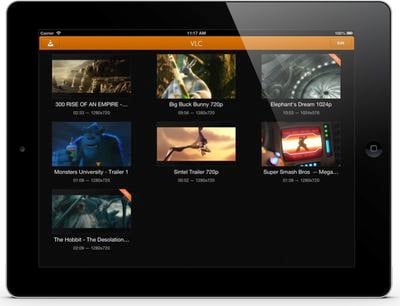
Felix Paul Kuehne, lead developer for the iOS and OS X version of popular video player app VLC, has confirmed that VLC for iOS should be available again soon in the iOS App Store (via Softpedia). The app will be returning after an almost four-month absence from the iOS platform.
VLC for iOS mysteriously disappeared from the iOS App Store following the release of iOS 8 in September of this year. VLC did not comment on the removal, only stating that it was "working with Apple on a solution" to bring VLC back into the App Store. After several months of silence, the company announced in early December that it was launching a semi-public TestFlight beta trial of the updated version of the app.
Addressing a recent complaint about the app still not being available, Kuehne wrote in a VLC forum post that, "It will be again, but probably early next year due to the iTunes Connect holiday shutdown." He added on Twitter that the app will be back "Hopefully quite soon."
VLC recently released the TestFlight beta 2 version of VLC for iOS 2.4.0 with a handful of improvements. Based on Kuehne's comments, soon everyone, not just beta testers, will be able download the version as a new app or an update for versions downloaded before the app was removed from the App Store.
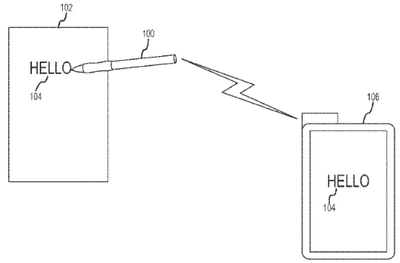
Apple today was awarded a new patent by the U.S. Patent and Trademark Office that concerns a new type of digital stylus that translates a user's handwritten note into a digital version when connected to a smartphone, tablet, or any "digital computing device" (via Apple Insider).
The patent also details various exchangeable tips for the stylus, including actual ink, markers for a whiteboard, or a rubberized nub akin to most popular tablet styli. The stylus activates when various motion-sensing hardware, including accelerometers, detects when the pen is picked up out of its dock, pressed to a writing surface, or simply turned on manually.
Thanks to motion sensors able to detect a 3D plane, the stylus uses an initial zero point to transmit the movement and flow of handwriting as varying changes in position to the desired computing device. This technology also means an actual surface isn't needed to transmit data -- simply writing notes in the air would suffice. The patent even details ways for users to choose how the data is transmitted, including continuously or at chosen intervals, allowing battery life to be preserved.
As noted by Apple Insider, there are many practical solutions for Apple's new patent. The pen allows a user to display their writing on multiple displays, a possible solution for work meetings and classrooms. It could also be a digital solution for note-taking, as the user would take notes with the pen on a paper tablet, and a digital copy would be sent to a phone or tablet tucked away in a bag. The automatically produced digital backup could then be more easily edited and shared.
The patent isn't exactly new, being initially filed nearly five years ago in January of 2010, and is by no means a confirmation that Apple will be moving forward with a smart stylus of any kind. But, like most patents, it is an interesting glimpse into what possibilities the company is looking into for the future.
Apple's spaceship-shaped campus under construction in Cupertino will include a spot for a historic barn, reports the San Jose Mercury News. First constructed in 1916, the Glendenning Barn is a historic Cupertino site left from a time when the city was still a sprawling orchard.
During the teardown of the existing HP campus, Apple dismantled the redwood barn plank by plank and made careful notes on its construction because the company pledged to relocate the building to another site.
It was initially unclear whether the barn would remain on the campus, but it appears it will indeed stay on Apple's property, nestled among the many fruit trees the company plans to build around its spaceship-shaped building. The barn, according to the Mercury News, will be used as an equipment storage facility by Apple and will be located directly adjacent to the employee fitness center.
Glendenning Barn, courtesy of the Cupertino Historical Society (via Mercury News).
To protect the structure during construction, Apple carefully dismembered the barn, numbering it piece by piece -- every plank, nail and crossbeam -- so it can be rebuilt just as it was, says Donna Austin, president of the Cupertino Historical Society. The company has even stockpiled redwood salvaged from an old grove in case any damaged planks need to be replaced.
Under Apple's care, it will be a working barn for the first time in decades, storing sports equipment and the landscaping supplies the company will need for the thousands of trees that will shade the campus.
Apple's second campus was designed in part by former CEO Steve Jobs, and one of his main goals was to give the site a more natural look and feel, returning many of the native plants and trees that grew in the area before it was turned into an office site by former owner Hewlett-Packard.
Apple's growing focus on the environment is fully evidenced in the new campus design, which includes 80 percent green space, a central garden with outdoor dining areas, and more than 300 different species of trees. The campus was also built to use efficient water and landscaping and it will get 70 percent of its energy from solar and fuel cells.
Construction on Apple's second campus is well underway, with the foundation complete and walls beginning to take shape. Apple plans to finish the campus by the end of 2016, and construction crews work at the site almost around the clock to keep the building plans on schedule.
Oil company Chevron has plans to expand its use of Apple Pay to gas pumps in the new year, according to a tweet the company sent out to a customer earlier today. In the message, Chevron says that it is working with Apple to bring Apple Pay payment solutions to pumps by early 2015.
@SingAsana We are working alongside Apple to develop solutions to integrate with Apple Pay at the pump by early 2015.
— Chevron (@Chevron) December 29, 2014
Chevron is an early Apple Pay partner, and was listed as one of Apple's supporters when the service first launched on October 20. Apple Pay is accepted at Chevron and Texaco gas stations at the current time, but it can only be used at the in-store cash register, which is considerably less convenient than a pump-side payment option.
Support for Apple Pay at the pump has been in the works at Chevron for several months, with a Chevron spokesperson stating that the company was working with Apple on developing pump-side options in mid-October. As the only gas stations accepting Apple Pay, Chevron and Texaco gas stations may be able to get a leg up on the competition by luring iPhone 6 and 6 Plus users looking for a more convenient way to pay for gas purchases.
Apple Pay is still in its infancy, but early numbers suggest Apple's payments service has the potential to be the first widely adopted mobile payments option. During the month of November, Apple was responsible for 1 percent of digital payment dollars, with 60 percent of Apple Pay customers using the service on multiple days throughout the month. Apple Pay is only in the United States at the time being, but Apple has plans to expand to multiple other countries in 2015.
Update 2:00 PM PT: Chevron has clarified that a potential timeline for the rollout of Apple Pay at the pump remains unclear, with no official early 2015 launch planned. The company also plans to continue to roll out in-store Apple Pay support to 3,000 stores in 2015.
Syfy is bringing the classic 12 Monkeys science fiction thriller to TV in a new series that will provide an immersive lighting experience for iOS device owners with a Philips Hue lighting system. For the first time ever in a TV series, viewers will be able to sync their household lighting to the action within each episode of the Syfy original series.
Syfy updated its iOS Sync app earlier this year with support for Philips Hue prior to the re-airing of Sharknado and the debut of Sharknado 2. The system requires users to install the Syfy Sync second screen app [Direct Link] to enable the feature.
Starting with the series premiere on Friday, January 16 at 9pm ET/PT, 12 Monkeys fans who pair the Syfy Sync app for phones and tablets with Philips Hue bulbs while watching the program will be treated to a specially designed “light track” – marrying the action on the screen to the lighting in your room – which will add a heightened engagement through a more immersive viewing experience. When combined, the app will detect audio cues from 12 Monkeys and translate them to the Web-enabled Hue system. Fans will then be enveloped in the onscreen action through ambient lighting effects designed to engage viewers in an entirely unique way.
Syfy will provide this immersive lighting in all 13 episodes of 12 Monkeys beginning in mid-January. The first episode will air Friday, January 16 at 9pm ET/PT.
The cover of Fortune's January edition showcases an interview with Disney CEO Bob Iger and his "Empire of Tech," focusing on Disney's growing media empire with acquisitions of brands such as Star Wars, Indiana Jones, and Marvel expanding the company's already considerable reach over the past few years. With Disney's and Iger's histories intersecting with those of Apple and Steve Jobs, Iger unsurprisingly takes a few moments to discuss topics such as his relationship with Jobs, his view on Apple and Disney's history, and Disney's attempt to stay relevant in a growing technological world.
In one anecdote, Iger recalls the moment in 2005 when he was about to be named as the new CEO of Disney, calling Jobs ahead of time to let him know what was coming. Disney's own animation was seen as "lifeless" in the years before the company's 2006 acquisition of Pixar, and amid reports of "bad blood" between former Disney CEO Michael Eisner and Jobs himself and an inability to come to an agreement for a continued distribution deal following the successful release of Toy Story, both studios' futures remained up in the air.
Even before the news became public, he called Jobs to let him know big changes were coming. “I told him I was well aware of how strained the relationship had become,” says Iger. “I said, ‘I know you think it’s going to be business as usual, but I’d like to prove to you that it’s not.’ ”
Jobs gave Iger the benefit of the doubt and told him to come up as soon as the dust settled. And that’s just what Iger did—not only because he knew Pixar was the key to revitalizing Disney’s lifeless animation studio, but also because he saw Apple’s CEO as a valuable technology partner. The sentiment, apparently, was reciprocated.
Ensuing fruitful years of a Disney/Apple alliance began immediately, with Iger flying out to Cupertino to officiate a deal to get Disney-owned content on the iTunes Store, a big deal for the still-budding platform.
“Steve recognized that in Bob he actually had a partner,” says Edwin Catmull, current President of both Pixar Animation Studios and Walt Disney Animation Studios. “In the subsequent years they thought of each other as true partners. That’s what he wanted, and that’s not what he had previously.”
Two weeks after becoming CEO, Iger stood alongside Jobs to announce that Disney-owned ABC and its network of programs would be available on the iTunes Store, which only sold music at the time. Iger notes that Disney "got backlash from everybody -- from affiliates, retailers, and the guilds." He goes on to remark, however, that the experience "changed my relationship with him [Jobs] bigtime. And it led to a much better dialogue on Pixar.”
The Disney/Apple partnership continues to grow stronger, even in the wake of Jobs' death. Iger joined Apple's board just months after Jobs' passing, and Jobs' widow Laurene Powell Jobs remains Disney's largest individual shareholder thanks to Disney's acquisition of Pixar.
And Iger isn't afraid of the necessity to innovate, as highlighted by Apple CEO Tim Cook in a quote for the piece. “He has the courage to lose sight of the shore,” Cook says of Iger. “He understands the tradition of Disney but isn’t wedded to it.” But Iger also knows that both companies' pasts are important in looking towards the future, and remembers fondly brainstorming sessions with Jobs.
“Occasionally we would stand in front of a whiteboard and talk about ideas,” says Iger. “We’d just muse on business. When you think about it, media’s the intersection of content and technology—it’s all about storytelling, like photography and the camera. So we’d talk about that a lot, the intersection between the story and the gadget.”
The partnership isn't only growing strong behind boardroom doors, either. Just last week Apple Pay launched at Walt Disney World, its "Disney Movies Anywhere" app debuted exclusively on the App Store before expanding to Android recently, and even the upcoming Apple Watch is said to be including a Mickey Mouse-themed watch face option.


 Thanks to the