The Nest Protect app-enabled smoke detector will be returning to store shelves soon, the company said today, after being pulled off the market and recalled because of a potential safety issue last month.
The company, which was acquired by Google earlier this year for $3.2 billion, stopped selling the Nest Protect last month after laboratory testing determined that the Nest Wave feature could potentially malfunction. The Nest Wave allows users to silence false alarms by wave at the detector rather than requiring them to manually press a button, which could be inconvenient for those with high ceilings.
The company has stated that there were no cases of smoke detectors turning off in customer homes, but that it wanted to be extremely cautious with such an important consumer device.
Nest and the U.S. Consumer Product Safety Commission have issued a "recall" to ensure that all affected Protects receive a software update to disable the feature. Purchased devices do not need to be returned to Nest and will continue to function normally, albeit with the Wave feature disabled.
Nest told The Guardian that the Nest Protect will be going "back on the market in a few weeks."
Apple has renewed exclusive rights to use Liquidmetal Technologies' metal alloys in consumer electronics items, according to a filing with the SEC.
The rights were originally purchased back in 2010, to run through February 2014. The new renewal extends the agreement through February of 2015.
On May 19, 2014, Liquidmetal Technologies, Inc. (the “Company”) and Apple Inc. (“Apple”) entered into an second amendment (the “Second Amendment”) to the Master Transaction Agreement that was originally entered into on August 5, 2010 (the “MTA”) and amended on June 15, 2012 (the “First Amendment”). Under the MTA and the First Amendment, the Company was obligated to contribute to Crucible Intellectual Property, LLC, a special purpose subsidiary of the Company, all intellectual property acquired or developed by the Company from August 5, 2010 through February 5, 2014, and all intellectual property held by Crucible Intellectual Property, LLC was exclusively licensed on a perpetual basis to Apple for the field of use of consumer electronic products under the MTA. Under the Second Amendment, the parties agreed to amend the MTA and the First Amendment to extend the February 5, 2014 date to February 5, 2015.
According to a report from earlier this year, Apple is interested in using Liquidmetal's alloys for home buttons, touch sensors and tamper-resistant screws. The alloys possess a number of unique properties including high strength and corrosion resistance while remaining relatively light and able to cast into a variety of forms.
Apple today released Safari 7.0.4 for OS X Mavericks and Safari 6.1.4 for OS X Mountain Lion and Lion, addressing a significant memory corruption issue in the WebKit engine powering Apple's browser. It also addresses an issue with handling of unicode characters that could be exploited.
The Safari 7.0.4 update is recommended for all OS X Mavericks users and contains improvements to security.
The new update comes roughly six weeks after the release of Safari 7.0.3, which included a more substantial list of improvements. Safari 7.0.3 was later bundled into OS X 10.9.3, which was released last week.
Safari 7.0.4 and 6.1.4 are free downloads available through the Software Update mechanism in the Mac App Store.
Released earlier this month, somewhat controversial iOS game Weed Firm quickly shot to the top of the App Store charts for free apps. The game centers around a marijuana business, with the player controlling a character responsible for all aspects of growing and selling the product.
Just as quickly as it arrived, Weed Firm has disappeared from the App Store, with the game's developer, Manitoba Games, tweeting yesterday that the game would be removed for "a few days" to address "a few maintenance things". That may not be the complete story, however, as Manitoba Games has posted a note on its website (via CNET) noting that the removal "was entirely Apple's decision, not ours."
The developers don't share Apple's specific justification for the removal, claiming that while there may have been some objections to "illegal activities", Apple must have simply thought it was "too good" of a game as there are a number of other marijuana-themed apps available in the App Store.
We guess the problem was that the game was just too good and got to number one in All Categories, since there are certainly a great number of weed based apps still available, as well as games promoting other so-called 'illegal activities' such as shooting people, crashing cars and throwing birds at buildings.
The Android version of Weed Firm has also been removed from Google Play, but the developer claims that this is due to an issue with the app's publisher rather than any action by Google.
Manitoba Games promises that Weed Firm will be returning to the App Store shortly, although some of the more controversial aspects of the game may need to be toned down given the close scrutiny Apple will undoubtedly give the app upon review.
Apple maintains a list of review guidelines for App Store submissions, but as part of the document's broader themes the company also reserves the right to reject "any content or behavior that we believe is over the line". As such, Weed Firm may simply have been a borderline case that garnered a second look as it soared to the top of the charts. But exactly what changes Apple will require of the app's developers in order for Weed Firm to return remain to be seen.
A pair of hackers from the Netherlands and Morocco, identifying themselves as AquaXetine and MerrukTechnolog, claim to have compromised the security of Apple's iCloud system for locking iOS devices.
The hack will unlock stolen iPhones by bypassing Activation Lock, making it possible for thieves to resell the phones easily on the black market, reports Dutch publication De Telegraaf [Google Translate]. It also may provide hackers with access to Apple ID passwords and other personal information stored in Apple's iCloud service.
The hackers reportedly worked on the vulnerability for five months, studying the transmission of data between iPhone handsets and Apple's iCloud services. The pair claim to be able to unlock a locked iPhone by placing a computer between the iPhone and Apple's servers. In this configuration, the iPhone mistakenly identifies the hacker's computer as one of Apple's servers and follows instructions provided by the nefarious computer to reverse activation lock on the handset.
While the hackers did not reveal precise information on how their intercepting computer can spoof Apple's iCloud activation servers, it appears that they may be taking advantage of an SSL bug that is present in iTunes for Windows, as noted by iPhone in Canada, who spoke to security researcher Mark Loman about the issue. The previously disclosed issue was fixed in iOS 7.0.6 and OS X 10.9.2, but it appears that iTunes for Windows is still affected.
After looking into some claims of the jailbreak community, Mark Loman decided to do some investigating of his own and made a shocking discovery. SSL has two tasks: one, to verify communication with the intended server; and two, to prevent manipulation.
“The problem is with verifying the certificate. Apple appears to have deliberately left out this essential step required for proper secure communication. They fixed it last month for iOS but forgot to fix it for iTunes. But the jailbreak community is already making use of it — which is how I figured it out.”
The vulnerability reportedly allows hackers to intercept Apple ID credentials, which can then be used to unlock iOS devices that have been locked after having been lost or stolen.
Actually, the data IS encrypted. But when an attacker strips SSL during a so-called man-in-the-middle attack the AppleID account name and password can be extracted as they are sent in plain text inside SSL, Mark Loman said in an email sent to iPhone in Canada.
Using this technique, the hackers claim to have unlocked 30,000 iPhones in the past few days. The group allegedly contacted Apple about this vulnerability in March, but Apple never responded, prompting the hackers to go public with the information.
Update 10:43 AM: One of the hackers has denied that the bypass involves an SSL bug.
International aid organization Baptist World Aid Australia released its Electronics Industry Trends report that examines working conditions for employees throughout the technology supply and manufacturing chain (via ZDNet). Apple was one of the highest-ranking brands in the report, which includes suppliers in all facets of the supply chain starting with mineral extraction and extending to the end stage of product assembly.
According to the report, Apple scored a B+, placing it just below Nokia, which was the leader with a B+ score on the basis of being able to prove it was paying workers a living wage. Paying a living wage was a key metric, with most of the surveyed companies (97 percent) not able to confirm they were paying workers at a rate that would meet their basic needs for food, water and shelter.
"Apple's inclusion in the top tier may come as a surprise given the public attention it has received for poor working conditions and child labour at Chinese suppliers like Foxconn and Pegatron. In fact, Apple itself reported finding eight facilities using child labour in 2014," said the report.
Apple has made significant progress in addressing poor working conditions in supplier factories, following several high-profile reports of labor violations at manufacturers such as Pegatron and Foxconn. Apple now routinely audits supplier factories and documents working conditions in a yearly report published on the company's Supplier Responsibility section of its website.
Apple has pledged to prevent excessive work hours, unethical hiring policies, and the hiring of underage workers at the factories that supply Apple with parts. The company takes this commitment seriously, dropping suppliers when they are found to be violating its Supplier Code of Conduct.
Apple has updated its WWDC app for this year's developer conference in San Francisco, with the app confirming that WWDC will kick off with the usual keynote address scheduled from 10 AM to noon Pacific Time on Monday, June 2.
Unlike last year's update that brought new features such as video integration, today's update appears to include no significant feature additions, although it does include a new orange theme and a new look more consistent with Apple's iOS 7 design language. As is generally true ahead of the event, the conference schedule includes many developer sessions for which topics have yet to be announced, but this year Apple has used a number of clever placeholder names until after details are released at the conference keynote.
WWDC 2014 will kick off on June 2, and CEO Tim Cook is expected to lead the keynote with other executives pitching in to help share the latest news on Apple's hardware and software. Apple's WWDC app is available free of charge from the App Store. [Direct Link]
A study from Piper Jaffray analyst Gene Munster unsurprisingly shows that interest in the iPhone is waning as the current lineup ages and users are increasingly looking toward an expected fall launch for the iPhone 6. The survey asked 1,016 U.S. consumers about their plans to buy a new smartphone in the next three months.
According to Munster, only 34 percent of surveyed consumers plan to buy an iPhone in the coming months, down from the 50 percent reported shortly after the iPhone 5s and iPhone 5c launch in September of last year. While interest in the iPhone wanes, consumer attention towards Android has increased as the balance shifts toward the newest handsets. Leading Android vendor Samsung introduced its latest flagship Galaxy S5 handset in February ahead of a launch last month.
This declining interest in the iPhone is not surprising, given the cyclic nature of product launches. With the iPhone midway in its product cycle, consumers may be delaying their purchase of a new iPhone due to rumors that suggest Apple's iPhone 6 is likely to arrive this fall. The effect of rumors on a consumer's purchasing decision is nothing new -- Apple CFO Peter Oppenheimer blamed rumors for declining iPhone sales in the months preceding the launch of the iPhone 4S. The iPhone 6 also appears set to bring a larger than normal upgrade spike as the device moves to a significantly larger display.
Even with U.S. customers delaying their purchases, Piper Jaffray still sees reason for optimism with continued strong international sales and even U.S. planned purchase rates remaining as high as 34 percent.
The Mar-14 quarter showed 17% y/y iPhone growth, which was significantly ahead of Street expectations for low single digit y/y growth. We believe that the iPhone showed significant strength in overseas markets, in addition to the China Mobile launch, that enabled it to grow meaningfully higher than expectations. While our survey is US focused, we believe the data suggests that the iPhone, particularly the highest-end 5S model, continues to have staying power given about a third of US smartphone consumers expect to purchase an iPhone in the next three months. We view the stronger March quarter in addition to our survey as an indication that iPhone can remain healthy into the iPhone 6 upgrade in September.
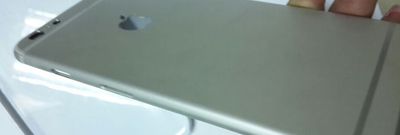
Apple's next-generation iPhone is expected to launch this fall with a 4.7-inch display, a faster A8 processor, and an upgraded rear-facing camera with image stabilization. It may also feature a thinner profile with a new power button layout and elongated buttons to accommodate the changes in form factor. An even larger 5.5-inch model may also be in the works, although it could launch several months later than the 4.7-inch version.
Southwest Airlines has updated its official iOS app to include mobile boarding pass support at 28 total airports following a rollout of the feature in Austin, Texas last year. In addition to expanded mobile boarding pass support, the app also now includes upcoming trip cards that contain flight infomation such as boarding position and gate location, as well as access to flight tools like mobile check-in from the home screen.
Airports that now support Southwest Airlines' mobile boarding pass feature include:
- Albuquerque International Sunport (ABQ) - Hartsfield–Jackson Atlanta International Airport (ATL) - Austin–Bergstrom International Airport (AUS) - Baltimore–Washington International Airport (BWI) - Nashville International Airport (BNA) - Bob Hope Airport (BUR) - Dallas Love Field (DAL) - Denver International Airport (DEN) - Fort Lauderdale–Hollywood International Airport (FLL) - William P. Hobby Airport (HOU) - McCarran International Airport (LAS) - Los Angeles International Airport (LAX) - Kansas City International Airport (MCI) - Orlando International Airport (MCO) - Chicago Midway International Airport (MDW) - General Mitchell International Airport (MKE) - Louis Armstrong New Orleans International Airport (MSY) - Oakland International Airport (OAK) - Philadelphia International Airport (PHL) - Phoenix Sky Harbor International Airport (PHX) - Southwest Florida International Airport (RSW) - San Diego International Airport (SAN) - San Francisco International Airport (SFO) - San Jose International Airport (SJC) - Sacramento International Airport (SMF) - John Wayne Airport (SNA) - Lambert–St. Louis International Airport (STL) - Tampa International Airport (TPA)
The official app of Southwest Airlines saw its last major update in November, which brought a new unified actions sidebar and airport information content pages in addition to initial mobile boarding pass support.
Google has usurped Apple as the world's most valuable brand in Millward Brown's annual BrandZ study of global brands (via The Telegraph). This comes after the survey had named Apple the top brand for the past three years.
The study saw Apple's brand value decline 20%, from $185 billion to $147 billion, while Google saw a 40% increase, from $113 billion to $158 billion. Samsung also grew, going from the 30th most valuable brand to the 29th with a 21% jump, growing from $21 billion to $25 billion.
The big question for Apple, according to Millward Brown, is whether Apple is still redefining technology:
Google has knocked Apple off its perch after three years at the top. Apple is performing well but is it still redefining technology for consumers?
Overall, Brown noted that the study, which has four technology brands in the top five, reiterates how integral technology is to the lives of people.
Among other technology brands, Microsoft jumped into the top five with a 20% increase, going from $69 billion to $90 billion, while IBM stayed put at number three with a 4% decrease. The largest increase in technology came from Facebook, who jumped 10 places to 21 with a 68% increase, going from $21 billion to $35 billion.
While "brand value" studies can be difficult to compare, because of the use of differing methodologies used by those who gather the data can lead to much different results, they can be a good look at marketing and branding trends.
A Dutch appeals court on Tuesday night upheld a lower court's sales ban of some older Samsung Galaxy phones, reportsRe/code. It's yet another chapter of Apple and Samsung's worldwide patent battle.
The order applies specifically to the Galaxy SII and Galaxy Ace, but could possibly be extended to other Samsung devices found to similarly infringe on a European Apple patent.
Initially, when Apple filed an infringement claim against Samsung and requested the ban in 2011, the company had requested a ban on all Samsung devices. Apple did not see its request fulfilled, however, and only saw the Galaxy S, Galaxy SII and Galaxy Ace banned.
Last week Apple and Google/Motorola Mobility agreed to a settlement and will dismiss patent litigations between the two companies. As part of the agreement they will also work together "in some areas of patent reform". Following that news, it was reported that Samsung and Apple were in early negotiations to settle their patent disputes out of court as well, although some key royalty payment terms are under negotiation.
Verizon yesterday introduced its XLTE service, doubling the LTE bandwidth in some select markets to improve peak speeds on a range of devices, including the iPhone 5s, the iPhone 5c, the iPad Air, and the Retina iPad mini.
XLTE is the name given to Verizon's AWS spectrum, which the company initially purchased back in 2012. Akin to opening another lane on a congested freeway, XLTE will open up new bandwidth for those using an AWS-compatible device, which includes the iPhone 5s and the 5c, ultimately resulting in faster LTE speeds. XLTE simply refers to LTE on the AWS spectrum, with Verizon's described speed increases resulting from more available bandwidth.
While not directly beneficial to users of older iPhones, XLTE does have the potential to result in increased bandwidth on the standard 700MHz spectrum used by those devices, as newer devices will automatically take advantage of the AWS spectrum.
XLTE delivers faster peak data speeds and a minimum of double the bandwidth to 4G LTE customers in high traffic areas in markets nationwide where AWS spectrum has been activated.
While XLTE network enhancements are invisible to the customer, the mobile experience is not. XLTE Ready devices automatically access both 700 MHz spectrum and the AWS spectrum in XLTE cities. Customers with 4G LTE devices operating solely on the 700 MHz spectrum in XLTE markets also benefit from the extra capacity created by XLTE Ready device traffic moving to the AWS spectrum.
XLTE is currently available in multiple cities across 44 different states, which can be found on Verizon's website [PDF]. According to Verizon's estimates, the newly available AWS spectrum will improve LTE speeds for approximately 35 percent of the active devices on its network.
It is important to note that XLTE is simply a marketing term for LTE on Verizon's AWS spectrum rather than a new wireless standard. It is similar to AT&T's move to call HSPA+ 4G back in 2012 in order to distinguish it from standard HSPA 3G speeds.
Verizon has also announced VoLTE -- or Voice over LTE -- which is set to roll out to its network later this year. VoLTE, much like AT&T's HD Voice, will improve voice quality by allowing users to make calls over LTE.
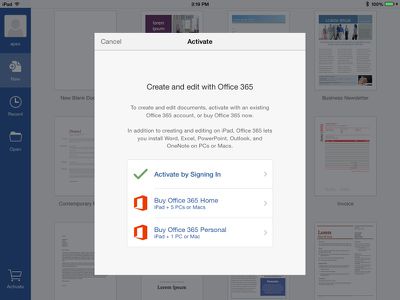
iWork for iCloud received an update today, adding a range of new features to Pages, Keynote, and Numbers, further boosting the real-time collaboration capabilities of the apps. It is now possible to collaborate with up to 100 people (previous limit was 50) on a single document and users are also able to create 2D and interactive charts in all three apps.
Larger documents, up to 1GB in size, can be edited, and larger images up to 10MB in size can be added to documents. Chart formatting is now available in all three apps, and there are new color options.
Keynote has also gained the ability to show and hide slide numbers, while Numbers now supports alternating row colors in tables and the ability to export to CSV. Pages supports exporting to ePub, object layering, and inserting and editing inline tables.
The iWork for iCloud software is available to all users for free, and it can be accessed through Apple's iCloud.com website.
Waterfield Designs today introduced its new Mac Pro Go Case, a bag designed to transport the 2013 Mac Pro and necessary accessories. Created from padded ballistic nylon, the case is designed to fit snugly around Apple's newest desktop computer.
The case cushions the Mac Pro with both internal padding and a plush liner, and there's a heavy duty plastic plate to protect the bottom of the computer. An accessories pocket able to hold add-ons like a mouse, cables, and power cord fits on top of the bag and a side pocket has room for an Apple wireless keyboard.
Just in time for the Apple World Wide Developers Conference (WWDC14), WaterField Designs introduces the Mac Pro Go Case to keep the Apple powerhouse Mac Pro and accessories safe in transit. Perfect for travelling gamers, developers, video editors and any others who take their systems with them, the rugged case holds just about everything--the Mac Pro and Apple wireless keyboard plus computer accessories: a mouse, cables and power cord.
At 7.5 inches in diameter and 12 to 14-inches tall, the Mac Pro Go Case can be carried using a nylon grab handle or a removable suspension shoulder strap.
The Mac Pro Go Case, which comes in black to match the Mac Pro, can be ordered for $129 from SFBags.com.
OS X 10.9.3, released last week, boosted the maximum VRAM used by the Intel HD 5000/5100/5200 graphics chips used in the most recent 2013/2014 MacBook Airs and Retina MacBook Pros.
First noticed by French site Mac4Ever [Google Translation], updating to 10.9.3 increases available VRAM from 1024MB to 1536MB, boosting the size of the shared memory, possibly to further improve 4K performance on certain machines.
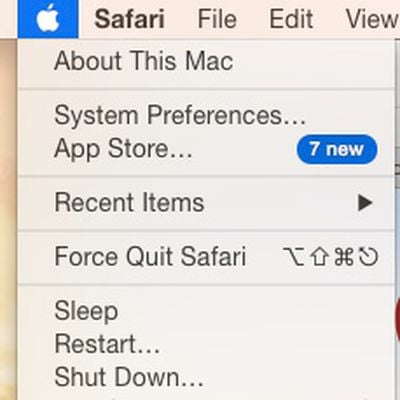
The change can be seen in the Graphics/Displays section of the System Report accessible via About This Mac. Apple has not yet updated its support page to reflect the new VRAM limits, continuing to list 1GB of system memory as the maximum. The update was also not mentioned in the 10.9.3 release notes.
The 10.9.3 update, available via the software update tool in the Mac App Store, also included enhanced support for 4K displays and restored the ability to sync contacts and calendars between Macs and iOS devices over USB.
Update 12:45 PM PT: As noted by forum member SmileyDude, some machines with HD 4000 graphics have seen a VRAM boost as well, namely the 2012 Mac Mini, which now has a maximum VRAM of 1024MB, up from 768MB.
Apple is moving forward on plans to develop its own content delivery network (CDN), reports well-known CDN and Internet Services analyst Dan Rayburn (via Ars Technica). The Cupertino company is reportedly negotiating deals with Internet Service Providers in order to ensure the efficient delivery of content to its customers.
Apple may control the media for iTunes and iCloud customers, but it currently outsources the delivery of this media to third-party companies like Akamai, ceding control over the quality of service to these other companies. Apple reportedly has been working for five years on its own CDN that would bring content delivery in house, ensuring its customers can access data reliably and quickly regardless of ISP or geographic location.
Apple has been deploying the necessary network hardware and recently started forging interconnection deals with Internet Service Providers as it prepares to shift content to its own CDN soon, claims Rayburn.
Apple has been very busy with their build out deploying a lot of boxes running Apache Traffic Server and buying a ton of transit, co-location, wavelengths and other infrastructure services. Their CDN is quickly growing, and it won’t be long before we start seeing a portion of their content getting delivered from their new CDN.
As part of their build out, Apple is currently negotiating paid interconnection deals with some of the largest ISPs in the U.S. I’m not going to disclose which ISPs they are talking to and what deals they have already done, but it’s interesting to note that with all the talk lately of net neutrality, peering and interconnect relationships, Apple isn’t out in the market making any complaints.
Despite concerns about net neutrality, these priority access deals are becoming common among big companies, such as Netflix, Microsoft and Google, that move large volumes of data across the Internet.
Microsoft today hosted a media event in New York City to introduce the Surface Pro 3, the company's next-generation tablet device. Billing the Surface Pro 3 as the culmination of a three-year effort to create a "tablet that can replace your laptop", Microsoft's Panos Panay highlighted a number of improvements over the previous generation, including a larger 12-inch display with 3:2 aspect ratio, thinner design, an improved stylus, and a full friction kickstand that gives users greater flexibility for adjusting viewing angles.
Pricing begins at $799 with pre-orders starting tomorrow and availability of select models coming on June 20 in the U.S. and Canada. Availability will expand with additional models and countries in August.
Based on Intel's Core i3, i5, or i7 processor, Surface Pro 3 measures 9.1 mm thick and weighs 800 grams, making it thinner and lighter than a MacBook Air, with Panay placing the two devices on a scientific balance scale to highlight the difference in weight.
The Surface Pro 3 also comes with a new Surface Pen stylus offering 256 levels of pressure sensitivity. During the presentation, Panay highlighted how the very thin optical stack of the Surface Pro 3 brings the content close to the surface of the tablet, allowing for greater precision with the stylus and which makes it appear as if ink is flowing directly from the pen tip. Integration with OneNote makes it easy to jot down notes on the Surface and have those notes uploaded to other devices, and the Surface Pen's button can be used to wake the tablet to take notes and then upload to the cloud when finished.
In support of its argument that the Surface Pro 3 can replace a notebook computer, Microsoft partnered with Adobe to show a preview of Photoshop optimized for the tablet device, with larger icons and support for both stylus and touch input.
The entry-level $799 Surface Pro 3 model carries a Core i3 processor with 4 GB of RAM and 64 GB of storage, with Core i5 models priced at $999 (128 GB storage, 4 GB RAM) and $1299 (256 GB storage, 8 GB RAM). High-end Core i7 models with 8 GB of RAM will be available for $1549 (256 GB storage) and $1949 (512 GB storage). Battery life is pegged at up to nine hours of web browsing.
Alongside the Surface Pro 3, Microsoft also introduced several new accessories, including a new $130 Type Cover that is thinner than its predecessor while offering a much larger trackpad. A $200 docking station converts the Surface Pro 3 into a desktop workstation, including Ethernet, Mini DisplayPort, USB, and audio ports.
Rumors of Apple incorporating near field communication (NFC) technology into the iPhone have become a yearly ritual, but Morgan Stanley analysts believe that Apple may finally be poised to adopt the technology as part of a push to break open the mobile payments industry. In a recent note to investors, analyst Craig Hettenbach points to possible licensing deals, company financial disclosures and patent filings as the basis for this claim.
Morgan Stanley believes NFC is ready to take off, and Apple could be the force that drives its widespread commercial adoption. Though Apple has been publicly silent on NFC and has in fact pursued alternative technologies such as Wi-Fi and Bluetooth for short-range communication features like AirDrop and iBeacons, there is little doubt the company is exploring this short-range wireless technology. A recent patent application describes a secure, NFC-based wallet that allows customers to make purchases wirelessly through their phone, and Apple is in the process of updating its in-store point-of-sale system with one that supports NFC.
According to Morgan Stanley, Apple is choosing NFC as the key technology for its mobile payments system, with semiconductor company NXP likely providing the necessary wireless hardware. NXP has an existing relationship with Apple, supplying the M7 motion-sensing chip found in the iPhone 5s.
NXP is well positioned to participate in Apple’s mobile payments ecosystem. The company signed a licensing agreement with a customer in Q4’13, who we believe is Apple, related to its emerging ID business. A recent patent filing by Apple revealed potential use of NFC and secure element, which we think could be embedded. NXP has also accelerated R&D spend to support a new program related to the IP deal, with revenue expected in 2H, lining up well with the launch of iPhone 6. We see this potentially adding $250mn in sales and EPS of $0.25 in 2015.
A number of rumors have suggested Apple is actively working on a mobile payments system, with Eddy Cue allegedly approaching retailers about the company's desire to handle payments in retail stores and elsewhere and longtime online store executive Jennifer Bailey shifting role to oversee the payments initiative. While stopping short of confirming mobile payments, CEO Tim Cook also admitted during a recent earnings conference call that mobile payments were "one of the thoughts behind Touch ID."
Morgan Stanley is certainly not the only source to be sharing rumors of NFC support for the iPhone 6, with Brightwireciting its own sources earlier this month and high-profile KGI Securities analyst Ming-Chi Kuo making his own claims last month.
Apple's first foldable iPhone, with a book-style design featuring a ~5.5-inch outer display and a ~7.8-inch inner display with a minimal crease down the middle.