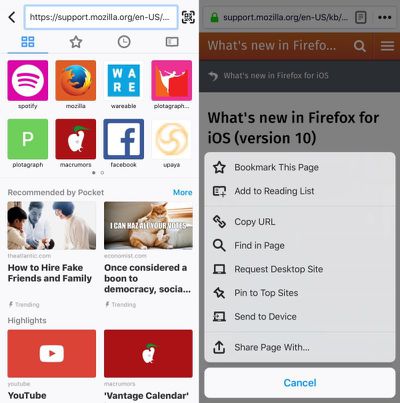
When Pinterest acquired keyboard app maker Fleksy last summer, development was paused on the company's well-known iOS and Android keyboard apps as the team was integrated into Pinterest's projects. The companies said that Fleksy would continue to exist with minimal updates, but otherwise not much news has come out about the keyboard app, until today.
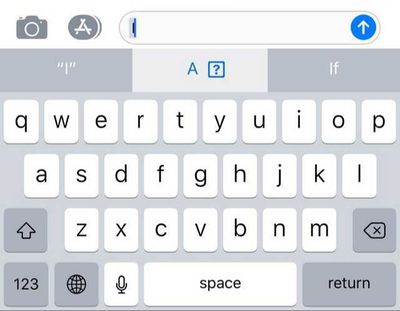
Now, Barcelona-based keyboard startup Thingthing [iOS App Store Direct Link] announced in a blog post this morning that it will take over development of the Fleksy keyboard, while the original Fleksy team continues to work at Pinterest (via TechCrunch). Thingthing said that thanks to the deal, the company is "closer than ever to our goal of bringing you the world’s first Keyboard as a Platform (KaaP)."
The company highlighted improvements coming to Fleksy + Gif Keyboard on the iOS App Store [Direct Link] and Android devices over the coming months, including: "A new brand, more themes and extensions, continued focus on data privacy, awesome auto-correction, new services thanks to our open keyboard as a platform, [and] ongoing support to all of you!"
For now, the company updated Fleksy with a few basic bug fixes today, while a "very, very big" product launch is expected sometime this fall.
Thingthing users are used to being productive, using the keyboard’s interface to improve their typing experience and reducing time to realise day-to-day activities, which are performed naturally in Thingthing.
Still, a lot of you have requested more languages, more services, more customization, a better auto-correct, etc. This is exactly what we’re bringing to you: what you asked for.
Thingthing's chief technical officer mentioned that the developer intends to "vastly improve" upon the current Fleksy keyboard with these updates, building the keyboard up into a platform of its own with extensions for apps like Spotify, YouTube, and more. The upcoming brand refresh will be centered on changing the design and feel of the app and its logo, while the Fleksy name will remain in place.
Earlier this year, researchers from security firm Malwarebytes discovered a piece of Mac malware called Fruitfly that reportedly spied on computers in medical research centers for years before being detected. Apple has since updated macOS to automatically detect the malware, safeguarding users.
However, a new variant of the Fruitfly malware has recently been discovered by Patrick Wardle, a researcher with security firm Synack. Wardle said the malware has been targeting Macs for at least five years, with the number of infected Macs totaling nearly 400 and possibly much higher, reports Ars Technica.
The malware can supposedly capture screenshots, keystrokes, webcam images, and other info about each infected Mac. The Fruitfly variant also collects information about devices connected to the same network, according to the report.
Wardle said the method of infection remains unknown, but he suspects it involves tricking users into clicking on malicious links, as opposed to exploiting vulnerabilities in apps or in macOS. He added that the primary command-and-control server used by the malware's creators has since been shut down.
Many of the affected Macs have never been disinfected, however, allowing Wardle to create his own custom command-and-control server for the malware and witness the close to 400 infected machines connect to it.
After analyzing the new variant, Wardle was able to decrypt several backup domains that were hardcoded into the malware. To his surprise, the domains remained available. Within two days of registering one of the addresses, close to 400 infected Macs connected to the server, mostly from homes located in the United States. Although Wardle did nothing more than observe the IP address and user names of Macs that connected to his server, he had the ability to use the malware to spy on the users who were unwittingly infected.
Wardle will provide a briefing about his custom command-and-control server tactics on Wednesday at the Black Hat security conference in Las Vegas.
Since the method of infection is unknown, there aren't many specific steps users can take to ensure they're protected. But, given all domains known to be associated with the malware are no longer available, and the limited number of Macs infected beforehand, most users shouldn't be too worried about this malware.
One option Mac users have is to install OverSight, a free software tool that monitors a Mac's microphone and webcam, alerting the user when the internal microphone is activated, or whenever a process accesses the webcam.
Wardle has reported all of his findings to law enforcement officials, and the threat is likely neutralized, according to the report.
Apple has sourced Quanta Computer as the primary manufacturer of the Apple Watch since the original wearable device began a production ramp-up in late 2014/early 2015 for its official launch in the spring of 2015.
The supplier was again the sole source of Apple Watch manufacturing for the Series 2 models in 2016, and a new article out today by Chinese-language site Economic Daily News has echoed previous reports that stated Apple will yet again keep Quanta as its main Apple Watch supplier for the so-called "Apple Watch Series 3." The move is expected to lead Quanta into a "strong" second half of 2017, further cementing the next-generation Apple Watch's debut this upcoming fall (via DigiTimes).
Additionally, Quanta's income towards the end of the year is poised to rise thanks to the manufacturer's supply of notebooks and servers, but the Apple Watch Series 3 is described as one of the company's biggest assets. Secondary to Quanta, EDN's report today cited market watchers who believe Compal will also be sourced as an Apple Watch supplier this year, but with a focus on older-generation models and not including Series 3.
Quanta Computer is expected to enjoy a strong second-half 2017 thanks to rising demand for notebooks, growing server sales and the release of the next-generation Apple Watch, according to a Chinese-language Economic Daily News (EDN) report.
Apple is reportedly planning to launch its third-generation Apple Watch in 2017 and the wearable is likely to help Quanta's Apple Watch product line turn profitable. Although Compal Electronics reportedly has joined the supply chain of the Apple Watch, the market watchers believe Apple is likely to let Compal mainly handle older-generation models, the paper added.
While rumors leading into the fall of 2017 have largely focused on the iPhone 8, it is believed that Apple will launch an all-new Apple Watch device this year, perhaps at the same iPhone debut event expected in September. The company used that strategy last fall when it announced and launched the iPhone 7, iPhone 7 Plus, and Apple Watch Series 2 within the same September timeframe.
Besides the expected new-generation bumps to processing speeds and a longer battery life, Apple Watch Series 3 has been rumored to include cellular connectivity so users could make phone calls, send iMessages, and stream Apple Music without needing to be tethered to their iPhone, with the caveat of an added data plan likely. The Series 3 device is also said to not include any major visual overhauls to the Apple Watch design, keeping the same case and band form factor that Apple has used since 2015.
Last November, Adobe previewed its next-generation photo editor, Project Nimbus, which boasts a focus on cloud storage and simplified editing controls, telling users to expect a beta sometime in 2017. Although that beta has yet to arrive, some users of Adobe's Creative Cloud recently had access to an "internal only" download of Project Nimbus on both Mac and Windows devices.
Since a few Creative Cloud users were able to download Project Nimbus, Adobe quickly fixed the leak and confirmed it as an accident: "That morning, we shared Project Nimbus by mistake with a small group of Creative Cloud customers." French site MacGeneration [Google Translate] had a chance to browse Project Nimbus, and shared its thoughts earlier today.
The site described Project Nimbus as a complement to Lightroom, not a replacement, and ultimately said that the interface is "actually much closer to Lightroom for iPad than Lightroom for Mac / Windows." Thanks to half a dozen simplified and "general" editing tools and the ability to transfer edits in the cloud, MacGeneration also compared Project Nimbus closely with Apple's iCloud photo library.
Compared to Lightroom, which Nimbus does not replace but complete, the interface is less loaded and there is no segmentation in modules (library, development, printing ...). The editing tools are not all stacked in the right column, there is a palette of tools to the Photoshop which includes half a dozen general tools: Basic tools (light, color, effects, details, optics, geometry); Refraction; Correct; Brush; Linear gradient; Radial gradient; and Options (copy / paste settings, view original, return to original, display histogram, single panel mode, edit in Photoshop).
In the end, Project Nimbus is not a substitute for Lightroom, which should continue to evolve on its own, but an iCloud photo library in Adobe sauce. It remains to be seen whether this new service will be adopted by the usual users of Lightroom and whether it will attract new customers.
The leak provided information on cloud storage included with Project Nimbus, which will give users 1TB of storage in the cloud to facilitate the software's goal of cross-platform editing. During the announcement, Adobe specifically described Project Nimbus as "cloud-native," with non-destructive image edits that are saved across all platforms that the software is available on and that users are signed into.
Last week, Adobe updated Lightroom for iOS, bringing a new selective brush, a details tab, a refreshed interface for the iPad, and enhanced support for features like the Apple Pencil and 3D Touch.
Earlier in July, a report by The Korea Herald suggested that Apple and supplier LG Display were working on a deal that would see Apple investing $1.75-2.62 billion into LG Display's OLED manufacturing, specifically a plant that would be exclusively devoted to Apple orders. Today, Reuters has provided a few more details on LG Display's plans to enter the OLED display market for smartphones, which rival Samsung Display currently dominates.
In total, LG Display plans to invest $13.5 billion into boosting its output of OLED screens over the next three years, covering TV screens and specifically hoping to "make inroads against rival Samsung in smartphone displays." LG Display is already the OLED leader in large-screen television displays, but now the supplier is said to be seeking a strong foothold in the OLED screen market for smartphones, coming in the wake of OLED-backed iPhone 8 rumors and Apple's reported plans to go OLED-only on iPhones beginning in 2019, and perhaps even 2018.
LG Display will invest around $4.5 billion for a new production line that will create flexible OLED panels to help bolster its position in the auto display and smartphone market, and another $2.5 billion will be saved for another line of "large-size OLED screens." In regards to lines dedicated to small and mid-sized OLED displays, it's said that Apple will help out with getting the lines up and running, continuing the investment rumors began earlier this month.
Around 5 trillion won is earmarked for a new line for flexible OLED aimed at bolstering its position in auto displays and smartphones while 2.8 trillion won will go toward a separate new line for large-size OLED screens. Both production lines will be located in Paju, northwest of Seoul. Its planned 15 trillion won investment over three years implies an average of 5 trillion won in capital spending per year, above its usual 4 trillion won, but analysts said it will probably not be enough.
"For small and mid-sized OLED, it is expected to receive additional investment from somewhere else, perhaps Apple," said Lee Min-hee, analyst at Heungkuk Securities. "One production line for small and mid-sized OLED can require nearly 10 trillion won in investment. LG doesn't have the firepower to single-handedly build a lot of OLED production lines."
Apple's current OLED deal with Samsung will see the manufacturer supply 92 million OLED panels over the next two years. In The Korea Herald's report from early July, it was rumored that LG Display's OLED output for Apple would gear up in 2019, aligning with the end of Apple's contract with Samsung. A rumor this week has also pointed towards Apple's plans to develop its own OLED technology to reduce its reliance on suppliers like Samsung Display.
Apple's launch of the first-ever OLED iPhone is widely expected to be coming later this fall, in the majorly redesigned "iPhone 8," while more iterative updates in the "iPhone 7s" and "iPhone 7s Plus" will receive traditional LCD screens.
Google launched a new feature for its Search and Maps apps today that aims to help users stay on top of events when a natural disaster or other crisis occurs near their location (via TechCrunch).
Called "SOS Alerts", the notifications will appear at the top of Google search results and Maps when a user looks for information about an incident or the affected area.
In the Search app, Google will offer an overview of the incident using maps, relevant news stories, emergency phone numbers where available, websites, and any other information that might be useful. In the event that the user is in close proximity to the incident, Google may also send notifications directing users to further details.
The same information will show up in the Maps app where relevant, for example in search results, with real-time updates detailing road closures and traffic and transit updates.
Google has worked with several organizations to bring the feature to its Search and Maps apps, including the Red Cross, the Federal Emergency Management Agency, the Philippine Atmospheric, and Geophysical and Astronomical Services Administration.
Google Maps and Search can be downloaded from the App Store for free.
Facebook is planning to release its own smart speaker to compete with similar connected devices offered by Amazon, Google, and Apple, a report out of Taiwan claimed on Tuesday.
However, instead of voice recognition functions in the vein of Siri or Alexa, Facebook's speaker will focus more on displaying visual imagery via a 15-inch touch panel, according to sources in the supply chain.
Amazon's Echo Show was the first smart speaker to feature a display
The device will be manufactured by Pegatron for release in the first quarter of 2018 and has already begun small volume pilot production at plants in China, said the sources. The touchscreen is said to be supplied by LG Display using in-cell technology, while the chassis is constructed from a magnesium-aluminum-alloy.
Market watchers predicted high growth for Pegatron going into the second half of the year, with the manufacturer already fulfilling iPhone orders for Apple as well as Surface and Xbox One orders for Microsoft.
Amazon is reportedly working on a successor to its popular flagship Echo speaker for release later this year. The company hopes to steal the spotlight from Apple as it prepares to launch its music-oriented HomePod speaker, costing $350.
Research firm Strategy Analytics claims worldwide smart speaker shipments reached 5.9 million units in 2016, 4.2 million of which were shipped in the fourth quarter of 2016. The smart speaker market is expected to reach $5.5 billion by 2022.
iRobot CEO Colin Angle today told Reuters that he hopes indoor mapping data collected by Roomba automatic vacuum cleaning machines can be sold to a company like Amazon, Apple, or Google in the near future.
iRobot's latest line of 900-series Roomba vacuums use simultaneous localization and mapping (SLAM) technology to map rooms while they clean, memorizing room layout and the location of furniture. Angle believes that mapping data collected by the Roomba could be used to make other in-home smart devices like lighting, thermostats, and security cameras smarter.
"There's an entire ecosystem of things and services that the smart home can deliver once you have a rich map of the home that the user has allowed to be shared," said Angle.
Guy Hoffman, a robotics professor at Cornell University, told Reuters that the kind of spatial mapping technology iRobot can deliver has the potential to be a "major breakthrough" for smart homes.
Right now, smart home devices operate "like a tourist in New York who never leaves the subway," said Hoffman. "There is some information about the city, but the tourist is missing a lot of context for what's happening outside of the stations."
Angle believes that iRobot could reach a deal to sell its maps data to "one or more" of the "Big Three" (Amazon, Apple, and Google) in the next couple of years, but cheaper technology from competing companies and privacy concerns could potentially halt the company's plans. Angle says iRobot will not sell room data without customer permission, but he believes most people will give consent to access smart home functions.
Indoor home mapping has the potential to be valuable to companies like Apple, especially with Apple poised to release its augmented reality platform with iOS 11, but it's unclear if Apple would be interested in or need such data. Functionality built into Apple's own upcoming devices like the iPhone 8 could potentially allow for in-home maps that could bolster smart home devices if rumors of enhanced augmented reality features are true.
Last week, the Computer & Communications Industry Association, a lobbying group representing Google, eBay, Amazon, Microsoft, Netflix, Intel, Samsung, and other tech companies, asked the United States International Trade Commission to reject Qualcomm's request for an import ban on some of Apple's iPhone and iPad models that use Intel chips.
The group said that banning Apple products that use Intel chips would enable Qualcomm's anti-competitive behavior and cause supply issues, resulting in harm to consumers.
Qualcomm today responded to the CCIA in a court filing, accusing the group of launching a "coordinated effort aimed at misdirecting" the ITC, reports Reuters. Qualcomm also said that the import ban it requested is not focused on Intel's chips, but the patented technology used in iPhones with Intel chips.
In its filing on Monday, Qualcomm argued that its import ban is not actually about Intel's chips, but instead concerns the patented technology that surrounds the Intel chips in current versions of the iPhone. Thus a ban on importing the phones would not hurt competition in the long term, Qualcomm argued. "Apple can purchase and utilize any LTE modem it chooses so long as it does not infringe Qualcomm's asserted patents," the company wrote.
Apple and Qualcomm have been embroiled in an ongoing legal battle following Apple's decision to sue Qualcomm in January for charging unfair royalties and refusing to pay quarterly rebates.
The fight between the two companies has escalated since then, most recently leading Qualcomm to file a patent infringement lawsuit against Apple and request an import ban for some iPhone models.
In a statement to Reuters on Qualcomm's filing this afternoon, Apple once again complained that Qualcomm makes a single chip in the iPhone but "for years [has] been demanding a percentage of the total cost of [Apple] products - effectively taxing Apple's innovation."
Apple seeded the fourth beta of iOS 11 to developers this morning, bringing some of the most significant changes we've seen yet in an iOS 11 beta.
A much-desired swipe feature for clearing Notifications on the Lock screen has been added, and there are also several visual tweaks to icons throughout the operating system. We've outlined all of the changes in both the video and the post below.
- New icons - Apple has introduced new icons for the Contacts, Notes, and Reminders app. Some of the app icons may be bugged for some people, showing certain details, like bullets for Reminders, on the wrong side of the icon. This is because Apple inverts the icons for languages that read right to left instead of left to right, and it should be fixed in a later beta.
There's also a new icon for Contacts in the Settings app, while the Notes and Reminders icons in Settings remain the same.
- Notification Center - You can now swipe to the left on a Notification on the Lock screen to bring up options to clear it or view it. Tapping on view or tapping on the Notification itself also brings up a new screen that instructs you to use Touch ID to unlock your device to open the associated app.
In addition to tapping on an icon or using the view option to open it, a Notification will also open if you slide to the right. A full slide to the left automatically clears a Notification without having to tap the clear button.
- Settings (Capacity) - In the General section of the Settings app, when you choose "About," the Capacity listing now shows the total amount of storage a device possesses rather than the amount of storage available minus the size of iOS.
- Settings (AirDrop) - In the Settings app under General, there's now a dedicated section for AirDrop that allows it to be toggled off, set to everyone, or limited to contacts. Previously, only the Control Center could be used to change these settings.
- Settings (Accounts & Passwords) - In the Accounts & Passwords section of the Settings app, the key icon is now vertically oriented instead of displayed horizontally.
- WiFi icon - The WiFi icon in the upper left hand of the display that shows when you're connected to a WiFi network has been slightly tweaked with thicker, more uniform lines.
- App Store - There's now an option to pull downwards to refresh the App Store's Updates tab.
iOS 11 beta 4 is currently limited to developers, but Apple will likely introduce the changes in a third public beta that we expect to see later this week.
Universal Search, the feature that allows users to find content across multiple apps and services using text or Siri voice search, was today added to several new apps in the United States, Australia, Canada, and other countries.
In the United States, AHC Go (American History Channel), Destination America Go, Discover Life Go, Filmstruck, Shudder, Sundance Now, and Velocity Go have been updated with Universal Search support.
In Australia, AnimeLab and DocPlay support Universal Search, as do City Video and Crave in Canada.
In France, Japan, Mexico, Netherlands, and Spain, the MUBI app has been updated with support for Universal Search.
Apple's Universal Search feature was first introduced alongside the fourth-generation Apple TV. It was originally limited to iTunes, Netflix, Hulu, HBO, and Showtime, but Apple has been steadily expanding the number of apps that work with Universal Search since its debut.
Apple maintains a full list of apps that support the Apple TV's Universal Search feature in a dedicated support document. Apple plans to continue expanding the search feature to additional apps.
Along with Universal Search, AHC Go, Destination America Go, Discover Life Go, and Velocity Go also now work with the TV app on the Apple TV and iOS devices in the United States. Apps that support the TV app are also listed in an Apple support document.
After hundreds of charging cycles, a MacBook Pro's battery begins to lose its ability to hold a charge and should be replaced. Apple offers battery service free of charge with AppleCare+ coverage, or it charges an out-of-warranty fee of $199 in the United States, £199 in the UK, or $259 in Canada.
Due to a severe constraint of top case assemblies with glued-in batteries, however, Apple has informed its Genius Bar employees and Apple Authorized Service Providers it is currently unable to service the batteries of 15-inch MacBook Pro with Retina display models released in Mid 2012 and Early 2013.
According to Apple's internal directive, obtained by MacRumors, top case assemblies with batteries for the aforementioned MacBook Pro models will remain severely constrained until September 15, 2017. The directive does not identify a reason for the shortage, which has been ongoing since at least March.
As a temporary solution, Apple's directive says customers may choose to delay battery service until inventory becomes available, in exchange for Apple covering the cost of the repair. Alternatively, to avoid the delay, Apple's directive says customers may exchange the MacBook Pro for a functionally equivalent model.
Given the affected MacBook Pro models were released between four and five years ago, however, an increasing number of customers have shared stories of Apple replacing their notebooks with significantly newer models.
Reddit user NoTNoS, for example, said Apple exchanged his 2012 model 15-inch MacBook Pro for a 2017 model 15-inch MacBook Pro with Touch Bar. He said the process took about 10 business days, and he was allowed to keep his old MacBook Pro during the wait. The only cost was the $199 battery service fee.
Dozens of other MacBook Pro owners have sharedsimilarexperiences on Reddit, while only a handful of users have shared unsuccessful attempts. Many users appear to have received refurbished 2015 MacBook Pro models, but some others claim to have received even newer 2016 or 2017 models.
In order to potentially qualify, you must have a Mid 2012 or Early 2013 model 15-inch MacBook Pro with a Retina display. The policy doesn't apply to any 13-inch MacBook Pro, any Late 2011 or older MacBook Pro, any Late 2013 or newer MacBook Pro, any MacBook Pro without a Retina display, or any MacBook Air.
Secondly, the MacBook Pro must be in need of battery service. To check, click on the Apple logo in the top-left corner of the macOS menu bar, and then click on About This Mac > System Report… > Power. Under the "Health Information" section, the condition should say "Service Battery" or an equivalent status.
As a rule of thumb, the battery should typically have a full charge capacity below 80 percent, which can be estimated with a tool like coconutBattery. The battery's charge cycle count may also be a factor. Only Apple's diagnostic test will ultimately determine if the battery requires servicing.
Since the process appears to differ on a case-by-case basis, each customer's mileage may vary. Apple could stop acknowledging this internal policy at any time, and not all employees may be aware it exists.
There doesn't appear to be any regional limitations to the policy, with customers who successfully exchanged their MacBook Pro models residing in the United States, UK, Canada, Brazil, Spain, Australia, and other countries. It also doesn't appear to matter if the Mac is covered by AppleCare+ to qualify.
Eligible customers that wish to press their luck may visit any Apple Store, or supposedly select Apple Authorized Service Providers. Booking a Genius Bar appointment through the Apple Support website is recommended.
Update: In an internal memo obtained by MacRumors, Apple has informed Genius Bar employees and Apple Authorized Service Providers that it is actively working to rebuild worldwide supply of top case assemblies with batteries for Mid 2012 and Early 2013 models of the 15-inch MacBook Pro with Retina display.
Apple's memo says, effective July 26, service inventory of top case assemblies with batteries are now available for new repairs. The directive adds that MobileGenius, the service and support tool that Genius Bar employees use on the iPads they carry around, has stopped presenting messages about delayed repairs.
Apple today seeded the fourth beta of an upcoming watchOS 4 update to developers, a little over one week after seeding the third beta and over a month after introducing the new update at its 2017 Worldwide Developers Conference.
Once the proper configuration profile has been installed from the Apple Developer Center, the watchOS 4 beta can be downloaded through the dedicated Apple Watch app on the iPhone by going to General --> Software update.
To install the update, the Apple Watch needs to have at least 50 percent battery, it must be placed on the charger, and it has to be in range of the iPhone.
watchOS 4 features three new watch faces, including a dedicated Siri watch face that displays dynamic information unique to each individual and is perhaps the most significant new feature in the update. There are also new complications for Now Playing and Apple News, and an enhanced Workout app that supports High Intensity Interval Training and new swimming options.
GymKit, a new technology platform, will let the Apple Watch interface with gym equipment for workout data sharing purposes, and the Activity app will offer up intelligent coaching and tailored workout encouragement along with new monthly activity challenges.
Many other small tweaks and changes have been introduced, all of which are outlined in our dedicated watchOS 4 roundup.
watchOS 4 is only available to developers and will not be provided to public beta testers, so non-developers will need to wait until the software sees an official release in the fall to try it out.
Apple today seeded the fourth beta of an upcoming tvOS 11 update designed for the fourth-generation TV, two weeks after seeding the third beta and more than a month after releasing the first beta during the 2017 Worldwide Developers Conference.
Registered developers can download tvOS 11 by connecting the Apple TV to a computer with a USB-C cable and installing the beta software using iTunes.
tvOS 11 didn't receive much attention at the Worldwide Developers Conference due to time constraints, but according to Apple's release notes, it introduces a few new features to the operating system.
tvOS 11 includes automatic switching between light/dark mode based on local time, Home screen syncing options that keep multiple Apple TVs in a household in sync, new background modes and notification support, Focus API improvements, custom sound support, network-based pairing and development support, improvements to Mobile Device Management, and more.
The fourth beta of tvOS 11 likely focuses primarily on bug fixes and other small refinements, as the first three betas did. Apple's new tvOS 11 update is available for both registered developers and public beta testers. It will see a public release later this year.
Apple today seeded the fourth beta of an upcoming macOS High Sierra update to developers for testing purposes, two weeks after seeding the third beta and more than a month after introducing the new software at the 2017 Worldwide Developers Conference.
The fourth beta of macOS High Sierra can be downloaded from the Apple Developer Center or over-the-air using the Software Update mechanism in the Mac App Store.
macOS High Sierra builds on features introduced in Sierra, focusing on new core storage, video, and graphics technology. It introduces a new Apple File System (APFS), High Efficiency Video Codec (HEVC), and an updated version of Metal with support for VR and external GPUs.
Some apps are gaining new features in macOS High Sierra. The Photos app is being updated with a new sidebar that's designed to make it easier to access editing tools and albums, and there are new filters and editing options like Curves and Selective Color. Photos also supports external editing apps like Photoshop and Pixelmator, saving changes made in those apps, and it interfaces with new third-party printing services.
Safari is gaining speed enhancements, an option to end autoplay video, and a new feature that puts a stop to data tracking. Siri in macOS High Sierra has expanded music capabilities and a new, more natural voice, and Spotlight supports flight status information. There are also improvements to iCloud, FaceTime, Messages, and Notes.
macOS High Sierra is available for both registered developers and public beta testers and will see several updates ahead of its expected fall public release.
Apple today seeded the fourth beta of iOS 11 to developers for testing purposes, two weeks after releasing the third beta and more than a month after introducing the new update at the Worldwide Developers Conference.
Registered developers can download the new iOS 11 beta from Apple's Developer Center or over-the-air once the proper configuration profile has been installed.
According to Apple's release notes, today's beta fixes some errors with VSCO, Pinterest, Citi Mobile, and Apple's personal assistant Siri, but introduces new known issues. Tapping the AirPlay button in videos that aren't full screen can cause some apps to crash, and FaceTime Live Photos is disabled by default and must be re-enabled.
The call history list in the Recents tab does not update immediately in the beta, resulting in the second number in the list being dialed when the first is selected, and Cellular data for music downloads is included in WiFi Services instead of iTunes Accounts.
As for visual changes, Notes, Reminders, and Contacts all have revamped icons. There's also now an option to swipe to the left on a Notification to clear it, and there's a new Touch ID screen when tapping on a Notification to open it up.
iOS 11 introduces some significant design changes, including a customizable Control Center and a new Lock screen that's merged with the Notification Center. Peer-to-peer Apple Pay payments are being introduced in the Messages app, which is also gaining a new App Drawer, and there's a new Do Not Disturb feature that is designed to help drivers stay focused on the road. Siri, Photos, the Camera app, and more are also gaining new features and refinements.
ARKit for developers will result in a wide range of new augmented reality apps on iOS devices, while a Core ML SDK will allow apps to become a whole lot smarter. iOS 11 is also the biggest update ever for the iPad, with a new Dock that introduces much improved multitasking, a Files app for better managing files, improved Apple Pencil support, a revamped App Switcher, and a system-wide drag and drop feature.
iOS 11 is available for both registered developers and public beta testers and will see two more months of testing ahead of a prospective September release date alongside new iPhones.
Music streaming service Spotify is close to signing a deal with Warner Music Group that would see artists under the label launch albums exclusively on Spotify's $9.99/month paid subscription tier. Spotify has previously not restricted albums to its paid subscribers, but reports earlier this year said that the service would soon begin practicing in exclusives, and it now appears to be happening with Warner Music artists as the first potential exclusives for Spotify Premium users that would be unavailable to anyone on the free tier.
Spotify and Warner Music's new deal "could be signed by September," according to sources speaking with Reuters. The sources said that some of the biggest parts of the deal have been talked about, including granting Spotify "a more favorable revenue split" in return for Spotify launching Warner Music albums exclusively on its paid tier "for a defined period." However, specific monetary amounts for such a deal, and which of Warner Music's artists would be included -- Ed Sheeran and Muse are under the label's management -- were details that have yet to be ironed out.
One source described the talks as being at "a crossroads," with any potential for a final deal remaining "at bay" until agreements were made on a number of points. Still, talks are said to be "taking place daily," leading other sources close to the deal hopeful for a finalized agreement to come by September. The signing of the deal is said to be Spotify's "last big music royalty deal" ahead of the company's plan to go public on the stock market by late 2017/early 2018.
The parties are positive a deal could be signed by September as major issues such as granting loss-making Spotify a more favorable revenue split in return for making some new albums accessible only to its paying subscribers for a defined period have already been agreed, the sources said.
However, the precise revenue split and the size of a potential guaranteed upfront payment to the label, home to artists including Ed Sheeran and Muse, have yet to be agreed, said two of the sources.
In terms of the revenue split, Spotify is said to be seeking an even 50-50 split with royalties of albums streamed on the service, but Warner Music is hoping to keep at least 52 percent of its albums' royalties on Spotify. Any deal is expected to see a percent of Warner Music's royalties decreased, as the company currently has a 55 percent majority on Spotify royalties. Artist royalties have been the center of negative press for Spotify in the past, leading to the company's acquisition of blockchain technology company Mediachain Labs.
In June, Spotify announced that it has over 140 million global monthly active users, 53 million of which are paid subscribers. According to MIDiA Research detailed in today's Reuters report, that represents about 40 percent of streaming music subscribers worldwide. In comparison, Apple Music is said to have 19 percent of global streaming music subscribers (about 28 million), while Amazon Prime Music accounts for 12 percent (about 16 million subscribers).
For Apple Music, the streaming music service has been repeatedly criticized for its reliance on album exclusives since its launch in the summer of 2015. Last year, Eddy Cue said that exclusives on Apple Music will continue to appear "where appropriate."
Speaking with Reuters last month, Spotify vice president Jonathan Forster said that Apple's rise in the music streaming market has helped Spotify: "It's great that Apple is in the game," Forster said. "They are definitely raising the profile of streaming. It is hard to build an industry on your own."
Linkin Park singer Chester Bennington was filmed in an episode of Apple's upcoming show Carpool Karaoke: The Series just days before his death.
Earlier this month, the band tweeted an on-set photo with Bennington pictured alongside Linkin Park band members Joe Hahn and Mike Shinoda, and Ken Jeong, best known for his role as Ben Chang on the NBC sitcom Community.
Carpool Karaoke: The Series, based on the popular segment from The Late Late Show with James Corden, is set to debut August 8 on Apple Music. Apple did not immediately respond when asked if Linkin Park's episode will still be released.
Bennington committed suicide last Thursday, resulting in an outpouring of grief from his family, friends, and fans around the world. Linkin Park has set up a website in his memory and tweeted a message about him earlier today.
"Our hearts are broken," the band said. "You touched so many lives, maybe even more than you realized. In the past few days, we've seen an outpouring of love and support, both public and private, from around the world."
"I am in shock and heartbroken," tweeted Jeong. "All my thoughts and prayers go out to Chester and his family and friends at this time."
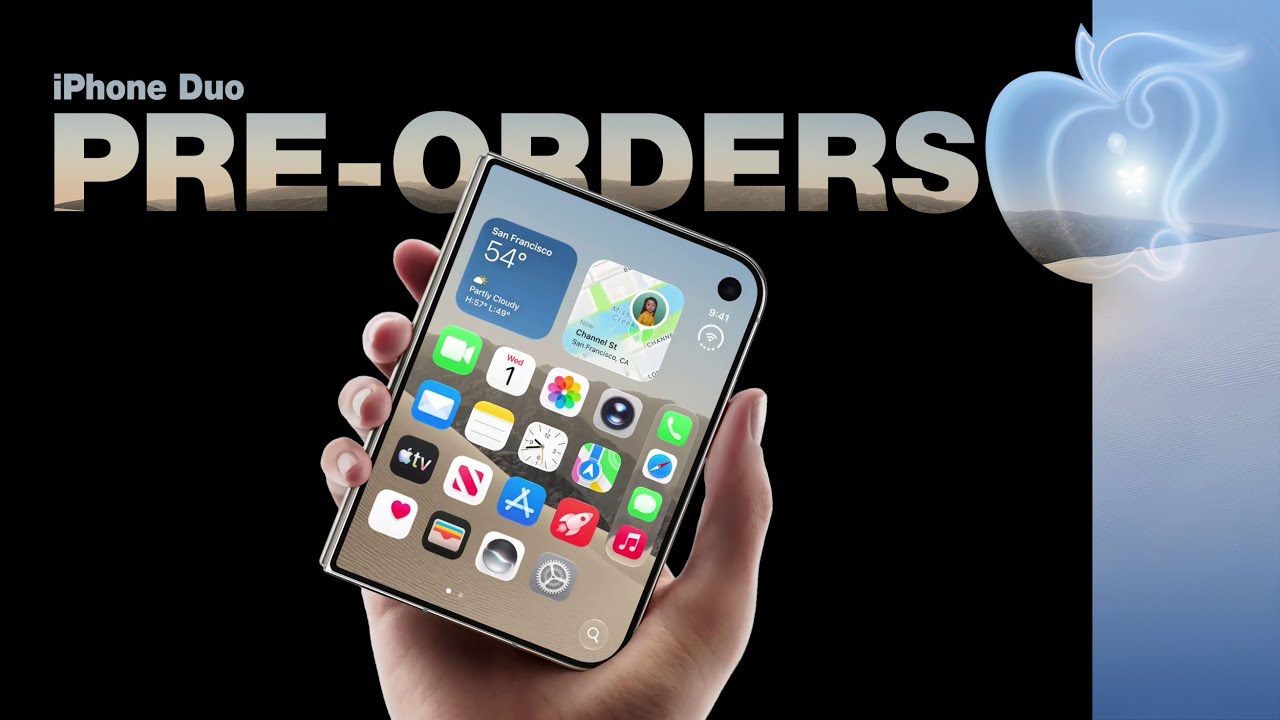
Apple's first foldable iPhone, with a book-style design featuring a ~5.5-inch outer display and a ~7.8-inch inner display with a minimal crease down the middle.