Facebook this week announced it has added several new features to video chatting in its Messenger app for iPhone and iPad.
In both one-on-one and group video chats, Messenger users can now add or use animated reactions, filters, effects, and new masks, while Facebook has added a conveniently placed camera icon to take a screenshot of your video chat.
For animated reactions, Messenger users can choose one of five emoji icons: love, laughter, surprise, sadness, or anger. Tapping an emoji generates a related reaction that animates on the screen for a short period of time.
On the artificial intelligence side, Facebook has expanded the capabilities of Messenger's built-in "M" personal assistant, adding a "save it for later" function, birthday wishes, and call initiations, according to Engadget.
The personal assistant, which is currently available in the United States only, is designed to provide proactive suggestions in Messenger [Direct Link].
Over the past few days, some Apple Music subscribers have noticed the appearance of a new playlist in the "For You" tab of the music streaming app, called "My Chill Mix." Redditor Elliotblyth posted about the playlist recently, noting that their iPad remains on iOS 10 and that they have not yet installed the iOS 11 public beta that released yesterday. Still, a few commenters on the Reddit post have noted the appearance of My Chill Mix while on the iOS 11 beta.
In screenshots, the playlist doesn't have a description like My Favorites Mix and My New Music Mix, but a few users who have been listening to the playlist have given a decent description of what kind of music it includes. As a point of comparison, currently My Favorites Mix (refreshed every Wednesday) gives subscribers a list of the songs they most listen to, while My New Music Mix (refreshed every Friday) recommends newly released music that aligns with the taste of a user's previous listening history.
My Chill Mix is said to be similar to My New Music Mix, but without the rule that only newly released tracks can be in the playlist. This means that Apple Music will pull from music selections that are both old and new, all based on each user's personal listening history and likes/dislikes, to propagate My Chill Mix every Sunday. For subscribers who don't see the new playlist, asking Siri to "play My Chill Mix" sometimes works.
Apple describes My Chill Mix as follows: "Tailored to your music tastes, My Chill Mix is a selection of songs to help you relax and unwind." The playlist originally appeared in the watchOS 4 preview page after WWDC, with Apple including My Chill Mix among the playlists that will automatically sync to Apple Watch. Since then, any mention of the playlist has been removed from that page on Apple.com.
My New Music Mix and My Favorites Mix originally appeared on the iOS 10 public beta last September, a few months after WWDC 2016 when Apple originally announced that personally curated playlists would be coming to Apple Music. A few tweaks are coming to Apple Music in iOS 11 as well, including a new social feature where subscribers can make profiles, share playlists, see their friends' playlists, and browse their friends' listening history.
Despite selling for $159, considerably less than the Apple Watch at between $269 and $1,499, longtime Apple analyst turned venture capitalist Gene Munster believes AirPods will be "bigger than the Apple Watch" over the next decade.
Munster predicts that AirPods will contribute "about the same amount of revenue" to Apple's pocket as the Apple Watch by the company's 2022 fiscal year. He also predicts that AirPods will have an average price of $200 by then, as the product shifts towards what he calls "augmented audio."
AirPods: Bigger Than Apple Watch. Over the next 10 years, we anticipate that AirPods will be bigger than the Apple Watch as the product evolves from simple wireless headphones to a wearable, augmented audio device. While both AirPods and Apple Watch should continue to grow, we see AirPods contributing about the same amount of revenue as Apple Watch by FY22. We expect the AirPods ASP to increase from $159 today to $200 in FY22 as the product shifts to augmented audio.
Apple doesn't disclose AirPods or Apple Watch sales in its quarterly earnings results. Both products are instead grouped into its "Other Products" category, alongside sales of iPods, Apple TVs, Beats products, and accessories. Any revenue or sales numbers that circulate around are purely estimates.
Apple reported $2.87 billion revenue from "Other Products" last quarter, a 31 percent increase from $2.18 billion in the year-ago quarter.
Early last month, Apple CEO Tim Cook said the response to AirPods has been "great," with the wireless earphones remaining hard to come by.
"Demand for AirPods significantly exceeds supply, and growth in Beats products has also been very strong," said Cook. "In fact, when we combine Apple Watch, AirPods, and Beats headphones, our revenues from wearable products in the last four quarters was the size of a Fortune 500 company."
Despite launching over six months ago, AirPods continue to have a 6-week shipping estimate for orders placed on Apple's website. Some third-party resellers have occasionally had them in stock with earlier delivery.
Apple analyst Neil Cybart recently said Apple is "underpricing" the Apple Watch and AirPods in an effort to bring new users into its ecosystem. He said this pricing strategy was "unimaginable" ten years ago, when Apple was often accused of pricing products artificially high—aka the so-called "Apple Tax."
Cybart said a strong case could have been made for Apple to price AirPods at $249, or even $299. By selling them for $159, he thinks Apple has "removed all available oxygen from the wireless headphone space," and forced other wireless headphone makers to cut their own prices in order to remain competitive.
AirPods have been well received by early adopters, achieving a 98 percent customer satisfaction rate in a recent survey conducted by Experian and market research firm Creative Strategies.
A new campaign by Greenpeace today has rated the repairability of six Apple devices against the smartphone, tablet, and laptop market at large, the purpose of which is to highlight planned obsolescence in the technology industry. Greenpeace partnered with iFixit to assess over forty different devices that debuted between 2015 and 2017, with iFixit's teardown repairability scores serving as the basis for the data.
Apple's products looked at in the campaign included the iPhone 7, iPhone 7 Plus, 9.7-inch iPad Pro, iPad (fifth generation), 13-inch MacBook Pro, and 12-inch MacBook (refreshed in 2017). All products were rated in the following categories: battery replaceability, display replaceability, no special tools needed, and spare parts available.
Scoring worst on the list were the two MacBooks, which each got a 1/10, and the two iPads didn't fare much better, both getting 2/10 marks in the campaign. The new iPhone 7 models were much higher, both receiving a 7/10 with positive check marks in display replaceability but red x's in all other categories.
Microsoft had trouble in the ratings as well, with its Surface Pro 5 and Surface Book both rated at 1/10. Conversely, the brands abiding by Greenpeace's repairability mantra included Fairphone, Dell, and HP, which all had products rated at 10/10 on the campaign's scale.
Ultimately, Greenpeace wants to bring awareness to the phenomenon of planned obsolescence, which the company's IT sector analyst, Gary Cook, said "adds to growing stockpiles of e-waste," due to difficult repairability shortening device lifespan. Cook noted that, "improving the repairability of electronic products is technically achievable and brands should be prioritizing this in their product design."
“Electronics take a massive amount of energy, human effort, and natural resources to make,” said iFixit CEO Kyle Wiens. “And yet, manufacturers produce billions more of them every year—while consumers keep them for just a few years before tossing them away. E-waste is one of the fastest growing waste streams in the world. We should be able to make electronics a more sustainable part of our lives.”
In an environmental report earlier this year, Greenpeace awarded Apple with an "A" rating, calling it the most environmentally friendly technology company in the world, for the third year in a row. That report looked specifically at energy transparency, renewable energy commitment, energy efficiency and mitigation, renewable procurement, and advocacy.
A new patent filed by Apple in 2015, and published today by the United States Patent and Trademark Office, shines some light on what the company could be working on in regards to sleep tracking technology and its recent acquisition of Beddit. Called "Adjusting alarms based on sleep onset latency," the new patent describes in detail a system that could receive data from devices like an iPhone, Apple Watch, or a Beddit-like flat, flexible sensor, and intelligently track user behavior to help them get their best night sleep possible (via AppleInsider).
The patent explains that most people have typical bedtime habits recurring every night, such as going to the bathroom, shutting blinds, taking a shower, etc. These "sleep ritual activities" directly affect each person's "sleep onset latency," or the amount of time it takes you to fall asleep after first lying down and attempting to go to sleep. The problem with most modern alarm apps is that they can't understand a restless night's sleep, or a lengthy sleep onset latency period, and Apple's new patent tries to address these issues.
The first step is for the sensors to determine your sleep ritual activities, and Apple's patent has a few ways to go about doing that. One is by using sound data, so when the device detects someone brushing their teeth, taking a shower, "or any other activity that generates an identifiable or unique sound," the sleep tracking system can start accumulating data for that night's sleep because it knows you're about to try to rest. Other tips related to sleep rituals for Apple's sleep tracking system include user movement, light/dark levels in a room, and even app usage.
In some implementations, sleep logic can identify sleep ritual activities based on application usage. For example, the user may have a habit of using specific software applications installed on computing device immediately before going to bed. The user can check calendar application. The user can set a wake up alarm using alarm clock application.
The user can use social media applications, news applications, a game application, an e-book reader application, and/or other applications before going to sleep. Sleep logic can monitor application usage before the predicted sleep time (e.g., 1 hour before, 0.5 hour before, etc.) and determine which applications the user uses before the user's predicted sleep time. Sleep logic can store the detected application use activities as sleep ritual activities in sleep ritual database.
Taking this information into account, once you actually try to go to bed, the sleep tracking system will begin looking at how long it actually takes you to fall asleep (heartrate and breathing are mentioned), remembering your sleep ritual activities and calculating how they affected your sleep onset latency. Apple's theoretical system would also understand when you're obviously not asleep, like if you're currently on your iPhone on another connected device, and adjust tracking accordingly.
All of this data then feeds into how the system would be able to automatically adjust pre-set alarms because of a potentially inconsistent sleep pattern. The basic idea of the patent simply adds on sleep latency duration to the following morning, so if the system tracked that it took you 45 minutes to fall asleep, and you have an alarm for 7:00 AM, it would wake you up at 7:45 AM.
Of course, that risks some users getting a later start on their day than they are comfortable with, so Apple's patent has a wide range of features that can prevent you from not waking up later than you intend to. The system would recognize calendar data, so if you have an appointment at 7:30 AM, your 7:00 AM alarm wouldn't be adjusted. Likewise, travel time to your first appointment of the day would be taken into account.
Similar to nighttime rituals, the system is said to also track how long your morning rituals last over time. Using this data, it'll also be able to figure out the best wake up time, so if you have a long morning ritual, your alarm might go off earlier than someone whose morning ritual is faster. Over time, all of the data gathered by the sleep tracking system would help users "feel more rested" throughout their day, according to Apple's new patent.
Particular implementations provide at least the following advantages: the mobile device can help the user feel more rested by automatically adjusting an alarm or suggesting an earlier bedtime based on the determined sleep onset latency to ensure that the user gets enough sleep; the mobile device can automatically determine sleep onset latency using various sensors of the mobile device; the mobile device can automatically identify sleep patterns that may be adversely affecting the user.
Additionally, Apple's patent even discusses an in-depth "nap function" for sleep tracking. In the user interface (seen below, image right), you would set up a nap schedule, determine when you want to wake up, and press and hold on the iPhone's display to begin your nap. The system would know the sleep onset latency because of this applied pressure, so when you first apply your finger to the display, it'll know the period has begun, and when you begin to release pressure (i.e. doze off), it knows you've begun napping.
An alternative "power nap function" describes a way for a device -- here a "wearable device such as a watch" is specifically mentioned -- to wake you up when the system determines that you've entered and stayed in a deep sleep for a period of previously-determined time. After figuring out when your heart rate and breathing rate have reached the "deep sleep threshold" for a period of time, the system would begin waking you up, so you can "realize the benefit of sleep without the grogginess that is experienced when a user is awakened from a deep sleep."
The specific kinds of sensors referenced in the patent -- including light- and sound-based sensors -- are implemented in modern iPhones, but it's unclear whether a sleep tracking system described in today's patent would simply be an addition to an existing Apple device, a new iteration of a product like Beddit, or a combination of both. Apple slowly began expanding its sleep tracking support with "Bedtime" in the iOS 10 Alarm app, but that feature simply tracks the hours between when a user manually inputs a bedtime and when they silence the morning alarm, with no ability to understand how long the user is actually sleeping.
Of course, it's still unclear exactly what Apple intends to do with Beddit's technology, and today's patent comes with the usual warning to take everything detailed in it with a grain of salt. For a closer look at Beddit, check out the technology behind the flexible sensor, as well as our own review of Beddit's sleep monitor.
Now, iPhone and iPad users with a cable or satellite TV subscription can sign in once with their TV provider credentials to gain access to content in the NBC app alongside all other supported apps that their pay TV subscription includes.
Single Sign-on is available in the United States only for these providers: Blue Ridge, Cable ONE, CenturyLink Prism, DIRECTV, Dish, Grande Communications, GVTC, GTA, Hawaiian Telcom, Hotwire, MetroCast, Service Electric, and Sling TV.
To enable Single Sign-on on iOS devices, open the Settings app and scroll down to "TV Providers" to sign in. From then on, when accessing a supported app that requires a cable subscription, the app will ask to use the saved sign-on credentials.
NBC's app, available for free on the App Store [Direct Link], also supports Single Sign-on on tvOS for the fourth-generation Apple TV.
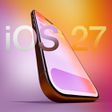
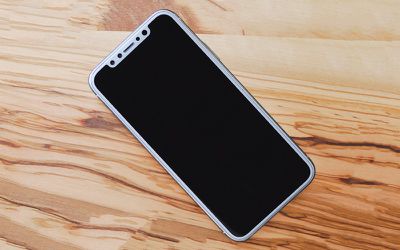
Shipments of Apple's upcoming "iPhone 8" could be delayed because of low yield rates at assembly plants and a limited supply of OLED display panels, according to a report published on Tuesday.
DigiTimes cited industry sources predicting that the shipments could end up behind schedule because of the issues, despite chipset suppliers delivering parts early and an increased recruitment drive by companies in the assembly line.
The latest speculation comes even though chipset suppliers have begun delivering related parts to the iPhone supply in the second quarter, and iPhone assemblers Foxconn Electronics, Pegatron and Wistron have been stepping up efforts to recruit more workers for their assembly lines in China, said the sources.
As covered previously on MacRumors, Samsung is the main supplier of display panels for Apple's 5.8-inch OLED iPhone, with Apple reportedly having ordered 70 million units from the company this year.
However, although Samsung Display has promised to fully support Apple with regards to the supply of OLED panels, DigiTimes' sources are now claiming only 3 to 4 million OLED-based iPhones will be ready for shipping before the new smartphones are unveiled at a product event slated for September.
Judging from the current supply of OLED panels, it will be difficult for Apple to ship up to 50-60 million OLED-based new iPhones in 2017, the sources indicated.
There have already been rumors suggesting the OLED iPhone will be in short supply when it launches, with the majority of the stock unavailable until later in the year, so today's report doesn't come out of the blue. However, the number of iPhones available at launch quoted by DigiTimes is the lowest we've seen so far.
Apple's so-called "iPhone 8" will be a radical redesign compared to previous handsets, with a glass body and edge-to-edge OLED display that includes an integrated Touch ID fingerprint sensor and a front-facing camera with 3D sensing capabilities, possibly for use with augmented reality software. The new iPhone is expected to be sold alongside upgraded (but standard) 4.7 and 5.5-inch iPhones.
Amazon is releasing a software update for its Echo range of smart speakers that enables households with multiple Echos to use them as room-to-room intercoms (via TechCrunch).
Once the new feature is set up, users are able to select a speaker in a specific room and communicate with it one-to-one - to call the kids to dinner from the kitchen Echo, for example.
To enable the function, users must first give a distinctive name (such as a room) to each Echo in their household and enable the Drop-In feature using the Alexa app.
The intercom system works through household groups created during the setup process, meaning it's not limited to speakers on the same Wi-Fi, so it's possible to communicate with Echo-owning friends or relatives in a different area code, for instance. Users can also use the feature away from home using the Alexa app.
The Drop-In feature first appeared on Amazon's new Echo Show with integrated display, with some reviewers finding the video aspect a little intrusive. Similarly, there doesn't seem to be a way to block the intercom audio on the standard Echo range, so it's worth keeping this in mind before enabling it.
The update is rolling out to the Echo family of speakers this week.
A brand new Apple Pencil costs $99 in the United States, so taking the refurbished route yields a savings of $14.
A refurbished Apple Pencil isn't brand new, but Apple says it undergoes a thorough cleaning process and inspection to ensure it meets Apple's quality standards, including full functionality testing. It's then repackaged in a new box with a Lightning adapter, an extra tip, and the appropriate documentation.
Apple Pencil is a stylus designed specifically to work with iPad Pro, giving artists a tool with a level of precision far beyond that of a finger.
Designed to mimic the feel and sensation of using a pen or a pencil, the Apple Pencil has built-in sensors to determine orientation and angle, and to detect a range of forces for pressure-sensitive drawing and writing. Apple has optimized the iPad Pro and iOS to ensure the Apple Pencil has minimal latency.
With iOS 11, iPad Pro users are able to add handwriting and drawings alongside text, and search handwritten notes using Spotlight.
A refurbished Apple Pencil comes with Apple's standard one-year limited hardware warranty covering manufacturing defects.
iOS 11 is pre-release software, so installing the beta on a secondary device is highly recommended. Due to bugs and other potential issues, installing the iOS 11 beta on an iPhone that you use everyday is generally not a good idea.
Installing the iOS 11 public beta is a relatively simple task that, in most cases, shouldn't take longer than 15 or 20 minutes from start to finish. Here's the step-by-step instructions for an iPhone, which extend to the iPad and iPod touch.
Apple today seeded the first beta of an upcoming tvOS 11 update to its public beta testing group, marking the first time public beta testers have had access to tvOS betas. Previously, public betas were limited to iOS and macOS software likely due to the slightly more complicated tvOS beta installation process, but now public beta testers can access all software platforms with the exception of watchOS.
The first beta of tvOS 11 available to public beta testers corresponds with the second tvOS 11 update made available to developers. Developers have had access to tvOS 11 since June 5, when Apple introduced new versions of tvOS, iOS, macOS, and watchOS at WWDC.
tvOS 11 can be downloaded by connecting an Apple TV to a computer with a USB-C cable and installing the beta software using iTunes. After the proper profile is added to the Apple TV, subsequent betas will be available over-the-air.
Compared to iOS 11, macOS High Sierra, and watchOS 4, tvOS 11 is a relatively minor update that brings few changes to the tvOS operating system. In fact, it received no time on stage at the Worldwide Developers Conference aside from a mention of an Amazon Prime Video app coming to the Apple TV this fall.
According to Apple's release notes, tvOS 11 introduces automatic light/dark appearance switching based on local time, Home screen syncing options for syncing content between two or more Apple TVs in a household, new background modes and notification support, plus new tools for developers and improvements to Mobile Device Management.
Additional tvOS 11 features may be unveiled ahead of the operating system's public release, which is expected in the fall alongside other software updates.
Apple today released the first public beta of iOS 11 to its public beta testing group, allowing non-developers to download and test the update ahead of its fall release. iOS 11 has been available for developers since June 5, and the first public beta corresponds with the second developer beta.
Beta testers who have signed up for Apple's beta testing program will receive the iOS 11 beta update over-the-air after installing the proper certificate on an iOS device.
Those who want to join the beta testing program can sign up on Apple's beta testing website, which gives users access to iOS, macOS, and tvOS betas. Before installing a beta, make sure to create a full encrypted iTunes backup and be sure to install it on a secondary device because beta software is not stable and can include many bugs.
iOS 11 brings subtle design changes to the operating system, including a new Lock screen experience and a customizable, redesigned Control Center. Siri is smarter, has a more natural voice, and can do more, Messages features person-to-person Apple Pay, Notes has searchable handwriting and document scanning, and Music now lets you share playlists with your friends.
A new Files app improves file management on iOS devices, and for the iPad in particular, there's a new Dock, an App Switcher, and support for Drag and Drop, all of which vastly improves multitasking on the device. An entirely revamped App Store is coming in the update, photos and videos take up less space, iMessages can be stored in iCloud, and developers are getting new tools like ARKit for creating impressive new augmented reality apps and games.
For full details on all of the new features included in iOS 11, make sure to check out our iOS 11 roundup. iOS 11 will be available for developers and public testers for testing purposes for several months ahead of a planned fall release.
Apple has almost certainly acquired German computer vision company SensoMotoric Instruments, a provider of eye tracking glasses and systems, based on evidence compiled by MacRumors.
On May 2, Apple's vice president of corporate law Gene Levoff, representing Delaware-based shell company Vineyard Capital Corporation, granted power of attorney to German law firm Hiking Kühn Lüer Wojtek to represent Vineyard Capital Corporation in all business related to the acquisition of SensoMotoric Instruments.
On June 16, SensoMotoric Instruments filed several documents with the German Company Register outlining new articles of incorporation. SensoMotoric's previous managing director Eberhard Schmidt was replaced by Dr. Ali Sahin, one of the German attorneys representing Vineyard Capital Corporation.
Vineyard Capital Corporation is listed as having acquired all company shares of SensoMotoric Instruments.
Apple takes steps to hide its acquisitions through shell companies, which essentially only exist on paper, but Levoff's signature on one of the documents is a clear giveaway that Vineyard Capital Corporation is Apple. Levoff even notarized the document in Cupertino, California, where Apple is headquartered.
SensoMotoric Instruments recently updated its website, removing over a dozen pages with detailed information about its products. The website also no longer has a jobs portal, news blog, schedule of events and workshops, contact information, list of distributors and resellers, or mailing list signup form.
An archived version of the website from last week indicated the company was hiring, but the current version does not. Schmidt's name and headshot have also been removed from the website now that he is no longer managing director. Christian Villwock, Director of OEM Solutions Business, was also removed.
The acquisition is backed up by an anonymous tipster, who told us that he allegedly spoke to an Apple employee today who said the deal has been completed. Additionally, one of SensoMotoric's clients informed us that they have been attempting to contact the company for several weeks without hearing back.
Apple and SensoMotoric Instruments did not respond to multiple requests for comments. SensoMotoric's phone line was out of service.
SensoMotoric Instruments, founded in 1991, has developed a range of eye tracking hardware and software for several fields of use, including virtual and augmented reality, in-car systems, clinical research, cognitive training, linguistics, neuroscience, physical training and biomechanics, and psychology.
The company's Eye Tracking Glasses, for instance, are capable of recording a person's natural gaze behavior in real-time and in real world situations with a sampling rate up to 120Hz. As seen in the video below, one possible use case is for athletes looking to evaluate and improve their visual performance.
SensoMotoric has also developed eye-tracking technology for virtual reality headsets such as the Oculus Rift, which can analyze the wearer's gaze and help to reduce motion sickness, a common side effect of VR. The solution can also allow for a person's gaze to control menus or aim in a game with their gaze.
SensoMotoric's other eye-tracking solutions include standalone devices, such as the RED250mobile, which allows saccade-based studies to be conducted at 250Hz for researchers who require both mobility and high sampling rate.
Apple has reportedly prototyped a pair of "smart glasses" that would connect to an iPhone and display "images and other information" to the wearer, and SensoMotoric's eye-tracking technology could feasibly play a role in that product alongside solutions from Apple's other acquisitions like Faceshift.
Apple CEO Tim Cook has also repeatedly expressed a "profound" interest in augmented reality, calling the technology "a big idea" like the smartphone. He said augmented reality should "amplify" human contact, but noted "there are things to discover before that technology is good enough for the mainstream."
With iOS 11, Apple is delving into augmented reality in a big way, introducing an ARKit development platform that will allow developers to quickly and easily build augmented reality experiences into their apps and games.
SensoMotoric Instruments is headquartered in Teltow, Germany, near Berlin, and its website said it had an office in Boston as well. It's unclear if the company and its roughly 60 employees, according to LinkedIn, will merge within Apple or remain an independent subsidiary. Financial terms of the deal are unknown.
Eric Slivka contributed to this report.
Update: "Apple buys smaller technology companies from time to time, and we generally do not discuss our purpose or plans," an Apple representative said in a statement to Axios, essentially confirming the deal.
Apple CEO Tim Cook took the stage at Cisco Live in Las Vegas today, sitting down with Cisco CEO Chuck Robbins to discuss the ongoing partnership between the two companies that has leveraged Apple's expertise in devices and apps and Cisco's strength in networking and enterprise tools.
During the session, Cook argued that business customers who use the integrated Apple-Cisco ecosystem should be granted a benefit in the form of lower cybersecurity insurance premiums, reports Reuters.
"The thinking we share here is that if your enterprise or company is using Cisco and Apple, that the combination of these should make that (cyber-security) insurance cost significantly less," Cook said. "This is something we're going to spend some energy on. You should reap that benefit."
Cisco also announced its upcoming Cisco Security Connector program for iOS devices, launching later this year.
Expected to be released in the fall of 2017, the Cisco Security Connector is designed to deliver the deepest visibility, control, and privacy for iOS devices. The Cisco Security Connector offers organizations the most granular view of what is happening on enterprise-owned mobile devices and provides the best protection for users, anywhere they travel. With the Cisco Security Connector, businesses will now have the ability to meet risk and compliance requirements from auditors and ultimately expand iOS adoption in new ways. [...]
With the Cisco Security Connector, organizations gain the following:
- Visibility: Ensure compliance of mobile users and their enterprise-owned iOS devices during incident investigations by rapidly identifying what happened, whom it affected, and the risk exposure. - Control: Protect users of iOS devices from connecting to malicious sites on the internet, whether on the corporate network, public Wi-Fi, or cellular networks. - Privacy: Safeguard corporate data and users by encrypting internet (DNS) requests.
Cisco says it collaborating with insurance companies on "more robust policies" for customers taking advantage of continuous security monitoring based on technologies from Apple and Cisco.
The disclosure of the relationship between Apple and Hertz came in documents recently released by the California Department of Motor Vehicles. The documents note Apple is leasing its small fleet of Lexus RX450h SUVs for autonomous driving tests from Hertz's fleet management group.
The iPhone maker is leasing Lexus RX450h sport-utility vehicles from Hertz’s Donlen fleet-management unit, according to documents released recently by the California Department of Motor Vehicles. When Apple received its license to test three autonomous vehicles from the state’s DMV in April, the documents listed Donlen as the lessor and Apple as the lessee.
Hertz's stock price is up nearly 15 percent on the news, as investors speculate about a larger partnership between the two companies as Apple's project moves forward.
Ahead of the launch of the Echo Show this Wednesday, June 28, Amazon has given review units to a few sites so that they can test out the new Echo and see how its 7-inch touch screen adds to the traditional Amazon Echo experience. Amazon revealed the $230 Echo Show earlier in May and bills it as having all of the features of the traditional Echo, with the addition of a display to enhance user interactivity.
According to The Verge, one of the best aspects of Echo Show is that, "you basically never need to tap the screen for anything, unless you really want to." Instead of adding an array of touchscreen-required actions that overcomplicate the interface, the company focused on adapting the abilities of the previous Echo models to work with a touchscreen.
While there were some moments when the touchscreen's "secondary importance" caused UI annoyances, the site largely admired Amazon's decision to keep the voice control focus of the Echo line with Echo Show.
Are there things I don't love about the Echo Show? Of course. I think it's pretty homely and I think that the sound quality could be better for the price. But the improvements over the original Echo are big enough that it's my favorite smart speaker right now.
From nearly any other company, adding a screen would have resulted in feature-itis of the worst kind. By holding back, the Echo Show feels like it does more. Its strength is in its simplicity.
In its review, TechCrunch described Echo Show's video calling feature as the "killer app" for many users, allowing calls between two Echo Show devices, or between an Echo Show and the Alexa smartphone app. After entering a phone number, the Echo Show displays a list of other Echo owners from your own personal contact list, and from there you can directly call their Echo.
The site noted that the screen is far too small for long movie sessions (currently only supporting video from Amazon Prime), and described its resolution as "middling," but in video calls the Echo Show's 7-inch touchscreen makes the most sense. Still, both TechCrunch and The Verge did find Echo Show's "Drop In" feature slightly intrusive, as it lets selected friends and family pop into your Echo Show and see your home whenever they feel like it, but it's not activated by default.
It’s a lot easier to use than Skype (though, to be fair, most things in this life are), but it’s currently limited to Show users, which means Amazon is going to sell a lot of these to family members looking for a simple way to keep in touch. There’s also an odd Drop-In option, which takes the whole picking-up-the-phone bit out of the equation, so select friends and family can communicate directly with little warning. I suppose there’s some value for users looking to periodically check in on loved ones, but the whole thing is too intrusive for my tastes.
Wired also referenced worry about Echo Show's always-watching camera, but ultimately sees potential in the device's future, particularly once Amazon begins adding in more "skills" for the Echo Show. The site continued an opinion shared in multiple reviews posted today, which is that the Echo Show's speaker is better than that of the original Echo's, but "it's no Sonos."
Still, I find the Show’s potential fascinating. The Alexa ecosystem has grown big enough that I suspect Netflix and Hulu will soon make video skills, most smart-home manufacturers will support the new device, and games and apps will pop up all over the place. Alexa’s voice recognition works well enough to make all of this work, and developers can access the camera, the screen, the microphone, and the speaker. The Echo Show is basically an always-on, plugged-in smartphone, which could become hugely powerful.
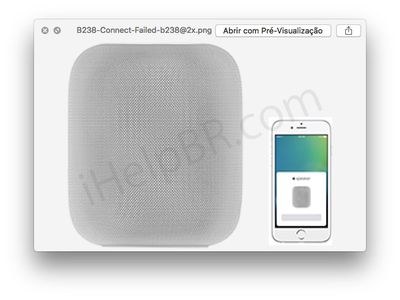
Amazon's Echo Show is the latest in the company's line of smart speaker systems, following the Echo, Echo Dot, and Echo Look. Apple is gearing up to finally enter the same market, with an announcement at WWDC this year for the "HomePod." Apple said that its speaker is more focused on high-quality music playback than its smart speaker rivals, while also offering Siri-based AI features.
Apple today seeded a revised version of the second tvOS 11 beta to developers for testing. The new version has a build number of 15J5310h, compared to 15J5310e for the original version of second beta, which was released last Wednesday.
It's unclear what changes have been made in the revised version, but this article will be updated if any differences are discovered.
Registered developers can download tvOS 11 by connecting the Apple TV to a computer with a USB-C cable and installing the beta software using iTunes.
tvOS 11 received little attention at the Worldwide Developers Conference, but according to the release notes, it introduces a few new features to the operating system.
tvOS 11 brings automatic switching between light and dark mode based on local time, Home screen syncing options that keep multiple Apple TVs in a household in sync, new background modes and notification support, Focus API improvements, custom sound support, network-based pairing and development support, and improvements to Mobile Device Management.
Later this year, Apple will partner with Amazon to bring an Amazon Prime Video app to the Apple TV for the first time, and in tvOS 11, AirPods are able to pair automatically with an Apple TV.
The new tvOS 11 update is only available for registered developers at the current point in time, but Apple plans to release a public tvOS 11 beta in the future.
Apple today seeded a revised version of the second iOS 11 beta to developers for testing. The new version has a build number of 15A304j, compared to 15A304i for the original second beta, which was released last Wednesday.
The software update appears to be available for select iPhone and iPad models. It's unclear what revisions have been made at this point.
Registered developers can download the iOS 11 beta from Apple's Developer Center, or over-the-air once the proper configuration profile has been installed. A public beta will be released later this month.
iOS 11 is Apple's biggest software release ever for the iPad, with a new Dock that introduces much improved multitasking, a Files app for better managing files, improved Apple Pencil support, a revamped App Switcher, and system-wide drag and drop.
The update also includes many features for both the iPhone and the iPad, including a redesigned and customizable Control Center, a new Lock screen that's merged with the Notification Center. Peer-to-peer Apple Pay payments are being introduced in the Messages app, which is also gaining a new App Drawer, and there's a new Do Not Disturb feature that is designed to help drivers stay focused on the road. Siri, Photos, the Camera app, and more are also gaining significant improvements.
ARKit for developers will result in a wide range of new augmented reality apps, while a Core ML SDK will allow apps to become a whole lot smarter.