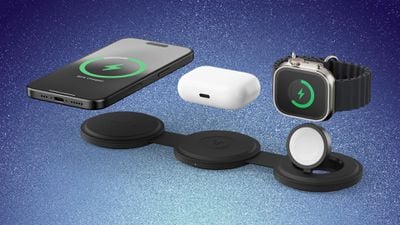
Satechi and MacRumors partnered up this week to offer our readers an exclusive 30 percent discount on select products for a limited time. This sale is available only on Satechi's website and is set to end on Monday, December 15, so this weekend is your last chance to take advantage of the deals.
Note: MacRumors is an affiliate partner with Satechi. When you click a link and make a purchase, we may receive a small payment, which helps us keep the site running.
To get the discount, add anything from the lists below to your cart and head to checkout. Once at checkout, you can enter the code MRHOLIDAY to get 30 percent off your order for this week only. This discount code takes 30 percent off each item in your cart, so you can purchase multiple accessories at once.
Note: Use code MRHOLIDAY at checkout to see the discount.
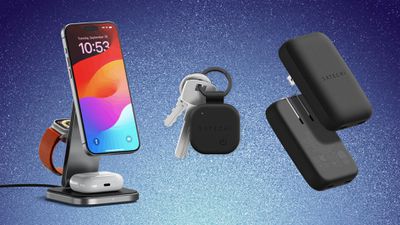
Products in this sale include Satechi's newest Qi2 charging stations and travel chargers, including the 3-in-1 Foldable Charging Station for $91.00, down from $129.99. You can also get both of Satechi's On The Go chargers on sale for 30 percent off with our exclusive code, priced at $56.00 for the 2-in-1 model and $70.00 for the 3-in-1 model.
It's also worth noting that some products are under a "last chance" discount, leftover from Satechi's Cyber Week sale, and our exclusive code stacks with these markdowns. This means you can get ultra-steep discounts on Satechi's 2-in-1 Headphone Stand and Wireless Charger ($39.20, $40 off) and Thunderbolt 4 Dock ($147.00, $152 off).
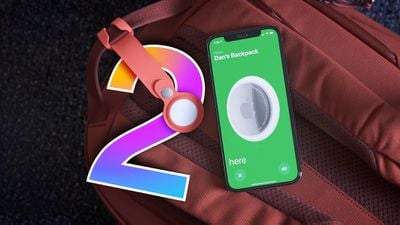
The code also covers 30 percent off Satechi's range of FindAll Bluetooth trackers, including the FindAll Keychain, FindAll Card, FindAll Luggage Tag, FindAll Glasses Case, and FindAll Passport Cover. We've listed every product that works with our exclusive MRHOLIDAY discount code below, so be sure to shop the sale before it ends on December 15.
If you're on the hunt for more discounts, be sure to visit our Apple Deals roundup where we recap the best Apple-related bargains of the past week.
Deals Newsletter
Interested in hearing more about the best deals you can find this holiday season? Sign up for our Deals Newsletter and we'll keep you updated so you don't miss the biggest deals of the season!
We're already in the middle of December, and holiday deals are abundant this time of year. This week, you can find best-ever discounts on AirPods Pro 3, Apple Watch Series 11, Apple Watch SE 3, and M5 iPad Pro. Below, you'll also find an exclusive sitewide deal at Burton Goods and an ongoing holiday sale at Samsung with big discounts on storage accessories and more.
Note: MacRumors is an affiliate partner with some of these vendors. When you click a link and make a purchase, we may receive a small payment, which helps us keep the site running.
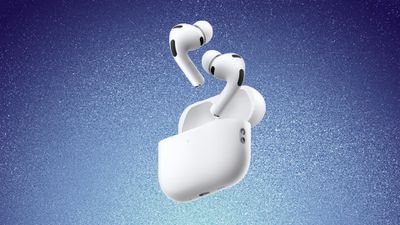
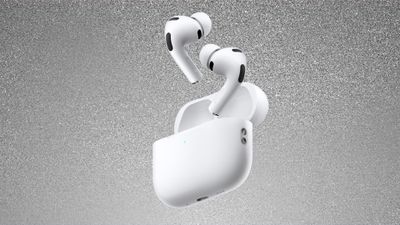
Apple's AirPods Pro 3 hit a new record low price of $199.00 this week on Amazon, down from $249.00, and they're still available today. This deal beats the Black Friday price we saw last month by about $20.
Burton Goods
What's the deal? Take 25% off sitewide with code MR25
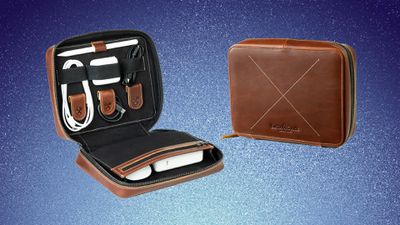
MacRumors readers can get 25 percent off sitewide this weekend at Burton Goods, with the code MR25 at checkout. Burton Goods is known for its leather accessories that include iPhone and iPad Cases, MacBook sleeves, Apple Watch bands, MagSafe-compatible wallets, and more.
Samsung
What's the deal? Save sitewide on Samsung TVs, monitors, and more
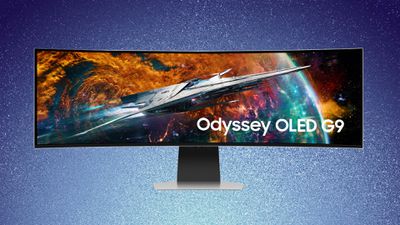
Samsung kicked off a new holiday event this week, and you can find great deals on monitors, storage accessories, TVs, Galaxy smartphones, and home appliances. Many of these deals are the exact same all-time low prices we tracked during Black Friday and Cyber Monday.
A new highlight of this event is Samsung's 4TB Portable SSD T7 Shield for $349.99 ($115 off), and you can still get The Frame Pro on sale for $1,999.00 ($1,200 off).
Apple Watch
What's the deal? Take up to $100 off Apple Watch SE 3 and Series 11
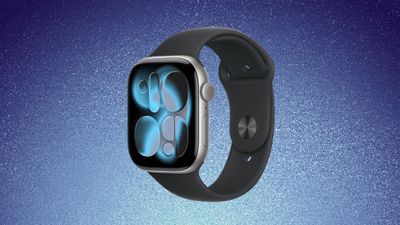
Amazon has a few record low prices on multiple Apple Watch models this week, including the Apple Watch Series 11 and Apple Watch SE 3. These have been some of the most consistent deals to stick around after Black Friday, and they're available in multiple color options and sizes.
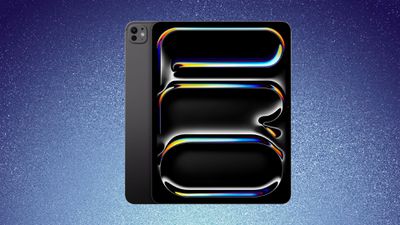
Amazon and Best Buy opened up big discounts across the M5 iPad Pro lineup this week, offering as much as $180 off select tablets. Prices start at $899.00 for the 256GB Wi-Fi 11-inch M5 iPad Pro at Amazon, down from $999.00. All deals in this sale match — or beat — the record low prices we tracked during Black Friday.
If you're on the hunt for more discounts, be sure to visit our Apple Deals roundup where we recap the best Apple-related bargains of the past week.
Deals Newsletter
Interested in hearing more about the best deals you can find this holiday season? Sign up for our Deals Newsletter and we'll keep you updated so you don't miss the biggest deals of the season!
After roughly six weeks of beta testing, iOS 26.2 and related updates have finally been released for all users, delivering a number of new features, changes, and bug fixes.
In other news this week, we saw fresh rumors about next year's iPhone models, Apple's chip guru Johny Srouji felt compelled to address reports that he might be joining the ongoing exodus of senior executives, and Apple Fitness+ is seeing its largest expansion since launch, so read on below for all the details on these stories and more!
Top Stories
Apple Releases iOS 26.2 With Alarms for Reminders, Lock Screen Changes, Enhanced Safety Alerts and More
iOS 26.2 and friends are finally here, with Apple pushing out the releases to the public following their beta testing period.
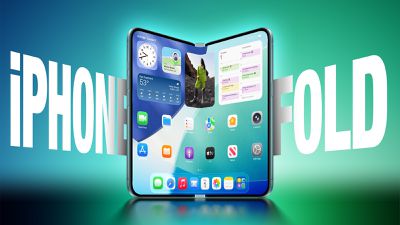
The estimates come as one source claimed Samsung Display is slated to produce more display panels than expected for the device, suggesting strong anticipated demand, although Samsung has disputed the claim.
iPhone 18 Pro Leak Adds New Evidence for Under-Display Face ID
Apple is actively testing under-screen Face ID for next year's iPhone 18 Pro models using a special "spliced micro-transparent glass" window built into the display, claims a Chinese leaker. Apple is reportedly testing the special glass as a way to let the TrueDepth system's infrared sensors pass through the panel without distortion.
A number of rumors have indicated Apple is working on moving Face ID hardware under the screen to reduce the size of the Dynamic Island, though they have been split on whether the technology will be ready in time for next year's iPhone models.
Apple's Chipmaking Chief Johny Srouji Responds to Report About Him Potentially Leaving
Apple was reportedly trying to put together a package of increased compensation and responsibilities to ensure Srouji would stay on board, but it's unclear if that effort has convinced him to remain at Apple or if the initial rumors of his potential departure had been somewhat overblown in the first place.
Switching Between iPhone and Android Will Get Easier With New Apple and Google Collaboration
Apple already has a Move to iOS app for transferring data from an Android device to an iPhone, while Google has an Android Switch app that can migrate data from an iPhone to an Android smartphone. The new method will apparently replace the existing apps, offering a transfer function when setting up a new iPhone or Android device.
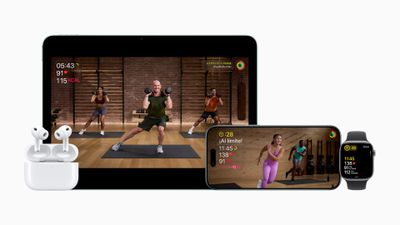
Apple Fitness+ Coming to 28 New Regions With Digital Voice Dubbing
Apple Fitness+ will become available in Chile, Hong Kong, India, the Netherlands, Singapore, Taiwan, and additional regions on December 15, with Japan scheduled to follow early next year. The expansion increases total availability to 49 countries.
Hundreds of sessions will initially be available with digitally generated voice dubbing in Spanish and German, with Japanese added when the service launches in Japan. New dubbed episodes will be released weekly across all supported regions.
MacRumors Newsletter
Each week, we publish an email newsletter like this highlighting the top Apple stories, making it a great way to get a bite-sized recap of the week hitting all of the major topics we've covered and tying together related stories for a big-picture view.
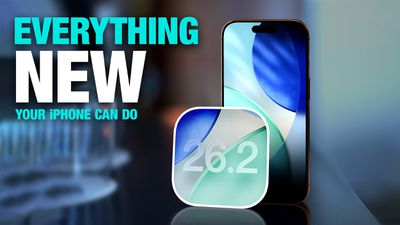
Apple released iOS 26.2 on December 12, introducing the latest version of iOS 26. iOS 26.2 isn't the biggest update, but it brings quite a few helpful new features to your iPhone.
We've rounded up all of the new features your iPhone is getting in iOS 26.2.
Alarms for Reminders
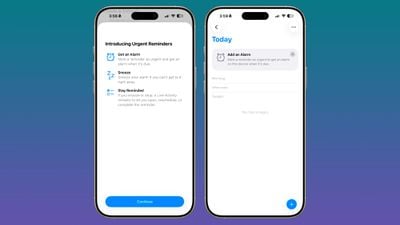
The Reminders app has a new option to have an alarm go off when a reminder is due. Setting up an alarm can be done by toggling on the "Urgent" option when creating a reminder.
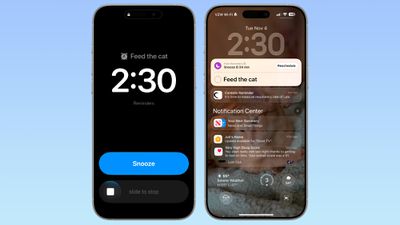
When a Reminder alarm activates, it displays a snooze option or a slide to stop option. If you snooze it, it will show a Live Activity countdown on the Lock Screen that includes an option to complete the reminder or reschedule it. Apple distinguishes Reminders alarms from standard alarms with a new blue color.
Apple provides a splash screen letting users know about the feature, plus a small banner that shows up when you go to add a new entry in the Reminders app after updating to iOS 26.2.
Lock Screen
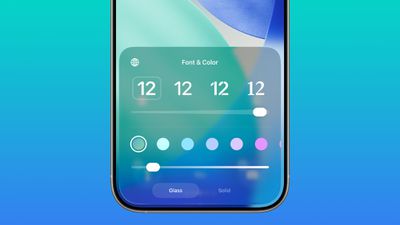
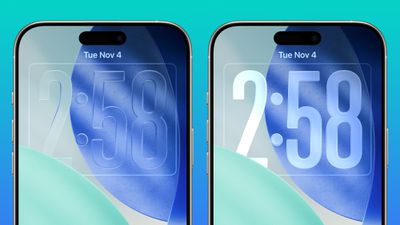
The Lock Screen has a new Liquid Glass slider that lets you customize the appearance of the time. When using the "Glass" option, you can use the slider to make the time look almost entirely clear, or give it a more frosted look.
There's still a separate Solid toggle that turns off the Liquid Glass appearance for the clock entirely if you want to opt for a much more opaque design, and you can also still use the color options for the time.
Liquid Glass Settings
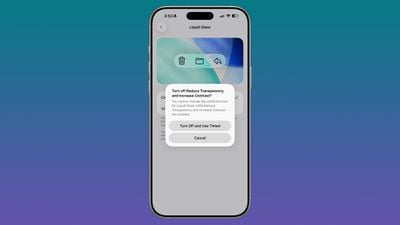
When using the Liquid Glass "Tinted" option that reduces transparency, there's a warning that the Tinted option cannot be used in tandem with the Reduce Transparency and Increase Contrast Accessibility settings.
Turning on Tinted mode is able to turn off Reduce Transparency and Increase Contrast automatically. In the prior update, there was no option to turn on Tinted mode without turning off these features manually.
AirDrop
iOS 26.2 increases the security of AirDrop. The update adds an extra layer of verification when using AirDrop with unknown contacts.
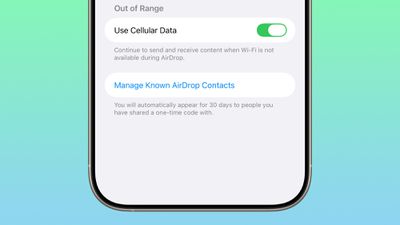
There is an option to generate an AirDrop code on the receiver's device, which can then be entered on the sender's device to complete the transfer. Codes allow AirDrop to work for a 30-day period.
People you have shared a code with can be managed by opening up the Settings app, selecting the General section, choosing AirDrop, and tapping on "Manage Known AirDrop Contacts."
Apple Music
Apple Music supports offline lyrics, so you can see a song's lyrics when not connected to Wi-Fi or cellular.
Your Favorite Songs playlist also now shows up in Top Picks on the home tab.
Sleep Score
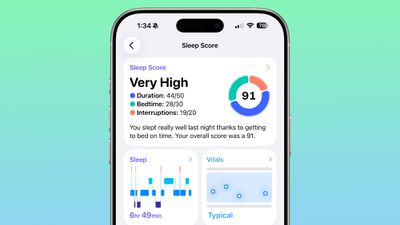
With iOS 26.2 and watchOS 26.2, Apple has adjusted the ranges for the Sleep Score feature that it introduced earlier this year. The new Sleep Score numbers better match how people might be feeling after a night of sleep.
These are the new scores:
Very Low - 0-40 (previously 0-29)
Low - 41-60 (previously 30-49)
OK - 61-80 (previously 50-69)
High - 81-95 (previously 70-89)
Very High - 96-100 (previously 90-100)
The "Very High" rank used to be "Excellent," but Apple changed the name to be more in line with the other labels.
Sleep Scores are available on all Apple Watch models compatible with watchOS 26.2 and can be found in the Health app on the iPhone. Apple designed Sleep Score to provide an overall sense of sleep patterns, so users can identify habits that might impact their sleep.
Sleep Score takes into account sleep duration, bedtime, and interruptions to assign a nightly score that represents sleep quality. Duration is worth 50 points, bedtime is worth 30, and interruptions (times woken up in the night) are worth 20, for a total of 100 possible points each night.
Podcasts
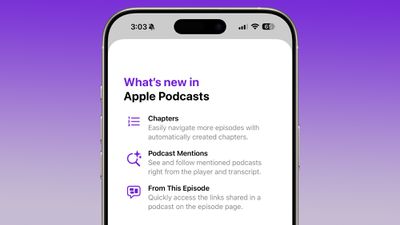
The Podcasts app has three new features, including automatically generated chapters, options to see mentions of other podcasts from the transcript and the player, and access to links mentioned in a podcast on the episode page.
Passwords
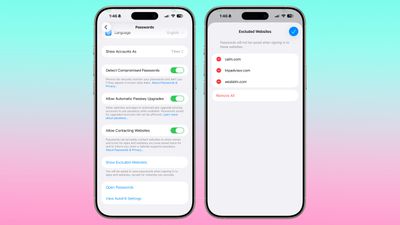
In the Settings section of the Passwords app, there's an option to manage websites where passwords are not saved when signing in.
Freeform
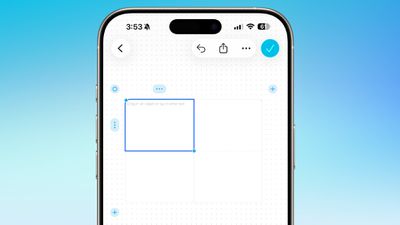
The Freeform app now supports tables that can hold text, images, documents, and drawings. Cells intelligently resize to fit content, providing structure.
Apple News
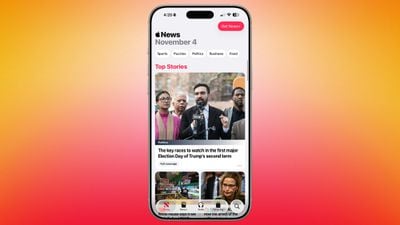
Apple updated the design of Apple News, adding quick access top buttons for categories like sports, puzzles, politics, business, and food.
There's also a dedicated tab for Following, which has been decoupled from the search interface.
Home App
The Home app now supports multipack accessory pairing. You can use the same setup code to enroll multiple accessories that are sold together.
Flash for Alerts
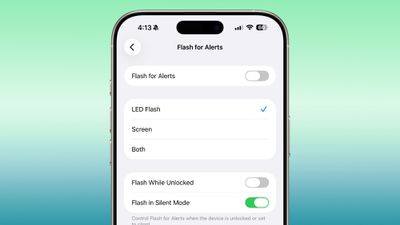
The Flash for Alerts option in the Accessibility section of the Settings app allows users to have the screen flash when there's an incoming notification. Previously, this setting was limited to the LED on the back of the iPhone.
Users can swap to the screen flash or have both flash at the same time when notifications come in.
Enhanced Safety Alerts
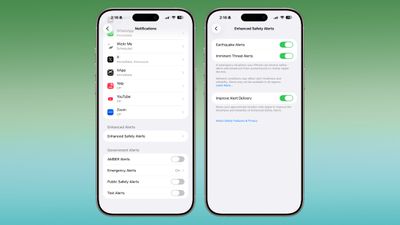
In the Notifications section of the Settings app, there's an Enhanced Safety Alerts section for managing earthquake alerts, imminent threat alerts, and activating improved alert delivery, a feature that uses location to improve the reliability of alerts.
Apple says that Enhanced Safety Alerts provide rich information like a map of affected areas and links to additional safety guidance.
Enhanced Safety Alerts is limited to the United States.
Measure App
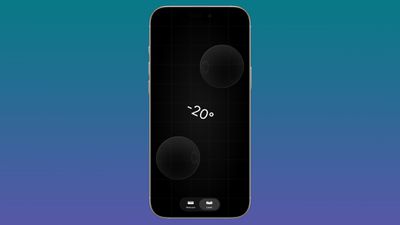
Apple's Measure app now features a Liquid Glass design for the level, with two Liquid Glass bubbles instead of white circles.
Games App
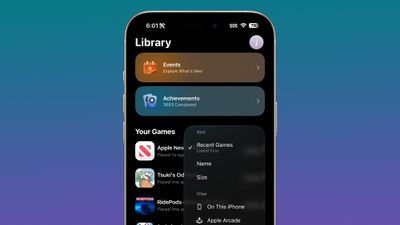
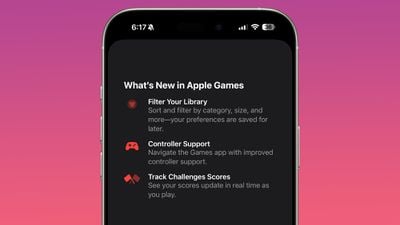
There's an option to sort games in the Games app Library by size, in addition to Name and Recent. In-game challenge score banners provide real-time updates when someone new has taken the lead in a game you're playing.
The Games app also supports navigation with a controller and real-time updates to challenge scores during gameplay, plus there's enhanced support for controllers like the Backbone and Razer.
CarPlay
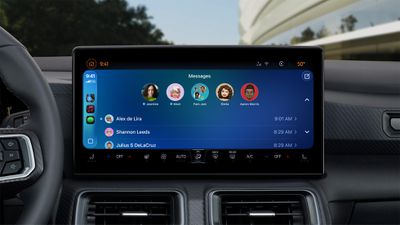
The CarPlay app supports disabling pinned messages in the Messages app for drivers who prefer the classic Messages view that was available before iOS 26.2.
Menu Animations
For pop-out menus that expand from a corner button, iOS 26.2 adds a quicker, bouncier animation that looks like the animation that Apple showed off at WWDC.
Privacy
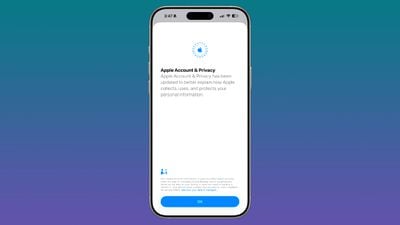
When you access your Apple Account for the first time after installing iOS 26.2, you'll see an alert letting you know that Apple's privacy information for Apple Accounts has been updated to better explain how personal information is collected and used by Apple.
AirPods Live Translation for EU
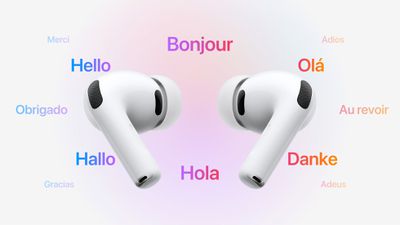
iOS 26.2 expands AirPods Live Translation to the European Union. Apple had to delay the feature in the EU to complete the engineering work needed to comply with the requirements of the Digital Markets Act.
AirPods Live Translation works with the AirPods Pro 3, AirPods Pro 2, and AirPods 4 with ANC. It is available in English, French, German, Portuguese, Spanish, Italian, Chinese (Simplified and Traditional Mandarin), Japanese, and Korean at the current time.
iPhone Changes in Japan
Siri Replacement
Apple is laying the groundwork for a new option that will let iPhone users in Japan choose a different default voice assistant. A press and hold gesture on the Side Button only activates Siri in earlier versions of iOS.
iPhone users in Japan will be able to select a new voice-based conversation app to activate with the Side Button, allowing alternative assistants like Gemini or Alexa to be used on the iPhone. Developer documentation confirms that it will only be available for Japanese Apple Accounts owned by people living in Japan.
Search Engine Choice
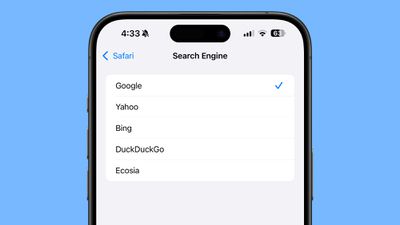
After installing iOS 26.2, iPhone users in Japan will be prompted to select a preferred search engine. Options include Bing, Google, DuckDuckGo, Yahoo Japan, or Ecosia, the same options available globally in the Safari settings. In most other countries, Google is the default search engine and there is no prompt to choose a different option when the iPhone first starts up.
While iPhone users outside of Japan can choose one of the other options, doing so requires going into the Safari section of the Settings app to make a change.
With iOS 26.2, Apple is adding tools for developers that will help them comply with the App Store Accountability Act that goes into effect in Texas in 2026. Apple users in Texas will need to confirm whether they are 18 years or older when creating an Apple Account, and parents will need to provide consent for their children's App Store downloads and in-app transactions.
Apple will share user age range information with developers, and developers will need to implement systems for notifying parents about significant app changes and allowing parents to revoke a child's access to an app at any time.
Bonus: iPadOS 26.2 Multitasking
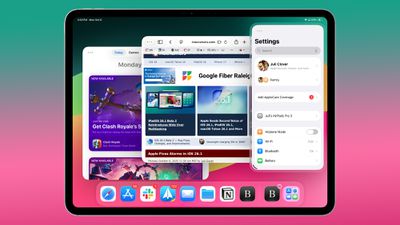
In iPadOS 26.2, Apple is expanding on the updated multitasking that it introduced in iPadOS 26.1. There's an option to drag and drop apps from the App Library, Dock, and Spotlight into Slide Over and tiled views, restoring some functionality that was removed in the iPadOS 18 to iPadOS 26 transition.
Bug Fixes
There are two notable bug fixes in iOS 26.2. Apple addressed an issue that could cause pre-release albums in the Apple Music Library not to be playable at release time, and it addressed an issue where a Privacy and Security setting could be incorrectly marked as managed by an enterprise organization.
Security Updates
iOS 26.2 addresses over 20 vulnerabilities, including two bugs that are known to have been actively exploited.
There are a pair of WebKit vulnerabilities that could allow maliciously crafted web content to execute code or cause memory corruption. Apple says that the bugs might have been exploited in an attack against targeted individuals on versions of iOS before iOS 26.
One of the WebKit bugs was fixed with improved memory management, while the other was addressed with improved validation.
There are several other vulnerabilities that were fixed too, across apps and services. An App Store bug could allow users to access sensitive payment tokens, processing a malicious image file could lead to memory corruption, photos in the Hidden Album could be viewed without authentication, and passwords could be unintentionally removed when remotely controlling a device with FaceTime.
Now that these vulnerabilities have been publicized by Apple, even those that were not exploited before might be taken advantage of now. Apple recommends all users update their devices to iOS 26.2, iPadOS 26.2, and macOS Tahoe 26.2 as soon as possible.
Compatibility
iOS 26.2 is available on all iPhones that support iOS 26.
What's Next
Apple is likely to release the first beta of its next update, iOS 26.3, as soon as next week.
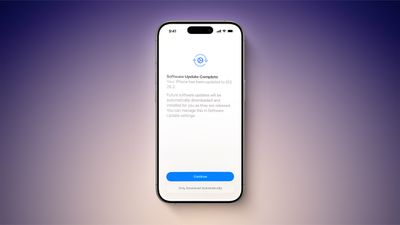
After installing iOS 26.2, if you're just tapping through screens, you could miss the update turning on automatic software updates.
At the "Software Update Complete" stage where you normally tap on continue to get to the Home Screen, there might be an extra little bit of information. Some users are seeing a warning that future updates will be automatically downloaded and installed, with the option toggled on automatically if the Continue button is tapped. There's a subtle "Only Download Automatically" option that does not opt you into automatic updates if you're paying attention, but it's easy to miss.
You won't see iOS 26.2 turn on automatic software updates if you already have them on, and it doesn't even seem to be showing up for all users that have automatic update installation turned off. You might want to double check your settings just in case, and even if iOS 26.2 didn't turn on automatic software updates, it's worth knowing about the possibility because it's an option that Apple can sneak into any update. If you've ever had an update mysteriously install on your device when you didn't manually do it, it's probably because automatic software updates was quietly turned back on.
If you did install iOS 26.2 and accidentally turned on automatic updates, you can undo it by going to General > Software Update > Automatic Updates and toggling the option off. From there, you can choose to allow updates to automatically download, and toggle off the automatic installation of system files.
Govee makes just about every kind of light you can think of, and many of those are Matter-capable and able to connect to HomeKit. Earlier this year, Govee came out with a series of Matter star projectors, which you can hook up to your Apple Home setup.
There are three new projectors, including the Star Light Projector Nebula, the Star Light Projector Ocean Wave, and the higher-end Galaxy Light Projector 2 Pro. I was intrigued by the idea of HomeKit-connected light projectors, so I tested two of the three products.
Star Light Projector (Ocean Wave)
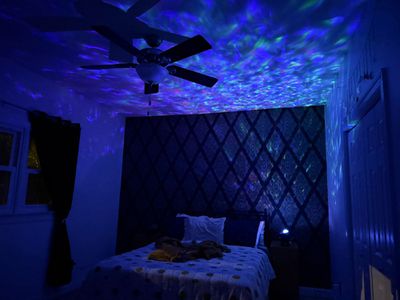
There are two variants of the Star Light Projector, the Nebula that mimics the night sky, and the Ocean Wave that has more of an oceanic vibe. The Ocean Wave Star Light Projector is one of Govee's more affordable projectors at $50 on sale, and it's a fun nightlight experience, especially for children.
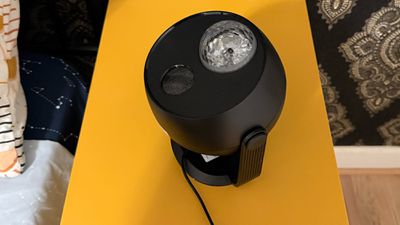
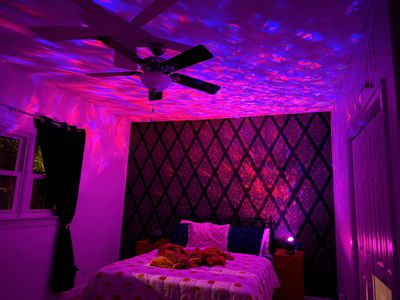
The projector is on a rotating base that can be adjusted as needed for the space that it's in, and it covers up to 540 square feet. It's more than big enough to bathe the entire ceiling of your average bedroom in soft, shifting light. It's about eight inches tall and six inches long, so it can tuck right on a bedside table or dresser to light the room.
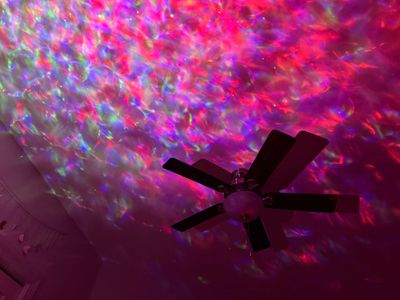
There is a textured lens that covers four RGBW lamp beads, and together, that setup allows for a water-like ripple pattern. I didn't think it necessarily looked quite like I was underwater, but some colors were more convincing than others.
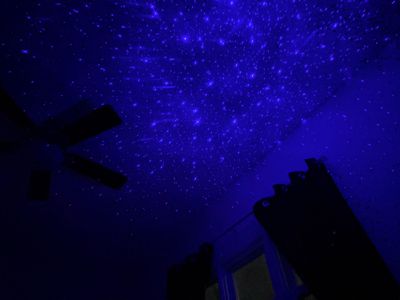
Along with the light under the lens, there's a laser module that projects pinpoints of light meant to be stars. The laser light looks like stars, and that was somewhat confusing with the water aesthetic. I ended up with mesmerizing light effects, but not a lighting experience that made me feel like I was under the sea or looking at the sky. It's a chaotic mix that doesn't quite work.
While the lighting effects produced by the projector feature multiple colors and patterns that can be adjusted in the app, the laser is a static green color and it can't be changed. If the laser light is on, it's green, and that didn't look great with some of the other colors. You need a fairly dark room for the projector to work as intended. It needs to be the only light that's on, and it needs to be dark outside.
There is an included speaker and you can turn on white noise options to add to the oceanic effect, but the speaker quality was just okay. I am someone that sleeps with white noise, and I would not pick the projector over another noise machine. For a child that doesn't know much of a difference, the sounds would likely be plenty soothing, and it might also work well for meditation. My cat was enthralled with it, so pets can enjoy the lighting effects too. If you don't like the white noise options, you can connect to it via Bluetooth and play music from an iPhone. There is a subtle noise from the projector, but I'm not sure you would hear it unless you were right next to it.
The laser can be turned off, and the light can be dimmed for sleep, plus there are options to set timers. This would make for a great nightlight/sound machine in a child's room, and all the different settings and light patterns are fun to play with. The app has quite a few presets to choose from, some of which have an accompanying sound and some of which don't, but you can also create your own. I liked the amount of control I had and all of the patterns available with this model, because surprisingly, the more expensive model is a bit more limited in scope because of its specialization.
This model does not come with a power adapter, so you'll need to supply your own, but it does come with a USB-C to USB-A cable. The USB-A side plugs into the power adapter, and I would have much preferred a USB-C to USB-C cable so I didn't have to hunt down a USB-A power adapter, which I have been ridding my house of.
Govee Galaxy Light Projector 2 Pro
The Galaxy Light Projector 2 Pro is Govee's higher-end projector option, and it's quite a bit different from the more affordable Star Projector variants. I don't have much experience with projectors, so this review ended up sending me down a rabbit hole.
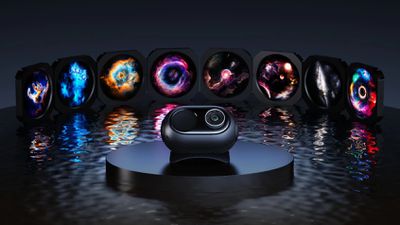
Why would someone pay $160+ for this projector when there are options with more customizability at a lower price? The answer is resolution and the ultimate feel of the lighting effect. The Projector 2 Pro doesn't use different colored lights and textured lenses, instead passing light through high-resolution film discs.
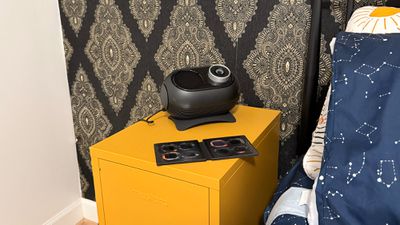
There are eight film discs to select from, and the image on the film is projected onto the ceiling or the wall. The discs have good variation in color and effect, but I was disappointed to learn that there are no additional discs I can buy. These are also proprietary, so you can't exactly buy discs somewhere else and pop them into the projector.
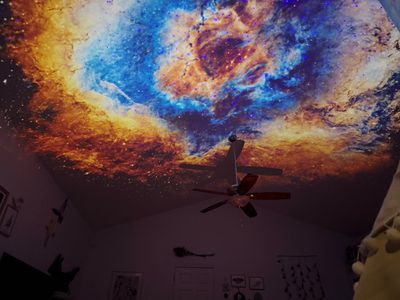
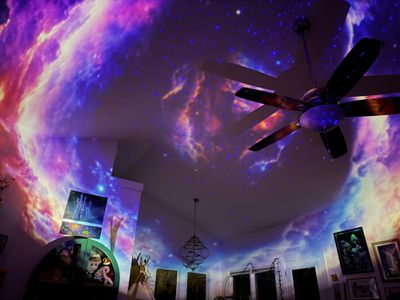
There's a 4-megapixel lens and a 230 lux light, and the combination produces vivid colors and a realistic effect that feels like you're immersed in space. Govee says that you don't need total darkness for the projector to work, but that's not really true. It looks a lot better when the room is completely dark.
You can leave a nightlight on or have a lamp on in the room, but it really fades the effect. Even a TV washes it out too much. You also need to make sure to adjust the focus after you get the light positioned where you want it to project, otherwise it will look blurry. If you don't have a dark enough room and don't adjust the focus, it's going to look washed out. You also need to ensure you have good placement in a room and the right angle. There is soft motor sound when the projector is turned on, and occasionally, I noticed some minor jumps in rotation. I am sound sensitive and the noise didn't bother me, but if it's right next to your head and you want total silence, it could be an irritation.
The Light Projector 2 Pro covers up to 300 square feet with a 90 degree projection, which is ideal for bedrooms. I found it to be a little too small for the living room, and it does look best when it can cover an entire ceiling. I have vaulted ceilings in most rooms. In rooms with higher vaulted ceilings, the projector didn't look the best, perhaps because the distance was just too far. Lower ceilings looked better, and on Amazon, Govee actually recommends using the star projector within a distance of 3.28 feet to 9.84 feet, ruling out taller ceilings.
The projected scenes rotate to provide movement, and a laser that provides moving stars adds to the effect. The laser is blue, which means the stars are always blue. Blue works well with most scenes, but with both of the light projectors I tested, I wanted to be able to change star color. Laser color is static, though, and there aren't multiple options, which is a major downside. The laser stars have two different movement patterns, including diffuse or gather, both of which created unique effects with each film disc. Star speed can be adjusted, and the stars can also be turned off entirely.
There are preset scene options to choose from, some of which are tied to white noise, but even with the more expensive Light Projector 2 Pro, I didn't like the white noise quality. The speaker is just okay and doesn't sound like it has any depth. I would not get this for the white noise function.
The projector has a separate, rubberized base, and the shape of the projector allows it to be positioned anywhere on the base, so it's easy to adjust the angle to get the light in the right spot. There's a 90-degree projection angle to work with. The device is nine inches long and six inches wide, so it's a little bigger than the more affordable models.
The Galaxy Light Projector 2 Pro does provide a realistic night sky effect that's immersive and pretty to look at, but you are limited to the eight different discs. Star patterns and scenes mix things up a bit, but it can get boring looking at the same pattern night after night. I think this projector looks great, but it needs more scene options and I hope Govee sells additional discs in the future.
There is nowhere on the projector to store discs, so it's easy to misplace them. Govee does give you a little book to store them in, but just one sleepy night of not putting a disc away has the potential to result in a lost one. I also can't seem to take the discs out of the projector or put them in without touching the film, which is frustrating.
Govee App
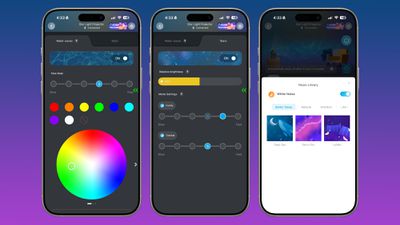
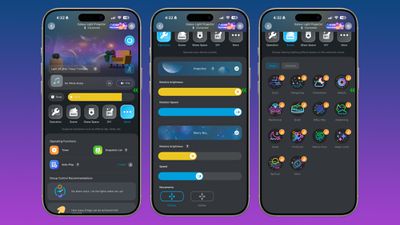
The projectors connect to Wi-Fi and can be controlled with the Govee app. The app has a main view where you can see each Govee product, and you can tap on one to get to the different options.
The Govee app is fine for the most part. It works and does what I expect, but it's also messy. There are ads for other products in several places, and controls that are offered without explanation. It's definitely an app that has the potential to be confusing.
For the Ocean Wave projector, you can control the speed of the light and to some extent, the color, but colors are dictated by the bulbs inside. They aren't multi-color LED bulbs, so you can't set it to any color that you want. Changing wave speed also doesn't make that much of a difference, so there is a limited amount of customization. You can turn off the wave effect or the stars and enable preset scenes, some of which have accompanying sounds.
The Galaxy Light Projector 2 Pro has fewer settings because there are no colors. You can change the speed of image rotation, change the speed of the stars, and turn those features on or off. You can also adjust the direction of the stars and activate scenes that have accompanying music. The preset scenes were a disappointment for the most part because almost all of them turn off the projection and rely just on a star pattern.
There are features in the app that seem unnecessary, like AI for describing scenes (mostly because there are so few actual options that make a visual difference), and a community feature that shows videos of scenes other people have created. There are some practical options for the two projectors, like controlling the timer, setting times for the projector to turn on, and grouping devices together for multi-device control.
HomeKit
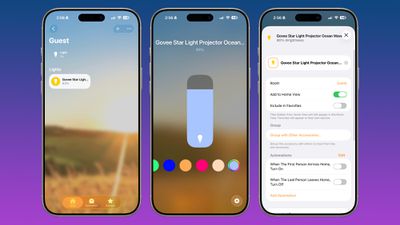
You can bind the Govee projectors to HomeKit using Matter, as long as you have a Matter hub. In the Apple ecosystem, HomePods and Apple TVs serve as hubs.
There's a limited amount that you can do with HomeKit, and it doesn't offer the full suite of customizations that are available in the Govee app. You can turn the light on or off and include it in scenes and automations along with other HomeKit products.
It supports changing the light color as with any HomeKit light, but this feature doesn't work in practice because the Home app offers color options that are not supported by the projector. You can also use Siri to turn the projector off and on, which can be useful, and you can change the brightness.
Bottom Line
Both projectors are fun nighttime accessories, but I can only recommend the Star Light Projector Ocean Wave. It doesn't have discs to fuss with, there are multiple color options to play with, and it's not too expensive.
The Galaxy Light Projector 2 Pro looks awesome, but there are too many caveats. The room has to be entirely dark, the ceiling height has to be right, the angle has to be right, and you have to adjust the focus just right. Even meeting those parameters, you get a limited number of scenes with no option to purchase additional discs. If it were priced closer the Ocean Wave and Nebula projectors, that might make it more worthwhile, but this doesn't feel like a $180 device.
I wouldn't recommend buying either of these projectors at full price, but there are often sales you can catch.
Note: Govee provided MacRumors with an Ocean Wave Light Projector and Galaxy Light Projector 2 Pro Projector for the purpose of this review. No other compensation was received.
Apple's Beats brand is teaming up with YouTuber and streamer IShowSpeed on a new Kung Fu-themed short film showcasing Powerbeats Pro 2 as "the most stable earbuds on earth."
Thanks to their flexible ear hooks, Powerbeats Pro 2 are popular with athletes and other active users who need the extra stability to ensure the earbuds stay in their ears.
The nearly five-minute short film features IShowSpeed traveling halfway around the world to train with a kung fu master, played by a longtime member of Jackie Chan's stunt crew, Paco Yick, to prove an internet troll wrong.
IShowSpeed is currently hosting a livestream premiere of the film, where he is giving away five "Master of Speed & Stability" kits that include an exclusive custom pair of Powerbeats Pro 2 and a movie poster.
Apple today released iOS 26.2, iPadOS 26.2, and macOS 26.2, all of which introduce new features, bug fixes, and security improvements. Apple says that the updates address over 20 vulnerabilities, including two bugs that are known to have been actively exploited.
There are a pair of WebKit vulnerabilities that could allow maliciously crafted web content to execute code or cause memory corruption. Apple says that the bugs might have been exploited in an attack against targeted individuals on versions of iOS before iOS 26.
Processing maliciously crafted web content may lead to arbitrary code execution. Apple is aware of a report that this issue may have been exploited in an extremely sophisticated attack against specific targeted individuals on versions of iOS before iOS 26.
Processing maliciously crafted web content may lead to memory corruption. Apple is aware of a report that this issue may have been exploited in an extremely sophisticated attack against specific targeted individuals on versions of iOS before iOS 26.
One of the WebKit bugs was fixed with improved memory management, while the other was addressed with improved validation.
There are several other vulnerabilities that were fixed too, across apps and services. An App Store bug could allow users to access sensitive payment tokens, processing a malicious image file could lead to memory corruption, photos in the Hidden Album could be viewed without authentication, and passwords could be unintentionally removed when remotely controlling a device with FaceTime.
Now that these vulnerabilities have been publicized by Apple, even those that were not exploited before might be taken advantage of now. Apple recommends all users update their devices to iOS 26.2, iPadOS 26.2, and macOS Tahoe 26.2 as soon as possible.
Macworld's Filipe Espósito today revealed a handful of features that Apple is allegedly planning for iOS 26.4, iOS 27, and even iOS 28.
The report said the features are referenced within the code for a leaked internal build of iOS 26 that is not meant to be seen by the public. However, it appears that Espósito and/or his sources managed to gain access to it, providing us with a sneak peek at some of the things that Apple's software engineers are working on.
As always, Apple's plans could change, so there is no guarantee that any or all of these features will end up being released to the general public.
Here is what Apple is planning for iOS 26.4, according to the report:
A redesigned Health app, with a new layout for categories and simplified metric logging. A previous rumor indicated there will also be an Apple Health+ subscription service with an AI-powered health and fitness assistant.
If you have credit card information stored in Apple's Passwords app, you will be able to AutoFill those details in third-party apps.
The ability to create folders in the Freeform app.
Apple is apparently working on a new "Sports Tier" for the Apple TV app, but the report did not offer any further details about this.
There are signs of "a new validation system that will check the integrity of the device before logging into Apple ID and iCloud."
New features for AirPods, including "Precise Outdoor Location" in the Find My app.
These features are allegedly planned for iOS 27:
Improvements to photo collections in the Photos app.
Improvements to the AirPods pairing process.
The report even mentioned a potential iOS 28 feature:
New metrics for Apple Watch sleep tracking.
Apple is also planning to expand the Health app to the Mac with macOS 28, the report said.
Apple today released iOS 26.2, the second major update to the iOS 26 operating system that came out in September, iOS 26.2 comes a little over a month after iOS 26.1 launched. iOS 26.2 is compatible with the iPhone 11 series and later, as well as the second-generation iPhone SE.
The new software can be downloaded on eligible iPhones over-the-air by going to Settings > General > Software Update.
iOS 26.2 adds an option to activate an alarm when a reminder is due, an option to change the opacity of the time on the Lock Screen, updated AirDrop functionality, and new features for the Podcasts app.
It also brings Live Translation for the AirPods to the EU, and adds support for alternative app stores and other voice assistants in Japan. Apple's release notes for the update are below.
Apple Music - Favorite Songs playlist appears in Top Picks on the home tab - Offline lyrics for downloaded songs so you can view them without an internet connection
Podcasts - Automatically generated chapters make it easier to navigate episodes - Links to mentioned podcasts let you see and follow other podcasts mentioned in the episode you’re listening to directly from the player and transcript
Games - Filters in the Games library let you find games by category, size, and more - In-game challenge score banners provide real-time updates when someone new has taken the lead - Improved support for connected controllers such as Backbone and Razer
This update also includes the following enhancements and bug fixes: - Additional Lock Screen time customization option lets you further adjust its appearance, giving the Liquid Glass material more or less opacity - Enhanced Safety Alerts can inform you about imminent threats such as floods, natural disasters, and other emergencies, with rich information like a map of affected areas and links to additional safety guidance (available in the U.S.) - Alarms for Reminders help you stay on top of urgent tasks, and provide snooze and Live Activity support if you’re not ready to check the reminder off - AirDrop codes offer an additional layer of verification when using AirDrop with unknown contacts by providing a code on the receiver’s device that the sender must enter to complete the transfer - Apple News Section links at the top of the Today feed offer easy navigation to popular topics like Sports, Politics, Business, and Food - Multipack accessory pairing in the Home app lets you use the same setup code to easily enroll multiple accessories when sold together - Flash for alerts in Accessibility Settings offers the additional option to have the device screen flash when you receive a notification - Tables in Freeform can hold text, images, documents, and drawings, with cells that intelligently resize to fit, bringing structure to the infinite canvas - Fixes an issue where pre-release albums in the Apple Music library were not immediately playable at their release time - Fixes an issue where a Privacy and Security setting may incorrectly be marked as managed by an enterprise organization.
Apple today released iPadOS 26.2, the second major update to the iPadOS 26 operating system released in September. iPadOS 26.2 comes a month after iPadOS 26.1.
The new software can be downloaded on eligible iPads over-the-air by going to Settings > General > Software Update.
iPadOS 26.2 continues with the multitasking improvements that were added with iPadOS 26.1. You can now drag and drop apps from the Dock, Spotlight Search, or the App Library to different multitasking views, including Slide Over.
Apps can be dragged to the far left or far right to enter Slide Over mode, or to the left or right to enter a tiled view. There's also an option to drag an app to the middle to open up a larger or smaller window, with visual indicators to make it simple. It's an easier way to manipulate apps than the prior controls accessible through the window buttons. Apple's release notes for the update are below.
Multitasking - Multitasking gestures to quickly tile windows or place an app in Slide Over by dragging app icons from the Dock
Apple Music - Favorite Songs playlist appears in Top Picks on the home tab - Offline lyrics for downloaded songs so you can view them without an internet connection
Podcasts - Automatically generated chapters make it easier to navigate episodes - Links to mentioned podcasts let you see and follow other podcasts mentioned in the episode you’re listening to directly from the player and transcript
Games - Filters in the Games library let you find games by category, size, and more - In-game challenge score banners provide real-time updates when someone new has taken the lead - Improved support for connected controllers such as Backbone and Razer
This update also includes the following enhancements and bug fixes: - Additional Lock Screen time customization option lets you further adjust its appearance, giving the Liquid Glass material more or less opacity - Alarms for Reminders help you stay on top of urgent tasks, and provide snooze and Live Activity support if you’re not ready to check the reminder off - AirDrop codes offer an additional layer of verification when using AirDrop with unknown contacts by providing a code on the receiver’s device that the sender must enter to complete the transfer - Apple News Section links in the sidebar of the News app offer easy navigation to popular topics like Sports, Politics, Business, and Food - Multipack accessory pairing in the Home app lets you use the same setup code to easily enroll multiple accessories when sold together - Flash for alerts in Accessibility Settings offers the additional option to have the device screen flash when you receive a notification - Tables in Freeform can hold text, images, documents, and drawings, with cells that intelligently resize to fit, bringing structure to the infinite canvas - Fixes an issue where pre-release albums in the Apple Music library were not immediately playable at their release time - Fixes an issue where a Privacy and Security setting may incorrectly be marked as managed by an enterprise organization.
Apple today released macOS Tahoe 26.2, the second major update to the macOS Tahoe operating system that came out in September. macOS Tahoe 26.2 comes five weeks after Apple released macOS Tahoe 26.1.
Mac users can download the macOS Tahoe update by using the Software Update section of System Settings.
macOS Tahoe 26.2 includes Edge Light, a feature that illuminates your face with soft light when you're on a video call in a room with poor lighting. The update also adds alarms for the Reminders app, new podcast features, updated AirDrop settings, and more. Apple's release notes are below.
Edge Light - Edge Light video effect uses the Mac display to illuminate your face like a virtual ring light when you're on a video call in low light - Customizable light width and temperature give you control over how you're lit - Mouse awareness ensures that the light recedes when you need to access content underneath - Option to have the light turn on automatically in low light situations on Mac computers introduced in 2024 and later
Podcasts - Automatically generated chapters make it easier to navigate more episodes - Links to mentioned podcasts let you see and follow other podcasts mentioned in the episode you're listening to directly from the player and transcript
Games - Filters in the Games library let you find games by category, size, and more - In-game challenge score banners provide real-time updates when someone new has taken the lead - Connected controller support
This update also includes the following enhancements and bug fixes: - AirDrop codes offer an additional layer of verification when using AirDrop with unknown contacts by providing a code on the receiver's device that the sender must enter to complete the transfer - Apple News Section links in the sidebar of the News app offer easy navigation to popular topics like Sports, Politics, Business, and Food - Tables in Freeform can hold text, images, documents, and drawings, with cells that intelligently resize to fit, bringing structure to the infinite canvas - Favorite Songs playlist appears in Top Picks in Apple Music - Fixes an issue where pre-release albums in the library were not immediately playable at their release time
For information on the security content of Apple software updates, please visit: support.apple.com/100100.
Apple today released tvOS 26.2, an update to the tvOS 26 operating system that came out in September. tvOS 26.2 is available on the Apple TV 4K and the Apple TV HD models, and it comes a month after Apple released tvOS 26.1.
tvOS 26.2 can be downloaded using the Settings app on the Apple TV. Open up Settings and go to System > Software Update to get the new software. Apple TV owners who have automatic software updates activated will be upgraded to tvOS 26.2 automatically.
The tvOS 26.2 update changes the way that profiles work on the Apple TV, adding an option to create a profile without an Apple Account. With no need for an Apple Account, profiles can be created for guests and children.
For profiles made for children, there is an age-restricted mode that limits the content that kids can access in the Apple TV app. The Apple TV app will only show content that is appropriate for the limits that have been established for the account, and rating options include TV-G, TV-PG, TV-14, and more.
Apple shares full release notes for tvOS in its tvOS support document when new versions are released, so check that out for additional details.
Apple today released watchOS 26.2, an update to the watchOS 26 operating system that came out in September. watchOS 26.1 comes a month after Apple released watchOS 26.1.
watchOS 26.2 can be downloaded for free on an iPhone running iOS 26.2 by opening up the Apple Watch app and going to General > Software Update, or initiating an update in the Settings app on the watch. To install the new software, the Apple Watch needs to have at least 50 percent battery and it needs to be placed on a charger.
watchOS 26.2 changes the labeling for Sleep Score point ranges to better match how people might be feeling after a night of rest. The update adjusts the ranges for Very Low, Low, OK, High, and Very High sleep score results. Very High is also a new classification that replaces Excellent.
Apple's full release notes for watchOS 26.2 are below.
This update includes improvements and bug fixes, including: - Refinements to sleep score classifications and notification controls - An issue where the Music app fails to advance to the next song - Enhanced Safety Alerts can inform you about imminent threats such as floods, natural disasters, and other emergencies, with rich information like a map of affected areas and links to additional safety guidance (available in the US)
For information on the security content of Apple software updates, please visit this website: https://support.apple.com/100100
Apple today released visionOS 26.2, the second update to the visionOS 26 operating system that came out in September. visionOS 26.2 comes a month after the release of visionOS 26.1.
visionOS 26.2 can be downloaded on all Vision Pro headsets by navigating to the Settings app, selecting the General section, and choosing the Software Update option. To install an update, the Vision Pro headset needs to be removed, and there is a software progress bar available on the front EyeSight display.
visionOS 26.2 expands the Travel Mode feature to cars and busses, plus it adds new features for spatial accessories like the Logitech Muse. Apple's release notes for the update are below.
This update expands Travel Mode to cars and busses, adds support for hand-drawn content with spatial accessories, and includes other features, bug fixes, and security updates for your Apple Vision Pro. - Travel Mode lets passengers use Apple Vision Pro on cars and busses in addition to airplanes and trains - Support for hand-drawn content with spatial accessories like Logitech Muse in Notes, Freeform, and any PencilKit-enabled app - Tables in Freeform can hold text, images, documents, and drawings, with cells that intelligently resize to fit, bringing structure to the content of your board
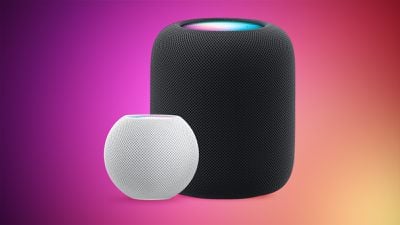
Alongside iOS 26.2, iPadOS 26.2, and macOS Tahoe 26.2, Apple has released new HomePod 26.2 software for the HomePod and the HomePod mini. The update comes a month after Apple released HomePod Software 26.1.
According to Apple's release notes, HomePod Software 26.2 includes performance and stability improvements.
HomePod software is installed automatically on the HomePod unless the feature is disabled, but the HomePod can also be manually updated in the Home app on iPhone, iPad, or Mac by tapping on the More button, choosing Home Settings, and then selecting the Software Update option.
Well-known game developer Halfbrick this week launched Bluey's Quest for the Gold Pen, an iPhone, iPad, and Mac adventure game that's currently exclusive to Apple's platforms. The game was made for children and adults who are fans of the wildly popular Bluey animated series.
Like the show, the game features Bluey, an anthropomorphized six-year-old blue heeler puppy, along with her sister Bingo and her parents. Bluey's Quest was inspired by the Dragon and Escape episodes from the TV show, where Bluey and Bingo's drawings come to life. The game uses a charming hand-sketched art style that ties into the Bluey universe while still creating a unique gaming experience.
Bluey's Quest for the Gold Pen is a game designed for children, and Halfbrick kept that in mind when developing it. The game has no ads and no in-app purchases to trick children or their parents into spending more money. It's a free download with a demo to play before purchase, and then a $14.99 in-app purchase to unlock the full game. $14.99 is on the more expensive side for a game, but it is refreshing to see a thoughtfully designed experience for children that's not just a digital loot box cash grab.
Bluey creator Joe Brumm wrote an original story for the game, and Halfbrick made it feel like the player has been transported into an episode of Bluey. In the game, Bluey and her family are once again transported into a world of drawings, where they team up to hunt down the Gold Pen. Gameplay consists of simple puzzles, fun challenges, item collecting, and animated cutscenes, with a touching, humorous Bluey story unfolding as players progress through nine different worlds.
There are simple controls, and children can glide, fly, and skate through levels while interacting with fun characters and uncovering treasure. As in the show, there are a range of Australian landscapes, from mountains and beaches to forests. The original TV show actors reprise their roles in the game, so it will feel just like an episode of Bluey. Younger children can play alongside parents, while older children will be able to explore the game on their own. Bluey's Quest for the Gold Pen offers hours of gameplay, and children will likely want to experience the adventure again and again.
Bluey's Quest for the Gold Pen is available from the App Store for free, and unlocking the full game requires a one-time $14.99 fee. It will eventually come to consoles and other platforms, but for now, it is exclusive to Apple devices. [Direct Link]
Epic Games CEO Tim Sweeney has said that he will never agree to share revenue with Apple for external purchases linked from iOS apps, even after a U.S. appeals court ruled that Apple is entitled to charge a reasonable fee for such transactions.
Speaking to The Verge following the U.S. Court of Appeals decision that partially modified the injunction in the Epic Games v. Apple case, Sweeney outlined his position on what Apple should and should not be allowed to charge developers as the dispute returns to the district court for further proceedings. The appeals court ruled that Apple must be allowed to collect some form of compensation for purchases made through external links in iOS apps, reversing a lower court order that had permanently barred Apple from charging any commission at all.
Sweeney acknowledged that Apple incurs operational costs in reviewing apps that include external payment links and said Epic would accept flat, submission-based fees tied directly to that work. However, he rejected outright the idea that Apple should receive any percentage-based commission on revenue generated outside the App Store.
Sweeney characterized the appeals court ruling as a decisive rejection of Apple's longstanding approach to App Store fees. He said the decision "completely shuts down, I think, for all time, Apple's theory that they should be able to charge arbitrary junk fees for access." He went on to suggest that the U.S. decision could influence regulators abroad, arguing that other countries would be unlikely to permit Apple to charge fees that a U.S. court had found to be unlawful.
However, the appeals court did not block Apple from charging commissions on external purchases. Instead, it said the district court went too far by permanently banning all commissions, calling that approach more like a punishment than a corrective measure. Although the court agreed that Apple deliberately violated the original injunction by making external links hard to use, it ruled that Apple must still be allowed to cover its costs and receive some payment for the use of its intellectual property.
As a result of the ruling, the case has been sent back to the Northern District of California to determine what constitutes an appropriate fee structure. The appeals court said that Apple may not charge any commission on purchases made via external links in iOS apps until the district court approves a rate.





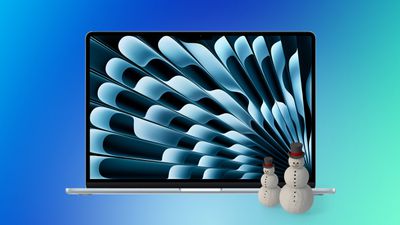




 Note: MacRumors is an affiliate partner with Satechi. When you click a link and make a purchase, we may receive a small payment, which helps us keep the site running.