Elevation Lab made a name for itself with the ultra popular Elevation Dock, which was introduced in 2012 through a Kickstarter project that brought in over a million dollars.
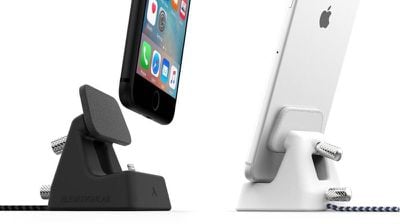
Today, Elevation Lab is unveiling its newest dock, the ElevationDock 4, an amalgamation of everything the company has learned about docks over the course of the last five years.
ElevationDock 4 features a compact design that's meant to take up minimal space on a desk. Adjustment knobs allow it to fit an iPhone and a case that's up to 3.5mm thick, and it's designed to work one-handed, a feature few other docks can offer.
It has an 18° back angle with a +/-4° adjustment so the tilt can be changed for an ideal setup on a desk or nightstand, and the Lightning connector is designed to flex only under high torque to keep the iPhone stable and upright.
The dock is Made for iPhone certified and comes with a built-in Lightning cable. Construction wise, it features stainless steel adjustment knobs and a medical grade silicone overmolded body. It's available in Matte White with a 5-ft braided blue cord or Matte Black with a 5-ft dark braided cord.
Because of its study construction and stable base, the ElevationDock 4 is compatible with both the iPhone and the iPad. It will work with iPads as large as the 10.5-inch iPad Pro.
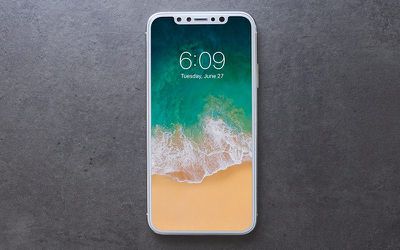
Apple's upcoming OLED "iPhone 8" with an edge-to-edge display and facial recognition faced multiple production issues early in the manufacturing process, which is likely to result in "extended supply shortfalls and shipping delays," reports The Wall Street Journal.
The production problems have led to a setback of "about a month" in Apple's manufacturing timetable, but Apple supplier Foxconn is ramping up development and working to hire new employees.
Today's report is nothing we haven't heard before. KGI Securities analyst Ming-Chi Kuo has said for months that he expects the iPhone 8 will be hard to come by until early 2018, and we've heard several rumors pointing towards problems with the display lamination process and other high-tech components like the 3D sensor embedded at the front of the device. The Wall Street Journal points to OLED assembly as a major reason for the delays.
Apple and its suppliers also ran into trouble manufacturing the OLED displays. The display modules are being produced in Vietnam by an affiliate of Samsung Electronics. Unlike the OLED display module in Samsung's own smartphones, in which the display and touch panel are integrated, iPhone's display module has the touch panel outside of the display, according to a person familiar with the technology.
The iPhone manufacturing process requires more steps and more layers of adhesive and protective film than are involved in Samsung's manufacturing process, the person familiar with the process said, creating a greater risk of manufacturing error.
Apple also wanted to add Touch ID to the display of the new device, but it "proved difficult," leading Apple to abandon the fingerprint sensor and lose valuable time as deadlines loomed.
While we hear rumors of supply shortages each and every year, it's worth noting that this year's rumors are both more concrete and more dire. If Kuo's predictions are correct, many of us hoping to get our hands on a new device could be waiting for weeks or months as Apple works to ramp up production.
Extended shortages may also impact Apple's holiday sales period, which is often the company's strongest, but because there's also a new iPhone 7s and 7s Plus on the horizon, it's difficult to determine the effect extended iPhone 8 shortages might have on the company's Q4 bottom line.
Customers hoping to get an iPhone 8 as soon as possible will want to pre-order the device right when it goes on sale. It's not entirely clear yet if the iPhone 8 will be available shortly after being introduced on September 12 or if the supply issues will lead Apple to delay shipments beyond September.
In early August, Disney revealed that it plans to pull all of its movies from Netflix and launch its own streaming service in 2019. Users were understandably curious as to which Disney-owned brands that might include, particularly once Disney CEO Bob Iger referenced the company's interest in potentially branching off Marvel and Star Wars into their own, separate streaming services.
Today, Iger cleared up any confusion by confirming Marvel and Star Wars films will be available on the upcoming Disney-branded streaming app (via Deadline). Current films in these franchises on Netflix -- like Doctor Strange and Rogue One: A Star Wars Story -- will be removed from Netflix and arrive on the Disney platform when it launches in 2019. It's still unclear at what point between now and 2019 Disney will begin removing these films from Netflix.
Last month Reuters reported that Netflix was in "active discussions" with Disney to keep Marvel and Star Wars films on the popular streaming platform, but it appears those talks have now fallen through.
Films from Marvel and Star Wars that now go to Netflix will move to Disney’s planned ad-free direct-to-consumer streaming service, CEO Bob Iger said today at an investor gathering.
“We’re going to launch big, and we’re going to launch hot” by late 2019, he told the Bank of America Merrill Lynch 2017 Media, Communications & Entertainment Conference.
The outcome for Marvel and Star Wars TV shows was not specified, but Iger said that the Disney streaming app "will have the entire output of the studio — animation, live action and Disney including Pixar, Star Wars and all of the Marvel films,” potentially including television content. Right now, users can watch Marvel and Star Wars TV shows on Netflix including Marvel's Agents of S.H.I.E.L.D. and Star Wars: The Clone Wars.
Last month Iger confirmed that Disney "has no plans" to remove any of the Netflix-owned and created Marvel series from the service, including Daredevil, Jessica Jones, Luke Cage, Iron Fist, The Defenders, and The Punisher. These original Netflix shows were formed under a separate deal from the one created in 2012, meaning they'll continue to be Netflix original shows for the forseeable future. Iger said Disney is even potentially willing to license even more Marvel characters for future shows.
On the Disney branded side of things, the app will include four or five "mostly live action" original movies, as well as four or five original Disney TV shows. Besides the new content, the service will of course also house the company's back catalogue, spanning nearly 500 films, 7,000 episodes of television, and "thousands" of short films. Neither Disney nor Iger has mentioned the subscription cost for the service yet, but the CEO said a price will be coming "in the months ahead."
ARKit demos have been popular over the summer, showcasing the features that iOS 11 users will gain on their iPhones once the new software update rolls out worldwide later in September. Today we've rounded up some of the latest tech demos of the software development kit, which you can check out below.
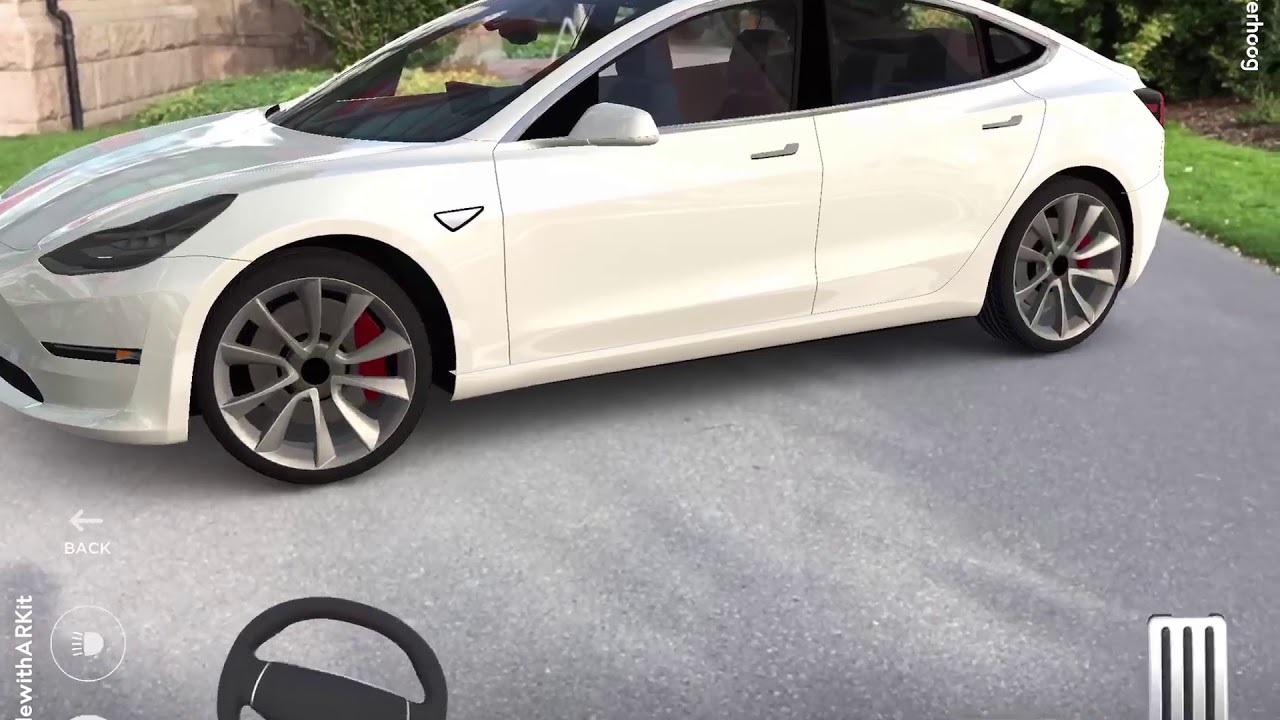
In the first ARKit demo, augmented reality and user experience designer Jelmer Verhoog has created an app that lets users design and customize a Tesla Model 3 car. This extends to the wheels, paint, and interior of the vehicle, and even includes driving controls. While Verhoog's demo is focused on the Model 3, it's easy to imagine other carmakers using Apple's ARKit to help customers when they're on the hunt for a new vehicle.
The next demo, by Zach Lieberman, shows off an interesting use of augmented reality and ARKit -- it allows users to record audio through the app, which is then visually represented by waveforms in an AR space. To play back the audio, users can physically move through it, with the ability to listen to the recorded audio both forwards and backwards. Check out the video below with audio to see Lieberman's demo in action.
An app called "Neon" was showcased recently, and it allows friends to find one another in the midst of overcrowded festivals. The app's Twitter page says it'll be out "this fall," and it appears to use its own social network to add close friends, find them through their own iPhones, and present their location to users as augmented reality chevrons that are easy to track down.
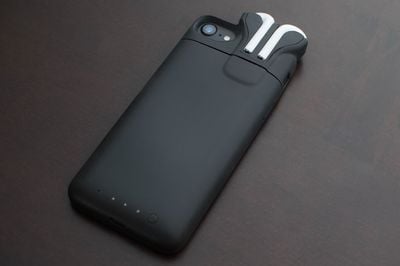
After Pebble was acquired by Fitbit late last year, Pebble said that its hardware devices would continue to function as normal for at least another year, with any future support for its services heading into 2018 unclear. Today, Pebble founder Eric Migicovsky has revealed his next project, and it's a Kickstarter for a case aimed at the iPhone 7 and iPhone 7 Plus that also charges AirPods, called "PodCase" (via Engadget).
The Kickstarter page describes the case as a "slim case" for carrying and charging both the iPhone and AirPods, thanks to a 2500 mAh battery. That'll provide up to one full charge for the iPhone 7 (with a 1,960 mAh battery), although not quite enough for a full charge of the iPhone 7 Plus (with a 2,900 mAh battery). That's also equivalent to "up to 40 AirPod charges," according to the PodCase's crowdfunding page.
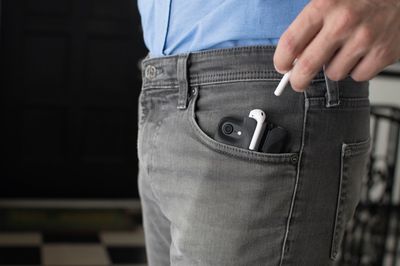
Keeping track of your AirPod charging case is a chore. It’s one more gadget to misplace, one more item to remember when you run out the door, and one more lump of plastic in your pocket. Drop it into your bag or purse and you might as well call search and rescue! Storing your AirPods with your phone seemed only natural to us.
Charging an extra device every night is a pain. No one likes a mess of cables on their night stand, and remembering to charge your AirPods during the day isn't a great solution either. You plug your phone in every night anyway--why not charge your AirPods and your iPhone together? That's exactly what PodCase does.
The case itself is charged through USB-C, so those with the newest MacBook models will be able to fuel up PodCase through their existing chargers. A design for the iPhone 8 is said to be coming soon, but the company is waiting for the September 12 Apple event to confirm the accessory's design.
PodCase will retail for $99, but early bird Kickstarter backers will be able to buy the accessory for $79. The PodCase team also includes Avegant co-founder Allan Evans and Pebble industrial designer Steve Johns. Check out the PodCase Kickstarter page here for more information on the accessory, including a video introduction by Migicovsky.
The Kickstarter's goal is $300,015 in 30 days, and the PodCase's shipping date is estimated for February 2018.
Streaming companies Spotify and Hulu today announced a new partnership that will allow eligible students to sign up for Spotify Premium for Students at its normal $4.99/month price tag, and gain access to Hulu's Limited Commercials plan at no extra charge. In Hulu's press release, the company said that the offer streamlines two popular services commonly used by busy students into a single subscription plan.
The bundle is available to all qualifying new and existing Spotify student subscribers, immediately offering access to both Spotify Premium's music streaming service and Hulu's basic Limited Commercial, TV-streaming package. Users will also continue to use Spotify and Hulu through each brands' respective apps.
“In bringing Spotify and Hulu together, we’re now able to offer students – both the millions already on Spotify Premium, and those who are new to Spotify – access to the world’s best music, TV and movie content in the simplest possible way,” said Alex Norstrom, Chief Premium Business Officer at Spotify. “We’re very excited to be partnering with Hulu – a like-minded company which is as focused as we are on delivering the very best in high quality streaming content.”
“We are proud to announce Spotify as our newest strategic partner – they’re an iconic brand in music streaming and a proven leader in reaching and engaging young consumers,” said Tim Connolly, SVP, Head of Distribution and Partnerships at Hulu. “By bundling our enormous catalogues of content together in a single, highly compelling offer, we’re making it easier for people to enjoy all of the TV and music they love, whenever and wherever they want.”
According to Hulu, "this is the first step" that each company is taking to bundle their services together, and in the future similar bundles will be targeted "at the broader market" beyond college students. Find out more information on user eligibility for Spotify's student membership right here.
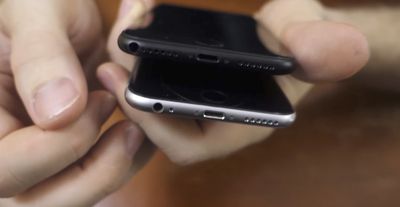
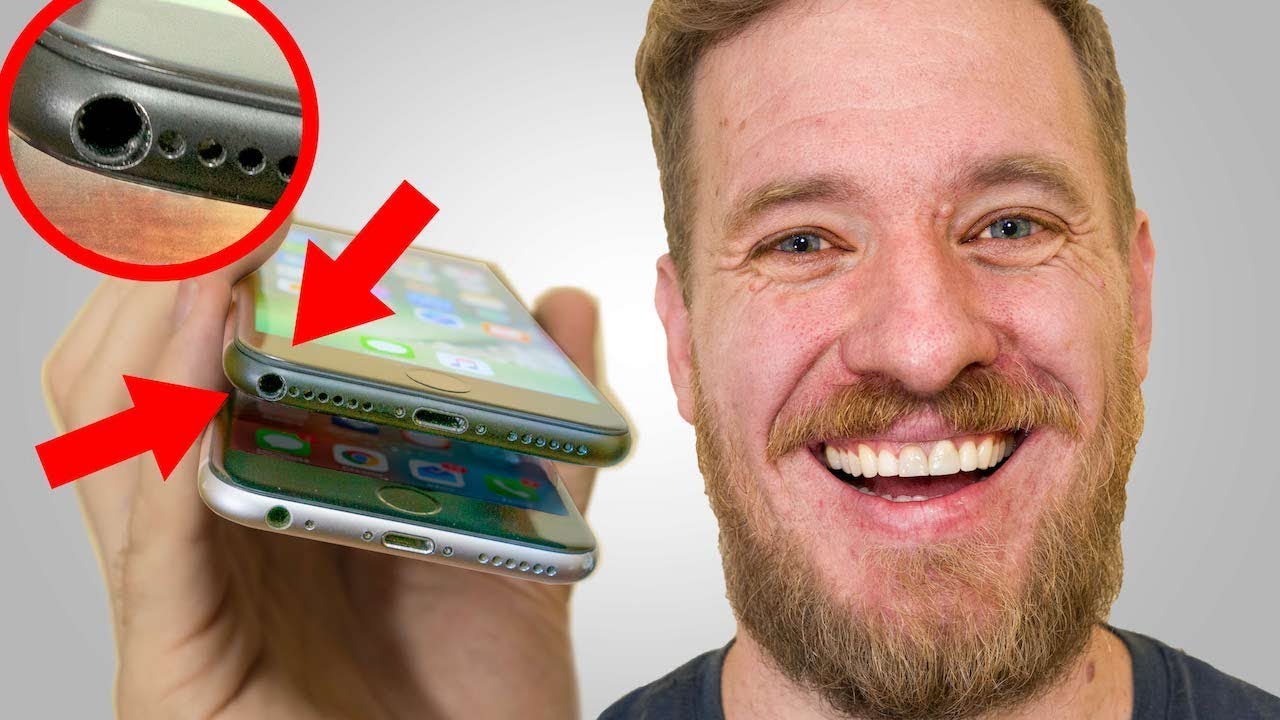
Former software engineer Scotty Allen has posted his second video to YouTube this week, in which he decides to modify an iPhone 7 in order to add a functional 3.5mm headphone jack into the smartphone. On the Strange Parts website, Allen explained that he spent four months on the project, working in Shenzhen, China assembling the tools, going through 7 custom circuit boards designs, and 3 disassembled iPhones to finally arrive with a working unit.
Allen said that the hardest part of creating an iPhone 7 with a headphone jack centered on the electrical design and fitting the new parts inside of the smartphone. Upon the release of the iPhone 7, Apple said that the removal of the 3.5mm headphone jack was needed to make room for the internals of the new camera system -- as well as increasing water resistance -- but Allen found that "there was inexplicably a lot of extra room" near the lower left hand corner of the iPhone 7, where he added the component.
The modded iPhone 7 (above) compared to an iPhone 6s (below)
While Allen's feat is notable due to many iPhone users' ongoing complaints about losing the headphone jack on the newer iPhones, it isn't a practical solution for everyday users. Allen pointed out that he went through designing numerous circuit boards that were "more complex" than anything he's ever done, as well as spending money on "lots, and lots, and lots" of spare parts and advanced disassembly tools.
I’m pretty proud of the final implementation. I took apart an Apple lightning to headphone adapter, put that inside the phone, and hooked it up by man in the middling the lightning jack with a flexible PCB. The PCB has a switching chip that switches between connecting the headphone adapter to the phone by default, and then disconnecting it and connecting the lightning jack when something is plugged into it. I have a couple other timer chips that briefly disconnect everything from the phone when something is connected/disconnected to improve the reliability of the phone detecting when something is plugged/unplugged (otherwise it sometimes gets confused).
The full 30-minute video goes into detail of Allen's project, and he reveals the successful final product at the 30:00 minute mark. One downside is that the modded iPhone 7 can't listen to music and charge simultaneously, which Allen admitted would require a "pretty serious engineering effort."
Earlier in April, Allen built his own functional iPhone 6s entirely by finding spare parts in Huaqiangbei, China. His final homemade iPhone 6s was a like-new 16GB device with full functionality, including a working Touch ID Home button.
Allen ended his new video telling Apple that he "really wants to buy an iPhone with a headphone jack from you," hoping that Apple will return the 3.5mm headphone jack into an upcoming iPhone model sometime in the future. Apple is holding an iPhone reveal event in Cupertino next week on September 12, and all three new smartphones -- the iPhone 8, iPhone 7s, and iPhone 7s Plus -- are not expected to have a headphone jack, although Apple might continue to include a Lightning to headphone jack adapter in the box.
For more information about Allen's project, check out the Strange Parts website here.
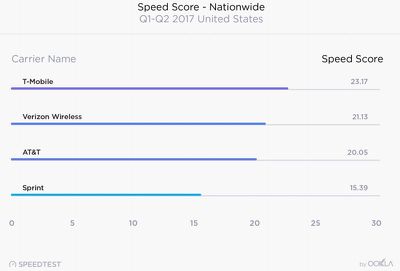
T-Mobile was the carrier with the fastest mobile network in the United States during the first half of 2017, according to a new U.S. Market Report for Mobile Broadband shared this morning by Ookla.
The carrier scored a 23.17 using Ookla's new "Speed Score" metric that combines low-end, median, and top-end performance for both upload and download speeds. Ookla says this is a comprehensive metric combining all factors that "matter to a good network experience" into a single score.
Coming in after T-Mobile was Verizon, with a Speed Score of 21.13, while AT&T came in third with a score of 20.05 and Sprint brought up the rear with a score of 15.39.
According to Ookla, T-Mobile's "tightly-spaced cell site grid" and smaller subscriber base gave it an edge over Verizon and AT&T, both of whom are dealing with higher traffic loads since their unlimited plans were introduced last year.
While Verizon has managed to deliver "consistent and reliable performance" across its network despite the unlimited plans, the rollout of AT&T's unlimited plans resulted in a "notable drop in performance."
Sprint, unsurprisingly, had the slowest mobile network with a Speed Score of 15.39, despite improvements made over the course of the last year. From June of 2016 to June of 2017, Sprint LTE speeds improved by 23.7 percent, but the carrier still can't match the big three.
T-Mobile comes out on top for overall speeds and acceptable speeds at a national level and provides the fastest service in 40% of the largest cities in the U.S. Verizon Wireless has the fastest service in many of the cities we looked at and comes in first on acceptable speeds in the top 100 CMAs, but we suspect their use of depriortization on unlimited could be bringing down their overall performance.
AT&T falls near the bottom in consistency of acceptable speeds and also saw a spoke in low end speeds in Q2 2017. The slowest carrier, Sprint, struggles with consistently providing acceptable speeds but saw big gains in the first half of the year.
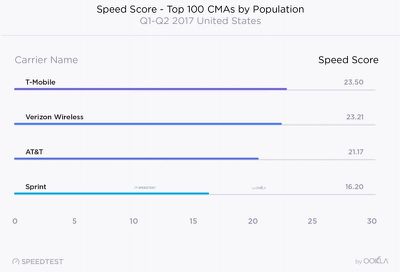
While the above chart information covers the United States as a whole, Ookla also compared mobile performance data in the 100 most populated Cellular Market Areas within the country. The rankings were the same, but T-Mobile and Verizon Wireless were nearly neck and neck. Across the board, users in populated cellular markets see higher speeds.
Mobile performance by carrier varies greatly from area to area, so while T-Mobile may have the best overall network speeds, AT&T or Verizon could have a significant edge depending on where a user is located. All four carriers are aggressively pursuing improved LTE speeds and network expansion through spectrum purchases, refarming legacy spectrum (like ending 3G networks), network densification, relay solutions, and other techniques.
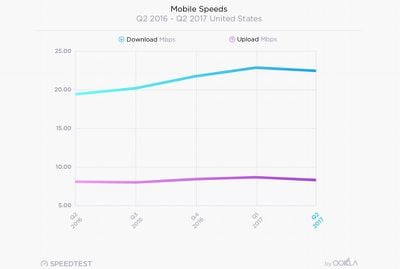
Across all carriers in the United States, there was a 19.2 percent increase in average mobile download speeds between the first half of 2016 and the first half of 2017, with an average speed of 22.69 Mb/s.
Average mobile upload speeds didn't see quite as much improvement, coming in at 8.51 Mb/s for a four percent improvement year over year. When it comes to average mobile download speeds, the United States is ranked 44th in the world. That rank drops down to 65th for average mobile upload speed. In rural areas, performance can be significantly worse, with speeds that are 20.9 percent slower than the nation as a whole. Verizon (51.6%) and AT&T (27.3%) have far more coverage in rural areas than T-Mobile (11.5%) and Sprint (9.6%).
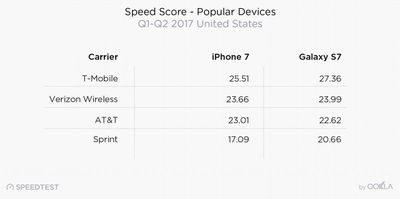
In addition to looking at network performance by carrier, Ookla also shared some data on LTE speeds across carriers on two popular devices: the iPhone 7 and the Galaxy S7. On T-Mobile and Sprint, broadband speeds were on average slightly faster for the Galaxy S7, with little difference on Verizon and AT&T networks.
Both the iPhone 7 and the S7 see higher mobile network speeds than other devices because they aggregate three component carriers to improve peak and average speeds. On T-Mobile, Samsung has an edge because the Galaxy S7 enables features like higher order modulation and 4-Layer MIMO.
Ookla's report is based on data gathered from its popular Speedtest Intelligence benchmark during the first half of 2017. More than 3 million unique devices performed more than 14 million user-initiated cellular network tests, giving the company a lot of data to work with to figure out trends during the year. For the S7 and iPhone 7 comparison tests, data from 250,278 iPhones was collected and compared to data from 134,742 Galaxy devices.
Additional test results covering minimum acceptable experience, the impact of unlimited data, fastest carriers by city, and more can be read in the full report.
Google this morning quietly updated its Backup and Sync client app with APFS support for Macs running the latest macOS High Sierra beta.
The change, first spotted by Piunikaweb, means users of Google Drive and Google Photos can now take advantage of the new Apple File System (APFS), which was introduced in High Sierra. APFS replaces HFS+ and unifies the file system across macOS, iOS, tvOS, and watchOS, meaning it's optimized for devices that use flash and solid-state storage.
Google's new Backup and Sync client app was broken by the OS change, and some High Sierra users resorted to moving their Google Drive to an external disk formatted to HFS+ to allow their files to sync again.
However, that step should no longer be necessary with Backup and Sync version 3.36. Users can take advantage of the new APFS support by either downloading the Google app anew or waiting for their client to auto-update sometime in the next week.
Google Backup and Sync for Google Photos and Google Drive is a free download for Mac.
Instagram is currently testing a new feature that allows users to share new Instagram Stories directly to their Facebook account. The feature, first reported by Mashable, appears to be Facebook's latest attempt to increase the visibility of Stories in its main app, essentially by getting users of its more visual-oriented Instagram network to double-post stories as Facebook Stories.
As part of the test, which is likely only a partial rollout for now, Instagram users see a new option to share their newly captured photos and videos as a Facebook Story as well as an Instagram Story, according to screenshots posted to Twitter.
The experiment appears to suggest that Facebook Stories, which the company launched in April, have failed to be a hit with the social media network's users. Like Snapchat and Instagram Stories before them, Facebook Stories let users post a picture or video onto their feed, which disappears 24 hours later.
Facing poor adoption of a feature that appears at the top of the news feed, Facebook initially tweaked the UI to look less bereft by showing ghost-like, grayed-out profile pictures of friends, regardless of whether they've ever posted a Facebook Story. But it looks like that hasn't had much effect either.
By contrast, Instagram Stories enjoy high engagement and are reportedly used by 250 million people daily. In fact, Instagram's success has allowed it to remain largely free of encroachment from its parent company until now, so Facebook's attempt to siphon off some of that success to its core app implies this could be a last-ditch attempt to save Facebook Stories before the feature's removed for good.
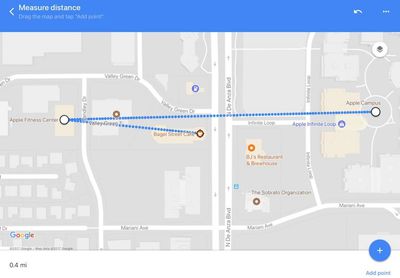
Google updated the Google Maps app for iOS on Wednesday and brought a useful measurement feature to iPhone and iPad that has been available on the Maps web interface for some time.
Maps apps are usually the first port of call for finding out how far away somewhere is and how long it will take to get there via car, public transport, or walking, but these directions rarely reveal the actual distance between points and places on the map "as the crow flies".
With Google's new "measure distance" feature on iOS, however, it's possible to calculate the actual geographical distance between two or more points on the map. For example, it's now possible to measure the mileage in a straight line between two cities.
To measure a distance between two or more points in Google Maps, touch and hold anywhere on the map to make a red pin appear, and tap the name of the place at the bottom of the screen.
Now scroll down and choose "Measure distance", and move the map so that the black circle (or crosshairs) is on the next point you want to add. Then simply tap the blue "Add point" button.
You can continue to add as many points as you want, and the cumulative distance in miles or kilometers will update accordingly in the bottom left. To remove the last point you added, tap the Undo arrow in the top right. And to clear all the points, tap the three dots at the top right and select Clear.
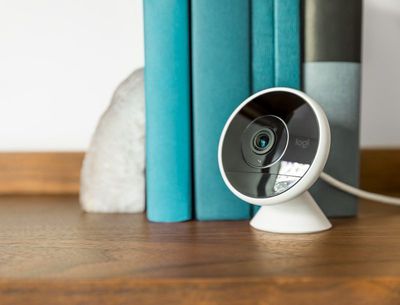
Logitech's recently released Circle 2 Wired home security camera is today gaining support for HomeKit, which will allow the device to interface with other HomeKit apps, send notifications, work with Siri voice commands, and be controlled through the dedicated Home app on iOS devices.
"HomeKit truly complements the simplicity of setting up and using Circle 2," said Vincent Borel, director of new ventures at Logitech. "We're focused on building experiences that let you easily and securely control your Circle 2 camera, while expanding its capabilities. Whether you're checking on the kids from another room with your iPad or looking for extra peace of mind while you're away, HomeKit makes Circle 2 work even smarter for you and your family."
The new Circle 2 Wired camera was introduced in June and began shipping out to customers in July, but Logitech had not yet implemented HomeKit support. The camera is designed to let you keep an eye on what's going on in your house while you're not there with features like high quality 180-degree video, cloud uploads, night vision, an adjustable ball joint, and various mounting solutions.
With HomeKit, the Circle 2's motion detection features can be used in scenes to do things like turn on HomeKit-connected lights in the house, and the camera stream itself can be viewed directly in the Home app. With an Apple TV or iPad set up as a Home hub, HomeKit connectivity is also available when you're away from home.
Logitech also offers a wire-free version of the Circle 2, but that product is not compatible with HomeKit because HomeKit requires always-on connectivity to work with camera accessories. HomeKit works with the Circle 2 Wired camera by itself and when the camera is attached to either the Plug Mount or Window Mount.
HomeKit connectivity is available starting today. Existing Circle 2 users will need to follow the instructions on the Logitech website to enable HomeKit support.
The Logitech Circle 2 is available from the Logitech website for $179.99. It will also be coming to Apple Stores and the Apple online store in October.
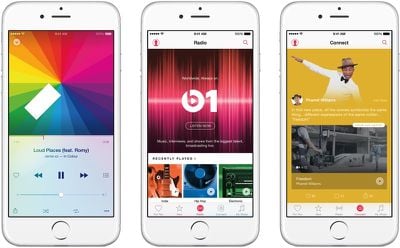
As Apple's original Apple Music deals with record labels begin expiring, Apple has been pursuing lower streaming rates as it negotiates new deals. Apple recently reached a deal with Warner Music Group, reports Bloomberg, and the Cupertino company was indeed able to secure a lower rate.
Warner Music Group will provide Apple with a catalog that includes Ed Sheeran, the Red Hot Chili Peppers, Bruno Mars, and more, for iTunes, the online store, and Apple Music. Apple will be paying Warner Music Group a smaller percentage of sales from Apple Music subscribers than it did in its original deal. Apple is also close to a deal with Sony Music Entertainment, but is still negotiating with Universal Music Group.
Large technology companies and music rights holders are establishing a framework this year for how to share proceeds from on-demand streaming, now the dominant source of sales for the record business in the U.S. Music rights holders are willing to accept a slightly smaller share of the sales from on-demand services, provided those services continue to sign up paying subscribers at a high rate.
Apple began aiming for a lower rate after Spotify was able to secure a rate reduction. Since 2015, Apple has been paying labels 58 percent of revenue from Apple Music subscribers, while Spotify was paying 52 percent. Apple is now said to be considering providing labels with a 55 percent cut, with that number decreasing should Apple meet certain subscriber number targets.
Since its debut in June of 2015, Apple Music has seen steady growth, undoubtedly giving the company an upper hand when negotiating new deals with labels. As of June 2017, Apple Music had 27 million paying subscribers.
For the past five years, Apple's September iPhone-centric events have followed the same general formula. An event during the first week or two of the month, pre-orders shortly after, and then an official launch date approximately 10 days later. Apple's September schedule for 2012 to 2016 is below:
If Apple plans to follow this same formula -- and it looks like that's what's happening -- pre-orders for the new "iPhone 8" and its companion devices the iPhone 7s and the iPhone 7s Plus will take place on Friday, September 15 at 12:00 a.m. Pacific Time.
Following pre-orders, the new devices will most likely see an official launch on Friday, September 22, with pre-order shipments going out to customers and in-store stock available.
Friday, September 15 is a highly logical guess as to when we're going to see pre-orders, and unsurprisingly, that's the date being cited today by German site Macerkopf. According to the site, German carriers are preparing for a September 15 pre-order date and a September 22 launch date.
While Apple tends to follow a specific September formula, there have been deviations. In 2013, for example, Apple did not accept pre-orders for the iPhone 5s due to supply constraints, and in 2015, pre-orders took place early on a Saturday morning. Still, September 15 and September 22 are the most likely dates for pre-orders and launch, respectively.
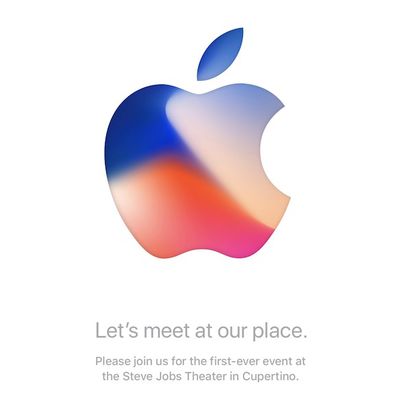
Apple will unveil the new iPhone 8 at an event set to be held on Tuesday, September 12 at 10:00 a.m. PT at its Apple Park campus. An iPhone 7s, 7s Plus, LTE Apple Watch, and 4K Apple TV will also make an appearance at the event.
For details on the new iPhone 8, which will feature a glass body, edge-to-edge display, facial recognition, and more, make sure to check out our full iPhone 8 roundup.
Four additional veteran executives from the television industry are joining Apple's video content team, according to a new report from Variety.
Former head of current programming at Sony Pictures Kim Rozenfeld is joining Apple as its future head of programming and lead executive on documentary series development. Apple has thus far purchased several music-related documentaries that have aired on Apple Music, including Kygo: Stole the Show and Can't Stop, Won't Stop: A Bad Boy Story.
Rozenfeld formerly worked with Zack Van Amburg and Jamie Erlicht, two Sony Pictures Television executives who joined Apple in June to lead Apple's video programming efforts. Erlicht and Amburg have produced popular shows like Breaking Bad, Better Call Saul, The Crown, and more.
Two additional former Sony employees are joining the video team as development executives. Both Max Aronson and Ali Woodruff also worked with Amburg and Erlicht and will report to the duo at Apple. Aronson previously served as VP of drama development at Sony Pictures Television, while Woodruff was the director of creative affairs.
Rita Cooper Lee, who formerly worked as the WGN America head of publicity is joining Apple to lead communications for the video content unit, and she will report directly to Tom Neumayr. Lee is the second employee to join Apple from WGN America. Former president and general manager of WGN America Matt Cherniss joined Apple earlier in August to help oversee the development of the video unit.
Apple is picking up a lot of talent in the video and television area as it experiments with original content as a way to promote its Apple Music service. The company has launched two shows so far, including Planet of the Apps, a series about app developers pitching ideas to investors, and Carpool Karaoke, a music-based show developed from the Carpool Karaoke segment on The Late Late Show with James Corden.
While Apple's first two shows have been reality shows, the company is said to have bigger content ambitions, with rumors suggesting Apple is pursing deals with A-list talent to create a roster of shows on par with Netflix and Amazon.
Apple today released a new update for Safari Technology Preview, the experimental browser Apple first introduced in March of 2016. Apple designed the Safari Technology Preview to test features that may be introduced into future release versions of Safari.
Safari Technology Preview release 39 includes fixes and improvements for Beacon API, Directory Upload, Fetch API, Input Events, JavaScript, WebAssembly, WebRTC, Web Inspector, and Media. With Safari 11 now available to developers through the macOS High Sierra beta, Apple is providing two versions of Safari Technology Preview, one for macOS Sierra users and one for those using macOS High Sierra.
Safari Technology Preview users might want to hold off on downloading Safari Technology Preview 39 as the new version appears to be crashing at launch and not working properly.
Apple's aim with Safari Technology Preview is to gather feedback from developers and users on its browser development process. Safari Technology Preview can run side-by-side with the existing Safari browser and while designed for developers, it does not require a developer account to download.
Update: The Safari Technology Preview 39 release has been pulled by Apple and is no longer available for download.
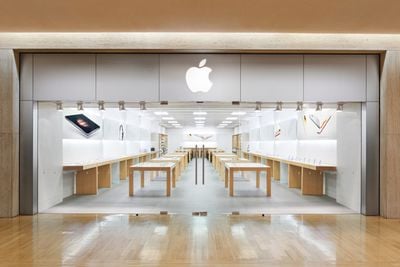
Apple today announced its Northbrook Court store in Northbrook, Illinois, a suburb of Chicago, is moving to a new location within the shopping mall this weekend. The grand opening is set for Saturday, September 9 at 10:00 a.m. local time.
Apple's original store at Northbrook Court
The new store will be located across the hall on the lower level, between H&M and Banana Republic, according to property management GGP.
The current store, between Sephora and Finish Line, originally opened in July 2005. Friday will likely be its final day of business in that location.
The new store should be around 10,000 square feet, which is nearly double the size of the current store, according to Northbrook Court's leasing plan.
The new store will also be based on Apple's latest retail design, which typically includes wide, open spaces with some combination of large glass doors, sequoia wood tables and shelves, large video screens for Today at Apple sessions, and light boxes spanning the length of the ceiling.
All new Apple Stores opened since September 2015 have been based on the new design language, including flagship-tier locations such as Apple Union Square in San Francisco and Apple World Trade Center in New York City. Apple has renovated over 40 existing stores to reflect the newer aesthetic.
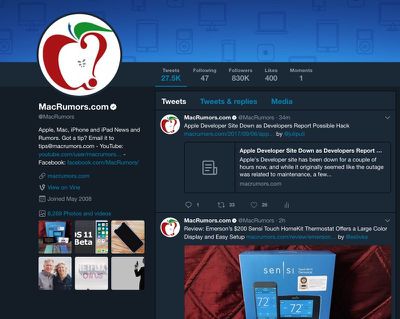
For the past few weeks, Twitter has been testing a Night Mode option for its desktop site, and as of today, the new Night Mode feature is rolling out to all Twitter users.
Designed to turn the Twitter interface darker to make it easier to read tweets at night, Night Mode can be enabled by clicking on your profile photo and choosing the "Night Mode" option from the drop-down menu. Turning it off is as simple as clicking the Night Mode setting a second time.
With Night Mode enabled, the traditional light colored interface is made darker with a black overall background and a darker blue background for tweets. Because Night Mode is enabled manually, it will stay activated until it's turned off.
Night Mode has been available on iOS devices since August of 2016 through the main Twitter for iOS app.
Night Mode on the desktop is currently rolling out to Twitter users so you may not see the option under your profile right away.
Apple's first foldable iPhone, with a book-style design featuring a 5.4-inch outer display and a 7.6-inch inner display with a minimal crease down the middle.









 Google this morning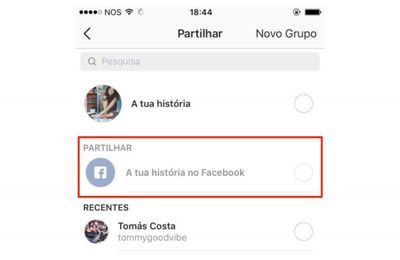
 Apple today