Apple today released a new update for Safari Technology Preview, the experimental browser Apple first introduced two years ago in March of 2016. Apple designed the Safari Technology Preview to test features that may be introduced into future release versions of Safari.
Safari Technology Preview release 51 includes bug fixes and feature improvements for Accessibility, Security, Loading, Service Workers, Rendering, Styles, and Web Inspector.
Apple's aim with Safari Technology Preview is to gather feedback from developers and users on its browser development process. Safari Technology Preview can run side-by-side with the existing Safari browser and while designed for developers, it does not require a developer account to download.
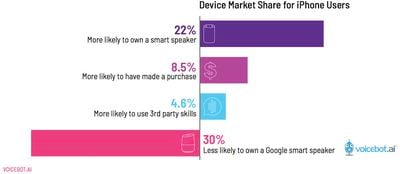
In January, Voicebot.ai surveyed 1,057 Americans over the age of 18 regarding their ownership or interest in smart speakers, and today the researchers have published their final report with the results. While the data precedes Apple's entry into the market with HomePod in February, it does include a few points of data regarding iPhone/iOS users and their interest in smart speakers, prevalent long before rumblings about Apple's HomePod began.
Specifically, the Smart Speaker Consumer Adoption Report states that iPhone owners are 22 percent more likely to own a smart speaker compared to non-Apple smartphone owners. Of the smart speakers on the market besides HomePod, iPhone users are 30 percent less likely to own a Google Home and favor devices like Amazon Echo.
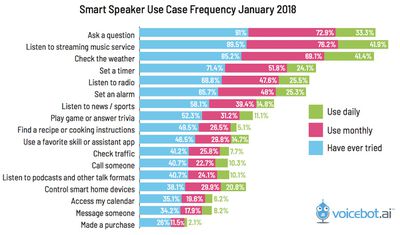
Graphs via Voicebot.ai
In fact, Voicebot.ai argued that Apple and Amazon are likely companions in "multi-manufacturer households," where HomePod is purchased as a "luxury item for music listening" and Echo is used for more "utilitarian tasks."
iOS users are attractive consumers and far more likely to own a smart speaker overall, but far less likely to own a Google device. However, the data also suggests that Google is at less risk of losing share to Apple HomePod than Amazon. Apple and Amazon may be the focus of multi-manufacturer households where HomePod is a luxury item for music listening in living spaces while Echo products get placed in the kitchen and bedrooms for utilitarian tasks.
In addition, iPhone owners are a good fit for Amazon because they are far more likely to have made a purchase by voice and more likely the 30,000 Alexa skills offered to Echo users. The favoritism shown by Apple owners to Alexa devices may also appeal to developers. Historically, iPhone app users have been far more valuable to developers on a revenue basis than Android users.
The report has many other interesting tidbits of information, stating that about 19.7 percent of adults in the United States use smart speakers, while 47.3 million have access to one of these devices. This means that they live in a home with a smart speaker, but may not be the primary owner -- a necessary distinction for the survey as smart speakers are "communal devices" used by entire households, unlike a smartphone with one user.
Many consumers own an average of 1.8 smart speakers, most place them in their living room (45.9 percent of owners) or kitchen (41.4 percent), and Amazon remains the dominant player in the market with a 3.5 times larger install base than Google. All of this growth surprised many analysts, particularly compared to growth rates of other product categories.
How does the march to nearly 50 million smart speaker consumers in 3 years compared to growth rates of other communications channels? Television took 13 years, the internet four years, and Facebook just two years. Smart speakers are devices but are growing almost as quickly as social media apps."
Among the most popular use cases, questions, music, and weather commands remain at the top. In total, the researchers said that this data provides the best indication that smart speakers are "being incorporated into everyday lives of consumers," with 63 percent using them daily and 77 percent at least weekly.
For those who don't own a smart speaker, 37.9 percent stated disinterest as their reason, 21.2 percent said they get enough similar features from their smartphone, 16 percent referenced privacy concerns, 11.8 percent said they plan to purchase soon, 8.8 percent claimed they were too expensive, and 4.2 referenced other reasons. For future owners, 9.8 percent expect to make a purchase in 2018, 26 percent of which said they will be purchasing Apple's HomePod.
If accurate, the timeframe suggests Apple will unveil the new iPad Pro models at its annual Worldwide Developers Conference, which will likely take place June 4-8 at the McEnery Convention Center in San Jose, California. Apple similarly unveiled its current iPad Pro lineup at WWDC last year.
Zhang expects the revamped iPad Pro to have slimmer bezels and no home button, in line with the iPhone X. The revamped design will likely be featured on both the 10.5-inch and 12.9-inch iPad Pro, although his research note didn't specify.
Apple's plans to release an iPad Pro with Face ID were first revealed by KGI Securities analyst Ming-Chi Kuo, who said the refresh would occur in 2018. Bloomberg's Mark Gurman was a bit more specific, noting the iPad Pro with Face ID would debut "a little more than a year" after the current models.
The 10.5-inch iPad Pro and second-generation 12.9-inch iPad Pro launched in June 2017, so it's not entirely clear if "a little more than a year" meant WWDC 2018 or Apple's annual September event where it introduces new iPhones.
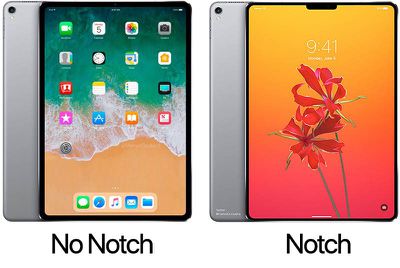
The new iPad Pro models will likely retain LCDs instead of OLED displays due to supply, cost, and technological constraints. It's unclear if the tablets will have a notch for the TrueDepth sensor housing, or if the device will have uniformly slim bezels on all four sides with enough room for the components.
A supply chain report out of China recently claimed the new iPad Pro models will be faster thanks to an octa-core A11X Bionic chip with three high-performance "Monsoon" cores and five energy-efficient "Mistral" cores.
There's no word on potential pricing yet, but the new iPad Pro lineup will likely cost more than the current 10.5-inch and 12.9-inch models, which start at $649 and $799 respectively in the United States. Since the new models won't have OLED displays, however, the price increase might not be substantial. Apple is also rumored to release a new 9.7-inch iPad for $259 in March, while the fate of the iPad mini remains uncertain.
Zhang also believes Apple may be planning to unveil a (PRODUCT)RED iPhone in the near future. Based on Apple's past (PRODUCT)RED devices, which included a (PRODUCT)RED version of the iPhone 7 and 7 Plus, it makes sense that a red iPhone and iPhone 8 Plus could be in the works. There's also a possibility Apple could be planning to unveil a (PRODUCT)RED iPhone X, but Zhang's predictions have been a little unclear on this point.
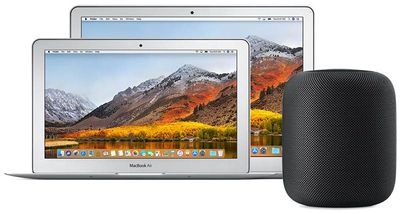
Apple will launch lower-priced versions of four products this year, including an iPad, iPhone, MacBook Air, and HomePod, according to a translated report from Taiwan's Economic Daily News via Japanese blog Mac Otakara.
We've already heard rumors about more affordable iPad, iPhone, and MacBook Air models, but this is the first word of a supposedly lower-priced HomePod being on Apple's roadmap. The speaker is forecast to launch in the second half of 2018 for between $150 and $200 in the United States.
At $349, the current HomePod is considerably more expensive than the Amazon Echo and Google Home for $99 and $129 or less respectively. But the HomePod also has significantly better sound quality than its smart assistant rivals, in line with Apple positioning it as a high-quality speaker first and foremost.
A lower-priced HomePod would certainly be more competitive with the Echo and Google Home, but it's unclear if that would come at the expense of audio quality. One possibility is that Apple will release a smaller HomePod mini that still delivers premium sound relative to other portable speakers in that category.
Here's the full breakdown of the Economic Daily News report, based on what we could gather from a translated version:
9.7-inch iPad for $259: This lines up with a DigiTimes supply chain report from last December that said Apple is considering releasing a cheaper 9.7-inch iPad for $259 in the second quarter of 2018. The current 9.7-inch iPad was released in March 2017 for $349.
6.1-inch iPhone for $649 to $749: This lines up with a prediction from KGI Securities analyst Ming-Chi Kuo, who expects Apple to launch a mid-range 6.1-inch iPhone with Face ID, but with some design compromises like an LCD rather than OLED display to achieve the lower price point.
MacBook Air for $799 to $899: This lines up with another prediction from Kuo, who said Apple will launch a more affordable MacBook Air in the second quarter of 2018. The estimated price range comes from WitsView researcher Yubin Qiu. The current MacBook Air starts at $999.
HomePod for $150 to $200: Today's report cites industry sources who expect a more affordable HomePod to launch in the second half of 2018. It's hard to decipher details from the loosely translated report, but Mac Otakara's coverage seems to suggest it will be a smaller speaker.
It's worth noting that these prices are estimates, as it's hard to envision Apple sharing pricing information with its supply chain partners.
Of the four products, the new iPad and MacBook Air are most likely to debut first. Apple is rumored to unveil new devices later this month, but it's unclear if the announcements will be made via press release or at a media event. If there is a keynote planned, invites would certainly have to go out soon.
The new 6.1-inch iPhone should debut in September alongside a new iPhone X and so-called iPhone X Plus, and the lower-priced HomePod could certainly be introduced at the same event. The current HomePod launched in early February.
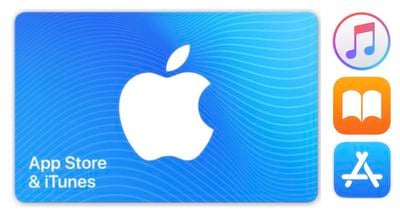
About one month after PayPal's previous 15 percent discount on iTunes cards, the company has launched its latest sale for those who have been waiting on a deal to get some free iTunes credit. Like previous discounts, PayPal on its Digital Gifts eBay storefront is offering $100 App Store and iTunes gift cards for $85. While the sale lasts, anyone with a PayPal account can take advantage of the deal, and you should receive the code for the iTunes credit within a few hours after the purchase.
Note: MacRumors is an affiliate partner with these vendors. When you click a link and make a purchase, we may receive a small payment, which helps us keep the site running.
As usual with email delivery sales on iTunes cards, you can either enter your own email address and send the code to yourself, or enter the email of a friend or family member to send it as a gift. The credit will only be valid on purchases made on the United States App and iTunes stores, however.
Coinciding with the new gift card offer, iTunes has some notable discounts on its Movies storefront that might be of interest to users getting iTunes credit today. The sale prices include a collection of Disney films for $14.99 each, as well as some recent 4K releases for as low as $9.99. We've rounded them up below:
Earlier in January, Apple detailed a series of plans to to bolster the U.S. economy, which included the confirmation of its fourth campus based in the United States. At the time, the company said its new campus will "initially house technical support for customers" and that it won't be located in California or Texas, but no other hints regarding its location were given.
Today, Bloomberg posted a new piece theorizing potential locations for Apple's fourth campus in an attempt to predict where Apple might end up. In partnership with Moody's Analytics, Bloomberg was provided with data regarding the top 15 U.S. cities for tax incentives and a local business environment, top 15 cities for workforce education and human capital, and top 15 cities for public transport.
This information was cross-referenced with known data including current Apple headquarters, call centers, data centers, repair centers, smaller corporate offices, and major parts suppliers, to result in areas of the country that Apple could be interested in. Bloomberg ultimately hypothesized that Apple "seems likely" to end up in one of three areas: the northeast, potentially in Pennsylvania, Massachusetts or upstate New York; the southeast, in North Carolina or Florida; or Midwest, in Illinois or Wisconsin.
When you consider all these factors, Apple seems likely to choose among northeastern states such as Pennsylvania, Massachusetts and upstate New York; North Carolina and Florida in the southeast; and Midwestern states like Illinois and Wisconsin. The East Coast has one obvious advantage: the ability to provide customer support before existing call centers in Texas and California open for the day, as well as its proximity to hundreds of suppliers. The company could also consider the northwest, where it has a couple of offices, including an R&D center for cloud services in Seattle, and several suppliers.
In regards to Moody's top 15 cities data, Bloomberg argued that these statistics will be the main criteria Apple looks at when planning its fourth campus. These cities could provide Apple with incentives in exchange for its investment, a talented workforce that emphasizes bachelor's degrees instead of advanced engineering degrees ("which arguably fit better with Apple's plans to recruit technical support people, rather than those working on products and operations"), and available commuting options for employees, including a nearby airport for those flying in from other offices.
As the company makes plans for its latest campus, this month it has also named Kristina Raspe as its new vice president of global real estate and facilities. On her LinkedIn page, Raspe said that she's responsible for a variety of the company's real estate assets, including corporate and data center construction.
Cities that have already expressed interest in becoming the home of Apple's fourth U.S. campus include Sidney, Nebraska and Orlando, Florida, but Apple said back in January that it won't confirm the location until later in 2018.
Check out Bloomberg's full article for more information on the potential locations of Apple's upcoming campus.
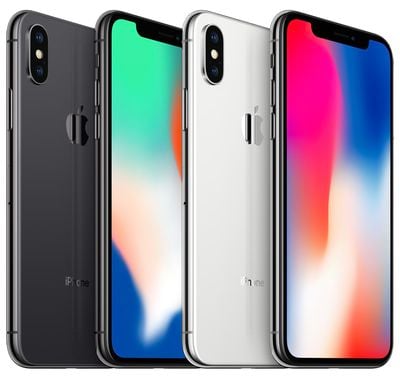
The next-generation iPhone X will feature a smaller notch for the TrueDepth camera system, while future models released in 2019 or later will have no notch whatsoever, according to Korea's ET News.
The interesting bit is that all three iPhone models are said to feature slimmer bezels and smaller notches, emphasis ours:
Apple is planning to release two models with OLED display and a model with LCD display during this fall. It is heard that OLED models will be available in 5.85-inch display and 6.46-inch display while a LCD model will be available only in 6.04-inch model. All three of these models will have Face ID function and it is heard that there will be less bezel and smaller notch design.
An unnamed industry source added that Apple has decided to remove the notch "from 2019 models," suggesting the third-generation iPhone X could be the first model with a truly full-screen design.
"Apple decided to get rid of notch design starting from 2019 models and is having discussions with relevant companies," said a representative for an industry. "It seems that Apple is planning to implement full-screen that is more complete to its new iPhones."
The report claims each iPhone will have Face ID, but it's unclear how Apple would manage to fit the required TrueDepth sensors on the front of the devices without a notch. The report speculates that Apple could drill holes into the display itself, or use patented multi-layer Black Matrix technology.
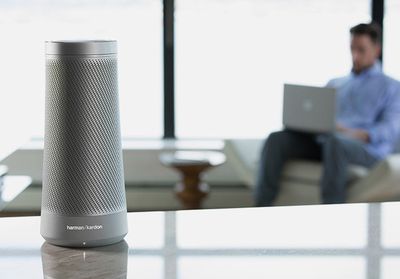
Microsoft is giving users of its Cortana virtual assistant another way to activate it with their voice. As reported by The Verge, owners of the first Cortana-integrated Invoke speaker can now summon the assistant using just "Cortana" rather than the typical "Hey, Cortana" phrase, although that continues to work as well. The alteration is expected to trickle down to Cortana for iOS in the near future.
Microsoft hasn't offered a reason for the new option, but probably doesn't need to, given that many users will find "Cortana" easier to say, just as Amazon's "Alexa" is on supporting devices. Alexa users can also choose an alternative "Echo" invocation, but owners of Apple devices must use the phrase "Hey, Siri" (and its equivalent in other languages) to get the attention of Apple's digital assistant.
Apple has never indicated it will offer a way to customize the "Hey, Siri" invocation – perhaps because it's not technologically viable, given the way Siri listens for the activation phrase via an energy-preserving coprocessor. But the ability to do so could theoretically help users specify which device their request is directed at when multiple Apple devices are present ("Hey, HomePod," for example). Aside from offering a little more personalization, the option could also help device owners prevent accidental or prank requests from other sources, like TV ads, podcasts, and so on.
Apple's native Mail application in macOS lacks a specific option for enabling out-of-office replies, but there is another way you can set them up on a Mac, and that's with Rules. It's worth bearing in mind at the outset that your Mac needs to be powered on for this out-of-office method to work. That's because Apple Mail rules are only applied locally to incoming emails, and aren't active on the server side.
Apple today released a new update for its Apple Music app designed to be used on Android devices, which Apple says significantly improves stability to make music playback more reliable.
Apple says today's Apple Music Android update also introduces "new experiences" for music videos. Users can now watch music videos in fullscreen or inside Now Playing and music videos will continue to play while browsing other areas of the app.
Music videos can also be added to playlists to watch them back to back, and you can listen to music videos in the background while using other apps.
Apple has offered an Apple Music for Android app since November of 2015, and the company regularly updates the app with new features to keep it on par with the iOS versions of Apple Music. The app's last major update came in April of 2017, when Apple introduced major design changes.
Apple's newest iPhones can capture high-quality 60 FPS 4K video, but there are a lot of other factors that need to be taken into account to make excellent videos that can compete with what you can do with a traditional camera.
Lighting, stabilization, settings, and composition are all elements that can make or break a video, and in our latest guide on YouTube, we're sharing a series of tips you can use to make your videos better than ever.
Without shelling out any cash, there are certain settings you can change to make sure you're getting the best quality video out of your iPhone.
Open up the Settings app, choose the "Camera" section, and you can set your video recording quality. On iPhone X and iPhone 8, you can capture 4K video at 60 frames per second. On older iPhones like the iPhone 6s and iPhone 7, your options will be more limited, with 4K video topping out at 30 frames per second.
You can also improve your videos with simple Auto Exposure and Auto Focus locking features, which will prevent abrupt changes while you're filming. After setting exposure with drag gestures on the iPhone's screen when using the Camera app, hold a finger on the focal point until the AE/AF lock banner pops up.
You'll get even more control over settings using a third-party app like FiLMic Pro ($14.99), which lets you set parameters like exposure, white balance, color, aspect ratio, and focus while also giving you live tools for monitoring video and making adjustments.
Lighting is a huge factor when it comes to video quality, so shooting outdoors in daylight or in a well-lit room will improve your videos immensely if you can't shell out for a lighting setup, and you can spice up your videos with iPhone camera capabilities like time lapse and slow motion. Stabilization is as important as lighting - brace your elbows or invest in a tripod or a handheld gimbal.
If you're going to be taking a lot of video with your iPhone, you might want to check out something like the $130 DJI Osmo Mobile 2, which uses a gimbal to smooth out and counteract camera shake. It's not for everyone given its high price point, but it's worth the investment if you're aiming for quality video that's shake free. For a cheaper option, check out the Manfrotto Pixi Mini Tripod, which is just $24.95 (with an additional $9.95 for the mount).
For a full rundown on all of our video tips, make sure to watch the video above, which, fittingly, was filmed entirely on an iPhone X. Did we leave anything out? Let us know your own tips and tricks for capturing better video in the comments.
In addition to our standalone articles covering the latest Apple news and rumors at MacRumors, this Quick Takes column provides a bite-sized recap of other headlines about Apple and its competitors on weekdays.
Commentary: iTunes LPs, introduced in 2009, are interactive albums with multimedia such as lyrics, liner notes, artist and band photos, performance videos, and more. A lot of this content can now be found in Apple Music, so it's no surprise that Apple is beginning to phase out this long-forgotten feature.
Commentary: The six-month offer only applies to first-time Apple Music subscribers. If you've already taken advantage of Apple Music's standard three-month trial period, you'll only receive an additional three months of complimentary service. Volkswagen is also offering a similar deal in Europe.
Microsoft begins accepting pre-orders of new Surface Pro with LTE Advanced: The new Surface Pro gains cellular connectivity, with support for 20 LTE bands, but it's otherwise the same as the previous generation. The tablet-notebook hybrid starts at $1,149, but only a higher-end $1,449 model is available currently.
Commentary: While the Surface Pro isn't part of Apple's ecosystem, the tablet has received favorable reviews from The Verge and CNET, and some customers may prefer its versatility over the cellular-enabled iPad Pro.
House near Apple Park smashes Sunnyvale real estate record: A two-bedroom, one-bathroom house in Sunnyvale, near Apple's headquarters in Cupertino, California, recently sold for $2 million in cash. At $2,358 per square foot, it's reportedly the highest price per square foot for a home in Sunnyvale ever.
Commentary: Sunnyvale is situated in the heart of Silicon Valley, where companies like Apple, Google, and Facebook are headquartered. With these tech giants often offering six-figure salaries, it's no surprise that real estate prices continue to rise in the area. The previous record was $2,175 per square foot, according to the MLS.
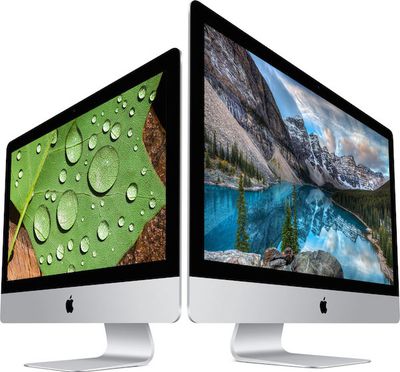
Top-rated eBay shop ElectronicsValley today has the 27-inch 5K iMac from October 2015 for $1,299.99, down from $2,299.99. This model has a 3.3 GHz Intel Core i5 6th Generation processor, 8GB of RAM, 2TB of hard drive storage, and was the first of Apple's iMacs to come with the updated Magic Mouse 2 back in 2015. ElectronicsValley describes the iMac as "New," and its customers have left a largely positive feedback percentage of 99.1 percent on its store.
Note: MacRumors is an affiliate partner with some of these vendors. When you click a link and make a purchase, we may receive a small payment, which helps us keep the site running.
ElectronicsValley often has multiple New-condition Apple products on sale, currently including sales on last year's MacBook Air refresh:
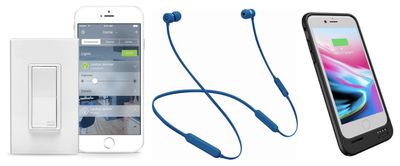
Also today, The Home Depot is offering select Leviton dimmers and switches for up to 30 percent off, including a few HomeKit-compatible switches. The company has a 2-pack of the Leviton 15 Amp Decora Smart Switch for $62.96, down from $89.94. The switch can connect to Apple's Home iOS app and allow users to control lights on their iPhones and iPads or with Siri. There are a few other switches available, all with limited stock and with sale prices that will expire by the end of the day.
A few other deals worth mentioning today include savings on Speck's Presidio Power case for the iPhone 7, priced at $30.00 for a limited time, down from $99.95. Amazon and Best Buy also continue to offer notable savings on BeatsX, with both retailers pricing the headphones at $89.99, down from $149.99, in select colors.
For those who are interested but haven't yet taken advantage of ongoing deals from DirecTV Now and Sonos, be sure to head to our full Deals Roundup for more information on each sale. The limited time offers for a free 32GB Apple TV 4K with DirecTV Now and bundle of two Sonos One speakers have been around since November 2017 and January 2018, respectively, and are expected to expire sometime in the spring.
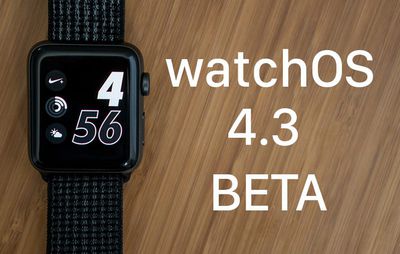
Apple today seeded the fourth beta of an upcoming watchOS 4.3 update to developers, two weeks after seeding the third beta and a little over two weeks after releasing watchOS 4.2.3, a minor update focusing on bug fixes.
Once the proper configuration profile has been installed from the Apple Developer Center, the new watchOS beta can be downloaded through the dedicated Apple Watch app on the iPhone by going to General --> Software update.
To install the update, the Apple Watch needs to have at least 50 percent battery, it has to be placed on the charger, and it needs to be in range of the iPhone it's paired to.
watchOS 4.3 introduces support for Nightstand mode in portrait orientation, a feature that was previously only available when the watch was placed in landscape orientation. There's also a new charging animation when the Apple Watch is placed on the charger, a new app loading animation, your Activity data is now displayed on the Siri watch face, and the battery complication more accurately reports battery life.
The watchOS 4.3 update also brings the return of a much-desired feature that allows music playing on the iPhone to be controlled using the Music app on the Apple Watch.
In prior versions of watchOS, starting with watchOS 4, the Music app could only be used to control music playing on the watch itself. With the tvOS 11.3 beta installed, there's also an option to control music playing on the Apple TV with the watch.
Apple plans to release watchOS 4.3 to the public in the spring, and until then, it will be limited to developers. Apple offers public betas of tvOS, iOS, and macOS, but watchOS betas are not available for public beta testers because there's no way to revert to an earlier version of watchOS once an update is installed.
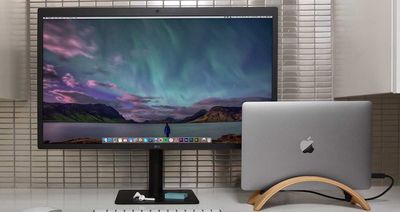
Twelve South today announced that its BookArc möd stand is now compatible with MacBook Pro models released in 2016 and later.
The stand now ships with two interchangeable silicone inserts that can hold 13-inch and 15-inch MacBook Pro models with Thunderbolt 3 ports, older 2012-2015 era MacBook Pro models, any 12-inch MacBook, and any MacBook Air.
BookArc is a popular stand for docking a MacBook vertically in closed-display mode. The aluminum version is already compatible with the 2016 and later MacBook Pro, and now the hardwood version is too after a much longer wait.
BookArc möd is on sale for $49.99, down from $59.99, via Twelve South's online store. The aluminum BookArc is $49.99.
The Magical Bridge Foundation, which helps build playgrounds for children and adults with disabilities and special needs, this week announced that Apple will help fund the foundation's latest playground, located in Sunnyvale, California's Fair Oaks Park. Magical Bridge Foundation's playgrounds are located in select communities in the Bay Area, including Mountain View, Morgan Hill, Palo Alto, and Redwood City.
Apple's contribution to the playground will come in the form of a $250,000 donation and mark the company as a sponsor of an "Innovation Zone" section of the park. Magical Bridge Foundation describes this area as "a dynamic space within the Sunnyvale playground for people of all ages and abilities to meet, learn, explore, create and build new and diverse relationships."
Clockwise from top left: The Innovation Zone, Kindness Corner, Playhouse + Playstage, and Tot Zone
Apple's sponsored Innovation Zone is said to lie "at the heart" of the new playground's leading edge concepts.
Capturing the innovative spirit of Silicon Valley, the Innovation Zone provides unique and interactive play experiences utilizing technology, art and design that stimulates the full array of human senses in an entirely new way.
“The dream to build magical spaces where people of all abilities can feel freedom of play has become a reality because companies like Apple and our other partners are so committed to this community, its residents and visitors,” Magical Bridge co-founder Olenka Villarreal said. “The joy is contagious. Magical Bridge Playgrounds are changing neighborhoods, cities, and soon, the country through truly inclusive play.”
Magical Bridge Foundation is still collecting contributions for the playground, and if it raises its goal of $3.3 million it will begin construction on the Sunnyvale location in fall 2018, with a public opening aimed for 2020. Other tech companies have also announced sponsored areas in the playground, including LinkedIn's $150,000 sponsorship of the "Kindness Corner." Other play zones, like a Tot Zone, Spin Zone, and Playhouse + Playstage, are still available for sponsorship.
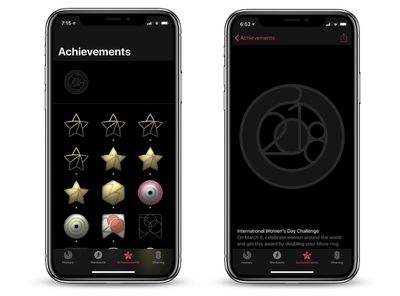
Apple has debuted a new Activity Challenge for Apple Watch wearers today, this one focused on celebrating International Women's Day. To complete the challenge and earn the achievement, you'll have to double your Move ring on March 8, the day that commemorates the movement for women's rights around the world.
The award for completing the challenge will be a set of still and animated stickers you can send to friends and family members within Messages. You'll find the new Activity Challenge by opening the Activity iOS app, tapping the Achievements tab, and tapping the icon for the International Women's Day Challenge achievement, which should be located at the very top of the page.
The new challenge follows one from February that encouraged users to close their Apple Watch's exercise ring for seven days in a row as a promotion for Heart Month. Apple has regularly added Activity Challenges to the Activity app on iOS over the past few years, marking major holidays like Thanksgiving and New Year's with challenges that encouraged users to avoid staying sedentary during each holiday.
Apple Watch isn't the only area where Apple has been celebrating International Women's Day, with the company debuting a series of female-focused spotlight categories in the iTunes Movies store earlier this week on iOS, macOS, and tvOS. The "Leading Ladies" section offers films like Wonder Woman, Mean Girls, Mad Max: Fury Road, and Room for under $10 for a limited time.
In Apple Music, a "Celebrating Bold Women" card has been featured in the Browse tab for the past few days, linking subscribers to playlists, essential albums, up-and-coming artists, women who made history, and a breakdown of Leading Ladies in musical genres like pop, jazz, rock, and more.
Washington this week became the first state to pass a new law -- House Bill 2282 -- that restores and protects certain net neutrality rules, after the Federal Communications Commission voted 3-2 in favor of repealing net neutrality nationwide late last year. Washington state's new rules were signed into law by Governor Jay Inslee yesterday, and prevent internet service providers from blocking and slowing down content online (via The New York Times).
Many multi-state lawsuits began cropping up following the net neutrality vote in December, but this marks the first time that a state has directly gone against the FCC and enacted its own regulations on how ISPs are regulated within the state. Now, the Washington state law will go into effect starting June 6, 2018, barring ISPs from blocking websites, throttling speeds, or charging its customers more for faster speeds on select sites "in a way that benefits the broadband company and partner websites."
Today we make history: Washington will be the first state in the nation to preserve the open internet with our own #NetNeutrality law. The open internet lives on for Washingtonians. pic.twitter.com/3wsmAycWLN
— Governor Jay Inslee (@GovInslee) March 6, 2018
These actions are now technically legal under the repeal of net neutrality by the FCC, made official by its entry into the Federal Register in February and becoming nationwide law itself April 23, 2018. The law signed by Inslee is said to "immediately" put back into place consumer protections provided by net neutrality rules, and was "passed with broad bipartisan support in the state legislature."
“Today we make history: Washington will be the first state in the nation to preserve the open internet,” Inslee said during today’s bill signing ceremony. “We’ve seen the power of an open internet. It allows a student in Washington to connect with researchers all around the world — or a small business to compete in the global marketplace. It’s allowed the free flow of information and ideas in one of the greatest demonstrations of free speech in our history.”
Besides Washington state, lawsuits and movements against the FCC have appeared in nearly two dozen states, with bills in each appearing similar to the one signed by Governor Inslee this week. Washington state's law -- and any others that appear in the future -- are expected to end up in court, because part of the FCC's rules passed under the repeal of net neutrality explicitly mentioned that states could not create their own rules.
Various tech companies also joined together in a lawsuit against the FCC filed on Monday, with Etsy, Foursquare, and Kickstarter among the companies banning together to fight the net neutrality repeal. Before the 3-2 vote in December, Apple was vocal against the potential repeal of net neutrality, emphasizing its stance in a letter last August that urged the FCC not to roll back the rules. Apple said this repeal could risk "fundamentally altering the internet as we know it today—to the detriment of consumers, competition, and innovation."
Note: Due to the political nature of the discussion regarding this topic, the discussion thread is located in our Politics, Religion, Social Issues forum. All forum members and site visitors are welcome to read and follow the thread, but posting is limited to forum members with at least 100 posts.


 Apple today released a new update for Safari Technology Preview, the experimental browser Apple first introduced two years ago in March of 2016. Apple designed the Safari Technology Preview to test features that may be introduced into future release versions of Safari.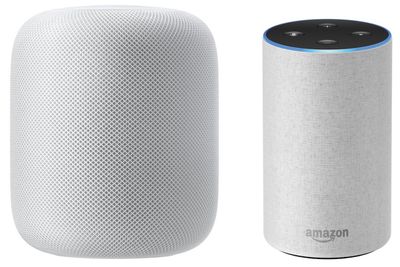
 Note: MacRumors is an affiliate partner with these vendors. When you click a link and make a purchase, we may receive a small payment, which helps us keep the site running.


 Apple's native Mail application in macOS lacks a specific option for enabling out-of-office replies, but there is another way you can set them up on a Mac, and that's with Rules. It's worth bearing in mind at the outset that your Mac needs to be powered on for this out-of-office method to work. That's because Apple Mail rules are only applied locally to incoming emails, and aren't active on the server side.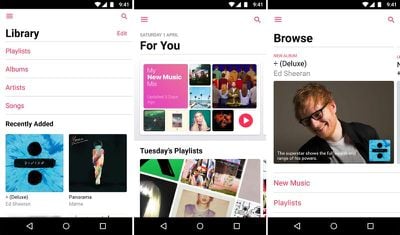




 Note: MacRumors is an affiliate partner with some of these vendors. When you click a link and make a purchase, we may receive a small payment, which helps us keep the site running.