Apple Seeds Second Beta of watchOS 3.2.3 to Developers

Apple today seeded the second beta of an upcoming watchOS 3.2.3 update to developers for testing purposes, two weeks after seeding the first watchOS 3.2.3 beta and a little over two weeks after releasing watchOS 3.2.2, a minor bug fix update.

Registered developers can download the watchOS 3.2.3 update through the Apple Watch app on the iPhone by going to General --> Software Update. For the beta to be installed, the Apple Watch needs to have 50 percent battery, it must be placed on the charger, and it has to be in range of the iPhone.


Apple only provides watchOS betas to developers because there's no way to downgrade software on an Apple Watch. Non-developers will need to wait for the public release to get the update.

No notable features or bug fixes were discovered in the first beta of watchOS 3.2.3, suggesting the update focuses primarily on under-the-hood improvements.

watchOS 3.2.3 is likely to be one of the last updates to the watchOS 3 operating system, as Apple is expected to introduce a new version of watchOS at its Worldwide Developers Conference in June.

Related Roundups: Apple Watch Series 2, watchOS 3
Buyer's Guide: Apple Watch (Neutral)

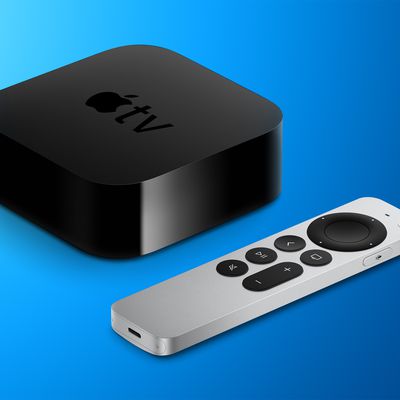
Apple Seeds Second Beta of tvOS 10.2.2 to Developers

Apple today seeded the second beta of an upcoming tvOS 10.2.2 update to developers for testing purposes, two weeks after releasing the first beta of tvOS 10.2.2 and a little over two weeks after releasing tvOS 10.2.1, a minor bug fix update.

tvOS 10.2.2 is available for the fourth-generation Apple TV. Registered developers can download the update by connecting the Apple TV to a computer with a USB-C cable and installing the beta software using iTunes.


Due to the installation requirements, tvOS betas are only available for developers, so tvOS 10.2.2 will not be publicly available until the final version of the software is released.

No major feature changes or bug fixes were discovered in the first beta of tvOS 10.2.2, and it appears to focus on minor under-the-hood improvements.

tvOS 10 will soon be followed by a new version of tvOS, which Apple is expected to introduce at its Worldwide Developers Conference on June 5.

Related Roundups: Apple TV, tvOS 10
Buyer's Guide: Apple TV (Don't Buy)

North Korean Company Ignores Apple Trademarks and Launches Tablet Called 'Ryonghung iPad'

North Korea technology company Ryonghung has recently released a new tablet using the trademarked name of Apple's popular device, the iPad. The company's tablet is called the "Ryonghung iPad" and lets users read the news, work on documents, and perform other actions across more than 40 different pre-installed apps (via Gizmodo).

Tech specs for the Ryonghung iPad detail a device with 1GB RAM, an 8GB hard disk, a quad-core 1.2GHz processor, HDMI compatibility, a keyboard, and "network connection" capabilities. The advertising material details a few apps as well, relating to programs like a calculator, a health encyclopedia, a medical app, and an agricultural program.


As NK News pointed out, the heavy use of "iPad" in the device's marketing material violates Apple's trademarks.
A North Korean company is advertising a domestic tablet computer under the copyrighted name of one of Apple Inc.’s flagship products – the “iPad” – the DPRK’s latest edition of Foreign Trade magazine shows. The term “iPad” is registered as an Apple trademark on its website and while there are occasions when the company’s terms can be used, these generally need Apple’s authorization.
A different version of the Ryonghung iPad first appeared in North Korea in 2013, although then it lacked the "iPad" moniker and was called the "Ryonghung-trademarked tablet computer" by the media. North Korean versions of Apple devices have been seen in the past, with a computer bearing resemblance to the iMac showing up at a trade fair in Pyongyang in 2015. Created by a company called Blue Sky, the computer was an all-in-one device with an aluminum finish, black bezels, and white keyboard and mouse accessories.

Similarly, in 2014 reports surfaced of North Korea's "Red Star" Linux operating system and its overall resemblance to OS X at the time. The Red Star OS included a similar dock, wallpapers, tool bar, and more visual similarities to Apple's MacBook and iMac computer operating system. However, the Ryonghung iPad appears to be the first device launched out of North Korea that directly uses Apple branding.

Apple was asked if it would enter a trademark dispute with the North Korea-based company over the iPad brand, but a representative of the Cupertino company has yet to respond.

Note: Due to the political nature of the discussion regarding this topic, the discussion thread is located in our Politics, Religion, Social Issues forum. All forum members and site visitors are welcome to read and follow the thread, but posting is limited to forum members with at least 100 posts.

Apple's Domination of Component Supply Chain Said to Be Constraining Nintendo Switch Production

A new article by The Wall Street Journal today has taken a look into the increased pressure put on suppliers of NAND flash memory units, as well as other smartphone components, and how Apple might be indirectly affecting the supply of the Nintendo Switch. According to people in the industry, smartphone makers -- namely Apple -- and their increasing ramp-up on component manufacturing for high-end devices have led to dwindling supplies of Nintendo Switch.

Specifically, Nintendo is lacking components related to NAND flash-memory chips, liquid-crystal displays, and the motors used in the Switch's HD Rumble feature. NAND memory chip supplies are said to be placed mainly upon the shoulders of Toshiba's struggling NAND chip unit, which is still up for sale despite legal troubles that have plagued the company over the past few weeks. In April, Apple was rumored to be looking into spending several billion for a "substantial stake" in Toshiba's NAND chip unit.


Apple's manufacturing ramp-up on the upcoming "iPhone 8" is said to be behind some of the supply chain constraints faced by Nintendo, as well as ongoing demand for the iPhone 7. Currently, Apple manufactures iPhone 7 with an LCD display and various internal sizes of NAND memory. The Nintendo Switch has a multi-touch LCD display and 32GB of internal memory.
People in the industry say the rapid expansion of web-based services for corporations has driven demand for computer servers that use flash memory. Continued demand for Apple’s iPhone 7 and a 10th anniversary model of the iPhone expected later this year are also keeping parts makers at full capacity, helping power Japan’s economy to its longest growth streak since 2006.

“Demand for our NAND flash memory has been overwhelmingly greater than supply, and the situation is likely to stay for the rest of this year,” said a spokeswoman at Toshiba Corp.
For Nintendo, the company has said it hopes to make as many as 20 million Switch units by the end of its financial year, in March 2018. Thanks to supply constraints, the actual sales target of the year is 10 million units, although "strong demand suggests it can sell many more - if it can make them." In its first month on the market, Nintendo sold 2.74 million Switch units.

Analysts watching the supply chain said that Nintendo's rivals "offer better terms" than the video game company, and that smartphone makers like Apple specifically "issue larger orders than Nintendo." This leads to manufacturers giving preference to companies other than Nintendo, and subsequent shortages for its products. Increased spending to secure more parts at a faster rate for the Switch isn't a possibility for Nintendo, as president Tatsumi Kimishima doesn't want the console's $299 retail price to increase.

Apple Pay Rumored to Arrive in Ukraine in Q2 2018

Apple Pay will continue its worldwide expansion next year, with a new report suggesting that Apple is planning to launch its mobile payments wallet in Ukraine in the second quarter of 2018. The news comes from PaySpace Magazine (via Tehnot.com) [Google Translate], which reported on the announcement of a new digital banking service, Alfa Digital, a division of financial institution Alfa-Bank.

During the announcement, Alfa-Bank Ukraine's head of e-business, Maxim Patrin, mentioned that Apple Pay is set to debut in Ukraine sometime in Q2 2018. Patrin's source of the news is said to come from an anonymous tipster in one of the payment systems currently in operation on the Ukrainian market.


Alfa Digital is said to be keeping a close eye on the Ukrainian debut of popular digital wallets like Apple Pay and Samsung Pay, and plans to support the addition of cards issued by Alfa-Bank into Apple Pay whenever it launches. Patrin didn't mention any further details about the launch.
In the second quarter of 2018 Apple Pay payment service can run on the Ukrainian market. This was stated by the head of "Alfa-Bank Ukraine" e-business, Maxim Patrin, citing an anonymous source in one of the payment systems that operate on the Ukrainian market.
Ukraine currently lacks Apple Pay, Android Pay, and Samsung Pay, instead relying on contactless payment solutions like Privat24 to let users pay for items using their smartphone. Samsung Pay is rumored to beat Apple Pay to Ukraine, with a potential launch of Samsung's mobile wallet sometime in the middle of 2017.

The latest Apple Pay launch took place in Italy in the middle of May, with users in the country able to add Visa and MasterCards issued by Boon, Carrefour, and UniCredit into their iPhone. Apple Pay is now available in the United States, UK, China, Australia, Canada, Switzerland, France, Hong Kong, Russia, Singapore, Japan, New Zealand, Spain, Ireland, and Italy.

Related Roundup: Apple Pay

Andy Rubin's Essential Products Announces Modular Smartphone and Amazon Echo Rival

New company Essential Products announced its debut products today, including a modular titanium smartphone with an edge-to-edge display and an Amazon Echo competitor. Andy Rubin, the founder of Essential and the original creator of the Android OS platform, announced the devices ahead of a talk he is scheduled to give later on Tuesday at the Code Conference.

The company's logo-free Essential Phone features a 5.71-inch edge-to-edge QHD display that reaches all the way to the top of the phone and runs around the 8-megapixel front-facing camera. The unique design is in contrast to Samsung's Galaxy S8, which retains a minimal bezel to house the camera and associated components.


The phone is constructed from titanium and ceramic, allowing it to survive a drop test "without blemish, unlike the aluminum competitor devices," the company claims. Apart from the fingerprint sensor and camera lenses, the rear of the device also features a modular accessory system that works via a pair of magnetic pins.

Initially, the "Click" cordless connector pins will hook up to the company's 360-degree camera and phone dock, with more modular products planned that Essential promises will "keep your phone cord-free, future-proof, and always up-to-date". A USB-C connector at the bottom of the phone provides the only other connectivity; no headphone jack is included.

The Essential Phone is powered by a Qualcomm 835 processor, 4GB of RAM, and has 128GB of storage, while its 13-megapixel rear-mounted dual lens camera includes a monochrome sensor and supports 4K at 30 frames per second. The phone runs some form of Android, but the company promises no extraneous software is pre-installed. Available in black, grey, white, and "Ocean Depths" colors, the phone will launch in the U.S. later this summer and cost $699.


Onto the company's new Amazon Echo competitor, the Essential Home. Details are still scant on the product, but here's what we know. The intelligent assistant device has a relatively inconspicuous puck-like shape with a sloping top that's dominated by a round touchscreen, which allows users to control music, ask general interest questions, set times, and control lights. It can be activated with a question, a tap, or even a "glance", according to Essential, suggesting some form of face detection.

The Essential Home will run the company's open platform Ambient OS, allowing it to interface with existing smart home products as well as SmartThings, HomeKit, Nest, and other popular standards. The intelligent assistant will also support notifications and reminders with contextual information displayed on-screen. Processing of user data is said to remain local to the device wherever possible. Pricing is yet to be announced, but the Essential Home is expected to ship later this summer.

Wired today published a write-up of Rubin's new Essential venture that provides some interesting background on the company. You can read the article here.

Tag: Essential

U.S. Could Expand Tablet and Laptop Ban to All International Flights

The U.S. Department of Homeland Security is considering expanding its carry-on restrictions for electronic devices to include flights departing from the United States, according to CNN.

In March, restrictions were announced that prevented U.S.-bound passengers from eight Middle Eastern countries from carrying certain electronic devices in the passenger cabin. The TSA order, which does not have a stated end date, covers laptops, tablets, e-readers, cameras, portable DVD players, and handheld gaming devices larger than a smartphone.

However, those restrictions could also soon include flights departing from the United States, according to Homeland Security Secretary John Kelly, who spoke briefly to reporters on Friday.
When asked whether it is true that he has hinted the laptop ban could expand to US soil, Kelly said that those characterizations of his thinking are accurate.

"No, they didn't misread me," he answered. "I would tell you that the threats against passenger aviation worldwide are constant. The good news is that we have great intelligence collection overseas -- US intelligence collection. We also have great sharing with partners overseas. So, we are doing everything we can to get after these threats -- but they are real."
As with the original ban, the U.S. officials declined to comment on any new or specific threats, but implied that the decision had been made on evaluated intelligence.

The original ban applies to Jordan, Qatar, Kuwait, Morocco, United Arab Emirates, Saudi Arabia, and Turkey. The nine airlines impacted by that order are Royal Jordanian, EgyptAir, Turkish Airlines, Saudia, Kuwait Airways, Royal Air Maroc, Qatar Airways, Emirates and Ethiad Airways. The United Kingdom issued a similar ban covering flights from six countries shortly after the U.S. announcement.

Last week, Politico reported that U.S. airlines are making preparations for an "imminent" expansion of the ban to Europe and possibly other regions.

Note: Due to the political nature of the discussion regarding this topic, the discussion thread is located in our Politics, Religion, Social Issues forum. All forum members and site visitors are welcome to read and follow the thread, but posting is limited to forum members with at least 100 posts.

Siri Bug Allows Cellular Data to be Disabled From Lock Screen Without a Passcode

A reddit user has discovered what appears to be a Siri-related bug that allows access to a locked iPhone's Cellular Data options without a passcode.

As shown in the screenshot below, when Siri is asked to bring up Cellular Data settings (or if Cellular Data is on), an option to toggle the feature off appears on the lock screen, with no passcode required. When Siri is specifically asked to turn off Cellular Data, the personal assistant asks for a passcode first.


Given that a passcode is required when asking Siri to disable Cellular Data, it seems that this is meant to be the default behavior and that it's not a setting meant to be controlled from a locked iPhone.

It's questionable if this bug has any real impact, though, as there are other ways to disable cellular service on an iPhone that's been stolen, including turning on Airplane Mode from Control Center or simply turning the iPhone off.

MacRumors tested the Siri command and found that it worked on iOS 9 and all versions of iOS 10, including the most recent iOS 10.3.3 beta.

For iPhone owners worried about unauthorized access to their iPhones, both Siri and the Control Center can be disabled on the lock screen.

Tag: Siri

Review: Apple's Beddit Sleep Monitor Offers a Comprehensive Look at Sleep Quality

Earlier this month, Apple purchased its first company that develops health-related hardware, Beddit. Beddit makes an iPhone-connected Sleep Monitor that tracks a wide range of sleep-related metrics, from heart rate and sleep time to room temperature and respiration.

When Apple acquires a company, the company in question typically shuts down and stops selling whatever product it makes as Apple assimilates the technology into its own offerings, but that's not the case with Beddit. Apple is still selling the Beddit Sleep Monitor in its stores, and the Beddit privacy policy has been updated to note that Apple is collecting Beddit sleep data.


That raises some interesting questions about Apple's future plans. Will that sleep tracking data contribute to an upcoming Apple Watch with sleep tracking functionality? Does Apple have plans for some other kind of sleep tracking device? Will Beddit be one of several health-related companies Apple purchases so it can sell a range of hardware products?

Apple's plans for the Beddit technology may be a mystery right now, but we can take a closer look at the Sleep Monitor to see just what it can do, what kind of data Apple is gathering, and whether it's worth buying. I bought a Beddit Sleep Monitor shortly after Apple announced its acquisition, and I've been testing it for the past 10 days.

The Beddit Sleep Monitor belongs to a class of sleep tracking devices that aren't wearable. It's meant to be placed directly on the bed under the sheets rather than on the body. Design wise, it consists of a long strip of fabric that's about 2.5 feet in length and three inches wide. One side is a soft, pliable material, while the other side, which sits on the mattress, is backed with rubber so it stays in place. It's small enough that it's easy to pack up when traveling.

➜ Click here to read more...

Tag: Beddit

TouchArcade iOS Gaming Roundup: Steredenn, Fidget Spinner Apps, Prison Architect, and More

In case you missed the post last week, once again this is Eli Hodapp, and I'm Editor in Chief of MacRumors' iOS gaming sister site TouchArcade. We're putting together these weekly roundups of the biggest news and releases in the world of iOS gaming. If you're interested in this quick recap, there's tons more where this came from over on TouchArcade. We post daily news, reviews, and more, covering every aspect of the world of iOS gaming.


We've also got a very active iOS gaming Twitch channel, a Discord server, our own forums, and a weekly podcast. All of these things are packed with other iOS gamers and developers, discussing iOS gaming around the clock! Anyway, here are the big things you don't want to miss this week:

➜ Click here to read rest of article...

Best Buy Memorial Day Sale Savings on Apple Watch, Mac Notebooks, 9.7-Inch iPad Pro, and More

Best Buy today launched a four-day-long Memorial Day sale that has markdowns on quite a few Apple products, including Apple Watch, iPhone 7, iPhone SE, iPad, MacBook Air, MacBook Pro, and iMac. The four day sale begins today and ends on Memorial Day, this Monday, May 29.

Note: MacRumors is an affiliate partner with Best Buy and may earn commissions on purchases made through these links.

The first item up for sale is Apple Watch Series 2, which Best Buy has marked down $70 for nearly all models of Apple's wearable device. Each purchase of an Apple Watch during the event will net customers free in-store setup and advice by Geek Squad.


Aluminum case models including Nike are priced at $299 for 38mm or $329 for 42mm, while stainless steel models range from $479 to $679 depending on casing color and band combinations.

Best Buy's iPhone 7 sale lets customers save up to $300 when they buy and activate an iPhone 7 or iPhone 7 Plus on a monthly installment plan, with carrier plan options varying by store. Similarly, Best Buy is offering up to $200 off the iPhone SE 16GB and 64GB models with the purchase of a monthly installment plan.


For Mac notebooks, Best Buy is providing discounts of between $200 and $250 on MacBook Air and MacBook Pro models. The new MacBook Pro with Touch Bar isn't included in the site's Memorial Day sale. Customers who buy one of the MacBooks will also get six months of Trend Micro Internet Security for free, which will cover up to three iOS, Mac, Android, or Windows devices for the time frame.

Best Buy has marked down numerous versions of Apple's 9.7-inch iPad Pro, with savings between $100 and $125 off of the devices in Wi-Fi only configurations. Discounts of $100 are also available on iPad mini 4 Wi-Fi models. With the purchase of an iPad customers will receive a free six months of Kaspersky Internet Security that covers a range of three devices across iOS, Mac, Android, and Windows.

Best Buy has a few deals on iMacs, Mac minis, and Mac Pros this weekend, with savings going up to $200 on iMac and $100 on Mac mini, with the same free warranty offer as it's offering for customers purchasing a MacBook. Best Buy is also knocking $600 off of the original price of the quad-core Mac Pro that has discontinued been by Apple.

Finally, the Memorial Day sale also includes a few smart home items, like connected light bulbs and the Nanoleaf Aurora lighting system. Beats by Dre Powerbeats3 Wireless headphones are on sale for $129.99 ($70 in savings), as well as the DJI Phantom 4 Quadcopter drone at $999.99 ($200 in savings). Customers can choose between free in-store pick up on all items, or get free two-day shipping for any orders over $35.

Visit Best Buy's Hot Deals page here to see the full list of products available before the Memorial Day sale ends on Monday.

Related Roundup: Apple Deals
Tag: Best Buy

Bear 1.2 Brings Sketching, New Icons, and VoiceOver to Note-Taking App

Popular note-taking app Bear received an update on Thursday across Mac and iOS that adds a number of notable features to the Evernote rival.

The biggest change to Bear is the ability to sketch on iOS. Users can now add sketches to their notes using a finger or stylus. Sketches are drawn on a separate open canvas, which includes pencil and marker tools similar to Apple Notes, with each pencil coming in three sizes and a range of colors.


Next, Bear has taken cues from the new API in iOS 10.3 that enables apps to use custom icons. Bear supports eight different themes, and now each one has an accompanying icon so that Bear's appearance on the Home screen optionally matches the selected theme.

Bear 1.2 also brings VoiceOver support, to aid blind and visually impaired notetakers. Elsewhere, a Bear Notes sticker pack has been included for use in iMessages.

Lastly, Bear has been translated for three new languages: Korean, Russian, and Brazilian Portugese. Bear 1.2 is free and offers a $1.49 monthly or $14.99 annual subscription model for Pro features. Bear is available to download on the App Store for iPad and iPhone [Direct Link], as well as on the Mac App Store [Direct Link].