YouTube is testing a new search feature that it says is meant to feel more like a conversation than a search interface. Users are able to ask complex questions in natural language, receive results that include video and text, and then ask follow-up questions.
The new search option is part of YouTube Labs, an opt-in program that lets YouTube Premium subscribers gain early access to experimental features and prototypes. YouTube Labs is available to U.S. users, and subscribers sign up on the YouTube Labs website.
According to YouTube, subscribers who opt in to try the new search can enter a prompt in the search bar, like "plan a 3-day road trip between San Francisco and Santa Barbara," and then select the Ask YouTube option to get the results. Search results include AI summary text, short videos, and long videos, with relevant segments in videos highlighted.
The Ask YouTube search interface suggests some search prompts, such as "unique ideas for a backyard water feature," "plan a living room redesign using thrifted items," and "how to make a traditional French omelet."
Other YouTube Labs features in testing right now include Beyond the Beat AI details when listening to radio and mixes in the YouTube Music app, and VibeCheck, an AI coaching feature that provides tips on Shorts videos before they're published.
The updated search feature will be in testing until June 8.
On-device Apple Intelligence will be able to make subtle changes to image quality, positioning, and focus, with the new capabilities joining Clean Up, the sole AI editing feature that Apple has released to date.
The Photos app in iOS 27, iPadOS 27, and macOS 27 will have an Apple Intelligence Tools section when editing an image. Options will include Extend, Enhance, and Reframe.
Extend - Extend generates additional image content beyond the original frame of the photo, filling in scenery when changing the crop of an image. This tool will support expanding the edges of an image with zoom gestures.
Enhance - Uses AI to automatically tweak color, lighting, and other image parameters, similar to how the auto editing feature works now.
Reframe - When used with spatial photos, Reframe will let users change the perspective of an image after it's captured.
Apple apparently hasn't gotten the tools working perfectly, so Extend and Reframe could be delayed or scaled back. Clean Up, Apple's existing AI tool, still has issues even a year and a half after launching. It is able to remove unwanted objects from an image, but it is not as good at filling in missing information as other AI tools from smartphone makers like Samsung and Google.
More on the features coming in iOS 27, including Siri updates, can be found in our iOS 27 roundup. iOS 27 will be previewed at the WWDC 2026 keynote that's set to take place on June 8, 2026.
If you've noticed the Apple Weather app isn't loading weather data right now, you're not alone. The app appears to be experiencing an outage.
According to Apple's System Status page, the Weather app may be slow or unavailable for some users. The problem started at 11:36 a.m. Eastern Time and is ongoing.
Reports on social media suggest that the Weather app is slow to load for some, and is not loading data for others. We'll update this article when the issue has been resolved.
Update: Apple says the issue is fixed as of 2:30 p.m. Eastern Time,
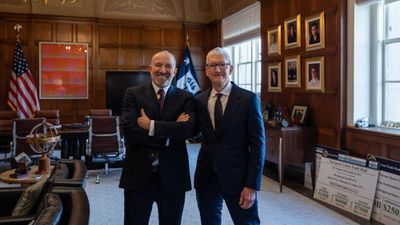
Apple CEO Tim Cook met with United States Secretary of Commerce Howard Lutnick on Monday. The U.S. Department of Commerce shared details on the meeting on social media, and said that Lutnick wished Cook well, commending his "remarkable leadership and lasting contributions to American technology."
Last week, Apple announced that Cook would be stepping down from his role as CEO on September 1, 2026, with current hardware engineering chief John Ternus set to take over. Cook's visit with Lutnick was his first high-level Trump administration meeting since last week's transition news.
Cook does not plan to leave Apple, and will instead transition to executive chairman, where he will "assist with certain aspects of the company, including engaging with policymakers around the world."
In a letter to employees, Cook said that he is healthy and that he plans to be at Apple "for a long time" in his new role. "Apple will be my top priority," he said. "It's who I am at my core, and I can't imagine it any other way."
Cook told employees that he believes he can help strengthen Apple's global relationships. Cook has navigated two Trump presidencies so far, maintaining a positive relationship with the Trump administration and earning tariff exemptions for Apple.
Cook personally donated $1 million to Trump's inaugural fund in 2025, and he presented Trump with a custom gift featuring a glass plaque with a 24-karat gold base after promising Apple would invest a total of $600 billion in the U.S. over a four-year period.
Trump last week said that he has "always been a big fan" of Cook, and that the two had a "long and very nice relationship." Trump said he was pleased with Cook's outreach efforts. "I was very impressed with myself to have the head of Apple calling to 'kiss my ass,'" said Trump. According to Trump, he solved a "fairly large problem" for Cook during his first term, and he said he would help Cook where possible when Cook is not "too aggressive" in what he asks for.
Ahead of announcing his transition to a new role, Cook said in an early April interview that the Trump administration was "very accessible," and willing to "engage." Cook explained that he felt engagement and communication were important values, giving some insight into how he is approaching his new position.
But engagement for me, not just in the U.S. but around the world, is so important because it is very complex, working through local laws, local customs, local culture, local regulations. Every country is its own story. Everybody looks at things differently.
The only way you get a feel for that is to sit before someone and communicate and engage. If you went in my conference room, you would see the Teddy Roosevelt quote 'It is not the critic who counts.' I've never believed that just yelling from the sideline about plus or minus was a good strategy. Your voice just goes into the wind.
So you'll see me everywhere, and you'll wonder 'oh, he's meeting with somebody that has a different view than him.' I think that's good. I think it's good. I think a problem in the world right now is that it's so polarized and different views aren't shared or discussed. They just become hardened. And I don't think that's good.
With Cook taking on communication with policymakers around the world, incoming CEO John Ternus will be able to spend more time focusing on Apple's growth, and he won't be exposed to the same criticism that Cook has faced for his relationship with Trump and other world leaders.
Cook is still in Washington and he attended today's State Arrival Ceremony for King Charles III and Queen Camilla, who began their four-day state visit on Monday. Cook may also attend the State Dinner this evening.
Note: Due to the political or social nature of the discussion regarding this topic, the discussion thread is located in our Political News forum. All forum members and site visitors are welcome to read and follow the thread, but posting is limited to forum members with at least 100 posts.
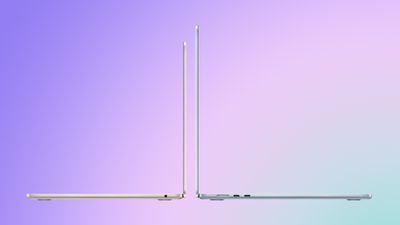
Apple last month announced a new MacBook Air, introducing the M5 chip, faster wireless connectivity, double the base storage, and a more capable charger, while simultaneously discontinuing the M4 model. So how does the new machine compare?
The M5 MacBook Air starts at $1,099 for the 13-inch model and $1,299 for the 15-inch, a $100 increase over the equivalent M4 models. In exchange, base storage doubles from 256GB to 512GB, and Apple says the new SSD delivers twice the read and write speeds of the previous generation. Education pricing is also available directly from Apple and typically shaves at least $100 off the price.
The main upgrade between the two models is the chip. Compared to the M4, the M5 delivers:
Up to 15% faster multithreaded CPU performance
Up to 30% faster overall graphics performance
Up to 45% faster ray tracing performance
27.5% higher unified memory bandwidth
In addition to these general performance claims, Apple published a set of specific real-world workload results showing measurable gains in AI-driven applications:
4×+ peak GPU compute performance for AI
3.6× faster time to first token (LLM)
1.8× faster Topaz Video Enhance AI processing
1.7× faster Blender ray-traced rendering
2.9× faster AI speech enhancement in Premiere Pro
Beyond raw performance, the M5 introduces several meaningful architectural changes. The GPU includes a dedicated Neural Accelerator in every core, a hardware addition absent from the M4, and Apple is exposing this via new Metal 4 developer APIs with Tensor capabilities.
The ray tracing engine advances to its third generation, and dynamic caching moves to its second generation. Memory bandwidth rises from 120 GB/s to 153 GB/s, enabled by the move from TSMC's second-generation 3nm process (N3E) to its third-generation 3nm process (N3P).
The M5 MacBook Air also gains Apple's N1 wireless chip, bringing Wi-Fi 7 and Bluetooth 6 in place of the M4 model's Wi-Fi 6E and Bluetooth 5.3.
Made with TSMC's second-generation 3nm node (N3E)
Made with TSMC's third-generation 3nm node (N3P)
No integrated Neural Accelerators
Integrated Neural Accelerator in every GPU core
Metal 3 developer APIs
Metal 4 developer APIs with Tensor APIs to program GPU Neural Accelerators
Second-generation ray tracing engine
Third-generation ray tracing engine
First-generation dynamic caching
Second-generation dynamic caching
Shader cores
Enhanced shader cores
PCIe NVMe Gen 3 SSD
PCIe NVMe Gen 4 SSD (2× faster read/write speeds)
120 GB/s memory bandwidth
153 GB/s memory bandwidth
Apple N1 chip
Wi-Fi 6E
Wi-Fi 7
Bluetooth 5.3
Bluetooth 6
Support for up to two external displays when the lid is open
Support for up to two external displays simultaneously over a single Thunderbolt port; one display up to 8K at 60Hz or 5K at 120Hz
30W USB-C Power Adapter
40W Dynamic Power Adapter with 60W Max
256GB base storage, up to 2TB
512GB base storage, up to 4TB
Introduced in March 2025
Introduced in March 2026
Started at $999 (13-inch), $1,199 (15-inch)
Starts at $1,099 (13-inch), $1,299 (15-inch)
For users whose workloads include on-device AI inference, complex 3D rendering, or other GPU-bound and memory-intensive tasks, the jump from M4 to M5 is significant. The combination of per-core Neural Accelerators, higher memory bandwidth, and the new GPU architecture produces multi-fold speed-ups in specific AI operations. In environments where time-to-result directly affects workflow such as local LLMs, diffusion models, video enhancement, or ray-traced production, the M5 represents a meaningful step-change. The Gen 4 SSD, which delivers approximately twice the read and write speeds of the M4 Air's Gen 3 drive, further compounds these gains for storage-intensive workflows.
For typical day-to-day usage including browsing, office work, media playback, and basic editing, the difference is highly unlikely to be perceptible in any way. The M4 was already a high-performance chip that routinely exceeded the demands of normal Mac workloads, and for the overwhelming majority of M4 MacBook Air owners, there is clearly no general-purpose reason to upgrade.
For new buyers choosing between the two models, the M5 is the more straightforward long-term choice. The doubled base storage alone changes the value calculus, and when you consider that Apple previously charged $200 to upgrade the M4 Air from 256GB to 512GB, the M5 effectively costs $100 less than a comparably configured M4 model would have at launch. If future-proofing is a priority and you intend to keep the machine for many years, the M5 model will be better equipped to handle increasingly prevalent on-device AI workloads as they mature.
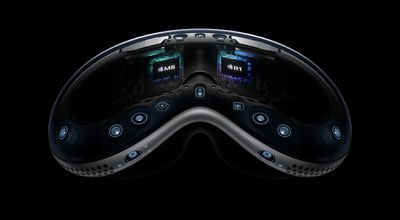
Apple's Vision Pro has hit another medical-use milestone, with a New York ophthalmologist becoming the first surgeon to perform cataract surgery using the spatial computing headset.
Dr. Eric Rosenberg of SightMD completed the initial procedure in October 2025 and has since performed hundreds of additional cases using ScopeXR, a surgical platform he co-developed for Apple's mixed reality device.
ScopeXR streams live feeds from 3D digital surgical microscopes directly into the Vision Pro, which lets the surgeon view the operative field in stereoscopic 3D while overlaying preoperative diagnostic data. The platform also supports real-time remote collaboration, allowing surgeons to virtually join procedures and see exactly what the operating surgeon sees.
"We are now able to bring the world's best surgeon into any operating room, at any hour, from anywhere on the planet," said Dr. Rosenberg in a company press release. "From residents performing their first cases to surgeons facing unexpected complications, this technology democratizes access to expertise and that will save vision."
It's another example of Apple's move toward enterprise and professional use cases for Vision Pro, with widespread consumer adoption beleaguered by the headset's $3,499 starting price and bulky form factor. Apple has increasingly leaned into specialized applications in fields like medicine, aviation training, and industrial design - markets where the device's capabilities can justify its cost, in other words.
The headset was never expected to be mass-market from day one, according to Apple. Even so, enthusiasm is said to have cooled far faster than anticipated. Based on the latest reports, there are now no Apple Vision headsets in active development, with the company's focus pivoting to lightweight smart glasses, where Meta has already seen success. Last October, Apple introduced an updated Vision Pro model featuring the M5 chip, the first hardware revision of the device.
Apple today announced that its hit comedy-drama series "Ted Lasso" is returning for a fourth season with a first episode on Wednesday, August 5. One new episode will follow every Wednesday thereafter through October 7.
"Ted Lasso" is one of the most popular shows ever released on the Apple TV streaming service. The eponymous character Ted Lasso, played by Jason Sudeikis, starts off as a small-time football coach from Kansas who is hired to coach a professional soccer team in England, despite having no experience coaching soccer.
In the fourth season, Apple says Lasso returns to England to take on his biggest challenge yet: coaching a second division women's soccer team.
"Throughout the course of the season, Ted and the team learn to leap before they look, taking chances they never thought they would," said Apple.
Apple has shared a teaser trailer for the new season.
Fan favorites such as Hannah Waddingham, Juno Temple, Brett Goldstein, Brendan Hunt, and Jeremy Swift are all set to return in the fourth season.
The third season of "Ted Lasso" was released in 2023, so there has been a long wait for a fourth season. The series has won several major awards since it debuted in 2020, with its overall positive tone making it a popular comfort show.
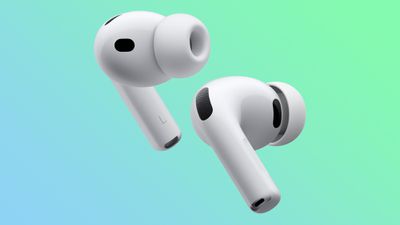
Amazon today has the AirPods Pro 3 available for $199.99, down from $249.00. This is a match of the all-time low price on the AirPods Pro 3, and it's accompanied by a solid deal on the AirPods 4.
Note: MacRumors is an affiliate partner with some of these vendors. When you click a link and make a purchase, we may receive a small payment, which helps us keep the site running.
This model of the AirPods Pro launched in September 2025 and has 2x better Active Noise Cancellation than the previous generation, better audio quality, a revised fit that's meant to improve comfort and stability, Live Translation for in-person conversations, and heart rate sensing for workouts.
You can also get the AirPods 4 for $99.00, down from $129.00. This is a second-best price on the AirPods 4, which is the base model without Active Noise Cancellation. Amazon provides a May 4 estimated delivery date for free shipping, with faster delivery options for Prime members.
Head to our full Deals Roundup to get caught up with all of the latest deals and discounts that we've been tracking over the past week.
Deals Newsletter
Interested in hearing more about the best deals you can find in 2026? Sign up for our Deals Newsletter and we'll keep you updated so you don't miss the biggest deals of the season!
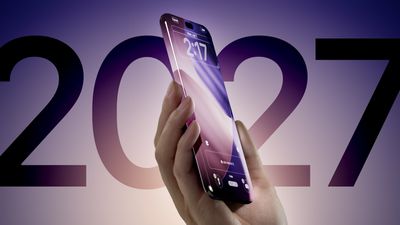
Apple's 20th-anniversary iPhone will use a new type of curved screen technology that more effectively hides the display bezels from the user's line of sight for a purer viewing experience, claims a Chinese leaker.
Apple is reportedly planning a radical redesign for the 20th-anniversary iPhone that could feature a display that curves around all four edges of the device. To achieve this, Apple will reportedly use an equal-depth quad-curved panel supplied by Samsung, and it sounds like it's going to be quite different from typical curved screens.
According to leaker Ice Universe, "It is not a traditional quad curved display, nor is it anything like the curved screen solutions we have seen on Android phones over the years." This is said to be down to its extremely subtle curvature, but there are apparently other factors that could come into play.
"What truly creates the visual impact may be a sophisticated combination of optical refraction, light guiding structures, and carefully engineered visual illusion," said Ice Universe, writing in a post on X. "The end result could be a display where the bezel nearly disappears from sight, while edge viewing remains natural and undisturbed."
Apple will also reportedly adopt a Samsung-made OLED technology called COE (Color Filter on Encapsulation) to make the 20th-anniversary iPhone's display brighter and thinner than previous panels. Apple may refer to it as a "Liquid Glass Display," in a nod to its latest software interface redesign, claims the leaker.
Apple may define its next generation display as "Liquid Glass Display." It is not a traditional quad curved display, nor is it anything like the curved screen solutions we have seen on Android phones over the years. The curvature itself could be extremely subtle. What truly... pic.twitter.com/onj81yNWQf
— Ice Universe (@UniverseIce) April 27, 2026
To mark the 20th-anniversary of the iPhone in 2027, Apple ideally wants an uninterrupted display with no cutouts for the most visual impact, but concealing the Face ID system and selfie camera under the panel is going to be a challenge.
Display analyst Ross Young has said that Apple won't have under-display Face ID ready to go for a 2027 iPhone, but other leakers think it's possible. If Apple can't get everything under the display, we may see under-display Face ID and then a small hole-punch cutout on the front for the front-facing camera.
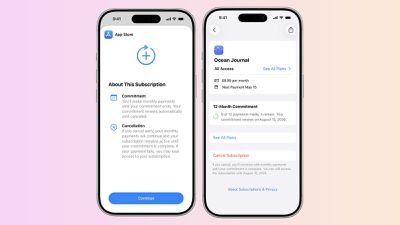
Apple today announced the launch of a new subscription option for App Store developers: monthly subscriptions with a 12-month commitment. The new option allows developers to offer subscribers discounted pricing typically associated with an annual subscription but paid on a monthly basis to keep payments more affordable.
This new payment option allows you to offer subscribers more affordable options. People can cancel their subscription at any time, which will prevent the subscription from renewing after they've completed their agreed-to payments to fulfill their commitment.
Apple says that the new feature provides transparency to users by allowing them to easily view the number of completed and remaining payments they've made toward their annual commitment. Apple will also send email and optional push notifications ahead of renewals.
Developers can begin creating these new subscription types in App Store Connect and testing them in Xcode starting today, and they will go live to users on iOS 26.4 and equivalent versions for other platforms next month alongside the launch of iOS 26.5 and related updates.
Notably, it appears the United States and Singapore will be excluded from these subscriptions for the time being, and there's no word on when they might roll out in these markets.
Spotify today launched a new Fitness hub, bringing over 1,400 on-demand Peloton workout classes to Premium subscribers alongside a range of free content from independent wellness creators.
The Peloton classes span strength, cardio, yoga, pilates, barre, meditation, stretching, and outdoor run and walk, and require no specialist equipment. Peloton's bike workouts are not included. The catalog is available in the U.S., UK, Australia, Germany, Austria, Canada, Mexico, Sweden, and Spain, with Spotify saying it will expand to more countries over time.
Both free and Premium subscribers can access curated playlists and content from a range of established wellness creators, including Yoga With Kassandra, Caitlin K'eli Yoga, Sweaty Studio, Chloe Ting, Pilates Body by Raven, Abi Mills Wellness, and Sophiereidfit. The Peloton partnership content, featuring instructors such as Rebecca Kennedy, Ally Love, and Rad Lopez, is available to Premium subscribers only, ad-free.
The Fitness hub includes an onboarding questionnaire that asks users what type of movement they want, how hard they want to push, and their experience level, then generates a personalized starter pack. Classes are primarily in English, with select options in Spanish and German. Offline downloads are supported, and users can switch between watching a class on TV and listening on a phone or smart speaker in audio-only mode.
Nearly 70% of Premium subscribers apparently work out monthly, and there are more than 150 million fitness playlists active on the platform. Fitness and workout content also ranks among the top use cases for the company's recently launched AI-powered Prompted Playlist feature.
The Fitness hub is accessible by searching "fitness" in the Spotify app's Search tab, or via the "Browse all" menu.
Apple today provided the fourth beta of an upcoming macOS Tahoe 26.5 update to developers for testing purposes, with the update coming a week after the third beta.
Developers can download the macOS Tahoe 26.5 update by opening up the System Settings app, selecting the General category, and then choosing Software Update. Beta Updates will need to be enabled, and a free developer account is required.
No new features were found in the first three macOS Tahoe 26.5 betas, and it's likely the update primarily focuses on bug fixes and performance improvements.
Update 1:05 pm: The update is now also available to public beta testers.
Apple today seeded the fourth betas of upcoming iOS 26.5 and iPadOS 26.5 updates to developers for testing purposes, with the software coming a week after Apple released the third betas.
Registered developers can download the betas from the Settings app on the iPhone or iPad by going to the General section and selecting Software Update.
iOS 26.5 and iPadOS 26.5 do not include new Siri capabilities, suggesting any Siri updates are being held until iOS 27. The Maps app has a Suggested Places feature for recommending locations to visit nearby based on trends and recent searches, plus Apple is laying the groundwork for ads in the Apple Maps app.
Apple is continuing to test end-to-end encryption (E2EE) for RCS messages between iPhone and Android users. Apple included the feature in the iOS 26.4 beta, but removed it before the update launched to the public.
In the European Union, Apple is testing proximity pairing, notification forwarding, and Live Activities for third-party wearables like earbuds and smartwatches. The functionality will allow third-party wearables to have many of the same features as the Apple Watch and AirPods.
Apple today provided developers with the fourth betas of upcoming watchOS 26.5, tvOS 26.5, and visionOS 26.5 betas for testing purposes. The software comes a week after Apple released the third betas for each platform.
The software updates are available through the Settings app on each device, and because these are developer betas, a free developer account is required.
There's no word on what's in the software as of yet. watchOS, tvOS, and visionOS often get few features in each new beta, with updates primarily focusing on bug fixes and performance improvements. Nothing new was found in the first three betas.
The IAM Union representing Apple employees in Towson, Maryland today said that it is filing an Unfair Labor Practice charge [PDF] against Apple with the National Labor Relations Board. The union is accusing Apple of unlawful discrimination against unionized workers.
Earlier this month, Apple announced plans to close the Towson Apple Store alongside two other Apple locations in Connecticut and California. The Towson store was the first Apple retail location to unionize in the U.S. back in 2022.
With most store closures, employees are relocated automatically to nearby stores, but Apple said the union rules at the Towson location prevented it from moving the workers to other stores. Apple instead said that Towson employees are "eligible to apply for open roles at Apple in accordance with the collective bargaining agreement."
The IAM Union said at the time that it was "outraged" by Apple's decision, and that there was nothing in the agreement that prevented employees from being relocated. IAM said Apple's claim was false, and that it raised "serious concerns" that the closure was a "cynical attempt to bust the union."
In today's filing, the IAM Union complained that Apple allowed employees at two non-union stores to transfer to other locations, but forced Towson employees to reapply for positions through the same process as external candidates.
"This is about whether workers are treated fairly under the law or punished for exercising their rights," said IAM Union International President Brian Bryant. "Apple is denying union-represented workers the same opportunities it is giving to others -- and doing so because these workers chose to organize. That is discrimination, and it is exactly what federal labor law is designed to prevent."
The union has asked Apple to reverse its decision and give Towson workers the same opportunity to transfer to other retail locations.
The three stores that Apple is closing are located in struggling shopping malls that are slowly shutting down and losing foot traffic.
Update: Apple has issued the following statement to MacRumors regarding the complaint:
We strongly disagree with the claims made, and we will continue to abide by the agreement that was negotiated and agreed with the union. We look forward to presenting all of the facts to the NLRB.
Note: Due to the political or social nature of the discussion regarding this topic, the discussion thread is located in our Political News forum. All forum members and site visitors are welcome to read and follow the thread, but posting is limited to forum members with at least 100 posts.
Apple's MacBook Neo has recently been struck by delayed delivery estimates on Apple.com, due to the notebook's booming popularity. However, both Walmart and Amazon offer deliveries as soon as tomorrow, and even feature small discounts on the Neo.
Following its launch in March, the MacBook Neo has become a big hit for Apple, with the company struggling to keep the computer in stock online and in Apple stores. As of writing, Apple.com quotes a 2-3 week delivery estimate on every model of the Neo in the U.S. and many other countries.
If you want to prioritize saving a bit of money, Amazon has every model of the MacBook Neo for $9 off this week. Free delivery options place the Neo arriving as soon as May 2, while Prime members can get same-day shipping on the 256GB models in many locations.
Over at Walmart, you won't find any discounts, but you will find similarly quick delivery estimates. Select locations should see delivery estimates as soon as April 28 through April 29 on every model of the MacBook Neo. If you have Walmart+ instead of Amazon Prime, this could be a better option despite the lack of a straight cash discount.
The MacBook Neo is Apple's low-cost Mac, priced at $599 for the 256GB model and $699 for the 512GB model with Touch ID. Students can get the computer for even cheaper at $499 through Apple's education store on its website.
Note: MacRumors is an affiliate partner with some of these vendors. When you click a link and make a purchase, we may receive a small payment, which helps us keep the site running.
Apple has decided to market two of its new products over the next year as "Ultra" devices, Macworld reports.
Citing sources familiar with the matter, the report claims that Apple's first foldable iPhone will be called the "iPhone Ultra." The device will become the highest end option in the lineup.
The iPhone Ultra will not be considered part of the iPhone 18 iPhone lineup, despite arriving alongside the iPhone 18 Pro and iPhone 18 Pro Max. This would be just like how the iPhone Air is not considered to be part of the iPhone 17 series. Although Apple is hoping to ship the iPhone Ultra alongside the iPhone 18 Pro, it may launch a few weeks later and with scarcer availability.
Moreover, Apple is apparently planning to release a "MacBook Ultra" later this year or in early 2027. It will feature an OLED panel and a touchscreen, sitting above the MacBook Pro in the lineup at a "significantly" higher price point. While the device was originally intended to launch later this year, it is now likely pushed back by several months due to memory supply chain shortages.
Apple already offers M-series Ultra chips, the Apple Watch Ultra, and CarPlay Ultra. "Ultra" branding for the foldable iPhone and OLED MacBook was previously rumored by Bloomberg, which added that "AirPods Ultra" could also be on the way.
OpenAI is working on a smartphone in what appears to be a significant reversal from previous reports that the company had no plans to enter the phone market, according to supply chain analyst Ming-Chi Kuo.
Kuo shared the findings from his latest supply chain checks in a post on X, saying MediaTek and Qualcomm are the chosen chip partners and Luxshare Precision Industry is the exclusive manufacturing partner, with mass production scheduled for 2028. Exact chip specifications and additional suppliers are expected to be finalized by late 2026 or the first quarter of 2027.
Kuo argues that the smartphone remains uniquely positioned for AI agent use because it is the only device that captures a user's full real-time state, including location, activity, communication, and context, which he describes as the most important input for real-time AI agent inference. He claims that AI agents will fundamentally change how people interact with a phone, shifting the focus from launching individual apps to completing tasks through a more continuous, context-aware interface.
He argues that fully controlling both the operating system and the hardware is the only way for the company to deliver a comprehensive AI agent service, and that a subscription-bundled business model could enable OpenAI to build a developer ecosystem around those agents.
Kuo suggests that Luxshare, which has long sought to reduce its dependence on Apple supply chain work, could benefit substantially from an early position in what he frames as the next generation of smartphone hardware.
The development represents a notable reversal in OpenAI's publicly stated hardware strategy. Previous reports have consistently described the company's hardware ambitions as centered on non-phone form factors developed in collaboration with Jony Ive, the former Apple design chief whose startup io Products was acquired by OpenAI for $6.5 billion. Those plans include a smart speaker, which is likely the first product to launch, along with smart glasses, a smart lamp, and potentially earbuds. OpenAI Chief Global Affairs Officer Chris Lehane has said the first hardware announcement is expected in the second half of 2026, with launch around early 2027.
OpenAI CEO Sam Altman posted on X the same day Kuo published his analysis, writing that it "feels like a good time to seriously rethink how operating systems and user interfaces are designed." Such a device would obviously put OpenAI in direct competition with Apple's iPhone.






 Note: MacRumors is an affiliate partner with some of these vendors. When you click a link and make a purchase, we may receive a small payment, which helps us keep the site running.