Apple today announced new texture and grain controls for Photographic Styles with the iPhone 18 Pro and iPhone 18 Pro Max.
Photographic Styles are tone presets that adjust the color and warmth of a photo as it is captured, rather than as a filter applied afterward, while preserving skin tones.
The iPhone 18 Pro and iPhone 18 Pro Max gain a redesigned computational imaging pipeline for the 48-megapixel Fusion Main camera that Apple says produces sharper, more detailed shots. The new texture and grain controls build on that pipeline, allowing users to further dial in their desired appearance for more creative control over their photos.
It is not clear if older iPhone models such as the iPhone 17 Pro, which otherwise support the latest version of Photographic Styles, will receive the feature via a software update.
The iPhone Duo has what Apple is calling an "iPhone-first dual battery system" with one battery on each side of the device. Apple optimized physical space for battery capacity to make sure that the battery lasts as long as possible.
When using the larger 7.6-inch inner display (unfolded), the battery lasts for up to 31 hours of video playback.
If you're using just the 5.4-inch outer display, the battery lasts for up to 44 hours when watching video.
With Apple's typical use metric, which includes equal use of both screens, the battery lasts for up to 24 hours. Typical use includes a mix of messaging, photo capture, listening to music, social app use, streaming video, playing games, web browsing, and navigation. Apple says it is based on median usage across iPhone users.
The typical use metric for the iPhone Duo matches the iPhone 18 Pro's. The larger 7.6-inch display draws more power and eats more battery than the 18 Pro when watching video, while the smaller display gets better battery life. The iPhone 18 Pro Max has the longest battery life of the three iPhones at up to 45 hours.
The iPhone Duo is able to charge to 50 percent in around 20 minutes with a 60W or higher USB-C power adapter. It includes support for MagSafe and can wirelessly charge at up to 25W using MagSafe or Qi2.
The two batteries in the iPhone Duo are managed as a single battery by iOS. Apple says battery life was maximized through the two-battery design, eSIM-only design, C2 modem efficiency, and the new A20 Pro chip.
Preorders for the iPhone Duo will start on October 16, with a launch to follow on October 23.
Apple today published a new YouTube playlist aimed at helping developers prepare their apps for the iPhone Duo, its first foldable iPhone.
The "Get ready for iPhone Duo" playlist, published on the Apple Developer YouTube channel, is described by Apple as a guide to help developers "prepare your apps for launch on iPhone Duo." It contains six videos: "Design for iPhone Duo," "Prepare your app for iPhone Duo," "Raise the bar with iPhone Duo," "Strike a pose with adaptive layouts on iPhone Duo," "Leverage multiple displays and scenes on iPhone Duo," and "Build a great camera experience for iPhone Duo."
The iPhone Duo features a number of special software features. Essential controls have moved to the sides of the display to sit within thumb's reach, the Home Screen dock is now oriented vertically, and the status bar has been redesigned to fit into the corner of the display. Software transitions between the outer and inner displays as the device opens, with controls staying in a consistent position while content scales up.
The iPhone Duo starts at $1,999 for 256GB, with storage options going up to 2TB. Preorders begin October 16, with availability starting October 23.
Apple today unveiled new iPhone 18 Pro models and the iPhone Duo – the company's first foldable iPhone – and both the iPhone 18 Pro and the iPhone Duo feature Apple's new custom-designed C2 modem for 5G connectivity.
Prior to today's announcements, there was speculation that Apple's C2 in-house modem would not support mmWave 5G in the U.S., and that the company would once again rely on Qualcomm to fill the gap for American carriers. Apparently, that's not the case, at least as far mmWave support goes.
Apple's press release for the iPhone 18 Pro and Pro Max and the tech specs page for the two models appear to indicate that the C2 modem is limited to only the smaller iPhone 18 Pro model, leaving the iPhone 18 Pro Max on Qualcomm modems. The reason for the distinction is unclear given the near identical capabilities of the iPhone 18 Pro and Pro Max.
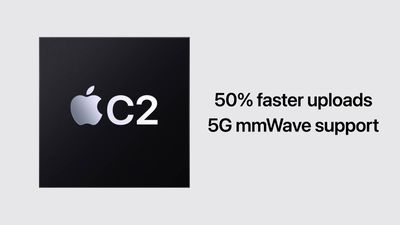
Apple says the C2 brings AI-powered improvements to cellular quality and reliability, and now supports mmWave in the U.S. The company claims the C2 also delivers meaningfully faster uploads when compared to C1X while consuming 15 percent less energy.
As for mmWave support, Apple's U.S. specifications list bands n258, n260, and n261, alongside sub-6GHz 5G with 4×4 MIMO, but the UK specifications list sub-6GHz only.
Meanwhile, both models feature the N1, an Apple-designed wireless networking chip that enables Wi-Fi 7, Bluetooth 6, and Thread support.
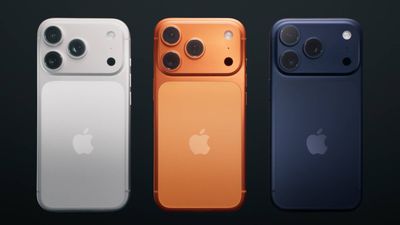
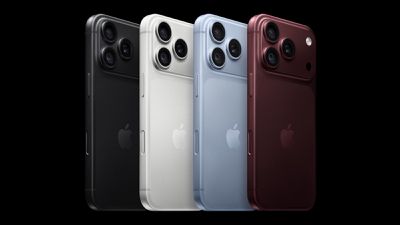
The iPhone 18 Pro and iPhone 18 Pro Max come in burgundy, glacier, silver, and black colors, with prices starting at $1,199 and $1,299, respectively. Both models come in 256GB, 512GB, 1TB, and 2TB storage options and will be available to order September 12.
iPhone Duo is available in star white and night sky colors, and starts at $1,999, coming in 256GB, 512GB, 1TB, and 2TB storage capacities. Pre-orders for the iPhone Duo begin on Friday, October 16, with availability beginning Friday, October 23.
Update: This article originally stated that all three models include the C2 modem, but it appears the iPhone 18 Pro Max does not in fact include it.
The iPhone 18 Pro Max has the largest battery ever in an iPhone, and both iPhone 18 Pro models last for longer than the iPhone 17 Pro models.
iPhone 18 Pro Battery
Typical use - Up to 24 hours
Video playback - Up to 36 hours
Streaming video - Up to 33 hours
iPhone 18 Pro Max
Typical use - Up to 30 hours
Video playback - Up to 45 hours
Streaming video - Up to 40 hours
For comparison, the iPhone 17 Pro lasted for up to 33 hours when watching video, and the iPhone 17 Pro Max lasted for up to 39 hours. Streaming video numbers were 30 hours for the 17 Pro and 35 hours for the 17 Pro Max.
The iPhone 18 Pro gains three hours of battery life, while the 18 Pro Max gains six hours. Apple says its "typical use" metric is based on median iPhone usage and includes messages, photo captures, music, social app use, streaming, games, browsing, and navigation.
The iPhone 18 Pro and Pro Max offer faster charging and can charge to 50 percent in a 15-minute period when using a 60W or higher Adjustable Voltage Supply power adapter. The two iPhones offer up to a 50 percent charge in 30 minutes with a 35W adapter, and up to 25W MagSafe and Qi2 charging is supported.
Preorders for the iPhone 18 Pro models will begin on Saturday, September 12 at 5:00 a.m. Pacific Time.
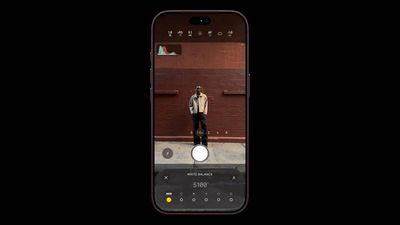
Apple today announced Pro Controls, a new customizable camera interface for the iPhone 18 Pro and iPhone 18 Pro Max that lets users manually adjust aperture, shutter speed, and white balance, or check exposure levels with a live histogram.
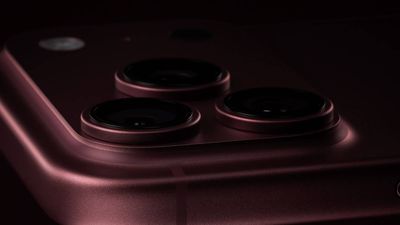
Pro Controls is built around the variable aperture on the new Main camera. Six laser-cut blades move smoothly between four aperture settings, and the Camera app can adjust aperture automatically based on depth of field and lighting, or users can take manual control themselves for what Apple calls "truly unique shots that weren't possible before" on an iPhone.
Pro Controls works across both photo and video capture. It also introduces Smart Focus Tracking, which uses on-device AI models to lock onto a subject and maintain focus even if that subject briefly leaves the frame and comes back into view.
The new interface arrives alongside broader camera upgrades on the iPhone 18 Pro and iPhone 18 Pro Max, including a redesigned computational imaging pipeline, updated Photographic Styles with new texture and grain controls, and the ability to apply Cinematic effects after capture to video shot at up to 60 fps. Variable aperture is also exposed to developers through a new API, giving third-party apps access to the same range of aperture settings.
The iPhone 18 Pro starts at $1,199 and iPhone 18 Pro Max starts at $1,299. Pre-orders open on Saturday, September 12, ahead of availability on Friday, September 18.
The iPhone Duo Case is a thin, two-part design that wraps around both the front and back of the device. It uses built-in magnets that align with th iPhone Duo for what Apple calls a "magical attach experience." The case is made from polycarbonate with a matte coating and comes in Sand and Navy Blue.
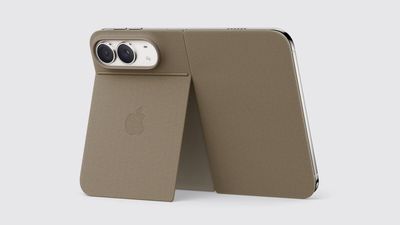
The iPhone Duo Folio with Kickstand takes a different approach, using TechWoven, Apple's custom technical fabric, and covering only the back of the device rather than wrapping the edges. It includes an integrated kickstand that snaps flush against the case when not in use and props up at a range of angles for reading, watching video, or FaceTime calls. It uses the same magnetic alignment, and Apple says it is able to charge via MagSafe behind the kickstand, even when it's propped open. The Folio with Kickstand is available in Taupe and Navy Blue.
Apple says both cases go through thousands of hours of testing during design and manufacturing, consistent with the rest of its case lineup. The iPhone Duo Case and Folio with Kickstand are currently unavailable, but will presumably become available for pre-order soon.
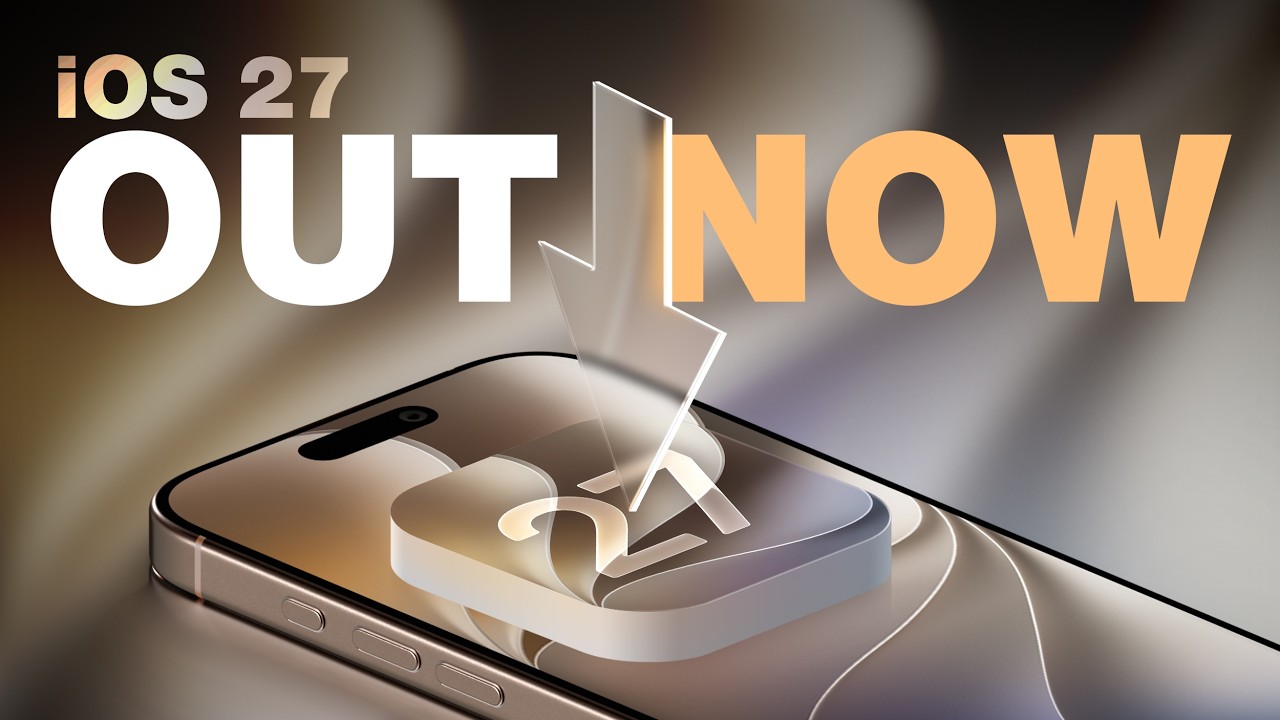
Apple today seeded the release candidate versions of iOS 27 and iPadOS 27 for final testing purposes, with the update coming a week after Apple released the eighth betas. These will be the last beta updates of iOS 27 and iPadOS 27 before the software's public release, as long as no bugs are found.
Registered developers and public beta testers can download the betas from the Settings app on the iPhone or iPad by going to the General section and selecting Software Update.
iOS 27 introduces Apple's smarter version of Siri, Siri AI. Siri AI is a chatbot similar to ChatGPT, incorporating general world knowledge, personal data from apps like Messages and Mail, and onscreen awareness to answer questions and find information for you.
There are new Apple Intelligence features in apps like Photos, Safari, Shortcuts, Wallet, and Passwords, plus Apple added a standalone Siri app that houses Siri conversations. Write with Siri is available systemwide for generating text or offering feedback on your writing, and Visual Intelligence has been relocated to the Camera app with a new Siri mode.
Apple improved the look of Liquid Glass and added a slider for customizing transparency. There are multiple performance improvements to speed up iOS, so everything feels faster, even on older iPhones. Apps launch quicker, AirDrop transfers are faster, the keyboard pops up more quickly, and devices are better at transitioning between Wi-Fi and Cellular to keep you connected.
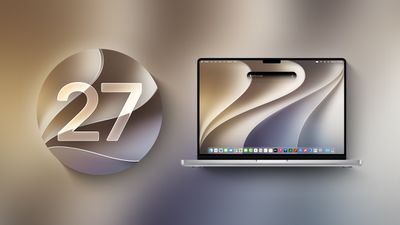
Apple today seeded the release candidate version of macOS Golden Gate, with the update coming a week after Apple seeded the eighth beta. The release candidate is the final version of macOS Golden Gate that developers and beta testers will get before the software sees a public launch.
Testers can download macOS Golden Gate by going to System Settings > General > Software Update. Beta Updates will need to be enabled, and a free developer account is required.
macOS Golden Gate includes multiple design improvements. Liquid Glass opacity has been improved to increase readability, there's a slider for controlling the level of transparency, and changes to shadowing make it easier to tell when a window is active. Apps now have uniform toolbars, edge-to-edge sidebars, and less rounded corners, and there are fewer icons in menu bars.
Siri has been transformed into Siri AI, a chatbot-style assistant that combines general world knowledge, your personal data, and onscreen awareness to answer questions about anything and find information for you. Siri lives in Spotlight, and you can ask questions with the new Search or Ask interface.
There's also a Siri app where you can chat with Siri and view past conversations, and on newer Macs, you can set a custom voice for Siri with personalized pace and expressivity. Visual Intelligence is now on the Mac so Siri can answer questions about what's on your screen, and a Write with Siri feature lets Siri generate text or give feedback on your writing.
There are AI photo editing tools in the Photos app, AI tab organization in Safari, an option to use AI to automatically update weak passwords in the Passwords app, and a revamped Image Playground app that can generate photorealistic images.
Apple today seeded the release candidate versions of watchOS 27, visionOS 27, and tvOS 27 to developers and public beta testers. The release candidates are the final versions of the updates that will be seeded to the public as long as no final bugs are found during this last round of testing.
The updates can be installed through the Software Update section in the Settings app on each device.
watchOS 27 introduces Siri AI, the smarter, more capable version of Siri. Siri can hold back-and-forth conversations, plus it has access to general world knowledge and your personal data to answer questions and find information. Siri AI on Apple Watch requires an iPhone that supports Apple Intelligence, including the iPhone 15 Pro and later.
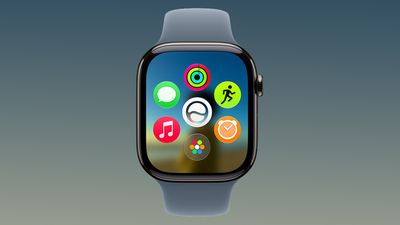
There's a Dynamic app grid that highlights Siri suggested apps, and more intuitive Smart Stack Suggestions. You can find your parked car, see pinned messages, get noise alerts, and view identity and transit cards. Liquid Glass has been updated to improve legibility, and Workout Buddy works on the Apple Watch even when an iPhone isn't nearby. Apple also added a new all-in-one Find My app.
visionOS 27 also includes Siri AI. Siri on Vision Pro can answer questions about anything the wearer is looking at, and there's a new Siri orb that can be placed anywhere in wearer's virtual space.
Panorama photos can be turned into spatial environments, and there's a new Icelandic Thórsmörk environment that features dramatic mountains, valleys, and glaciers, along with the northern lights. Web Environment support allows developers to create 360-degree environments in Safari for a more native Vision Pro browsing experience.
App windows are now curved to provide a more immersive workspace, and Control Center has been reorganized to make system controls easier to find. Apple added a smaller widget size, and notifications automatically expand when the wearer looks at them.
tvOS 27 has few new features compared to the other 27 software updates, but it does add a redesigned Podcasts app, options for larger text, and a more responsive Control Center.
AirPlaying to an Apple TV from another Apple device is faster, and apps and animations are smoother. You can also now see AppleCare coverage details in the Settings app.
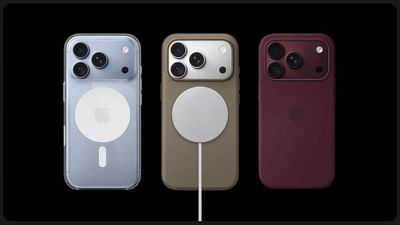
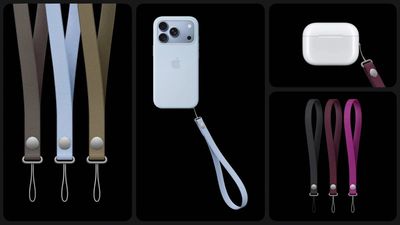
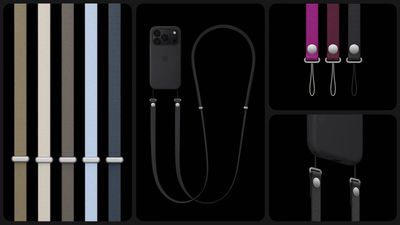
Apple today announced a new lineup of accessories for the iPhone 18 Pro, iPhone 18 Pro Max, and AirPods Pro 3, including a redesigned clear case with MagSafe and all-new wrist straps.
The new colors span much of Apple's accessory range:
The Wrist Strap is new, and Apple highlighted its compatibility with the AirPods Pro 3 alongside the iPhone 18 Pro and iPhone 18 Pro Max.
Apple has also updated its clear case with MagSafe, giving it a new circular MagSafe alignment ring in place of the square outline introduced with last year's model.
The new cases, straps, and wallet are available to order now.
Following the announcement of the iPhone 18 Pro models today, Apple discontinued the iPhone 17 Pro and iPhone 17 Pro Max.
Apple usually retires its Pro models with the release of their successors, and this year that's no different. Both the iPhone 17 Pro and iPhone 17 Pro Max are no longer available on Apple's online store.
The iPhone 17 Pro and iPhone 17 Pro Max were introduced in September 2025, at Apple's "Awe dropping" event and released later the same month. Both models are powered by the A19 Pro chip and feature triple-array rear camera systems, all of which have 48-megapixel lenses, with one being a 48-megapixel Telephoto camera offering 4x optical zoom and up to 8x optical-quality zoom. There's also a 18-megapixel Center Stage front camera.
These models replaced the titanium frame of the iPhone 16 Pro models with a new aluminum unibody design incorporating an Apple-designed vapor chamber for improved thermal performance, while retaining 6.3-inch and 6.9-inch display sizes. The iPhone 17 Pro launched at $1,099, while the iPhone 17 Pro Max started at $1,199 in the United States.
With the discontinuation of the iPhone 17 Pro and Pro Max, Apple's lineup now centers on their successor models, with the iPhone 18 Pro starting at $1,199, and the iPhone 18 Pro Max starting at $1,299. For the first time, a 2TB storage capacity is available on the smaller model. Apple today also unveiled the iPhone Duo, its first foldable iPhone, which starts at $1,999 for 256GB, with storage options going up to 2TB.
Elsewhere today, Apple has raised the prices of the iPhone 16, iPhone 17, iPhone Air, and iPhone 17e on its online store.
Behind today's iPhone 18 Pro and iPhone Duo announcements, Apple has raised the prices of the existing iPhone 16, iPhone 17, iPhone Air, and iPhone 17e on its online store.
The new starting prices for the three models now look like this:
iPhone 16: $799 (+$100)
iPhone 17e: $699 (+$100)
iPhone 17: $899 (+$100)
iPhone Air: $1099 (+$100)
So that's a $100 price hike on all four existing models in Apple's iPhone lineup. With the debut of the iPhone 18 Pro and iPhone 18 Pro Max, Apple has discontinued the iPhone 17 Pro and iPhone 17 Pro Max.
Prior to today's iPhone event, there was growing speculation that Apple may hike the prices of its iPhone 17 lineup when new iPhone 18 Pro models launch in September, especially following CEO Tim Cook's recent comments about "unavoidable" price increases.
In late June, Cook told The Wall Street Journal that Apple is no longer able to absorb the increased cost of memory and storage chips, both of which are in high demand from AI and neocloud companies as they continue to build more data centers.
The scale of the AI infrastructure buildout has prompted debate over whether demand will ultimately justify the hundreds of billions of dollars being invested, but for now it is helping to drive supply constraints across the semiconductor industry. Cook likened the memory shortages to a hundred-year flood. "I've never seen anything like it in any area in over 40 years," he said.
Rumors about the foldable iPhone were unclear on whether it would have MagSafe charging, but it turns out the iPhone Duo does indeed have a magnetic charging array.
Tech specs for the device say it supports MagSafe wireless charging at up to 25W, the same as the iPhone 18 Pro models. It also supports Qi2 25W wireless charging when using third-party accessories.
Faster wired charging is available, with the iPhone Duo charging to 50 percent in a 20-minute period. That's a little bit slower than the iPhone 18 Pro and Pro Max, which can charge to 50 percent in 15 minutes.
The iPhone Duo preorders start on October 16, and it will launch on October 23. Pricing starts at $1,999 for 256GB of storage.
Apple's all-new foldable iPhone Duo will be available to pre-order starting on Friday, October 16 at 5 a.m. Pacific Time, and the device will be released on Friday, October 23, in the U.S. and more than 70 other countries and regions, including Australia, Canada, China, France, Germany, India, Japan, Singapore, the U.K., and others.
In the U.S., pricing will start at $1,999 for a configuration with 256GB of storage.
512GB, 1TB, and 2TB storage capacities will also be available, with U.S. pricing going up to a whopping $3,199 for the 2TB configuration:
256GB: $1,999
512GB: $2,199
1TB: $2,599
2TB: $3,199
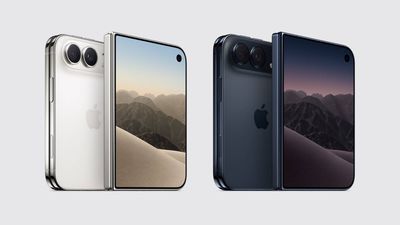
There are two color options: Star White and Night Sky.
iPhone Duo will launch in 28 more countries and regions on Friday, October 30.
Apple today announced that the iPhone 18 Pro and iPhone 18 Pro Max will be available to pre-order starting Saturday, September 12 at 5 a.m. Pacific Time / 8 a.m. Eastern Time. The devices will then be released on Friday, September 18.
The initial launch countries include the U.S., Australia, Brazil, Canada, China, Colombia, France, Germany, India, Japan, Malaysia, Mexico, Singapore, South Korea, Türkiye, the United Arab Emirates, the U.K., Vietnam, and others.
The devices will be available in 20 other countries starting Friday, September 25.
The key dates:
Pre-Orders: Saturday, September 12 at 5 a.m. Pacific Time / 8 a.m. Eastern Time
Release Date: Friday, September 18
Apple also announced that iOS 27 will be released on Monday, September 14.
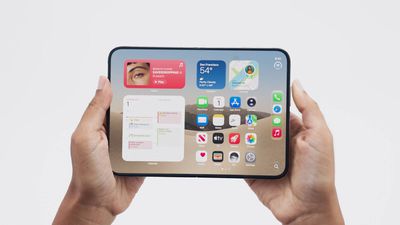
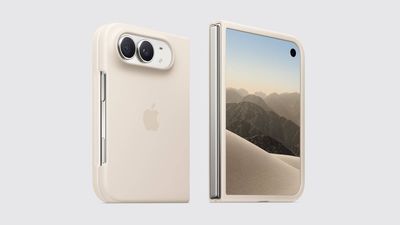
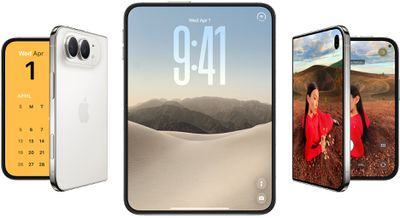
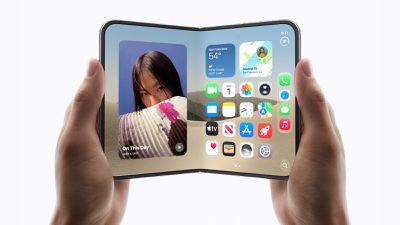
Apple today announced the "iPhone Duo," a new kind of iPhone featuring two screens and a foldable inner display.
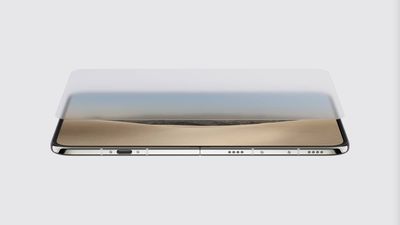
The two halves of the iPhone Duo connect into a single continuous frame with the same aspect ratio across both displays, and Apple said the transition between open and closed is designed to feel fluid. When fully open, Apple says it is the thinnest iPhone ever made, with an architecture that packages its components into the camera plateau.
The frame is machined and polished titanium, with Ceramic Shield on the back and Ceramic Shield 2 on the front, and the device carries an IP68 rating. iPhone Duo comes in two colors: Star White and Night Sky. Touch ID is built into the side button, and the device can also be unlocked using an Apple Watch.
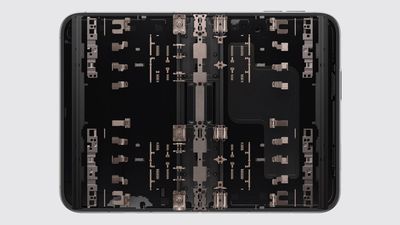
A custom hinge, made from more than 100 tiny precision components, holds the display flat when open and controls the folding motion. Apple said the structure uses a multi layer lamination design with viscoelastic adhesives that let the display's layers glide against each other during folding "like pages in a book," preventing distortion over time. A titanium plate forms the bottom layer for added durability, with carbon fiber support plates creating a stiff, lightweight base for the display to rest on.
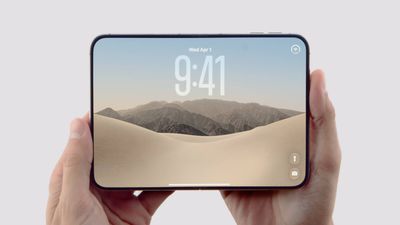
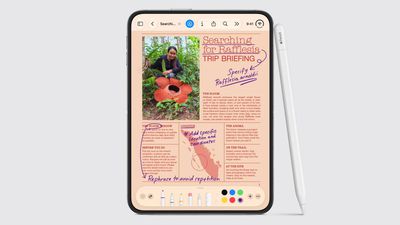
The inner display measures 7.6 inches, which Apple said is 50% larger than the iPhone 18 Pro Max and 80% larger than the iPhone 18 Pro, while the outer display is 5.4 inches and offers 90% of the screen area of the iPhone 18 Pro. Apple Pencil support is coming to both displays later this year.
For the display surface itself, Apple said it created a custom nano texture finish that cuts down on glare and reflections. The company also described a separate micro lens texture, produced using maskless laser lithography that writes each lens pixel by pixel, which it said creates a "perceptually flat matte surface" that minimizes the visibility of the fold crease while still feeling premium to the touch.
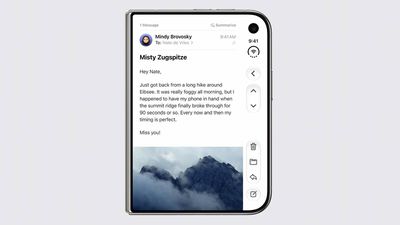
The iPhone Duo also features a number of special software features. Essential controls have moved to the sides of the display to sit within thumb's reach, the Home Screen dock is now oriented vertically, and the status bar has been redesigned to fit into the corner of the display. Software transitions gracefully between the outer and inner displays as the device opens, with controls staying in a consistent position while content scales up.
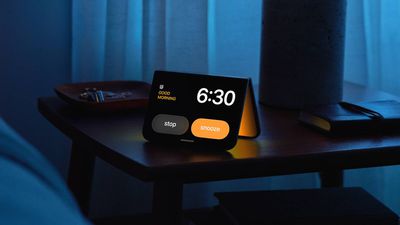
iOS also adapts to how the device is angled or propped, and it can be used partially folded, with content sliding away from the crease where taps are harder to register. Custom audio tuning adjusts for the changing distance between the speakers depending on how the device is positioned. Users can run two apps at once or open the same app twice, and can swipe up from the bottom to switch apps or pair two apps together to reopen later. A new Standby mode adds widgets for music, calendar, or weather, and Apple said the device can double as a bedside clock with a soft glow.
The iPhone Duo uses the same 48MP Fusion main camera design Apple has used elsewhere in its lineup alongside a 48MP Fusion ultra wide camera, the same ultra wide used in the iPhone 18 Pro, and supports Apple's upgraded Photographic Styles. Since the device can stand on its own, Apple said it opens up new options for capturing time lapses in 4K Dolby Vision HDR.
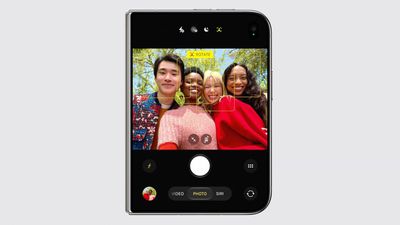
The outer display houses a 12MP Center Stage front camera, which Apple said improves selfies by letting people preview the shot before taking it. The inner display has its own FaceTime camera hidden behind the screen, which works whether the device is fully open or propped on a surface, and the two cameras can dual capture front and rear scenes simultaneously.
A new Duo FaceTime feature lets someone else join a video call from the outer display. A Smart Take feature tracks a scene and automatically takes the photo once everyone in a group shot is ready, removing the need to set a timer, and the outer display can play animations to help hold a child's attention for the camera.
The iPhone Duo contains Apple's A20 Pro chip, just like the iPhone 18 Pro. It also features the new C2 modem, which Apple said is up to 50% faster than the C1X, adds 5G mmWave support in the U.S., and uses up to 15% less battery. Apple also said AI algorithms improve everyday cellular reliability, including reconnecting faster in areas with weak coverage, and that the device delivers up to 35% higher sustained performance than the iPhone 17 Pro. The iPhone Duo is eSIM only worldwide.
Each half of the device has its own battery, which Apple said operate together as a single battery for all day use, rated at up to 31 hours of video playback on the inner display and 44 hours on the outer display. Using both screens equally, Apple rates the device for up to 24 hours of battery life, with fast charging reaching 50% in around 20 minutes and just five minutes of charging providing up to five hours of video playback on the outer display.
New accessories include a Duo Folio case with a built in kickstand, along with an iPhone Duo case made of two separate parts that wrap around each half of the device.
The iPhone Duo starts at $1,999 for 256GB, with storage options going up to 2TB. Preorders begin October 16, with availability starting October 23.
Apple today announced it is extending free access to satellite features for an additional year for existing iPhone 14, iPhone 15, and iPhone 16 users.
The extension applies to devices activated in a country that supports Apple's satellite features prior to midnight Pacific Time on September 9. Apple revealed the update in its press release for the new iPhone 18 Pro and iPhone 18 Pro Max.
This marks at least the third time Apple has extended free access to the features for iPhone 14 users, whose satellite trial was originally set to run for two years from the phone's launch in November 2022 before Apple pushed the expiration date back in 2025 and again this year. Free access for iPhone 15 users, whose trial was set to expire this year, has similarly been extended, and iPhone 16 owners are now covered by the same rolling extension for the first time.
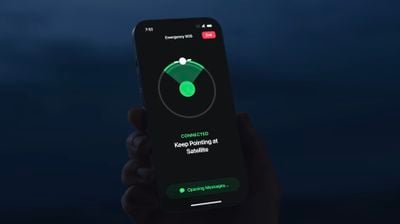
Apple's satellite features include Emergency SOS via satellite, Messages via satellite, Find My via satellite, and Roadside Assistance via satellite, with availability varying by country. The features rely on Apple's satellite partner Globalstar and let users reach emergency services, share their location, or send messages when they have no cellular or Wi-Fi signal.
Apple has not confirmed what, if anything, it plans to charge for the features once free access eventually ends. For now, the practical effect is that iPhone 14, iPhone 15, and iPhone 16 owners who activated their devices before today's cutoff can keep using the features at no cost for at least another year.