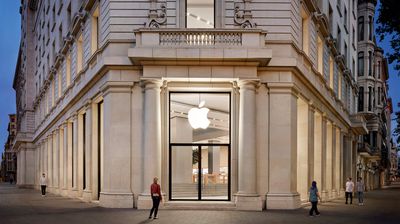
Apple's beautiful Passeig de Gràcia store in the heart of Barcelona, Spain has been temporarily closed for renovations since mid-February, but the location is finally set to reopen next month. The store will resume business on May 26, according to Apple's website.
Apple Passeig de Gràcia
Apple Passeig de Gràcia first opened in 2012, and it is one of the company's flagship retail locations. The store is on one of the most popular avenues in Barcelona, inside a historic former bank building with a stunning stone facade.
Three established YouTube channels have sued Apple, alleging that the company violated the U.S. Digital Millennium Copyright Act (DMCA) by unlawfully accessing and scraping millions of copyrighted videos from YouTube to train its AI models.
In a class action lawsuit filed in California federal court last week, the owners of the YouTube channels h3h3Productions (plus H3 Podcast and H3 Podcast Highlights), MrShortGame Golf, and Golfholics allege that Apple "deliberately circumvented" YouTube's protections against video scraping and "profited substantially" by doing so.
Apple's research papers indicate that some of the YouTube videos uploaded by the plaintiffs were used to train its AI models, the complaint alleges.
Apple's actions were "not only unlawful, but an unconscionable attack on the community of content creators whose content is used to fuel the multi-trillion-dollar generative AI industry without any compensation," the lawsuit adds.
The plaintiffs are seeking an injunction and damages individually and on behalf of all others similarly situated in the U.S., per the complaint.
In recent months, the same three YouTube channels have filed similar lawsuits against other tech giants, including Meta, Nvidia, ByteDance, and Snap.
h3h3Productions is a well-known YouTube channel created by Ethan Klein and Hila Klein, and they later created the H3 Podcast. Their channels have millions of followers, while MrShortGame Golf and Golfholics have hundreds of thousands of followers.
Note: MacRumors is an affiliate partner with Amazon. When you click a link and make a purchase, we may receive a small payment, which helps us keep the site running.
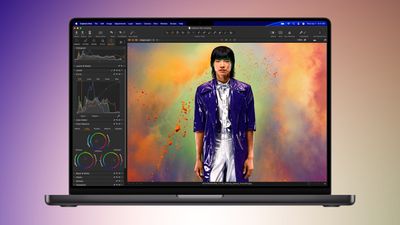
Starting with the 14-inch models, you can get the 24GB/1TB M5 Pro MacBook Pro for $2,049.99, down from $2,199.00. This deal, along with all of the others we're tracking in this article, represent best-ever prices on the brand new M5 Pro and M5 Max MacBook Pro.
We're also tracking similar steep discounts on the 16-inch models, including a few M5 Max options. These discounts reach up to $199 off original prices, and as of writing we're only tracking these deals on Amazon.
Amazon has the 512GB 13-inch M5 MacBook Air for $949.99, down from $1,099.00, and the 24GB/1TB model for $1,349.99, down from $1,499.00. Both of these represent new record low prices for each configuration, and as of writing we're only seeing these deals at Amazon.
In terms of the 15-inch models, you'll find up to $149 off the M5 MacBook Air, with multiple color options on sale for each configuration. Prices start at $1,149.99 for the 512GB model, down from $1,299.00, and also include both 1TB models on sale.
If you're on the hunt for more discounts, be sure to visit our Apple Deals roundup where we recap the best Apple-related bargains of the past week.
Deals Newsletter
Interested in hearing more about the best deals you can find in 2026? Sign up for our Deals Newsletter and we'll keep you updated so you don't miss the biggest deals of the season!
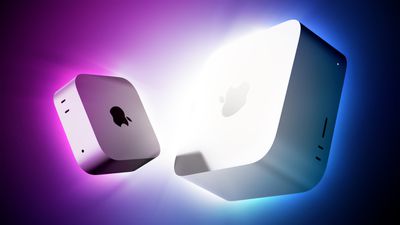
Apple's online store in the U.S. is currently showing delivery estimates of up to 4-5 months for many Mac mini and Mac Studio configurations with upgraded amounts of RAM. The delays are occurring amid a severe global memory chip shortage driven by surging demand from companies building AI servers that require large amounts of RAM.
For example, a Mac mini with an M4 Pro chip and 64GB of RAM ordered from Apple's online store in the U.S. today is estimated to ship in 16-18 weeks.
Even the $599 base model with an M4 chip and 16GB of RAM has a one-month delay.
Likewise, a Mac Studio with an M3 Ultra chip and 256GB of RAM is estimated to ship in 4-5 months, with in-store pickup not available until September.
Memory chip prices are reportedly starting to stabilize or slightly decrease, but prices still remain well above historical averages, so high-end Mac mini and Mac Studio shipping estimates might not meaningfully improve any time soon.
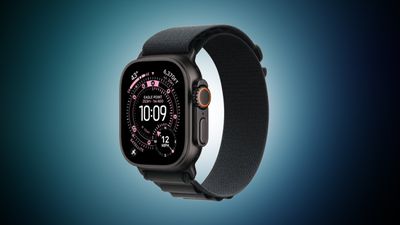
Amazon today has introduced fresh deals on the Apple Watch Ultra 3, providing $99 discounts on select models. It's been months since we last tracked any discounts on the Ultra 3, and these are solid second-best prices on the 2025 smartwatch.
Note: MacRumors is an affiliate partner with some of these vendors. When you click a link and make a purchase, we may receive a small payment, which helps us keep the site running.
You can get the Apple Watch Ultra 3 for $699.99 in Natural and Black color options, down from $799.00. There are also a few Milanese Loop models on sale for $799.99, down from $899.00.
We've collected all of the Apple Watch Ultra 3 models currently on sale on Amazon in the list below. All of these deals are within $19 of the all-time low price, and they're the best prices we've seen so far in 2026.
If you're on the hunt for more discounts, be sure to visit our Apple Deals roundup where we recap the best Apple-related bargains of the past week.
Deals Newsletter
Interested in hearing more about the best deals you can find in 2026? Sign up for our Deals Newsletter and we'll keep you updated so you don't miss the biggest deals of the season!
NASA has shared threeincrediblephotos shot on the iPhone 17 Pro Max by astronauts during the Artemis II mission to the Moon.
Shot on iPhone 17 Pro Max (Wiseman)
In February, NASA announced that the iPhone had been fully qualified for extended use in orbit, with reports indicating that each of the four crew members aboard the Orion are equipped with an iPhone 17 Pro Max for personal photos and videos.
The photos show Artemis II's Commander Reid Wiseman and Mission Specialist Christina Koch looking back at Earth through one of the Orion spacecraft's main cabin windows. Flickr data indicates that these photos were shot with the iPhone 17 Pro Max's front camera on April 2, which was the second day of the mission.
Shot on iPhone 17 Pro Max (Koch)
All other photos from the mission shared so far were captured with other cameras, such as the Nikon D5, Nikon Z 9, and GoPro HERO4 Black.
Shot on Nikon D5
Artemis II is NASA's first crewed mission to the Moon since 1972. The crew is expected to reach the far side of the Moon on Monday, breaking the all-time record for the farthest distance traveled from Earth by humans. However, the Orion is not capable of landing on the Moon and is set to return to Earth on April 10.
Amazon has introduced a few new record low prices on the M5 MacBook Air this weekend, with up to $200 off these notebooks. We're tracking $149 off the 13-inch M5 MacBook Air and up to $200 off the 15-inch models.
Note: MacRumors is an affiliate partner with Amazon. When you click a link and make a purchase, we may receive a small payment, which helps us keep the site running.
Amazon has the 512GB 13-inch M5 MacBook Air for $949.99, down from $1,099.00, and the 24GB/1TB model for $1,349.99, down from $1,499.00. Both of these represent new record low prices for each configuration, and as of writing we're only seeing these deals at Amazon.
In terms of the 15-inch models, you'll find up to $200 off the M5 MacBook Air, with multiple color options on sale for each configuration. Prices start at $1,149.99 for the 512GB model, down from $1,299.00, and also include both 1TB models on sale.
If you're on the hunt for more discounts, be sure to visit our Apple Deals roundup where we recap the best Apple-related bargains of the past week.
Deals Newsletter
Interested in hearing more about the best deals you can find in 2026? Sign up for our Deals Newsletter and we'll keep you updated so you don't miss the biggest deals of the season!
Apple's HomePod mini today reached a notable milestone, marking 2,000 days since its introduction in October 2020, an unusually long lifespan for an Apple hardware product that has yet to receive a second-generation refresh.
Apple unveiled the HomePod mini at its iPhone 12 event on October 13, 2020, positioning it as a smaller and more affordable alternative to the original HomePod. The device launched at just $99, with pre-orders beginning November 6 and availability following on November 16.
Unlike the original HomePod, which emphasized premium audio at a higher price point, the HomePod mini was designed as a mass-market smart speaker that could be deployed throughout the home at comparatively low cost. Apple described it as delivering "amazing sound" alongside Siri functionality and smart home control, with a compact spherical design that enabled 360-degree audio.
The HomePod mini is powered by the Apple S5 chip, the same processor used in the Apple Watch Series 5, and features a single full-range driver, dual passive radiators, and a four-microphone array. It supports 802.11n Wi-Fi, Bluetooth 5.0, Ultra Wideband for proximity-based features, and Thread networking, allowing it to function as a smart home hub.
Apple expanded the available colors in 2021, adding blue, yellow, and orange options to the original white and space gray finishes, and later replaced space gray with a similar "midnight" variant. Beyond these cosmetic updates, the underlying hardware has remained unchanged, making the HomePod mini one of the longest-running Apple devices without a specification revision.
Apple is widely expected to release a second-generation HomePod mini sometime soon, and the most consistent expectation is a move to a newer chip in place of the current S5, which should improve responsiveness, computational audio performance, and headroom for future Siri features. A second-generation Ultra Wideband chip and Apple's N1 Bluetooth and Wi-Fi chip are also possibilities.
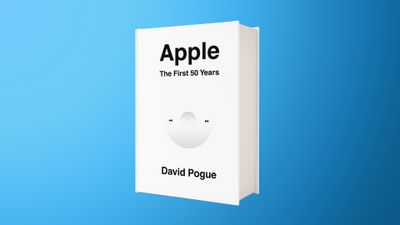
Last month, tech columnist David Pogue launched a new book called "Apple: The First 50 Years." On Amazon, you can get the new book for $34.38 in hardcover, down from $50.00, which is a 31 percent discount on the book.
Note: MacRumors is an affiliate partner with Amazon. When you click a link and make a purchase, we may receive a small payment, which helps us keep the site running.
The book explores the first five decades of Apple's history, including interviews with 150 key people who shaped Apple into what it is today, like Steve Wozniak, John Sculley, Jony Ive, and more. The book launched to coincide with Apple's 50th anniversary, which just happened on April 1, 2026.
Amazon's sale is on the hardcover version of the book, and provides an estimated April 9 delivery date for free delivery. If you're on the hunt for more discounts, be sure to visit our Apple Deals roundup where we recap the best Apple-related bargains of the past week.
Deals Newsletter
Interested in hearing more about the best deals you can find in 2026? Sign up for our Deals Newsletter and we'll keep you updated so you don't miss the biggest deals of the season!
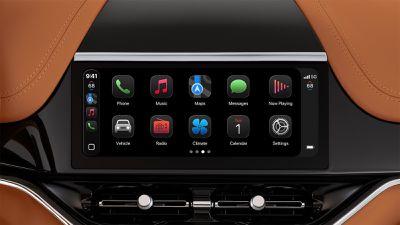
Apple's CarPlay system for accessing iPhone apps on a vehicle's dashboard screen received three popular apps this week: ChatGPT, Google Meet, and Audiomack.
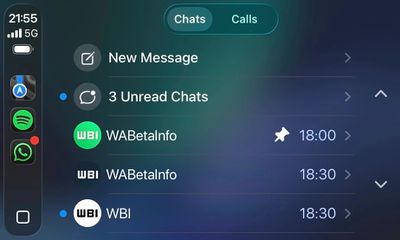
In addition, WhatsApp is beta testing a revamped CarPlay app that will improve upon the basic Siri-based functionality that was previously available.
Make sure you have the latest version of each app and they will automatically appear on CarPlay.
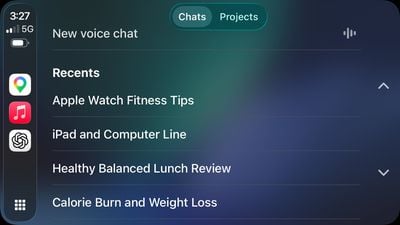
ChatGPT
Starting with iOS 26.4, CarPlay supports voice-based conversational apps. This means that chatbots can extend their iPhone apps to CarPlay for voice-based conversations, and OpenAI's ChatGPT is one of the first options available.
With the ChatGPT app on CarPlay, you can have voice conversations with ChatGPT while the app is open, and view the titles of your past conversations. For safety reasons, the app does not show the text or images within conversations.
Google Meet
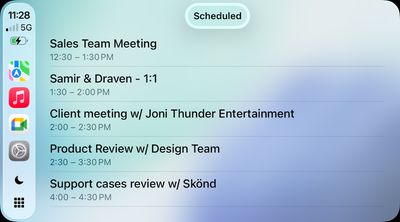
Google Meet is now available on CarPlay as well, allowing you to join meetings with a single tap, view your upcoming schedule, and participate in audio calls. For safety reasons, you cannot view video calls on the CarPlay interface.
Audiomack
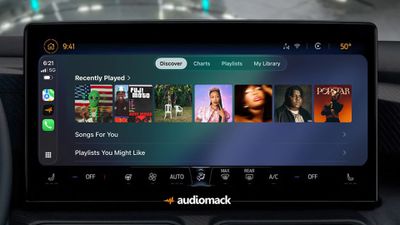
Audiomack expanded to CarPlay this week. The 11th-most downloaded app in the App Store's Music category in the U.S. lets you stream and download songs, with a focus on independent artists and especially the Afrobeats and hip-hop genres.
Audiomack's CarPlay app has Discover, Charts, Playlists, and My Library tabs, allowing you to listen to your existing songs and discover new ones.
WhatsApp is already available on CarPlay, but the app has limited Siri-based functionality. The revamped app displays lists of recent chats and phone calls, and there is also a tab that displays a list of your favorite contacts.
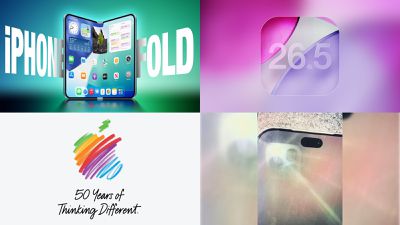
An incredibly busy March in the Apple world has come to end, punctuated by the company celebrating its 50th anniversary on April 1.
That doesn't mean the news and rumors have stopped, however, as this week saw new discussion of the foldable iPhone, the iPhone 18 Pro, a potential future iMac upgrade, and much more to come throughout the remainder of the year, so read on below for all the details!
Top Stories
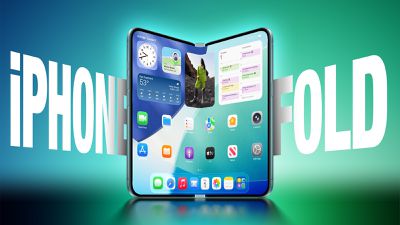
Apple Preparing 'Most Significant Overhaul in the iPhone's History'
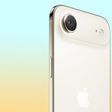
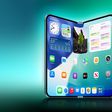
"iPhone 4, iPhone 6 and iPhone X were clearly a big deal, but this is a whole new design," he said. Like Samsung's Galaxy Z Fold 7, the foldable iPhone will reportedly open up like a book, providing users with a large inner screen for watching videos, playing games, and multitasking. iOS 27 is expected to be optimized for the foldable iPhone, allowing for apps to be open side-by-side and for other iPad-like multitasking functionality.
We're expecting the foldable iPhone to be unveiled in September alongside iPhone 18 Pro and iPhone 18 Pro Max models, though it may not ship until a few months later.
Everything New in iOS 26.5 Beta 1
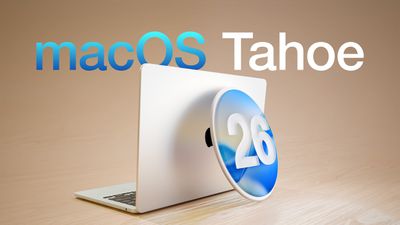
Following last week's public release of iOS 26.4 and related updates, this week saw the first developer betas of iOS 26.5, macOS Tahoe 26.5, and more.
While we still haven't seen the revamped Siri powered by Apple Intelligence that had previously been rumored for iOS 26.4 and is now seemingly pushed back until iOS 27, the new update does have some changes and we've recapped all of the ones we've spotted in the first beta.
Apple to Launch These 15+ New Products Later This Year
March was an incredibly busy month for Apple, with the company unveiling more than 10 new products and accessories. We said hello to the MacBook Neo at the start of the month, and we bid farewell to the Mac Pro at the end of it.
Beyond the usual annual updates to iPhones and Apple Watches, Apple's all-new smart home hub is finally expected to launch later this year, once the more personalized version of Siri arrives. We are also expecting a foldable iPhone, a MacBook Pro with an OLED display, and long-awaited updates to the Apple TV and HomePods this year.
Apple Celebrates 50th Anniversary With Employee Gifts, Finale Concert With Paul McCartney at Apple Park
Apple celebrated its 50th anniversary this week, and the company's month-long celebration that saw a variety of events around the world culminated with a major party at Apple Park.
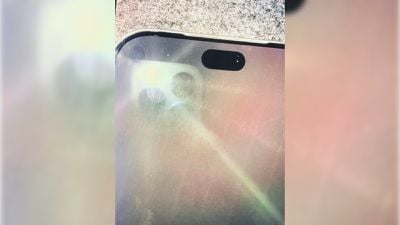
New images of an alleged iPhone 18 Pro prototype and screen protectors have emerged from multiple sources, adding weight to earlier reports that Apple plans to significantly shrink the Dynamic Island later this year.
An X user called @earlyappleleaks recently shared an image purportedly showing a prototype iPhone 18 Pro with a noticeably smaller Dynamic Island. In the picture, the flashlight of another iPhone is held over the corner of the display, revealing a small circular punch-hole cutout under the display, which is presumably a relocated Face ID sensor.
Apple Reportedly Planning to Launch iMac With OLED Display
Apple has apparently requested that Samsung Display, LG Display, and other suppliers produce 24-inch OLED panel samples suitable for a future iMac model using their mass-production facilities. This would be the biggest ever OLED display offered on an Apple device.
Specifically, Apple asked suppliers for 24-inch OLED panels with 600 nits of brightness and around 218 pixels-per-inch (PPI). By comparison, the current iMac features a 24-inch LCD display with 500 nits of brightness and 218 PPI.
MacRumors Newsletter
Each week, we publish an email newsletter like this highlighting the top Apple stories, making it a great way to get a bite-sized recap of the week hitting all of the major topics we've covered and tying together related stories for a big-picture view.
We're long overdue for an Apple TV update, and there have been rumors about an imminent refresh since late last year. It's now sounding like we're not going to get a new version for several months because of Siri delays. If you're holding out for a new model, here's a recap on what to expect when it eventually comes out so you can decide whether to continue to wait, or buy now.
Design
Apple TV design updates are few and far between, and that's not changing in 2026. The next Apple TV is going to have the same squircle shape as the current model, and it'll continue to be made from a black plastic material.
We're expecting the 2026 Apple TV to be indistinguishable from the existing Apple TV on the exterior.
New Chip
A new A-series chip will be the main Apple TV update, and rumors suggest that it will get the A17 Pro chip that Apple first used in the iPhone 15 Pro models.
Compared to the A15 Bionic in the current Apple TV, the A17 Pro is a big update, and it's a good reason to hold off on buying the current model. The A17 Pro is built on a 3-nanometer process for faster speed and better efficiency, and it has hardware-accelerated ray tracing for higher-quality graphics in games.
Given that Apple has held the Apple TV update for so long, it's entirely possible it'll get an even newer chip like the A18 or A19. A RAM update is possible too, especially if the Apple TV has any kind of Apple Intelligence support.
Apple Intelligence and Siri
The next Apple TV is supposedly ready to launch at any time, but new Siri features are the holdup. Apple wants to debut the Apple TV with the smarter version of Siri that's in the works, and it's not ready to go.
Bloomberg's Mark Gurman says the Apple TV is linked to "new artificial intelligence features" that Apple has postponed until September 2026. Apple intended to launch the Apple Intelligence Siri features in spring 2026, but the company was still experiencing issues with Siri. At this point, we're not going to see new Siri capabilities until iOS 27, which also means a delay for all the devices that Apple is holding.
Along with the Apple TV, the rumored home hub and a next-generation version of the HomePod are waiting on Siri.
Updated Siri features will likely require more RAM and a faster chip, so if you want the smarter Siri on the Apple TV, that's another reason to wait before making a purchase.
Wi-Fi
The Apple TV could get Apple's N1 networking chip with Wi-Fi 7 support. Wi-Fi 7 works with the 6GHz band offered by newer routers.
6GHz connectivity is faster and less congested, which you generally want for a device designed for streaming content.
Bluetooth
The Apple TV 4K could get Bluetooth 6 for connecting devices like controllers and earbuds.
Pricing
There might be a cheaper version of the Apple TV available because there have been rumors of a price drop.
Apple could release two models, one that's higher-end and one that has lower specs and a lower price tag, or it could keep the existing Apple TV around as a low-cost option.
Launch Date
If the new version of Siri has been pushed to iOS 27 and the Apple TV is tied to that update, we're not going to see the Apple TV refreshed until September 2026 or later.
Apple today provided public beta testers with the first releases of upcoming iOS 26.5, iPadOS 26.5, macOS Tahoe 26.5, watchOS 26.5, and tvOS 26.5 updates for testing purposes. The public betas come four days after Apple provided the betas to developers, though Apple seeded updated iOS 26.5 and iPadOS 26.5 betas to developers earlier today.
After signing up for beta testing on Apple's beta site, public beta testers can download the updates using the Software Update section of the Settings app on each device.
iOS 26.5, iPadOS 26.5, and macOS Tahoe 26.5 include a new Suggested Places feature for recommending nearby locations to visit, and Apple is also gearing up to start showing ads in Maps.
Apple is testing end-to-end encryption for RCS messages between iPhone and Android users again, and there are proximity pairing, notification forwarding, and Live Activities for third-party wearables in the EU.
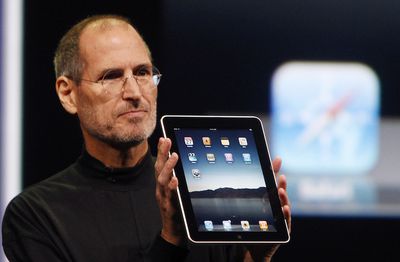
Today marks the 16th anniversary of when Apple released the first-generation iPad. After Steve Jobs announced the iPad on January 27, 2010, it launched a few months later on April 3, 2010.
Apple's original iPad looked like a larger version of the iPhone, featuring thick bezels, a 9.7-inch multitouch display with a 1,024 x 768 resolution, a Home Button, and a 30-pin dock connector. The iPad was the first device that Apple released with a custom-designed chip, the Apple A4.
The concept of a tablet device like the iPad actually predated the iPhone, and Apple had a prototype project in the works in 2004. Then-Apple CEO Steve Jobs wanted to prioritize the iPhone, so the iPad was put on hold until after the iPhone was established.
Apple priced the iPad at $499, and Jobs called it a "magical and revolutionary device at an unbelievable price." Like the iPhone, the iPad dominated the tablet space, and it still continues to do so today. Apple sold a million iPads in the first month, and while competitors like Microsoft and Samsung quickly came out with competing tablets of their own, the iPad has no match.
Apple has led the global tablet market for over a decade and no competitor comes close to matching its tablet market share. As of the fourth quarter of 2025, Apple's market share was 44.9 percent, with Samsung the next closest at 14.7 percent.
Apple has expanded its iPad lineup over the years, and we now have multiple sizes at multiple price points. The 11-inch iPad is available for those who want a low-cost option, while the 11-inch and 13-inch iPad Air are mid-range products with a Mac chip. The 8.3-inch iPad mini is available for those who want a smaller-sized tablet, and for those who want top-of-the-line performance with Apple's latest Mac chip, the 11-inch and 13-inch iPad Pro models are available.
Repair site iFixit today shared a teardown of Apple's new AirPods Max 2 headphones, and as expected, there are few changes. iFixit says the AirPods Max 2 are "basically the same" as the original AirPods Max headphones that came out in 2020.
A comparison of the internal components of the AirPods Max 2 and the USB-C AirPods Max indicate the headphones are identical, and opening them up requires the same steps. The only difference is the updated H2 chips inside each earcup.
Apple hasn't addressed the common failure points in the AirPods Max, such as condensation that builds up in the earcups in humid environments, and Apple doesn't have parts or repair manuals available.
iFixit suggests that if Apple made instructions and components available through its self-service repair program and made the battery and USB-C port more accessible, the AirPods Max would be repairable and could have a much longer lifespan.
With no updates to the AirPods Max 2 design, the headphones are no more repairable than the prior-generation models. iFixit gave the prior version a repairability score of 6/10.
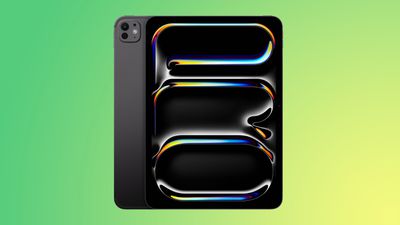
Apple is now selling M4 iPad Pro models in its online store for refurbished products, allowing customers to purchase like-new models at a discounted price.
There are both 11-inch and 13-inch options available, in multiple storage configurations. Apple is offering Wi-Fi and Cellular refurbished models, and silver and black color options.
Pricing on the 11-inch M4 iPad Pro starts at $759, down from the original $999 price. The 13-inch model is priced starting at $1,019, down from the original $1,299 price. Entry-level models are Wi-Fi only with 256GB of storage.
Apple released the M4 iPad Pro models in May 2024, but this is the first time that refurbished models have been available for purchase. Apple discontinued the M4 iPad Pro models with the launch of the M5 iPad Pro in October 2025.
Apple sells refurbished devices with the same one-year warranty that comes with a new Apple product. Refurbished iPads feature all manuals and accessories, plus Apple has a testing, repair, repackaging, and cleaning process to make sure that refurbished products are identical to new devices. Refurbished products are eligible for AppleCare+ protection.
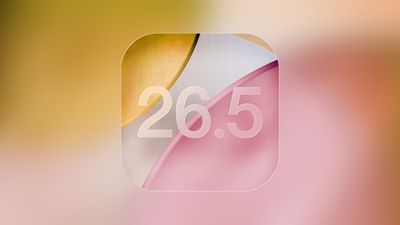
Apple today seeded revised first betas of upcoming iOS 26.5 and iPadOS 26.5 updates to developers for testing purposes, with the software coming four days after Apple seeded the initial betas.
Registered developers can download the betas from the Settings app on the iPhone or iPad by going to the General section and selecting Software Update. It's not clear why Apple has seeded new beta updates, but there may be a bug fix that couldn't wait for the second beta.
iOS 26.5 and iPadOS 26.5 do not include new Siri capabilities, suggesting any Siri updates are being held until iOS 27. The Maps app has a Suggested Places feature for recommending locations to visit nearby based on trends and recent searches, plus Apple is laying the groundwork for ads.
Apple is again testing end-to-end encryption (E2EE) for RCS messages between iPhone and Android users. Apple tested the feature in iOS 26.4, but removed it before the update launched.
In the European Union, Apple is testing proximity pairing, notification forwarding, and Live Activities for third-party wearables like earbuds and smartwatches.
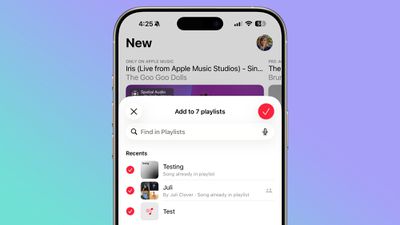
If you often find yourself adding a track to an Apple Music playlist, going back, and then adding it to other playlists, iOS 26.4 includes an option that could save you bags of time: You can now select multiple playlists when adding a song.
Previously, tapping Add to Playlist would take you to a list of your playlists, and you could only pick one at a time. In iOS 26.4, there's a new multi-select option that lets you check off as many playlists as you like in one go. Here's how it works.
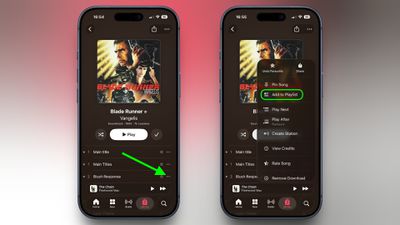
In the Music app, find the song you want to add.
Long press the song, or tap the three-dot menu (...) next to it.
Tap Add to Playlist.
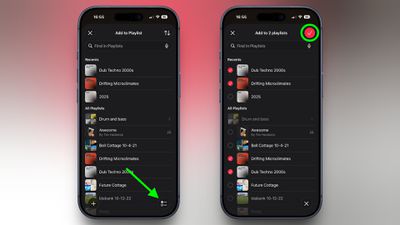
In the bottom-right corner, tap the new multi-select button.
Select all the playlists you want to add the song to – each one gets a red checkmark.
Tap the checkmark button in the top-right corner to confirm.
The header at the top of the screen will update to reflect how many playlists you've selected, so you can keep track before confirming.
It might seem like a minor addition, but if you maintain several playlists organized by mood, genre, or occasion, it eliminates so much back-and-forth navigation. It's no exaggeration to say that some users will have been waiting years for this option.
In iOS 26.4, Apple has also given albums and playlists a new fullscreen design so that the album artwork colors style the entire background of the track list and other UI elements to give each album a more immersive, authentic look. To check out what's new, make sure your iPhone is up-to-date with the latest version by going to Settings ➝ General ➝ Software Update.


 Apple Passeig de Gràcia
 Note: MacRumors is an affiliate partner with Amazon. When you click a link and make a purchase, we may receive a small payment, which helps us keep the site running.
 Note: MacRumors is an affiliate partner with some of these vendors. When you click a link and make a purchase, we may receive a small payment, which helps us keep the site running.
 Shot on iPhone 17 Pro Max (Wiseman)
 Shot on iPhone 17 Pro Max (Koch)
 Shot on Nikon D5
 Note: MacRumors is an affiliate partner with Amazon. When you click a link and make a purchase, we may receive a small payment, which helps us keep the site running.
 Note: MacRumors is an affiliate partner with Amazon. When you click a link and make a purchase, we may receive a small payment, which helps us keep the site running.