Apple is in talks with government officials in India to expand its iPhone manufacturing facility in Bengalaru, a federal minister acknowledged on Tuesday (via Reuters).
The Cupertino-based company reportedly wants to bulk out the plant in the southern Indian tech hub as part of its plan to capture a bigger share in one of the world's fastest growing smartphone markets.
Ravi Shankar Prasad, the state official for Electronics and IT, said government officials were in touch with Apple and other mobile phone manufacturers for expanding facilities and setting up new plants.
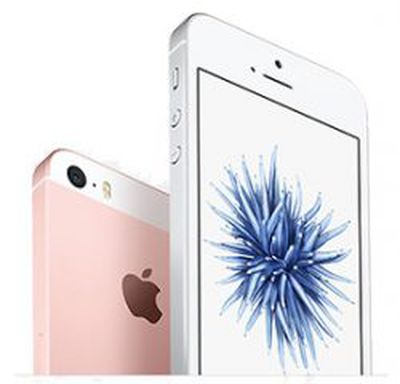
Last week Apple officially began initial production of a small number of iPhone SE devices at its Wistron-run Bangalore plant, and plans to ship Indian-created iPhones to local customers as soon as this month.
The locally produced phones could be up to $100 cheaper than the current going rate for iPhone SE devices in the country, which would help Apple to compete with the wide variety of cheap devices available there.
Apple's struggles in India have been put down to the iPhone's traditionally expensive price tag, a fact that Apple CEO Tim Cook has openly admitted. Last year, a Strategy Analytics report said a total of 35 percent fewer iPhones sold in 2016 in the country than in 2015.
Swedish home store IKEA has announced that its recently announced Trådfri smart lighting system will soon be compatible with HomeKit, Apple's smart home management platform.
The affordable range of home lighting products was originally announced in late March and includes LED bulbs, illuminated panels, a motion sensor kit, a gateway kit, and dimming lights, but no mention was made about whether the collection would be able to integrate with existing smart home solutions like HomeKit.
However, IKEA said in its press release that HomeKit support is in the works, enabling users to control the devices using the Apple Home app on iPhone, iPad or Apple Watch, or voice using Siri.
In the summer and autumn, IKEA takes the next step towards the smart home. With increased functionality, IKEA's smart lighting range can be used with Amazon Alexa, Apple HomeKit and Google Assistant, which means that you can voice-control your lighting.
We believe that smart home technology should be accessible to everyone. For this reason, we will continue to work with our products to be compatible with other products available on the market.
According to iphone-ticker.de, which first spotted the announcement, IKEA plans to retrofit the new functions via a software update to the Trådfri Gateway and Trådfri app. In addition to HomeKit, the update will also make IKEA's smart products controllable through Amazon Echo and Google Home.
Nokia and Apple announced today that they have settled all litigation related to their intellectual property dispute and agreed a multi-year patent license.
Under the collaborative agreement, Nokia said it will provide "certain network infrastructure products and services" to Apple. In turn, Apple agreed to return all health products owned by the Finnish company to Apple retail and online stores.
"This is a meaningful agreement between Nokia and Apple," said Maria Varsellona, Chief Legal Officer at Nokia, responsible for Nokia's patent licensing business. "It moves our relationship with Apple from being adversaries in court to business partners working for the benefit of our customers."
In December of last year, Nokia filed multiple complaints against Apple in several countries, accusing the Cupertino company of infringing several of its patents. In response, Apple sued Nokia in an antitrust lawsuit against several patent assertion entities which it claimed were trying to collect excessive fees for Nokia patents. Apple had established FRAND (Fair, Reasonable, and Non-Discriminatory) deals with Nokia, but by transferring patents to patent holding companies, additional royalties can be demanded.
Following the latest development, Nokia will receive an up-front cash payment from Apple with additional revenues forthcoming. The figure remains undisclosed, but net sales in Nokia patent licensing will reflect the value of the agreement, while Nokia expects related revenues to be reflected in the second quarter of 2017. No other details of the terms of the agreement have been released.
"We are pleased with this resolution of our dispute and we look forward to expanding our business relationship with Nokia," said Jeff Williams, Apple's chief operating officer.
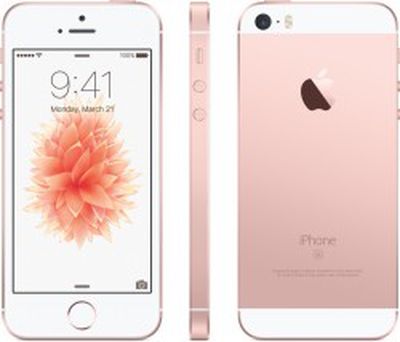
Despite a shift towards smartphones with larger screens, the iPhone SE has topped all other smartphones in the annual American Customer Satisfaction Index (ACSI).
Apple's four-inch smartphone received a customer satisfaction score of 87 out of 100 to finish just ahead of Samsung's 5.7-inch Galaxy S6 edge+ and the 5.5-inch iPhone 7 Plus.
20 other smartphones, mostly including other iPhone and Galaxy models, received customer satisfaction scores of between 70 and 85, according to the ACSI results published today.
“Over the past few years, the general trend for smartphones has been toward larger screens,” says ACSI Managing Director David VanAmburg. “But apparently, consumers were craving a new iteration of a smaller, less expensive phone as the iPhone SE – Apple’s first update to a 4-inch phone since 2013 – comes in first in ACSI this year.”
ACSI said the results are based on interviews with 36,194 customers in the United States, chosen at random and contacted via email between May 2016 and April 2017. The survey data was inputted into ACSI's so-called "cause-and-effect econometric model," which in turn estimates customer satisfaction.
Apple introduced the iPhone SE in March 2016, acknowledging that some people simply love smaller phones, as evidenced by the 30 million 4-inch iPhones that it sold in 2015. The smartphone is essentially an iPhone 5s with newer tech specs, including a twice as fast A9 chip and a 12-megapixel rear camera.
Given its lower $399 starting price, the iPhone SE is also a popular smartphone in more price-sensitive markets such as India.
YouTube TV, the streaming television service that launched in April, was today updated with support for AirPlay, allowing video streamed from the iPhone or the iPad to be played on an Apple TV.
The service has been available on the iPad and the iPhone through a YouTube TV app since it launched, but YouTube has not yet made an app available on the Apple TV.
Prior to today, Chromecast was the only way to broadcast content from the app to a television set, but with AirPlay support, YouTube TV content is also available through the Apple TV.
Priced at $35, YouTube TV is only available in a limited number of cities, including Chicago, Los Angeles, New York City, Philadelphia, and the San Francisco Bay Area.
YouTube TV is a standalone streaming service that's focused on a mobile first experience, and it is separate from the YouTube Red premium service. It includes access to ABC, CBS, Fox, NBC, CW, Disney, ESPN, FX, USA, and dozens of other major cable channels, alongside standard YouTube video content. Premium channels like Showtime are available for an additional fee.
For customers who want to try YouTube TV, the service includes a one-month free trial. YouTube TV can be downloaded from the App Store for free. [Direct Link]
Apple today debuted an overhauled webpage aimed at encouraging Android users to switch to the iPhone, introducing a simpler FAQ-style site that highlights iPhone features and makes it clear how simple it is to switch from an Android device to an iPhone.
Apple previously had a webpage dedicated to customers coming to an iPhone from Android devices, but it featured less information on the iPhone itself and focused primarily on the Move to iOS app, a dedicated app that helps Android users transfer contacts, message history, photos, mail accounts, calendars, and more.
The new site, while featuring a section on Move to iOS, also attempts to lure Android users with details on the iPhone's camera and its processor, along with information on Apple Pay, Apple's privacy policy, the Messages app, Apple's commitment to the environment, and Apple Support.
The site, which features clever animations and a simple design that's quick to scroll through, ends with an iPhone comparison chart and direct links to purchase iPhones from Apple's current lineup, including the iPhone 7 Plus, iPhone 7, iPhone 6s Plus, iPhone 6s, and iPhone SE.
Apple continues to see a growing number of customers who are switching to the iPhone from an Android device, which Apple CEO Tim Cook covers in nearly every earnings call. During the second quarter earnings call in early May, Cook had this to say: "We saw the largest absolute number of switchers outside of Greater China that we've ever seen in the same period."
Update: To go along with the new site, Apple has uploaded a series of 16 second videos on its YouTube channel. Each video (there are five in total) highlights how easy it is to switch from Android to iPhone with the Move to iOS app or points out iPhone features like speed and privacy.
Apple is planning to make some changes to scrolling behavior in mobile Safari in a future update, making for a more unified scrolling experience.
The news comes courtesy of a Hacker News thread discussing Apple's default scrolling behavior vs. the scrolling behavior of webpages that use Google AMP, a discussion inspired by a Daring Fireball post on the subject.
Google AMP (or Accelerated Mobile Pages), for those unfamiliar, is an online publishing format created by Google that's optimized for mobile web browsing and rapid page loading. It is used by multiple news sites, including CNN, ABC, and The Washington Post. On mobile Safari, AMP uses its own scrolling behavior, making AMP pages stand out from non-AMP pages.
In the Hacker News discussion, Malte Ubl, who created Google AMP, says the AMP team filed a bug report about the scrolling discrepancy, and as a result, Apple is going to implement a change that makes all webpages scroll like AMP pages.
With respect to scrolling: We (AMP team) filed a bug with Apple about that (we didn't implement scrolling ourselves, just use a div with overflow). We asked to make the scroll inertia for that case the same as the normal scrolling.
Apple's response was (surprisingly) to make the default scrolling like the overflow scrolling. So, with the next Safari release all pages will scroll like AMP pages.
Another Hacker News responder, "Om2," who appears to work on WebKit, explains that Safari webpage scrolling is inconsistent from all other scrolling, an intentional decision implemented several years ago. Following a review of scrolling rates, Apple has decided to implement a change to introduce a more consistent scrolling experience.
In current iOS Safari, webpage scrolling is inconsistent from all other scrolling on the system. This was an intentional decision made long ago. In addition, overflow areas are consistent with the rest of the system, and thus inconsistent with top-level webpage scrolling. This is semi-accidental. In reviewing scroll rates, we concluded that the original reason was no longer a good tradeoff. Thus this change, which removed all the inconsistencies: https://trac.webkit.org/changeset/211197/webkit
Having all scrolling be consistent feels good once you get used to it.
At the current time, the difference between scrolling on an AMP page and a standard webpage is noticeable, with the AMP pages scrolling faster and more smoothly. It's not entirely clear when the scrolling change will be implemented in mobile Safari, as the new scrolling behavior is not available in the current iOS 10.3.3 beta.
For the last few weeks, Apple has been testing its autonomous driving software in three Lexus RX450h SUVs, which have been photographed around the San Francisco Bay Area. This morning, MacRumors reader Andrew was able to capture some video of one of the SUVs, giving us our closest look yet at the vehicles Apple is using to test its system.
The SUV is equipped with multiple sensors and cameras, making it easy to see when it's out on the road. It uses a top-end Velodyne 64-channel lidar, two or more radar, and several cameras to navigate. The video was captured on the 101 North, with Apple's vehicle exiting towards University Avenue in Palo Alto.
Apple received a DMV permit to test autonomous vehicles on April 14 and wasted no time getting the cars out on the road. With the SUVs, which are driven by six Apple employees with expertise in autonomous vehicles, Apple is testing a self-driving vehicle system it has in development.
The company has been working on self-driving car technology for several years and was originally rumored to be planning to introduce its own Apple-branded vehicle. That didn't pan out, however, and Apple pivoted to an autonomous driving software platform being developed under the leadership of Bob Mansfield.
Apple has reportedly given its car team until the end of 2017 to prove the feasibility of an Apple-designed autonomous driving system. Such a system could allow Apple to partner with vehicle manufacturers for something akin to a much more advanced version of CarPlay, or it could be built into a future Apple vehicle should Apple decide to revisit manufacturing its own car down the road.
While Apple is notoriously secretive, its ongoing autonomous car testing will be done under the public eye. In California, companies that participate in the Autonomous Vehicle Testing Program must file Disengagement Reports that share many details on the testing process, including miles traveled and any incidents or accidents that occur.
Apple has asked the DMV to alter the rules that govern exactly what data needs to be included in public Disengagement Reports, but it is not yet known if the DMV will comply.
The Supreme Court of the United States today decided that U.S. companies may only face patent infringement lawsuits in the jurisdiction in which they are incorporated, which in Apple's case would be California.
The decision is significant for Apple, as the iPhone maker faces several patent infringement lawsuits in a single district court in Eastern Texas that is considered friendly to patent holding entities, or so-called "patent trolls."
By limiting where patent infringement lawsuits can be filed, the Supreme Court's decision means that Apple will likely be able to battle patent infringement lawsuits in Northern California, and finally put East Texas behind it.
The Supreme Court's decision today relates to a Delaware-based lawsuit between Heartland Food Products Group and The Kraft Heinz Company, but it extends to all domestic companies across the United States.
Update: The appears to be considerable confusion throughout media coverage of this ruling. The ruling narrowly limited a company's "residence" to the place of incorporation, but patent lawsuits may still be filed anywhere "the defendant has committed acts of infringement and has a regular and established place of business." As a result, it appears patent lawsuits can still be filed against Apple in many jurisdictions, including the Eastern District of Texas.
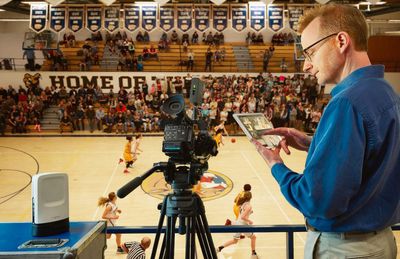
Slingbox creators Sling Media today launched an all-new multi-camera production and live video broadcasting system called SlingStudio, which connects to an iPad app to allow users the ability to edit and manage videos on the spot. With the $999 SlingStudio, users can monitor and edit four HD video inputs from up to ten connected cameras and smartphone devices, as well as output live video to Facebook Live and YouTube.
The company said that SlingStudio can simplify every step of shooting video, all the way to post-production, thanks to its design. The ten video sources can include DSLR cameras, video cameras, smartphones, and computers, which connect to SlingStudio via the device's own private Wi-Fi network. Any wirelessly connected device has to stay within 300 feet of the hub.
Alternatively, users can hardwire some DSLR cameras to SlingStudio using the hub's HDMI input port, or purchase the $349 CameraLink accessory that plugs into the camera's HDMI port and wirelessly transmits up to 1080p video to SlingStudio for around two hours of battery life.
During the production of a video, the company's Console app for iPad [Direct Link] is required, letting directors monitor and create live-to-tape video from up to four input sources at one time. With the app, directors can add in picture-in-picture, edit transitions like dissolves and wipes, mix audio, and throw in text overlays. The company said that all of these additions can be made in real time, both as a video is streaming live and as it's being recorded to a USB hard drive, SSD, or SD card.
For post-production, creators will be able to move an entire project file to their computer and import it into editing applications like Adobe Premiere Pro and Apple Final Cut Pro. Sling Media listed a detailed description of SlingStudio's tech specs, as well:
Portable and compact: 1.43 lbs, (H) 7.87” x (W) 5.59” x (D) 3.54”, tripod mountable.
Wireless: 5 Ghz 802.11ac, 4x4 MIMO, specially tuned video-grade Hotspot to connect to different video sources; dual-band 2.4 Ghz and 5 Ghz 802.11ac client mode to connect to Internet for live streaming.
1080p HD multi-camera recorder: Up to seven simultaneous recordings. Includes four video inputs, live-switched program and quad-view of input, plus a separate audio line-in input recording.
Multi-camera live monitor and switcher: Monitor up to four video sources and switch between 10 different video sources using the Console app for iPad.
Professional grade video: High-definition resolutions up to 1080p60 at 30Mbps (using H.264 encoding) with the ability to effortlessly synchronize audio and video.
Live broadcasting: Simultaneous recording and live broadcasting of program output. Max bit rate for live streaming is 8 Mbps (input source bit rates up to 30 Mbps). Supported platforms currently include Facebook Live and YouTube. Support for other content-sharing websites is coming soon.
Ports: USB-C, HDMI video input, HDMI video output, audio line-in.
Storage: Storage via SD or USB-C drives. Optional USB-C Expander available to connect USB 3.0 drives.
Device compatibility: SlingStudio hub compatible with iOS and Android smartphones via the Capture app, and HDMI-enabled DSLR and video cameras connected to a CameraLink or via the direct HDMI input. An Apple iPad is required to operate the Console app.
Additional accessories include a $149 Battery that adds in portability to SlingStudio with three hours of battery life (otherwise the device requires an AC adapter), and a $49 USB-C Expander that supports wired Gigabit Ethernet connectivity for live broadcasting as well as data storage via compatible hard drives. More information about the device and its accessories can be found on the company's website, and those interested can purchase SlingStudio today for $999.00.
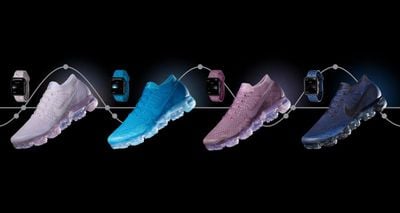
Nike today announced four new Apple Watch bands for Apple Watch Nike+ that will match the Nike Air VaporMax Flyknit "Day to Night" collection of shoes. The company said that the new colors of bands and shoes are "inspired by a shade of the sky, from dawn to dusk," and mark the first time that Apple Watch owners can directly match their band choice to their Nike sneakers.
Similar to previous Nike+ Apple Watch bands, the new options are made of the same flexible fluoroelastomer material that Apple uses in its own Sport bands, but include a perforated design for ventilation and sweat management. The most recent Nike and Apple partnership was in the cream and black NikeLab band that launched in April, following the first Apple Watch Nike+ device that debuted last September.
Users will be able to purchase the new Nike Apple Watch sport bands for $49.00 each beginning on June 1 on Nike.com and in select Nike stores. The company said that the bands will be available on Apple.com, in Apple retail locations, authorized resellers, and specialty department stores from "early June." The running shoes will also go on sale on June 1, and will be priced at $190.00.
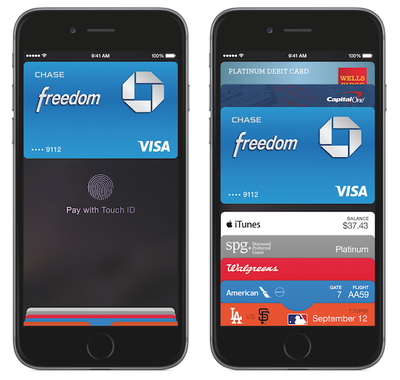
Apple and Visa have been sued by a small company based in Boston this weekend, which claims that Apple Pay violates 13 patents that it holds related to digital payment systems and user authentication technology. The company behind the lawsuit, Universal Secure Registry, filed the complaint in a Federal District Court in Delaware on Sunday (via The New York Times).
According to the filing, USR chief executive Kenneth Weiss "was the first in the space, and the secure payment technology that he developed goes right to the core of Apple Pay." Specifically, Weiss' company is claiming that the 13 patents include details on authentication systems embedded in smartphones, biometric ID confirmation through fingerprint scanning, and the generation of secure, one-time-use tokens in financial transactions.
According to Weiss, he had "extensive meetings" with Visa in 2010 that centered around working together to introduce a mobile payments system into smartphones, which allegedly lead to Visa signing a 10-year nondisclosure agreement with Weiss and his company to be able to use the technology. Weiss said that Visa eventually "dropped further communication without securing a license," and that any inquiries he wrote to Apple in asking the Cupertino company to license his technology were never answered.
Then, Visa began working with Apple on a partnership that eventually lead to the debut of Apple Pay in 2014, which the lawsuit claims to have been built with the "willful infringement" of USR's patents. Weiss is now seeking damages in relation to Apple Pay and Visa's alleged patent infringement, represented by Quinn Emanuel Urquhart & Sullivan, which advised Weiss to file a suit before seeking a license agreement or royalties from Apple or Visa.
This suit seeks unspecified damages, but details the scope of the infringement, claiming, "since 2014 Apple's backend servers and Visa's payment processing network VisaNet, including Visa Token Service, have supported and processed transactions made using Apple Pay, including billions of Apple Pay transactions made in the United States."
"It is not uncommon for large companies to be unresponsive to outside suggestions for innovation or improvements to their product or technology," said Weiss. "Occasionally, these companies infringe patents and force a patent owner to file a lawsuit as the only way to financially benefit from the technology he invented."
Weiss founded Security Dynamics and invented the RSA SecurID token system, which is used to secure and authenticate important data sent by major companies, banks, and multiple branches of the United States government. USR is said to hold a portfolio of Weiss' patents related to the new lawsuit, and also including a few pending applications and foreign patents he has filed dating back to 2000.
Home thermostat maker Emerson today announced two new smart thermostats, one of which includes a color touchscreen display. The Sensi Touch Wi-Fi Thermostat — along with an updated version of Sensi's existing Wi-Fi Thermostat — is now compatible with Apple's smart home management platform HomeKit, for controlling the device using the Apple Home app on iPhone, iPad or Apple Watch, or voice using Siri.
Apart from showing current system temperature and swipe-to-set features, the touchscreen display on the Sensi Touch Wi-Fi changes color to indicate whether the system is heating or cooling, while live humidity tracking keeps users informed about their home's atmosphere. Meanwhile, smart alerts serve to notify homeowners of extreme temperature changes when detected.
Additional menu options enable users to customize the information on the home screen display and to choose a continuous back glow for soft lighting in dark hallways or rooms. In addition to the touchscreen controls, the thermostat also has illuminated terminals for increased visibility while wiring and easy-click terminals that eliminate the need for a screwdriver.
"As we've continued to learn from our customers, homeowners are gravitating toward simple smarthome solutions that make life easier," said Robert T Sharp, executive president of Emerson Commercial. "Our latest Sensi thermostats combine enhanced capabilities, including support for Apple HomeKit with simple and secure controls, and a sleek new interface with a proven home comfort experience that puts users firmly in control of their environment, anytime and from anywhere."
The thermostat display functions are mirrored in the accompanying Sensi app, which includes instructional steps for easy do-it-yourself installation, no experience required. Elsewhere, the system supports flexible scheduling for each day of the week, while a geofencing feature allows users to change temperature settings when they leave and before they return to their home.
In addition to the Apple HomeKit integration, the Sensi thermostats are compatible with smart home platforms Amazon Alexa and Wink. The Sensi Wi-Fi Thermostat costs $129.99, while the Sensi Touch Wi-Fi Thermostat costs $199.99 and will be available in the U.S. starting June.
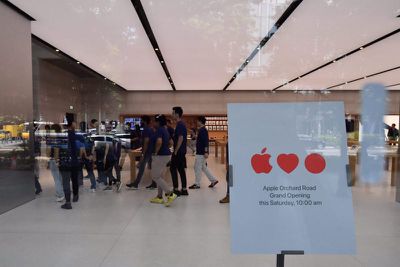
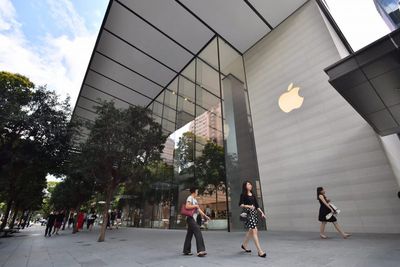
Apple last night removed the blockades previously obscuring the inside of its new retail location in Singapore, which will officially be called Apple Orchard Road when it opens this Saturday, May 27 (via The Straits Times).
After the "Apple Loves Singapore" artwork was removed from the location, people passing by have gotten the chance to take a glimpse inside the two levels of the store. The bottom level is said to be the place where customers will browse and purchase iPhones, iPads, Apple Watches, Apple TVs, Macs, and various accessories, while the top floor will be home to "Today at Apple" classes.
Work on opening the first official Apple retail location in Singapore has been ongoing for well over a year, with Apple confirming the store's existence in November 2015, the same month it began hiring for the new location. Once it opens on May 27, the store will be open daily from 10 a.m. to 10 p.m. local time.
Apple Orchard Road's grand opening coincides with the beginning of the company's new Today at Apple initiative, which kicked off this past weekend. Apple recently celebrated the launch of the educational classes by sharing a collection of photos that show its visitors learning to code, taking pictures, creating illustrations, and producing music all on iOS and macOS devices.
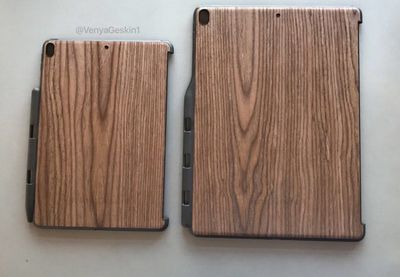
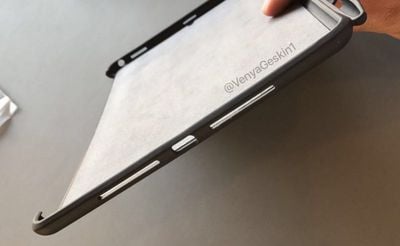
A collection of new images today claim to show cases for Apple's upcoming 10.5-inch and 12.9-inch iPad Pro devices. The 10.5-inch iPad Pro is believed to be an update similar in vein to the iPhone 8, with a size that remains close to that of the 9.7-inch iPad Pro, but includes a larger 10.5-inch display thanks to shrinking bezels.
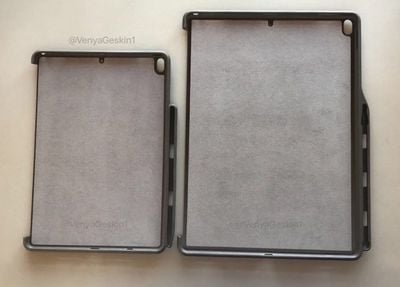
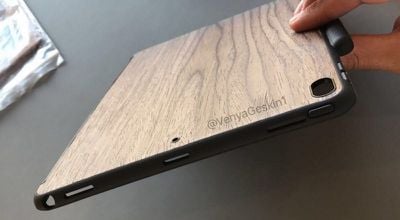
Benjamin Geskin has shared the iPad Pro accessory images on Twitter today, showing off cutouts for the Lightning port, speaker grilles, microphone, and vertically-aligned camera. The microphone cutout is placed on the top rear of both new iPads, similar to its location on the newest 9.7-inch iPad. For the current 12.9-inch models, however, the microphone cutout sits on the right side of the iPad, above the volume buttons.
The cases include multiple large cutouts for what appears to be four speakers, with two on top of the case and two on the bottom surrounding the Lightning port. This suggests that the 10.5-inch iPad is likely to continue supporting the stereo audio system of the iPhone 7 and 9.7-inch iPad Pro update. The wood cases also include side inserts for Apple Pencil storage.
Also on top of the case is the expected cutout for the lock button, and the 3.5mm headphone jack will still be included on the 10.5-inch and 12.9-inch iPad Pros launching this year, according to the new cases. Volume rockers remain on the traditional right side of the iPad cases, as well.
With production on the 10.5-inch iPad reportedly ramping up, the device could debut as early as WWDC, which takes place two weeks from today. For the smaller-screened iPad mini, recent rumors have suggested that Apple might discontinue the devices due to likely cannibalization from the 5.5-inch iPhone Plus devices. According to Geskin, the iPad mini will remain off of Apple's update list -- for 2017 at least -- with his Tweet stating, "No new iPad mini this year."
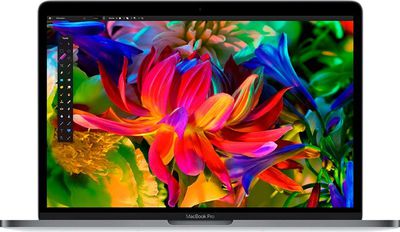
Apple's notebook shipments totaled an estimated 3.4 million units in the first quarter of the 2017 calendar year, representing a year-on-year increase of 15.4 percent, according to new data published by market research firm TrendForce.
Shipments of MacBooks and MacBook Pros actually declined 15.8 percent against the previous quarter of 2016, reflecting a somewhat similar decline for the overall notebook market over the same period, however the company's Q1 2017 numbers indicated strong demand in terms of a year-on-year increase in overall MacBook shipments.
Apple shipped 3.4 million units of MacBook devices this first quarter and claimed fifth place in the ranking. The latest generation of MacBook Pro with Touch Bar, which was released in last year's fourth quarter, was well-received by consumers and contributed significantly to the overall MacBook shipments. As a result, first-quarter MacBook shipments, while representing a 15.8% decline versus the prior quarter, also showed a year-on-year increase of 15.4%.
HP, Lenovo, Dell, and Asus all suffered marginal market share declines compared to Q4 2016, but Apple's share stayed level over the last two quarters, enabling it to maintain fifth place in the shipment rankings. However sixth-placed Acer gained 0.8 percent ground on Apple over the same period, which TrendForce put down to expanded stocking of notebooks by channel distributors in anticipation of increased device production costs.
TrendForce estimates that MacBook shipments for the second quarter of 2017 will grow by more than 10 percent compared with the first quarter. The firm attributes this projection to suggestions that Apple will update its 12-inch MacBook with a new processor and the possibility of promotional pricing for some older models.
Recent rumors suggest Apple could be planning to announce refreshes for both the MacBook and MacBook Pro at June's Worldwide Developers Conference. The notebooks are expected to be updated with faster Kaby Lake processors, an update from the Skylake processors in the current machines. Apple is also said to be considering updating the MacBook Air with new internals, as sales of Apple's most affordable notebook have remained surprisingly strong.
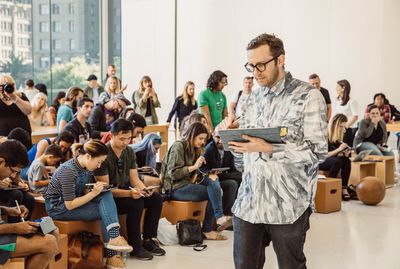
Apple this weekend celebrated the launch of its new in-store programming, "Today at Apple," at all of its 495 retail locations. The world-wide expansion of the educational program was announced in April, and this weekend marked the official debut of Today at Apple at every Apple store around the globe.
“Today at Apple” kicked off this weekend with new in-store programming around the world, including Photo Walks and Kids Hour at all 495 Apple stores. From Getting Started with Coding to How To: Sketch, Draw and Paint with iPad, stores collectively hosted 4,000 sessions a day, including some with very special guests.
Users interested in the program can choose from 60 different hands-on sessions in creative skills, and in some of the new images shared by Apple its visitors are shown learning how to illustrate with an iPad Pro and Apple Pencil. Artist Todd Selby and French illustrator mcbess lead the art-focused sessions at Apple Union Square and Apple Regent Street, respectively.
Apple also had a few singers perform for the grand opening of Today at Apple, including Charlie Puth and Leon Bridges at Apple Union Square, Dua Lipa at Apple Regent Street, and Sigrid at Apple Marché Saint-Germain. At Apple Williamsburg, Grammy-nominated musician Steve Lacy held a Music Lab to teach visitors how to create and record music on iOS and macOS devices.
Other Today at Apple events included:
- Movement artist and star of Apple’s AirPods commercial, Lil Buck, shows off his moves in the Forum at Apple Union Square. - iPhone photographers cover two miles in 90 minutes as they seek out fashion-forward portraits with photographer Shingi Rice. - iPhone photographers hit the streets of Brooklyn for a portrait-themed Photo Walk with Timothy Mulcare. - Aspiring coders of all ages can learn how to code in Swift, Apple’s programming language for iOS and Mac apps.
Apple launched a new website for Today at Apple, which allows those interested to check for sessions in their area and sign up for the classes in advance. During the launch, Apple noted that stores collectively hosted more than 4,000 educational sessions each day under the Today at Apple initiative.
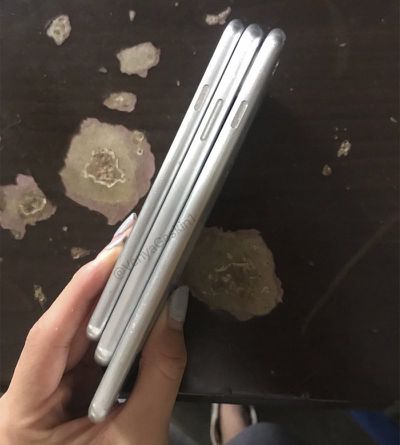
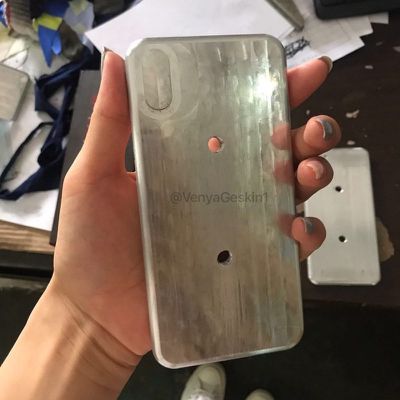
A series of photos claiming to show molds of Apple's upcoming 2017 iPhone range appeared online today and over the weekend, providing a potential look at the relative sizes of the rumored new devices. Apple is expected to announce three new iPhone models this year: two LCD-based "S" cycle upgrades to the iPhone 7 and 7 Plus, alongside a radically redesigned tenth-anniversary "iPhone 8" with an edge-to-edge OLED display.
It's worth bearing in mind that the molds shown in the images could simply be made for use in the production of third-party iPhone cases rather than actual handsets. Either way, they do appear to line up with unconfirmed details we've been hearing over recent months, particularly with regard to the dimensions of the devices.
The mold of the so-called "iPhone 8" is pictured between the two iterative models, which shows the redesigned handset isn't much bigger than the 4.7-inch iPhone 7S chassis on the right hand side. Despite the similarity, reports suggest the redesigned phone could pack a 5.8-inch display that's closer in size to the screen on the 5.5-inch iPhone 7 Plus. A lack of bezels at the top and bottom of the device are said to enable the larger OLED area.
The side-on view offers another take on the relative dimensions, and also reveals a longer power button on the OLED iPhone in the middle. The appearance of the longer button in previous dummy images has led to speculation that it could act as a fingerprint recognition surface if Apple can't integrate Touch ID into the OLED display. Rumors say Apple has struggled to overcome the challenges involved in such a feat, but details are still sketchy.
Some sources suggest the company could resort to placing the sensor on the back of the handset, like on the Samsung Galaxy S8, but most agree this would be an inferior implementation compared to Touch ID's current front-facing location on the home button.
Cutouts for the rear camera in the middle mold line up with previous rumors that Apple will go with a vertical dual-lens orientation in the "iPhone 8", in contrast to the horizontal layout on the iPhone 7 Plus, which is expected to remain on the 7S Plus.
The OLED iPhone is expected to be unveiled at a September event alongside the "S" cycle phones, and could feature new 3D-sensing technology in the front-facing camera, as well as a faster A11 chip, face and iris recognition, better waterproofing, some form of wireless charging, and a glass body.


 Apple is in talks with government officials in India to expand its iPhone manufacturing facility in Bengalaru, a federal minister acknowledged on Tuesday (via Reuters).

 Despite a shift towards smartphones with larger screens, the iPhone SE has topped all other smartphones in the annual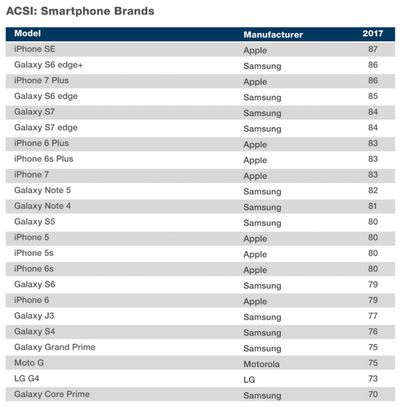

 Apple is planning to make some changes to scrolling behavior in mobile Safari in a future update, making for a more unified scrolling experience.