iOS 27 has already been available as a developer beta since June and as a public beta since July, and Apple today said that the update will be released for all users with a compatible iPhone model on Monday, September 14.
iOS 27 is compatible with the exact same iPhone models as iOS 26, meaning the update will be available for the iPhone 11 series and newer.
All compatible models:
iPhone 18 Pro
iPhone 18 Pro Max
iPhone Duo
iPhone 17e
iPhone 17
iPhone 17 Pro
iPhone 17 Pro Max
iPhone Air
iPhone 16e
iPhone 16
iPhone 16 Plus
iPhone 16 Pro
iPhone 16 Pro Max
iPhone 15
iPhone 15 Plus
iPhone 15 Pro
iPhone 15 Pro Max
iPhone 14
iPhone 14 Plus
iPhone 14 Pro
iPhone 14 Pro Max
iPhone 13
iPhone 13 mini
iPhone 13 Pro
iPhone 13 Pro Max
iPhone 12
iPhone 12 mini
iPhone 12 Pro
iPhone 12 Pro Max
iPhone 11
iPhone 11 Pro
iPhone 11 Pro Max
iPhone SE (2nd generation and later)
iPadOS 27, macOS 27, watchOS 27, tvOS 27, and visionOS 27 will also be released on Monday, September 14, according to Apple's website.
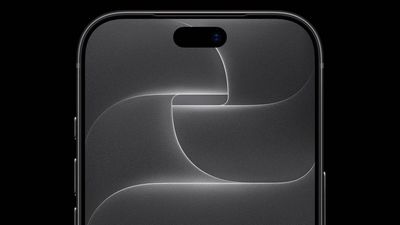
The iPhone 18 Pro and iPhone 18 Pro Max feature a smaller Dynamic Island, with support for up to three simultaneous Live Activities.
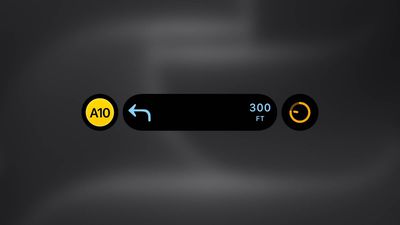
Until now, the Dynamic Island has only supported a maximum of two simultaneous Live Activities. Here is how three Live Activities display at the same time:
Bloomberg's Mark Gurmansaid ahead of the event that the redesigned Dynamic Island would be "smaller and improved" and let users toggle between three live tasks.
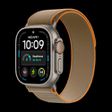
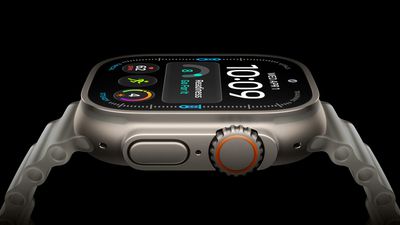
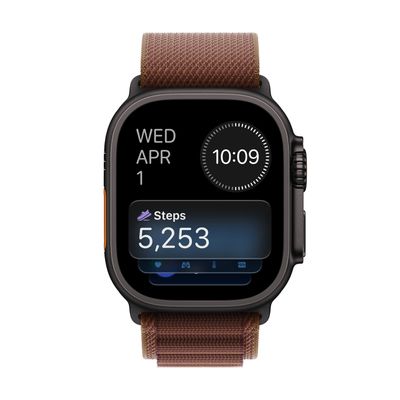
Apple today announced the Apple Watch Ultra 4, which features a new S11 chip, a redesigned health sensing system, and a larger battery that Apple says delivers two days of battery life.
With improved power efficiency, Ultra 4 offers up to 18 hours of workout tracking with full GPS and heart rate monitoring, or 45 hours in its maximum extended workout mode, according to Apple.
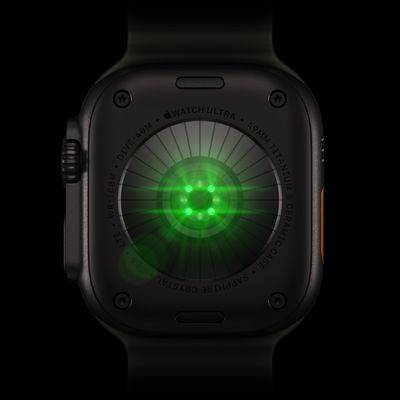
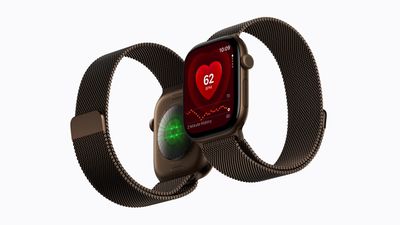
The redesigned health sensing system features a larger electrode surface for improved skin contact during ECG readings, photodiodes arranged in a ring to capture light more efficiently, and larger, more power-efficient green LEDs for heart rate tracking.
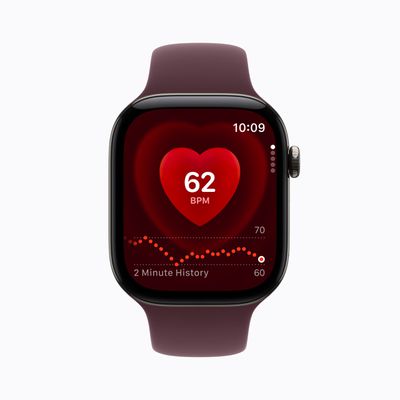
More frequent readings are displayed in an updated Heart Rate app and new watch face complications, and Apple says the system delivers the most accurate heart rate tracking of any wearable. The company cites a study involving hundreds of participants running, cycling, and performing HIIT workouts, with an ECG chest strap used as the reference.
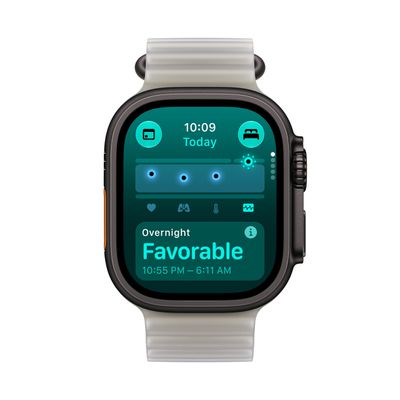
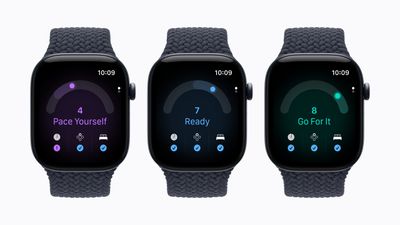
Elsewhere, a new Readiness feature analyzes recent activity, vitals, and sleep each morning to provide a score indicating whether users should recover, pace themselves, or take on more activity.
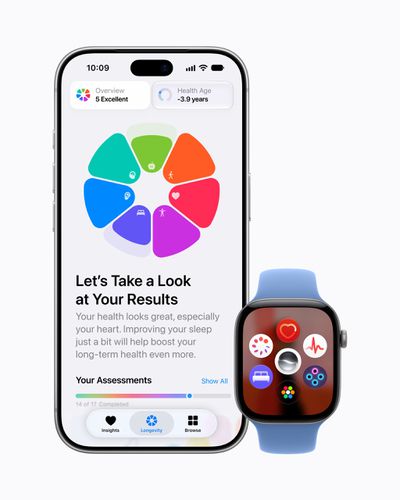
Apple has also redesigned the Health app to offer personalized guidance powered by Apple Intelligence. A new Health Age feature combines Apple Watch metrics such as VO2 max and sleep with blood test biomarkers to compare users' health indicators with their chronological age. Meanwhile, a Longevity tab brings together insights across sleep, movement, heart health, and other areas.
Apple says users can now enter lab results manually or sync their medical records with the new Health app. (In the U.S., Apple will also offer access to a Quest blood panel covering more than 50 biomarkers for $119.) A new VO2 max test uses the iPhone's camera alongside Apple Watch to assess users as they perform a series of exercises, and Apple says it provides immediate results. The redesigned Health app is coming later this year.
The S11 chip's energy-efficient always-on processor enables new Audio Intelligence features, such as Sound Recognition, which identifies sounds such as alarms, doorbells, and a baby crying, and Live Rewind, which displays a transcript of what was said in the preceding 15 seconds.
In addition, "Siri Recap" generates titles, summaries, and key points from conversations for users to review in the Siri app. Apple says users can schedule when it takes notes or toggle it in Control Center, while the audio features do not create or store audio recordings. Siri Recap will launch in beta later this year, initially in English, with additional languages to follow.
Apple Watch Ultra 4 comes in Black and Natural titanium, alongside new band colors and a new titanium Hermès band. It starts at $799 and is available to preorder today, with availability beginning September 18.
Apple today announced the Apple Watch Series 12, featuring a new S11 chip, a redesigned health sensing system, and new aluminum, titanium, and ceramic finishes.
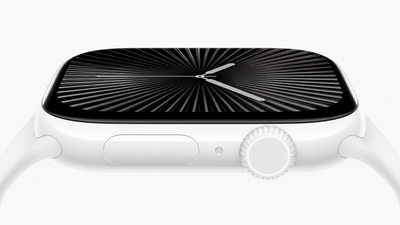
Series 12 comes in Space Gray, Black, Light Gold, and Dark Bronze aluminum finishes. The aluminum models gain Ceramic Shield, which Apple says makes their screens 60% tougher. Polished titanium models are also available in Radiant Gold and Natural, while ceramic models come in Pearl White and Night Blue.
The redesigned health sensing system features a larger electrode surface for improved skin contact during ECG readings, photodiodes arranged in a ring to capture light more efficiently, and larger, more power-efficient green LEDs for heart rate tracking.
Apple says more frequent readings are displayed in an updated Heart Rate app and new watch face complications, and the system delivers the most accurate heart rate tracking of any wearable. To underline accuracy, Apple cites a study involving hundreds of participants running, cycling, and performing HIIT workouts, with an ECG chest strap used as the reference.
Meanwhile, a new Readiness feature analyzes recent activity, vitals, and sleep each morning to provide a score indicating whether users should recover, pace themselves, or take on more activity.
Apple is also redesigning the Health app to offer personalized guidance powered by Apple Intelligence. A new Health Age feature combines Apple Watch metrics such as VO2 max and sleep with blood test biomarkers to compare users' health indicators with their chronological age, while a Longevity tab brings together insights across sleep, movement, heart health, and other areas.
Apple says users can enter lab results manually or sync their medical records. In the U.S., Apple will also offer access to a Quest blood panel covering more than 50 biomarkers for $119. Elsewhere, a new VO2 max test uses the iPhone's camera alongside Apple Watch to assess users as they perform a series of exercises, providing immediate results. The redesigned Health app is coming later this year.
The S11 chip's energy-efficient always-on processor powers new Audio Intelligence features, like Sound Recognition which identifies sounds such as alarms, doorbells, and a baby crying, and Live Rewind which displays a transcript of what was said in the preceding 15 seconds.
"Siri Recap" generates titles, summaries, and key points from conversations for users to review in the Siri app. Apple says users can schedule when it takes notes or toggle it in Control Center, and the audio features do not create or store audio recordings. Siri Recap will launch in beta later this year, initially in English, with additional languages to follow.
Apple Watch Series 12 starts at $399 and is available to preorder today, with availability beginning September 18.
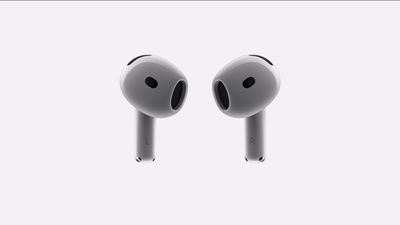
Apple today introduced AirPods 5, offering Active Noise Cancellation with its entry-level wireless earbuds at a starting price of $129.
Apple says AirPods 5 remove up to 50% more external noise than AirPods 4 with Active Noise Cancellation. They also boast a redesigned acoustic architecture and updated Adaptive EQ also promise richer, more detailed sound, and an improved Transparency mode that makes nearby voices and sounds more natural.
Both models include Adaptive Audio, which automatically blends noise cancellation and Transparency mode, as well as Conversation Awareness, which lowers playback volume when the wearer starts speaking. Live Translation is also supported when paired with a compatible iPhone with Apple Intelligence enabled.
A $149 version with a Wireless Charging Case adds swipe-based volume controls on the stems and longer battery life. Apple says this model delivers up to five hours of listening with noise cancellation enabled, or up to 22 hours with the case, which supports Apple Watch and Qi chargers alongside USB-C.
AirPods 5 are available to preorder today, with availability beginning Friday, September 18.
Apple today announced the iPhone 18 Pro and iPhone 18 Pro Max, with pricing starting at $1,199 for the Pro model and $1,299 for the Pro Max, both with 256GB of storage as the base configuration.
The increase amounts to $100 over the equivalent iPhone 17 Pro and Pro Max pricing, matching what Bloomberg's Mark Gurman had predicted ahead of today's event. That is a smaller jump than many analysts had floated over the summer.
Both models now offer a 2TB storage option for the first time, sitting above the previous 1TB ceiling for an added cost.
Apple is also offering the iPhone 18 Pro and iPhone 18 Pro Max through its Apple Upgrade program, which starts at $34.99 a month over 24 months and can come in lower for customers who trade-in an eligible device. Separately, customers trading in an iPhone 14 or newer toward a new purchase can get up to $1,200 off.
The pricing arrives after months of speculation that Apple would raise iPhone prices more steeply this year, following a broader run of cost increases across its Mac, iPad, and home product lines earlier in 2026 tied to the global memory shortage.
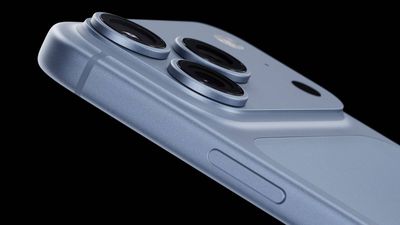
Apple has revealed at its "Surprise and Shine" event that both iPhone 18 Pro models will be equipped with a variable aperture camera.
Prior to this announcement, some rumours suggested that only the iPhone 18 Pro Max would feature a variable aperture lens, but it seems that both models will benefit from the technology.
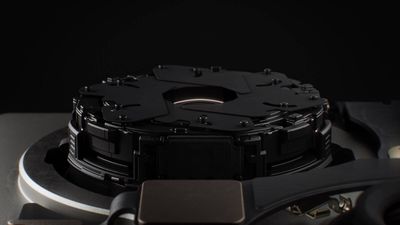
Apple says it has developed a system of six laser-cut blades, each thinner than a human hair, to create the aperture lens. The blades are made of a specialized polymer composite for the right balance of mass flexibility and durability.
The aperture adjusts automatically based on the scene. When you're in a darker environment, for example, the aperture opens to let in around 50% more light.
It also allows you to capture cinematic mode effects from regular video after you capture, plus it now supports 60 frames per second for a half-speed effect.
"iPhone 18 Pro has a new 48 megapixel fusion main camera with variable aperture for creative control that wasn't possible before," said Apple. "This is the most advanced camera we've ever made."
Apple today revealed the A20 Pro chip in the iPhone 18 Pro and iPhone 18 Pro Max, built on a brand new architecture using 2nm process technology.
Apple described the A20 Pro as "an exceptional chip that sets a new bar for mobile computing." The chip has a 6-core CPU design with two new super cores that Apple says are up to 20% faster, calling them "desktop class" and "the fastest in any smartphone," alongside four new efficiency cores.
The GPU has also been redesigned with a 7-core layout that Apple says delivers up to 40% faster graphics performance and increased memory bandwidth. New neural accelerators built into the GPU offer twice the FP8 performance of the previous generation, which helps the chip run large language models locally on the device.
The A20 Pro features an additional Neural Engine, bringing the total core count to 32. The company says the redesigned Neural Engine delivers 2x the compute of its predecessor, is more efficient, and now supports 8-bit floating point math. Apple called the A20 Pro "the ultimate chip for running advanced on-device models," adding that it ships with "the widest memory interface we've ever shipped in an iPhone."
The company said effective thermal management in the iPhone 18 Pro is critical to unlocking the chip's maximum performance, since efficient heat dissipation determines how much of that performance can be sustained. To support this, Apple redesigned the chip's silicon packaging, describing it as "custom packaging inspired by our M-series chips" that connects the silicon and memory directly to the vapor chamber for improved thermal performance.
Apple compared sustained performance directly against previous generations, citing 40% more sustained performance from the iPhone 18 Pro's A20 Pro compared to the A19 Pro in the iPhone 17 Pro, and twice the sustained performance compared to the A18 Pro chip in the iPhone 16 Pro.
Apple at its annual fall iPhone event has revealed that the new iPhone 18 Pro and iPhone 18 Pro Max models will be available in four new colors.
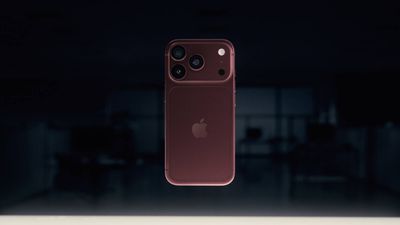
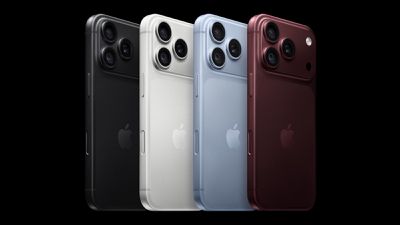
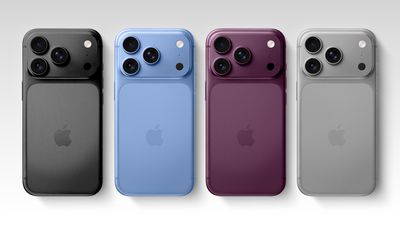
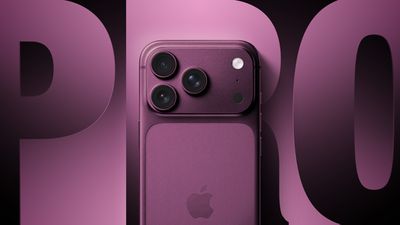
Apple describes the new colors as a Deep Black, a refined Silver, a new Glacier Blue, and Burgundy – calling the latter a "sophisticated and unique new color" that's obviously meant to be a successor to the iPhone 17 Pro's Cosmic Orange.
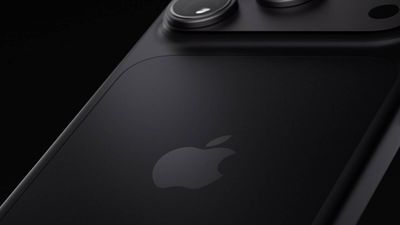
In addition, the rear aluminum and Ceramic Shield glass area are now more color-matched compared to the iPhone 17 Pro models, which had a noticeable glazed effect on the rear of the devices.
Apple is still describing the design and features of the iPhone 18 Pro and iPhone 18 Pro Max, with the Apple event ongoing as we write.
iPhone 18 Pro sticks with a 6.3-inch display, while the iPhone 18 Pro Max sticks with a 6.9-inch display. As was widely rumored, both devices have a smaller Dynamic Island that can show up to three Live Activities at once.
Built using TSMC's latest 2-nanometer process, the A20 Pro chip in the iPhone 18 Pro models has a 6-core CPU, a 7-core GPU, and a 32-core Neural Engine. Apple says sustained performance is up to 40% faster compared to the A19 Pro chip.
Both devices feature longer battery life compared to the previous generation. Apple says the iPhone 18 Pro matches the battery life of the iPhone 17 Pro Max with up to 24 hours of typical usage per full charge, while the iPhone 18 Pro Max has the biggest generational leap in battery life ever with up to 30 hours of usage per charge.
Apple says the iPhone 18 Pro can charge to 50% in just 15 minutes.
The vapor chamber cooling system is three times as large in the iPhone 18 Pro models as it is in the iPhone 17 Pro models for improved thermal management.
The main 48-megapixel Fusion camera on both the iPhone 18 Pro and iPhone 18 Pro Max has variable aperture, allowing for greater control of depth of field:
Six laser-cut blades smoothly transition between different apertures, making it incredibly easy to capture the best shot by automatically adjusting for depth of field and lighting. Combined with a new sensor that improves image quality, the result is better low-light photography, crisper detail in the back of group photos, and more unique shots.
With a new computational imaging pipeline, Apple says the Main camera produces sharper, more detailed shots, while upgraded Photographic Styles with new texture and grain controls let users further dial in their desired appearance.
When using Time-lapse mode, users can now record videos in 4K and Dolby Vision HDR.
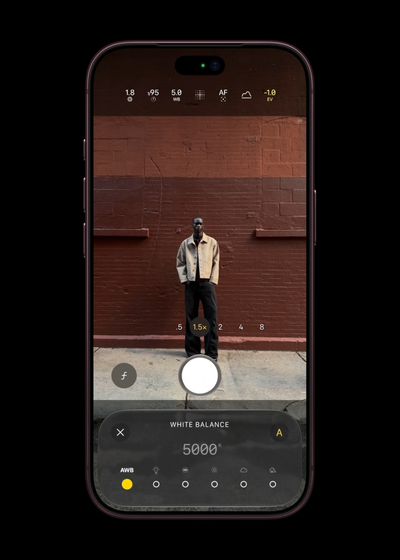
iPhone 18 Pro and iPhone 18 Pro Max users can customize the Camera app with a new "Pro controls" experience that makes it easier to access commonly-used settings and manual control options. Users can now adjust settings such as lens aperture, shutter speed, and white balance, or use a histogram to check exposure levels throughout a scene.
Aperture options include ƒ/1.48, ƒ/1.8, ƒ/2.8, and ƒ/4.0.
iPhone 18 Pro color options include Black, Silver, Glacier, and Burgundy. The rear aluminum and Ceramic Shield glass area are now more color matched.
In the U.S., the iPhone 18 Pro starts at $1,199, and the iPhone 18 Pro Max starts at $1,299. For the first time, a 2TB storage capacity is available for both the Pro and Pro Max, whereas it was previously exclusive to the iPhone 17 Pro Max.
Pre-orders begin Saturday, September 12, ahead of a launch on Friday, September 18.
eSIM-only models of iPhone 18 Pro and iPhone 18 Pro Max will be available in Bahrain, Canada, Guam, Japan, Kuwait, Mexico, Oman, Qatar, Saudi Arabia, the United Arab Emirates, the U.S., and the U.S. Virgin Islands. The devices have a SIM card tray in all other countries around the world, including in the U.K. and the rest of Europe.
iPhone 18 Pro models have a range of new Silicone Cases, TechWoven Cases, Crossbody Straps, and FineWoven Wallets, and Apple has a new Wrist Strap.
Apple's "Surprise and Shine" event kicks off today at 10:00 a.m. Pacific Time, where we're expecting to see the foldable iPhone Duo, the iPhone 18 Pro and Pro Max, Apple Watch Series 12 and Ultra 4 models, new AirPods 5 earphones, and perhaps some other announcements.
Apple is providing a live video stream on its website, on YouTube, and in the company's TV app across various platforms. We will also be updating this article with live blog coverage and issuing Twitter updates through our @MacRumorsLive account as the event unfolds. Highlights from the event and separate news stories regarding today's announcements will go out through our @MacRumors account.
Apple's "Surprise and Shine" media event kicks off at 10:00 am Pacific Time today with members of the media in attendance. We know that some MacRumors readers who can't follow the event as it's being broadcast are interested in avoiding all of the announcements and waiting until the event video is available for on-demand viewing so as to experience it without already knowing the outcome.
For those individuals, we've posted this news story, which will be updated with a direct link to the presentation once it becomes available from Apple. No other news stories or announcements will be displayed alongside this story.
Apple's recent events have been made available to view almost immediately following the conclusion of the broadcasts, and we expect similar timing for today's event.
Users waiting for the video to be posted are welcome to gather in the thread associated with this news story, and we ask that those who follow the events as they occur refrain from making any posts about Apple's announcements in this thread.
Ahead of Apple's annual iPhone event at 10 a.m. Pacific Time today, Bloomberg's Mark Gurman has leaked all of the color options for the iPhone 18 Pro, iPhone 18 Pro Max, and the first-ever foldable iPhone named the iPhone Duo.
iPhone 18 Pro and iPhone 18 Pro Max color options:
Black
Light Blue
Burgundy
Silver
Burgundy has also been described as Dark Red or Dark Cherry.
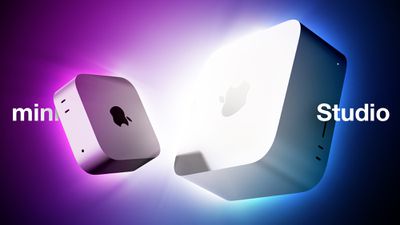
Apple announced new Mac mini and Mac Studio models last month, with both available to pre-order now. It is the first time in years that Apple has revised its two desktop Macs simultaneously, so which should you choose?
There are now two desktop Macs to choose from following the discontinuation of the Mac Pro, but the prices have moved sharply. The Mac Studio starts at $2,499 and rises to $5,499 for the M5 Ultra model, while the Mac mini starts at $899 with the M6 chip and $1,699 with the M5 Pro.
Those prices come on top of the across-the-board Mac and iPad increases Apple made in June, which took the Mac mini from $599 to $799, the M4 Pro configuration from $1,399 to $1,599, and the Mac Studio from $1,999 to $2,499. The M5 Ultra adds a further $200 to the post-June M3 Ultra price, putting it $1,500 above what the M3 Ultra cost at launch.
Our guide helps to answer the question of how to decide which of these two desktop Macs is best for you. The two machines now share a large number of key features, including:
A boxy silver aluminum enclosure with no color options
Apple's N1 chip, bringing Wi-Fi 7 and Bluetooth 6 to both machines for the first time
Neural Accelerators built into every GPU core
Hardware-accelerated ray tracing
A Media Engine with hardware-accelerated H.264, HEVC, ProRes, and ProRes RAW, plus AV1 decode
A next-generation SSD architecture that Apple says is up to twice as fast as before
64-core GPU: 96GB or 256GB unified memory 80-core GPU: 96GB, 256GB, or 512GB unified memory
256GB, 512GB, 1TB, or 2TB storage
512GB, 1TB, 2TB, 4TB, or 8TB storage
512GB, 1TB, 2TB, 4TB, or 8TB storage
1TB, 2TB, 4TB, 8TB, or 16TB storage
Video decode engine
Video decode engine
Video decode engine
Two video decode engines
Video encode engine
Video encode engine
Two video encode engines
Four video encode engines
ProRes encode and decode engine
ProRes encode and decode engine
Two ProRes encode and decode engines
Four ProRes encode and decode engines
Support for up to three displays: two at 6K 60Hz or 4K 165Hz, plus a third at 5K 60Hz over Thunderbolt or 4K 60Hz over HDMI
Support for up to three displays, all at 6K 60Hz or 4K 165Hz
Support for up to five 4K displays, four 6K displays, or two 8K displays
Support for up to eight 4K displays, eight 6K displays, or four 8K displays
Two displays per Thunderbolt port
All three displays through a single Thunderbolt port
Three rear Thunderbolt 4 ports
Three rear Thunderbolt 5 ports
Four rear Thunderbolt 5 ports
Four rear Thunderbolt 5 ports
Two front USB-C ports
Two front USB-C ports
Two front USB-C ports
Two front Thunderbolt 5 ports
Two rear USB-A ports
Two rear USB-A ports
2.5Gb Ethernet or 10Gb Ethernet port
2.5Gb Ethernet or 10Gb Ethernet port
10Gb Ethernet port
10Gb Ethernet port
SDXC card slot (UHS-II)
SDXC card slot (UHS-II)
Bottom power button
Bottom power button
Rear power button
Rear power button
Starts at $899
Starts at $1,699
Starts at $2,499
Starts at $5,499
Both enclosures carry over unchanged, so the dimensions of the two devices remain radically different, with the Mac Studio dwarfing the Mac mini in every way.
Mac mini
Mac Studio
Height
2.0 inches (5.0 cm)
3.7 inches (9.5 cm)
Width
5.0 inches (12.7 cm)
7.7 inches (19.7 cm)
Depth
5.0 inches (12.7 cm)
7.7 inches (19.7 cm)
Weight
M6: 1.5 pounds (0.67 kg) M5 Pro: 1.6 pounds (0.73 kg)
M5 Max: 6.0 pounds (2.7 kg) M5 Ultra: 8.0 pounds (3.6 kg)
Most customers should choose the M5 Pro Mac mini over the M5 Max Mac Studio, saving $800 on the base models. The gap widens across custom configurations, since the Mac Studio's memory and storage tiers start higher and climb further.
There is an unusual situation at the bottom of the lineup this year. The $899 Mac mini is the only machine of the four with a latest-generation chip, and the M6 is Apple's first 2nm chip. Its Dual 16-core Neural Engine, which Apple says system frameworks can drive simultaneously, is also more Neural Engine hardware than either the M5 Pro or the M5 Max provides. If your workload leans on on-device machine learning rather than sustained CPU or GPU throughput, the cheapest Mac in this comparison is not obviously the weakest one for the task. The trade-offs are Thunderbolt 4 rather than Thunderbolt 5, a 32GB memory and 2TB storage ceiling, and a single video encode engine.
You should only consider the Mac Studio if you have a professional workflow that can genuinely leverage the M5 Max or the M5 Ultra, along with the additional ports, display outputs, and memory capacity. If you need the Mac Studio, you will likely already know that you are looking for a highly powerful machine capable of supporting a specific intense workload. The M5 Ultra is Apple's first quad-die M-series chip, and its four ProRes engines, four video encode engines, and 1.2TB/s of memory bandwidth are aimed squarely at multi-stream video work and large local AI models. The 512GB memory ceiling has no equivalent anywhere else in the Mac lineup, and it is what allows models with hundreds of billions of parameters to run entirely on device.
The Mac Studio still has a superior selection of ports, with four rear Thunderbolt 5 ports on the M5 Max and six in total on the M5 Ultra, plus an SDXC card slot, USB-A, and 10Gb Ethernet as standard. This makes a practical difference for anyone working off fast external storage or camera media. The Mac mini has closed part of the distance by moving to 2.5Gb Ethernet as standard, up from Gigabit.
Clustering over Thunderbolt 5 and RDMA is not a point of difference between the two machines, since it arrived in macOS 26.2 last December and works on any Mac with Thunderbolt 5, including the M5 Pro Mac mini and the previous-generation Mac Studio. The exception is the M6 Mac mini, which has Thunderbolt 4 and cannot take part.
Both Mac mini models still cap out at three external displays, but they now reach 165Hz at 4K, up from 144Hz on the M4 generation, and the M5 Pro model drives all three through a single Thunderbolt port. For a three-display desk setup at high refresh rates, the M5 Pro Mac mini is sufficient. It is only above three displays, or at 6K and 8K, that the Mac Studio becomes necessary.
A notable exception arises at the top of the Mac mini lineup. An M5 Pro Mac mini configured with additional memory and storage moves close enough to the $2,499 Mac Studio that the comparison changes somewhat. For an increment of a few hundred dollars, the Mac Studio substitutes a chip with roughly twice the memory bandwidth, a second video encode engine, far greater display support, and headroom to 128GB of unified memory. If you are already spending heavily on a Mac mini, price the Mac Studio before committing.
If you plan to keep the machine for many years, the Mac Studio's ceiling matters more than its starting price, because it is the only one of the two that can be configured beyond 64GB of unified memory. Buyers weighing the M6 Mac mini against the M5 Pro Mac mini should note that the newer chip generation and the newer process node both sit in the cheaper machine, and that the M5 Pro's advantages are concentrated in multi-core and graphics performance rather than in longevity.
To some extent, purchasing decisions should be driven by budget, but any savings on the computer itself can be put toward a good external display such as Apple's Studio Display, which starts from $1,599 and was one of the few products spared June's price rises. An M6 Mac mini paired with a Studio Display comes to $2,498, a dollar less than a bare M5 Max Mac Studio with nothing to plug into. An M5 Pro Mac mini and a Studio Display together come to $3,298, which is $799 more than the base Mac Studio and $2,201 less than the M5 Ultra Mac Studio with no display at all.
Both machines are available to pre-order now and arrive on Tuesday, September 22, with education pricing of $799 and $1,599 on the two Mac mini models and $2,299 and $5,099 on the two Mac Studio models. Mac Studio configurations with 512GB of unified memory are not due until late October.
Apple will be holding an event today starting at 10 a.m. Pacific Time, with the company expected to unveil its first-ever foldable iPhone, the iPhone 18 Pro and iPhone 18 Pro Max, the Apple Watch Series 12 and Apple Watch Ultra 4, AirPods 5, and potentially more. Below, we have recapped 20 last-minute rumors about these devices.
iPhone Duo shipments to customers will begin as early as October. It is unclear if pre-orders will begin earlier.
iPhone Duo color options: white and dark blue.
iPhone Duo starts with 256GB of storage. U.S. pricing will start at around $1,999.
iPhone Duo will have Apple's A20 Pro chip and C2 modem for 5G.
iPhone Duo will have dual rear 48-megapixel cameras. No Telephoto camera.
iPhone 18 Pro and iPhone 18 Pro Max special color: dark red.
iPhone 18 Pro models will have longer battery life — the Pro Max especially.
iPhone 18 Pro models will have an improved vapor chamber system to reduce overheating.
At least one iPhone 18 Pro model's camera will have variable aperture for greater control over depth of field.
In the U.S., iPhone 18 Pro and iPhone 18 Pro Max starting prices will be $100 higher compared to iPhone 17 Pro models. This means the iPhone 18 Pro would start at $1,199, and the iPhone 18 Pro Max would start at $1,299.
iPhone 18 Pro's smaller Dynamic Island can show three Live Activities, up from two.
Do not expect a regular iPhone 18 model to be announced today, as Apple reportedly plans to launch that device in the first quarter of 2027.
Apple Watch Series 12 and Apple Watch Ultra 4 models will have new case color options.
Apple Watch Series 12 will have a ceramic case option.
Apple Watch Ultra 4 will have longer battery life compared to the Ultra 3.
An all-new Readiness app for the Apple Watch will be announced today.
The new Apple Watch models will offer a new daily summary feature.
AirPods 5 will be unveiled today — with and without active noise cancellation.
Apple will be holding an event today starting at 10 a.m. Pacific Time, with the company expected to unveil new iPhones and much more.
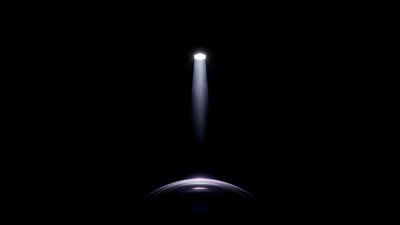
Ahead of the event, Apple's new CEO John Ternus just shared a mysterious teaser video. The short clip appears to show a beam of light that is shining onto the edge of an iPhone. The light is coming from a hexagonal shape that changes size, which could hint at the iPhone 18 Pro's rumored mechanical aperture upgrade.
The main 48-megapixel Fusion camera on the iPhone 18 Pro and/or iPhone 18 Pro Max is rumored to have a variable aperture, which would allow users to control the amount of light that passes through the camera's lens and reaches the sensor. This would provide greater control over depth of field. However, given that iPhones have smaller image sensors due to smartphone size constraints, it is unclear exactly how meaningful this improvement would be.
In addition to the iPhone 18 Pro models, Apple is expected to unveil its first-ever foldable iPhone today. The device is reportedly named iPhone Duo.
Ternus became Apple's CEO on September 1, succeeding Tim Cook, who is now the company's executive chairman. Ternus joined Apple in 2001, became a VP of hardware engineering in 2013, and became SVP of hardware engineering in 2021.
MacRumors is in attendance at Steve Jobs Theater and will be providing live coverage of Apple's event today, so stay tuned. It will be a very busy day.
Leaker "pdfu" today shared additional code-level details about the Apple Watch Series 12 and Ultra 4's new day summary feature, offering a clearer picture of what the AI tool will actually track.
In a new post on X, pdfu said that the summaries generated by the feature, referred to in code as "Ambient Sensing," include fields for time and date, location, meal information, and the people present along with their relationship to the user.
The leaker also listed dozens of activity categories the underlying code supports, covering everything from meal prep and household chores to workouts, commuting, shopping, and screen time, alongside a catch-all "Unknown" category. The full list of activity categories is as follows:
Eating Meal
Snacking
Preparing Meal
Making Drinks
Baking
Plating
Vacuuming
Taking Out Trash
Washing Dishes
Loading Laundry
Folding Laundry
Mowing Lawn
Watering Plants
Gardening
Mopping
Dusting
Cleaning
Walking
Running
Cycling
Strength Training
Yoga
Elliptical
HIIT
Cardio
Hiking
Regular Commute
Driving
Flying
Riding Train
Riding Bus
Grocery Shopping
Clothes Shopping
Home Goods Shopping
Hardware Shopping
Taking Break
Waiting
Relaxing
Social Dining
Meeting
Partying
Gathering
Family Time
Brushing Teeth
Flossing
Getting Dressed
Applying Lotions
Watching TV
Using Tablet
Using Laptop
Using Desktop
Reading E-Reader
Using ATM
Attending Class
Attending Sermon
Attending Keynote
Reading Book
Doing Homework
Taking Notes
Working
Drinking
Unknown
The post builds on a report from Bloomberg's Mark Gurman, who said the Apple Watch Series 12 and Ultra 4 would ship with a feature that analyzes a user's day, including conversations they've had, and provides a summary of what took place. Gurman noted the system apparently does not record or store audio and cannot produce a transcript to preserve privacy, and it is unclear how exactly it works.
The Apple Watch Series 12 and Ultra 4 are expected to be announced later today alongside the iPhone 18 Pro, iPhone 18 Pro Max, and the first foldable iPhone, dubbed the "iPhone Duo."
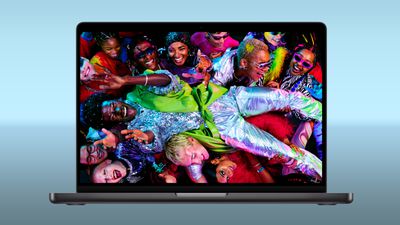
Amazon and Best Buy today have big discounts on the M5 Pro and M5 Max MacBook Pro, with up to $600 off select models. A handful of models have better discounts when compared to the last time we tracked these deals, coming in as much as $100 off previous price points.
Note: MacRumors is an affiliate partner with Amazon. When you click a link and make a purchase, we may receive a small payment, which helps us keep the site running.
New massive discounts have hit the 14-inch models, with $500 off the 18-Core/24GB/2TB M5 Pro MacBook Pro, now priced at $2,699.00, and a giant $600 off the 36GB/2TB M5 Max model, now priced at $3,499.00. These are both the best prices we've tracked on the MacBook Pro in the wake of the summertime price hikes.
In terms of the larger display models, we're tracking discounts on all four models on Amazon. These start at $2,759.00 for the 24GB/1TB M5 Pro configuration ($240 off), and reach up to $4,499.00 for the 48GB/2TB M5 Max device ($500 off).
If you're on the hunt for more discounts, be sure to visit our Apple Deals roundup where we recap the best Apple-related bargains of the past week.
Deals Newsletter
Interested in hearing more about the best deals you can find in 2026? Sign up for our Deals Newsletter and we'll keep you updated so you don't miss the biggest deals of the season!


 Note: MacRumors is an affiliate partner with Amazon. When you click a link and make a purchase, we may receive a small payment, which helps us keep the site running.