Apple Subsidiary FileMaker, which makes a popular database platform, today launched a new ad campaign that brings together former stars of hit television show "The Office."
Kate Flannery (Meredith), Leslie David Baker (Stanley), and Paul Lieberstein (Toby) team up in a three minute spot called "Farm Time." The ad features a news report on a popular beet farm where the trio use FileMaker to run their operation.
FileMaker has had a teaser site in place for the last few weeks leading up to the launch of the ad spot, and that site initially led to some speculation that it a revival of a proposed "The Office" spinoff called "The Farm."
There were also rumors floating around suggesting "Farm Time" could be a three-part commercial for Apple products, but as it turns out, it's simply a promotional spot for FileMaker.
For those unfamiliar with FileMaker, it's a database platform that's designed to make it easy for businesses to build a range of customized apps that work across iPhone, iPad, Mac, Windows, and the web. The most recent version of FileMaker is FileMaker 16, introduced in March of 2017.
Many of our readers commented or tweeted to ask if and when Mazda will ever support CarPlay, so we reached out to the company for an update.
MacRumors received the following statement from Mazda spokesperson Jacob Brown today ensuring that it still plans to offer CarPlay. Unfortunately, it still isn't willing to share any additional details at this time.
We remain committed to introducing the Apple CarPlay and Android Auto technologies to our vehicles, designing them to interface with our MAZDA CONNECT infotainment system in a manner that promotes a focus on the driving experience. We cannot provide timing or any additional details at this time.
Mazda made a similar promise a few times last year. Last March, for example, the automaker told Cars.com that CarPlay and Android Auto compatibility was in the works, and noted the software platforms would be available in both new and older-generation vehicles with its Mazda Connect system.
Mazda Connect appears to have debuted in 2013 model year vehicles, so a wide range of Mazda vehicles should eventually support CarPlay and Android Auto if and when the company finally fulfills its promise. Of note, like Toyota, Mazda has been listed as a committed CarPlay partner on Apple's website since 2014.
A survey last year indicated that an increasing number of customers consider CarPlay a must-have feature, so like Toyota, it may be worthwhile for Mazda to begin supporting Apple's software platform sooner rather than later.
CarPlay is already available in hundreds of vehicle makes and models around the world, including Ford, General Motors, Fiat Chrysler, BMW, MINI, Audi, Mercedes-Benz, Honda, Acura, Hyundai, Kia, Subaru, Nissan, Renault, Mitsubishi, Porsche, Lamborghini, Aston Martin, Volkswagen, Volvo, and many others.
As an update to Toyota's announcement, a spokesperson said the automaker doesn't have any plans to support CarPlay in pre-2019 vehicles at this time, even though models like the 2018 Camry and 2018 Sienna have its Entune 3.0 system.
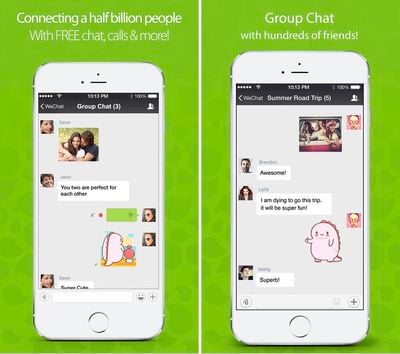
Apple and Tencent, the company that owns the popular WeChat messaging app, have reached a deal that will let WeChat users resume sending in-app tips to content creators, reports The Wall Street Journal.
Apple first asked Chinese social networking apps to disable tipping functionality back in May 2017 as it violated App Store rules. Tipping, Apple said, was a form of in-app purchase that should be subjected to the same fees as other in-app purchases.
In June, Apple officially updated its App Store Review Guidelines and began allowing tipping, but as an in-app purchase, ensuring the company received its full 30 percent cut. Another tweak was made in September, however, officially allowing Apple users to send monetary gifts to other users without Apple taking a cut.
Tencent initially refused to reimplement tipping as an in-app purchase because in WeChat, tipping is a free service provided to customers to build engagement, with Tencent receiving no portion of the money.
Tipping will soon resume in WeChat, though, as WeChat creator Allen Zhang said on Monday that the company had reached an accord with Apple. Details are scarce, but Zhang said WeChat will tweak its platform so tips are paid to individual content creators.
"In the past, companies like Apple might have had a difficult time understanding China-specific features," Mr. Zhang said, according to a transcript of his remarks provided by Tencent. "We now all share a mutual understanding and we'll soon bring back the "tip" function."
With little detail available on the deal established between Tencent and Apple, it's not clear if Apple will be receiving a cut of tips sent between WeChat users, but the tipping feature should soon be returning to the app.
Meltdown and Spectre are serious hardware-based vulnerabilities that take advantage of the speculative execution mechanism of a CPU, allowing hackers to gain access to sensitive information. All modern Intel, ARM, and AMD processors are affected, with many patches and mitigations already released.
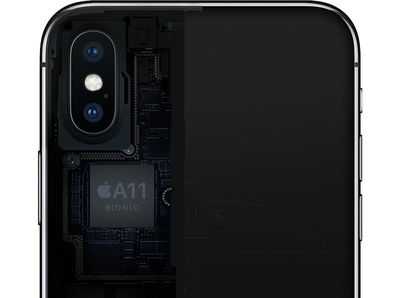
Anthony Bartling and Jacqueline Olson filed a class action complaint against Apple last week in a U.S. district court in San Jose on behalf of anyone who purchased a device with an ARM-based processor designed by Apple, ranging from the A4 to A11 Bionic chips used in iPhone, iPad, iPod touch, and Apple TV models.
The complaint alleges that Apple has known about the design defects giving rise to the Meltdown and Spectre vulnerabilities since at least June 2017, and could have disclosed details to the public more promptly.
An excerpt from the complaint:
ARM Holdings PLC, the company that licenses the ARM architecture to Apple, admits that it was notified of the Security Vulnerabilities in June 2017 by Google's Project Zero and that it immediately notified its architecture licensees (presumably, including Apple) who create their own processor designs of the Security Vulnerabilities.
The complaint added that it is unlikely Apple would be able to fully and adequately release fixes for Meltdown and Spectre without the performance of its processors decreasing by between five and 30 percent.
Apple addressed Meltdown in macOS High Sierra 10.13.2 and iOS 11.2, while Spectre mitigations were introduced in a macOS 10.13.2 supplemental update and iOS 11.2.2, both of which were released early last week.
Despite one dubious claim that Apple's patch for Spectre resulted in a significant performance decrease on one developer's iPhone 6, Apple said its testing indicated that its mitigations had no measurable impact on its Speedometer and ARES-6 tests and an impact of less than 2.5 percent on the JetStream benchmark.
The complaint expects at least 100 customers to be part of the proposed class, with the combined sum of compensatory and punitive damages expected to exceed $5 million if the case proceeds to trial.
A group of Israelis have filed a request with the Haifa District Court to file a class action lawsuit against Apple, Intel, and ARM over Meltdown and Spectre as well, according to local news publication Hamodia.
In the United States, the iPhone maker now faces at least 39 class action complaints as of January 15, according to court documents compiled by MacRumors. Additional lawsuits have been filed in France, Israel, Russia, Korea, and Vietnam, with another pending in Canada, bringing the total to 45.
Many of the lawsuits demand Apple compensate all iPhone users who have experienced slowdowns, offer free battery replacements, refund customers who purchased brand new iPhones to regain maximum performance, and as Apple has already promised, add more detailed info to iOS about a device's battery health.
We've already answered many frequently asked questions about Apple's power management process, and covered the issue extensively, so read our past coverage for more information about the matter.
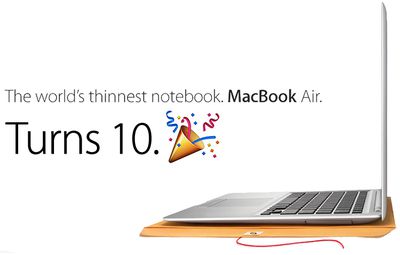
Today marks the tenth anniversary of the late Steve Jobs unveiling the MacBook Air, the world's thinnest notebook at the time.
After introducing the AirPort Time Capsule and sharing some iPhone and Apple TV news, Jobs walked over to his podium, grabbed a manilla envelope, and pulled out the sleek MacBook Air. The crowd at Macworld erupted with applause as Jobs held the ultra-light notebook in the palm of his hand.
The thinness came at a cost. The base model ran $1,799 for a 1.6GHz Intel Core 2 Duo processor, 2GB of RAM, and an 80GB hard drive. A maxed out version was also available for $3,098, around $300 more than the base Mac Pro at the time, with a faster 1.8GHz processor and a 64GB solid-state drive.
MacBook Air was all about firsts. The notebook was Apple's first without a CD/DVD drive, first to ditch a range of ports and connectivity options, first with a multi-touch trackpad, first to have the option for SSD storage, first to weigh just three pounds or less, and first with a mercury-free display.
A single design decision also epitomized the past decade of Apple: a flip-down door on the right side of the machine provided access to only a single USB port, a headphone jack, and a micro-DVI port.
We've seen Apple go down this path many times since: it introduced the MacBook with just a single USB-C port, reduced the MacBook Pro's connectivity to Thunderbolt 3 ports, and removed the headphone jack on the iPhone 7. Each change generated controversy, but ultimately set the course for its future.
A decade later, the MacBook Air remains a product in Apple's lineup, but likely only because it is a lower-cost option. Beyond a minor speed bump last June, the notebook hasn't been updated since March 2015, and it very well may be discontinued once Apple feels able to sell its 12-inch MacBook for around $999.
Apple today has honored the life of Dr. Martin Luther King, Jr. with a full-page tribute on its website. A photo of Dr. King is accompanied by a famous quote of his: "The time is always right to do what is right."
Apple CEO Tim Cook also shared a quote from Dr. King on Twitter and added "let's find the light and the love, together."
“Darkness cannot drive out darkness; only light can do that. Hate cannot drive out hate; only love can do that.” Let’s find the light and the love, together. #MLK
— Tim Cook (@tim_cook) January 15, 2018
Today is Martin Luther King Jr. Day in the United States, a federal holiday in commemoration of his birthday. The iconic leader of the African-American civil rights movement would have turned 89 years old on Monday.
Note: Due to the political nature of the discussion regarding this topic, the discussion thread is located in our Politics, Religion, Social Issues forum. All forum members and site visitors are welcome to read and follow the thread, but posting is limited to forum members with at least 100 posts.
Toyota today is introducing its all-new 2019 Avalon at the North American International Auto Show in Detroit, and MacRumors has learned it is the automaker's first vehicle with support for Apple's CarPlay.
Toyota and Lexus plan to expand CarPlay compatibility to other 2019 model year and beyond vehicles with its Entune 3.0 and Enform 2.0 multimedia systems respectively, according to company spokesperson Brian Lyons. Toyota and Lexus vehicles with CarPlay will initially be sold in the United States only.
Entune 3.0 is already included with the 2018 Camry and 2018 Sienna, so CarPlay should be available in 2019 models of those vehicles at the very least. Toyota told us it hasn't finalized plans for all other vehicles yet.
Toyota said its CarPlay implementation will be wired, so connecting an iPhone via USB will be required. Entune 3.0 will also be compatible with Amazon's Alexa voice assistant in the United States, as Toyota announced at CES 2018 last week. It looks like Android Auto isn't supported at this time.
Toyota often competes for the title of world's largest automaker, and it was by far the most notable brand to not support CarPlay until now, lagging months or years behind competitors like Ford, General Motors, Fiat Chrysler, BMW, Audi, Mercedes-Benz, Honda, Hyundai, Kia, and Volkswagen.
Toyota had been listed as a committed CarPlay partner on Apple's website since 2014, but it had no plans to adopt the platform as of February 2015. "We may all eventually wind up there, but right now we prefer to use our in-house proprietary platforms for those kinds of functions," the company said at the time.
Then, in early 2016, Toyota entered into an agreement with Ford and Livio to deploy SmartDeviceLink, an open source multimedia system rivaling CarPlay and Android Auto. Ford and Toyota established a consortium in early 2017 to accelerate development of the open source software platform.
A recent survey indicated that an increasing number of customers consider CarPlay a must-have feature, so Toyota's support for Apple's software platform should benefit both new vehicle buyers and its bottom line.
Below is a list of some of the other new vehicles with CarPlay support debuting at the auto show this week:
- 2019 Audi A7 - 2018 BMW X2 - 2019 BMW i8 Coupe - 2019 Ford Ranger - 2019 Ford Edge - 2019 Genesis G70 - 2019 Hyundai Veloster - 2019 Kia Forte - 2019 Honda Insight Prototype
Update: Toyota has now shared a press release that reveals the 2019 Avalon has a new nine-inch capacitive touchscreen. CarPlay is a standard feature on all trim levels of the vehicle, which goes on sale in late spring 2018.
Update 2: Toyota informed MacRumors that its CarPlay implementation will be wired, so connecting an iPhone via USB will be required. We're also told that CarPlay will be available in select 2019 model year and beyond Lexus vehicles with its Enform 2.0 multimedia system in the United States.
Update 3: Toyota told us that it doesn't have any plans to support CarPlay in pre-2019 vehicles at this time, even though models like the 2018 Camry and 2018 Sienna have its Entune 3.0 system.
Apple currently has no plans to make any major upgrades to its MacBook Pro lineup in 2018, according to DigiTimes. Of course, if accurate, the report doesn't rule out a MacBook Pro refresh or update of any kind this year.
An excerpt from the report, citing sources within Apple's supply chain:
The sources revealed that Foxconn had been aggressively working to land more MacBook orders from Apple during the past few years by offering attractive quotes. Since Apple has not had a major upgrade to its MacBook product line since the releases of its new MacBook Pro devices at the end of 2016 and has no plan for one in 2018, the US-based vendor is planning to shift orders for models that are already in mass production to Foxconn to save costs and reduce risks.
Apple's manufacturing partner Foxconn could land a large number of additional MacBook orders this year, the report adds. The increase could come at the expense of Quanta Computer, which has been Apple's major MacBook supplier in recent years.
Taiwan-based Foxconn has reportedly been working to boost its chances of notebook orders from Apple by offering attractive quotes. Apple will therefore switch MacBook orders to Foxconn for models that are already in mass production as a way to save costs and reduce risks, according to the sources cited.
Foxconn is expected to begin mass shipments to fulfill the new orders in the second quarter of 2018, said the sources. Foxconn and Quanta both declined to comment on their clients or orders. The sources pointed out that Apple started outsourcing the assembly for some of MacBooks' components to Foxconn's plants in Shenzhen, China in the second half of 2017.
Despite the news, Quanta is expected to remain Apple's biggest supplier going into 2018. According to DigiTimes' research, out of 15 million MacBooks shipped to Apple a year, the shipment ratio between Quanta and Foxconn has been at around 8:2 for the past five years. Last year alone, Quanta had a 79.5 percent share and Foxconn took 20.5 percent.
Quanta is said to be looking to other brand vendors to offset the impact of the loss of orders, as it aims for similar growth to the market average in 2018. The Taiwan-based firm shipped 38.7 million notebooks last year, up five percent on year, and is currently the largest notebook supplier for HP, Apple, Acer, and Asus.
Quanta also maintains orders for the Apple Watch, and is said to be teaming up with Israeli-based augmented reality company Lumus to manufacture lenses for smart glasses. It's not clear if Quanta and Lumus are working with Apple on a future AR headset or smart glasses, but it is a possibility as rumors suggest Apple has a wearable augmented reality product in the works.
Drone videographer Duncan Sinfield has shared the first new Apple Park drone footage of 2018 on YouTube today. The three minute video includes shots of Apple Park's large central courtyard, employee fitness center and basketball courts, the Steve Jobs Theater, and more.
The first part of Sinfield's new video focuses on the landscaping within Apple Park's courtyard, which is still being finished up in the new year. Greenery now covers most of the space and surrounds the main water feature, which is complete. Landscaping has been a major part of the last few Apple Park drone videos -- most recently in one shared by Matthew Roberts last month -- with most of the large equipment moved off of the campus since the majority of construction is now complete.
In the new video, you can also briefly see the Steve Jobs Theater and Apple Park Visitor Center. The main atrium is captured, as well as the outside dining terrace where employees can sit and eat lunch. One of the areas where construction remains ongoing is the piece of land between the Steve Jobs Theater and the main spaceship building, where some vehicles and equipment remain inside of a red fence.
Although small pieces of construction and landscaping remain, employees have already moved into Apple Park and the Visitor Center opened to the public last November. Next month will mark one year since Apple officially named the campus "Apple Park," at the time explaining that it would take more than six months to move its planned 12,000 employees to the site.
Apple today has shared two new iPad Pro ads titled Augment Reality and Take Notes. The short 15-second clips, set to the song "Go" by Louis The Child, are part of a larger campaign ongoing since last year.
The first ad focuses on how the iPad Pro can run augmented reality apps based on Apple's new ARKit platform for iOS 11.
The second ad focuses on how the Apple Pencil can be used to create multimedia notes on an iPad Pro running iOS 11, along with the ability to draw, type, or drag and drop photos from Apple's Files app. A few clips from this ad were previously shared in Apple's longer What's a Computer? ad in November.
The two ads follow yesterday's new 38-second ad titled A New Light, in which Apple explained how Portrait Lighting offers studio quality lighting effects without a studio and showed off various examples.
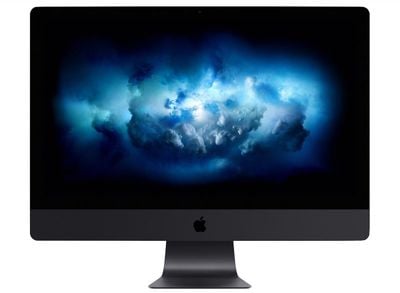
Micro Center stores are currently offering the base model iMac Pro for $3,999, a significant $1,000 discount off Apple's regular price, and by far the lowest price we've ever seen for the powerful desktop workstation since it was released a month ago.
Micro Center says the deal is available at its retail stores only and not online. The official Apple Authorized Reseller has 25 locations across the United States, many of which appear to be open this Saturday and Sunday.
The best deal we had previously seen on the base model iMac Pro, which starts at $4,999 from Apple, was a $250 discount from Best Buy that dropped the price to $4,749.99 earlier this week, so this is an impressive sale.
Micro Center says the deal is limited to one per household, and supplies are likely extremely limited, so we recommend calling ahead if you are planning on visiting one of their stores. There's no indication when the sale ends, so act fast.
The base model iMac Pro is equipped with a 27-inch 5K display, 3.2GHz 8-core Intel Xeon W processor, 32GB of ECC RAM, 1TB SSD storage, Radeon Pro Vega 56 graphics with 8GB HBM2 memory, 10Gb Ethernet, and four Thunderbolt 3 ports.
(Thanks to Steve, Johnny, and other readers who tipped us!)
The 2018 Consumer Electronics Show is wrapping up today, bringing an end to a week's worth of non-stop announcements about all of the new products we can expect to see over the course of the year.
For our last video, we asked MacRumors videographer Dan to spend some time on the show floor, hunting down the most interesting products he could find. Not everything we're sharing today is Apple related, but we thought MacRumors readers might want to see some of the zanier things on display at CES.
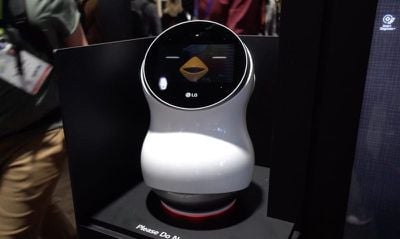
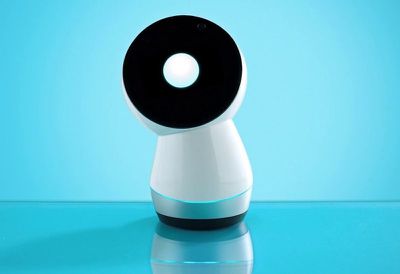
Robots were big at CES, some of which were offering an impressive level of detail and intelligence. Jibo, a $900 "social" robot that's already for sale, was on display, as was the CLOi Robot from LG. LG's CLOi is designed to control smart home products, but it had a bit of a rough start this week when it failed to perform at an LG event.
LG's CLOi
You might have seen Jibo in person already, because the company has been showing it off at mall kiosks and other locations. Jibo has a built-in camera for both facial recognition and capturing "special moments," plus he can dance, answer questions, play music, and more.
Jibo
Other robots on display were just plain odd. Robotis had a bunch of its programmable $499 Mini Humanoid Robots set in a choreographed dance to South Korean hit song "Gangnam Style." Robotis also had a pet dog robot on hand, which was able to roll over, wag its tail, and even pretend to go to the bathroom.
Robotis Mini
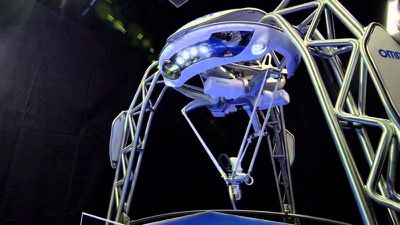
Some robots were more conceptual than consumer oriented. Omron, for example, was showing off its Forpheus ping pong robot, which can play a mean game of table tennis. In the future, Omron has goals beyond ping pong or Forpheus, but for now, it's an interesting proof of concept demonstrating what robots are capable of.
Omron's ping pong robot
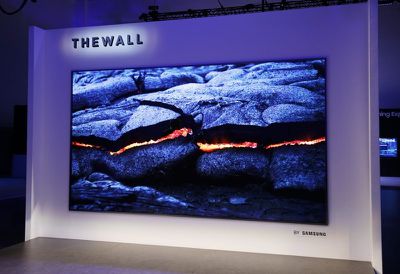
Beyond robots, there was some impressive TV tech being demonstrated at CES. LG created an entire tunnel filled with OLED TVs to simulate walking through a forest, while Samsung showed off its 146-inch microLED modular TV, "The Wall."
The Wall scales out to as large as 146 inches, which is the average size wall a consumer might have in a house. It's modular, though, so if your wall is smaller, it can be built smaller, too. Samsung hasn't provided pricing on The Wall, but we imagine it's going to be a lot more than most people want to spend for a TV set, even one as cool as this.
The Wall from Samsung
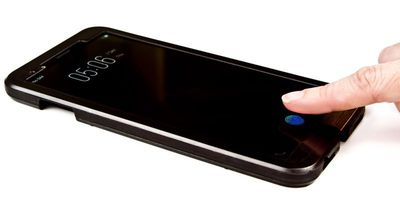
Though not quite as visually interesting, the latest Vivo phone was being shown off on the show floor. The Vivo is notable because it's the first phone that includes an in-display fingerprint sensor, courtesy of Synaptics. Apple was rumored to be working on this kind of technology, but the company ultimately went with Face ID.
Synaptics' Clear ID in-display fingerprint sensor
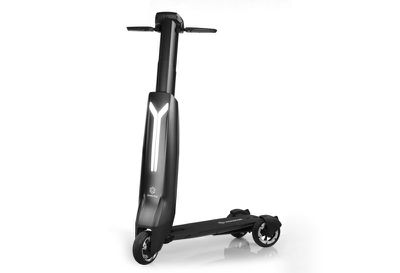
Cars and other alternative transportation methods were also a highlight of CES, with companies showing off everything from the luxurious to the futuristic. There were also plenty of electric bikes and scooters, including an FAA-approved collapsible electric scooter from Immotor. It's sleek, folds down into a tiny package, and offers a 16 mile range on one charge, but it's expensive at $1,500.
Immotor Go
Our CES coverage is at an end for 2018, but we'll be seeing more of many of these products over the course of the year. If you want to catch up on our coverage, make sure to check out our CES 2018 hub, and don't miss our roundup of some of the best Apple-related accessories we saw at the show.
The lower price, down from $49.99 regularly, is applicable to the iPhone 5c, iPhone 5s, iPhone 6, iPhone 6 Plus, iPhone 6s, iPhone 6s Plus, iPhone 7, iPhone 7 Plus, and iPhone SE, subject to battery availability and while supplies last.
Office Depot and OfficeMax promise same-day battery replacements. If the order is not completed by the end of regular store hours, the customer receives a repair discount of $25, according to fine print on its website.
One very important caveat is that Office Depot and OfficeMax are not Apple Authorized Service Providers, meaning their replacement batteries are not supplied by Apple, and having an aftermarket battery installed can void your iPhone's warranty, although iFixit argues that Apple cannot do so under U.S. law.
A spokesperson for Office Depot and OfficeMax informed us that their iPhone batteries are built to Apple's specifications for each iPhone model and added that all of their batteries carry a one-year warranty against defects.
We still highly recommend only having an Apple Store or Apple Authorized Service Provider replace your iPhone's battery, but Apple is currently running low on some batteries, and Office Depot and OfficeMax may be an option worth considering for customers with an iPhone that is already past its warranty.
Office Depot and OfficeMax offer iPhone battery replacements at hundreds of locations across the United States. Those interested can enter their ZIP code on Office Depot's website to find a participating location near them.
iFixit has also discounted its iPhone battery replacement kits to $29 or less as a do-it-yourself option, but again, we recommend letting a professional at Apple or an Apple Authorized Service Provider complete the process.
For customers who want to keep things official, read our guide on how to get your iPhone's battery replaced with an appointment at an Apple Store or Apple Authorized Service Provider. Apple also offers a mail-in option.
Apple this afternoon uploaded a new iPhone X video to its YouTube channel, this time showing off the new Portrait Lighting mode on the iPhone X.
In the 38-second video entitled "A New Light," Apple explains that Portrait Lighting offers studio quality lighting effects without the studio, while also showing off each of the different Portrait Lighting options.
Portrait Lighting on iPhone X creates studio-quality lighting effects. See portraits and selfies in a whole new light.
Portrait Lighting is a feature available for both the iPhone X and the iPhone 8 Plus, but the iPhone X is the only device that offers Portrait Lighting effects for both the front and rear-facing cameras thanks to its front-facing TrueDepth lens system.
Apple's Portrait Lighting feature uses sophisticated algorithms to calculate how your facial features interact with light, to create unique lighting effects. There are several Portrait mode lighting presets, including Natural Light, Studio Light (lights up your face), Contour Light (adds dramatic shadows), Stage Light (spotlights your face against a dark background), and Stage Light Mono (Stage Light, but in black and white).
Portrait Lighting is one of the new features that Apple has focused on a few times before in past videos, sharing Portrait Lighting tutorials and demonstrations of Portrait Lighting in action. Most of Apple's prior videos focused on the iPhone 8 Plus, though, while this one is specific to iPhone X.
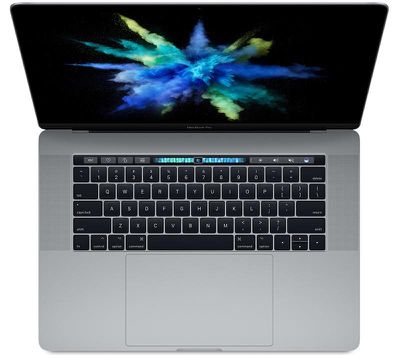
Adorama has marked down a collection of MacBooks this week, with instant rebates that start at $150 off Apple's mid 2017 refresh of the 13-inch MacBook Pro and increase to $200 off the 15-inch model. Adorama's markdowns on the latest MacBook Pros provide some of the best sale prices for these custom configurations found online, and other retailers like B&H Photo and MacMall are matching discounts in many instances.
Note: MacRumors is an affiliate partner with these vendors. When you click a link and make a purchase, we may receive a small payment, which helps us keep the site running.
13-inch MacBook Pro from mid 2017
2.3GHz, 16GB RAM, 256GB SSD - $1,549 at Adorama and B&H Photo, down from $1,699
2.3GHz, 16GB RAM, 512GB SSD - $1,749 at Adorama and B&H Photo, down from $1,899
Touch Bar, 3.1GHz, 16GB RAM, 512GB SSD - $2,049 at Adorama and B&H Photo, down from $2,199
Touch Bar, 3.5GHz, 16GB RAM, 512GB SSD - $2,349 at Adorama and B&H Photo, down from $2,499
15-inch MacBook Pro with Touch Bar from mid 2017
2.8GHz, 16GB RAM, 256GB SSD - $2,199 at Adorama, down from $2,399
2.9GHz, 16GB RAM, 512GB SSD - $2,599 at Adorama and MacMall, down from $2,799
2.9GHz, 16GB RAM, 1TB SSD - $2,989 at MacMall / $2,999 at Adorama and B&H Photo, down from $3,199
3.1GHz, 16GB RAM, 1TB SSD - $3,199 at Adorama and B&H Photo, down from $3,399
In addition to Adorama's instant rebates, Best Buy today started a new 2-day sale that will last until tomorrow, January 13 at 11:59 PM CT. Discounts include $200 off the MacBook Air, around $60 off the HP ENVY printer, as well as savings on 4K tvs and various smart home products. We've rounded up some of the most notable deals during Best Buy's 2-day sale in the list below.
If you were interested in T-Mobile's BOGO iPhone offer announced earlier this week, remember that the carrier's trio of deals go live today. For more of the latest discounts and sales head over to our Deals Roundup.
Visa today announced it will eliminate its signature requirement for EMV payments beginning April 2018 in the United States and Canada.
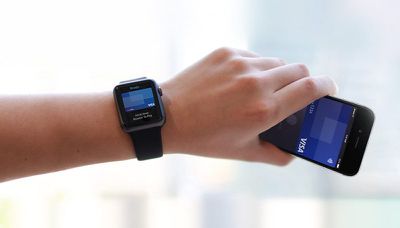
The change will apply to both chip-and-signature credit and debit cards, and contactless payment solutions like Apple Pay when linked to a Visa credit or debit card. The change is designed to allow for a more consistent, streamlined, and quicker checkout experience for both merchants and cardholders.
For years, customers have been required to sign the receipt when making a purchase to verify they own the debit or credit card they are attempting to use. A cashier is supposed to match the signature on the receipt against the one on the back of the card, but in reality, this process is often skipped nowadays.
Currently, even when using Apple Pay, a signature can be required on occasion for purchases over $25 made with a Visa card in the United States. But with EMV technology and other modern safeguards, Visa is now moving to fully eliminate this requirement, in line with Mastercard, American Express, and Discover.
The signature requirement is already much less common in Canada, where customers insert their chip card into a payment terminal and verify ownership by entering a four-digit PIN. You also can't use contactless payments for transactions over $100 in Canada (update: excluding American Express — thanks Gary Ng!)
Visa says its partners have deployed EMV-chip enabled readers at more than 2.5 million locations around the world. Less than two years since the technology launched in the United States, counterfeit fraud declined 66 percent at EMV-chip enabled merchants, according to the company.
Merchants will remain able to collect signatures if required to do so by an applicable law in a particular jurisdiction.
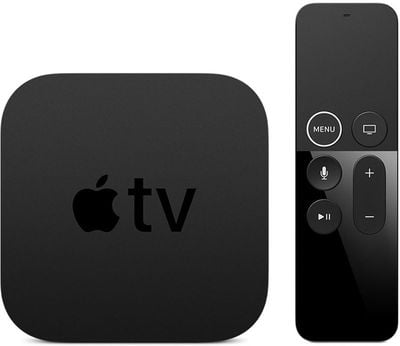
Apple today seeded the fifth beta of an upcoming tvOS 11.2.5 update to developers for testing purposes, one week after seeding the fourth beta and almost a month after the release of tvOS 11.2.1, an update that introduced a fix for a HomeKit vulnerability.
Designed for the fourth and fifth-generation Apple TV models, the new tvOS 11.2.5 developer beta can be downloaded onto the Apple TV via a profile that's installed using Xcode.
We don't yet know what features or changes might be included in the tvOS 11.2.5 update, but it likely focuses primarily on bug fixes and performance improvements rather than major outward-facing changes.
There were no outward-facing changes discovered in the first four developer betas, but we'll update this post should new features be found in the fifth beta.
For this week's giveaway, we've teamed up with Intrepid Bag Co to offer MacRumors readers a chance to win an Adventure Leather Satchel Bag designed for Apple's line of MacBook, MacBook Air, and MacBook Pro machines.
Available in 13 and 15-inch size options, the Adventure Leather Satchel is made from high-quality full grain tobacco-colored leather that will age into a unique patina, making each bag one-of-a-kind.
Intrepid Bag Co offers several quality-made leather bags, but the Adventure Satchel is its most rugged, made with old-world craftsmanship techniques like hand pounded copper rivets and UV-resistant nylon stitching.
The Adventure Satchel is laden with pockets and can hold quite a bit of gear. Under the front flap, there's a dedicated laptop section, two medium-sized interior pockets, rainproof side flaps, a key strap, and two pen holders.
There's also a hidden passport/wallet section for keeping your valuables safe, and on the outside of the bag, there's a zippered compartment under the flap and a long newspaper pocket at the back.
You can wear the Adventure Satchel cross-body with a side mounted 1.5-inch strap made from leather and canvas, which is padded for comfort even when the bag is packed full, and there's also a hand strap at the top.
Intrepid Bag Co normally charges $249 for the 13-inch Adventure Satchel or $269 for the 15-inch version, but we've got one to give away. Intrepid Bag Co has also provided MacRumors readers with a 10 percent discount on all products using the code "MacRumors10."
To enter to win the giveaway, use the Rafflecopter widget below and enter an email address. Email addresses will be used solely for contact purposes to reach the winners and send the prizes. You can earn additional entries by subscribing to our weekly newsletter, subscribing to our YouTube channel, following us on Twitter, or visiting the MacRumorsFacebook page.
Due to the complexities of international laws regarding giveaways, only U.S. residents who are 18 years or older and Canadian residents (excluding Quebec) who have reached the age of majority in their province or territory are eligible to enter. To offer feedback or get more information on the giveaway restrictions, please refer to our Site Feedback section, as that is where discussion of the rules will be redirected.
The contest will run from today (January 12) at 10:00 a.m. Pacific Time through 10:00 a.m. Pacific Time on January 19. The winners will be chosen randomly on January 19 and will be contacted by email. The winners will have 48 hours to respond and provide a shipping address before new winners are chosen.








 Note: MacRumors is an affiliate partner with these vendors. When you click a link and make a purchase, we may receive a small payment, which helps us keep the site running.