Next year's Apple Watch, which would be the Series 8, could come in three sizes, according to display analyst Ross Young. On Twitter, Young said that people should not be surprised "if there are three sizes next year."
Young did not provide details on what those three sizes might be, but he asked if users would like to see a "bigger display," so presumably the third size would be a larger Apple Watch than is currently offered.
Apple in 2021 made minor changes to the design of the Apple Watch Series 7, and it comes in 41mm and 45mm case options. Prior Apple Watch models have been available in 38mm, 40mm, 42mm, and 44mm sizes, with increases coming alongside slimmed down bezels and larger display sizes.
This is the first we've heard of the possibility of the Apple Watch Series 8 being available in more than two sizes, and it is not clear what kind of size increase Apple might offer.
Though we're still waiting on the Apple Watch Series 7, we have heard rumors about what might be coming in 2022. The Apple Watch Series 8 could be available in an option with a "rugged casing" aimed at athletes, hikers, and others who use the watch in more extreme conditions than day to day wear, plus it could have a temperature sensor. Other health sensors that have been in the works for some time are also possibilities, such as blood glucose monitoring for diabetics.
One of Apple's self-driving test vehicles was involved in a minor incident on September 27, according to a filing made with the California DMV [PDF].
The self-driving vehicle, which was operating in autonomous mode at the time, clipped a curb while going 13 miles per hour. There was no damage reported, but the car did require a realignment.
A test vehicle, operating in autonomous mode in Sunnyvale and turning right from Mathilda Avenue onto Del Ray Avenue, made contact with a curb at approximately 13 miles per hour. While there was no tire or wheel damage, the contact resulted in misalignment. No other agents were involved, no injuries were reported, and law enforcement was not called to the scene.
The incident occurred when the vehicle was turning right from Mathilda Avenue onto Del Ray Avenue, a location that is right near Apple's Mathilda Avenue location.
Apple's self-driving vehicles have been involved in several very minor accidents, but most have been caused by other drivers and while not in autonomous mode. This is the second event that has occurred where an Apple vehicle was being operated in autonomous mode.
Apple has been testing its self-driving software since early 2017, using the aforementioned Lexus RX 450h vehicles outfitted with sensors and cameras in the area around its Cupertino campuses. The work on autonomous driving is part of Apple's longtime car project, and rumors suggest Apple is planning to release a vehicle in the mid to late 2020s.
Apple today announced an upcoming "Unleashed" event for Monday, October 18, and the event is expected to focus on the MacBook Pro, which is long overdue for a refresh.
We've been hearing endless exciting rumors about the new machines, but this morning, display analyst Ross Young shared something new - the upcoming MacBook Pro models could feature a 120Hz refresh rate.
In a Twitter conversation, Young said that the 14 and 16-inch MacBook Pro models will feature mini-LED displays with 120Hz refresh rates. We've heard about the possibility of a mini-LED display prior to now, but Young says that it is "100% confirmed."
Yes, new 14" and 16" MacBook Pro's will have miniLEDs and we believe they will also be 120Hz refresh.
— Ross Young (@DSCCRoss) October 12, 2021
He claims that Apple will use the same panel suppliers that it uses for the iPad Pro, and oxide backplanes, mini-LED backlights, and 120Hz refresh rates are expected. Though he says mini-LED technology is a sure thing, Young seems less sure about the inclusion of a faster 120Hz "ProMotion" refresh rate, though it appears to be a possibility.
Panel suppliers are the same between the iPad Pro's and MacBook Pro's - LG Display and Sharp. Expecting similar technology - oxide backplanes, miniLED backlights and 120Hz refresh rates. MiniLEDs, 100% confirmed.
— Ross Young (@DSCCRoss) October 12, 2021
"We believe they will be 120Hz," Young wrote in response to someone who asked whether a 120Hz refresh rate was confirmed. ProMotion technology is used in the iPad Pro and the iPhone 13 Pro models, so it would not be a surprise to also see it in the MacBook Pro. ProMotion offers a variable refresh rate ranging from 24Hz (10Hz on iPhone) to 120Hz, and at the maximum refresh rate, it results in smoother scrolling and gameplay, along with other benefits. The variable refresh rate allows the display to conserve energy when higher frame rates are not needed, preserving battery life.
Mini-LED technology has previously been mentioned by Apple analyst Ming-Chi Kuo and Bloomberg's Mark Gurman. Gurman has also shared several details on what we can expect, which he reiterated in an article posted after the event invites went out.
According to Gurman, the new MacBook Pro models will feature the biggest change to the line since the 2016 refresh that introduced the current design. Apple is planning to introduce a new version of the M1, dubbed M1X, which is a much more powerful chip.
It is expected to feature 10 cores, with eight high-performance cores for system intensive tasks and two efficiency cores for basic operations. 16 and 32-core graphics options will be available, and the machines could support up to 64GB RAM.
Apple is planning to offer the upcoming machines in 14 and 16-inch screen sizes, which will replace the current Intel models. Along with a refreshed design that features flatter edges similar to the iPhone 13 Pro, the new MacBook Pro models will be equipped with a MagSafe magnetic charger and will feature an HDMI port, USB-C ports, and an SD card slot. There will be no Touch Bar, as Apple plans to remove it in favor of a standard row of function keys.
For more on what to expect from the upcoming MacBook Pro models, we have a dedicated guide where we have aggregated all of the rumors we've heard so far.
Apple is also working on a redesigned and higher-end version of the Mac mini, a smaller Mac Pro, a larger iMac, a new low-end MacBook Pro, and a revamped MacBook Air, according to Bloomberg, and we could see the Mac mini at the event. AirPods 3 are in development as well and could make an appearance.
Apple plans to livestream the October 18 event, but MacRumors will also have live coverage both here on MacRumors.com and on our MacRumorsLive Twitter account.
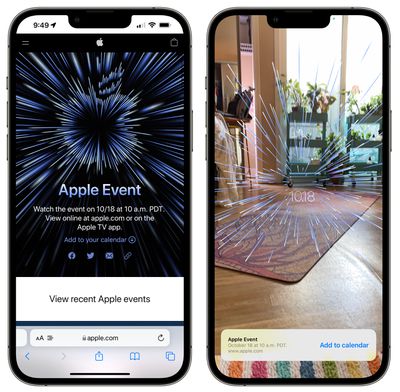
Apple just announced its second fall event, which is set to take place on Monday, October 18. As usual, the Apple Events webpage features an augmented reality logo that you can see when viewing the page on an iOS device.
Open up the Apple Events page on an iPhone or an iPad and then tap on the logo to open the augmented reality interface. Apple asks you to scan around the room and then projects the graphic from the event invite into the area.
For the Unleashed event, the augmented reality view features beams of blue light that are arranged in the shape of an Apple logo, along with the date "10.18."
Apple's October event is expected to focus on new MacBook Pro models, but we could also see the AirPods 3 and a refreshed version of the Mac mini. Apple plans to livestream the event, but MacRumors will also have live coverage both here on MacRumors.com and on our MacRumorsLive Twitter account.
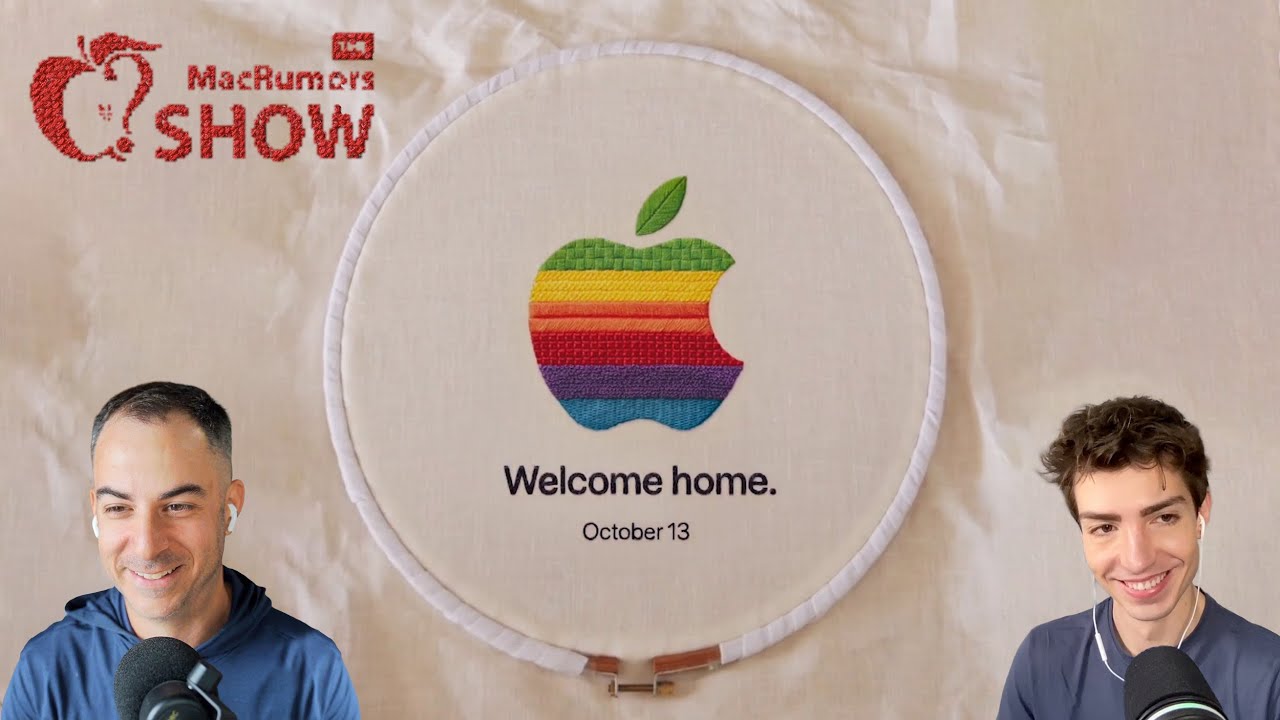
Apple today announced that it will be holding a special event on Monday, October 18 at 10:00 a.m. Pacific Time. The event is set to take place at the Steve Jobs Theater on the Apple Park campus in Cupertino, California, and it will once again be a digital only event.
When there are a lot of products coming in the fall months, Apple often holds a second October or November event, which is the case in 2021. Rumors have been teasing redesigned 14 and 16-inch MacBook Pro models for months now, and it's looking like Apple is finally ready to release them.
Rumors suggest the 14 and 16-inch MacBook Pro models will have an overhauled design with thinner bezels and larger displays, and we've already seen hints of 3024 x 1964 and 3456 x 2234 resolutions, respectively, which would enable 2x Retina for sharper, crisper images and text. The new MacBook Pro will use an M1X chip, which is an faster, more powerful version of the M1, plus it could support up to 32GB RAM.
The new MacBook Pro will mark the return of MagSafe connectivity, a charging feature that will replace USB-C. Apple is also bringing back the HDMI port and SD card slot, and there will be no Touch Bar, with Apple instead re-adopting a standard function row of keys. The 2021 MacBook Pro models will be a throwback to the pre-2016 MacBook Pro designs, with Apple undoing many of the changes that were introduced with the 2016 revamp.
We thought the AirPods 3 might come out at Apple's September event because it makes sense to unveil AirPods alongside iPhones, but that didn't happen, so we could instead see them at the October event. The new AirPods will have shorter AirPods Pro-like stems and an AirPods Pro-style case, but will continue to be a more affordable option without Active Noise Cancellation.
We'll likely find out when macOS Monterey is going to launch, and Apple could also have some surprises like an M1X version of the Mac mini in store, but aside from MacBook Pro models and AirPods 3, we haven't heard rumors of anything else coming out this year.
Apple plans to stream the fall event live on its website, on YouTube, and on the Apple TV through the Apple TV app. For those unable to watch, MacRumors will be providing full event coverage both on MacRumors.com and the MacRumorsLive Twitter account.
Over a decade after being released on the App Store, the classic hit iPhone game Tiny Wings is coming to Apple Arcade this Friday.
Tiny Wings is a casual game that involves tapping and holding the screen to control a bird whose wings are too tiny to fly. The game tasks players with outrunning the sun as they fly a bird across procedurally generated islands. Players must tap on the screen at the perfect moment so that the bird slides down hills and gains enough momentum to reach the next island before the sun sets, while aiming to complete tricks for score multipliers.
Tiny Wings, created by Andreas Illiger, was first released on the App Store in 2011 and remains one of the most popular paid games in the casual category. On Apple Arcade, the game will be titled Tiny Wings+ and it will be available for the iPhone, iPad, and Apple TV. Like all Apple Arcade titles, the game does not have any in-app purchases or ads.
Other games coming to Apple Arcade include NBA 2K22 Arcade Edition on October 19 and Kingdom Rush Frontiers, which doesn't have a release date yet.
Priced at $4.99 per month or $49.99 per year, Apple Arcade is a subscription-based service that provides access to a catalog of over 200 games across the iPhone, iPad, Mac, and Apple TV, with additional titles added periodically.
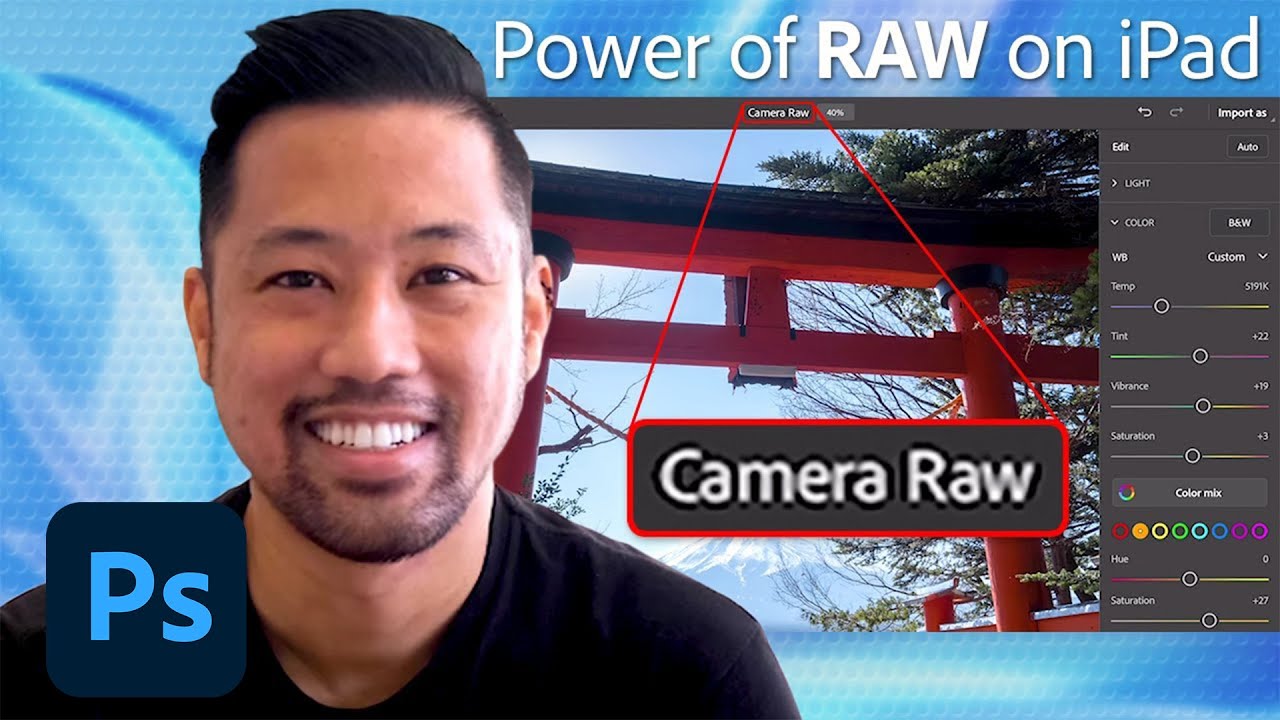
Adobe today announced that Adobe Camera RAW support is coming to Photoshop on the iPad, which will allow Photoshop iPad users to import, open, and edit RAW files. The upcoming feature was highlighted in a demo video that Adobe shared on YouTube, but no details on when it will launch were provided.
According to Adobe, RAW support will work with file types ranging from DNG to Apple ProRAW, which is the RAW file format available on the iPhone 12 Pro and iPhone 13 Pro models.
RAW files can be edited like any other image, with users able to adjust aspects like exposure and noise and use Photoshop's non-destructive editing and auto-adjustment tools.
Photoshop for iPad is part of Adobe's Creative Cloud plan. Access is available priced starting at $9.99 per month for the Photography plan.
As the popularity of Apple TV+ grows, Apple appears to be struggling to contend with increasing levels of online piracy, despite concerted efforts to take down its stolen content, MacRumors has found.
Piracy is a lucrative business for torrent sites, with a report from August estimating that the top five piracy websites raise around $18.3 million in ad revenue and sponsorships per year. According to the Alliance for Creativity and Entertainment (ACE), streaming piracy represents up to 80 percent of piracy, costing companies as much as $71 billion annually.
Although Google has increasingly cracked down on websites that host pirated content, site operators often change domains and redirect users to avoid takedowns and keep torrent links accessible. In a research paper published in 2018, Google conceded that there will "be new sites dedicated to making copyrighted works available as long as there is money to be made doing so."
Apple largely avoided the need to combat online piracy until the launch of Apple TV+ in November 2019. Since then, Apple TV+ shows and movies have proliferated throughout piracy sites across the internet.
While Apple has a clear piracy prevention statement for software, this does not extend to its video entertainment content, which is instead covered by Apple's terms and conditions of service. From MacRumors' findings, some of Apple's most popular shows and movies have at least 2,000 active seeders on each major piracy site, going up to as many as approximately 125,000 seeders per title. Download trends broadly map to the popularity of Apple's various shows and movies, with the likes of "Ted Lasso," "The Morning Show," and "SEE" garnering the most downloads.
Apple is a governing member of the Motion Picture Association of America's ACE, an influential anti-piracy group committed to "supporting the legal marketplace for video content and addressing the challenge of online piracy" that also includes Netflix, Amazon, Comcast, Disney, NBC, MGM, ViacomCBS, Paramount, Fox, NBCUniversal, Sony Pictures, Warner Bros., and others. Apple also works with the Software and Information Industry Association (SIIA).
Streaming production studios and distributors, such as Netflix, Amazon Prime Video, and Disney+, have attempted to curtail the illegal sharing of movies and TV shows using specific enforcement partners who flag stolen content on their behalf. Apple has followed suit, inking working deals with multiple firms specializing in digital copyright protection, including Corsearch Inc. and OpSec Security. They operate by issuing DMCA takedown orders for pirated online content.
According to information accessed by MacRumors, Corsearch has issued more than 320,000 DMCA orders to Google, citing copyright infringement for Apple TV+ content. These orders only stop Google from indexing flagged piracy sites and do little to curtail the actual hosting of pirated content. Delist requests on Apple's behalf reached an all-time high on August 16 this year, with more than 8,500 requests to Google in a single day.
MacRumors tracked numerous domains and URLs used to pirate Apple TV+ content and found that none were taken down by Apple or its partners over the course of a week. On the contrary, during this period, the website's catalog of stolen Apple TV+ content grew, sometimes within just hours of new episodes being released on Apple TV+ itself.
Apple and its partners must issue DMCA orders to the websites themselves to get them taken down, a process that can be cumbersome. To make matters more complex, some sites do not host Apple TV+ content directly but act as an aggregator for content hosted elsewhere.
The websites we tracked were hosted by Cloudflare, a popular web infrastructure company that provides digital security and CDN, or content delivery network. As outlined in its abuse policy, Cloudflare cannot take sites down as it does not directly host them. Instead, it can redirect cases of reported digital copyright infringement to the piracy site's hosting provider or owner.
Actioned DMCA orders show that Apple and its partners tend to focus on more obscure websites that host Apple TV+ content infrequently rather than more persistent, larger piracy sites hosting Apple TV+ content in larger swathes.
Although 91.2 percent of Apple's delist requests were successfully actioned, the growth and availability of Apple TV+ content on torrent sites does not seem to have been significantly impeded by its efforts, with the company firmly falling into the same issues experienced by its rivals in the entertainment industry. Apple, Corsearch, and OpSec declined to respond to requests for comment.
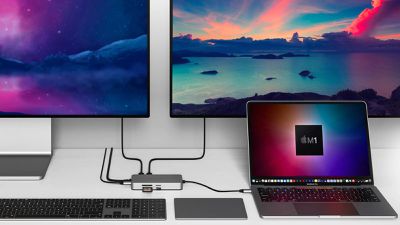
Hyper today announced the release of two new HyperDrive hubs that allow M1 models of the MacBook Air and 13-inch MacBook Pro to connect to two 4K displays over HDMI in a plug-and-play manner with no drivers required.
There is a 3-in-1 version of the hub with two HDMI ports and a USB-C Power Delivery port for up to 100W of pass-through charging, and a 10-in-1 version of the hub that offers those same ports with the addition of another USB-C port, two USB-A ports, a Gigabit Ethernet port, microSD and SD card slots, and a 3.5mm headphone jack.
Hyper says both hubs deliver dual 4K HDMI video output over a single USB-C connection to M1 MacBook models by using a combination of both DisplayPort Alt Mode and SiliconMotion InstantView plug-and-play video technology. After connecting the hub to the Mac, users must open the HyperDisplay app that appears on the desktop.
Keep in mind that on both of the hubs, one HDMI port supports 60Hz and the other is limited to 30Hz, which may be a dealbreaker for some users.
Note: MacRumors is an affiliate partner with Hyper. When you click a link and make a purchase, we may receive a small payment, which helps us keep the site running.
Infiniti today announced that most of its 2020 and newer vehicles are now eligible for a complimentary upgrade to wireless CarPlay in the United States.
The free software update is available for 2020 and 2021 models of the Q50, Q60, QX50, and QX80 from now until March 31, 2022, according to Infiniti. Owners of these vehicles can schedule an appointment at an Infiniti dealership to have the update completed.
Infiniti is also offering wireless CarPlay in 2022 models of the Q50, Q60, QX55, QX60, and QX80.
Infiniti, the luxury brand of Japanese automaker Nissan, was a late adopter of CarPlay. MacRumors editor-in-chief Eric Slivka reviewed wired CarPlay in the 2020 QX50 last year and the vehicle is now eligible for the complimentary wireless CarPlay upgrade.
Wireless CarPlay works over Bluetooth and Wi-Fi, allowing for an iPhone to be connected to the infotainment system without a Lightning cable. Infiniti joins a long list of automakers that have started adopting wireless CarPlay, including Hyundai, Honda, Acura, Ford, GM, Chrysler, BMW, Mercedes-Benz, Mitsubishi, Volkswagen, and others.
Note: MacRumors is an affiliate partner with some of these vendors. When you click a link and make a purchase, we may receive a small payment, which helps us keep the site running.
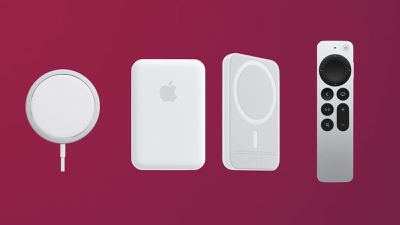
Notably, for the MagSafe deals shoppers should be aware that the prices listed below may not be reflected on Verizon until you add each to your cart. If you don't see the sale prices reflected on the product pages, Verizon will automatically discount each accessory once in your cart.
Ecobee today announced that its HomeKit-enabled SmartThermostat with voice control is gaining "Hey Siri" support with a free software update that is beginning to roll out now and will be available over the next few weeks for all users.
"Hey Siri" support allows users with a HomePod or HomePod mini to control the SmartThermostat with voice commands for tasks such as setting the temperature and sending Intercom messages. The thermostat relays the requests through a HomePod or HomePod mini connected to the same Wi-Fi network to ensure privacy and security. Users can also continue to control the thermostat in the Home app on an iPhone, iPad, or Mac.
Apple announced at WWDC 2021 that HomeKit accessory makers would be able to integrate Siri voice control for the first time, allowing the accessories to support Siri features such as Personal Requests, Intercom messages, timers, and alarms. As mentioned, Hey Siri-enabled accessories are required to relay requests through a HomePod or HomePod mini.
In addition to a HomePod or HomePod mini, users need a device with iOS 15 or iPadOS 15 or later to use Siri voice control on the SmartThermostat.
Ecobee's SmartThermostat with voice control is regularly priced at $249.99 in the United States and is available to purchase on Ecobee.com and through select partners, including Amazon, Lowe's, Home Depot, Best Buy, or an Ecobee certified installer.
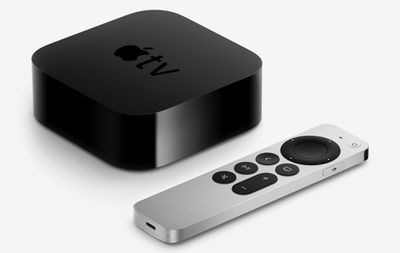
Today we're tracking a new Amazon low price on the 2021 32GB Apple TV 4K, available for $159.99, down from $179.00. This $19 discount is a match of the same all-time low price we saw last week, and it's the first time we've seen the deal on Amazon.
Note: MacRumors is an affiliate partner with Amazon. When you click a link and make a purchase, we may receive a small payment, which helps us keep the site running.
Importantly, you'll only see this sale price once you add the Apple TV 4K to your cart and an automatic coupon worth $9.01 is applied to the order. The Apple TV 4K is available for the usual free Prime shipping options, and it's in stock and ready to ship today.
You can also get the 64GB Apple TV 4K for $189.98, down from $199.00. We've seen this Apple TV 4K discounted by an additional $10, so this sale is a second-best price. Both of these Apple TVs are sold by Amazon, and they're in stock and ready to ship today.
Although the sales on these Apple TV models aren't particularly steep, they are the best offers around and worth checking out if you're still on the market for the newest Apple TV 4K. You can keep an eye out on Apple TV deals in our Best Apple TV 4K Deals guide.
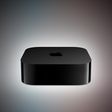
Apple is working on a redesigned Apple TV box that will feature a flatter, thinner footprint, and a "plexiglass" top, according to a questionable report from iDropNews.
The report, citing "sources," claims that an Apple TV with a thinner and flatter design is in the works, eliminating the "horribly outdated and bulky" design of the current generation Apple TV. According to the sketchy report, the Apple TV will feature a "plexiglass" top, a design feature that's expected to debut in an upcoming Mac mini. The redesign mentioned in the report is reminiscent of the design of the first-generation Apple TV.
Neither iDropNews nor the author of this report has an established track record, so all of the information should be taken with a large pinch of salt. The report also states that the new Apple TV will have "sharp edges like the iPhone 13, iPad Pro, and iMac." The claim is somewhat moot, considering that the current Apple TV design is already flat-edged with hard edges.
Another rumor in the report is about Apple working on a "Nintendo Switch style gaming console." The information is a regurgitation of previous rumors, claiming that Apple is working on a gaming console to advance its gaming portfolio. Today's rumor states that it will be Apple's take on a "premium hybrid gaming console" and will have performance that "will outperform anything that Microsoft or Sony offers in 2021."
Reliable leaker L0vetodream in 2020 said that Apple is working on a gaming controller, but that's yet to be seen in a consumer product. Apple launched Apple Arcade, its gaming subscription service, in 2019 and has since promoted the iPhone, iPad, Mac, and Apple TV as powerful devices to play games on. Earlier this year, Apple updated the Apple TV with an A12 Bionic chip, offering even more performance for Apple Arcade games.
Tile, a company that makes Bluetooth-based item trackers that compete with Apple's AirTags, today introduced a refreshed lineup of devices and new features that make it easier for users to locate lost items.
The Tile Pro, Tile's most robust tracker with a 400 foot Bluetooth range, has been updated with a new key fob look. Tile says that the Pro is designed to attach to keys right out of the box, and that with the included keychain, it can also be used with bags and purses.
Tile's Mate, Sticker, and Slim trackers have all been refreshed and now have a 250 foot Bluetooth range, a louder ring, and upgraded IP67 water-resistance. The Mate has also received a design update and it now features a three-year battery life.
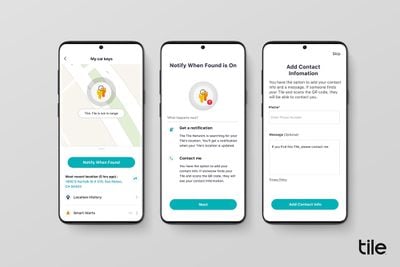
For locating lost devices, Tile is updating its "Lost and Found" network with support for QR codes that will be included on the back of every item tracker. If a lost item with a Tile tracker is found, the person who found it can scan the QR code to get contact details for the owner. All of Tile's refreshed trackers include the QR code with the exception of the Sticker.
Apple has a similar system that allows a lost AirTag to be identified by someone who finds it, but Apple's solution uses NFC functionality. A lost AirTag can be scanned by an NFC-enabled smartphone to bring up details.
To address unwanted tracking, Tile is introducing a "Scan and Secure" feature is designed to let anyone with the Tile app scan for and detect nearby Tile devices and determine if an unknown device is near them. Scan and Secure is coming to Android and iOS users in early 2022.
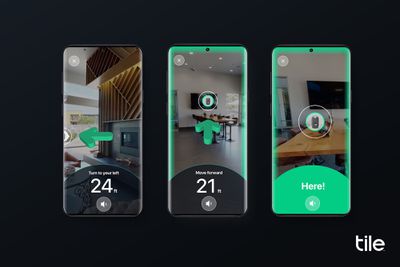
To better compete with AirTags, Tile next year plans to debut the Tile Ultra, a new tracker that's able to leverage Bluetooth and Ultra Wideband technology for more precise tracking. Tile Ultra uses "Point and Locate" finding, which lets users locate their items using an augmented reality interface, similar to how AirTags work.
When paired with iPhones with a U1 chip, AirTags will enter into a Precision Finding mode when close to a lost device. Tile Ultra will work in the same general way with visual finding, and it will be compatible with both iPhones and Android smartphones.
LoveFrom, the design firm co-founded in 2019 by Apple's former design chief Jony Ive and fellow designer Marc Newson, this week unveiled its official website, LoveFrom.com.
The site reveals for the first time LoveFrom's visual identity, which was designed by Ive and other members of the "creative collective," including English art director Peter Saville, and Chris Wilson and Antonio Cavedoni, both former members of Apple's design team.
In typical Ive fashion, the site is highly minimalist in nature, containing no images, links, or contact details – just a brief text described in an accompanying press release as "a concise and finely crafted definition of the LoveFrom collective and its work."
LoveFrom is a creative collective. We are designers, architects, musicians, filmmakers, writers, engineers, and artists. You may know us from our past work. We are obsessed with traditions of creating and making. Fanatically devoted to excellence. Insatiably curious. We collaborate with leaders and founders. We work on projects for joy. We develop our own ideas. Love & fury.
The wordmark and text are set in a new typeface called LoveFrom Serif, which is inspired by John Baskerville's letterforms and based on studies of his original punches and matrices. "Each character has been lovingly redrawn, refined and meticulously crafted over the past two years," according to the launch press release.
Upon arriving at the site, a text cursor blinks and the LoveFrom name appears to be typed out. The wordmark includes a lively comma, which Saville describes as "initiating a dialogue and shared conversation."
The site launch is the most public move yet by the collective, which has kept a low profile and only been mentioned in creative partnership announcements by clients such as Airbnb and Ferrari.
Ive left Apple to begin LoveFrom in June 2019. At the time, the tech giant said it would remain one of Ive's primary clients, but which Apple products he has helped to design since then, if any, is unknown. Apple said Ive was involved in the design of the colorful 24-inch iMac released in April, but it's not clear if that work occurred after Ive left the company.
It remains unclear how many employees work for LoveFrom, but Ive recruited at least four of his former Apple colleagues to work with him at the firm, including Wan Si, Chris Wilson, Patch Kessler, and Jeff Tiller.
Apple today released iOS 15.0.2, the second update to the iOS 15 operating system that was released in September. iOS 15.0.2 comes a week and a half after the launch of iOS 15.0.1, a bug fix update.
The iOS 15.0.2 update can be downloaded for free and the software is available on all eligible devices over-the-air in the Settings app. To access the new software, go to Settings > General > Software Update.
According to Apple's release notes, the update fixes an issue that could cause images saved to your Photo Library from Messages to disappear after the associated message or thread is deleted.
iOS 15.0.2 also fixes an issue that could cause the iPhone Leather Wallet with MagSafe not to connect to Find My, and a bug that could cause AirTags not to appear in the Find My Items tab. There's a fix for a CarPlay bug that could cause CarPlay to fail to open audio apps, and an issue that could cause device restore or updates to fail on iPhone 13 models. when using Finder or iTunes. Apple's full release notes are below:
This update includes bug fixes for your iPhone: - Photos saved to your library from Messages could be deleted after removing the associated thread or message - iPhone Leather Wallet with MagSafe may not connect to Find My - AirTag might not appear in the Find My Items tab - CarPlay may fail to open audio apps or disconnect during playback - Device restore or update may fail when using Finder or iTunes for iPhone 13 models For information on the security content of Apple software updates, please visit this website: https://support.apple.com/kb/HT201222
Apple has also released iPadOS 15.0.2 for iPad models, with fixes for the Messages bug, the AirTag bug, and a bug that could cause device restore or update to fail on an iPad mini 6 when using Finder or iTunes.
Apple's security support page for the updates says that iOS and iPadOS 15.0.2 address a vulnerability that could allow an application to execute arbitrary code with kernel privileges, a bug that Apple says could have been actively exploited.
For that reason, all users should make sure to update to the latest software as soon as possible.
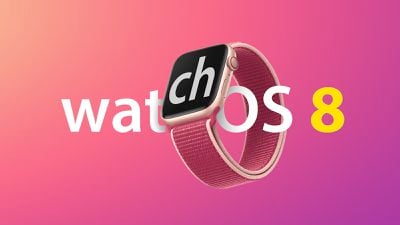
Apple today released watchOS 8.0.1, a minor update to the watchOS 8 operating system that was first released in September. watchOS 8.0.1 comes three weeks after the launch of watchOS 8.
watchOS 8 can be downloaded for free through the dedicated Apple Watch app on the iPhone by going to General > Software Update. To install the new software, the Apple Watch needs to have at least 50 percent battery, it needs to be placed on a charger, and it needs to be in range of the iPhone.
According to Apple's release notes for the update, watchOS 8 fixes a couple of Apple Watch Series 3 bugs that affected software update progress and accessibility settings.
- Software update progress may not be displayed accurately for some Apple Watch Series 3 users - Accessibility settings may not have been available for some Apple Watch Series 3 users
watchOS 8.0.1 is being released alongside iOS 15.0.2, a bug fix update for iPhone users.
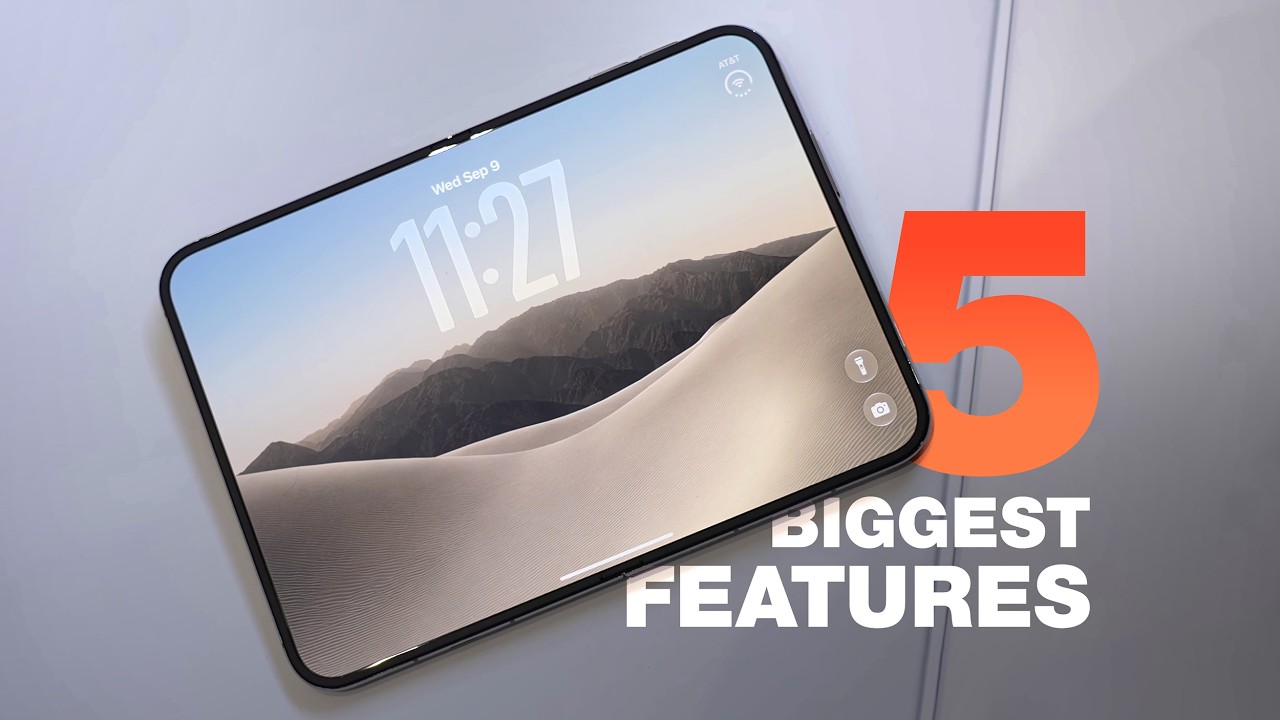
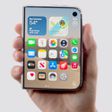
Apple's first foldable iPhone, with a book-style design featuring a 5.4-inch outer display and a 7.6-inch inner display with a minimal crease down the middle.















 Note: MacRumors is an affiliate partner with some of these vendors. When you click a link and make a purchase, we may receive a small payment, which helps us keep the site running.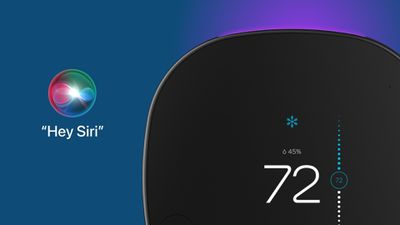
 Note: MacRumors is an affiliate partner with Amazon. When you click a link and make a purchase, we may receive a small payment, which helps us keep the site running.