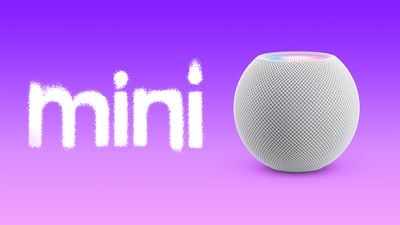
More than four years have passed since Apple released the HomePod mini in November 2020, and the wait for a new model might finally soon be over.
Below, we recap rumors about the next-generation HomePod mini.
Bloomberg's Mark Gurman last week reported that a new HomePod mini will be released next year. He said the speaker will be equipped with Apple's own combined Wi-Fi and Bluetooth chip, which supports Wi-Fi 6E. It is unclear if the chip's Wi-Fi 6E support will be enabled for the new HomePod mini, but if it is, that would allow for faster wireless connectivity compared to the current model's Wi-Fi 4 support.
While there are no other rumors yet, likely upgrades for the next HomePod mini include a newer "S" chip, improved sound quality, a second-generation Ultra Wideband chip for a lower-latency Handoff experience, and new color options. The current HomePod mini is equipped with the S5 chip, which debuted in 2019's Apple Watch Series 5.
In addition to a new HomePod mini, Apple reportedly plans to release an all-new smart home hub as soon as March next year. The hub is expected to feature around a 6-inch display that can be mounted on a wall, or attached to a tabletop base with a speaker, so the device could be similar to the HomePod mini in some ways.
It is unclear if the next HomePod mini will have Siri improvements, as unlike the home hub, the speaker is not expected to get Apple Intelligence.
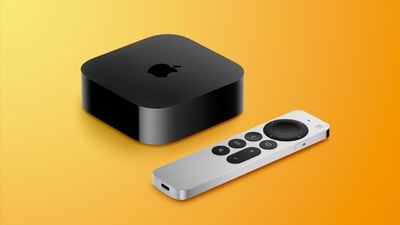
The current Apple TV 4K was released more than two years ago, so the streaming device is becoming due for a hardware upgrade soon. Fortunately, it was recently rumored that a new Apple TV will launch at some point next year.
Below, we recap rumors about the next-generation Apple TV.
Bloomberg's Mark Gurman last week reported that Apple has been working on its own combined Wi-Fi and Bluetooth chip that will roll out in multiple devices next year, including new Apple TV and HomePod mini models. He said the chip will support Wi-Fi 6E, which would be an upgrade over the current Apple TV's standard Wi-Fi 6 support. Wi-Fi 6E extends the capabilities of Wi-Fi 6 to the 6 GHz band, enabling faster wireless speeds and reduced signal interference with a compatible device and router.
No major design changes have been rumored for the next Apple TV specifically, but Gurman said Apple has considered adding a built-in camera to a future model. tvOS 17 added a FaceTime app to the Apple TV, allowing for users to have video calls by using the rear camera on a connected iPhone or iPad. If the Apple TV gained a built-in camera, users would no longer need to rely on an external device for video calls on the TV.
Unsurprisingly, the next Apple TV is also expected to be equipped with a newer chip for faster performance. The current Apple TV is equipped with the A15 Bionic chip that debuted in the iPhone 13 models in 2021. Apple has released several newer A-series chips since then, including the A16 Bionic, A17 Pro, A18, and A18 Pro.
The next Apple TV could have lower pricing. Apple analyst Ming-Chi Kuo suggested that the next model could have a sub-$100 starting price. In the U.S., the current Apple TV is available with 64GB or 128GB of storage for $129 and $149, respectively.
It is unclear exactly when in 2025 the new Apple TV would launch. Here is when the previous five Apple TV models were announced:
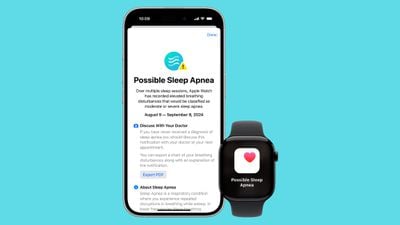
Apple today announced that the Apple Watch feature to help identify sleep apnea is now available in Brazil following the granting of a license from the Brazilian Health Regulatory Agency.
The feature, which is now available in over 150 countries and regions, uses the Apple Watch's accelerometer to record wrist movements associated with interruptions in normal breathing patterns during sleep.
Based on the data collected, the feature assesses each day whether your levels of breathing disturbances are elevated or not elevated, and if over a 30-day period it determines the frequency of your elevated disturbances reaches a threshold, you will receive a notification of possible sleep apnea. The notification is not a diagnosis, but it does provide information to help you discuss the situation with a healthcare provider.
The algorithm uses machine learning trained on clinically validated sleep data, with Apple's feature then validated in its own clinical study, which found that 100 percent of study participants who received a positive result from the algorithm indeed had at least mild sleep apnea.
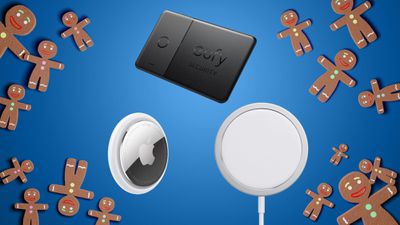
Amazon still has quite a few last minute Apple gift ideas that can be delivered before Christmas, including AirTag, MagSafe Chargers, iPad Pro Magic Keyboard, and more.
Note: MacRumors is an affiliate partner with some of these vendors. When you click a link and make a purchase, we may receive a small payment, which helps us keep the site running.
AirTag
Amazon is discounting Apple's AirTag 4-Pack to $72.99 this week, down from $99.00. This is just about $3 higher when compared to the all-time low price and it's still a great deal on the accessory, with guaranteed Christmas delivery.
We're tracking a collection of great gift ideas at Amazon this week, all of which can be delivered in time for Christmas. First is the Eufy SmartTrack Card with Find My support for $16.88, down from $19.99. Satechi's 6-Port Charging Station and Twelve South's HiRise 3 Deluxe are both great for anyone who wants to upgrade their desk set-up, and both are available for record low prices.
Moving to the new 2024 Magic Keyboard, you can get the 11-inch model in Black for $249.99, down from $299.00. This is an all-time low price on the accessory and it can still be delivered in time for Christmas on Amazon.
Amazon has a few deals on Apple's new lineup of MagSafe Chargers this week. You can get the 1-meter model for $29.99 and 2-meter model for $34.99, both representing solid second-best prices on the accessory.
The new MagSafe Chargers provide overall faster charging speeds with compatible iPhone models. When paired with a 30W power adapter, iPhone 16 models can charge at up to 25W wirelessly over MagSafe, which is 10W faster than a regular non-MagSafe Qi2 wireless charger.
If you're on the hunt for more discounts, be sure to visit our Apple Deals roundup where we recap the best Apple-related bargains of the past week.
Deals Newsletter
Interested in hearing more about the best deals you can find during the holiday season? Sign up for our Deals Newsletter and we'll keep you updated so you don't miss the biggest deals of the season!
Apple on Monday seeded the first tvOS 18.3 beta to developers for testing. The update will likely be released in January. So far, there are only minor changes for the Apple TV, with one new feature and a few code changes discovered.
Below, we outline what is new in tvOS 18.3 so far.
Robot Vacuum Support in Home App
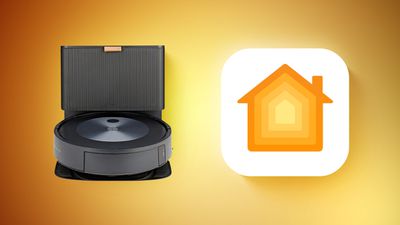
First, tvOS 18.3 will add robot vacuum support to the Home app on the Apple TV, based on code-level references to the feature in the first beta.
Here is how Apple describes the feature, which has faced a delayed launch:
The Home app now supports the core functionality of robot vacuum cleaners, such as power control, cleaning mode, vacuum, mop, and charge status. They can also participate in automations and scenes, and respond to Siri requests. So you can add them to your cleaning routines — or tell Siri to do some spot cleaning in the living room.
Likewise, the iOS 18.3 beta will add robot vacuum support to the Home app on the iPhone.
Code Changes
Additional Screen Savers Removed
The recently-released tvOS 18.2 update for the Apple TV added a rotating Snoopy screen saver to 2021 and newer models, but it appears that other new screen savers that Apple planned for the device have either been canceled or postponed.
Apple was planning at least two additional screen saver categories for the Apple TV. The first was a "TV and Movies" category of screen savers based on content from Apple TV+ series and movies, and the second was a "Soundscapes" category of screen savers overlaid with relaxing background sounds, including water and nature sounds.
MacRumors contributor Aaron Perris has confirmed that hidden references to the "TV and Movies" and "Soundscapes" screen saver categories that were in tvOS 18.2 code are no longer present in the first tvOS 18.3 beta's code.
Last month, it was reported that Apple removed all references to the "TV and Movies" screen savers from its Apple TV page, including a preview of a new screen saver based on the Apple TV+ series "Foundation." With references to the screen savers removed in the tvOS 18.3 beta, there is now even more evidence they are canceled or postponed.
In addition to Snoopy, existing screen saver categories on the Apple TV include Aerials, Memories, and a Portraits option with an on-screen clock.
Digital Sales Notice
The following digital sales notice will be visible in the Apple TV app, according to tvOS 18.3 code:
When you purchase access to this item, you can permanently download it to your iPhone, iPad, Mac, or PC. Once downloaded, you can access this without an internet connection, and Apple can't remove it from your device. If you purchase this from the Apple TV app on Apple TV, smart TVs, or other streaming devices, you can't download it on those devices, but you can easily download it on compatible devices.
tvOS 18 updates are compatible with all 2015 and newer Apple TV models, but some features and capabilities require a newer model.
Apple's subsidiaries in France and Belgium have had criminal complaints filed against them by the Democratic Republic of Congo, which is accusing the tech giant of using conflict minerals in its product supply chain (via Reuters).
The complaints allege that Apple is complicit in handling stolen goods and laundering minerals obtained through armed conflicts in the region.
Congo, a major source of tin, tantalum, and tungsten (3T minerals) used in computers and mobile phones, claims that Apple uses minerals pillaged from Congo and laundered through international supply chains. The complaints specifically target Apple France, Apple Retail France, and Apple Retail Belgium, accusing them of covering up war crimes and engaging in deceptive commercial practices. France and Belgium were reportedly chosen because of their perceived strong emphasis on corporate accountability.
Apple claims that it does not directly source primary minerals and conducts regular supplier audits. In its 2023 SEC filing, the company stated that none of its 3T mineral or gold suppliers had financed or benefited armed groups in Congo or neighboring countries.
The complaints focus on ITSCI, a metals industry-funded monitoring scheme designed to help companies perform due diligence on mineral suppliers. Congo's lawyers argue that Apple uses ITSCI as a "fig leaf" to falsely present its supply chain as clean, despite the scheme being suspended by the Responsible Minerals Initiative (RMI), of which Apple is a member.
Competition for minerals has been a significant driver of conflict in Congo's eastern mining regions since the 1990s, resulting in widespread civilian casualties and displacement. Armed groups often sustain themselves through mineral exports that are frequently smuggled through neighboring countries.
The judicial authorities in France and Belgium will now decide whether to investigate the complaints further and bring criminal charges.
Note: Due to the political or social nature of the discussion regarding this topic, the discussion thread is located in our Political News forum. All forum members and site visitors are welcome to read and follow the thread, but posting is limited to forum members with at least 100 posts.
Apple's latest macOS Sequoia 15.2 update has introduced a critical bug that prevents the popular backup utility SuperDuper from creating bootable backups, according to the app's chief developer, Shirt Pocket's Dave Nanian.
The issue stems from a "Resource Busy" error that occurs during the final stages of the backup process when attempting to copy system preboot or recovery files. While similar errors in the past could be resolved by keeping the system awake during backup, Ninian reports that this new bug appears to be more fundamental.
The problem originates from Apple's earlier decision to restrict third-party apps from directly copying the operating system, instead requiring them to use Apple's own replication tools. With these tools now malfunctioning in macOS 15.2, SuperDuper and potentially other backup utilities are unable to create complete bootable backups.
As a temporary workaround, SuperDuper users can still back up their applications, data, and settings using the app's "Backup - all files" option with "Smart Update" enabled. However, this method won't create a bootable backup that can be used for immediate system recovery.
Shirt Pocket has filed a bug report with Apple and is awaiting a resolution, but Nanian is keen to emphasize that since the issue lies within Apple's system components, third-party developers cannot implement their own fixes.
The timing of this bug is particularly concerning for users who rely on bootable backups as part of their data protection strategy, especially given the recent release of macOS 15.2 and the potential for other undiscovered issues. Have you been affected by the bug? Let us know in the comments.
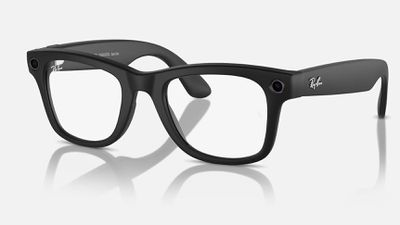
Meta today added new features to its Ray-Ban smart glasses, including live translation and live AI. With live AI, the Meta smart glasses are able to see whatever the wearer sees thanks to the built-in camera, and can hold real-time conversations.
According to Meta, the glasses are able to provide hands-free help with meal prep, gardening, exploring a new neighborhood, and more. Questions can be asked without the need to say the "Hey Meta" wake word, and the AI can understand context between requests for referencing prior queries. Meta says that eventually, the AI will be able to "give useful suggestions before you even ask."
Along with live AI, there's now a new live translation feature that can translate in real-time between English and either Spanish, French, or Italian. When someone is speaking in one of those three languages, the glasses will translate what they say into English through the speakers or on a connected smart phone, and vice versa.
The Meta glasses are now able to use Shazam to identify songs, so if you ask "Hey Meta, what is this song?" Shazam can provide the song title. Shazam is an Apple-owned company now, and is heavily integrated into iOS.
All of these features are part of the Early Access Program open to any Meta glasses wearer. Sign-ups are available on Meta's website, though there are a limited number of slots for customers in the United States and Canada.
Meta's smart glasses have seen a good amount of consumer interest, and rumors suggest that Apple might be getting into the smart glasses market with a similar device. Back in October, Bloomberg's Mark Gurman said that Apple is considering a pair of smart glasses that are comparable to the Meta Ray-Bans, offering Siri support, integrated cameras, and more.
Blackmagic today announced that its URSA Cine Immersive camera is now available for pre-order, with deliveries set to start late in the first quarter of 2025. Blackmagic says that this is the world's first commercial camera system designed to capture 3D content for the Vision Pro.
The URSA Cine Immersive camera was first introduced in June, but it has not been available for purchase until now. Blackmagic is asking $30,000 for the device, and it can be pre-ordered from the Blackmagic website.
The camera has a custom stereoscopic 3D lens system with dual 8K sensors, and it is able to capture a 180-degree field of view with spatial audio support at up to 90 frames per second. Captured content features an 8,160 x 7,200 resolution per eye, and there are 16 stops of dynamic range for detail and color accuracy in every frame.
Dual 5-inch HDR touchscreens are included, as is an external color status LCD screen. There are multiple connectivity options, including 12G-SDI out, 10G Ethernet, USB-C, and XLR audio ports, plus an 8-pin Lemo connector for power.
There is an included 8TB Blackmagic Media Module that is able to store approximately two hours of 8K stereoscopic video recorded in Blackmagic RAW, and Cloud Store is supported for fast media uploads and synchronization.
Instagram today launched a new 2024 year in review feature, allowing Instagram users to create 2024 collages from images they've shared throughout the year.
As noted by The Verge, the 2024 collage option comes up in the Instagram story interface. It works after an image has been added to a story and resized, with users able to select more images and rearrange them on the screen.
Instagram has also added new year-end themed templates for the "Add Yours" feature, along with New Year and Countdown text effects, holiday chat themes for DMs, and secret phrases like Happy New Year that trigger special effects.
Collages and the other temporary features will be available through the first week of January.
The dedicated ChatGPT search engine that OpenAI developed is rolling out to all users starting today, OpenAI announced as part of its 12 days of OpenAI event.
SearchGPT was added to ChatGPT in late October, providing improved AI-based searches right from the ChatGPT app and web interface. According to OpenAI, SearchGPT is able to search the web in a "much better way than before," providing links to relevant web sources along with contextual information and support for follow-up questions.
When it first debuted, SearchGPT was limited to those who subscribed to ChatGPT Plus and ChatGPT Teams, but it will now also be coming to free users.
During today's announcement, OpenAI said that its AI search has been improved over the last few months, making it faster and better on mobile. There's also a new option to search as you converse with ChatGPT, and to make ChatGPT Search the default engine for browsers like Chrome.
OpenAI is bringing search to logged in ChatGPT users, so it will be available globally on all platforms that support ChatGPT.
Social network TikTok today asked the U.S. Supreme Court to temporarily halt an imminent ban as TikTok waits for the appeal process to play out. TikTok is set to be banned from U.S. app stores starting on January 19 because parent company ByteDance did not sell TikTok to a non-Chinese company as mandated by a bill in April.
TikTok is calling on the Supreme Court to hear its appeal, and it is sticking with the free speech argument that the lower appeals court denied. The petition that TikTok submitted to the Supreme Court claims that Congress has "enacted a massive and unprecedented speech restriction," and that TikTok is one of the "most popular and important venues for communication" in the U.S.
U.S. lawmakers gave ByteDance nine months to sell TikTok to a company not located in China, but ByteDance has maintained that doing so would be impossible. ByteDance says that it is not able to give the TikTok source code to a new owner because it would take years for engineers to become familiar enough with it to perform routine maintenance, and ByteDance also does not plan to allow a third-party company to access its TikTok algorithm.
Statement on Filing Application for Emergency Injunction Pending Appeal with the Supreme Court:
""The Supreme Court has an established record of upholding Americans’ right to free speech. Today, we are asking the Court to do what it has traditionally done in free speech cases:…
— TikTok Policy (@TikTokPolicy) December 16, 2024
Further, China has said that it will firmly oppose any sale of the TikTok app, and any sale would need to be approved by the Chinese government. Per the terms of the bill, if TikTok is not sold off, app store owners Google, Apple, and others will be required to stop distributing the app in January. If TikTok is ultimately banned, users who have downloaded the app already would be able to continue to use it so long as it stayed functional, but there would be no distribution method for getting the app in the United States.
U.S. lawmakers want TikTok sold to a company outside of China over concerns that the Chinese government could force ByteDance to hand over information from users in the United States, plus there have been suggestions that China could use TikTok to spread political propaganda.
It is possible that the ban on TikTok could be lifted or delayed by President-elect Donald Trump. According to CNBC, Trump told reporters on Monday that his administration will "take a look at TikTok." Trump tried to ban TikTok when he was in office, but said this year that he opposes the law that Congress passed.
Note: Due to the political or social nature of the discussion regarding this topic, the discussion thread is located in our Political News forum. All forum members and site visitors are welcome to read and follow the thread, but posting is limited to forum members with at least 100 posts.
The macOS Sequoia 15.3 beta brings Genmoji to the Mac, allowing Mac users to use the custom made emoji characters for the first time. Genmoji were included in iOS 18.2 and iPadOS 18.2, but the feature was not available in the macOS 15.2 update.
With Genmoji, Mac users can input a text prompt to create a custom character that behaves just like an emoji on devices running iOS 18.1, iPadOS 18.1, macOS Sequoia 15.1 and later. On earlier versions of iOS, iPadOS, and macOS, and on Android devices, Genmoji show up as an image.
Genmoji can be added from the emoji palette on the keyboard, which can be activated with the Control + Command + Space keyboard shortcut in an app like Notes or by clicking on the emoji icon in Messages.
Genmoji is an Apple Intelligence feature that is available on all Macs that have an Apple silicon chip. All Genmoji generation is done directly on-device.
Amazon is discounting Apple's 13-inch M2 MacBook Air with 16GB of RAM and 256GB SSD storage down to $799.00 in every color. This is a $200 discount on the M2 MacBook Air, and Amazon is currently guaranteeing delivery before Christmas for the computer.
Note: MacRumors is an affiliate partner with Amazon. When you click a link and make a purchase, we may receive a small payment, which helps us keep the site running.
Amazon has Midnight, Space Gray, Silver, and Starlight on sale at this price. Although this is a previous generation device, it'll work great for anyone who doesn't need the performance gains introduced with the M3 chip, especially at this discounted price.
There are a few deals on the M3 MacBook Air, but many of them have a delivery estimate for after Christmas. If you don't mind waiting, you can get the 13-inch M3 MacBook Air with 16GB of RAM and 256GB SSD storage for $899.00 on Amazon, down from $1,099.00.
If you're on the hunt for more discounts, be sure to visit our Apple Deals roundup where we recap the best Apple-related bargains of the past week.
Deals Newsletter
Interested in hearing more about the best deals you can find during the holiday season? Sign up for our Deals Newsletter and we'll keep you updated so you don't miss the biggest deals of the season!
Apple today provided developers with the first beta of an upcoming macOS Sequoia 15.3 update, with the new update coming a week after Apple released macOS Sequoia 15.2. Apple has also seeded new betas of watchOS 11.3, tvOS 18.3, and visionOS 2.3.
The betas are available to registered developers at this time, and can be downloaded from the settings app on each device.
We don't yet know what's included in the macOS Sequoia 15.3 update or the other updates, but we'll update this article should anything new be found after we download and install the new software.
Apple today seeded the first betas of upcoming iOS 18.3 and iPadOS 18.3 updates to developers for testing purposes, with the software coming a week after Apple released iOS 18.2 and iPadOS 18.2.
iOS 18.3 and iPadOS 18.3 can be downloaded from the Settings app on a compatible device by going to General > Software update.
There's no word yet on what's included in iOS 18.3 and iPadOS 18.3, but Apple is still working to roll out Apple Intelligence features. iOS 18.2 and iPadOS 18.2 include Image Playground, Genmoji, and Siri ChatGPT integration, but there are still new Siri functions that are slated for release next year.
We could see updates to Siri with iOS 18.3, and the features Apple has in development include personal context, on-screen awareness, and the ability to do more in and between apps.
While iOS 18.3 and iPadOS 18.3 testing is starting in December, these updates will likely be released sometime in late January.
An 8.5-inch OLED iPad mini is planned for a 2026 launch, while 11-inch and 13-inch OLED iPad Air models are expected to follow in 2027. With the iPad Air and iPad mini set to gain OLED display technology, most of Apple's lineup with the exception of the low-cost iPad is expected to feature OLED displays by 2027.
DSCC also expects an 18.8-inch foldable iPad Pro with an OLED display to launch in 2027. There have been several rumors suggesting that a foldable iPad or MacBook will be one of Apple's first foldable devices, including a report from The Wall Street Journalover the weekend. The WSJ said that Apple is working on a larger foldable device that's "intended to serve as a laptop" and that would unfold to be about 19 inches in size. Bloomberg's Mark Gurman also highlighted a foldable iPad this weekend, suggesting that the "giant" tablet would launch in 2028. According to Gurman, Apple does not want the upcoming foldable device to have a crease, instead appearing as a single piece of glass.
Rumors have been unclear on whether the upcoming foldable device will be an iPad or a Mac, but either is feasible depending on what operating system Apple opts to go with.
While iPhones and the Apple Watch have used OLED displays for years, it has taken time for larger OLED displays to be affordable enough for use in Macs and iPads. Apple debuted its first OLED iPads this year, introducing the 11-inch and 13-inch OLED iPad Pro models.
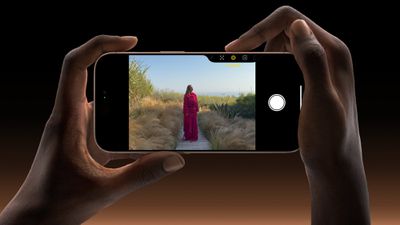
In iOS 18.2, Apple has introduced a thoughtful new feature for the Camera Control button on iPhone 16 models that helps prevent accidental camera launches by requiring the screen to be on before the button will register clicks. Keep reading to gain more control over when the Camera app opens.
Apple located the Camera Control button to make it conveniently placed for quick access, but it can sometimes be too responsive – especially during those moments when you're not actually trying to take a photo.
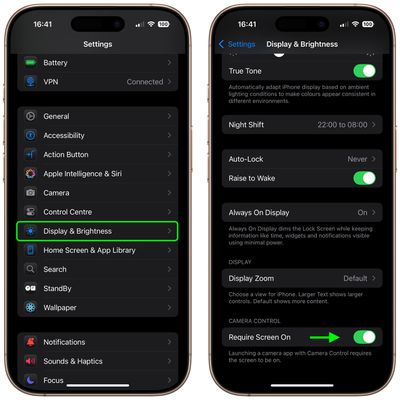
Recognizing the potential for this, Apple in iOS 18.2 has added a new Require Screen On feature for Camera Control. It's particularly useful if you often find your iPhone accidentally opening the Camera app while it's in your pocket or bag. By requiring the screen to be on first, you can significantly reduce those unwanted camera launches while still maintaining quick access when you need it.
Require Screen On for Camera Control
Here's how to enable the new option to prevent accidental Camera Control presses:
Open the Settings app on your iPhone 16.
Scroll down and tap Display & Brightness.
Look for the Camera Control section.
Toggle on Require Screen On.
Once enabled, you'll need to wake your iPhone's screen before the Camera Control button will respond. This extra step adds just enough friction to prevent accidental activation while keeping the camera readily accessible when you need it.
Apple's first foldable iPhone, with a book-style design featuring a ~5.5-inch outer display and a ~7.8-inch inner display with a minimal crease down the middle.


 Note: MacRumors is an affiliate partner with some of these vendors. When you click a link and make a purchase, we may receive a small payment, which helps us keep the site running.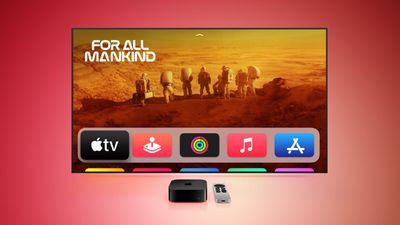






 Note: MacRumors is an affiliate partner with Amazon. When you click a link and make a purchase, we may receive a small payment, which helps us keep the site running.