This video was brought to our attention originally by GadgetsDNA. The video has apparently been circulating around asian sites and described as Steve Jobs rehearsing for the iPhone 5 introduction. It's a ridiculously fake video, but is starting to be reposted to some english sites. We've posted it just as a curiosity.
MacRumors
This video was brought to our attention originally by GadgetsDNA. The video has apparently been circulating around asian sites and described as Steve Jobs rehearsing for the iPhone 5 introduction. It's a ridiculously fake video, but is starting to be reposted to some english sites. We've posted it just as a curiosity.

BGR provides photos of an iPhone prototype that supports T-Mobile USA's 3G service.
Thats right, youre looking at photos of an iPhone prototype with T-Mobile USA 3G bands. The actual internal model is N94, and if you remember, the Verizon model is N92 while the standard GSM variant is N90. We have verified that the phone itself is running a test version of Apples iOS, much like the one we saw in those videos from Vietnam, and it includes internal Apple test apps like Radar and Apples employee directory app.
The T-Mobile US network uses different frequencies than AT&T's, requiring different hardware to support. It's not clear what this will mean given that AT&T is planning to acquire T-Mobile USA, though that transaction will take some time before it goes into effect. In the meanwhile, T-Mobile continues to operate as an independent carrier in the U.S.
Tag: BGR
Related Forum: iPhone

A finding earlier this month by OSXDaily has generated some speculation about Apple's plans for "Retina" display Macs. The Mac OS X Lion Developer Preview 2 released in late March included an ultra-high resolution version of the background desktop image at a resolution of 3200x2000. A few observers noted that this is higher than any Apple display has ever supported, generating speculation that Apple is preparing for "Retina" display Macs in the near future.
We had previously reported that Mac OS X Lion has made some under-the-hood changes opening the door to such super-high resolution displays.
Taking cues from iOS, Apple has reportedly built in support for what it calls "HiDPI display modes". These HiDPI modes allow developers to supply 2x-enlarged images to support double-high resolution displays. Like the iPhone 4's Retina Display, this means that user interface elements will remain the same size, but everything will be twice the resolution and therefore twice as detailed.
Now, MacMagazine.com.br has found that Apple is already starting to include other super high resolution artwork in Lion. They found several icons stored as 1024x1024 sizes, up from a previous maximum of 512x512.

Click for full-size
Of course, this support for super high resolution displays is only the first step, but suggests Apple is planning ahead when the hardware becomes available.
Update: The 1024x1024 icons in Mac OS X Lion were publicized [Google translation] earlier last week by Consomac.fr.

Former Engadget editor Joshua Topolsky has revealed possible new information on the upcoming iPhone 5, but that information seems to contradict other recent claims. Topolsky reiterates from his previous Engadget report that the next iPhone is to be completely redesigned, and that it looks more like the iPod touch than the iPhone 4. The new phone will be thinner and have a "teardrop" shape which goes from thick to thin, similar to the MacBook Air.
Meanwhile, the home button will be doing "double duty" as both a button and and a gesture area.
this falls in line with testing weve seen for gestures on the iPad, and our sources say that gestures are definitely coming in a future version of iOS. The home button will likely be enlarged, but not scrapped altogether.
He also details that the screen will occupy nearly the entire front of the phone leaving almost no bezel. This information is consistent with some earlier rumors that suggested an "edge to edge" screen. In addition Apple is said to be doing very "interesting things" with bonded glass technology and even exploring designs where the earpiece and sensors are behind the screen itself.
Topolsky is also hearing that the screen may go up to 3.7 inches while keeping the same resolution. This would keep the DPI within the "Retina" display moniker at 312dpi. Finally, there are some hints that there may be some form of inductive or touch charging but this seems unconfirmed.
Joshua Topolsky is the former editor-in-chief of Engadget and is well connected with his previous rumors being published to Engadget. This information, however, contradicts some previous reports from Reuters which suggest the iPhone 5 will carry a very similar form factor as the iPhone 4. Notably, in the same original Engadget report that detailed the "completely redesigned" iPhone 5, Topolsky/Engadget had previously predicted that the iPad 2 would carry a higher resolution screen and SD card slot, neither of which came true.
Update: We've received a tip (that we believe is reliable) that this redesigned iPhone 5 report is untrue.
Tags: Joshua Topolsky, ThisIsMyNext
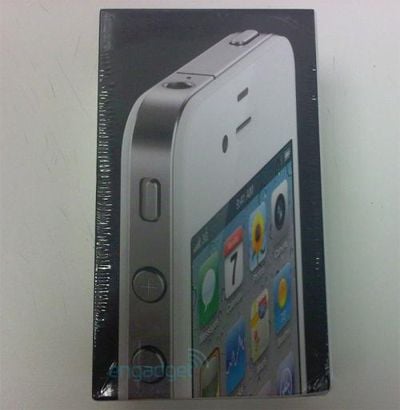
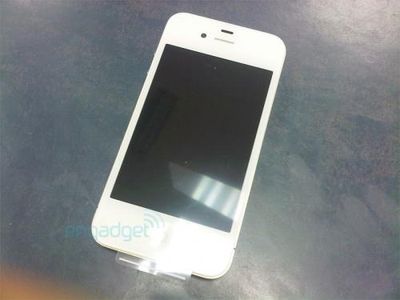
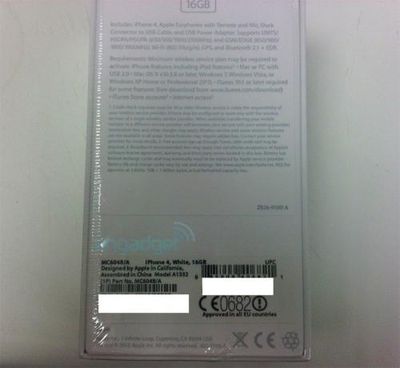
Engadget reports that it has received photos from a reader who claims to have purchased a white iPhone 4 through Vodafone in the UK today. The carrier has reportedly been gearing up to receive shipments of the device, but it now appears that the units may in fact be arriving and have slipped out for sale in a few instances.
Now, we've secured a few images of a 16GB model from a separate source that has seemingly made its way into the hands of one lucky customer (read: bloke) over in Britain.
As the story goes, the carrier's point-of-sale system rang it up as a black iPhone, and shortly after the sale went down, Voda sent out a notice to halt sale of these gems "until next week."
Interestingly, the iPhone appears to show a modified proximity sensor, utilizing an open slot over the earpiece instead of the previously-seen fine grating.
The most recent rumors have pegged the white iPhone 4 launch for next Wednesday, April 27th.
Related Forum: iPhone

Just as Apple's cloud-based music storage service has been said to be ready to go amid claims that Apple has inked two of the four major record labels to deals permitting the service, CNET now reports that Apple has reached a deal with Warner Music Group (WMG) in support of the plan.
Apple has an agreement with Warner Music Group to offer the record label's tracks on iTunes' upcoming cloud-music service, music industry sources said.
In the race to the cloud, Apple is apparently stepping on the gas. All Things Digital reported Thursday that Apple has signed two of the top four record companies. ATD reported that Apple content chief Eddy Cue was due to fly to New York on Friday to try and finalize agreements with the two labels that were still unsigned.
It is unclear whether Warner was one of those two that had previously licensed Apple or whether the label inked a new agreement on Friday.
The report notes that WMG is the third largest record label in the United States, joining Universal, Sony, and EMI in the group of major players that sets the tone for the industry. WMG may be the most important agreement, however, as the label has reportedly been the "fly in the ointment" that has caused both Spotify and Google issues in neogtiating their own music deals.
It is not yet known when Apple plans to introduce the new cloud-based service, but the company appears to be racing full speed ahead toward a launch.
Tag: CNET
Related Forum: Mac Apps
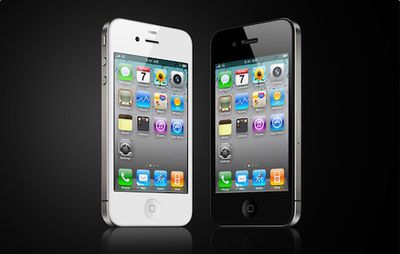
Earlier this week, Norwegian site Mobili.no reported [Google translation] that it had received information claiming that the white iPhone 4 will debut on Wednesday, April 27th.
Several reliable sources who wish to remain anonymous, says now Mobili.no that the white version goes on sale in the Norwegian mobile shops this coming Wednesday, 27 April.
It will be distributed in both Telenor's and NetCom's stores.
That claim is now being repeated [Google translation] by Dutch site iPhoneclub.nl, which claims to have confirmed with multiple employees of mobile phone retailer BelCompany that an internal memo has been circulated announcing the launch date.
We received this information through an anonymous tip from someone who works BelCompany. Then we started looking for other people who BelCompany works that could confirm the information. That was the case: they indicate that an internal memo was circulated, indicating the date of April 27 for the white iphone called April.
Bloomberg reported earlier this month that the white iPhone 4 is set to launch by the end of the month, giving Apple just over a week to meet that timeline. Over the weekend, Italian site iPhone Italia claimed that the device will launch on Tuesday the 26th. The next day, a listing appeared on UK carrier Three's website mentioning delivery for April 20th, although that date has since passed with no announcement regarding the white iPhone 4. Next Tuesday and Wednesday are of course among the most popular targets for release date speculation given Apple's tendency to announce and/or release new products on those days of the week.
Apple has said several times over the past six months, most recently just over a week ago, that it plans to launch the white iPhone 4 in the "spring" after several delays reportedly due to issues with the white paint used on the device. Some observers had speculated that Apple might cancel the device entirely given an expected launch of the fifth-generation iPhone just a few months down the road, but it increasingly appears that Apple will not be introducing the fifth-generation iPhone until the September timeframe.
Related Forum: iPhone

Ad Age reports that Conde Nast, one of the early iPad supporters in the magazine industry, is slowing down its plans to bring more titles to the platform, citing slow sales of its existing titles.
"It's a shift," one Conde publisher said. "The official stance was we're going to get all our magazines on the iPad because this is going to be such an important stream. The new change is maybe we can slow it down. In my opinion it makes Conde look smart because we have the ambition, but we're not rushing."
"They're not all doing all that well, so why rush to get them all on there?" the publisher added.
According to the report, development of iPad applications is now up to the individual publishers for each magazine, shifting away from a concerted effort by the conglomerate to push forward on all titles.
Conde Nast is said to be increasing its focus on sales of existing titles and generating unique iPad applications that don't mimic the print editions and instead offer "exclusive" content. Ad buyers are also reportedly still looking to see the distribution scale and metrics that will drive that market forward to sustain the digital magazine model, a position that is no doubt influencing Conde Nast's strategy to focus on scaling existing titles.
Related Roundup: iPad
Buyer's Guide: iPad (Don't Buy)
Related Forum: iPad

AppleInsider reports on a new research note from Concord Securities analyst Ming-Chi Kuo claiming that Apple is set to begin production on new Thunderbolt-equipped MacBook Air models late next month, setting the stage for an update to the company's popular ultra-thin notebooks.
Kuo tells AppleInsider that his latest round of checks with suppliers and system builders in the region reveals that MacBook Air shipments are set to rebound during the current calendar quarter, fueled by an upgrade to Intel's latest Sandy Bridge microprocessors, integrated Intel graphics, and the expected adoption of the new Thunderbolt high-speed I/O technology that made its debut on MacBook Pros earlier this year.
Specifically, he said the new models will "go to mass production in late May," which corroborates an earlier report that cited reliable sources as saying Apple would be ready to publicly announce and ship to consumers MacBook Airs with Sandy Bridge processors during following month of June.
A production ramp in late May would set the stage for a June launch for the new MacBook Airs, a timeframe that had been rumored several months ago.
While Apple's current MacBook Airs launched in October 2010 with a new 11.6-inch model joining the redesigned 13.3-inch model, they still rely upon aging Intel Core 2 Duo processors as Apple has struggled to find a suitable pairing of CPU and graphics performance in the wake of a dispute between Intel and NVIDIA over chipset production. But with new Sandy Bridge processors from Intel sporting improved graphics performance now available, Apple now has better options for its small form factor machines utilizing integrated graphics.
Kuo notably revealed Apple's plans for an 11.6-inch MacBook Air a full three months before the product debuted last year.
Related Roundup: MacBook Air
Tags: Concord Securities, Ming-Chi Kuo
Buyer's Guide: MacBook Air (Buy Now)
Related Forum: MacBook Air

Last week, we reported that a number of remote iPhone unlocking services had sprung up, apparently working through a contact with access to the official Apple database of whitelisted IMEI numbers. The services were generally charging in the $170 range to unlock users' iPhones without requiring jailbreaking.
As noted by Cult of Mac, however, prominent vendor CutYourSim has discontinued the service and is refunding customers whose orders had yet to be processed. Several other vendors who had offered the service (1, 2) have also discontinued their offerings.
What happened? Even a representative of CutYourSim doesn't know.
"Unfortunately, we were not able to complete the rest of the unlocks waiting in our queue due to our suppliers being unable to offer the service anymore," CutYourSim told Cult of Mac. "Our suppliers have told us that there is a possibility that the service may return, but they do not know when, so we have decided to start processing refunds for any orders that we were not able to complete."
Notably, it appears that CutYourSim doesn't even know who its supplier was, bolstering our earlier theory that a single person with access to Apple's systems had shopped the service around to various vendors while taking a significant cut of the service fee and remaining hidden in the background.
In other words, CutYourSim's iPhone unlocking service was as much of a black box to them as it was to customers. They would throw an iPhone into one end, wait for the light to go on, then pull it out, carrier unlocked. No one knew how it worked, but it did.
The problem with black boxes, though, is that when they break, no one knows how to fix them... or even what's wrong with it in the first place.
Cult of Mac postulates that Apple may have cracked down on the issue after noticing the significant influx of IMEI numbers being added to the database. It is unknown, however, whether the discontinuation was due to specific actions on Apple's end to halt the practice or if the provider simply decided to call a halt to it due to concerns potential repercussions or other issues.
Related Forum: iPhone

With rumors of Apple planning for a later-than-usual iPhone release this year, some have hoped that Apple might use the extra time to build in support for the latest 4G LTE networks beginning to go live with many carriers. On Apple's earnings conference call earlier this week, Chief Operating Officer Tim Cook reiterated earlier comments that the current generation of LTE chips forced design compromises that the company has been unwilling to make.
But as noted by Forbes after the call, that situation won't be resolved in time for Apple to bring LTE to the fifth-generation iPhone, pushing the compatibility off until the sixth-generation model in 2012. In particular, the chips Apple needs for an LTE-compatible iPhone simply aren't in production yet.
Those chips won't appear in handsets until next year, says Will Strauss, president of wireless chip tracker Forward Concepts. "They're right that there's nothing out there that fits the bill, and likely nothing will until the fourth quarter of this year," Strauss says when asked about Cook's remarks.
The report notes that Verizon's current 4G handset offering, the HTC Thunderbolt, relies on two chips for connectivity, a Samsung one for 4G and a Qualcomm one for 3G. Hybrid chips offering both 4G and fallback 3G compatibility won't become available until late this year and thus won't make it into handsets until early 2012.
The Cell Phone Junkie reports (via TiPb) that Apple is likely to use Qualcomm's recently-announced MDM9615 wireless chip to provide that hybrid functionality. Qualcomm notes that it will begin shipping samples of the chip in "late 2011".
Related Forum: iPhone

Dow Jones Newswires reports on comments from research firm IHS iSuppli noting that Apple's surprisingly low iPad shipments for the first quarter of 2011 were in fact due to production issues, primarily related to display and speaker production problems.
Apple's first-quarter supply of the iPad 2 fell far short of demand, according to the researcher, saying production faced manufacturing difficulties, which combined with strong demand, led to short supplies of the device. The issues, according to sources, include quality concerns with liquid crystal display panels and production shortages of the new speaker.
The report plays down any potential impact from the Japanese earthquake and tsunami, noting that Apple executives were quickly on-site in Japan to secure the necessary components. Shortages do still exist, however, and Apple may be continuing to experience some tightness in its production lines even as it has agreed to increase the prices it pays to suppliers in order to ensure a steady flow of parts.
Based on the light first quarter iPad sales and lingering production capacity issues, IHS iSuppli has lowered its 2011 iPad shipment forecast by nearly 10%, from 43.7 million units to 39.7 million units. The firm had boosted its projection to that 43.7 million figure back in October 2010 as it responded to booming demand for the first-generation models.
Related Roundup: iPad
Buyer's Guide: iPad (Don't Buy)
Related Forum: iPad

Apple seems to be getting ready to launch their cloud-based digital music "locker" service that has been rumored for many months. But contrary to an earlier Reuters report, All Things D has heard that Apple has already come to terms with two of the four major record labels about the service, and that Apple's Eddy Cue will be in New York tomorrow to try to finalize the remaining deals.
The negotiating of these deals is in contrast to Amazon's music storage service which notably launched last month without any deals in place -- a fact that the record labels were not very happy about. Apple is said to have been "very aggressive and thoughtful about it" and "It feels like they want to go pretty soon", according to an unnamed music executive. All Things D also provides some details about how the service might work from Apple:
The industry executives I've talked to haven't seen Apples service themselves, but say they're aware of the broad strokes. The idea is that Apple will let users store songs theyve purchased from its iTunes store, as well as others songs stored on their hard drives, and listen to them on multiple devices.
All Things D points out that having official licenses can allow Apple to store a single master copy of a song rather than storing individual copies for every user. Amazon's original argument against needing the licenses was that their service was the same as any upload storage service. This meant that users needed to upload copies of their old music to be able to stream them. With the proper deals, Apple could avoid the need to upload individual copies and simply allow users to stream off of the single master copy. This could save on significant upload time for the user and storage requirements for Apple.
Tag: AllThingsD
Related Forum: Mac Apps

OpenFeint announced tonight that they have been acquired by Japanese gaming company GREE for $104 million.
GREE, Japans leading mobile social gaming platform, today announced its entrance into the global market with the acquisition of OpenFeint's outstanding securities for US $104 million, plus additional capital for accelerated growth of the OpenFeint platform.
GREE is a popular Japanese social networking service and is said to be the largest social network in Japan with over 25 million users and a market cap of $3 billion. The acquisition brings in OpenFeint's 75 million users across Android and iOS.
OpenFeint began as a two-person iOS gaming company called Aurora Feint. Aurora Feint launched on the first day of the App Store's release with a free game game called Aurora Feint: The Beginning. That game was very well received but they soon branched off to become a social gaming network, providing high score systems, achievements and more. They've attracting thousands of developers including popular games such as Fruit Ninja and Tiny Wings. OpenFeint says they will continue to grow our network while accelerating upgrades with GREE's backing.
Related Forum: iPhone

In response to the Apple lawsuit, Reuters reports that Samsung has filed patent lawsuits against Apple in South Korea, Japan and Germany.
"Samsung is responding actively to the legal action taken against us in order to protect our intellectual property and to ensure our continued innovation and growth in the mobile communications business," the statement said.
The suit reportedly involves up to five infringements of patents but details were not provided. Earlier this week, Apple filed suit against Samsung over the Galaxy" line of Android-based smartphones and tablets.

Reuters reports that Apple has "completed work" on its rumored cloud-based music service and will beat Google to the punch as the search and advertising giant continues to work on a similar project.
Apple Inc has completed work on an online music storage service and is set to launch it ahead of Google Inc, whose own music efforts have stalled, according to several people familiar with both companies' plans.
Apple's plans will allow iTunes customers to store their songs on a remote server, and then access them from wherever they have an Internet connection, said two of these people who asked not to be named as the talks are still confidential.
Interestingly, the sources indicate that Apple still has yet to sign any of the major labels to new agreements covering the forthcoming cloud-based capabilities, making it unclear how the sources can be so confident that Apple will beat Google to a launch. Apple has reportedly not yet informed music industry insiders of when it intends to launch the new cloud-based service.
Tag: Reuters
Related Forum: Mac Apps

Inside Apple's current Mac Pro
According to 9 to 5 Mac, Apple is "toying with" a redesigned prototype for its Mac Pro line, narrowing the design from its current 8.1-inch width to something slightly over 5 inches wide. Combined with a slight reduction in height to around 19 inches, the redesign would apparently allow the Mac Pro to be rackmountable in server cabinets as a 3U component.
Nearly eight years after the Mac Pro's current design debuted, Apple is toying with a re-designed version of the product. The new design is said to be narrower at just over 5-inches and a few inches shorter at around 19-inches. One of the reasons that Apple might be making this particular Mac Pro prototype smaller is because it is able to fit on to a standard server rack.
Apple of course used to offer its dedicated Xserve product line offering a thinner 1U component for rackmountable use, but the company discontinued the line as of January 31st of this year. The company has since introduced a new "server" configuration of the Mac Pro, but a redesign to accommodate both standard upright orientation and a sideways rackmounted one would likely be a welcome move for server fans despite the significant increase in rack space required.
The report claims that Apple has developed a "stacked" drive configuration utilizing sleds capable of handling two conventional or solid state hard drives apiece, increasing the density of drives in an attempt to squeeze all of the existing components into the smaller form factor while still preserving space for expandability.
Apple's Mac Pro was last updated in late July, meaning that the line could be due for an update, although the company has been stretching out its Mac Pro product cycles over the past few years.
Tag: 9to5Mac
Buyer's Guide: Mac Pro (Don't Buy)
Related Forum: Mac Pro
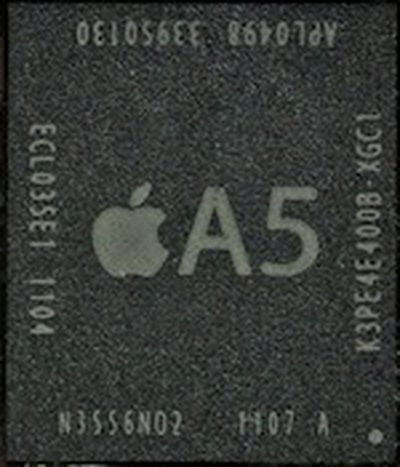
9 to 5 Mac reports that it has heard from a source that Apple has been providing developers at high-level iOS gaming companies with new prototype iPhone models based on the A5 system-on-chip found in the iPad 2. The developers are said to have been given access to the devices, which look exactly like the iPhone 4 from the outside, to assist them in preparing for advanced graphics and computational performance available with the new chip.
They already have select developers working on versions of their iPhone applications that take full advantage of the next-generation iPhone's speedier and much more powerful hardware. These developers, seemingly from high-level gaming outfits, have been given what is essentially an iPhone 4 but with an A5 processor instead of an A4. The device itself is virtually identical to the iPhone 4, and there is no way anyone can tell it's not an iPhone 4 based on the phone's exterior.
The source is reportedly calling the prototype iPhone an "iPhone 4S" in a nod to the iPhone 3G-to-iPhone 3GS transitioned, but that appears to be an unofficial name. The souped-up iPhone 4 is also said to reside in a company safe when not in active use, an understandable move given Apple's penchant for secrecy.
The report notes that this A5-based iPhone isn't necessarily the next-generation iPhone rumored to be released in September, but may simply be a sort of mid-stage custom upgrade to give prominent developer partners access to hardware performing at nearly the same level as we will see with the fifth-generation iPhone. Apple is of course expected to pack in other new features such as an upgraded camera and presumably a world-mode wireless chip for the next iPhone, but those features are apparently not included on these development units.
Tag: 9to5Mac
Related Forum: iPhone