With the introduction of Lion, Apple moved -- or removed entirely -- numerous options and settings.
For more advanced users, the old Expose & Spaces preference panel included controls to adjust what "Spaces" -- now called Desktops -- apps would appear in. For example, I had my Mail program set to display in Space 2, while iTunes would only appear in Space 4. With Expose & Spaces gone, it was tricky to figure out how to adjust where apps would appear.
It's easy, once you know where to look.
Update: Make sure you have multiple desktops open before doing this or else you won't see anything. Enter Mission Control. In the top-right of the screen is a button to create a new desktop. Click that button and create as many desktops as you wish. To delete a desktop space, option-click one of the desktops.
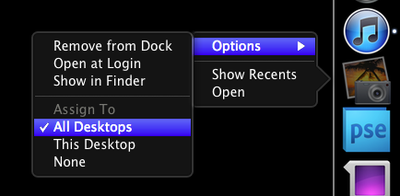
Now, simply right-click (control-click, two-finger-click) on an application icon in the Dock. In the Options menu, you'll see three choices related to Spaces:
- Assign To All Desktops - This Desktop - None
Play around with the choices until you get a feel for how they work. I put my instant messaging program into "All Desktops" so I can chat from wherever I'm working at the moment. Safari goes in the first desktop and my RSS reader stays in the second. With the advent of full-screen apps, I no longer need dedicated spaces for Mail and iTunes. They simply go full-screen and it accomplishes the same task.
AT&T today announced financial results for the second quarter of 2011, revealing that its iPhone activations remained flat compared to the previous quarter by coming in at 3.6 million. Activations were up from 3.2 million in the year-ago quarter.
According to the report, 24% of iPhone activations during the quarter were by customers new to AT&T, a figure just slightly higher than last quarter as the new customer draw appears to be stabilizing a bit after falling over the past 12-18 months from a steady 40% rate in the early days of the iPhone.
The second quarter of 2011 marked the first full quarter of availability for the CDMA iPhone on Verizon, which ended AT&T's iPhone exclusivity in the United States back in February. It is difficult, however, to compare exact sales numbers between the carriers and to Apple's total figures, in part because AT&T's activation numbers have historically included both new purchases and reactivation of used handsets that have been resold or passed down to other customers.
But AT&T does note that iPhone subscriber churn was down slightly from the previous quarter when the Verizon iPhone debuted, and even that quarter showed flat churn levels for iPhone customers compared to the previous-year quarter. Together, those pieces of data suggest that AT&T is still not seeing significant numbers of its existing iPhone customers defecting to Verizon for the CDMA iPhone.
TUAW reports that Adobe has posted a list of known issues for its products running on OS X Lion. The list is unfortunately extensive, but the company's discussion of Flash Player issues stands out for the revelation that OS X Lion may have disabled hardware acceleration.
Flash Player may cause higher CPU activity when playing a YouTube video. Possibly related to disabled hardware acceleration.
Other issues with Flash Player include a loss of response to mouse clicks in the setting dialog and problems with animation of custom native mouse cursors.
In addition to the Flash Player issues, Adobe's support document lists a number of other issues with its products under OS X Lion, as well as a few general notes for users to be aware of:
- With OS X Lion now hiding the user Library folder by default, users may need to use Finder's "Go to Folder" command to access preferences and other user settings for Adobe applications. Alternatively, users can use the command line to make the Library folder permanently visible.
- OS X Lion's new reverse scrolling may throw off some users, not just in Adobe's applications but across the entire experience. Reverse scrolling can be disabled in System Preferences.
- A lack of Rosetta support in OS X Lion means that some older Adobe software such as CS2 or earlier will not run on the new operating system.
- Adobe is considering how it may adopt some of OS X Lion's new features such as Autosave, Restore, Versioning, Full Screen Mode, and new multi-touch gestures, but they haven't been implemented yet. Adobe specifically notes that the Restore feature which reopens all windows and files to their previous state when an application is relaunched does not function on Adobe applications.
Update: Adobe corrected their post to say that hardware accelerated Flash is supported in Lion.
The final release of Mac OS X Lion (10.7) provides the same support for Flash hardware video acceleration as Mac OS X Snow Leopard (10.6). The previous “Known Issue” described in a tech note suggesting that video hardware acceleration was disabled in Lion was incorrect and based on tests with a pre-release version of Mac OS X Lion that related to only one particular Mac GPU configuration. We continue to work closely with Apple to provide Flash Player users with a high quality experience on Mac computers.
Earlier this month, an Apple-led consortium beat out Google in an auction of thousands of patents from bankrupt Nortel, bidding $4.5 billion for the entire package of patents. As noted by @SammyWalrusIV (via Business Insider), Apple 10-Q quarterly report filed with the U.S. Securities and Exchange Commission revealed that Apple's contribution to that effort totaled $2.6 billion.
On June 27, 2011, the Company, as part of a consortium, participated in the acquisition of Nortel's patent portfolio for an overall purchase price of $4.5 billion, of which the Company's contribution will be approximately $2.6 billion. This asset acquisition is subject to approval by various regulatory agencies.
Apple's partners in the deal included EMC, Ericsson, Microsoft, Research in Motion, and Sony. Apple's $2.6 billion contribution represents 58% of the entire purchase price of the Nortel patent portfolio. The large number may add credence to the rumor to have paid $2 billion for "outright ownership" of Nortel's LTE (4G) patent technology.
And Apple may not be finished with its efforts to purchase intellectual property on the open market, as the company is said to be considering going up against Google again for a portfolio of 1,300 patents related to mobile phone technologies being offered by InterDigital.
Apple's OS X Lion Up to Date program which allows qualifying customers to get a free copy of Lion is now active. Customers who purchased a Mac after June 6th can receive a free redemption code for OS X Lion from the Mac App Store.
The program was activated yesterday, but there had been reports that the activation server was having issues resulting in serial numbers being initially rejected.
Requests must be sent in prior to August 19th or 30 days after the purchase of your Mac, whichever is later.
As noted by the Financial Times, Apple has officially passed Nokia to become the world's top smartphone vendor. Apple's rapid growth paired with a sharp drop in shipments for Nokia allowed Apple to turn a 5.5 million unit deficit during the first quarter into a 3.6 million unit lead in the second quarter.
Shipments of Nokia smartphones declined by 34 per cent to 16.7m units, compared with the 20.3m iPhones shipped by Apple in its second quarter.
Apple was already the biggest smartphone maker by revenue and profits, but the April-June period marked the first time it had surpassed Nokia in volume.
Apple has been climbing the rankings of top smartphone vendors as longtime leaders Nokia and Research in Motion have faded. Apple passed Research in Motion in global shipments back in the third quarter of last year, and rapidly closed the gap on Nokia to claim the lead this past quarter.
Apple has of course faced stiff competition from Android over the last couple of years, but with dozens of manufacturers pushing out Android devices, no single vendor has been able to approach Apple's shipment volumes. Samsung and HTC lead the Android pack and have experienced very strong growth, but each company's smartphone shipments remains about half that of Apple's.
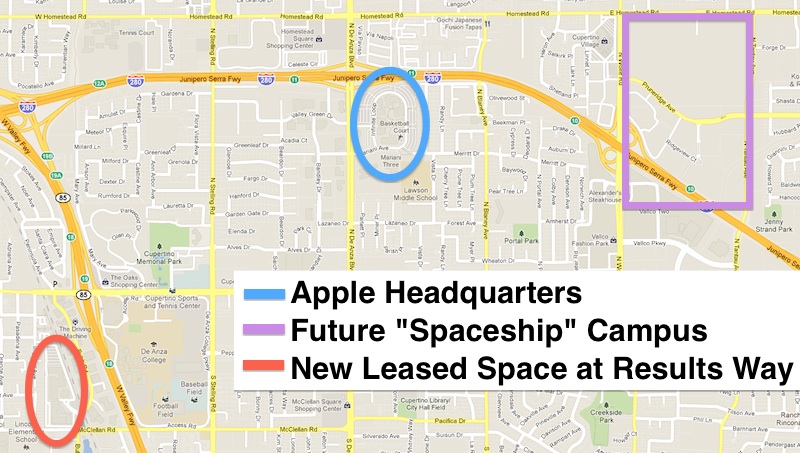
While Apple's plans for a stunning new corporate campus in Cupertino have received a significant amount of attention, that facility won't be ready to open until at least 2015, and Apple certainly hasn't stopped growing to wait for the new campus to come on line.
The San Jose Mercury News is now reporting that Apple has agreed to lease a nine-building office campus in Cupertino capable of housing up to 1,300 employees.
The lease deal in the old Measurex campus, now known as Results Way Corporate Center, allows Apple to rent 373,000 square feet. City officials and industry experts with direct knowledge of the transaction confirmed the rental deal.
"This is all good news for the city," said Kelly Kline, Cupertino's city economic development manager. "Apple is the premier corporation in Cupertino."
Real estate brokers note that Apple's move puts a further squeeze on the Cupertino and Mountain View markets that are nearly out of potential space for future office space needs, as Google, Facebook and others have also snatched up significant amounts of space. The dearth of additional available space leads to questions about where else Apple might be able to expand if even more space is required before it can open its new 12,000-employee facility on an old HP campus in Cupertino just a short distance from Apple's current headquarters campus.
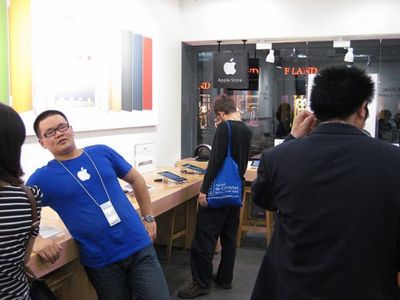
It's not just counterfeit iPads and iPhones that turn up in China. There are knockoff Apple Stores as well. The anonymous writer behind the BirdAbroad blog ran into a fake Apple Retail Store -- complete with wood floors, blue t-shirts and lanyards -- in Kunming, China.
It’s an Apple store!
Or is it?
RP and I went inside and poked around. They looked like Apple products. It looked like an Apple store. It had the classic Apple store winding staircase and weird upstairs sitting area. The employees were even wearing those blue t-shirts with the chunky Apple name tags around their necks...
Being the curious types that we are, we struck up some conversation with these salespeople who, hand to God, all genuinely think they work for Apple. I tried to imagine the training that they went to when they were hired, in which they were pitched some big speech about how they were working for this innovative, global company – when really they’re just filling the pockets of some shyster living in a prefab mansion outside the city by standing around a fake store disinterestedly selling what may or may not be actual Apple products that fell off the back of a truck somewhere.
The full blog post is a great read, with many details about the fake stores (plural!) she ran into. Her post has been covered extensively, but Apple has declined to comment about the fake stores.
Resume is one of the main new features to OS X Lion, one taken directly from iOS:
Now apps you close will reopen right where you left off, so you never have to start from scratch again. And when you install software updates, you no longer need to save your work, close your apps, and spend valuable time setting everything up again. With Resume, you can restart your Mac and return to what you were doing — with all your apps in the places where you left them.
Now, this feature might be all well and good, but what if you want your Mac to behave like it did in Snow Leopard? Resume can be easily disabled, but the option is fairly hidden.
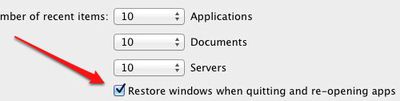
Head to System Preferences and select the General tab. At the bottom of that page is a checkbox labeled "Restore windows when quitting and re-opening apps." If you uncheck that, your apps will continue to behave as they did in Snow Leopard.
A few weeks ago, Apple lost a small jury trial related to a single patent related to downloadable playlists. The lawsuit was originally filed in June 2009 and accused Apple of infringement related to the "iPod classic, iPod mini, iPod shuffle, iPod nano and iPod Touch". The verdict awarded $8 million to patent holder Personal Audio LLC -- a very small chunk of Apple's $76 billion in cash.
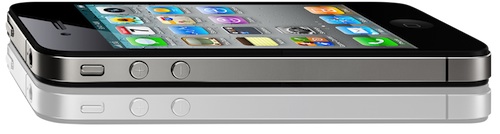
Now though, Personal Audio LLC is suing Apple again, over the same patent. But this time, it's accusing Apple of infringing with different products: "the iPod Nano Generation 6, iPod Shuffle Generation 4, iPod Touch Generation 4, iPhone 4, and iPad 2" -- all products Apple has released since the first lawsuit was originally filed.
Obviously the purpose of the second lawsuit is to expand upon the success of the first trial and squeeze even more money out of Apple...
This new lawsuit is more than just a nuisance for Apple to deal with. Damages in connection with the iPhone and iPad could could be substantially greater than in the previous trial that focused just on various iPod products. Also, Personal Audio LLC may now have an even better case for claiming willful infringement -- and one of Personal Audio LLC's prayers for relief is a request for an injunction.
Just one more lawsuit for Apple Legal to deal with.
Apple and Google are weighing bids for InterDigital, a mobile-technology R&D firm that holds an extensive patent portfolio related to digital wireless radiotelephony technology, including 3G and 4G, according to Bloomberg.
InterDigital's wireless patents, according to its CEO, are "deeper and stronger" than Nortel's. A consortium led by Apple purchased Nortel's thousands of patents for $4.5 billion last month beating out a bid by Google.
As of December 31, 2010, its patent portfolio consisted of approximately 1,300 United States patents (approximately 150 of which were issued in 2010) and approximately 7,500 non-United States patents (approximately 1,200 of which were issued in 2010). As of December 31, 2010, the Company had approximately 1,200 pending applications in the United States and approximately 8,500 pending non-United States patent applications. The patents and applications consists of its portfolio relate predominantly to digital wireless radiotelephony technology (including, without limitation, 2G, 3G, and 4G technologies).
InterDigital's stock price rose steeply over the past two days after news of Apple and Google's interest began to leak out. InterDigital currently has a market cap of $3.1 billion. The company announced in a press release that it had "initiated a process to explore and evaluate potential strategic alternatives for the company, which may include a sale or other transaction."
InterDigital claims licensing agreements with dozens of companies including Apple, HTC, Nokia, and RIM.
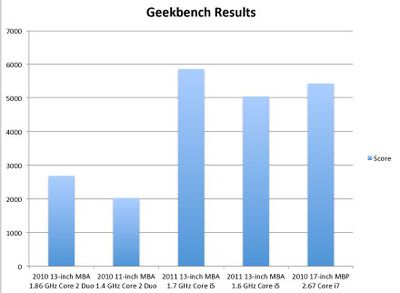
Electricpig reports that early benchmarking data obtained by Laptopmag.com from Apple's new MacBook Air models released today demonstrate significant performance improvements over the previous generation and even other Apple notebooks. Testing was performed using the Geekbench benchmarking tools.
According to the report, not only do the new MacBook Air models at least double the scores of the previous generation in testing with Geekbench, but the new machines also compare extremely favorably to even high-end MacBook Pro models from last year.
The new 13-inch MacBook Air earned a Geekbench score of 5860, a bump in performance of over 100 percent compared to last year’s model. The 11-inch MacBook Air was even more impressive, skyrocketing from 2024 to 5040 for 149 percent increase.
To put these benchmarks into perspective, the 2010 17-inch 2.67 GHz Core i7 MacBook Pro scored 5423. For £849 the 11-inch MacBook Air offers a benchmark on par with last year’s £2099 17-inch MacBook Pro.
Geekbench testing focuses on processor and memory performance, providing comparisons of raw power between machines but only telling part of the story. Consequently, it remains to be seen how the new MacBook Air models will stack up in real-world situations, but early indications suggest that Apple's ultraportable lineup has indeed received a major increase in performance.
Apple today released a pair of updates to its Apple Remote Desktop management system aimed at administrators who oversee large numbers of computers, allowing them to assist users remotely, administer their systems, and deploy software updates.
When using Apple Remote Desktop to control a client machine running Lion, you may share the current user's session or log into a separate session which will not be shown on the user's display and will not interrupt the current user.
The Screen Sharing service is enabled in the Sharing Pref pane by turning on either Screen Sharing or Remote Management. In Lion, the service under which Screen Sharing is enabled affects the authorization required for sharing the display.
If the Apple Remote Desktop administrator authenticates with a name that is different from the user logged on at the remote computer, the following applies:
- If the service was enabled by turning on Screen Sharing, the screen sharing user is presented with the option to request sharing access from the user logged on at the display. - If the service was enabled by turning on Remote Management, the screen sharing user can simply choose to share the display. - The screen sharing user can always choose to log in to their own session.
If a Apple Remote Desktop administrator authenticates with the same name as the user logged on at the display then they will share the display. This is equivalent to how screen sharing works in earlier versions of Mac OS X.
If the remote computer's display is at the login window, the Apple Remote Desktop administrator will simply share the display. This is equivalent to how screen sharing works in earlier versions of Mac OS X.
A third party VNC viewer will always be connected to the login window. If the login window is not on the display, a new login window is started that is not shown on the display. The screen sharing user can then log in with any valid account on that computer.
In Mac OS X 10.7, known as Lion, Apple went with the “shake things up” philosophy. It follows an old Apple pattern: embrace what’s cool and progressive, and ruthlessly jettison what it considers antiquated. That’s great if you love stuff that’s cool and progressive, and not so great if you hate people moving your cheese...
The Lion upgrade, in other words, is classic Apple: innovative to some, gimmicky to others, big leaps forward, a few stumbles back. It may never be the king of the jungle. But once the world’s software companies have fully Lionized their wares, and once Apple exterminates the bugs, Mac OS X 10.7 might be something even more exotic: a fast, powerful, good-looking, virus-free, thoroughly modern operating system.
There are, however, downsides to anything this new and major. In my view, the biggest of these is that switching to Lion will require a major adjustment even for veteran Mac users, though it will be easier for those who use iPhones or iPads. Lion will significantly increase the learning curve for Windows users switching to the Mac...
Lion is very different. It’s a big leap, and gives the Mac a much more modern look and feel for a world of tablets and smartphones. If you are willing to adjust, it’s the best computer operating system out there.
Most of the highest-profile changes share a unifying principle: They make a Mac feel a little less like a cranky, complicated personal computer, and a little more like a 21st-century appliance...
Lion feels, to revive an old OS X tagline, like a new Mac for your Mac. At $129, it would have been a meaty good value. At $29.99, it's a steal — the no-brainer upgrade that defines the notion of a no-brainer upgrade.
John Siracusa - Ars Technica (a staggeringly long review):
Though the Lion name suggests the end of something, the content of the operating system itself clearly marks the start of a new journey. Seemingly emboldened by the success of iOS, Apple has taken a hatchet to decades of conventional wisdom about desktop operating systems.
I love Mac OS X. I've used it since the very first and painful developer preview, back in September 2000. I love iOS too, because its modal nature simplifies powerful computing, and, at the same time, empowers normal people. I hoped Mac OS X Lion was going to merge both perfectly. Sadly, from a user interface point of view, it has failed to achieve that. And by failing at this task, it has made a mess of what was previously totally acceptable.
The short answer is yes. OS X Lion offers enough value in its security enhancements and improvements to features like Exposé and Spaces, in the form of Mission Control, to justify the $29.99 price tag alone. There’s really very little reason not to purchase the upgrade if you’re already a Mac user on Snow Leopard.
So, Lion appears to be worth $29.99 but as with any dot-zero release, users are encouraged to backup first and be careful about using it for mission-critical applications until Apple -- and your fellow users -- have gotten all the bugs out.
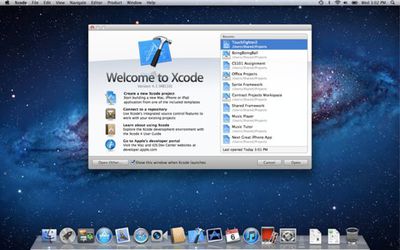
Along with the release of OS X Lion this morning, Apple also served up version 4.1 of development suite Xcode, available for free from the Mac App Store [App Store Link].
The prior version of Xcode was offered for $4.99 on the App Store to non-developers when it was released earlier this year.
Apple has traditionally included updated developers tools for free on the OS install DVD. With the advent of digital delivery, Apple has chosen to offer Xcode as a separate app download.
It seems likely that the $4.99 charge was related to Apple's convoluted accounting practices related to the addition of features without receiving direct payment for them. Because an improved version of Xcode wasn't originally included with Snow Leopard, Apple was required to charge for it to comply with certain accounting rules.
In its earnings call yesterday, Apple noted a change in how it was accounting for a portion of Mac and OS X sales to avoid such problems in the future.
In a report on the changing dynamics of the retail scene in Manhattan's historic Grand Central Terminal, The New York Times notes that Apple's bid for a retail store in the terminal is likely to be accepted next week. Apple is said to have delivered its proposal in "linen-lined boxes" in order to make a memorable impression.
When Apple proposed opening a store on the balcony overlooking the main hall, it submitted its bid in linen-lined boxes, as if it were a wedding present to transit officials, a source familiar with the application process said. The board is expected to approve the deal at its monthly board meeting next week.
According to the report, many longtime vendors are displeased with the Metropolitan Transportation Authority's strict control over the retail aspects of Grand Central Terminal, policies that require vendors to reapply for their space through an extremely competitive process at the end of each lease term. The reapplication process has seen several vendors who had been selling in the landmark terminal for decades ousted as "better" options presented applications for the spaces.
Apple is said to be set to occupy space on the East Balcony overlooking the Main Concourse, taking the space of restaurant Metrazur, which reportedly received a buyout to terminate its lease eight years early in what may have been a specific effort to make room for Apple.
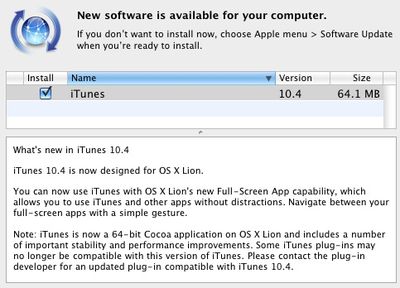
Apple this morning released iTunes 10.4 with support for Lion's Full-Screen Apps feature and, more importantly, iTunes is now a 64-bit Cocoa application under Lion.
You can now use iTunes with OS X Lion's new Full-Screen App capability, which allows you to use iTunes and other apps without distractions. Navigate between your full-screen apps with a simple gesture.
Note: iTunes is now a 64-bit Cocoa application on OS X Lion and includes a number of important stability and performance improvements. Some iTunes plug-ins may no longer be compatible with this version of iTunes. Please contact the plug-in developer for an updated plug-in compatible with iTunes 10.4.
The primary advantage afforded 64-bit applications is the ability to address more than 4GB of memory which can be a distinct advantage for applications which use large data sets. Adobe, for example, received some criticism in 2008 that their Photoshop products were slow to adopt 64-bit mode on the Mac. 64-bit Photoshop for Mac ultimately arrived with CS5.
The reason for the long delay was the fact that Apple dropped support for 64-bit mode in Carbon back in 2007, requiring developers to port their existing Carbon applications to Cocoa in order to take advantage of 64-bit mode. This primarily affected older applications such as Photoshop and iTunes which had existed prior to Mac OS X and were still using Carbon, Apple's legacy API. Meanwhile, Cocoa was Apple's native API for Mac OS X and offered some additional user interface advantages. For better or worse, many users saw Cocoa applications as superior to their Carbon counterparts due to historic baggage of many of the Carbon applications.
64-bit support only exists in Lion; iTunes remains a 32-bit application under Snow Leopard.
With today's release of OS X Lion, Apple has also pushed out a software update to its existing iWork suite of productivity apps, bringing support for new features found in Lion.
This update adds support for Mac OS X Lion and takes advantage of the following features:
- Full Screen - Resume - Auto Save - Versions
This update is recommended for users of iWork 9.0 and later. For detailed information on this update and individual application changes, please visit this site: http://support.apple.com/kb/HT4684.
The update, known both as iWork 9.1 and iWork Update 6, has been pushed out via Software Update.







 A few weeks ago, Apple lost a
  Apple and Google are weighing bids for