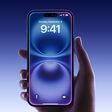
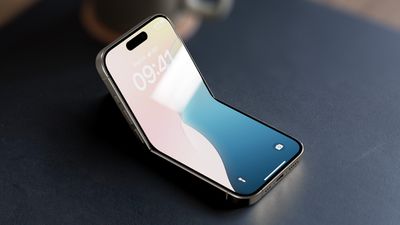
The rumored flip-device comes in addition to the wide foldable iPhone that is expected to launch later this year. Whether the flip-style foldable iPhone will reach mass production is apparently yet to be decided.
Earlier this month, Bloomberg's Mark Gurman said that Apple is "exploring" the idea of a foldable iPhone with a "square, clamshell-style" design.
The clamshell iPhone would be released at some point after Apple's first foldable iPhone, which is expected to open up like a book, similar to Samsung's Galaxy Z Fold 7. This design will provide users with a large inner display for watching videos and gaming, and there will likely be multitasking functionality. A clamshell iPhone, on the other hand, would be more about portability and pocketability.
Other rumors suggest that Apple's first foldable iPhone will feature a 7.8-inch crease-free inner display, a 5.5-inch cover display, Touch ID, two rear cameras, the A20 chip, and the "C2" modem. It is expected to launch alongside the iPhone 18 Pro and iPhone 18 Pro Max in the fall.
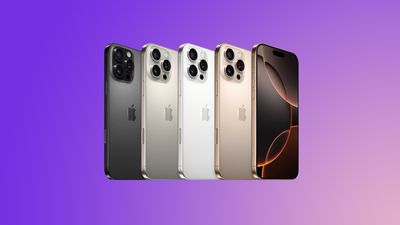
Variable Aperture: The main 48-megapixel Fusion camera on both iPhone 18 Pro models is rumored to have a variable aperture, which would allow users to control the amount of light that passes through the camera's lens and reaches the sensor. This would provide greater control over depth of field. However, given that iPhones have smaller image sensors due to smartphone size constraints, it is unclear exactly how meaningful this improvement would be.
A20 Pro Chip: Apple's next-generation A20 Pro chip is expected to use TSMC's first-generation 2nm process, whereas the A19 Pro chip is 3nm. With a 2nm architecture and a new packaging design, the A20 Pro chip should deliver solid year-over-year performance and power efficiency gains.
N2 Chip: All of the iPhone 17 and iPhone Air models are equipped with an Apple-designed N1 chip that enables Wi-Fi 7, Bluetooth 6, and Thread. Apple says the N1 chip also improves the overall performance and reliability of features like Personal Hotspot and AirDrop. iPhone 18 Pro models are expected to have Apple's next-generation N2 chip, but is not yet known what improvements would come with this upgrade.
C2 Modem: Apple's custom C1 cellular modem for 5G and LTE debuted in the iPhone 16e last year, and that was followed by a C1X chip in the iPhone Air. Apple says the C1X modem is up to twice as fast as the C1 modem, and the most power-efficient modem in an iPhone ever. The improvements should continue with Apple's third-generation C2 modem in the iPhone 18 Pro models.
These are only some of the new features and changes planned for the iPhone 18 Pro models, with additional ones outlined in our iPhone 18 roundup.
Apple is expected to release the iPhone 18 Pro models in September.
We're recapping this week's best Apple-related deals below, and it includes solid discounts on AirPods 4, AirPods Pro 3, Apple Watch Series 11, and a few sales from Samsung and Satechi.
Note: MacRumors is an affiliate partner with some of these vendors. When you click a link and make a purchase, we may receive a small payment, which helps us keep the site running.
AirPods
What's the deal? Take $30 off AirPods 4 and $39 off AirPods Pro 3
Apple's AirPods 4 returned to $99.00 this week, down from $129.00. This is the base model of the AirPods 4 without Active Noise Cancellation, and it's the best price we've seen on this model so far in 2026.
We're also tracking a solid second-best price on the AirPods Pro 3 on Amazon, available for $209.99, down from $249.00.
Apple Watch Series 11
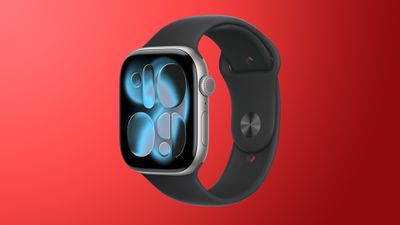
What's the deal? Take $100 off Apple Watch Series 11
Amazon this week has all-time low prices on the Apple Watch Series 11, with $100 discounts across numerous models of the smartwatch. This time around, we're tracking these record low prices on nearly every aluminum model.
Samsung
What's the deal? Save on Samsung monitors, TVs, and more
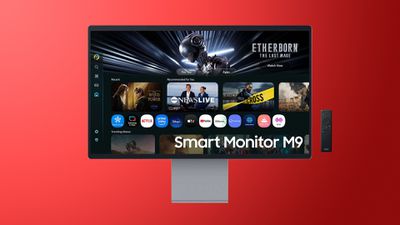
Samsung this week introduced a few big discounts on its monitors, TVs, and more this week on Amazon, including the return of the all-time low price on the newest Smart Monitor. You can get the 32-inch Smart Monitor M9 for $1,299.99, down from $1,599.99.
In addition to the Smart Monitor M9 sale, Amazon is offering extra savings if you purchase multiple select Samsung products this week. Purchasing two products from this landing page will get you an additional $100 off, three will get you $300 off, four will get you $400 off, and five will get you $500 off your total.
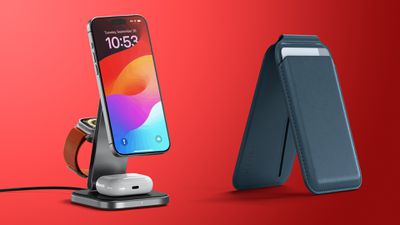
Satechi recently kicked off a new sale that has essential accessories at 20 percent off for a limited time. To get this discount, enter the code ESSENTIALS20 at checkout on the accessories found in Satechi's "Essentials Tech Upgrade" collection.
If you're on the hunt for more discounts, be sure to visit our Apple Deals roundup where we recap the best Apple-related bargains of the past week.
Deals Newsletter
Interested in hearing more about the best deals you can find in 2026? Sign up for our Deals Newsletter and we'll keep you updated so you don't miss the biggest deals of the season!
Apple released macOS Tahoe last September, but despite two point updates since then, it is still struggling to resolve an embarrassing interface issue in Finder that appears to have been introduced with its Liquid Glass redesign.
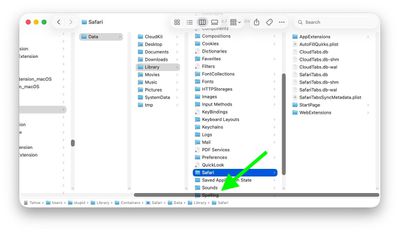
If you updated your Mac to macOS Tahoe and you prefer to work in Finder's column view, there's a good chance you've been frustrated by the glitch, which developer Jeff Johnson has been admirably tracking over on his blog.
Scroll bar blocking column resize handles (Original image: Jeff Johnson)
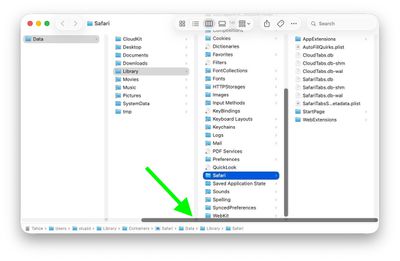
At the bottom of each Finder column are handy little resize handles allowing you to expand or reduce each column as you see fit. But in macOS 26 and macOS 26.2, when scroll bars are set to "always show," the horizontal scroll bar at the bottom overlaps and covers those handles, so you can't click them to adjust column widths the way you could in earlier macOS versions like Sequoia.
Scroll bar occluding column content (Original image: Jeff Johnson)
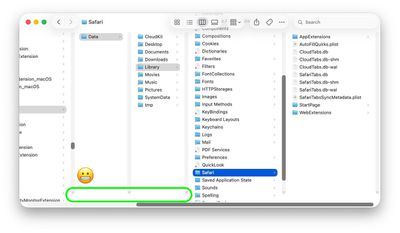
With the recent release of macOS 26.3, Apple attempted a fix. The vertical scrollers were shortened so the resizing widgets now sit above the horizontal bar and are technically clickable again. Unfortunately though, as Johnson points out, the horizontal scroll bar still overlaps file names in the view, causing it to regularly obscure content. Moreover, if you hide the path bar and status bar, the layout leaves a weird amount of empty space below the scrollers, making the whole thing look unfinished (see image below).
Column resize handles suspended in mid-air (Original image: Jeff Johnson)
Johnson's take is basically that while the most disruptive bug is less bad now, the overall column view layout still feels half-baked – especially for anyone who keeps scroll bars always visible.
As Daring Fireball's John Gruber points out, it's an embarrassing fudge for a company that used to pride itself on pixel-perfect settings across its Mac operating system.
At this point, it's unclear when Apple will manage to iron out the UI irregularities introduced by Liquid Glass. macOS Tahoe 26.4 is likely to be released in March or April, and could introduce some new Siri features, though at least some of the capabilities that we were expecting may have been delayed, depending on who you believe. The update is also expected to introduce new emoji characters.
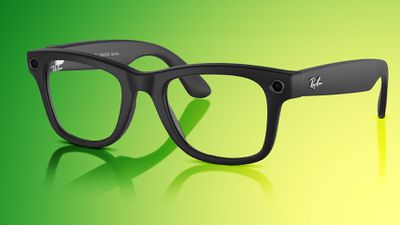
Meta plans to add a facial recognition feature to its Ray-Ban smart glasses as soon as this year, reports The New York Times ($).
According to people involved in the plans who spoke to the publication, the feature is internally called "Name Tag," and would let wearers identify people and get information about them via Meta's artificial intelligence assistant. Mark Zuckerberg reportedly wants the feature to differentiate the devices and to make the AI assistant in the glasses more useful.
According to an internal document seen by NYT, Facebook's parent company has been in discussions since early last year about releasing the feature, which carries obvious civil liberty and privacy risks. Based on the document, dated to last May, the company originally planned to release Name Tag to attendees of a conference for the blind – which did not happen – before releasing it to the general public.
The internal memo also said the "political tumult" in the United States was good timing for the feature's release. NYT quoting from the document out of Meta's Reality Labs:
"We will launch during a dynamic political environment where many civil society groups that we would expect to attack us would have their resources focused on other concerns."
The plan is a turnaround for the company – five years ago, Facebook shut down its facial recognition system for tagging people in photos on its social network, citing a need to find "the right balance" for a technology that raises privacy and legal concerns.
This isn't the first time it has considered adding facial recognition to a consumer product either. Technical challenges and ethical concerns reportedly prevented the feature from making it into Meta's first version of its Ray-Ban smart glasses, which have proven successful since they debuted in 2021. EssilorLuxottica, which works with Meta to make the glasses, said this week that it sold more than seven million units in 2025.
Meta is still said to be exploring who should be recognizable through the technology. Possible options reportedly include recognizing people a user knows via a Meta platform, and identifying people whom they may not know but who have a public account on a Meta site like Instagram. What Name Tag reportedly won't allow users to do is look up literally anyone they encounter.
In a statement given to NYT, Meta said:
"We're building products that help millions of people connect and enrich their lives. While we frequently hear about the interest in this type of feature – and some products already exist in the market – we're still thinking through options and will take a thoughtful approach if and before we roll anything out."
Meta's smart glasses have already been used to identify people in public. In 2024, two Harvard students used Ray-Ban Meta glasses alongside the facial recognition service PimEyes to identify strangers on the Boston subway, and later posted a video of the experiment that went viral. Meta responded by emphasizing that the glasses included a small white LED on the top-right corner of the frame to signal when recording is taking place.
Meta is apparently also working on so-called "super-sensing" glasses that continually run cameras and sensors to keep a record of someone's day.
According to a Bloomberg report last year, Apple is planning to launch a set of smart glasses by the end of this year. The glasses will be comparable to Meta's Ray-Bans and Google's Android XR glasses, "but better made."
Apple's smart glasses are expected to include cameras, microphones, and AI capabilities, and will have the ability to take photos, record video, provide translations, give turn-by-turn directions, and more. However, they won't have augmented reality capabilities.
Apple today announced the launch of AppleCare+ coverage in Indonesia, bringing the option of additional hardware protection and technical support to customers across the country.
Most Apple products come with a one-year limited warranty that covers hardware failures and manufacturing defects, and up to 90 days of complimentary technical support. AppleCare+ extends coverage for devices like iPhone, iPad, Mac, Apple Watch, Pro Display XDR, and Apple TV, including accidental damage protection for incidents like drops and spills, battery replacement when capacity drops below 80 percent, and 24/7 priority access to support.
"AppleCare brings peace of mind and mind to our customers, with comprehensive protection for their products and support from Apple experts," said Kaiann Drance, Apple's vice president for Worldwide iPhone Product Marketing. "Today's launch is part of our ongoing commitment to expand access to AppleCare coverage and deliver the best experience for our customers around the world."
AppleCare+ in Indonesia extends Apple's paid support and repair coverage through its network of Apple Authorized Service Providers. Customers can use mail-in or in-store repairs for supported Apple products, and Mac users may be eligible for onsite service. Global repair coverage also allows customers traveling abroad to obtain service through Apple's international network, subject to local parts and service availability.
AppleCare Protection Plan coverage can be purchased when ordering a qualifying device and within 12 months of purchase. Customers in Indonesia can learn more about AppleCare+ options in their country by visiting Apple's regional AppleCare+ webpage.
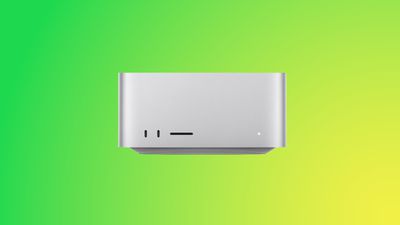
Apple is working on an updated version of the Mac Studio, and the new machine is expected to launch in the first half of 2026. We've rounded up what we know about the next-generation Mac Studio so far.
Design
We're not expecting Apple to redesign the Mac Studio, and there haven't been rumors of a design update. The Mac Studio will continue to have an Apple TV or Mac mini-like squircle design with rounded corners.
The Mac Studio is a much more compact desktop than the Mac Pro, measuring in at 3.7 inches tall and 7.7 inches wide. Apple has apparently put the Mac Pro on the backburner, and the Mac Studio is seen as the future of Mac desktop computing.
M5 Max and M5 Ultra Chips
We're expecting the Mac Studio to adopt M5 Max and M5 Ultra chips. The M5 Max chip will offer much faster CPU and GPU performance than the M5 chip that came out last October, and the M5 Ultra will double the M5 Max performance.
The M5 MacBook Pro models were updated with a faster SSD, so the Mac Studio and other Macs coming in 2026 could get the same refresh.
Studio Display 2
Apple debuted the first Studio Display alongside the Mac Studio, and there is a new Studio Display 2 rumored to be coming this year. We could get the new display alongside the new Mac Studio.
There haven't been rumors of pricing increases for the Mac Studio, so it could continue to start at $1,999.
Release Timing
Last weekend, Bloomberg's Mark Gurman said that new Mac Studio models "shouldn't arrive too long after the spring Mac refresh," which is expected to include new MacBook Pro models.
New MacBook Pro models could come as early as the week of March 2, so the Mac Studio will come sometime after that date.
Apple did not infringe on any patents owned by Texas-based company Optis Wireless, a jury ruled today. In a verdict shared by Reuters, the jury decided that Apple did not infringe any of the five LTE patents that Optis sued over back in 2019. If Optis had won, Apple could have faced hundreds of millions in damages.
Optis Wireless initially won $506 million from Apple in a 2020 jury trial, but the damages were thrown out after Apple appealed because the jury didn't calculate damages with an understanding of fair and reasonable essential patent (FRAND) terms. A second jury trial was held in 2021 to recalculate damages, and the jury awarded Optis $300 million. Apple again appealed, and the appeals court vacated the $300 million verdict because the district court provided the jury with incorrect instructions.
Apple and Optis were sent back to court for a third jury trial, which leads to today's verdict. With the jury finding in Apples favor, Apple owes Optis nothing. In a statement to Reuters, Apple said it was pleased the jury rejected Optis's infringement claims.
"We thank the jury for their time, and we're pleased they rejected Optis' false claims. Optis makes no products, and its sole business is to sue companies, which it has done repeatedly to Apple in an attempt to obtain an excessive payout."
Optis is likely to appeal the ruling, sending it back to the appeals court again. Apple is also fighting Optis in the UK, where a UK court ordered Apple to pay $502 million. Apple appealed the decision and the UK Supreme Court will hear the case in June 2026.
Apple is still planning to launch the smarter, more capable version of Siri in 2026, the company told CNBC today. Apple's statement comes just a day after Bloomberg reported Apple is having issues with the updated version of Siri, leading to potential delays of the feature.
Apple initially intended to launch the Apple Intelligence-powered version of Siri in spring 2025, but right around when a debut was expected in March 2025, Apple said that Siri wasn't ready and needed more time. Later in the year, Apple said that it would launch its Siri update in 2026.
Though Apple never gave a timeline more specific than "2026," Bloomberg said the company was aiming to include Siri in iOS 26.4, an update planned for spring 2026. Bloomberg's latest report suggests the Siri functionality will not be ready in time to be included in iOS 26.4, so the new features could be pushed to iOS 26.5 or iOS 27.
Apple may miss its internal target for the 2026 Siri launch, but since the company never publicly gave timing beyond 2026, there's no actual delay yet. Apple has until December 2026 to launch Siri within the timeframe that it promised in summer of 2025.
Back in June 2024, Apple previewed three new Siri features, including onscreen awareness, personal context, and the ability to do more in and between apps. Apple has since started working on additional Siri features like image generation and a tool for searching the web.
In Apple's testing, Siri apparently sometimes doesn't process queries properly, and can take too long to respond to requests. Features are not working as intended, so Siri's new capabilities could roll out across several updates. We could still get one or two new Siri features in iOS 26.4, with other features set to come in future updates slated for 2026. There are still several iOS 26 updates planned for 2026, and iOS 27 will launch in September 2026.
Apple provided CNBC with a statement because the company's stock dropped five percent today, both due to the Siri delay rumors and FTC scrutiny over Apple News.
Apple is likely to release the first beta of iOS 26.4 later this month, giving us more insight into the Siri launch situation.
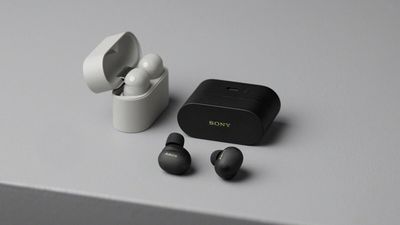
Sony today announced a new set of earbuds that are designed to compete with the AirPods Pro 3. The $330 WF-1000XM6 Truly Wireless Earbuds feature Active Noise Cancellation with a 25 percent reduction in noise compared to the prior-generation XM5 earbuds, with improved performance in the mid-to-high frequency range that's common in everyday environments.
The earbuds use Sony's HD Noise Canceling Processor QN3e with an adaptive noise canceling optimizer and four microphones on each earbud to detect sound to cut out. The earbuds analyze external noise and wearing conditions in real time to improve noise canceling performance.
Sony's XM6 earbuds are smaller than the AirPods Pro 3 because there is no stem, and they include noise isolating silicone ear tips with a USB-C charging case. Sony redesigned the earbuds with a more ergonomic shape that's meant to follow the natural curves of the inner ear to reduce discomfort, and the XM6 is 11 percent slimmer than the XM5. The updated design also reduces internal noises like footsteps and chewing sounds.
The battery in the XM6 earbuds lasts for up to eight hours, and the charging case provides an additional 24 hours.
More processing power delivers better sound, and Sony says the earbuds have a new driver unit that combines different materials on the dome and the edge. The soft edge offers deep bass, while the rigid dome provides clear and extended high frequencies. Sony is also using AI to restore compressed files in real time to improve sound quality.
For phone calls, there are two microphones and a bone conduction sensor on each side, with the earbuds using AI beamforming to isolate and capture the wearer's voice even in crowded environments.
Sony offers Adaptive Sound Control, Auto Play, multi-device support, and integrated voice assistance, with Google Gemini Live built in.
Reviews suggest the WF-1000XM6 earbuds are almost on par with the AirPods Pro 3 when it comes to noise cancellation. According to SoundGuys, the XM6 had an 88 percent average reduction in loudness across all frequencies, just behind the 90 percent average of the AirPods Pro 3. Passive isolation was better than the AirPods Pro 3 passive sound reduction.
Engadget felt that Sony's earbuds struggled with human voices and had fit issues, but The Verge said the earbuds tuned out conversations better than other ANC earbuds, including the AirPods Pro 3.
TechRadar said the AirPods Pro 3 had noticeably better ANC, Business Insider preferred the XM6 noise canceling, and CNET said the XM6 offered better sound quality than the AirPods Pro 3.
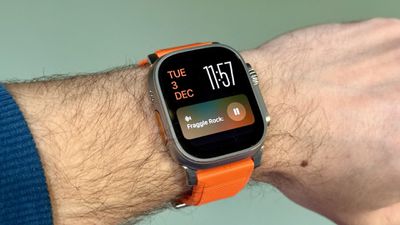
In watchOS 26, the Smart Stack for your Apple Watch is pretty clever. The collection of widgets can be pulled up with a scroll of the Digital Crown, and shows you relevant information throughout your day. But sometimes, its eagerness to help can be a bit much, especially when it comes to Live Activities.
You're probably familiar with this scenario: You raise your wrist expecting to see your customized watch face, but it's been replaced by media playback controls because someone's watching your Apple TV, or a timer you set earlier for cooking that still has ages left to run. Live Activities in the Smart Stack can clearly be useful, but having them automatically take over your display isn't always ideal. Here's how to take back control:
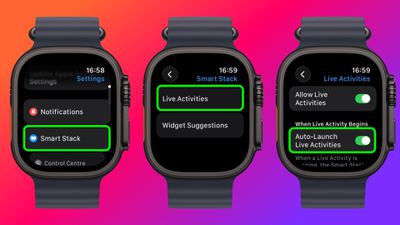
Open Settings on your Apple Watch.
Tap Smart Stack.
Select Live Activities.
Toggle off the switch next to Auto-Launch Live Activities.
After disabling auto-launch, Live Activities will still be available in your Smart Stack when you want them – you'll just need to manually scroll to see them instead of having them pop up automatically.
If you want more granular control, you're in luck. From the same settings screen you can control which Apple apps display Live Activities. Using the Watch app on your iPhone, you can also manage Live Activities settings for third-party apps. This lets you keep the notifications you find useful while preventing the less important ones from interrupting your watch face.
Pro Tip: If it's just those persistent media controls that bug you, head to Media Apps in the same settings menu and turn off Live Activities completely, or alternatively under "Auto-Launch," select Off or Smart Stack for a more focused watch face experience.
Apple today released new beta firmware for the AirPods Pro 2, AirPods Pro 3, and AirPods 4. The firmware is limited to developers at the current time, and it has a build number of 8B5034f.
Apple is not testing any iOS updates right now, so it is unclear what's in the AirPods firmware beta.
With iOS 26, iPadOS 26, and macOS Tahoe, Apple added a beta firmware update installation option that's available from the AirPods settings interface when the AirPods are connected to an iPhone, iPad, or Mac, which facilitates beta testing.
Developers can use the beta option to turn on beta downloads.
Apple today released a new update for Safari Technology Preview, the experimental browser that was first introduced in March 2016. Apple designed Safari Technology Preview to allow users to test features that are planned for future release versions of the Safari browser.
Safari Technology Preview 237 includes fixes and updates for Accessibility, CSS, DOM, HTML, Networking, Rendering, SVG, Web API, Web Authentication, Web Extensions, Web Inspector, and WebRTC.
The current Safari Technology Preview release is compatible with machines running macOS Sequoia and macOS Tahoe, the newest version of macOS.
The Safari Technology Preview update is available through the Software Update mechanism in System Preferences or System Settings to anyone who has downloaded the browser from Apple's website. Complete release notes for the update are available on the Safari Technology Preview website.
Apple's aim with Safari Technology Preview is to gather feedback from developers and users on its browser development process. Safari Technology Preview can run side-by-side with the existing Safari browser and while it is designed for developers, it does not require a developer account to download and use.
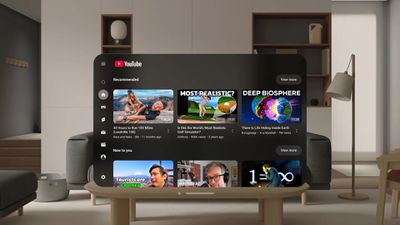
Starting today, an official YouTube app is available on the Apple Vision Pro, allowing you to watch videos on a theater-sized screen with immersive visionOS Environments.
Every video on YouTube is available in the new, standalone visionOS app, including standard videos, 180° videos, 360° videos, and YouTube Shorts. And on the newer Apple Vision Pro with the M5 chip, you can even watch YouTube videos in 8K.
Apple Vision Pro users can access their YouTube subscriptions, playlists, watch history, and more.
It was already possible to watch YouTube videos via the Safari browser on the Apple Vision Pro, but there was no official YouTube app on the device until now. A third-party YouTube app called "Juno" was available on visionOS in 2024, but it was quickly removed from the App Store because it was deemed to be violating YouTube's Terms of Service.
The official YouTube app is available in the visionOS App Store. The app is compatible with Apple Vision Pro models with the M2 chip and the M5 chip.
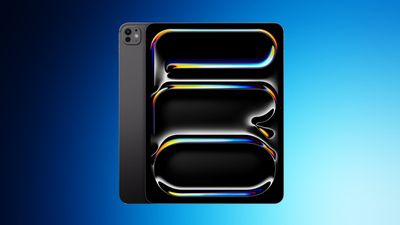
Amazon this week is offering discounts across the M5 iPad Pro lineup, including both 11-inch and 13-inch models. Every deal on the 11-inch M5 iPad Pro that we're tracking below is a match of the all-time low price on these tablets.
Note: MacRumors is an affiliate partner with some of these vendors. When you click a link and make a purchase, we may receive a small payment, which helps us keep the site running.
The highlight this time around is a return of a low price on the 256GB Wi-Fi 11-inch M5 iPad Pro, which is on sale for $799.91, down from $999.00. Amazon provides an estimated delivery date around February 17 for free delivery, but Prime members should see earlier delivery dates in many cases.
There are fewer 13-inch M5 iPad Pro models on sale during this event, but you can find $150 off a few Wi-Fi models on Amazon. Prices start at $1,199.00 for the 256GB Wi-Fi 13-inch M5 iPad Pro ($100 off), and also include the 1TB Wi-Fi Nano-Texture Glass model for $1,849.00 ($150 off).
If you're on the hunt for more discounts, be sure to visit our Apple Deals roundup where we recap the best Apple-related bargains of the past week.
Update: Amazon has further discounted the 256GB 11-inch iPad Pro, now available for $199 off.
Deals Newsletter
Interested in hearing more about the best deals you can find in 2026? Sign up for our Deals Newsletter and we'll keep you updated so you don't miss the biggest deals of the season!
New Apple Intelligence Features:Apple and Google announced that Gemini will help power some new Apple Intelligence features, which will likely begin rolling out on iOS 27. For example, it has been rumored that Apple Intelligence capabilities are coming to Apple's Calendar app. There was also a rumor about an Apple Health+ subscription service that would have included personalized, AI-powered health and fitness recommendations, but Apple has reportedly gone back to the drawing board on that, so only bits and pieces of it might arrive.
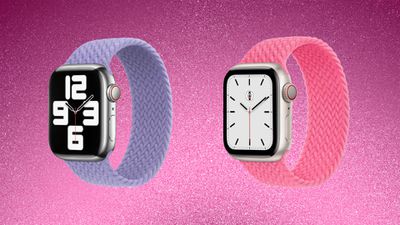
Woot this month is back with a massive sale on Solo Loop and Braided Solo Loop bands for Apple Watch, with prices that match the previous record low Woot deals on these bands.
Note: MacRumors is an affiliate partner with Woot. When you click a link and make a purchase, we may receive a small payment, which helps us keep the site running.
You can get the Solo Loop for just $14.99 ($34 off) and the Braided Solo Loop for $29.99 ($69 off). All bands in this sale are in brand new condition and come with a one-year Apple limited warranty.
Woot has reorganized the sale for 2026, with shoppers choosing their size before color this time around. Woot has size 1-12 of the Solo Loop and Braided Solo Loop available, but color and style availability varies within each size category.
Shoppers should note that this sale is focused on colors of the Braided Solo Loop and Solo Loop that Apple has stopped selling, and it doesn't include any of the new band colors. That being said, all of the bands in this sale are in new condition.
The entire sale is focused on Solo Loop and Braided Solo Loop Apple Watch bands, so you'll need to know the size that works best for you before you buy. Apple has a measurement tool on its website that you can use to determine your exact size.
If you're on the hunt for more discounts, be sure to visit our Apple Deals roundup where we recap the best Apple-related bargains of the past week.
Deals Newsletter
Interested in hearing more about the best deals you can find in 2026? Sign up for our Deals Newsletter and we'll keep you updated so you don't miss the biggest deals of the season!
Apple has fully acquired the rights to its hit Apple TV series "Severance," bringing future seasons and content in-house under Apple Studios, Deadline reports.
Apple is said to have acquired the intellectual property and all rights to Severance from Fifth Season in a deal valued at just under $70 million. Apple previously licensed "Severance" from Fifth Season. More than six years after Apple TV launched, Apple Studios now produces roughly half of the platform's slate.
The move transitions the series from an externally produced show to a fully in-house Apple Studios production, with Fifth Season remaining attached as an executive producer going forward. The change mirrors Apple's earlier move to bring the sci-fi series "Silo" under Apple Studios after its first season.
The acquisition follows a difficult production cycle for the show's second season, which reportedly cost as much as $20 million per episode. Season two faced prolonged production delays caused by COVID-19, Hollywood labor strikes, and script changes that led to reshoots and scrapped sets. Borrowing costs rose significantly during the extended production window, increasing financial pressure on Fifth Season as the studio waited for New York tax credits and funding reimbursements.
According to the report, Fifth Season asked Apple for financial advances and considered moving production to Canada for faster and larger tax rebates. Apple executives ultimately concluded that owning the series would allow the company to better absorb long production timelines and keep filming in New York, where the show has an established footprint.
Apple apparently now plans to position Severance as a long-term flagship franchise. The show has already been renewed for a third season, and a fourth season is reportedly considered a certainty. Deadline says Apple expects the series to run for at least four seasons, though creator Dan Erickson and executive producer Ben Stiller are open to expanding the franchise with prequels, spinoffs, and international adaptations.
Production on the third season is tentatively expected to begin this summer, though the start date may slip slightly as scripts are finalized. Six scripts have reportedly been completed, with additional episodes still in development. Apple and the creative team aim to begin filming only after all scripts are finished to avoid the costly shutdowns and reshoots that affected season two.
Season two of Severance became Apple TV's most-watched series at the time of release and received 27 Emmy nominations in 2025, winning eight awards.


 Note: MacRumors is an affiliate partner with some of these vendors. When you click a link and make a purchase, we may receive a small payment, which helps us keep the site running.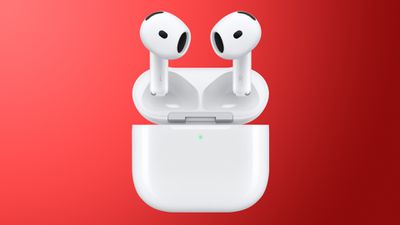




 Note: MacRumors is an affiliate partner with some of these vendors. When you click a link and make a purchase, we may receive a small payment, which helps us keep the site running.
 Note: MacRumors is an affiliate partner with Woot. When you click a link and make a purchase, we may receive a small payment, which helps us keep the site running.