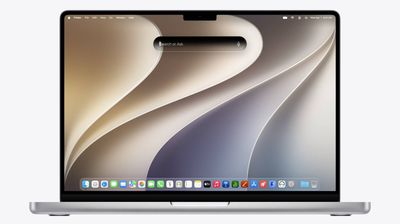
In macOS 27, Siri's new chatbot capabilities can be accessed straight from Spotlight, Apple announced today.
During its WWDC 2026 keynote, Apple revealed that Siri's rich conversational experience can be started right inside the Spotlight prompt, accessed via Command + Space, bringing in context and chat history on the fly.
Conversation history is synced via iCloud, so you can go from device to device. It can use world knowledge, personal content, and allows you to perform tasks like writing messages or emails.
There's also a new Siri mode in Camera. Apple is introducing broader Apple Intelligence upgrades that can bring smarter capabilities to apps across the iPhone, iPad, and Mac.
Apple today announced a significantly revamped Siri at WWDC 2026, rebranding it as "Siri AI" and unveiling out a wave of new capabilities spanning conversational depth, system-wide integration, and a redesigned interface across platforms.
Apple framed the update with the acknowledgment that "there are times when you expect more from Siri." The company is describing the redesigned assistant as "a profoundly more capable assistant" that can now hold multi-turn conversations, draw on real-time world knowledge, and interact with personal data across apps.
Siri is now embedded directly in the Dynamic Island, accessible by swiping down from it, pressing the side button, or saying "Hey Siri." A revamped voice engine makes the assistant sound more expressive, with micro-adjustable voice settings available during initial setup.
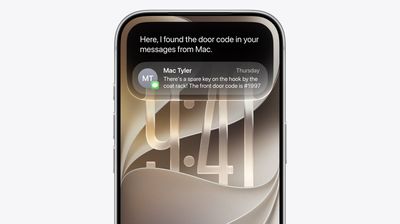
During Apple's keynote demo, presenters showed Siri handling chained, multi-step requests with apparent ease. In one sequence, a presenter asked about a Suki Waterhouse concert, was told tickets require a lottery entry, and asked Siri to set a reminder when the lottery opens, which it did. In another, the assistant identified a photo's landmark, pulled up navigation to that location, and surfaced photos from a recent family trip, adding a specific image to a shared family album on request.
Another demo showcased Siri's ability to synthesize information across apps. A presenter asked about a dessert he had heard about at an event, and Siri located the relevant details from his Messages history. It then compiled the information into a watch-party menu, drafted a message to his contacts with the menu included, and presented send and edit options. In a further demo, a presenter asked about something his son had shared in a message and followed it up by asking Siri to compose an email on the subject.
A new dedicated Siri app lets users scroll back through prior conversations and kick off new ones, with conversation history synced via iCloud so sessions carry seamlessly between devices. The app is also coming to watchOS. On the Mac, Siri is now also integrated into Spotlight and available via right-click context menus on any file or window. On visionOS, Siri AI gains a 3D visualization that users can place anywhere in their space.
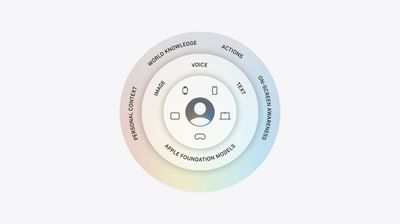
Apple today announced a major overhaul of its Apple Intelligence platform, revealing a new architecture built on foundation models developed in collaboration with Google using the technologies behind the Gemini family.
The new architecture centers on Apple Foundation Models co-developed with Google, which Apple says are adapted to run both on-device and on servers through its existing Private Cloud Compute infrastructure. Apple described the collaboration as a "deep" one that it says unlocks what it called a "huge upgrade" for Apple Intelligence, bringing state-of-the-art understanding and reasoning capabilities as well as multimodal support including image understanding and generation.
The upgraded models support new capabilities use cases, including realistic image creation, advanced photo editing, and visual question answering. Certain devices will receive a higher-power version of the model with additional capabilities including speech generation, improved dictation accuracy, and stronger natural language understanding, though Apple did not specify which devices qualify.
A new system orchestrator sits at the center of the revised architecture, coordinating Apple Intelligence features securely across Apple's platforms. Apple says the orchestrator allows the system to tailor its responses based on the active app and the user's current task, enabling what the company described as truly system-wide intelligence.
Apple used the announcement to frame its approach as a contrast to competitors it characterized as "racing forward" without regard for users. The company reiterated that Apple Intelligence relies on on-device processing and Private Cloud Compute, with a promise that user data is only used to execute the immediate request and is not accessible to Apple or third parties. Apple added that outside experts can verify those privacy guarantees "at any time."
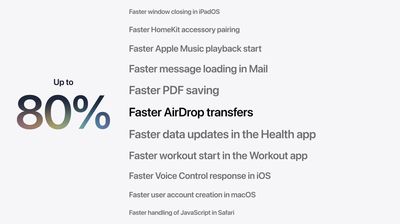
Apple at WWDC 2026 today said it has made several responsiveness improvements across its software ecosystem, speeding up system animations, app launching, and much more.
Apple says that launching iPhone and iPad apps is up to 30 percent faster across devices, while new photos taken on iPhone appear in iCloud Photos up to 70 percent faster.
Elsewhere, sharing files between devices over AirDrop is now up to 80 percent faster and transfers in the Files app are up to 50 percent faster. There's also a new CPU scheduler manager that prioritizes jobs and ensures that the right work is executed on time.
Apple also says that network transitions on its mobile devices have been improved, so that switching between cellular data and Wi-Fi when you're out and about feels a lot more seamless.
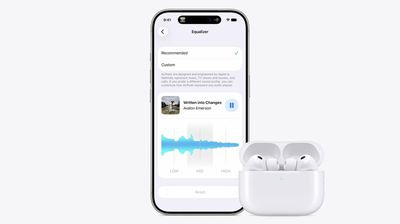
Apple today announced that AirPods will gain a custom EQ (equalizer) feature, allowing users to further personalize how their AirPods sound.
The new capability is part of Apple's next-generation software platform updates, which the company unveiled today. Custom EQ lets listeners adjust audio output to match their personal preferences, going beyond the fixed audio profiles AirPods have offered previously.
Custom EQ lets you adjust the balance of different sound frequencies, including bass, mids, and treble, to tailor audio output to your personal taste. Boosting the bass makes music feel punchier, for example, while lifting the treble adds more clarity to vocals and instruments.
AirPods already support features such as Adaptive Audio, Personalized Spatial Audio, and Conversation Awareness. Custom EQ adds a further layer of tuning on top of those.
Apple today announced that it has rebuilt the search infrastructure that powers key features like Spotlight, Photos, and Mail across all of its major next-generation software platforms.
The company says the index has been rearchitected to be more stable, efficient, and comprehensive, covering both old and new content. After updating, the new infrastructure will begin reindexing device content automatically.
New content will be indexed "almost immediately," Apple says, meaning users' files will become searchable much faster than before. After you update, the new search infrastructure goes to work indexing the content of your device.
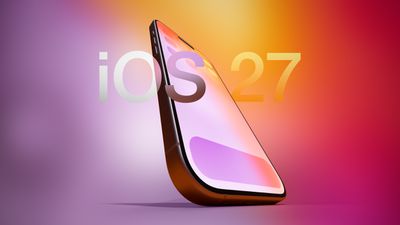
iOS 27 is supported on iPhone 11 and all of the same iPhone models as iOS 26, Apple confirmed today during its WWDC 2026 keynote.
The announcement means that iOS 27 will be compatible with the following iPhone models when it arrives in September:
iPhone 17e
iPhone 17
iPhone 17 Pro & Pro Max
iPhone Air
iPhone 16e
iPhone 16
iPhone 16 Plus
iPhone 16 Pro
iPhone 16 Pro Max
iPhone 15
iPhone 15 Plus
iPhone 15 Pro
iPhone 15 Pro Max
iPhone 14
iPhone 14 Plus
iPhone 14 Pro
iPhone 14 Pro Max
iPhone 13
iPhone 13 mini
iPhone 13 Pro
iPhone 13 Pro Max
iPhone 12
iPhone 12 mini
iPhone 12 Pro
iPhone 12 Pro Max
iPhone 11 Pro
iPhone 11 Pro Max
iPhone 11
iPhone SE (3rd generation)
Apple is also expected to introduce broader Apple Intelligence upgrades that could bring smarter capabilities to apps across the iPhone, iPad, and Mac. Stay tuned for all the details.
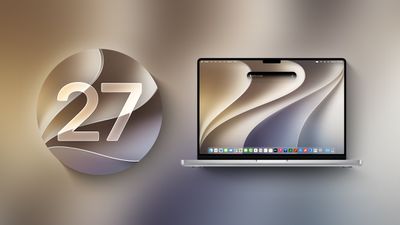
Apple today announced that macOS 27 is named macOS Golden Gate.
Much like Mac OS X Snow Leopard in 2009, Apple said it focused on improving macOS's performance and dozens of underlying technologies this year.
Apple says macOS Golden Gate offers quicker AirDrop transfers, faster network file browsing, improved syncing in the Messages app, better Spotlight search suggestions, and other changes that make your Mac feel "more responsive than ever."
"With improvements at the very core of the system and enhancements to apps and experiences you rely on every day, macOS feels better than ever," said Apple.
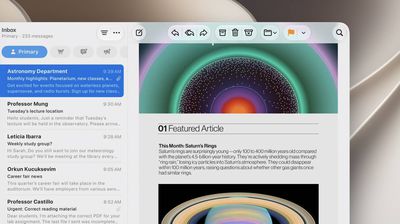
macOS Golden Gate also has design changes. For example, apps now have a unified toolbar at the top, and sidebars now extend to the edge of the window.
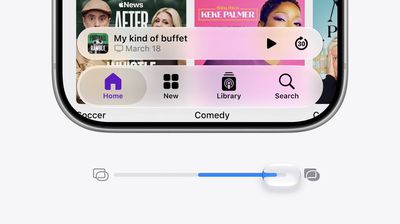
A new slider on macOS 27 lets you customize the opacity of Liquid Glass.
"Updates to Liquid Glass ensure exceptional readability with more uniform refraction and improved contrast," said Apple. "Uniform toolbars, edge-to-edge sidebars, and updated window shapes and menu bar icons deliver a more refined design. And a new slider lets you easily customize how Liquid Glass looks, from ultra-clear to fully tinted."
macOS Golden Gate is finally getting major promised Apple Intelligence and Siri upgrades, including personal context and on-screen awareness.
Spotlight has a new "Search or Ask" interface that is powered by the more intelligent version of Siri, which is officially known as "Siri AI."
"Powered by Apple Intelligence, Siri AI is your conversational AI assistant with entirely new capabilities on your Mac," said Apple. "Ask open-ended questions, brainstorm ideas for work or creative projects, and engage in natural, back-and-forth conversations. And when you search in Spotlight, you can choose 'Ask Siri' as the top hit."
Here are the Macs compatible with macOS Golden Gate, according to Apple:
MacBook Neo (2026)
MacBook Air with Apple silicon (2020 and later)
MacBook Pro with Apple silicon (2020 and later)
iMac with Apple silicon (2021 and later)
Mac mini with Apple silicon (2020 and later)
Mac Studio with Apple silicon (2022 and later)
Mac Pro with Apple silicon (2023 and later)
The first macOS 27 developer beta is available today, and the first public beta will follow in July. The update should be widely released in September, but Apple has yet to provide a specific release date.
Apple today announced a series of improvements to Liquid Glass, the translucent design language the company introduced last year.
Apple said it has heard user feedback, which it "deeply appreciates," and is now making adjustments to the underlying foundations of how Liquid Glass is constructed. Chief among those changes is a new slider that lets users control transparency, ranging from fully opaque to completely clear.
Sidebar behavior is also being updated. Sidebars will now expand to the full edge of the window, with refraction effects continuing beneath them rather than cutting off at the sidebar boundary. Sidebar icons will also retain their color, a change that addresses a common complaint about the original Liquid Glass implementation.
Apple also announced updates to its app icon design language. Having redesigned all of its first-party icons last year to create a more consistent look across apps and platforms, the company said it is now taking that work further by incorporating additional layers of Liquid Glass directly into the icon artwork itself.
The first developer betas of iOS 27, iPadOS 27, macOS 27, watchOS 27, tvOS 27, and visionOS 27 should be available today, and the first public betas typically follow in July.
Apple's Worldwide Developers Conference (WWDC) starts today with the traditional keynote kicking things off at 10:00 a.m. Pacific Time. MacRumors is on hand for the event and we'll be sharing details and our thoughts throughout the day.
We're expecting to see a number of software-related announcements today, headlined by a reset on Apple's push into AI that should see a significant overhaul for Siri plus quite a few new AI-driven features.
Apple is providing a live video stream on its website, on YouTube, and in the company's TV and Developer apps across its platforms. We will also be updating this article with live blog coverage and issuing Twitter updates through our @MacRumorsLive account as the keynote unfolds. Highlights from the event and separate news stories regarding today's announcements will go out through our @MacRumors account.
Sign up for our newsletter to keep up with Apple news and rumors.
Apple's WWDC 2026 begins today, with the event kicking off at 10:00 am Pacific Time via the traditional opening keynote. We know that some MacRumors readers who can't follow the event as it's being broadcast are interested in avoiding all of the announcements and waiting until the event video is available for on-demand viewing so as to experience it without already knowing the outcome.
For those individuals, we've posted this news story, which will be updated with a direct link to the presentation once it becomes available from Apple. No other news stories or announcements will be displayed alongside this story.
Replays of Apple's recent events have been made available to view almost immediately following the conclusion of the broadcasts, and we expect similar timing for today's event. Users waiting for the video to be posted are welcome to gather in the thread associated with this news story, and we ask that those who follow the events as they occur refrain from making any posts about Apple's announcements in this thread.
Ahead of the WWDC 2026 keynote at 10 a.m. Pacific Time today, Apple CEO Tim Cook has shared a short video in which country singer Lainey Wilson, actress Rhea Seehorn, DJ and producer Zedd, and other celebrities say "good morning" in various ways.
"I think I'll say it the way I always say it," concludes Cook.
Apple's hardware engineering chief John Ternus becomes CEO on September 1, so this WWDC will likely be Cook's final event running the company.
"It has been the greatest privilege of my life to be the CEO of Apple and to have been trusted to lead such an extraordinary company," said Cook, back when the CEO transition was announced in April. "I love Apple with all of my being, and I am so grateful to have had the opportunity to work with a team of such ingenious, innovative, creative, and deeply caring people who have been unwavering in their dedication to enriching the lives of our customers and creating the best products and services in the world."
Apple is set to unveil iOS 27 during its WWDC 2026 keynote today, and there are many rumored features and changes for iPhones.
The first developer beta of iOS 27 will likely be available immediately following the keynote, and a public beta typically follows in July. Following beta testing, the software update should be released to all users with a compatible iPhone in September.
Below, we outline 12 new features that are rumored to be coming with iOS 27:
Siri App: A dedicated Siri app will allow users to have back-and-forth conversations with Siri, similar to other chatbots like ChatGPT.
Search or Ask: Swiping down on the Dynamic Island area will open a new "Search or Ask" interface powered by the revamped Siri.
"Create a Pass" in Apple Wallet: iOS 27 will reportedly let users create their own digital passes for physical items like a gym membership card.
Apple Cash Bill Splitting: In the Wallet and Messages apps, a person who paid a bill in full will be able to take a photo of the receipt, assign individual items to certain people, and then generate Apple Cash payment requests for the purpose of reimbursement. Apple Cash is currently available in the U.S. only.
As was the case with iOS 26, it is likely that anyone with an Apple Developer account will be able to install the iOS 27 developer beta for free, with Apple Developer Program membership for $99 per year no longer required. After registering, restart your iPhone and open the Settings app. Next, tap on General → Software Update → Beta Updates and select the iOS 27 Developer Beta once it is seeded later today.
To install a public beta, first sign up at beta.apple.com. After enrolling, restart your iPhone and open the Settings app. Next, tap on General → Software Update → Beta Updates and select the iOS 27 Public Beta once it is available.
iOS beta versions can have bugs and performance issues. Backing up your iPhone before installing beta software is highly recommended.
Apple analyst Ming-Chi Kuo says the real test of today's WWDC keynote is whether Apple can deliver better AI experiences than Google using the same Gemini models.
Apple is using Google's Gemini to underpin the revamped version of Siri and new Apple Intelligence features. The key takeaway from WWDC, Kuo argues in a new post on X, will not be the short-term market reaction after the event. It will be whether Apple, using the same Gemini models, can deliver better AI applications, agentic workflows, and on-device and cloud hybrid experiences than Google.
If the answer is yes, it would help extend Apple's "bull" case. If the answer is no, the implication is that Apple's ceiling is set by a model it does not control. Kuo raised the point arguing against the market sentiment that "Even if Apple is temporarily behind on AI, it will ultimately catch up and come out ahead."
Nevertheless, Kuo believes Apple's business momentum will stay strong through year-end based on his latest supply-chain checks, which he expects observers to spin as "If Apple is doing this well without AI, just imagine once it has AI." Other reports suggest Apple's longer-term advantage could lie in on-device AI, with the company expected to show how its custom silicon lets it process more AI queries directly on the device rather than in the cloud.
Kuo expects today's announcements to have little bearing on the direction of Apple's stock price in the second half of the year. Regardless of what Apple says at WWDC, he argues, the positive second half of 2026 share-price trend is unlikely to change as long as the core narrative stays intact.
The longer-term risk is more pointed. Should Apple fail to outdo Google with Gemini, Kuo says the stock would not necessarily turn bearish, but the assumption that Apple "will ultimately come out ahead" would begin to face growing scrutiny. How much longer the bull narrative can last beyond 2026, in his view, is what makes the keynote worth watching closely.
WWDC 2026 has officially arrived, with Apple set to kick off its annual developer conference with its opening keynote at 10 a.m. Pacific Time today.
Apple will announce its latest software updates, including iPadOS 27, macOS 27, watchOS 27, tvOS 27, and visionOS 27. Could there also be a surprise or two in store?
Below, we recap five key talking points heading into WWDC 2026:
Apple could announce new hardware at this year's conference – reportedly, it even has a couple of new devices "ready to go" – but we are keeping our expectations in check. Apple is believed to be holding back new additions to the company's hardware lineup until the new version of Siri and other Apple Intelligence upgrades are released to the general public later this year. The global memory shortage is also making Mac upgrades less likely for now.
Apple may gate access to new Siri features via a waitlist when iOS 27 arrives in September, similar to the initial launch of the Apple Intelligence platform two years ago. Apple is still internally labeling the long-delayed revamped Siri as a "beta," suggesting it won't be marketed as finished when it arrives later this year. Today's preview of the software should clarify what still needs work.
macOS 26 Tahoe will be the final major macOS version for Intel-based Macs, Apple revealed at last year's WWDC. That means macOS 27 will be compatible with Apple silicon Macs only, so you will need a Mac with an M-series chip or a MacBook Neo with an A18 Pro chip in order to install the software update. Dropping support for the legacy chips also means Apple can focus on honing new features exclusively for Apple silicon.
WWDC 2026 will be Apple CEO Tim Cook's last as keynote speaker. The opening keynote of WWDC has been presented by Cook every year since 2012, but the 65-year-old is stepping down as Apple's chief executive officer, and hardware engineering chief John Ternus is set to take over on September 1. Bloomberg's Mark Gurman anticipates that Cook will kick off the keynote, but software chief Craig Federighi will be the most prominent figure for the majority of the presentation as he introduces the new AI-centric features.
This year, macOS Emerald and macOS Big Bear have emerged as two speculative possibilities for the name of macOS 27, which Apple has yet to announce. Meanwhile, Little Finder Guy has re-appeared, this time in WWDC swag bags! The tiny anthropomorphized version of the Mac Finder icon went viral earlier this year after appearing in Apple's MacBook Neo marketing campaign. Could we see the character return during the macOS 27 preview? Fingers crossed!
The 2026 Worldwide Developers Conference will take place this week from June 8 through June 12, and like the last six years, it will be an online event, although select developers and students will be invited to Apple Park. To kick things off, Apple holds a keynote event on the Monday to announce new software, which is what makes it of interest to the general public.
During the keynote event on Monday, June 8, Apple is expected to unveil iOS 27, iPadOS 27, macOS 27, tvOS 27, watchOS 27, and visionOS 27. (The "27" represents the September 2026 to September 2027 release season.)
You can watch the WWDC 2026 keynote event using one of the methods outlined below. The live stream is set to start at 10:00 a.m. Pacific Time from Apple Park in Cupertino, California. We have a full list of when the event will begin in other time zones in the United States and around the world.
Honolulu, Hawaii -- 7:00 a.m. HAST
Anchorage, Alaska -- 9:00 a.m. AKDT
Cupertino, California -- 10:00 a.m. PDT
Phoenix, Arizona -- 10:00 a.m. MST
Vancouver, Canada -- 10:00 a.m. PDT
Denver, Colorado -- 11:00 a.m. MDT
Dallas, Texas -- 12:00 noon CDT
New York, New York -- 1:00 p.m. EDT
Toronto, Canada -- 1:00 p.m. EDT
Halifax, Canada -- 2:00 p.m. ADT
Rio de Janeiro, Brazil -- 2:00 p.m. BRT (no DST)
London, United Kingdom -- 6:00 p.m. BST
Berlin, Germany -- 7:00 p.m. CEST
Paris, France -- 7:00 p.m. CEST
Cape Town, South Africa -- 7:00 p.m. SAST
Helsinki, Finland -- 8:00 p.m. EEST
Istanbul, Turkey -- 8:00 p.m. TRT
Dubai, United Arab Emirates -- 9:00 p.m. GST
Delhi, India -- 10:30 p.m. IST
Jakarta, Indonesia -- 12:00 a.m. WIB next day
Shanghai, China -- 1:00 a.m. CST next day
Singapore -- 1:00 a.m. SGT next day
Perth, Australia -- 1:00 a.m. AWST next day
Hong Kong -- 1:00 a.m. HKT next day
Seoul, South Korea -- 2:00 a.m. KST next day
Tokyo, Japan -- 2:00 a.m. JST next day
Adelaide, Australia -- 2:30 a.m. ACST next day
Sydney, Australia -- 3:00 a.m. AEST next day
Auckland, New Zealand -- 5:00 a.m. NZST next day
Watch the Keynote on YouTube
Watching the WWDC keynote on YouTube may be one of the quickest and easiest ways to catch the event because YouTube is generally available on most devices, including TV sets and consoles.
The YouTube live stream above will be accessible on June 8 when the event kicks off.
Watch the Keynote on Mac, iPhone, iPad, or Vision Pro
You can watch the WWDC keynote on any Mac, iPhone, iPad, or Vision Pro using Apple's native Safari browser or another browser. iOS devices must be running iOS 10 or later, and Macs need to be running macOS Sierra 10.12 or later to access the stream. Launch Safari from your chosen device and follow this link to the WWDC 2026 Keynote.
Watch the Keynote Using the Apple TV App
You can watch the WWDC keynote via Apple's TV app on Mac, iPhone, iPad, Vision Pro, and Apple TV, with the link in the TV app becoming available on the day of the event or just before.
Open the TV app on your chosen device.
Scroll down the Watch Now category and select WWDC 2026. Alternatively, type "WWDC" into the Search field and select WWDC 2026 from the results.
Click Play.
The app may tell you to tune in at your local time to watch the event live prior to when the WWDC keynote begins.
Watch the Keynote on a Windows PC
If you don't have an Apple device handy, you can still watch the WWDC 2026 keynote on a PC running Windows 10 or later. Open Microsoft Edge browser and follow this link to the WWDC 2026 Livestream.
While Apple offers no guarantees, other platforms may also be able to access the WWDC 2026 keynote using recent versions of Chrome or Firefox (MSE, H.264, and AAC codecs/extensions must be installed).
Watch in the Apple Developer App or Developer Website
For those unable to watch the live stream, or who prefer to read a text version of the announcements, we'll have live coverage both here on MacRumors.com and through our MacRumorsLive X (Twitter) account, so make sure to follow.
Just hours away from WWDC's opening keynote, some developers have been sharing the contents of their conference swag bags on social media. The bags are given to attendees when they register for the event, and typically contain limited-edition Apple gifts.
This year, developers have been registering early at Apple's Infinite Loop campus, where they have been gifted a black tote bag emblazoned with the WWDC 2026 logo, along with a water bottle, a selection of stickers, and collectible enamel pins.
There are four pins in the bag, including the Apple skull and crossbones, an Apple 50 pin, Clarus the Dogcow, and Little Finder Guy – the tiny anthropomorphized version of the Mac Finder icon that went viral after appearing in Apple's recent online marketing campaign for the MacBook Neo.
MacRumors will be in attendance at the keynote, with live coverage of the event beginning shortly after 10:00 a.m. Pacific Time. Stay tuned to MacRumors.com and our @MacRumorsLive account on X (Twitter). We've also put together a guide explaining all the ways you can watch Apple's WWDC 2026 Keynote live as it happens.



 Apple's
 Apple's WWDC 2026 begins today, with the event kicking off at 10:00 am Pacific Time via the traditional opening keynote. We know that some MacRumors readers who can't follow the event as it's being broadcast are interested in avoiding all of the announcements and waiting until the event video is available for on-demand viewing so as to experience it without already knowing the outcome.