Available for: Mac OS X v10.6.7, Mac OS X Server v10.6.7
Impact: Remove the MacDefender malware if detected
Description: The installation process for this update will search for and remove known variants of the MacDefender malware. If a known variant was detected and removed, the user will be notified via an alert after the update is installed.
The update weighs in at 2.36 MB and requires Mac OS X 10.6.7.
Seed notes for the most recent developer build of Mac OS X 10.6.8 had indicated that the update will identify and remove known variants of Mac Defender, but Apple apparently wanted to push the anti-malware portions of the update as quickly as possible before incorporating it directly into Mac OS X 10.6.8 for future updaters.
Earlier today, Apple announced that Steve Jobs will anchor the keynote at next week's Worldwide Developers Conference, also taking the unusual step of pre-announcing that Jobs will introduce the company's "iCloud" streaming service at the event.
While virtually all of the recent discussion about iCloud has been about Apple securing agreements with music labels and publishers to allow users to store their purchased songs on Apple's servers for streaming to a variety of devices, CNET reports that Apple may also be racing to secure agreements for movies and TV shows in time for the service's debut. The most specific information seems to be regarding movies:
In the past several weeks, Apple executives have stepped up their attempts to convince some of the major Hollywood film studios to issue licenses that would enable Apple to store its customers' movies on the company's servers, two sources close to the negotiations told CNET. Apple began discussing a cloud service with the studios over a year ago.
The report notes that talks with film studios are ongoing, but one stumbling block appears to be the "HBO window", an agreement between the cable channel and studios Warner Brothers, 20th Century Fox, and NBC Universal that requires those studios to temporarily stop sales and distribution of their content while it is being aired on HBO. Enforcement of such an agreement on cloud services may not be acceptable to Apple and its users who expect to be able to watch their content at any time.
The studios, led by Time Warner, do however seem to believe that cloud distribution is fundamentally different from other mechanisms and thus exempt from the HBO window, although it is unclear if the issue can be cleared up in time for next week's iCloud introduction. But even without such an agreement, Apple could launch the movie portion of the service with other major studios such as Disney, Paramount, and Sony that do not have blackout arrangements with HBO.
Information on potential TV content for iCloud seems to be based on speculation at this point, with the report pointing to Apple's existing "Multi-Pass" and "Season Pass" features that have allowed users to purchase bundles of content as foundation upon which a cloud-based service could be easily built, but it is unclear what the status of any discussions to that end might be.
Rumors of Apple looking to include movies and TV in a cloud-based service are not new, but sources have generally been silent about the negotiations as attention has focused on getting music deals done.
The Washington Post reports on the ongoing diversification of information technology platforms within the United States government, a trend that has seen a shift away from traditional large-scale technology contracts unable to respond to rapidly-changing markets to a more flexible approach that has seen many agencies and employees embracing Apple's iOS platform.
This is not a movie. This is not a Steve Jobs dream. This is the federal government 2.0, where technology upgrades no longer come at a "Little House on the Prairie" pace. Even President Obama, a BlackBerry devotee, has upgraded. He now owns an iPad, and it has been seen on his desk and under his arm.
The flashy consumer products that have been adopted in the corporate workforce - upending BlackBerrys for iPhones, Microsoft Outlook for Gmail, and lately laptops for iPads - are now invading the federal government. The State Department. The Army. The Department of Veterans Affairs. NASA.
The report notes that the push for increased flexibility comes from both the top management and rank-and-file workers, many of whom are using technology products such as iOS devices in their personal lives and see how they can be of use in the workplace.
Recent studies have shown that workers are increasingly purchasing their own smartphones and other technology for use in the workplace, preferring the added cost to the inconvenience of working with outdated or inadequate technology provided by their employers. Consequently, the trend is shifting to a flexible approach where workers are being allowed to select their own tools and receive stipends to cover what would otherwise have been provided on an enterprise basis. And this shift to "consumer" technology is projected to save billions of dollars in information technology costs for government units.
The adoption of these consumer devices, though still modest in size, has been widespread across a variety of agencies.
At ATF, there are about 50 iPads or iPhones in use, and the number could increase to 100 soon. At the Pacific Northwest National Laboratory, the 1,000 BlackBerrys used last year have dropped to about 700 as workers picked other smartphones. The State Department is testing iPads. Congress now allows iPads and iPhones on the House floor.
The report pitches the trend as a challenge for Research in Motion which has seen its BlackBerry platform for smartphones lose ground to iOS and Android. BlackBerry's strongest base has been in the enterprise market, and with alternatives now quickly chipping away at its dominance there, the developments could spell trouble for the company.
Find My Mac is likely one of the new Mac OS X Lion features that Steve Jobs will reveal at next week's WWDC keynote. One reader has noted that Find My Mac is mentioned when reinstalling the latest version of Mac OS X Lion.
DP3 through software update failed for me so I decided to format the lion partition and install it again. This is the warning I got when I tried to install lion on a HFS+ journaled formatted partition:
There is speculation that the Find My Mac feature is dependent on the creation of the recovery volume in Mac OS X Lion.
"Find My Mac" is expected to offer similar functionality as the "Find My iPhone" feature that Apple offers on iPhones. While most Macs don't have GPS built in, the same geographical Wi-Fi data used in the iPod Touch can be used to provide location data.
Apple today announced that its iWork suite of applications for the iPad has been updated to include universal binaries now capable of running on the smaller screen of the iPhone and iPod touch.
"Now you can use Keynote, Pages and Numbers on iPhone and iPod touch to create amazing presentations, documents and spreadsheets right in the palm of your hand," said Philip Schiller, Apple's senior vice president of Worldwide Product Marketing. "The incredible Retina display, revolutionary Multi-Touch interface and our powerful software make it easy to create, edit, organize and share all of your documents from iPhone 4 or iPod touch."
The three iWork applications for iOS (Keynote, Pages, and Numbers) are available individually via the App Store and are priced at $9.99 apiece. Besides the Universal upgrade, Apple has also added a few new features to the apps:
Keynote • Keynote Remote app (sold separately on the App Store) to control your presentation from another iPhone or iPod touch. • New document manager to easily sort your documents and organize them into folders.
Numbers • New document manager to easily sort your documents and organize them into folders. • Improved usability including Smart Zoom for viewing and editing data.
Pages • New document manager to easily sort your documents and organize them into folders. • Ability to change font style and size directly from the ruler when editing text. • Smart Zoom for viewing and editing data.
Several hints nearly a year ago had indicated that Apple was working on a version of iWork for the smaller screen, but any rumors of a launch have been scant since that time.
Apple last week announced a new worldwide repair program covering recent MacBook users against a defect that could cause the rubber surface on the bottom of some units to separate from the hard plastic case. Under the program, Apple will replace the bottom case of any affected machine free of charge for up to two years from the date of purchase.
Apple has determined that under certain circumstances the rubber surface on some MacBooks may separate from the bottom case of the system. MacBooks shipped between October 2009 and April 2011 may experience this issue.
Apple will replace the bottom case of any affected MacBook, free of charge, that exhibits the issue.
Apple offers several options for replacement, including assisted service at the company's retail stores or authorized third-party service providers, as well as a self-install option under which Apple will send any affected user a kit containing the replacement bottom case, screws, a screwdriver, and instructions for replacing the case.
While the program currently provides coverage for two years from the date of purchase, Apple does indicate that it will continue to evaluate repair data and may extend the coverage as needed.
Apple today announced that Steve Jobs will indeed host the keynote for the company's Worldwide Developers Conference (WWDC) next Monday in San Francisco. Aside from the expected focus on iOS 5 and Mac OS X Lion, Apple's announcement also confirms that Jobs will introduce the company's "iCloud" service.
Apple CEO Steve Jobs and a team of Apple executives will kick off the company's annual Worldwide Developers Conference (WWDC) with a keynote address on Monday, June 6 at 10:00 a.m. At the keynote, Apple will unveil its next generation software - Lion, the eighth major release of Mac OS X; iOS 5, the next version of Apple’s advanced mobile operating system which powers the iPad, iPhone and iPod touch; and iCloud, Apple's upcoming cloud services offering.
Apple last month was reported to have purchased the iCloud.com domain name, with additional reports claiming that Apple has indeed been referring to its streaming service by that name. Apple has been said to be close to wrapping up negotiations with major music labels and publishers to allow users to stream their owned music from Apple's cloud-based servers to any of a number of Internet-connected devices.
Both CNet and Digitimes have pinpointed the 2011 Macbook Air refreshes for the June-July timeframe. So, it should be no surprise that according to retail sources of 9to5mac, Apple's MacBook Air supplies are becoming constrained around the world.
The 2011 MacBook Air is believed to adopt the latest Sandy Bridge processors which come with Intel's embedded graphics chipset. This is a decision that Apple has already made for the latest low-end MacBook Pros, so we expect they will make the same decision in the new MacBook Airs. The new Airs should also adopt the Thunderbolt high speed connector that was introduced earlier this year.
Appleheadlines notes that MacBook Airs are on sale at some Best Buys. Several readers have also noted that the refurbished MacBook Airs on Apple's online store have also dropped in price. These price drops, however, may represent soft demand in the MacBook Airs rather than any particular knowledge about the new releases.
If it was just their MacBook Air-alike, we might have let it pass. But after we saw the ASUS Chairman's Computex presentation and "Behind the Scenes" video, it seems that ASUS is trying hard to be like Apple. Here is ASUS Chairman Jonney Shih revealing their one more thing at the Computex press conference:
At the end of the Asus press conference at Computex 2011, Chairman Jonney Shih waited until the very last minute to unveil the best product of the night: The Asus PadFone, a convergent device that docks a smartphone into the back of a slate so that they can be used together as a single device.
Note the staged phone call comes from "Steve". And here's their "behind the scenes" video, complete with interview with the designer:
The video ends:
There's nothing particularly wrong about trying, though they do come across as a Bizarro Apple.
At Computex, Intel updated the press about its roadmap for power efficient processors in the coming years. Engadget reprints the press release in which Intel predicts that a new class of laptops called "Ultrabooks" could make up 40% of the consumer latop market by the end of 2012.
These computers will marry the performance and capabilities of today's laptops with tablet-like features and deliver a highly responsive and secure experience, in a thin, light and elegant design.
Intel describes this family of notebooks as "thin, light and beautiful designs that are less than 20mm (0.8 inch) thick, and mainstream price points under US $1,000." These "ultrabooks" already sound very similar to Apple's MacBook Air which we've already heard is evolving into a mainstream product.
MacBook Air
Intel describes the ultimate evolution to these ultra-thin laptops in a 3 step process. The first systems based on their current designs should be available this winter. Meanwhile, they plan on continuing to push processor power designs in the coming years to enable even more efficient designs.
Laptops based on "Ivy Bridge" will bring improved power efficiency, smart visual performance, increased responsiveness and enhanced security. "Ivy Bridge" is the first high-volume chip based on Intel's 22 nanometer (nm) manufacturing technology that uses a revolutionary 3-D transistor design called Tri-Gate announced in May.
Finally, for the 3rd step, in 2013 processors codenamed "Haswell" will reduce the microprocessor power to half of today's chips. Intel has been previously reported to be working aggressively on reducing power consumption on their processors.
Apple has a good relationship with Intel and will certainly benefit from these new processor designs. So, we should also see the first Macs based on the Ivy Bridge processors in the first half of 2012. The most recently leaked slides suggest a March-April timeframe for the chip release.
Mac Otakara adds some notes about the upcoming iPhone 4S and iPhone 5 models, according to an anonymous source.
According to an anonymous source, this reported product by DigiTimes is improved model of iPhone 4 on same form factor, and uses ARM Cortex-A9 chip as CPU, but it is not confirmed whether this model has single CPU or with dual CPU's.
Essentially, they confirm what has been hinted at in the past. The new 2011 iPhone ("iPhone 4S") will carry an ARM Cortex-A9 CPU (Apple's A5) though they can't confirm if it's single or dual core. Separately, the iPhone 4S will include an improved 8 mega-pixel camera and 3-4 antennas inside to accommodate the dual modes of AT&T and Verizon.
Separately, Mac Otakara revives an older rumor that the iPhone 4S will be "sim-less". We first heard this rumor back in late 2010, when Apple was said to be working with digital security firm Gemalto to create a custom SIM card that would exist as a built-in chip inside the iPhone to allow users to activate their devices with a broad array of carriers. Orange CEO Stephane Richard essentially confirmed that Apple had explored this "sim-less" option but had also indicated that Apple had decided against using it.
As you probably know, Apple has been working for years on reducing the size of SIM cards because they need space in the phone. They even thought about a device without any SIM card, that is what is known as the e-SIM project.
All of us told them it was a bad idea because the SIM card is a critical piece of the security and authentication process. It would be very difficult for a telco or carrier to manage the customer relationship. I think that they understood this point. We had a very constructive exchange and dialogue with them.
It may be possible that Apple ignored those suggestions or that this "eSIM" could be a stopgap measure while waiting for the newly proposed smaller SIM standard.
In an interview with The Wall Street Journal discussing Samsung's push to embrace Android for its future tablet products, Samsung's president of mobile communications J.K. Shin notes that the company is seemingly unconcerned over Apple's lawsuit alleging that Samsung has copied the design and technology of the iPhone and iPad with its products. Shin does note, however, that the dispute could continue to escalate, although he apparently has not elaborated on potential scenarios.
"We didn't copy Apple's design," Mr. Shin said. "We have used many similar designs over the past years and it [Apple's allegation] will not be legally problematic." He suggested the scale of the lawsuit could grow, though he didn't provide more details.
Apple last week was granted access to unreleased (albeit already announced) Samsung hardware as part of the discovery phase in which Apple's lawyers build the background for their case. In response, Samsung filed a motion requesting access to Apple's next-generation iPhone and iPad models, despite the fact that Apple has yet to even acknowledge that such devices exist.
Samsung and Apple are of course significant partners in the mobile industry, a relationship that makes the competition between the two firms in the marketplace and in the courtroom all the more interesting.
Apple seeded developers with Mac OS X 10.6.8 (10K531) on Friday. As first noted by fscklog.com, the 10.6.8 update will offer a number of interesting enhancements.
First, Apple will use the 10.6.8 to identify and remove known variants of the Mac Defender malware. Apple released a support document last week detailing the Mac Defender malware and promising a software update to remove it. It appears 10.6.8 will be the update that accomplishes it.
Next, Apple is said to be "enhancing the Mac App Store" to get your Mac ready to upgrade to Mac OS X Lion. Lion is believed to be offered to customers via the Mac App Store. It is presently distributed to developers via Mac App Store downloads, so it's no stretch of the imagination that Apple will also be offering it to customers in the same way. Apple is expected to provide more details about Mac OS X Lion at the annual Worldwide Developer's Conference which kicks off on June 6th.
Thisismynext points out that Samsung has filed a motion Friday night asking Apple to turn over the iPhone 5 and iPad 3 as part of the discovery process in the ongoing Samsung/Apple legal feud.
Samsung claims that it needs to see Apple's future products because devices like the Droid Charge and Galaxy Tab 10.1 will presumably be in the market at the same time as the iPhone 5 and iPad 3, and Samsung's lawyers want to evaluate any possible similarities so they can prepare for further potential legal action from Apple.
The demand comes after Apple's lawyers were granted access to Samsung's upcoming (and already publicly demoed) devices.
To be clear, access on each side is restricted to the lawyers involved and not any of the engineers from either company. Thisismynext believes this is just a calculated gamble for additional leverage, and that the whole motion sounds strange and based on many assumptions.
That means talks have been at a standstill for a long time now, and I wouldn't be surprised if Samsung was trying to put some additional heat on Apple to try and kick negotiations back into gear.
Apple filed suit against Samsung over its Galaxy line of hardware and similarities to the iPhone and iPad lines.
Close on the heels of claims of revamped notifications and widgets in iOS 5, 9to5Google now reports that Apple will continue relying on Google's mapping service for iOS 5, noting that any efforts to sever geolocation ties with Google by moving things entirely in-house have not yet resulted in a finished product.
Now, sources have told 9to5Google that although Apple is working to improve the iOS Maps application, iOS 5 will not bring an Apple developed maps service and Google Maps is still in. Besides Apple's purchase of both Placebase and Poly9, some speculated that Apple is building their own maps service to either compete with Google or step away from their input into iOS.
Apple has given several indications that it is looking to make major improvements to the Maps application included in iOS and also revealed that it is building a crowd-sourced traffic database from iOS devices with an eye to rolling out a traffic service presumably linked to a turn-by-turn GPS mapping offering.
TechCrunch reports on some of the discussion surrounding Apple's apparent efforts to encourage members of the international press to attend its Worldwide Developers Conference (WWDC) early next month, disagreeing with the assessment that such encouragements suggest that an iPhone launch may indeed occur and instead arguing that iOS 5 and Mac OS X Lion alone will be a big deal. To that end, the company is seeking to make sure that media members do not skip the event simply because it seems that the next-generation iPhone will not make its debut there.
In addition, the report shares several tidbits that have been surfacing about iOS 5, most notably brief word that Apple is indeed planning to roll out a "completely revamped" notifications system and "widgets" that would presumably provide quick access to information without the need for launching dedicated apps, much the same as Dashboard widgets in Mac OS X.
The other big news for iOS5 - and yes, I've completely buried the lede here, thanks for reading! - two things: completely revamped notifications and widgets.
The iOS notification system has been one of the more highly criticized aspects of the platform, although optimism regarding a potential revamp rose earlier this year amid claims that Apple had acquired an unnamed development firm specifically to assist with the revamp.
As an example of how widgets might be employed, designer Jan-Michael Cart earlier this month released a concept video demonstrating his vision of widgets on iOS.
One other item of interest included in TechCrunch's report today is the claim that the Nuance technology rumored to be deeply integrated into iOS 5 will surprisingly not make its way into the Voice Control component of the platform, although things could change between now and the final release of iOS 5 later this year.
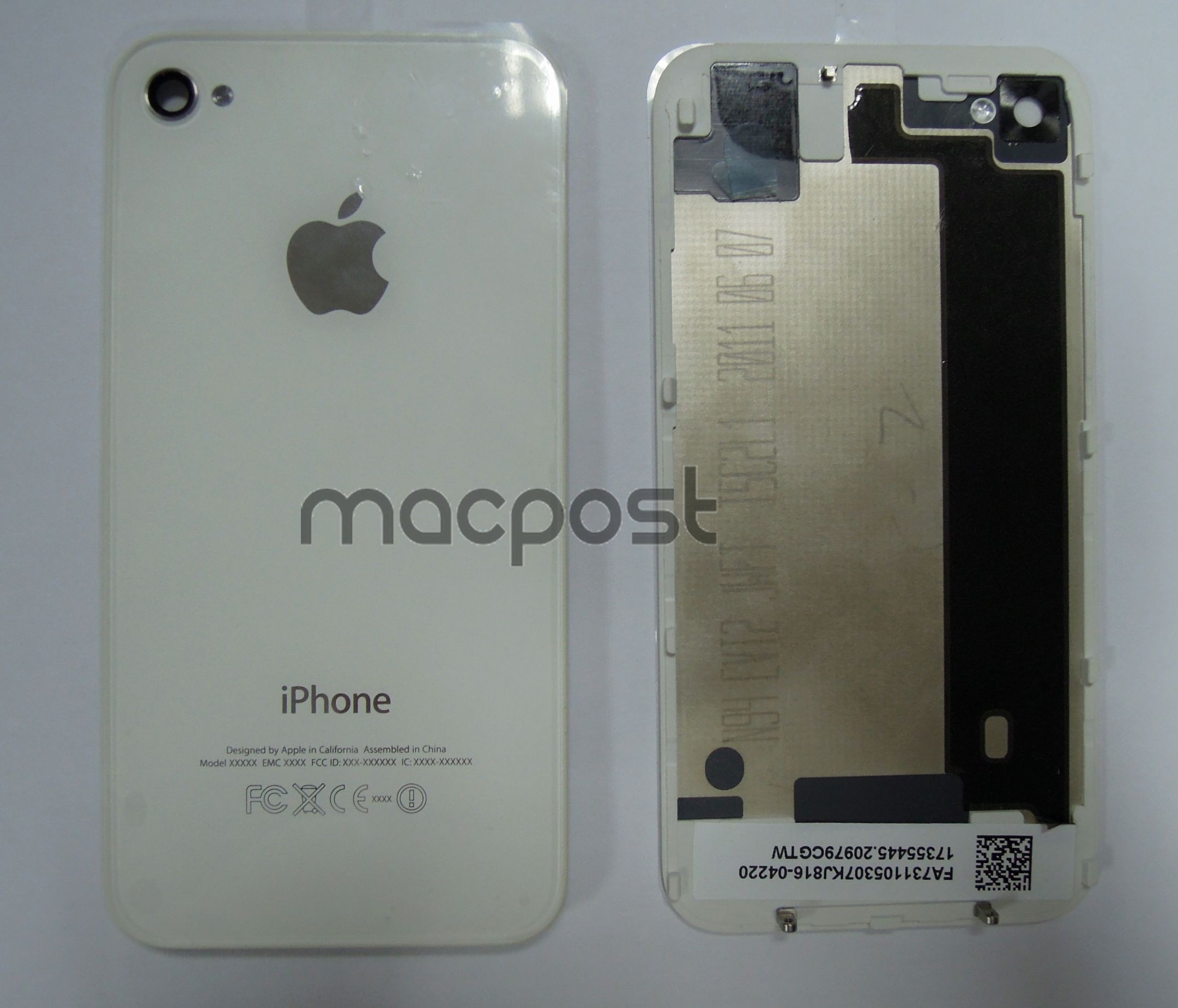
As we reported yesterday, Apple earlier this week filed a lawsuit against teenager Fei Lam and his parents over Lam's sale of unauthorized white iPhone 4 parts, alleging trademark infringement and dilution. At the time, we noted that Apple had simultaneously filed a voluntary dismissal of the case, suggesting that a settlement may have already been reached.
But in an interview with Fast Company, Lam reveals that he knows essentially nothing about the lawsuit, having learned about it only as reports spread through the media yesterday. Lam notes that a settlement has not been reached, but it will obviously be a topic of discussions apparently set to be held between Lam and Apple's lawyers "within the next month".
Q: When did you first find out about the lawsuit? Did Apple call or send a letter? A: I came back from school today and saw your email. Lol.
Q: So have your parents mostly been handling the case then? A: I told Apple's lawyer that I'm sick and to meet when I get better. That was last week. I'm [sic] been handling the whole thing
Q: So you have not settled? A: I think that will be decided in the meeting.
According to Lam, he no longer has a lawyer representing him in the case, as he is unable to afford one. Consequently, he says that he will be meeting alone with Apple's lawyers at their offices in New York City.
Lam notes that he did not make $130,000 in profits as some reports have claimed, although he declined to specify exactly how much he made from the venture or where those profits have gone. The initial report on his business noted that he had sold $130,000 worth of the parts, but it is unknown how much he had to pay his Chinese supplier for them.
Last week, a report surfaced claiming that Apple could launch its annual back-to-school promotion in the United States as early as this week, offering educational customers free or discounted iPod hardware with the purchase of a qualifying Mac product. With it now appearing that the offer will not debut this week, BGR is reporting that Apple may wait until next month's Worldwide Developers Conference (WWDC) to announce the promotion.
One of our Apple sources has informed us that they've been hearing Apple's yearly back-to-school special will be announced at WWDC next month. We have been told Apple will continue to offer educational discounts on computers and either a free iPod touch, or $229 towards the purchase of any other iPod.
The report also indicates that Apple may be preparing to include a $200 discount on the iPad as an option for those participating in the promotion.
Last year's promotion offered rebates of up to $199 on Apple's full line of iPod models, but did not include the iPad. Apple has also never included iPhone discounts in the promotion, which typically runs through early September, around the time the company traditionally introduces new iPods.