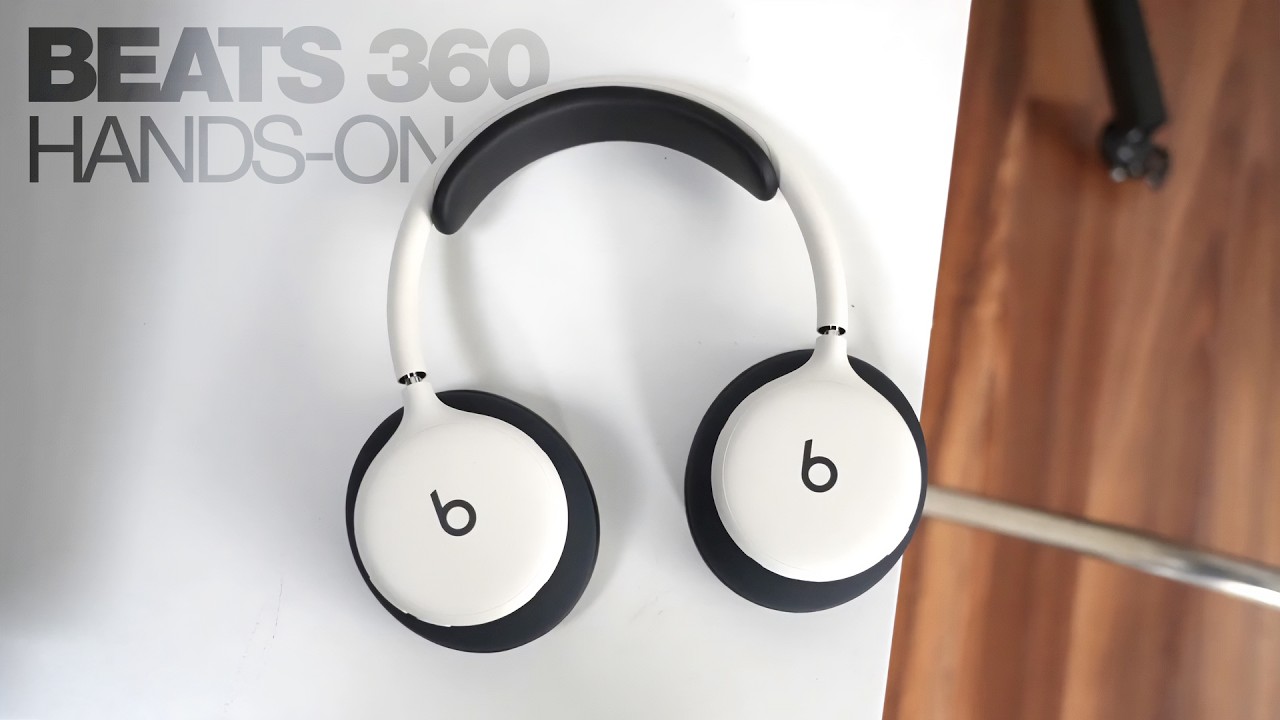
Apple today released a firmware update (4A203) for its upcoming Beats 360 headphones, suggesting that a launch is approaching. With the firmware now available, it seems likely that Apple will announce the Beats 360 at some point in September.
Beats 360 have already leaked across multipleregulatory databases and retail listings over the past several months, and soccer stars like Lamine Yamal and Antonee Robinson were spotted wearing them around the 2026 FIFA World Cup.
MacRumors was first to report on the Beats 360 name last month after the headphones appeared in various retail listings on Amazon and other reseller websites, some of which have since been removed. The listings revealed that the headphones will be available in Black, Cloud, Sky, and Pink, at a minimum. There will also be interchangeable Performance Knit and UltraPlush ear cushions and headbands that come in those same four colors, plus extra options like Volt and Navy, allowing you to create your own personalized look.
Beats 360 have a unique design with some similarities to the AirPods Max, including telescoping headband arms that smoothly extend and stay in place to maintain the desired fit. One of the product listings said the over-ear headphones offer up to 1.75× more noise cancellation than the Beats Studio Pro that came out in 2023.
The listing also said that the Beats 360 are Apple's first-ever sweat-resistant and water-resistant over-ear headphones, with an IPX4 rating.
Other features and specs mentioned in the listing included all-day battery life, a fold-flat design, and a high-fidelity acoustic platform. According to code uncovered by MacRumors contributor Aaron Perris, the Beats 360 will support hands-free Siri, meaning that you can say "Hey Siri" or simply "Siri" to activate the assistant.
Beats 360 will come with a set of interchangeable Performance Knit cushions and a woven ripstop fabric carrying case, but customers will need to supply their own USB-C charging cable and power adapter. One listing said the headphones will be priced at $299.99 in the U.S., but we cannot confirm if that information is accurate.
Beats Studio Pro are regularly priced at $349.99.
It is unclear exactly when Apple plans to officially unveil the Beats 360, but with all of these leaks across regulatory databases, athlete teasers, retail listings, and firmware updates, an announcement this month seems likely.
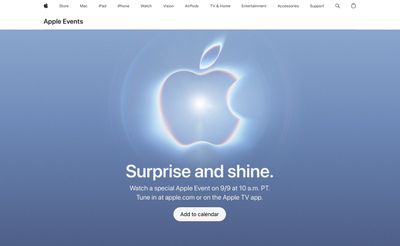
Apple is hosting an online streaming event for the public and press on Wednesday, September 9 at 10:00 a.m. Pacific Time. The company is expected to announce new iPhone 18 Pro models and a new foldable "iPhone Duo" alongside new Apple Watch models, and potentially AirPods 5 and other products during the event, dubbed "Sunshine and Shine." Here's how you can watch it and when, wherever you are in the world.
There are multiple ways to watch the September 9 event, with details listed below. We've also included a useful guide on when the event will take place in your particular time zone.
Apple Events Website
With the Apple Events website, you can watch the event live on a Mac, iPhone, iPad, PC, or any other device with a web browser. The Apple Events website works in Safari, Chrome, Firefox, and other main browsers.
Just navigate to www.apple.com/apple-events/ using a web browser at the appropriate time to watch. You can visit the site now to add an event reminder to your calendar.
YouTube
Apple also plans to stream the event live on YouTube, which is perhaps the easiest and most efficient way to watch because the YouTube live stream can be viewed on every platform where YouTube is available, which is pretty much all platforms, from smartphones and tablets to consoles and smart TVs.
Apple used to have a dedicated Apple Events app on the Apple TV, but ahead of WWDC 2020, it was folded into the Apple TV app. On event day, there will be a prominent Apple TV app section dedicated to the live stream, which can be watched on any device where the Apple TV app is available.
This includes the Apple TV, iPhones, iPads, and Macs, as well as select smart TVs, streaming devices, and gaming consoles. If you have an Apple TV, the Apple TV app is one of the best ways to watch the event live. Apple hasn't updated the Apple TV app with the new event as of yet, but it should be added soon.
Apple's event will take place at 10:00 a.m. Pacific Time, like most Apple events. Event times in other time zones are listed below.
Honolulu, Hawaii — 7:00 a.m. HST
Anchorage, Alaska — 9:00 a.m. AKDT
Cupertino, California — 10:00 a.m. PDT
Phoenix, Arizona — 10:00 a.m. MST
Vancouver, Canada — 10:00 a.m. PDT
Denver, Colorado — 11:00 a.m. MDT
Dallas, Texas — 12:00 noon CDT
New York, New York — 1:00 p.m. EDT
Toronto, Canada — 1:00 p.m. EDT
Halifax, Canada — 2:00 p.m. ADT
Rio de Janeiro, Brazil — 2:00 p.m. BRT
London, United Kingdom — 6:00 p.m. BST
Berlin, Germany — 7:00 p.m. CEST
Paris, France — 7:00 p.m. CEST
Cape Town, South Africa — 7:00 p.m. SAST
Helsinki, Finland — 8:00 p.m. EEST
Istanbul, Turkey — 8:00 p.m. TRT
Dubai, United Arab Emirates — 9:00 p.m. GST
Delhi, India — 10:30 p.m. IST
Jakarta, Indonesia — 12:00 a.m. WIB next day
Shanghai, China — 1:00 a.m. CST next day
Singapore — 1:00 a.m. SGT next day
Perth, Australia — 1:00 a.m. AWST next day
Hong Kong — 1:00 a.m. HKT next day
Seoul, South Korea — 2:00 a.m. KST next day
Tokyo, Japan — 2:00 a.m. JST next day
Adelaide, Australia — 2:30 a.m. ACST next day
Sydney, Australia — 3:00 a.m. AEST next day
Auckland, New Zealand — 5:00 a.m. NZST next day
MacRumors Coverage
If you're not able to watch or just want to follow along with us as we watch the event unfold, visit MacRumors.com for our liveblog or follow us on Twitter at MacRumorsLive for our live tweet coverage.
Both the MacRumors site and our X (Twitter) account are excellent ways to discuss the new announcements with other Apple enthusiasts as Apple unveils its new products. Later in the day and throughout the week, we'll also have much more in-depth coverage of all of Apple's announcements, so make sure to stay tuned.
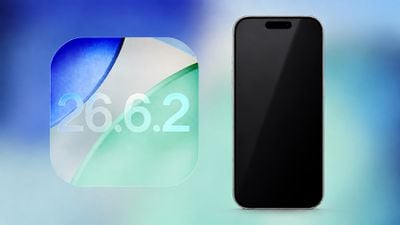
Apple today released iOS 26.6.2 with a fix for "an issue that prevents downloading a software update over a cellular connection."
The minor software update is rolling out now for the iPhone 11 series and newer. To update your iPhone, open the Settings app and tap on General → Software Update. It might take a few minutes for the update to be visible to everyone.
iOS 26.6.2 arrives approximately three weeks after iOS 26.6.1, which delivered security fixes.
Apple is expected to release iOS 27 later this month, with the company likely to announce a release date during its event this Wednesday.
Apple's biggest event of the year is almost here, and all eyes are on Cupertino. With the first foldable iPhone expected to headline Apple's "Surprise and Shine" event on Wednesday, September 9, at 10:00 a.m. Pacific Time, the rumor mill has been running full throttle, fuelled by the biggest single design change in the life of the iPhone.
To get you up to speed, here's a quick reference guide to the rumored upgrades, expected prices, and possible pre-order/release dates of everything we're expecting to see today.
Rumors by Model
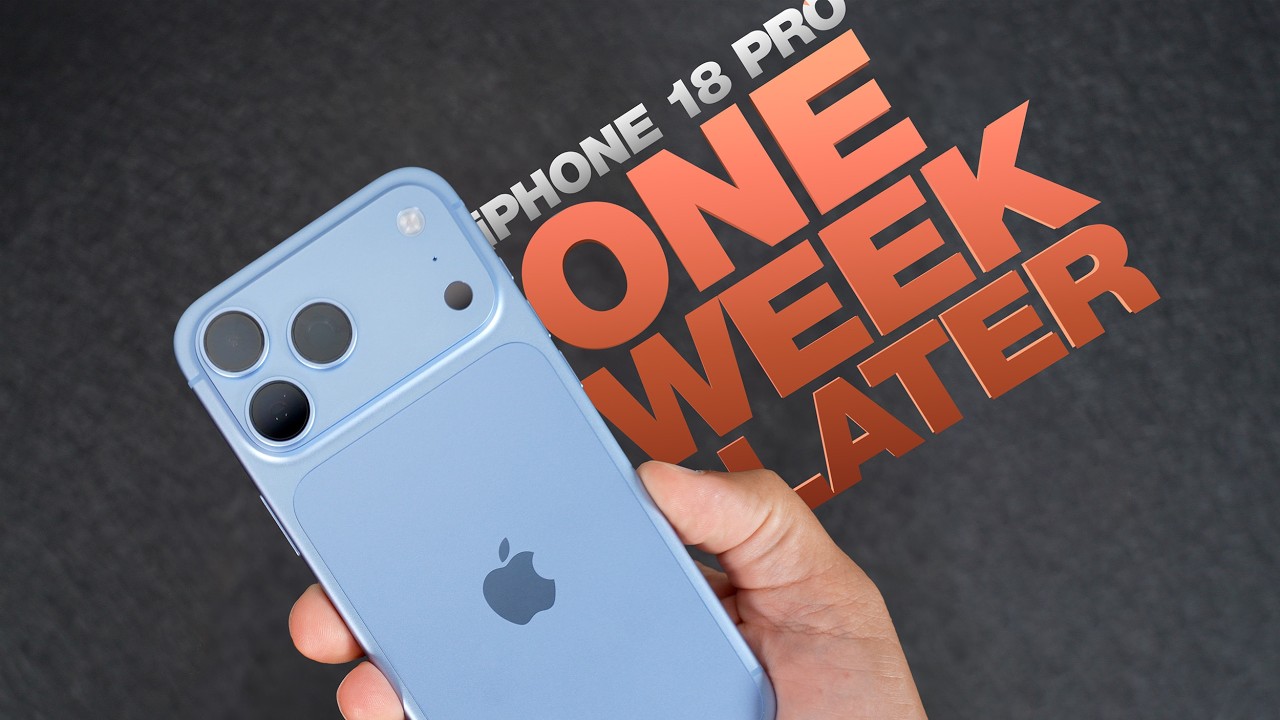
iPhone 18 Pro / Pro Max
Similar overall design to the iPhone 17 Pro models, with a more uniform finish across the aluminum and glass back.
Smaller Dynamic Island, said to be achieved by Apple moving some Face ID components beneath the screen.
More efficient LTPO+ displays.
A20 Pro chip manufactured using TSMC's 2nm process.
12GB of RAM and 256GB starting storage.
Variable-aperture main camera for greater control over light and background blur – although reports disagree on whether this will be exclusive to the Pro Max.
Possible Samsung image sensor for improved image quality and camera responsiveness.
Simplified Camera Control button that retains pressure sensing but removes the capacitive layer.
Larger battery in the Pro Max, which could well result in a slightly thicker and heavier body.
Possible Apple C2 modem, although U.S. models could retain Qualcomm modems for mmWave support.
The strongest color rumors include Dark Cherry, Light Blue, and Silver. Other rumors have suggested no Silver, and a black finish has also been suggested.
iPhone Duo (Foldable)
Apple's first folding iPhone, with "iPhone Duo" among the rumored names, with "iPhone Fold" and "iPhone Ultra" remaining outlying possibilities.
Book-style design with an approximately 5.5-inch outer display and 7.8-inch inner display.
Chassis measuring just 4.5mm thick when unfolded.
Liquid-metal hinge and an extremely inconspicuous – but not completely invisible – display crease.
Touch ID integrated into the Side button in lieu of Face ID.
Wide and Ultra Wide rear cameras, plus selfie cameras on both the outer and inner displays.
A20 Pro chip and an expected 12GB of RAM.
MagSafe charging support.
iPad-like multitasking, including side-by-side apps.
Silver/white and a very dark indigo finish among the rumored colors.
Apple Watch Series 12
Familiar design, with no major change to the case expected.
Faster S12 chip and improvements to health and fitness tracking.
Possible return of a ceramic case, with white and dark gray versions reportedly tested.
Continuous heart-rate monitoring throughout the day among the features Apple is testing, along with a new "Readiness" app.
More wellness metrics through revamped Health and Fitness experiences.
Apple Watch Ultra 4
Similar design to the Apple Watch Ultra 3.
Faster S12 chip and related health and fitness improvements.
Likely continuous heart-rate collection if the Series 12 gets it.
Possible expansion of satellite capabilities, including Apple Maps and photo sharing in Messages.
AirPods 5 (Possible)
Two versions expected, with and without active noise cancellation.
Possible H3 chip for better sound quality and lower latency.
iPhone 18 (Regular)
The regular iPhone 18 is not expected to feature tomorrow. Apple is reportedly moving that model's launch to spring 2027, when the iPhone 18e and iPhone Air 2 are also expected to debut as part of a new split-year release schedule.
iPhone 18 Pro and iPhone Duo Pricing Expectations
Higher memory costs could push up prices for both Pro models this year. Based on TrendForce's forecasts for the Pro models and Bloomberg's latest reporting on the foldable, the possible U.S. starting prices are:
Model
Estimated Starting Price
iPhone 18 Pro
$1,249–$1,299
iPhone 18 Pro Max
$1,349–$1,399
iPhone Duo
$2,199 (rumored)
Remember that these are estimates, with the Pro figures representing possible prices sourced from TrendForce's projected increases. Bloomberg's Mark Gurman today reported that the device will have a $2,000 starting price for the foldable with 256GB of storage, with some upgraded storage configurations potentially approaching $3,000. Reliable figures for every storage tier are not available.
When Can I Pre-order iPhone 18 Pro and iPhone Duo?
iPhone 18 Pro pre-orders could begin on Saturday, September 12, at midnight Pacific Time / 3 a.m. Eastern Time. The potential Saturday opening would avoid September 11, similar to Apple's approach in 2015.
Friday, September 18 is the most likely release date for the iPhone 18 Pro and Pro Max. It's our best educated guess, but we believe that is when deliveries and retail availability will begin.
As already mentioned, reports remain divided on the foldable's launch schedule. There's still a possibility that its unveiling tomorrow may precede its arrival in stores by several weeks or more.
MacRumors Coverage
Follow MacRumors.com and our MacRumorsLive account on Twitter (X) for coverage as the announcements happen. We'll have individual stories on the new products, followed by more detailed looks at their features, pricing, and availability throughout the week. Stay tuned!
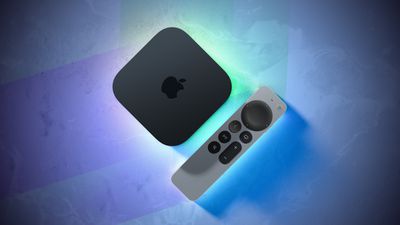
The next Apple TV 4K will be equipped with an A19 or A19 Pro chip, according to evidence in Apple's code uncovered by MacRumors contributor Aaron Perris. In particular, the device's model identifier points towards the A19 generation of chips.
Accordingly, the next Apple TV would have 8GB or 12GB of RAM, up from 4GB in the current 2022 model with the A15 Bionic chip. Other rumored upgrades for the next model include Siri AI support, an Apple-designed N1 wireless networking chip with Wi-Fi 7 support, and a revised Siri Remote.
Nearly all configurations of the Apple Watch SE 3 are suddenly "unavailable" on Apple's online store in the U.S. and other countries we checked, for reasons unknown.
Apple is holding an event this Wednesday to announce new iPhones and Apple Watches, but an Apple Watch SE 4 was not expected tomorrow, as new generations of the Apple Watch SE have never been released in back-to-back years. The original Apple Watch SE debuted in September 2020, the Apple Watch SE 2 arrived in September 2022, and the Apple Watch SE 3 was announced in September 2025.
Is this a sign that an Apple Watch SE 4 will be announced tomorrow after all, or is this simply a temporary issue that will be resolved soon? We shall see.
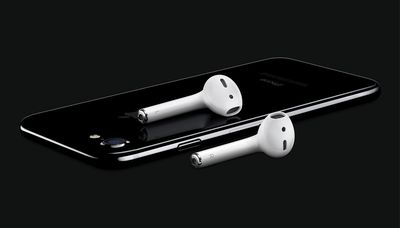
Apple unveiled the first AirPods on September 7, 2016, meaning the iconic wireless headphones are now 10 years old. However, the AirPods did not launch until December that year.
On the same day, Apple ignited controversy when it introduced the iPhone 7 and iPhone 7 Plus without a headphone jack. Apple still sells EarPods for customers who want wired headphones, with 3.5mm headphone jack, Lightning, and USB-C versions available for use with a wide variety of devices.
Apple plans to announce an all-new "Readiness" app during its "Surprise and Shine" event this Wednesday, according to Bloomberg's Mark Gurman.
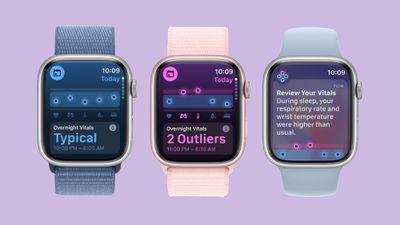
In a social media post today, Gurman said the "Readiness" app will be a "variant" of the existing Vitals app on the Apple Watch. "The idea is to better compete with software from Whoop and Oura," he said. For example, Oura's smart rings offer a daily "Readiness Score" from 0 to 100 that shows how prepared your body is for the day.
Introduced on watchOS 11, the Vitals app consolidates your key health metrics, including your average heart rate, respiratory rate, blood oxygen, wrist temperature, and sleep duration from the previous night. Based on many of the same metrics, the Readiness app would likely show you how recovered your body is for activity.
Evidence of the "Readiness" app in watchOS 27 beta code was already discovered a few days ago by a MacRumors forum member known as "pdfu."
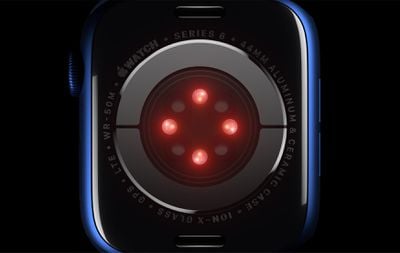
The app will be unveiled alongside the Apple Watch Series 12 and Apple Watch Ultra 4. Gurman previously reported that both of these new models will feature continuous heart rate sensing, regardless of whether you are actively exercising.
Breakout hit comedy show "Small Prophets" has been renewed for a second season, according to Deadline, a little over a week after Apple TVacquired the worldwide rights to the show's first season. This was the first time the company has acquired the streaming rights to an existing show.
"Small Prophets" is set to stream on Apple TV worldwide starting on October 7, with creator Mackenzie Crook returning to write and direct season two.
TrinamiX, a subsidiary of the German chemical giant BASF, is suing Apple in the U.S. District Court for the Western District of Texas, accusing the company of infringing seven patents related to face authentication technology used in Face ID.
In its complaint, first reported by Reuters, trinamiX said it spent years developing technology to stop people from fooling face unlock systems with a photo, a fake mask, or a silicone copy of someone's face.
The complaint says Apple's original version of Face ID, introduced with the iPhone X in 2017, did not use trinamiX's technology, but that newer iPhones and iPads do. TrinamiX's system is designed to tell real skin apart from things like photos or masks, essentially adding a check that catches fakes conventional optical face scanning methods would miss.
The complaint alleges that "Apple knew or should have known of the high probability that updating its iPhones and iPads to incorporate Face ID using material and skin detection" infringed seven trinamiX patents, causing "substantial damages and irreparable injury." The seven patents cover two areas: detecting skin during face unlock and identifying what material something is made of.
TrinamiX names a broad swath of Apple devices as accused products, including the iPhone 15, iPhone 15 Plus, iPhone 15 Pro, iPhone 15 Pro Max, iPhone 16, iPhone 16e, iPhone 16 Plus, iPhone 16 Pro, iPhone 16 Pro Max, iPhone 17, iPhone 17e, iPhone 17 Pro, iPhone 17 Pro Max, iPhone Air, 11-inch iPad Pro (4th generation), 12.9-inch iPad Pro (6th generation), and the 11- and 13-inch iPad Pro models with the M4 and M5 chips.
TrinamiX is asking the court to find that Apple infringed its patents, to block Apple from making, using, selling, offering for sale, or importing the accused products, and to award damages and attorneys' fees. The company has requested a jury trial. The full complaint is available via IP Fray.
Apple today announced a new series of games coming to Apple Arcade in October, headlined by "Pusheen's Place."
The new games heading to Apple Arcade next month are as follows:
Pusheen's Place: The first officially licensed game starring Pusheen the Cat, letting players build a cozy paradise and collect more than 100 kitties while playing, crafting, and decorating rooms for characters like Pusheenicorn and Pancake Pusheen, alongside mini games such as Snack Stack, Parfait Pop, and Batch Match.
River City Survivors: An explosive survivors-like action game from the long running River City series, throwing players into waves of zombies with more than 20 playable characters, including franchise mainstays Kunio and Riki, and support for up to two companions.
Terraria+: A sandbox action adventure game where players fight, explore, and build through an ever expanding world, including the "Bigger & Boulder" 1.4.5 update, which adds a "Dead Cells" crossover and Pals from "Palworld," with support for up to seven players via Game Center or local Wi-Fi.
Touchgrind BMX 2+: A physics-based BMX stunt game with two finger controls designed to make every trick feel real.
4 Pics 1 Word+: The Arcade edition of the puzzle game that has stumped and delighted more than 400 million players worldwide.
Apple Arcade is a subscription service that provides access to more than 200 games across the iPhone, iPad, Mac, Apple TV, and Apple Vision Pro, all free of ads and in-app purchases. In the U.S., Apple Arcade costs $6.99 per month with a one-month free trial, and customers who purchase a new iPhone, iPad, Mac, or Apple TV get three months of the service for free. Apple Arcade is also included in Apple One's Individual ($21.95), Family ($27.95), and Premier ($39.95) plans in the U.S., each with a one-month free trial. Apple Arcade can be accessed through the App Store and the Apple Games app.
Sonera previously announced that it had developed "breakthrough sensing technology" that "non-invasively measures magnetic fields" generated by the brain and body. The company said its technology can analyze neural data without direct skin contact, giving it an advantage over traditional electrical sensing techniques.
"This proprietary technology holds the key to making brain activity as easy to measure as heart rate, temperature, and other physiological signals," said Sonera, in a 2023 press release. The company said its technology was "poised to enable an entirely new class of consumer wearables and experiences based on muscle activity."
Sonera said it had developed a biomagnetic chip that would enable use cases such as "advanced prosthetics control, continuous monitoring of neuromuscular conditions, discovery of disease biomarkers, and sport performance tracking," so this acquisition could pave the way for future Apple Watch health and accessibility features.
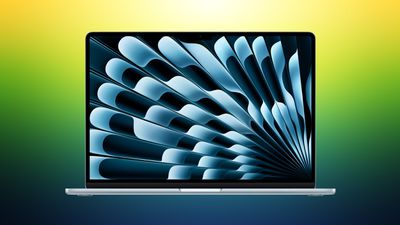
Amazon is taking up to $150 off multiple models of the M5 MacBook Air, including both 13-inch and 15-inch models. These are the best prices we've seen on the M5 MacBook Air in the wake of Apple's summertime price hikes.
Note: MacRumors is an affiliate partner with Amazon. When you click a link and make a purchase, we may receive a small payment, which helps us keep the site running.
New highlights include a pair of 15-inch M5 MacBook Air models at $150 off, starting with the 16GB/512GB model for $1,349.00 in Midnight, down from $1,499.00. You can also get the 16GB/1TB model for $1,649.00, down from $1,799.00, which is $50 cheaper when compared to the deals we tracked towards the end of August.
In terms of 13-inch models, Amazon has the 16GB/1TB 13-inch MacBook Air for $1,449.00, down from $1,599.00. This one is available in two colors on Amazon, and it's accompanied by the 24GB/1TB model for $100 off.
If you're on the hunt for more discounts, be sure to visit our Apple Deals roundup where we recap the best Apple-related bargains of the past week.
Deals Newsletter
Interested in hearing more about the best deals you can find in 2026? Sign up for our Deals Newsletter and we'll keep you updated so you don't miss the biggest deals of the season!
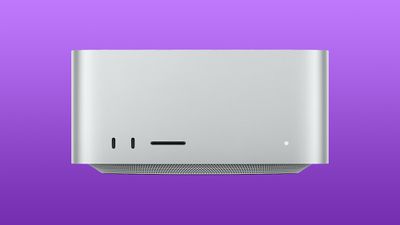
Amazon last week introduced the first cash discounts on Apple's brand new Mac mini, and today the M5 Max Mac Studio has joined in on the discounts. You can get this model, which includes 36GB RAM and a 512GB SSD, on sale for $2,449.99, a $49 pre-order discount.
Note: MacRumors is an affiliate partner with Amazon. When you click a link and make a purchase, we may receive a small payment, which helps us keep the site running.
All of these deals are pre-order discounts on the 2026 Mac mini and Mac Studio, which officially launch on September 22. Regarding the Mac mini, you can get the 16GB RAM/256GB SSD Mac mini for $879.99, down from $899.00, and the 16GB RAM/512GB SSD model for $1,069.99, down from $1,099.00.
In terms of upgrades, Apple said the Mac mini with the M6 chip delivers up to 40% faster CPU performance, up to 4× faster performance for AI tasks in particular, up to 2× faster graphics performance, and up to 2× faster storage speeds compared to the previous-generation model with the 10-core M4 chip, 32GB of unified memory, and 2TB of storage.
If you're on the hunt for more discounts, be sure to visit our Apple Deals roundup where we recap the best Apple-related bargains of the past week.
Deals Newsletter
Interested in hearing more about the best deals you can find in 2026? Sign up for our Deals Newsletter and we'll keep you updated so you don't miss the biggest deals of the season!
Former Apple CEO Tim Cook played a major role in the development of the foldable iPhone, which could reach around $3,000 with storage upgrades, according to new details shared by Bloomberg's Mark Gurman.
Early in the development of the foldable iPhone, the company reportedly targeted a starting retail price of $1,999, hoping to come under the "potentially controversial $2,000 barrier." The idea was to replicate the debut of the iPhone X in 2017, which started at $999.
Amid the impact of the global memory shortage, Apple is said to have recently discussed pricing the foldable at $2,199. Some storage configurations could approach $3,000. While the company anticipates some "sticker shock" for consumers, the willingness of customers to spend around $2,000 on iPhone models with upgraded storage convinced the company that an "upscale foldable device was worth bringing to market."
Gurman also revealed details about the history of the foldable iPhone inside Apple. Around 2020, Cook apparently returned from a visit to Asia "unusually energized" about foldable phones. During the trip, he saw growing numbers of consumers using foldable devices from the likes of Samsung and Huawei. He came to believe that Apple needed an equivalent offering in the market and pushed the company to accelerate its development efforts.
Apple's hardware engineering team had been studying foldable phones, displays, and related components for years, dating back to well before the launch of the first Galaxy Fold device in 2019. Before Cook's guidance, the project was mired by debates over the form that an Apple foldable should take, with one early concept being an iPad mini that could unfold into a larger tablet. Cook wanted the final device to be more mainstream in the form of a foldable iPhone, and his level of involvement in the project was unusual.
The project was conceived under Dan Riccio, who preceded John Ternus as head of hardware engineering. The company apparently prioritized resolving four main challenges: reducing the visibility of the display crease, improving hinge reliability, creating a new flexible cover glass for the inner display, and developing under-display camera technology.
The company eventually settled on a hinge system made using titanium and aluminum and custom cover glass developed with Corning. Despite being less durable than other existing iPhone models, Apple is said to believe that the construction quality of the foldable iPhone is industry-leading for the foldable market, and thinks it has an advantage over Android devices in terms of software.
Gurman restated several of the device's rumored specifications, including a 7.8-inch inner display, a 5.5-inch outer display, and a wide form-factor design. During development, Apple designers apparently compared the folded proportions of the device to a passport and the unfolded proportions to a Magic Trackpad. The short-and-wide design was chosen to provide a point of differentiation with rival foldable and generate consumer interest.
He reiterated that the foldable iPhone may be less durable than a conventional iPhone, with an inferior camera system and less battery life. Despite these drawbacks, Apple employees are said to believe "the company will sell every foldable phone it can produce."
Gurman also noted that the foldable iPhone's engineering complexity "makes it an ideal showcase" for new CEO John Ternus, following his career as Apple's hardware chief. Ternus was apparently a major champion of the device and played a major role to "push it over the finish line," alongside Cook.
Apple's foldable iPhone is expected to be announced tomorrow at its "Surprise and shine" event. See the full Bloomberg report for more information.
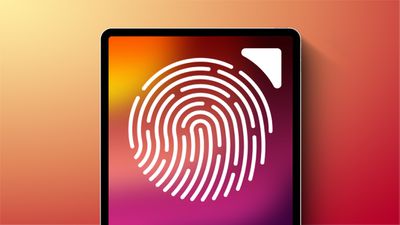
Apple's iPhone Ultra is widely expected to feature Touch ID instead of Face ID, but references found in the iOS 27 beta probably shouldn't be treated as proof. Code sleuth pdfu has found Car Key strings that mention an iPhone in the same string as both Ultra Wideband and Touch ID, which they say "confirms" Touch ID for the foldable since "all existing iPhone models with an UWB chip, starting with iPhone 11, use Face ID."
However, Apple's codebase often has Touch ID references that aren't tied to specific hardware. Legacy terminology can also linger for years, with references to discontinued products like iPod still appearing in recent iOS code. So while Touch ID is expected, this detail doesn't confirm it.
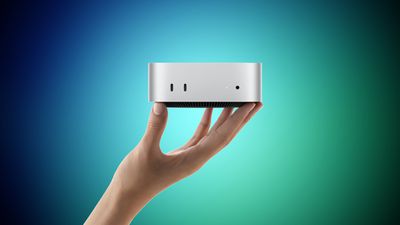
Last month, Apple announced a new Mac mini built around the all-new M6 chip and the M5 Pro, replacing the M4 and M4 Pro models that had been on sale since October 2024. Pre-orders are open now, with the machines arriving to customers and in stores on September 22.
The M6 model starts at $899 and the M5 Pro model at $1,699, each $100 above what its predecessor was selling for by the end of its run and $300 above what their predecessors launched at. The Mac mini rose from $599 to $799 in May, and the M4 Pro configuration went from $1,399 to $1,599 in June, both as a consequence of the memory shortage driven by AI demand. Education pricing brings the new models down to $799 and $1,599 respectively.
What Changed Across Both Models
A number of upgrades apply equally to the standard and Pro configurations, regardless of which chip you choose:
Mac mini (2024)
Mac mini (2026)
Neural Accelerators in each GPU core
Variable refresh rate and HDR support
Wi-Fi 6E connectivity
Wi-Fi 7 connectivity
Apple N1 wireless networking chip
Bluetooth 5.3
Bluetooth 6
Thread networking technology
Gigabit Ethernet or 10Gb Ethernet
2.5Gb Ethernet or 10Gb Ethernet
Genlock support over USB-C
Mac Mini With M4 vs. M6
Here is everything else that differs between the M4 and M6 versions of the Mac mini:
Mac mini (M4)
Mac mini (M6)
M4 chip
M6 chip
10-core CPU with four performance cores and six efficiency cores
12-core CPU with two super cores, four performance cores, and six efficiency cores
10-core GPU
12-core GPU
16-core Neural Engine
Dual 16-core Neural Engine
120GB/s memory bandwidth
153GB/s memory bandwidth, rising to 170GB/s with 24GB or 32GB of unified memory
Two displays up to 6K at 60Hz, plus a third up to 5K at 60Hz
Two displays up to 6K at 60Hz or 4K at 165Hz, plus a third up to 5K at 60Hz
Up to two external displays over a single Thunderbolt port
Now discontinued
From $899
Mac Mini With M4 Pro vs. M5 Pro
The comparison below outlines the remaining differences between the two Pro configurations:
Mac mini (M4 Pro)
Mac mini (M5 Pro)
M4 Pro chip
M5 Pro chip
Base: 12-core CPU with eight performance cores and four efficiency cores Configurable to: 14-core CPU
Base: 15-core CPU with five super cores and 10 performance cores Configurable to: 18-core CPU
Enhanced shader core and third-generation ray tracing
273GB/s memory bandwidth
307GB/s memory bandwidth
Three displays up to 6K at 60Hz
Three displays up to 6K at 60Hz or 4K at 165Hz
Two displays: one up to 8K at 60Hz or 4K at 240Hz, plus a second up to 6K at 60Hz
Two displays: one up to 8K at 60Hz, 5K at 120Hz, or 4K at 240Hz, plus a second up to 5K at 120Hz or 4K at 200Hz
Up to three external displays over a single Thunderbolt port
Now discontinued
From $1,699
How Much Faster Is It, Really?
The latest refresh is minor for ordinary work and significant for AI workflows. Against the M4, Apple claims 40% faster CPU performance and 2x faster graphics, which is a normal generational step, alongside unusually large gains of up to 4x faster AI performance and up to 4.8x faster prompt processing in LM Studio. Almost all of the engineering appears to have gone into AI optimization, in the form of Neural Accelerators built into every GPU core for the first time on the Mac mini and a Neural Engine doubled to two 16-core units. The M5 Pro follows the same pattern, at up to 4x faster than the M4 Pro for prompt processing but only 1.4x faster for ray-traced rendering in Blender.
Display support is the one significant change beyond the chips. Both models add 4K at 165Hz and variable refresh rate, which the 2024 machines never supported, and the M5 Pro can drive a second display at 5K at 120Hz where the M4 Pro capped it at 6K at 60Hz. If you own a high refresh rate monitor, this is perhaps the most noticeable difference in the entire update.
It is worth noting that Apple's figure of up to 170GB/s for the M6 only applies to the 24GB and 32GB configurations. The 16GB models run at 153GB/s, so the gain over the M4's 120GB/s is around 28% for many buyers rather than the 42% implied. Bandwidth governs how fast a model's weights move out of memory, which makes the 32GB configuration a faster machine.
The memory ceilings are also not the increases they appear to be. The M4 shipped with a 32GB option and the M4 Pro with 64GB when they launched in October 2024, and Apple removed both in May as memory prices climbed. The new models restore those ceilings rather than raising them, so a 32GB M4 or 64GB M4 Pro already has the same ceiling as its 2026 equivalent.
Which to Choose?
If you own a 2024 Mac mini and do not run AI models on it, skip this generation. A 40% CPU improvement is not something you will notice in daily use, and nothing else meaningful about the machine has changed. The exception is display support: if you have a high refresh rate monitor stuck at 60Hz, that is a real problem the new models solve and the old ones never will.
If you do run models locally, the upgrade is easy to justify from an M4, but more difficult from an M4 Pro. Roughly 4x faster prompt processing changes what you can attempt. From an M4 Pro you get unchanged GPU core counts, a 12% bandwidth increase, and a $300 rise over what you paid, so wait for the next year's revision unless you specifically need to upgrade to a 64GB model.
For new buyers, the gap between the two 2026 models is wider than the $800 price difference suggests: the M5 Pro has 80% more memory bandwidth, double the memory ceiling, and 50% more CPU cores at the top. Since tools like LM Studio and Ollama run on the GPU rather than the Neural Engine, capacity and bandwidth are what matter. Memory capacity decides which models you can load at all, while bandwidth determines how fast they run. If your models fit in 32GB, buy the M6 at $899. If they do not, the M5 Pro is your only option here.
The 2024 models remain worth considering even though Apple has stopped selling them new, with availability via third parties, Apple's refurbished store, or second-hand.
Do not expect prices to collapse in the usual way, whichever route you take. The memory shortage pushed Apple's prices up, twice during the M4's final year, so a modest discount off $799 is unremarkable. The M4 model is worth buying nearer the $599 it launched at, and much above that, the stretch to buy a new M6 is difficult to argue against.
The 32GB M4 and 64GB M4 Pro were only sold between October 2024 and May 2026, so they exist on the used market but were unavailable new for the machine's final months. A 64GB M4 Pro matches the memory ceiling of a $1,699 M5 Pro at 273GB/s against 307GB/s, for considerably less. For running larger models on a budget, that may be the most cost-effective configuration.
The new Mac mini is available to pre-order now, with deliveries and in-store availability beginning on Tuesday, September 22.
Apple's foldable "iPhone Ultra" may launch in mainland China later than in some other markets, according to an oft-reliable Chinese leaker.
Posting on the Weibo social media platform, Instant Digital said that Apple has a limited initial inventory for its first foldable device, and the rollout could be shaped by regional allocation.
The claim follows a recent report out of Japan suggesting that Apple was struggling to produce more than a few hundred units a day in late August because of the company's stringent quality control standards. Apple has reportedly ordered around 10 million units of the foldable for this year, but hinge and display durability tests are said to be taking longer than expected.
The leaker's warning today also echoes an earlier report out of Australia, which suggested that the foldable iPhone could face a staggered country-by-country launch over several months, with initial availability limited to the U.S. market.
On the other hand, Bloomberg's Mark Gurman has said he would be "very surprised" if the foldable iPhone does not come out at the same time as the iPhone 18 Pro models or "very close" to them. "Either on the same launch date, a dual launch, or coming out within weeks later," he said in an interview with Tom's Guide.
"This idea of a late October, November launch, massive delays, supply chain issues, I don't believe to be the case," he added.
To the best of our knowledge, Gurman has not commented on the claim that the device could see a staggered market-by-market launch, similar to the Vision Pro in 2024.
We should know more about Apple's launch plans for the foldable iPhone on Wednesday, September 9, when the company is expected to unveil the device alongside the iPhone 18 Pro models. Stay tuned to MacRumors for all the latest news and updates.
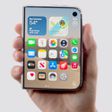
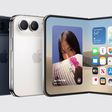
Apple's first foldable iPhone, with a book-style design featuring a 5.4-inch outer display and a 7.6-inch inner display with a minimal crease down the middle.








 The next Apple TV 4K will be equipped with an A19 or A19 Pro chip, according to evidence in Apple's code uncovered by MacRumors contributor Aaron Perris. In particular, the device's model identifier points towards the A19 generation of chips.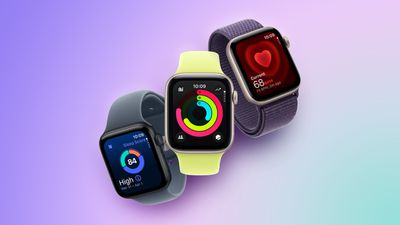
 Apple unveiled the first AirPods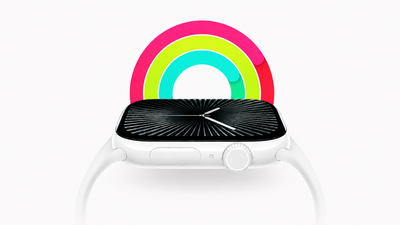
 Breakout hit comedy show "Small Prophets" has been renewed for a second season, according to

 Note: MacRumors is an affiliate partner with Amazon. When you click a link and make a purchase, we may receive a small payment, which helps us keep the site running.
 Note: MacRumors is an affiliate partner with Amazon. When you click a link and make a purchase, we may receive a small payment, which helps us keep the site running.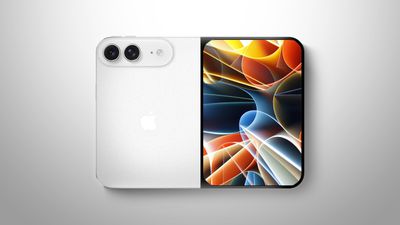
 Apple's iPhone Ultra is