Apple may be looking at an acquisition of bookseller Barnes & Noble, according to an "unproven source" at BGR:
We received a tip from an unproven source claiming to have knowledge of discussions within Apple to possibly purchase Barnes & Noble...
This unproven source also said that iTunes 11 would be released in September along with iOS 5 and iCloud, and will support reading iBooks on computers as well as textbook purchases and rentals.
It's unclear what Apple would gain from such a purchase. B&N has more than 700 stores plus another 600 college bookstores, as well as decent digital penetration with its own eBookstore and Nook e-reader.
Barnes & Noble is currently trading with a market cap just above $1b, which would be a very small dent in Apple's $76 billion cash pile, though the price would obviously be higher as a takeover premium.
We're a little skeptical about the whole thing and mention it primarily to encourage conversation. If Apple really wanted to purchase a bookseller, it could have bought Borders at fire sale prices. Wall Street seems unimpressed by the rumor: Barnes & Noble's stock price is flat on the day.
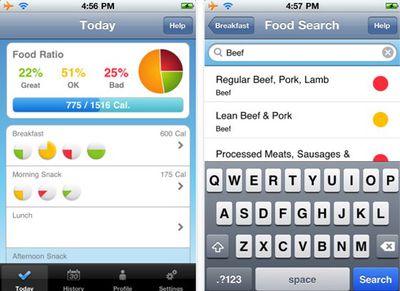
WorkSmart Labs' new food tracking app aims to simplify eating healthy. The company has more than 7 million users on Android, but just launched its first iOS App, Calorific Lite [iTunes].
Unlike other tracking apps, like Lose It! (which I have been using for the past few weeks), Calorific Lite doesn't focus as much on the number of calories, as on the types of food you're eating. It classifies food into a Green/Yellow/Red system to encourage users to eat better, not just to eat less.
For example, vegetables and fruit are green, while french fries and ice cream are red. Lean beef is yellow, as are things like seafood, low-fat yogurt and avocados. Once you choose your color, assign a serving size (tiny, small, medium, large) and you're done. Adding a meal takes just a couple quick clicks.
Lose It! requires you to pick exact products and serving sizes to get a more detailed assessment of what you've eaten, down to individual calories. WorkSmart Labs co-founder Artem Petakov compared Calorific Lite to Twitter, as a quick-and-easy way to track eating. Lose It! is more like full-length blogging, requiring quite a bit more work, but is a totally different style of tracking food:
One funny thing about that "exactly how many calories you had" -- even if you track it really precisely, there is no real way to know how many calories you had. This is because people digest food differently, have different metabolisms from one day to another, and don't weigh their food exactly.
So it's a lot of work that's only giving you an illusion that you are doing things precisely. That's why we wanted to get away from this. The biggest benefit is from the act of logging itself. Even if you just keep a little journal of what you eat with no calories, you will benefit hugely according to research.
Now that I've gotten into the habit of using Lose It!, I don't necessarily need to use an app like Calorific Lite -- but for someone who isn't used to tracking calories its traffic-light system is super-easy to use.
Calorific Lite is a 'light' application -- it doesn't support accessories like the WiThings body scale or posting to Twitter to encourage weight loss through public humiliation -- but it's a strong start for WorkSmart's first iOS application. They have a more full-featured app, Noom, available on Android, but Petakov said they were starting slow on iOS and are working to bring more functionality to the platform.
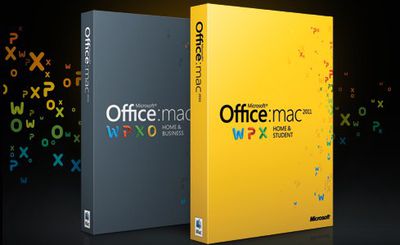
Microsoft is "working hard" to enable Lion-specific features in Office, according to a post on the Office for Mac blog.
Yes, we are working hard with Apple to enable versioning, auto save, and full-screen for Office for Mac 2011. I know your next question will be “when?”, and unfortunately I can’t answer that – but it’s likely measured in months not days – just to set expectations.
Pat Fox, the author of the post, also reminds users that Office for Mac 2004 will never work under Lion, because it is a PowerPC application and Apple has dropped support for PPC apps with the end of Rosetta support.
Also, Microsoft has fixed a nasty bug in Microsoft Communicator that caused a crash whenever an instant message was sent. It promises that update in the "next day or so."
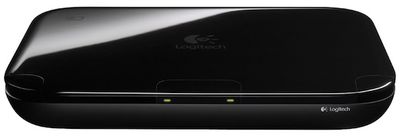
As noted by This is my next..., Logitech today revealed that its Google-TV based "Revue" set-top box has been a complete flop, actually recording negative sales numbers last quarter as returns exceeded new sales. In response, Logitech has announced that it will be slashing the Revue's price from $249 to a below-cost $99 and taking a $34 million charge to cover the loss.
Google TV had been seen as a major push into combining television viewing with Internet content, but got off to a rough start as Google asked manufacturers to hold off on introducing Google TV hardware as it sought to refine the software. But the Logitech Revue had already hit the market as a launch product for the concept, and has been unable to find a footing in the consumer market.
Apple has long been treading carefully in the television market with the Apple TV, and Steve Jobs noted in an interview at the D8 conference in June 2010 that the subsidized set-top boxes used by cable companies have squashed innovation in the television market.
On the future of television: "Subsidized set-top boxes have squashed innovation because no one wants to pay for separate boxes...ask TiVo, Roku, us, Google in a few months. The set-top box needs to be torn up and redesigned to get people things they way they want them. And there's no go-to-market strategy for that. With the iPhone, and now the iPad, we could partner with carriers, but television is very balkanized...everything is local.
Apple made its next attempt at the television market a few months later with the second-generation Apple TV, but even still that is primarily a hub for iTunes content with a few third-party streaming services like Netflix, MLB.tv, and NBA League Pass also being supported. Apple has repeatedly referred to the Apple TV as a "hobby", noting that the company feels that "there is something there" but that television presents a very difficult challenge for developing a go-to-market strategy.
For several years, analysts and other sources have been claiming that Apple is trying to develop its own Apple-branded television set integrating iTunes Store connectivity. The company's only public statements on the matter have, however, expressed strong disinterest in such a move given the competitive environment and low margins in the industry, but Apple has certainly been known to publicly dismiss certain ideas even as it has been working on implementing them.
Back in the day, we only had one game on our phones. A game we played for endless hours, trying to beat the high score that our 'friend' had saved when he borrowed our phone for 5 minutes that one time. That game, of course, was Snake; and it was ubiquitous in the late 90's because just about everyone had a phone from Nokia.
Now, with the advent of the iPhone, we have thousands and thousands of games to play. But, forget all this newfangled stuff like the app store and NBA JAM. Something is missing.
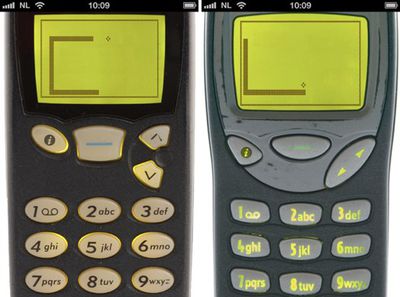
Because everyone likes a throwback, we now have Snake '97 -- an awesome game that replicates that old-school Nokia gaming experience.
The game, which comes in both free and 99 cent versions, emulates an old Nokia phone on your new iPhone -- complete with fantastic original sound effects and "awesome" features like a high score that can't be reset, just like the original!
In the game description, the developer, Willem, describes where the game came from:
The story behind this game was that my iPhone got damaged, requiring me to revert back to an old phone. Suddenly I knew the iPhone was missing something and the idea for a accurate Snake remake was born.
This app was created as an homage to the original Snake programmed in 1997 by Taneli Armanto.
By carefully analyzing the original gameplay, timing and controls, this Snake '97 remake is one of the most accurate available.
The free version is limited to 200 points while the 99 cent version includes a number of different game modes and difficulty levels.
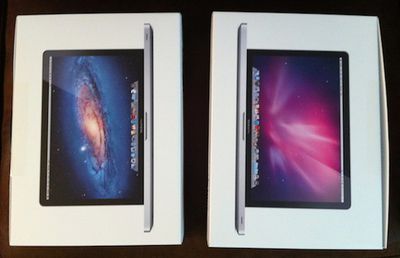
While Apple released new MacBook Air and Mac mini models alongside OS X Lion last week, the company also updated its other Mac lines to begin shipping them with Lion. But Apple changed a bit more than just the operating system on those models, as MacTrast details with a comparison of a new MacBook Pro with Lion pre-installed to another MacBook Pro purchased just a few months ago.
The difference between the two versions is immediately obvious from the product packaging, as the artwork now shows a machine with the OS X Lion default desktop image rather than the Mac OS X Snow Leopard one. Apple has also tweaked part numbers and manuals to reflect the change to Lion.
And, as seen in Apple's standalone keyboards, the company has also quietly tweaked the MacBook Pro's keyboard to convert the F3 key's function from Exposé to Mission Control and the F4 key's function from Dashboard to Launchpad.
Finally, Apple no longer includes restore discs of any sort, a move that could cause difficulties for the occasional user who finds the need or desire to perform a clean install of Lion on a bare hard drive. Apple's new MacBook Air and Mac mini models support a Lion feature called Internet Recovery that allows the operating system to be reinstalled to a bare hard drive, but other current hardware now shipping with Lion does not support the feature.
For its part, Apple does not consider hard drives to be user-replaceable components on most machines and would expect users experiencing failures of their hard drives to go through Apple for replacement during the one-year warranty period, under which circumstances Apple would of course provide a replacement drive with Lion installed. But for other circumstances, Apple has clearly made it difficult for users to perform clean installs of OS X Lion on new hard drives on their own. The Lion USB thumb drive set to debut next month will offer one solution for the problem, but represents a separate $69 purchase for users who are already licensed to use Lion through their machine purchases.
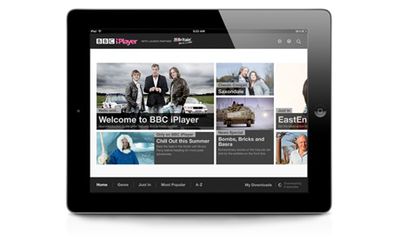
The Guardian reports that the BBC is finally set to launch its popular iPlayer service on an international basis, rolling out a new iPad app to eleven countries in Western Europe today and to the United States, Canada, and Australia by the end of the year.
The service will offer a limited amount of content for free, supported by pre-roll ads and sponsorship, but its core business model is subscription, with users paying €6.99 (£6.14) a month or €49.99 a year. The 11 launch countries are Austria, Belgium, France, Germany, Italy, Luxembourg, The Republic of Ireland, The Netherlands, Portugal, Spain and Switzerland.
The global iPlayer app includes some features that are not in the UK version, including the ability to stream shows over 3G as well as Wi-Fi, and a downloading feature to store programmes on the iPad for offline viewing.
According to BBC.com managing director Luke Bradley-Jones, the service will include video-on-demand content from the last month, with other "best of" content stretching back decades also being made available. At least 1,500 hours of programming will be available at launch, with at least 100 additional hours being added every month.
The BBC reports that it worked closely with Apple on the new offline functions, working to override the standard automatic sleep settings for the iPad in order to allow content to download overnight in advance of going offline.
According to Smith, the development team worked closely with Apple on the offline feature. "When we were doing our user testing, the use case was picking six shows before going on a long journey, and leaving them to download to the iPad overnight," he said.
"The way the device works, though, is it hibernates and stops you from doing that: you wake up the next morning and only half a show has downloaded. We have managed to override that functionality, and Apple are comfortable with us doing that."
Smith stressed that users will be warned about the likely battery consumption of doing this, though: they would be best advised to leave their iPad plugged in overnight in these cases.
The global iPlayer project, which is separate from the UK-specific iPlayer program, is a one-year pilot project focused on the iPad, with an eye toward refining the offerings and expanding to more devices, platforms, and markets over time.
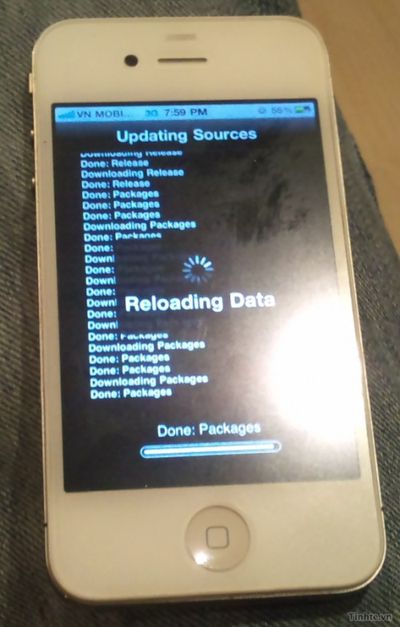
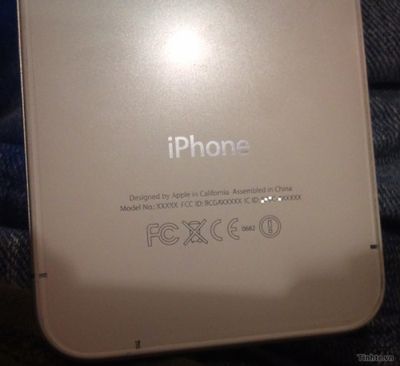
A series of images of what are claimed to be a prototype lower-cost iPhone 4 have been posted to Vietnamese site Tinhte.vn. The images are said to come from a "very reliable source" and are said to represent a lower-cost version of the iPhone 4. Machine translation describes an iPhone 4 but using plastic instead of glass to lower costs:
Some other information that you want to transfer to you is that this machine seems to run faster than the iPhone 4, lighter weight and two glass front and back seem to have been replaced by two plastic sheets, type of sensation and cry other than the iPhone 4.
There has been speculation about the possibility of two new iPhone models this year, including a cheaper model alongside the iPhone 5. The role of the cheaper model would be to penetrate the mid range smartphone market with another device. The existing iPhone 4 may be too expensive to produce as is to fill this gap.
Update: Some have suggested that the device is simply a regular jailbroken iPhone 4 with either matte protection films on the front and back or an early conversion kit utilizing plastic parts to turn black iPhone 4 units into white ones. While either of these explanations may be true, the original poster seems to believe that the device is genuine, and his track record of having obtained access to an iPhone 4 prototype ahead of the device's introduction as well as other prototype iOS devices adds weight to his claims.
The China Times pinpoints the iPhone 5 release to the second week of September with an initial order of 4 million units. Suppliers are said to be currently preparing 400,000 trial run units. The news report also reports that the next iPad may be delayed until Thanksgiving due to component shortages.
A mid September launch lines up nicely with current expectations for the iPhone 5 release. Apple has held an iPod media event in September for the past 3 years. With no iPhone release during this year's WWDC, Apple is expected to include the iPhone launch at this September event alongside the public release of iOS 5.
There's been some debate about what features the iPhone 5 will include. Recently leaked case designs have shown some major design changes, while other sources have said the iPhone 5 will look largely like the iPhone 4.
The China Times has had a hit or miss record with Apple-related rumors, though they do seem close to Apple's suppliers in China and may certainly have knowledge of their production plans. Reuters had previously also reported the iPhone 5 would see a September release with production beginning in July.
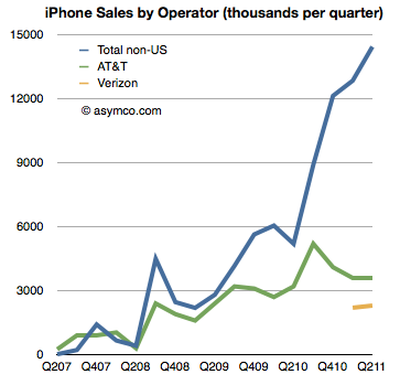
The introduction of the iPhone on Verizon contributed a healthy number of iPhone sales, but it was nothing compared to what non-US carriers delivered for Apple.
Horace Dediu at Asymco put together a few charts to illustrate just how big the non-US sales were:
The yellow line indicates Verizon's 4.5 million iPhone users, while the green line shows AT&T's slight slowdown in sales as the iPhone 4 matured (though even that doesn't show a very steep drop off).
By far the biggest impact is the sales by the rest of the world -- so big was that growth, Dediu points out, that "had Verizon not come on board the business would still have grown year-on-year over 100% (and sequentially)."
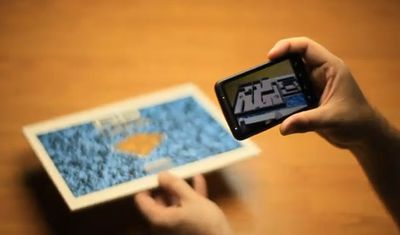
TechCrunch noted that Qualcomm had recently released their Augmented Reality Software Development Kit (SDK) for iOS. The SDK had originally been available for Android but Qualcomm had promised its release in July for iOS. The SDK should make it easier for developers to integrate virtual content with real content such as images captured by cameras found on many portable devices.
Augmented reality applications are nothing new for iOS, with Apple having introduced support for the technology in iPhone OS 3.1 nearly two years ago and a number of applications such as Layar Reality Browser and Word Lens having embraced it, but Qualcomm's tools will make for easier cross-platform adoption that could increase developer interest.
Qualcomm had held an Augmented Reality Application Developer Challenge last year to promote the use of their SDK. The video above shows the winners from that contest. The first version of the iOS SDK is said to support iPhone 4, iPad 2, and 4th Generation iPod Touch.
Apple's newest Retail Store is opening on Saturday in Glendale, California. The awkwardly named Apple Store, The Americana At Brand is located something like 500 feet from the Glendale Galleria, home of store R001.
The Glendale Galleria location opened on May 19, 2001 and was the second Apple Retail Store to open, as Tysons Corner opened earlier that day on the East Coast.
Gary Allen at IFOAppleStore notes that the Glendale Galleria location is "packed at all times" and the sister location is welcome. Gary also reports that the Palo Alto and Stanford stores are the next closest store pair, at a mere 3,737 feet apart.
The Americana location is numbered R451. It is the 239th US store and the 332nd store worldwide.
Apple numbers stores in the order in which they are planned. A number of stores were planned but have never been built for some reason. This is why the store is numbered R451 but there are only 332 stores in the chain, so far. R037 is the lowest number without a store attached.
The store will open at 10AM local time on Saturday, July 30.
Earlier this week, a purported case design for the iPhone 5 surfaced showing tapered edges more reminiscent of pre-iPhone 4 designs along with a possible larger screen and gesture area around the home button.
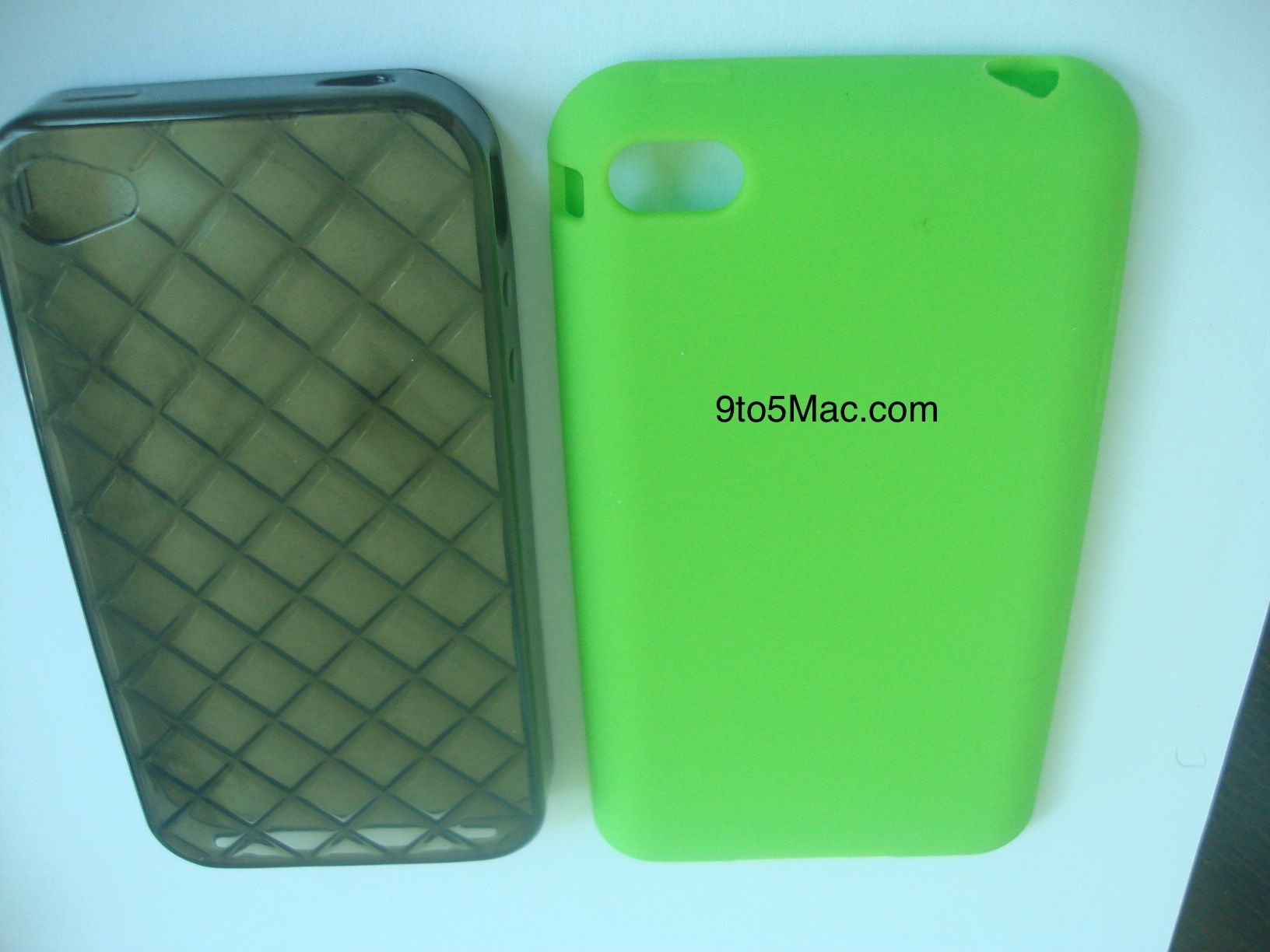
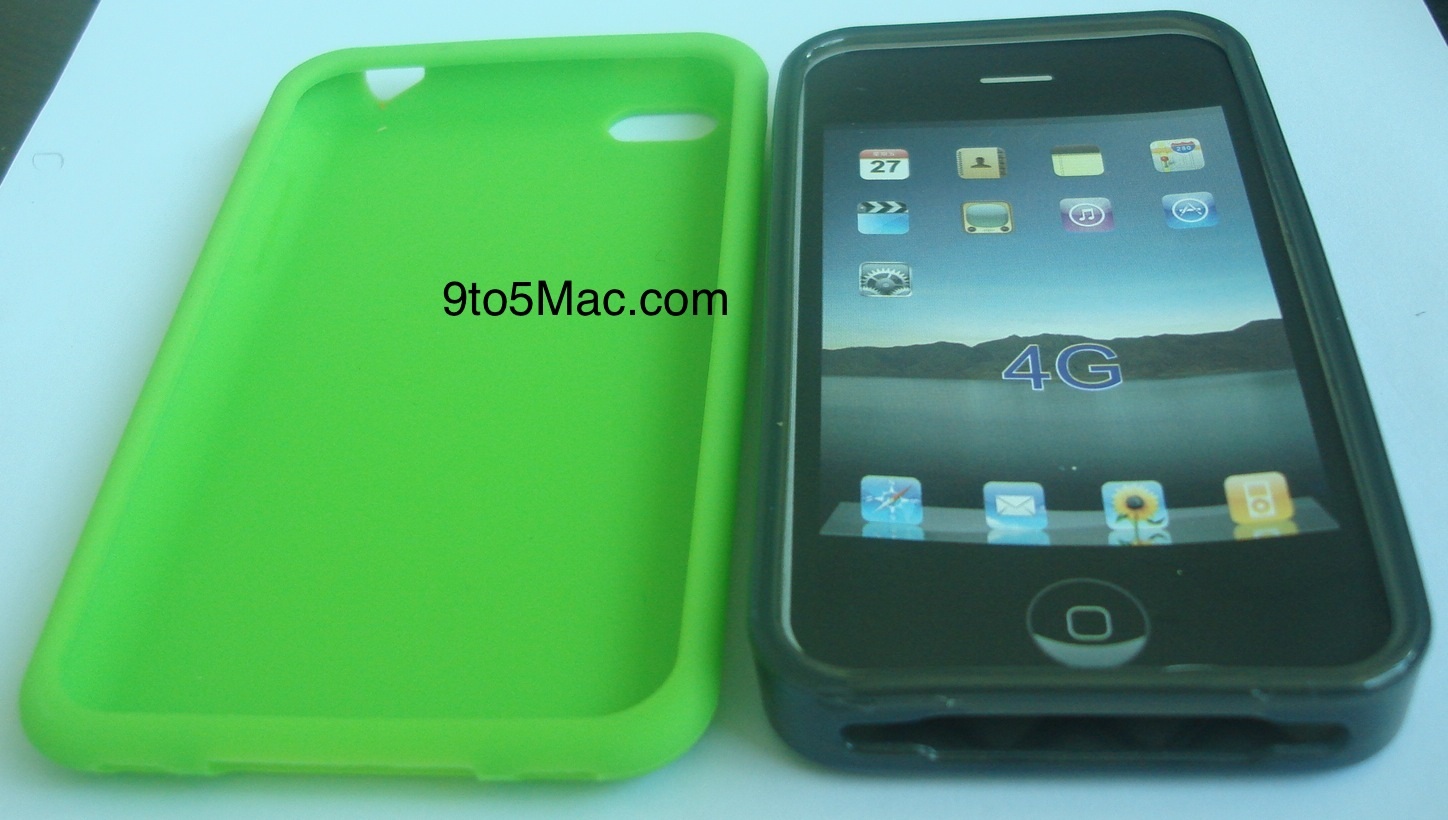
That schematic is not merely a random design drawing, however, as 9 to 5 Mac has received photos of an actual case apparently manufactured based on that design, which has reportedly been shopped around to manufacturers.
The new case does appear to portend a thinner design if it is indeed for the iPhone 5, but is unable to address claims of a larger screen or gesture area due a lack of covering on the front of the device. Placement of the physical features on the purported iPhone 5 appears nearly identical to the current iPhone, with the exception of what appears to a movement of the mute switch to the opposite side. This places the switch adjacent to the device's rear camera on the right side of the device as viewed from the front, as opposed to above the volume buttons on the left side.
Accommodations for the power and volume buttons are indeed present on the purported iPhone 5 case, although difficult to see in the photos as the case utilizes only small nubs of silicone covering the buttons rather than holes allowing direct access to them. Notably, the volume controls appear more like the elongated buttons found on the current iPod touch than the round individual buttons of the iPhone 4, a change which would make sense with an iPod touch-like tapered design for the new iPhone.
This latest case design is not the first to be claimed to be for the iPhone 5, however, as cases suggesting a nearly identical design to the iPhone 4 appeared in March while others apparently showing the rear camera flash moved to the opposite side away from the camera lens itself showed up in May.
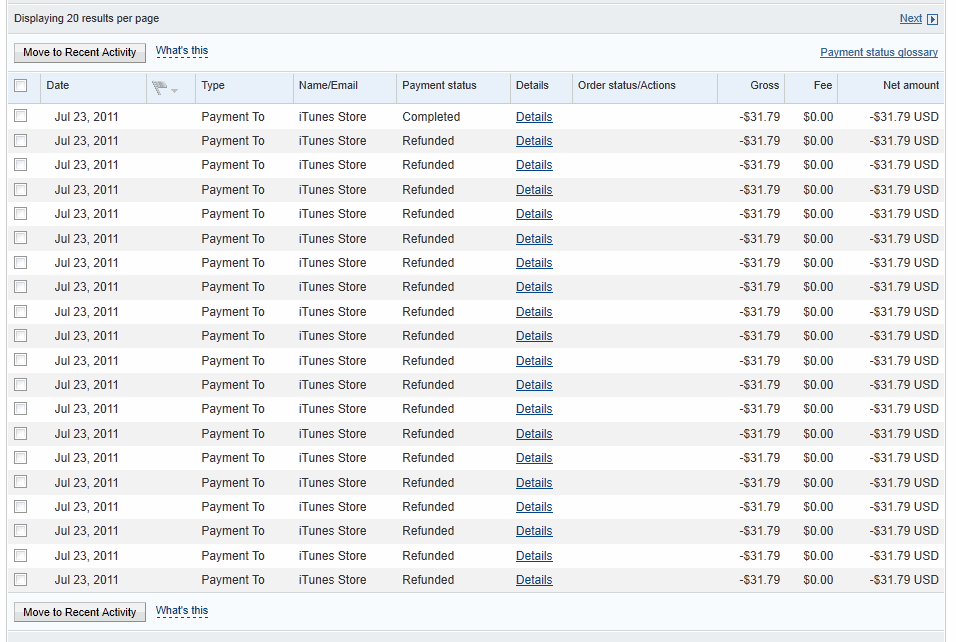
John Christman purchased OS X Lion on July 23, and paid $31.79 after sales tax. Then, his PayPal account was charged $31.79 an additional 121 times, for a total of $3,878.40.
Clearly Mr. Christman didn't need 122 copies of Lion, and something has gone awry. John got in touch with both PayPal and Apple support, but said both sides pointed fingers at each other. "Apple Blames PayPal, PayPal blames Apple. They both are claiming to investigate, but I am stuck broke for three days now."
Christman thinks it is related to the new iCloud feature that allows iTunes to automatically download previous purchases:
I fresh installed Lion, because the upgrade caused a lot of problems. My system needed as fresh start anyway.
I logged into our developer account and got the latest iTunes Beta, and installed it. iTunes has a cool new feature to download all your purchased apps for you. I clicked download all.
As each download started it charged me $31.79. Some apps came fast, some took longer, but the timing was directly related to when a new app started to download.
He downloaded 116 apps total, but noted that several apps failed to download and needed to be restarted. 116 apps downloaded and 121 extra charges seems too close to be mere coincidence.
Christman isn't the only person to face these issues surrounding Lion and PayPal. There is a lengthy discussion on Apple's support website about the issue, and other bloggers have run into similar problems.
Even though the purchases above say "refunded", Christman says he hasn't seen a dime. "Apple claims there was only one transaction. When I told PayPal to dispute them, they closed the cases and marked the items as refunded on the 23rd. Bear in mind all this money was taken and never returned yet."
"My mortgage is due in 2 days, and thanks to them, I don't have the money."
MacRumors reached out to Apple for comment, who said they would work with John directly to try to get his issues resolved.
Earlier this week, shopping comparison site PriceGrabber released the results of a survey of nearly 3,000 U.S. online consumers conducted earlier this month, revealing that 35% of respondents intend to purchase the next-generation iPhone. The strong consumer interest comes even as Apple has to yet announce or even acknowledge such a device and with rumors offering conflicting information on what users can expect from the next-generation iPhone.
Anticipation in the consumer electronics world is soaring for the launch of Apple's iPhone 5, which is rumored to be hitting store shelves this fall. PriceGrabber, a part of Experian, just released the results of its iPhone 5 survey, revealing that 35 percent of consumers plan to purchase the latest iPhone upon its release. Of these respondents, 51 percent indicated that they will buy the smartphone within the first year of release, 30 percent will purchase it before the end of 2011, 14 percent will buy it within the first month, and 7 percent will buy it within the first week. Conducted from July 1-11, 2011, the survey includes responses from 2,852 U.S. online consumers.
Apple leads the smartphone pack among the surveyed customers, with 48% of respondents stating that they "prefer" iOS and Android coming in at a distant second place with 19%.
For the next-generation iPhone, consumers most frequently cited improved battery life as a key feature they'd like to see, with 59% of respondents selecting the option in the survey. Measuring in close behind at 56% was a lower price point. Other popular desired features include a larger screen and an improved camera.
Interestingly, 46% of respondents indicated that "4G" compatibility is an important feature for the next iPhone, even with a separate survey recently revealing that one-third of current iPhone users mistakenly think that they already have 4G compatibility. The "4G" marketing term has come to embrace both HSPA+ and LTE network standards, and while the next-generation iPhone is expected to feature HSPA+ compatibility, Apple has been said to be holding off on LTE compatibility until more appropriate chips are available.
DigiTimes reports that Apple and Samsung are both "evaluating" the use of solar cells in future consumer products, with the process having advanced as far as discussions with several Taiwanese solar firms about the technology. Any such products are said to be some time off, however, with projects still in the research stage as vendors work toward increasing efficiency of energy conversion.
Samsung and Apple have been evaluating the possible niche market for solar-powered consumer products and considering the inclusion of Taiwan-based solar firms in their respective supply chains. However, according to Taiwan-based solar firms, these niche markets will need a longer time to develop.
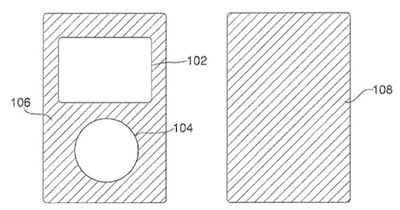
Apple has expressed interest in solar power for a number of years, with a patent application published in 2008 discussing the possibility of placing solar cells underneath a mobile device's screen. A more recent one discussed building solar cells into the external surface of an iPod-like device and integrating a power management system to balance battery and solar power generation to compensate for changes in light input due to environmental factors or certain panels being obscured by the user's hand.
2008 Apple patent application drawing showing iPod with integrated solar cells
Even more recently, The Wall Street Journal reported that Apple is working on "a new way of charging" for next year's iPhone. Speculation has naturally centered on some form of wireless induction charging given that technology is already mature enough to have made it into the consumer market, but at the very least Apple seems to be seriously considering alternatives to traditional power production mechanisms for its future devices.
Apple is working on a 15" ultra-thin Mac notebook, MacRumors has learned. We aren't certain if it will be called a MacBook Air or MacBook Pro, but we do know that it is already in late testing stages at Apple.
Apple's notebook lineup has received a significant revamp over the past two years, and the introduction of the MacBook Air seems to have finally edged out the low-end MacBook design. While originally priced as a premium product, the Air seems to have found a more mainstream market as its starting price dropped to only $999.
MacBook Air
Many now expect that Apple's design choices in the Air will eventually make their way to the MacBook Pro product, with the use of integrated SSD and lack of optical drive being the most notable changes allowing for such a thin design. While we don't know for a fact, we expect that any future "ultra thin" laptop from Apple will also dispense with a built-in optical drive. As evidenced by its recent release of the optical drive-less Mac mini, Apple has no problem leaving physical media behind.
The ultra-thin market is also about to get much more competitive this fall as Intel's partners begin launching their Ultrabook notebooks.
The timing of an ultra-thin 15" Apple notebook remains a mystery to us as Apple just revamped the MacBook Air with new 11" and 13" models. Meanwhile the MacBook Pro line was refreshed in February, likely pushing the next release out to at least very late in the year.
Update: TUAW corroborates our claim and also adds that they believe that this new notebook will fall under the "MacBook Pro" branding alongside a thin 17" model. Also, they believe it might be available in time for Christmas.
Apple's first foldable iPhone, with a book-style design featuring a ~5.5-inch outer display and a ~7.8-inch inner display with a minimal crease down the middle.