MacRumors

Earlier this year, Apple rolled out In App Subscriptions for App Store applications, offering content providers a way to provide ongoing content within their applications. As part of that rollout, Apple required that providers offer their content via In App Subscriptions at at least the same rates as other purchasing mechanisms and also barred apps from including links to those alternative external mechanisms, such as "buy" buttons linking out to web-based stores. The regulations were set to apply to both purchased and subscribed content, and would go into effect on June 30th (today) for existing applications.

But with just a few weeks to go before the deadline, Apple backpedaled somewhat, adjusting its App Store terms to allow developers to provide content in their applications without also requiring that the content be made available through In App Purchases/Subscriptions. The company did, however, maintain its exclusion of "buy" buttons linking to external purchasing mechanisms, and presumably continued to demand a June 30th compliance date for existing apps.

Last week, Hulu Plus became one of the highest-profile apps to comply with Apple's new rules, simply removing an external link for signing up for the Hulu Plus service. The revised app complies with Apple's rules by playing outside subscription content without offering an In App Subscription option while also not providing users with a way to subscribe to the service linked from directly within the app.

At the time, it was noted that a number of other high-profile apps had yet to comply with Apple's terms and that some such as Amazon's Kindle app might have significant difficulties doing so given their focus on offering individual eBook purchases. Offering access to a catalog of eBook content with no way to link out for external purchases would mark a relatively significant inconvenience for users trying to make new purchases.

kindle app store link
CNN Money reports that Kindle does indeed appear to be in Apple's crosshairs, along with similar eBook services from Barnes & Noble and Borders.

The new rules explicitly prohibit apps that include "external mechanisms for purchases ... such as a 'buy' button that goes to a web site to purchase a digital book."

Amazon's Kindle app prominently features a "Shop in Kindle Store" link, which takes shoppers to Amazon's website. That's verboten under the rules set to take effect Thursday.

Apple and the digital booksellers have remained silent on exactly what is expected to happen today as the new rules take effect, but none of the high-profile applications have yet received updates that would bring them into compliance with the rules.

Apple is not averse, however, to rejecting or removing such applications for non-compliance, as the company demonstrated by rejecting a Sony Reader application earlier this year for its ability to purchase external content without also offering In App Purchasing.
app store ipad 100k
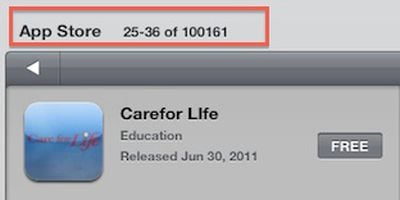
As noted by MacStories, Apple's App Store has reached yet another milestone, now offering over 100,000 iPad-specific applications.

Apple and third-party developers have set a new record: in 453 days since the original iPad came out on April 3, 2010, the App Store has more than 100,000 iPad-exclusive apps available. Either specifically targeting the tablet, or released as universal updates to existing iPhone apps, at the moment of writing this there are 100,161 iPad apps in the Store. How do I know? The App Store app itself on my iPad shows that.

Our sister site AppShopper, which tracks iPhone, iPad, iPod touch, and Mac App Store apps, currently has the available iPad app count at just over 106,000, as it relies on a slightly different recording method supplied by Apple's API for tracking App Store apps.

Apple currently offers over 400,000 total apps in its iOS App Store, and over 5,000 more in its Mac App Store.

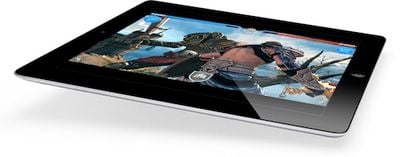
ipad 2 oblique
DigiTimes briefly reports that Apple is planning a significant increase in iPad 2 shipments for the third quarter of this year, attempting to move 12-14 million units over the period. That goal is up from the 7-9 million units reportedly shipped during the second quarter.

In order to significantly increase its shipments in the third quarter, Apple has been piling up its inventory of iPad 2 components such as panels in the second quarter to minimize the risk of facing component shortages.

Research analysts have had a particularly difficult time forecasting Apple's quarterly iPad shipments in the face of production constraints and the transition from the original iPad to the iPad 2. While a number of research analysts and firms have pegged Apple's total 2011 iPad sales in the range of 40 million units or even higher, Apple fell far short of expectations in the first calendar quarter with only 4.69 million units shipped. That figure only included, however, a few initial weeks of iPad 2 sales as Apple struggled to meet demand and according to Tim Cook sold every iPad 2 it made during the quarter.

Related Roundup: iPad
Buyer's Guide: iPad (Caution)
Related Forum: iPad

As noted by Arstechnica and iFixIt, Apple's new $50 Thunderbolt cable is actually a "smart" or "active" cable that contains circuitry and firmware. Arstechnica explains:

A source within the telecom industry explained to Ars that active cables are commonly used at data rates above 5Gbps. These cables contain tiny chips at either end that are calibrated to the attenuation and dispersion properties of the wire between them. Compensating for these properties "greatly improves the signal-to-noise ratio" for high-bandwidth data transmission.

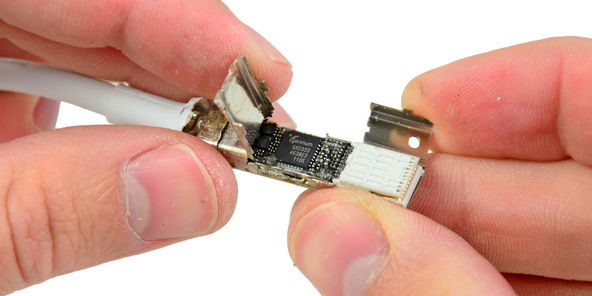
iFixIt tore down the new ThunderBolt cable and found two Gennum GN2033 chips in the connector, one on each side. Additional support chips and resistors were also found for total of 12 chips and "tons" of smaller electronic components.

QBZvGuXR2nRD64NM
Gennum's chip is described as a transceiver that enables "reliable data transfer at cutting-edge speeds over low cost, thin-gauge copper cables." Early benchmarks of Thunderbolt drive enclosures show massive improvements over FireWire 800.

One interesting benefit of this "active" cabling is that current Thunderbolt ports found in the iMac and MacBook Pro will be future-compatible with planned optical Thunderbolt cables. Optical cables were part of the original plans for Thunderbolt which promises to offer much higher speeds, but the first version released are based on traditional copper wiring. Intel still plans on upgrading to optical cabling in the future, and existing Thunderbolt devices should be compatible with new cabling. This was mentioned during the original Thunderbolt roll out.

...the port you'll find in new MacBook Pros and storage devices can actually take an optical cable when those are cost-effective enough to roll out, because Intel will eventually bake the optical transceivers into the cables themselves.

Ars, however, suggests that the high cost and complexity of the cabling may be a hurdle to widespread adoption of Thunderbolt.

739187 ipadFiona Bligh never thought she would get a response when she sent an email to Apple CEO Steve Jobs. But, the story of her daughter Holly's unique experience with her iPad inspired Steve so much that not only did he write back to Fiona, but Steve asked if he could share her story as well.
Fiona's daughter has albinism. It affects pigment in her skin, hair color and also her vision. The Australian Herald Sun wrote about nine-year-old Holly, noting that her iPad has replaced the large magnifying glass she needed to read. She can quickly enlarge text and is now much more enthusiastic about reading, and can read for twice as long without getting tired.

In her email to the Apple CEO, Fiona shared that "all the other kids think it's awesome that she gets an iPad!" Steve wrote back:

Thanks for sharing your experience with me. Do you mind if I read your email to a group of our top 100 leaders at Apple?

He signed the email "Thanks, Steve".

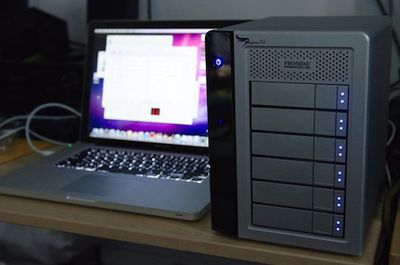
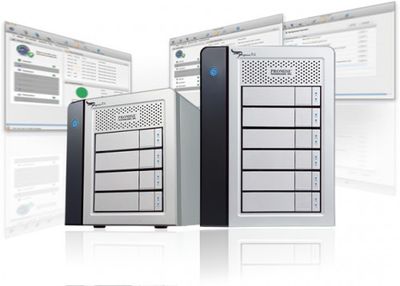
With the Pegasus R4 and R6 Thunderbolt RAID Enclosures now shipping, the first review units are starting to appear at various publications. Macworld has some early benchmarks comparing a 6-drive RAID 5 Promise enclosure to a 4-drive RAID 5 SmartStore DS 4600. The comparisons aren't entirely equal as the Promise enclosure doesn't support USB or FirewWire, so they had to make do with comparing different enclosures.

Pegasus SmartNavi
The early results are impressive. Benchmarks showed that the read and write speeds of the Thunderbolt enclosure were 6.8 and 11.5x faster than FireWire 800:

When connected to the iMac, the R6’s AJA System Test read scores came in at 566MBps—6.8 times faster than the DS4600 using FireWire 800. Even more impressive was the R6’s 644MBps AJA System Test write score, which is 11.5 times faster than the FireWire 800 scores of the DS4600.

Even more real-world tests of file and folder copies benefited with speeds ranging from at least 2x faster.

Macworld does plan to compare against eSATA in the future, and other benchmarks should be emerging over the next few days.

Ever since Apple and Intel introduced the Thunderbolt high-speed data connectivity standard back in late February, there has been speculation about whether the standard would support booting from external disks. At that initial release on revamped MacBook Pros, Andy Ihnatko reported that booting was not supported, although Target Disk Mode was supported. But a report from The Mac Observer early last month indicated that booting from disk would be supported over Thunderbolt.

With Apple's Thunderbolt cable and the first third-party drive systems hitting the Apple Store yesterday, Apple posted a few support articles outlining some of the Thunderbolt functionality, but failing to disclose any booting capabilities and thus leaving potential customers still in the dark about compatibility.

anandtech promise raid

AnandTech's 12 TB Promise RAID setup

It now appears, however, that we do have confirmation that booting over Thunderbolt is supported, as we received word yesterday from a reader who had received multiple confirmations from LaCie representatives that the feature will indeed be supported. Meanwhile, AnandTech has already received one of the new 12 TB RAID systems from Promise and confirms that booting over Thunderbolt is supported.

Bloomberg reports that HP has expressed interest in licensing its webOS mobile operating system to other companies, potentially opening the door for another major competitor in the smartphone and tablet industries.

"We are talking to a number of companies," Apotheker said in Beijing, declining to elaborate on details. "I can share with you that a number of companies have expressed interest. We are continuing our conversations."

The webOS operating system was originally developed by Palm as an answer to iOS, but was not able to gain much ground against Apple's platform and Google's Android. With HP's acquisition of Palm last year, webOS has undergone a transition as HP has attempted to move directly into the smartphone and tablet markets. HP is launching its TouchPad tablet device within the next few days, and has been said to be trying to launch its own cloud-based media service similar in some respects to Apple's iCloud.

webos apps
According to the Bloomberg report, Samsung is one of the companies interested in licensing webOS, presenting an alternative to the Android-based systems currently offered by the manufacturer.

A partnership with HP would allow Samsung, which uses Android for its Galaxy Tab tablet computers, to customize devices amid speculation that Google may restrict modifications for phones that use Android, said one of the people, who declined to be named because the talks are private.

If HP is able to find success with its new mobile products and Samsung adopts webOS as a leading platform for its own devices, the mobile industry could see a shakeup with webOS becoming a legitimate contender in the race to compete with iOS and Android.

Microsoft has of course been pushing its own Windows Phone operating system as yet another competitive platform, although customer adoption has appeared weak thus far. The company has, however, partnered with Nokia in a deal to drive that manufacturer's future hardware, a deal that could make Windows Phone another major player if customers embrace the platform.

AppleInsider notes that MacBook supplies have become "severely constrained" at a number of third-party retailers, suggesting that Apple may be drawing down stocks ahead of a refresh.

Specifically, Amazon, MacConnection, On Sale and J&R are all out of stock. In addition, inventory of the entry-level portable is low at DataVision.

In addition, one of Europe's largest distributors is completely out of stock of the white MacBook, and lists no estimated time of arrival for new shipments. Sources indicated that this is unusual, but not necessarily a sign that the current model will be discontinued.

Shipping estimates for orders made through Apple's online stores around the world remain at "within 24 hours", suggesting that the shortages have not yet extended to Apple's own distribution channels. But shortages at third-party retailers are frequently the first indications of Apple preparing to release updated models.

macbook 2010
As noted in our Buyer's Guide, Apple is well overdue for a MacBook refresh as judged by its usual update cycle, having last updated the MacBook in May 2010.

Rumors of updated MacBooks have been essentially nonexistent, although the Machine will presumably make the shift to Intel's Sandy Bridge platform and include Thunderbolt support. And while no specific timeframe for an update has been offered, the line is clearly one of many including the MacBook Air, Mac Pro and Mac mini that are due for an update. Apple has been said to be holding new hardware launches until OS X Lion is ready, and so we may see a flood of new releases once the operating system debuts next month.

Update: AppleBitch reports that Best Buy's online store and Amazon UK are also currently out of stock of the Mac mini. While the shortages are not as widespread as seen with the MacBook, they could be early signs of a drawdown for that line as well, which was last updated in June 2010 with a new design.

Related Roundup: Mac mini
Buyer's Guide: Mac Mini (Neutral)
Related Forums: MacBook, Mac mini

With talk of Apple seeking to release a cheaper iPhone being revived in recent days, RBC Capital Markets analyst Mike Abramsky now weighs in to report that he believes that Apple will be keeping the iPhone 3GS around even after the next iPhone hardware update, offering the device for free with a two-year contract and at $399 for unsubsidized purchases. Apple currently sells an 8 GB iPhone 3GS for $49 on a two-year contract and $449 unsubsidized.

As its entry-level iPhone strategy, Apple is expected to cut iPhone 3GS to $0 (on contract, $399 unsubsidized) in conjunction with iPhone 5 launch (we continue to expect it in September). This approach is intended to target mid-market smartphone buyers and counter Android's mid-market expansion. We expect iPhone 5 to launch at $199/$299 ($599/$699 unsubsidized), and Apple to drop iPhone 4 pricing to $99 ($499 unsubsidized).

The claimed $399 price point for the unsubsidized iPhone 3GS is a bit higher than other reports have been hinting at, with the analyst report from earlier this week suggesting that Apple would try to come in at $349 for its cheaper iPhone.

iphone 3gs oblique
Earlier reports had claimed that Apple was working on a smaller iPhone form factor that could allow the company to offer the device for as little as $200 unsubsidized. But while some rumblings of a new, smaller iPhone option for this year continue to float around, Abramsky believes that the "baby iPhone" will not be released until 2012, in part to fully take advantage of iCloud leverage that may not be possible as the service debuts.

Related Forum: iPhone

Many customers have been waiting for Apple to begin shipping its long-rumored updated MacBook Airs, bringing a significant performance improvement to the line with the incorporation of Intel's Sandy Bridge platform. A number of reports had pegged the release for the June-July timeframe, but the June dates are essentially out of the picture now and Apple has been said to be holding the release until it can offer OS X Lion preinstalled on the new machines.

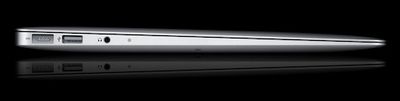
macbook air 2010 profile
Chatter is now beginning to coalesce around a mid-July launch, and we've been hearing that Apple may be planning a MacBook Air launch for the third week of the month. AppleNApps seems to agree, with several sources there reporting that Apple plans to release the new MacBook Airs alongside OS X Lion on Tuesday, July 19th.

Sources have indicated to AppleNApps that Apple has an internal launch date of July 19th for Mac OS X Lion and a refresh of the MacBook Airs. This is the target date under which the company is currently operating, though both sources are indicating that things can change. Our sources have just seen indications, and can’t be entirely certain, but if everything goes according to plan there will be a new MacBook Air shipping with Lion starting July 19th.

That would coincide with Apple's earnings announcement for the quarter just ending, providing the company with enticing discussion fodder for the conference call.

9 to 5 Mac also reports that it has been hearing Thursday, July 14th in the "rumblings" regarding a launch for Lion and new MacBook Airs, adding to the increasing consensus of a release right around the middle of the month.

Related Roundup: MacBook Air
Related Forum: MacBook Air

Apple has quietly posted a FAQ for Final Cut Pro X in response to the many questions and criticisms. (via 9to5Mac). The FAQ appears not to be linked from Apple's main site, and has not yet been publicized.

Final Cut Pro X is a breakthrough in nonlinear video editing. The application has impressed many pro editors, and it has also generated a lot of discussion in the pro video community. We know people have questions about the new features in Final Cut Pro X and how it compares with previous versions of Final Cut Pro. Here are the answers to the most common questions we’ve heard.

The FAQ mirrors some of the same issues addressed in David Pogue's article with responses from Apple product managers, but also gives a few more specifics.

answers
Regarding importing from Final Cut Pro 7, Apple says that due to the many changes there was no way to "translate" old projects without losing or changing data. So, Apple suggests that users continue to use Final Cut Pro 7 for existing projects.

As for Multicam editing, Apple again promises that "it will" support it. The "next major release" will provide "great multicam support".

Another feature they promise will be coming is export of XML. They say they "know how important XML export" is to their users and expect to add it to Final Cut Pro X. A set of APIs will be released in the next few weeks so that 3rd party developers can access the "next-generation XML in Final Cut Pro X". Similiarly, OMF, AAF and EDL support should become available through 3rd parties once the API is available. One third party solution is already available for OMF and AMF export.

Finally, assigning audio tracks for export is promised for a "summer" update which will "allow you to use metadata tags to categorize your audio clips by type and export them directly from Final Cut Pro X."

Final Cut Pro X was released just last week, but was met with significant complaints due to missing features. The rest of the FAQ provides some more details that may be of interest to professional video editors.

Former Shake product designer Ron Brinkmann weighs in on Apple's Final Cut Pro X release. The latest release of Apple's video editing software has received much criticism from professionals due to absent features. Brinkmann was on the original team that developed Shake image compositing software prior to Apple's acquisition of the parent company. Brinkmann continued to work at Apple from 2002 until 2007 as Shake Product Designer.

fcp2
As Brinkmann explains, Shake was "entrenched in the top end of the visual effects industry" with most major motion pictures of the era using Shake in some fashion. After Apple acquired Shake in 2002 there was concern about the company not willing to cater to the market, and sure enough the entire software was end of life'd a few years later. Brinkmann bluntly sums up Apple's attitude towards professionals:

And back then the same questions were being asked as now – “Doesn’t Apple care about the professional market?”

In a word, no. Not really. Not enough to focus on it as a primary business.

Brinkman goes on to explain that there are maybe 10,000 "high-end" editors in the world while the market for an easier to use more casual product is "at least an order of magnitude larger". The market size, however, isn't necessarily the only reason. Brinkmann offers an interesting anecdote about how the high end market tends to be 90% driven by product requests from the big customers. Apple doesn't work that way:

After the acquisition I remember sitting in a roomful of Hollywood VFX pros where Steve told everybody point-blank that we/Apple were going to focus on giving them powerful tools that were far more cost-effective than what they were accustomed to… but that the relationship between them and Apple wasn’t going to be something where they’d be driving product direction anymore. Didn’t go over particularly well, incidentally, but I don’t think that concerned Steve overmuch… :-)

Apple's hierarchy is also described as one in which easily demo-able features tend to be easier to promote within the organization. He goes on to say that in the case of FCP, Apple would rather introduce more easy to use features for the broader audience even if it means pushing out some items for high end editors.

Still, he is complimentary of Apple's products and describes them as an "incredible bargain in terms of price-performance", but that "if you’re really a professional you shouldn’t want to be reliant on software from a company like Apple." In the end, he says "your heart will be broken. Because they’re not reliant on you."

java iconApple today released a pair of Java updates for users of Mac OS X Snow Leopard and Leopard, patching vulnerabilities and increasing reliability and compatibility.

- Java for Mac OS X 10.6 Update 5 (75.45 MB, Requires Mac OS X 10.6.4)

Java for Mac OS X 10.6 Update 5 delivers improved compatibility, security, and reliability by updating Java SE 6 to 1.6.0_26.

- Java for Mac OS X 10.5 Update 10 (120.33 MB, Requires Mac OS X 10.5.8)

Java for Mac OS X 10.5 Update 10 delivers improved compatibility, security, and reliability by updating J2SE 5.0 to 1.5.0_30, and updating Java SE 6 to 1.6.0_26 for 64-bit capable Intel-based Macs.

J2SE 1.4.2 is no longer being updated to fix bugs or security issues and remains disabled by default in this update.

Full details of the security improvements included in the updates are available in support documents for Snow Leopard and Leopard.

Released earlier this month by newPCgadgets, the iPad 2 Display Dock claims to replicate the Apple retail store iPad 2 experience by offering a clear acrylic display block for the latest iPad, holding the device at an angle in a sleek enclosure for ease of interaction.

ipad 2 display dock
In addition to the iPad 2, the dock also contains an upright docking station for holding an iPhone or iPod touch.

Now you can dock your iPad 2 and iPhone just like the professionals do at the Apple Store. The new iPad 2 Display Dock is designed out of high-quality clear acrylic and provides the optimum viewing angle for your iPad 2 while also docking your iPhone (or iPod).

Priced at $74.95, the iPad 2 Display Dock may not be for everyone, but it is an interesting product that appears to do a decent job of replicating the clean lines and aesthetics of Apple's own product displays.

Google today announced the launch of Google Swiffy, a new Google Labs effort to produce a tool capable of converting Flash content to HTML5 for display on non-Flash devices such as the iPhone and iPad.

You can upload a SWF file, and Swiffy will produce an HTML5 version which will run in modern browsers with a high level of SVG support such as Chrome and Safari. It’s still an early version, so it won’t convert all Flash content, but it already works well on ads and animations.

Google has posted a small gallery showing examples of Flash content converted to HTML5 by Swiffy.

swiffy symphony orchestra comparison still
Earlier this year, Adobe released its own Flash-to-HTML5 converter known as "Wallaby". Neither Wallaby nor Swiffy is yet able to handle advanced Flash animations for such content complex interactive games, but both companies are obviously looking for ways to make it easy to move Flash content onto non-Flash devices. As Google notes in its Swiffy FAQ, Wallaby is designed to produce editable code by reusing some of the Flash elements in the HTML5 result, while Swiffy's focus is simply on presentation and yields a less-editable final product.

Since the release of Mac OS X 10.6.8 last week, a number of Xserve users have reported in Apple's discussion forums (via MacNN) issues with a hardware monitoring daemon known as hwmond generating significant CPU loads of up to 95%.

Member Arminhempel reports a CPU load up to 70 percent after every reboot on several Xserves he manages; Jean-Serge Remy has an Xserve Xeon showing an 84 percent hit, while InfraredAD is experiencing a 95 percent load on a 2008 quad-core Xserve, essentially wiping out an entire core. Both the combo and delta versions of the update have generated errors and, so far, the only reliable way to fix the issue is a downgrade to Mac OS X 10.6.7.

The update also appears to be causing occasional issues with shutdowns and restarts as users attempt to address the hwmond CPU load issue.

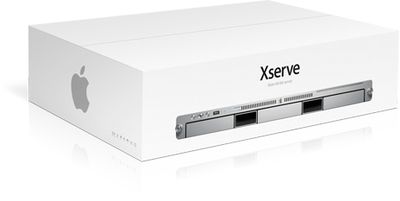
xserve box
Apple has yet to offer a specific solution for the issue, merely walking users who have contacted Apple Support through some troubleshooting steps without a specific resolution in place. But given the volume of complaints appearing in discussion forums, Apple will likely have to release a patch to address the issue.

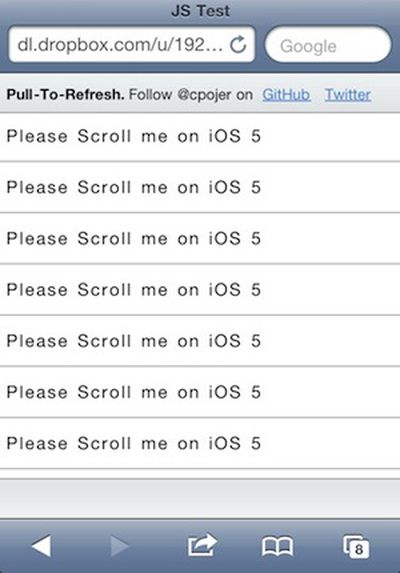
Over the weekend, we noted that one of the new features in the second beta of iOS 5 released to developers on Friday was the addition of native-style momentum scrolling for web apps, a key feature that will enable web app developers to easily make their apps feel much more like regular iOS applications.

ios 5 web app scroll
Daring Fireball now points to this demo from @cpojer showing off how the new CSS property can be implemented on a web app. While the demo will only function properly for those with iOS 5 Beta 2 installed, it does show the momentum scrolling and an implementation of the "pull to refresh" functionality that has become increasingly common on native iOS apps.