Rumors are flowing fast in the days before WWDC. LATimes reveals some additional details about Apple's iCloud service.
The iCloud service will function as many have expected. Offering iTunes users the ability to save their purchases to iCloud and then being able to listen to it from any web browser or Apple device. Apple will be offering a free trial for those who buy music from iTunes and later expects to charge "about" $25/year for the service.
The LATimes also adds without detail that "Apple would also sell advertising around its iCloud service." It's not clear in what form this advertising would be, and whether it would be present for only free or also paid customers.
Finally, Apple expects to extend the iCloud concept to movies, TV shows and other digital content. Apple will be announcing iCloud at next week's WWDC.
CNet reports that Apple has signed the last of the four major record labels to its iCloud service which will be officially announced next week.
The agreement means that Apple now has the rights to offer recording rights from all of the major labels. In addition, Apple has reached agreements with some of the large publishers, the sources said.
This represents the final step before Apple is able to launch its iCloud service which is believed to offer music streaming to iOS and Mac users. Apple has already announced that they will be detailing iCloud at next week's WWDC keynote which takes place on Monday, June 6th.
CNet reports that labels will get 58%, publishers 12%, while Apple retains 30%. They also add that streaming won't be available on Monday but will be offered "soon". And at first, Apple will only store music in iCloud that was purchased in iTunes, but Apple is looking to include songs outside iTunes "sometime in the future".
Apple has started decorating the Moscone West conference center in San Francisco with iCloud banners, revealing the icon for the first time. Photo by @stop.
Apple has announced that it will be discussing iOS 5, Mac OS X Lion and iCloud at next week's Worldwide Developers Conference (WWDC) to be held at the facility. Steve Jobs will be delivering the keynote on Monday, June 6th. Apple has been wrapping up deals with music labels and publishers to allow users to stream purchased music to their computers and other devices using the service, and has also been reported to be racing to include movie and TV content as well.
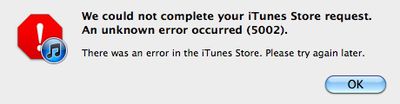
A flood of MacRumors readers have reported in saying that they are having difficulties downloading content from Apple's online download stores, including the App Stores for both iOS and Mac OS X as well as iTunes Store content. The issues appear to be widespread although not universal, as others have reported that they are having no problems downloading content.
The reason for the downtime is not currently known, although speculation has of course centered around potential preparations for Apple's new iCloud service set to be introduced on Monday at the company's Worldwide Developers Conference. Such preparations could involve the company shifting content around such as to its North Carolina data center, moves that could result in some issues with access to the content. Alternatively, Apple could simply be experiencing some sort of network problems unrelated to new product and service launches.
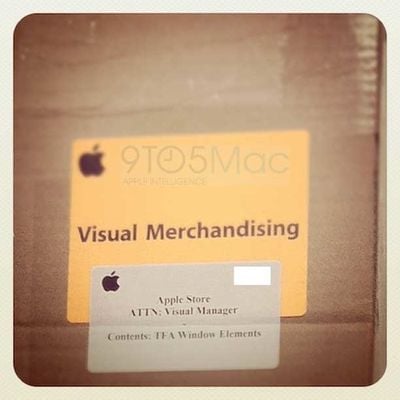
9 to 5 Mac reports that Apple's retail stores are receiving shipments of new promotional materials that are set to remain sealed until Tuesday, suggesting that Apple will indeed have something new to show off in its stores following its Worldwide Developers Conference (WWDC) keynote on Monday.
Whether the promotional materials are for new software and services such as Mac OS X Lion and iCloud or for hardware products such as new AirPort and Time Capsule base stations is unknown.
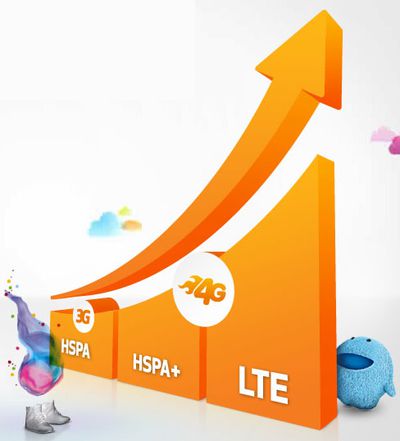
Barron's reports on a new research note from Hudson Square analyst Todd Rethemeier, who claims that the fifth-generation iPhone due this fall will indeed support HSPA+ technology, a development that will allow the device to offer faster data speeds on GSM networks such as AT&T. (The currently shipping iPhone supports standard HSPA.) Despite the fact that HSPA+ is slower than the LTE standard being rolled out by major carriers, AT&T has begun marketing its HSPA+ network as "4G", meaning that the carrier could position the next iPhone as a 4G device despite it failing to offer LTE compatibility.
The implications of an HSPA+ iPhone are significant in the United States, where Apple presently offers a separate CDMA iPhone running on Verizon. Even with both current models of the iPhone 4 limited to 3G networks, AT&T's HSPA data network is already faster than Verizon's EVDO data network. That disparity will be magnified with the next iPhone as AT&T users will be able to experience download speeds in the range of 5-10 Mbps under HSPA+ while users on Verizon will remain stuck on the carrier's current 3G network running in the neighborhood of 1 Mbps.
And that advantage would continue to be significant even for the expected LTE-enabled sixth-generation iPhone until LTE networks are essentially built out, as AT&T users would be able to fall back from LTE to HSPA+ while Verizon users would fall all the way back to basic 3G when out of LTE coverage areas.
For AT&T iPhone 5 users, this could mean download speeds of 5-10 Mbps, compared to less than 1 Mbps for a Verizon user. Certainly, when an LTE iPhone is introduced AT&T would lose some of its marketing advantage. However, even when that happens, the phone will be backwards compatible, so the AT&T iPhone 6 would be able to roam onto the HSPA+ network when an LTE network is not available, giving AT&T an advantage in suburban and rural areas for several more years, we believe.
AT&T notes that it is currently seeing "4G" speeds of up to 6 Mbps for HSPA+ devices connected to cell towers utilizing the enhanced backhaul connections needed to support such speeds. The carrier touts HSPA+ as an intermediate step on the way to LTE, a move that will enable it to be the only U.S. carrier to offer two layers of "4G" speeds on its network.
Early reports have seen some users of "4G" HSPA+ devices on AT&T experiencing speeds slower than that seen on 3G, particularly when it comes to upload, although the carrier is still finishing building out its full HSPA+ capabilities. Consequently, it remains to be seen exactly just how wide the disparity would be between an HSPA+ iPhone running on AT&T versus one running on Verizon's network.
Verizon executives have claimed that the next-generation iPhone will be a single "world-mode" model capable of operating on both GSM and CDMA networks. The CDMA iPhone 4 and iPad 2 already include a Qualcomm chip capable of supporting both HSPA+ and CDMA 3G standards, meaning that Apple would primarily have to focus on integrating sufficient antenna capabilities to support the number of frequencies required for both CDMA and GSM compatibility in a single device.
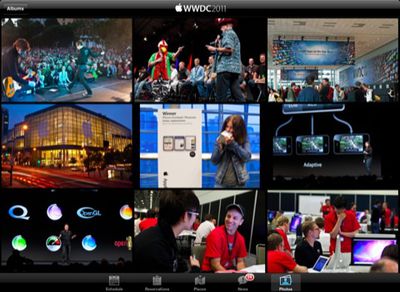
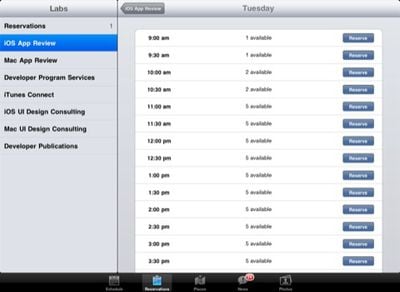
Apple today released a new iOS app [App Store] to assist attendees at the company's Worldwide Developers Conference next week. The app provides a number of scheduling and informational items including news and photos from the conference, as well as the ability to make reservations to meet with Apple staff at various labs throughout the conference.
The WWDC 2011 app is your mobile guide to the Apple Worldwide Developers Conference. Access a range of conference information on-the-go from your iPhone or iPad. You can quickly search the conference schedule, make a reservation at the User Interface, App Review, iTunes Connect, Program Support, or Developer Publications lab, view floor diagrams of Moscone West, and create a custom schedule of the sessions, labs, and events you plan on attending.
WWDC is a universal application supporting all iOS devices running iOS 4.2 or later.
Business Insider reports on a new research note from Goldman Sachs analyst Bill Shope covering a recent meeting between Shope and Apple executives Tim Cook, Ron Johnson, and Peter Oppenheimer. According to Shope, the executives expressed considerable optimism regarding the future of iOS, particularly when it comes to the iPad. In fact, Apple Chief Operating Officer Tim Cook reportedly noted that the company expects tablet sales to surpass PC sales over the next several years.
Shope says, "the company appeared more overtly optimistic on the long-term prospects for the iOS platform than it has been in quite some time."
Why?
For one, Cook said, "he sees no reason why the tablet market shouldn't eclipse the PC market over the next several years," according to Shope's note.
Apple's iPad of course currently dominates that tablet market, and while its share will almost certainly shrink as more competitors come to market, most observers expect Apple to continue to lead the market for years to come.
According to a separate article relating information from the note, Shope reports that Apple is once again touting its preference for an "integrated" ecosystem for iOS over the "fragmented" one it sees for Google's Android platform. Apple's executives reportedly suggest that while the Android approach may yield market share gains over the short term, but the the fragmentation will ultimately weaken the platform and degrade the user experience.
To that end, Apple argues that the true measure of a platform's value should be measured by how well it supports the entire ecosystem surrounding it, and with the company having paid out over $2 billion to App Store developers so far, it believes that it offers the most successful and sustainable model among mobile platforms.
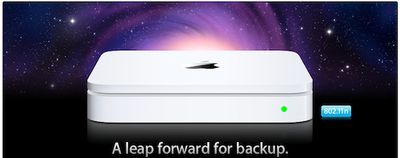
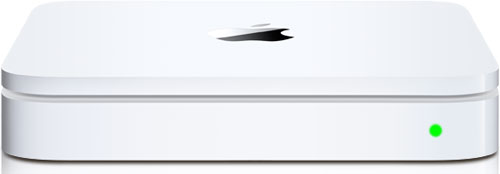
While we noted yesterday that an apparent tightening of supplies of AirPort and Time Capsule products in Apple's retail stores may heighten anticipation for a possible update at next week's Worldwide Developers Conference, 9 to 5 Mac reports that it has received word that Apple has at least been internally testing new Time Capsule models capable of caching software updates for users' machines in order to speed the download and update process.
What we do know is that Apple has been internally testing Time Capsules to cache Software updates for both Mac and iOS devices. The way we've heard it works is that the new Time Capsule learns which devices connect to it via Wifi. It then goes out to Apple's servers and downloads Software Updates for those products.
When the user wants to install the software update, the Time Capsule, which is also the router, routes you to the locally stored update, rather than downloading the whole thing over the Internet.
A smarter version of the update capabilities found in Mac OS X Server, the new Time Capsules would know exactly which machines it needed software updates for and download only those packages.
And with Apple's latest iMac and MacBook Pro models already supporting 450 Mbps Wi-Fi, distributing software updates downloaded quietly in the background by a Time Capsule to the actual machines could be accomplished with lightning speed.
As for potential tie-ins to Apple's iCloud service scheduled for introduction next Monday, new Time Capsules could integrate with the service to cache certain large or frequently-accessed files for faster access when on the local Wi-Fi network. Those files would of course instead be distributed directly from the iCloud servers when off the local network.
Apple's iOS devices have rapidly become popular giveaway items for businesses seeking to boost user interest and participation, encouraging customers to sign up or interact with the businesses in some way for chances to win an iPad, iPhone or iPod touch.
But as noted by Fortune, the vast majority of these promotions run afoul of Apple's published guidelines (PDF) on third-party promotions. Those guidelines lay out exactly what procedures companies looking to offer Apple products as promotional items must follow, most notably barring iPads, iPhones, and iPhone gift cards entirely from such promotions and requiring "special circumstances" and a minimum order of 250 units for iPod touch giveaways.
Apple has laid out some pretty strict rules about what it thinks you can and can't do with its products. Among them: (I quote)
- iPad, iPhone and the iPhone Gift Card may not be used in third-party promotions. - iPod touch is only allowed to be used in special circumstances and requires a minimum purchase of 250 units. - You may NOT use the Myriad Set font on or in connection with web sites, products, packaging, manuals, or promotional/advertising materials. - The use of "free" as a modifier in any Apple product reference in a prominent manner (headlines, call- outs, etc.) is prohibited. - You must submit all marketing materials related to the promotion of Apple products to Apple for review.
According to the report, Apple has only just recently begun reaching out to companies to enforce the guidelines, despite that fact that the document has been around for quite some time.
The Wall Street Journal reports that Apple's manufacturing partner Foxconn (also known as Hon Hai Precision) has reopened its polishing workshops that had been closed since an explosion that killed three people and injured 15 others nearly two weeks ago.
Hon Hai Precision Industry Co. said Thursday its polishing workshops in China resumed operation this week after an investigation into a deadly combustible dust explosion that killed three and injured 15 workers last month.
The company didn't disclose findings of its investigation.
The comments came after Hon Hai, an assembler of Apple Inc. products and the world's biggest contract electronics manufacturer by revenue, had closed the workshops that handle polishing for electronic parts and products due to an investigation into the explosion.
Foxconn opened the Chengdu facility where the explosion occurred late last year, seeking to diversify production away from its main facilities in Shenzhen, China. But analyst Brian White of Ticonderoga Securities reports that iPad production at the facility has been held back due to supply issues related to components used in the devices. Those issues had reportedly slowed the ramping up of production there even before the explosion, thus mitigating the acute affect of the workshops being taken offline following the explosion even as Apple and Foxconn continue to work to meet demand.
Update: All Things Digital has published a statement from Foxconn noting that the explosion was in fact due to an accumulation of combustible aluminum dust in a ventilation duct and that the company has made changes to its ventilation systems and dust disposal policies to address the issue going forward.
While the investigation into the tragic explosion that took place at our facility in Chengdu is ongoing, we have addressed the preliminary finding, that the accident was likely due to an explosion of aluminum dust in a ventilation duct, by putting in place improvements in workshop ventilation, a total revamping of the policies and practices related to the disposal of that dust, and through the application of new technologies that will further enhance the safety in these workshops.
Yesterday, we noted that the attackers behind the "Mac Defender" malware had moved quickly to combat Apple's new security update, within hours releasing a new variant of the malware that was capable of skirting around Apple's new protection.
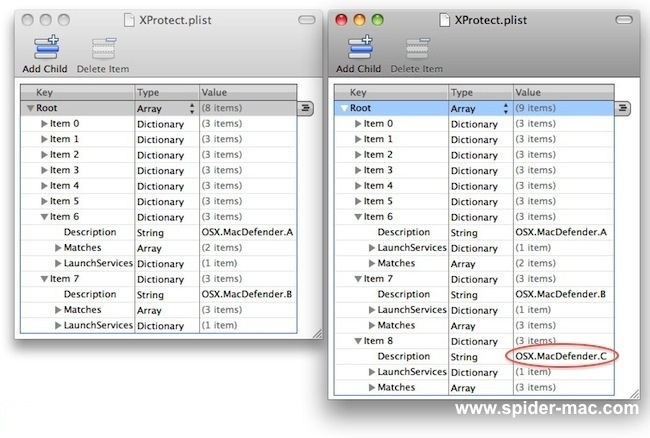
Xprotect.plist before (left) and after (right) latest update to address new Mac Defender variant
Fortunately for users, Apple has moved almost as quickly as the attackers, quashing any potential fears that the company might be slow to respond to each new threat that appears. As reported by Italian site Spider-Mac [Google translation], Apple has already issued an update to detect the new variant, pushing out a new entry for "OSX.MacDefender.C" to the Xprotect.plist file that contains the signatures for identifying malware.
After the update, users are indeed presented with a warning if they begin to download the latest variant:
As part of the security update earlier this week, Apple included a system to automatically update the Xprotect.plist anti-malware definitions every 24 hours, giving the company the ability to quickly push out new protection for Mac OS X Snow Leopard users. While this is unlikely to be the end of the Mac Defender attackers' efforts, it does appear that Apple is committed to responding and issuing updates to its users as quickly as the attackers can churn out new variants.
ZDNet's coverage of the latest Mac Developer malware includes a full video of what it looks like to get infected by Mac Defender:
As Macenstein notes, it's easy to imagine someone getting tricked by the process.
After watching this I suppose I could see how someone (who is fairly trusting, not all that tech savvy, and easily scared) could be tricked into letting this install on their system, so I’m not AS “what kind of idiot got this?” as I once was.
Apple has recently release a software update that addresses at least some variants of Mac Defender, but users should be cautious as new versions seem to be popping up already.
Ed Bott also shows what happens when Mac OS X detects the dangerous download:
But even with Apple's protection, it's a confusing mess of windows and dialog boxes that could leave the user uncertain what to trust.
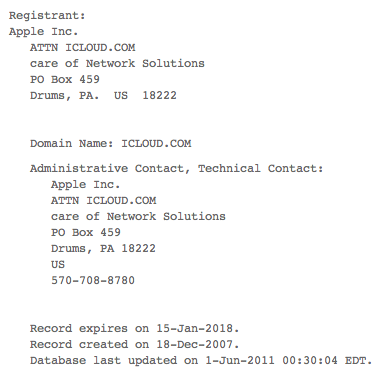
Apple has taken ownership of the domain iCloud.com. The domain was believed to have been sold to Apple for a price tag of $4.5 million. Prior to today, the whois domain registration listed Xcerion as the owner.
This change in domain registration information means Apple has control of the domain and will be able to redirect it to their own site. At present, iCloud.com still points to Xcerion's own service that has been renamed to CloudMe.com. Apple is also now listed as owner of iCloud.org as well.
Apple has already confirmed that they will be introducing "iCloud" at WWDC next week. Apple has started trademark registrations for iCloud and seems to be readying for its imminent launch.
We've received several reports today indicating that Apple's retail stores are quickly running out of stock of the various AirPort and Time Capsule wireless networking products, hinting that a full refresh for the line could take place as part of the company's Worldwide Developers Conference (WWDC) keynote next Monday.
One source has indicated that his local Apple retail store has completely sold out of both Time Capsule models, as well as the AirPort Extreme and AirPort Express base stations. A second source reported that Time Capsules are sold out at a different location, with Apple sales reps indicating that no new shipments appeared to be planned. There was no word on the status of AirPort Extreme and AirPort Express stocks at that location.
It seems now that TUAW has been hearing similar reports. They too have heard that several Apple Stores across the US are low or out of stock of AirPort devices.
A reader let us know that all of the Apple Stores in his area are out of AirPort Express models, and one of our sources confirmed the Apple Store in his area is out of stock on not just the Express, but the AirPort Extreme and Time Capsule as well. Another source says supplies at one store are not constrained and never have been, but the store "may have" received a notice to send its AirPort device inventory back.
TUAW acknowledges that WWDC is expected to be a software only event, but also raises the possibility that updates could come somehow be tied to Apple's iCloud offering.
At AllThingsD, Microsoft previewed Windows 8 for the first time. The early look at the upcoming operating system shows some drastic changes.
At the heart of the new interface is a new start screen that draws heavily on the tile-based interface that Microsoft has used with Windows Phone 7. All of a user’s programs can be viewed as tiles and clicked on with a touch of a finger.
The shown Windows 8 screenshot carries over the tile-based appearance of the Windows Mobile phone, but the new operating system is said to support two types of applications. One is the classic Windows application which will run in the familiar desktop interface, while the second type are HTML5/Javascript applications that look more like a full screen mobile application.
Windows 8 is said to have been influenced by the iPad and is meant to scale from touch screen devices to desktop. The prominent "Store" link seems to suggest that Microsoft will be offering a Windows App Store, much like Apple's Mac App Store. Microsoft promises that while the interface is optimized for touch, it should also work equally well with a mouse and keyboard.
• Fast launching of apps from a tile-based Start screen, which replaces the Windows Start menu with a customizable, scalable full-screen view of apps. • Live tiles with notifications, showing always up-to-date information from your apps. • Fluid, natural switching between running apps. • Convenient ability to snap and resize an app to the side of the screen, so you can really multitask using the capabilities of Windows. • Web-connected and Web-powered apps built using HTML5 and JavaScript that have access to the full power of the PC. • Fully touch-optimized browsing, with all the power of hardware-accelerated Internet Explorer 10.
Microsoft has not yet announced a timeframe for Windows 8's launch.
Apple, of course, is also reintegrating iOS mobile inspired changes into their next major operating system. Mac OS X Lion has been billed as taking "our best thinking from iPad" and bringing it all to the Mac. These features include full screen apps, the Mac App Store, and more. Apple will be presenting more on Mac OS X Lion at next week's WWDC.
In addition to today's update to GarageBand for iPad, Apple has also pushed out an update to iMovie for iOS devices [App Store], bringing several improvements and enhancements.
What's New in Version 1.2.1
- Audio plays from your HDTV when using the Apple Digital AV Adapter. - Video plays full screen from Marquee to your HDTV when using the Apple Digital AV Adapter. - Resolves some cases of missing media in projects. - Provides more accurate clip grouping by date in Video browser. - Fixes an issue where a project's background music would not fade in or out. - Additional performance and reliability improvements.
iMovie for iOS debuted nearly a year ago for the iPhone 4, with support for the fourth-generation iPod touch being added last September at that device's launch. The app's compatibility was expanded yet again in March of this year when the iPad was added.
Apple today pushed out an update to GarageBand [App Store] for iPad, adding a number of new features including audio output via AirPlay, Bluetooth, and HDMI, import of various audio file types including Apple Loops, and the ability to copy and paste audio files from compatible applications.
What's New in Version 1.0.1
- Support for audio output over AirPlay, Bluetooth devices and HDMI with the Apple Digital AV Adapter. - Import of AIFF, WAV, CAF audio files and Apple Loops (16 bit, 44.1 kHz). - Allows copy and paste of audio from supported apps into GarageBand. - Addresses occurrences of GarageBand freezing while playing Smart Instruments. - Improves overall stability and addresses a number of minor issues.
Full details on how to use the new features are included in a support document associated with the release.
Apple released GarageBand for iPad in mid-March and has since updated its GarageBand and Logic applications for Mac to support working with projects created on the iPad app.


 Rumors are flowing fast in the days before WWDC. LATimes reveals some additional details about Apple's iCloud service.