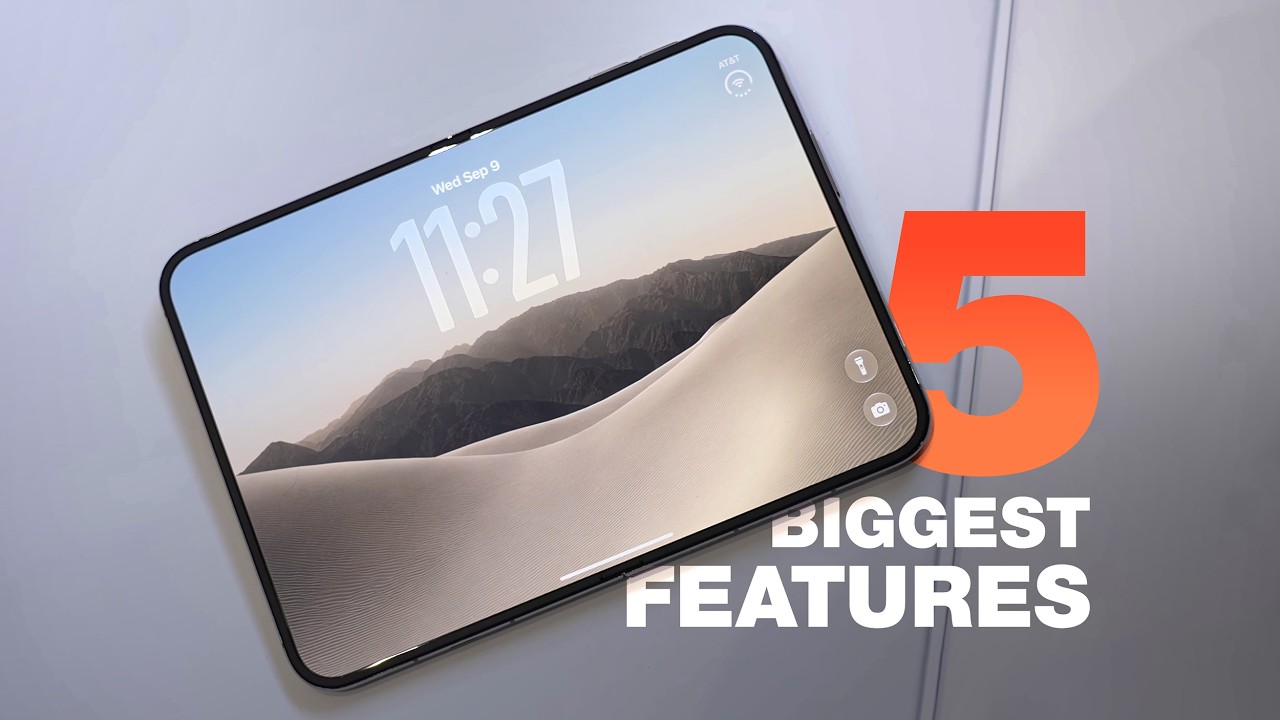
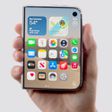
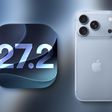
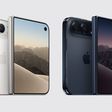
The Elec reports that Google, Oppo, and Vivo plan to adopt ultra-thin glass (UTG) in their foldable phones next year, following Apple's lead. Apple's book-style foldable iPhone, expected to be unveiled next week, reportedly uses two UTG layers, with the display sandwiched between them, isolating it from direct contact with the hinge.
The method, pioneered by Apple, is meant to spread mechanical stress across multiple layers to improve durability and reduce visible creasing over time. The UTG layers will be mass produced for Apple's rivals by Samsung, for wide adoption in 2027.
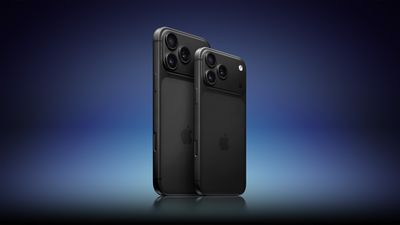
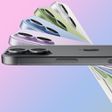
Longtime leaker Sonny Dickson has shared an image of differently colored SIM card trays that he claims are for Apple's upcoming iPhone 18 Pro models, suggesting Apple's flagship lineup will again be available in a trio of colors: Silver, Dark Cherry, and Sky Blue.
Apple currently offers the iPhone 17 Pro in Cosmic Orange, Silver, and Deep Blue.
Dickson shared the image in response to a MacRumors report on Tuesday covering a Chinese leaker's claim that the iPhone 18 Pro models could come in Dark Cherry, Sky Blue, and Black.
Dickson told MacRumors the colors in the shared image are the only ones he's come across in recent months. However, the leaker did share iPhone 18 Pro dummy units back in May that included a fourth Black color. When that was pointed out to him, Dickson argued that black dummies are made every year, but it's not a color Apple prefers to use anymore.
iPhone models sold in the U.S., Canada, and several other regions use eSIMs and don't come with SIM card trays, but devices sold in Europe, Japan, China, and Australia still include one (with the exception of the iPhone Air, which lacked a SIM tray everywhere it was sold).
Chinese leaker Instant Digital in April said there would be no black color for the iPhone 18 Pro. Last year was the first time Apple's high-end iPhones have not been available with a black or dark gray color option in any way, so it's possible Apple will continue that trend. Macworldreported in the same month that Apple would offer Light Blue, Dark Cherry, Dark Gray, and Silver colors.
We'll know either way soon enough. Apple's iPhone 18 Pro and iPhone 18 Pro Max are expected to be unveiled at the company's September event next week, alongside the company's first foldable iPhone, aka "iPhone Ultra."
Apple today informed developers that universal Mac App Store apps that require macOS 13 or later can remove support for Intel-based Mac computers.
We're reaching out to let you know that universal macOS apps on the Mac App Store that require macOS 13 or later can now remove support for Intel-based Mac computers.
By removing support for Intel-based Mac computers, you can simplify your development and optimize your download and on-device size.
Apps that drop Intel support will no longer deliver updates for those machines, but Intel Mac users will be able to keep using the last compatible version of an app. Apple did not previously allow Mac App Store apps with Intel compatibility to drop support.
Apple is also phasing out support for Rosetta 2, the feature that lets Intel-based apps run on Apple silicon Macs. Rosetta will stop working for most apps after macOS Golden Gate, and apps that use it won't launch. Apple is making an exception for some older unmaintained gaming titles that rely on Intel-based frameworks.
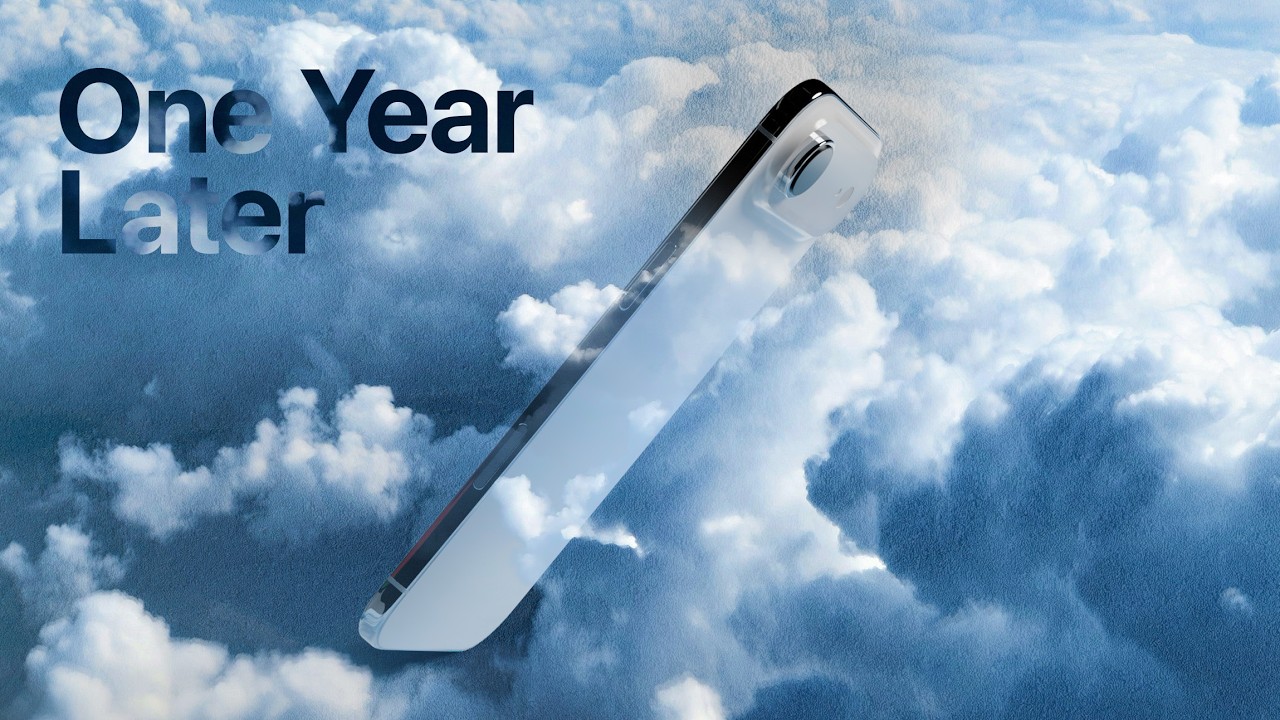
It's been almost 12 months since Apple launched the iPhone Air, and because MacRumors videographer Dan Barbera has been using it daily since launch, he decided to do a one-year review covering what it's like using Apple's super-thin iPhone on a long-term basis.
The iPhone Air is the thinnest iPhone Apple has released to date, and the form factor doesn't get old. It's pocketable, can be used with one hand, and it's much lighter than the iPhone 17 Pro and Pro Max. There's not much compromise on screen size since it has a 6.5-inch OLED display.
Apple used a smaller battery in the iPhone Air, and it doesn't last as long as the iPhone 17 Pro models. Some people might be able to get through the day on a single charge, but others will need an external battery pack like the one Apple built for the iPhone Air.
There's a single camera, which is one of the compromises with Apple's super-thin iPhone. You only get the Wide lens, with no option for the Ultra Wide or Telephoto lenses that come with the other iPhone 17 models. No Ultra Wide also means no macro images.
Price was and continues to be the biggest iPhone Air issue. At $999, it's more expensive than the iPhone 17, which has two cameras and nearly the same processor, and only $100 less than the three-camera iPhone 17 Pro. The iPhone Air's price wasn't worth it to a lot of people, and rumors suggest that it didn't sell well.
Make sure to watch Dan's video to see all of his thoughts on the iPhone Air.
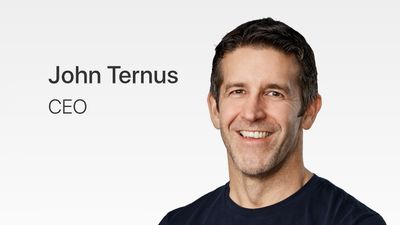
Apple has set new CEO John Ternus' target compensation at $58 million, according to an updated SEC filing [PDF]. Tim Cook's target compensation is $47 million in his new role as executive chairman.
Ternus' fiscal 2027 compensation includes a $3 million salary and an annual equity award with a target value of $55 million. A quarter of the award is time-based and will vest semiannually over four years. The rest of the restricted stock units (RSUs) will vest based on Apple's total shareholder return relative to other companies in the S&P 500, which is how Cook's RSUs have worked for many years. For fiscal 2026, Apple granted Ternus a prorated RSU award with a target value of $2.5 million.
Cook's new salary will be $2 million, but he's also earning an equity award with a target value of $45 million in fiscal 2027. Half will be granted in the form of time-based RSUs that vest over four years, and the other half will vest based on Apple's stock performance. Should Cook retire on or after the first anniversary of the grant date, his equity will vest, but he won't receive the shares until the originally scheduled vesting dates.
Target compensation figures for Ternus and Cook do not include performance-based bonuses, so the final amount each earns in fiscal 2027 could change.
In 2025, Cook earned $74.3 million, including a $3 million salary, $12 million in performance-based cash awards, and $57.5 million in stock awards.
Ternus' previous pay as Apple's senior vice president of hardware engineering was not publicly shared, so this is the first look at his compensation.
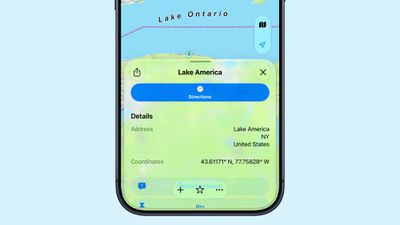
Apple Maps users in the United States will now see "Lake America" instead of "Lake Ontario" for the Great Lake on the border of Ontario and New York.
The updated name is currently rolling out to iPhone, iPad, and Mac users. The Maps app still has the Lake Ontario label for the body of water, but tapping it now says "Lake America." Apple will likely change the label in the next few hours.
As with Trump's renaming of the Gulf of Mexico, Apple Maps users in the United States will see the lake listed as Lake America. Canadians will see the Lake Ontario name, and users outside of the U.S. and Canada will see both names.
According to Axios, Trump directly asked Apple to rename Lake Ontario "Lake America" in the Maps app. Trump announced the name change after the ongoing trade war escalated with both countries announcing additional tariffs.
Once popular mapping app MapQuest refused to change the name of Lake Ontario, and its stance has caused it to surge on the App Store charts. MapQuest is the number one free app on the iPhone at the current time.
Note: This discussion thread is located in our Political News forum with special rules.
As noted by Broadcasts developer Steven Troughton-Smith, many Liquid Glass interface elements on the macOS Golden Gate beta have an even glassier appearance on certain high-end OLED displays with HDR support than they do on ordinary displays.
Apple reportedly plans to release new MacBook Pro or "MacBook Ultra" models with an OLED display by early 2027, so it is likely that macOS Golden Gate has these Liquid Glass enhancements in preparation for those laptops.
Anthropic today introduced Claude Fable 5.1 and Claude Mythos 5.1, which the company says are the "world's most advanced models for coding and knowledge work."
According to Anthropic, Claude Fable 5.1 sets a new standard for coding, knowledge work, and long-running problem-solving tasks. It achieves similar or better results than Fable 5 at low or medium effort, and has much higher performance at higher effort tiers. It outperforms Fable 5, Opus 5, and OpenAI's GPT–5.6 Sol across multiple benchmarks.
Fable 5.1 and Mythos 5.1 are the same model, but with different safeguard levels. Fable 5.1 is available to everyone, but Mythos 5.1 is limited to U.S. companies and individuals participating in Anthropic's trusted access programs. There's a new Life Sciences Verification Program that allows Mythos 5.1's advanced biology capabilities to be used for scientific research, with open enrollment for scientists coming soon.
Safeguards for Fable 5.1 have been improved, and Claude Code users should see around 60 percent fewer cybersecurity false positives. Anthropic says Fable 5.1 can now be used to discover software vulnerabilities, but not develop exploits for them. Fable 5.1 includes invisible watermarking for text generated by Claude, and Anthropic is rolling out a detection API in a private preview. The API is available to eligible organizations as required by EU law.
Fable 5.1 costs approximately 25 percent less than Fable 5 for typical workloads, and up to 45 percent for highly agentic work, because of a reduction in cache-read pricing. Base pricing remains the same. It is available today on all platforms.
iPhone Ultra dummy models that surfaced in April didn't include a MagSafe ring, while dummies of the iPhone 18 Pro did. Leaked cases for the device did have a MagSafe ring, making it unclear whether it would support MagSafe charging.
"All indications that I've heard is that MagSafe is in for this foldable phone. They were able to get it into the iPhone Air, and I don't see why they wouldn't be able to get it into the foldable," said Gurman.
Leaving out MagSafe was plausible because the iPhone Ultra is supposedly super thin, measuring 4.5mm when open. The device does not have room for Face ID camera hardware, and it is rumored to use Touch ID instead.
Gurman recapped several other iPhone Ultra rumors:
$2,000+ price tag
5.5-inch outer display (when closed)
7.8-inch inner display (when unfolded)
Short and wide passport-style design
Latest Apple modem (likely C2)
Latest Apple chip (A20 Pro)
Wide and Ultra Wide camera lenses
No telephoto lens
Durable hinge, minimal but not invisible crease
Apple has "gone to great lengths" to make apps automatically resize to fit different displays
Apple will announce the foldable iPhone alongside the iPhone 18 Pro models at its "Surprise and Shine" event set to be held on Wednesday, September 9. While there have been rumors that the foldable iPhone could be delayed and launch after the iPhone 18 Pro models, Gurman says he would be "very surprised" if the foldable did not come out at the same time as the Pro iPhones or "very close to it."
"Either on the same launch date, a dual launch, or coming out within weeks later. This idea of a late October, November launch, massive delays, supply chain issues, I don't believe to be the case," he said.
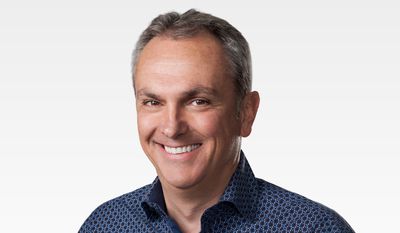
Former Apple CFO Luca Maestri is taking another step back from the company, reports Bloomberg. Maestri left his role as CFO in January 2025, but stayed at Apple to run the company's Corporate Services teams.
Maestri stepped down from that position in recent weeks, and Bloomberg says he is still at Apple but has no responsibilities other than hosting a class at Apple University. Maestri reported to former Apple CEO Tim Cook, but he does not report to new Apple CEO John Ternus. Maestri is slowly withdrawing from Apple, and visits the office about once a week.
Corporate services includes information systems and technology, information security, and real estate and development. The team is being taken over by Kevan Parekh, who became Apple's CFO after Maestri stepped down.
Bloomberg says Cook liked to keep departing executives in smaller roles, but Ternus may not continue that practice.
In his first memo to Apple employees as CEO today, John Ternus teased a "huge launch next week that's going to be phenomenal."
In a social media post today, Apple's marketing chief Greg Joswiak teased that Apple has "more to say" on Wednesday, September 9, which is when the company will be holding its next special event, starting at 10 a.m. Pacific Time.
During the event, Apple is expected to unveil the iPhone 18 Pro and iPhone 18 Pro Max, its first-ever foldable iPhone, the Apple Watch Series 12 and Apple Watch Ultra 4, and potentially AirPods 5. Of course, there could be other announcements and surprises too. MacRumors will be providing live coverage of the event from Steve Jobs Theater.
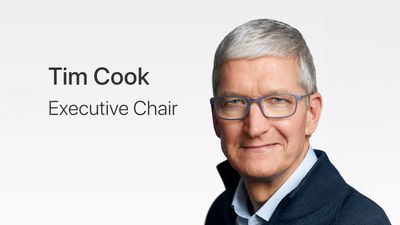
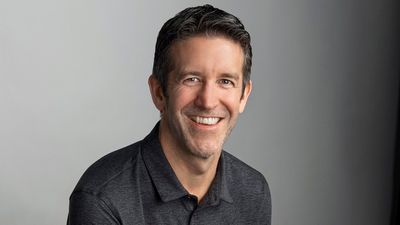
John Ternus officially became Apple's CEO today, with Tim Cook transitioning to a new role as Executive Chair. Ternus sent his first memo as CEO to employees this morning, praising Cook and sharing his excitement for Apple's future.
MacRumors obtained a copy of the memo, which you can read in full below.
Team,
Today, on my first day as CEO, I just wanted to send a quick note to thank everyone for the warm wishes. I also want to extend my deep appreciation to Tim for sharing so much of his knowledge and experience during this transition, and more importantly, for everything he contributed to Apple over the years. We're so lucky to have had a CEO who led with his values and with such decency and humanity. We are all better for it, and I'm so grateful he'll be our executive chairman.
I'm honored to be stepping into this role at what is truly the greatest company in the world, and I am so excited about everything we have in store. We have a huge launch next week that's going to be phenomenal. Thanks for everything you've all done to make it possible.
I'm just as excited about what lies beyond that, including the incredible products already in the works and the ones we haven't even imagined yet that we'll dream up and create together. There's no team in the world I'd rather build the future with.
More to come. In the meantime, thanks for your excellent work!
John
Ternus is a longtime Apple employee, having first joined the company in 2001. Prior to becoming CEO, he was senior vice president of Hardware Engineering, so he has a product-focused background instead of the operations background Cook has. Apple's leadership team has been reorganizing during the transition from Cook to Ternus, and the full effect of the changes will play out over the next several years.
Johny Srouji is now Apple's chief hardware officer, taking over the Hardware Engineering team that Ternus previously led. Former engineering VP and Ternus lieutenant Laura Legros is returning to Apple, and the product design team was restructured.
On his last day as CEO, Cook told employees he took "enormous comfort" in handing leadership of Apple to "someone as brilliant and wonderful and capable as John."
Ternus has been on stage during Apple events before, but the September 9 "Surprise and Shine" iPhone event will be his first as Apple CEO.
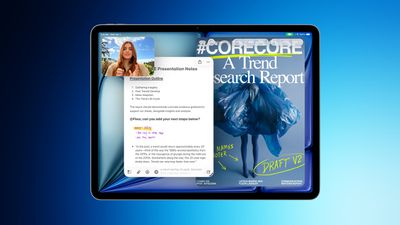
Amazon and Best Buy this week have multiple discounts on the M4 iPad Air, providing up to $149 off these 2026 models. These are the best prices we've seen in the wake of Apple's summer price hikes.
Note: MacRumors is an affiliate partner with Amazon. When you click a link and make a purchase, we may receive a small payment, which helps us keep the site running.
You'll find savings on both the 11-inch and 13-inch models of the M4 iPad Air, with savings mainly focused on 128GB and 256GB Wi-Fi tablets. All of these discounts have been automatically applied and do not require a coupon code or a special membership.
The new iPad Air features the M4 chip, C1X modem, and N1 networking chip, which brings support for Wi-Fi 7 and Bluetooth 6. In terms of design, the 2026 models are identical to the 2025 iPad Air tablets, with an edge-to-edge display, slim bezels, and aluminum chassis.
If you're on the hunt for more discounts, be sure to visit our Apple Deals roundup where we recap the best Apple-related bargains of the past week.
Deals Newsletter
Interested in hearing more about the best deals you can find in 2026? Sign up for our Deals Newsletter and we'll keep you updated so you don't miss the biggest deals of the season!
iPhone 18 Pro colors could include Dark Cherry, Sky Blue, and Black, with a Silver option unlikely to make the final lineup, according to the leaker known as "Fixed Focus Digital."
In a new post on Weibo, the leaker "Fixed Focus Digital" said the iPhone 18 Pro has entered full mass production and predicted a slightly different color lineup from what previous rumors have suggested, featuring Dark Cherry (also referred to as Burgundy), Sky Blue, and Black.
The leaker said a Silver option will "most likely" not be offered, adding in a reply that they have not seen evidence of that color's existence in China. If accurate, the lineup would mean Apple is replacing all three iPhone 17 Pro colors with new options for iPhone 18 Pro, rather than carrying Silver over as many earlier reports had suggested.
Bloomberg's Mark Gurmanfirst described the iPhone 18 Pro's main new shade as "deep red." A Macworld report later called it "Dark Cherry," and said the other colors would be Light Blue, Dark Gray, and Silver.
Weibo leaker "Instant Digital" said Apple may skip black, then described Dark Cherry as a mix of burgundy, coffee, and deep purple. Dummy models from Sonny Dickson showed Dark Cherry, Light Blue, Black, and Silver, while SIM tray photos showed Dark Cherry with Light Blue and Dark Gray.
The rumors point to Dark Cherry replacing Cosmic Orange as the signature Pro color, with Light Blue or Sky Blue, Silver, and Black or Dark Gray also possible. Black remains uncertain, after Apple reportedly considered black and steel gray for the iPhone 17 Pro before dropping both.
Apple's iPhone 18 Pro and iPhone 18 Pro Max are expected to be unveiled at the company's September event next week, alongside the company's first foldable iPhone, dubbed the "iPhone Ultra."
Apple's former hardware engineering chief John Ternus officially became CEO of the company today, with the change now reflected on Apple's leadership page.
Ternus joined Apple in 2001, became a vice president of hardware engineering in 2013, and became senior vice president of hardware engineering in 2021. He is 51, so he could serve as CEO for 10 to 15 years before reaching typical retirement age.
Tim Cook is now executive chairman of Apple's board of directors, after a 15-year run as CEO. In this role, Apple said Cook "will assist with certain aspects of the company, including engaging with policymakers around the world."
During his final day as CEO on Monday, Cook stopped by the Apple Park Visitor Center in Cupertino, California to meet some of Apple's retail employees from various stores, with photos and a video of the visit available on Instagram.
Mozilla today said it is adding an ad blocker to Firefox for iOS, allowing users to block many third-party ads and ad-related trackers.
The ad blocker uses the EasyList filter list and Apple's WebKit Content Blocker technology, which is the same content-blocker API Safari ad blockers use. App Store ad blockers only work with Safari, so Mozilla built the feature directly into the app.
Firefox won't block ads served by the site you're visiting, and ads shown in search results will still appear. Sponsored shortcuts and other sponsored content shown by Firefox when you open a new tab are separate from ads and won't be blocked.
Ad blocking is turned off by default, and it can be turned on in the Firefox app by going to Settings > Browsing > Ad Blocker.
OpenAI yesterday denied Apple's allegations of trade secret theft, telling a federal court that Apple failed to show any confidential information was actually stolen by its former employees, according to Reuters.
In a new filing submitted to the U.S. District Court in San Jose, California, OpenAI argued that the dispute is "a mess of Apple's own making." The filing is a direct response to Apple's new forensic evidence submitted against former Apple employees Chang Liu and Tang Tan, whom Apple accuses of stealing trade secrets related to hardware design, manufacturing, and supply chain operations after filing the lawsuit in July.
OpenAI says the lawsuit is an attempt to slow a rival and deter more employee departures. In court filings, it notes that it has hired about 400 former Apple employees for its hardware projects. The company argues that California law allows workers to move freely between competitors, while shifting attention to Apple's internal practices instead of addressing the forensic evidence allegation by allegation.
OpenAI alleges that Apple encourages staff to use personal iCloud accounts for work, potentially blurring the boundary between personal and company data after an employee leaves. It also says Apple's practice of immediately escorting departing employees off site leaves too little time to return devices or internal files, portraying the allegations as the result of a flawed offboarding process rather than intentional theft.
The filing says Liu retained access to Apple documents only to help former colleagues find files or answer questions, and that Apple employees repeatedly contacted him for support. Tan said he returned his Apple prototypes before leaving and kept only non-confidential materials, including a standard departure checklist.
OpenAI characterized the dispute as employees choosing to leave a company it says has been slow to adopt AI for a faster-moving competitor. It argued that Apple should not use its own internal failures to portray those departures as unlawful. Judge Edward J. Davila is scheduled to hear arguments on October 1.
Apple's first foldable iPhone, with a book-style design featuring a 5.4-inch outer display and a 7.6-inch inner display with a minimal crease down the middle.


 The Elec reports that Google, Oppo, and Vivo plan to adopt ultra-thin glass (UTG) in their foldable phones next year, following Apple's lead. Apple's book-style foldable iPhone, expected to be unveiled next week, reportedly uses two UTG layers, with the display sandwiched between them, isolating it from direct contact with the hinge.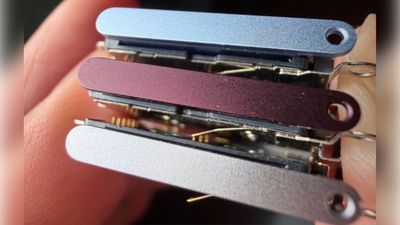

 As
As 



 Note: MacRumors is an affiliate partner with Amazon. When you click a link and make a purchase, we may receive a small payment, which helps us keep the site running.
 Apple's new CEO John Ternus now